2026

Matthew 12:38-39

The Certitude of Faith

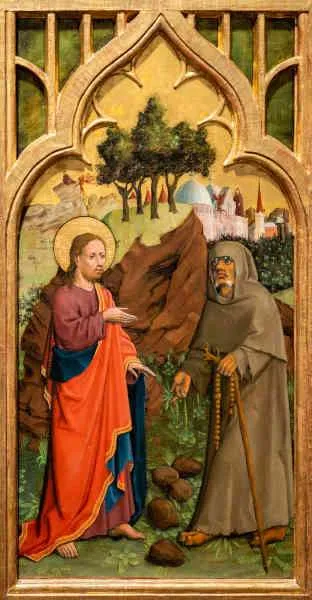
Some of the scribes and Pharisees said to Jesus, “Teacher, we wish to see a sign from you.” He said to them in reply, “An evil and unfaithful generation seeks a sign, but no sign will be given it except the sign of Jonah the prophet.”

Reflection:

Imagine if Jesus had responded differently to the scribes and Pharisees, saying, “Yes, I will perform a sign right now. Whatever you ask of Me, I will do.” Suppose they then asked Him to part the Sea of Galilee—just as Moses parted the Red Sea—and walk through on dry land, and Jesus fulfilled their request. Would that have been enough for them? Most likely not. The problem was not a lack of miracles, or even dramatic ones. The real issue was the hardness of their hearts, which closed them off to the transforming and supernatural gift of faith.

Had Jesus done this, they might have been temporarily impressed. They might even have professed belief that He was the Messiah and the Son of God—but not through faith. And there lies the deeper problem. Believing in Jesus’ divinity solely because of witnessing a miracle requires no faith. They would have seen the proof with their eyes but not received it into their hearts.

The supernatural gift of faith is far greater and more certain than anything we see. Faith leads to a conviction so deep that it transforms the soul. Countless saints have endured persecution, clung to the truth, and embraced martyrdom for this gift. But if one believes merely because of external signs—like parting the Sea of Galilee—then that belief remains shallow, always dependent on more visible proof rather than rooted in divine revelation.

Now consider an exaggerated scenario. Suppose you walk past a street preacher who declares himself to be the Son of God. You respond, “Prove it.” The man levitates, spins in the air, and lifts the cars on the street with a single command. He descends and says, “Worship me.” What would you do? Would such a spectacle bring about a true conversion of heart and lead you into divine worship?

Now imagine a real scenario. You are praying alone in a church. Your heart is open to God, and you express your deepest love for Him. Suddenly, the Holy Spirit enters your soul—convicting you of the Father’s will, illuminating your mind, and strengthening your resolve. You rise from prayer with clarity, courage, and peace.

Though the first scenario is unreal, it serves as a useful contrast. Its proof is external and sensational. Though extraordinary, many might suspect a demonic deception or illusion. It is unlikely to move the heart to true conversion. Rather, it would stir curiosity, not commitment—an appetite for signs, not surrender.

In the second, the proof is entirely interior, which is unquestionably greater. When God speaks within the depths of the soul and the soul responds with surrender, life is truly transformed. That encounter becomes a fountain of divine peace, strength, and love, satisfying the heart more deeply than any external sign ever could.

Jesus refused to offer the scribes and Pharisees the sign they demanded because He loved them and sought to draw even their hardened hearts to faith. By refusing a miracle and speaking instead in veiled language—“no sign will be given it except the sign of Jonah the prophet,” referring to His death and resurrection—Jesus moves their hearts, inviting them to ponder the mystery of His life, to be open to the Spirit’s revelation, and to respond in faith. Perhaps some of these religious leaders did eventually open their hearts. Many did not.

Reflect today on your own heart. Why do you believe in God? Why do you profess Jesus as your Lord and Savior? Has faith truly taken hold of you? Have you heard God speak within and responded with surrender? If so, then this is the transforming power of faith at work. Pray for this gift—that it may take deeper root and grow stronger each day—so that, unlike the scribes and Pharisees, the gift of faith will be the only sign from Heaven you need.

Source: https://catholic-daily-reflections.com/2026/07/19/the-certitude-of-faith/

Matthew 12:38-39 Read More »

Sixteenth Sunday in Ordinary Time

First Reading Wisdom 12:13, 16-19

There is no god besides you who have the care of all,
that you need show you have not unjustly condemned.
For your might is the source of justice;
your mastery over all things makes you lenient to all.
For you show your might when the perfection of your power is disbelieved;
and in those who know you, you rebuke temerity.
But though you are master of might, you judge with clemency,
and with much lenience you govern us;
for power, whenever you will, attends you.
And you taught your people, by these deeds,
that those who are just must be kind;
and you gave your children good ground for hope
that you would permit repentance for their sins.

Responsorial Psalm Psalms 86:5-6, 9-10, 15-16

R. (5a) Lord, you are good and forgiving.
You, O LORD, are good and forgiving,
abounding in kindness to all who call upon you.
Hearken, O LORD, to my prayer
and attend to the sound of my pleading.
R. Lord, you are good and forgiving.
All the nations you have made shall come
and worship you, O LORD,
and glorify your name.
For you are great, and you do wondrous deeds;
you alone are God.
R. Lord, you are good and forgiving.
You, O LORD, are a God merciful and gracious,
slow to anger, abounding in kindness and fidelity.
Turn toward me, and have pity on me;
give your strength to your servant.
R. Lord, you are good and forgiving.

Second Reading Romans 8:26-27

Brothers and sisters:
The Spirit comes to the aid of our weakness;
for we do not know how to pray as we ought,
but the Spirit himself intercedes with inexpressible groanings. 
And the one who searches hearts
knows what is the intention of the Spirit,
because he intercedes for the holy ones
according to God’s will.

Alleluia Cf. Matthew 11:25

R. Alleluia, alleluia.
Blessed are you, Father, Lord of heaven and earth;
you have revealed to little ones the mysteries of the kingdom.
R. Alleluia, alleluia.

Gospel Matthew 13:24-43

Jesus proposed another parable to the crowds, saying:
“The kingdom of heaven may be likened
to a man who sowed good seed in his field. 
While everyone was asleep his enemy came
and sowed weeds all through the wheat, and then went off. 
When the crop grew and bore fruit, the weeds appeared as well. 
The slaves of the householder came to him and said,
‘Master, did you not sow good seed in your field? 
Where have the weeds come from?’
He answered, ‘An enemy has done this.’
His slaves said to him,
‘Do you want us to go and pull them up?’
He replied, ‘No, if you pull up the weeds
you might uproot the wheat along with them. 
Let them grow together until harvest;
then at harvest time I will say to the harvesters,
“First collect the weeds and tie them in bundles for burning;
but gather the wheat into my barn.”‘”

He proposed another parable to them. 
“The kingdom of heaven is like a mustard seed
that a person took and sowed in a field. 
It is the smallest of all the seeds,
yet when full-grown it is the largest of plants. 
It becomes a large bush,
and the ‘birds of the sky come and dwell in its branches.'”

He spoke to them another parable. 
“The kingdom of heaven is like yeast
that a woman took and mixed with three measures of wheat flour
until the whole batch was leavened.”

All these things Jesus spoke to the crowds in parables. 
He spoke to them only in parables,
to fulfill what had been said through the prophet:
I will open my mouth in parables,
I will announce what has lain hidden from the foundation
of the world.

Then, dismissing the crowds, he went into the house. 
His disciples approached him and said,
“Explain to us the parable of the weeds in the field.” 
He said in reply, “He who sows good seed is the Son of Man,
the field is the world, the good seed the children of the kingdom. 
The weeds are the children of the evil one,
and the enemy who sows them is the devil.
The harvest is the end of the age, and the harvesters are angels. 
Just as weeds are collected and burned up with fire,
so will it be at the end of the age. 
The Son of Man will send his angels,
and they will collect out of his kingdom
all who cause others to sin and all evildoers. 
They will throw them into the fiery furnace,
where there will be wailing and grinding of teeth. 
Then the righteous will shine like the sun 
in the kingdom of their Father. 
Whoever has ears ought to hear.”

Source: https://bible.usccb.org/bible/readings/071926.cfm

Sixteenth Sunday in Ordinary Time Read More »

Saint Macrina the Younger

Profile

Macrina was the daughter of Saint Emmelia and Saint Basil the Elder; sister of Saint Basil the Great, Saint Gregory of Nyssa, and Saint Peter of Sebastea; She was the granddaughter of Saint Macrina the Elder, and called the Younger to distinguish between the two. She was educated by her mother, and she could read from an early age. BShe was betrothed at age twelve to a young lawyer who died before the wedding. She refused other offers of marriage, and devoted herself to her family, then to a religious life. She became a nun. She succeeded her mother as head of a small community of women in Pontus (part of modern Turkey). Her biography and reminiscences of her were written by her brother Saint Gregory.

Born

c.327 at Caesarea, Cappadocia (in modern Turkey)

Died

379 at Pontus (in modern Turkey) of natural causes

Canonized

Pre-Congregation

Source: https://catholicsaints.info/saint-macrina-the-younger/

Saint Macrina the Younger Read More »

Matthew 13:33

Transformed by God’s Word

He spoke to them another parable. “The kingdom of heaven is like yeast that a woman took and mixed with three measures of wheat flour until the whole batch was leavened.”

Reflection:

Yeast is small—invisible once it is worked into the dough. And yet, its influence is pervasive and powerful. This simple image—yeast worked into three measures of flour, causing it to slowly rise—reveals that the Kingdom of Heaven is built quietly, almost imperceptibly, from within. Like leaven silently transforming dough from the inside, so too does God’s grace operate—hidden yet active—in the heart, in the Church, and in the world.

Patiently watching dough rise can be a small wonder, especially for children. In this brief parable, the yeast symbolizes the Word of God, and the wheat flour, the human soul. When God’s Word is welcomed by faith, it possesses the power to transform the entire soul. Just as yeast elevates and expands flour into bread, so God’s Word elevates human nature and conforms it to Himself. How awe-inspiring it is to behold the gradual transformation of a soul animated by divine grace!

Saint Augustine offers several interpretations of the “three measures” of wheat flour. He suggests they can represent the threefold interior life of the human person: heart, soul, and mind (cf. Matthew 22:37); or the three degrees of fruitfulness described in the parable of the sower—“a hundredfold, sixtyfold, and thirtyfold” (cf. Matthew 13:23); or even the three righteous men mentioned in Ezekiel—Noah, Daniel, and Job (cf. Ezekiel 14:14), each representing a distinct path of fidelity under trial. Each of these interpretations reveals how God’s transforming Word is at work not only in the individual soul, but within the Church and throughout all humanity.

Though “three measures” might not sound like much, it was in fact a substantial amount. According to ancient Jewish and Roman measurements, three measures (or satons) could equal nearly fifty pounds of flour—enough to feed more than a hundred people. The parable, therefore, is about abundance—the superabundant fruitfulness of God’s Word when it is thoroughly received—penetrating deeply into the individual soul, the Church, and society. Like leaven in dough, this transformation takes time. Though not immediate, it is steady, enduring, and complete.

Consider your own life: Has the Word of God been thoroughly mixed into your whole being—into your heart, your soul, and your mind? Has it leavened your interior life so completely that even your smallest actions are touched by grace? Has divine love taken hold of you—not in part, but in whole?

Furthermore, do you see your interconnectedness with the Church and rejoice in the many ways God is at work within Her and Her members? Do you gaze upon the world and, with wonder and awe, perceive God’s hidden activity? It is easy to focus on the worldly chaos and to be drawn into the sensationalism of evil. But it takes a truly perceptive soul—like a child watching dough rise—to behold the quiet, steady work of God, who is ever bringing His Kingdom to life—quietly, steadily, and far and wide.

Reflect today on the quiet ways God is at work within you, within the Church, and throughout the world. Though you might not always perceive the movement of grace, trust that it is active—like yeast in dough—gently transforming, sanctifying, and preparing hearts for the glory to come. Resist the temptation to measure your spiritual growth by visible signs or immediate results. Instead, remain faithful to prayer, attentive to the Word, and docile to the promptings of the Holy Spirit. God’s Kingdom unfolds in time, and its rising is certain. Even when the world seems overwhelmed by sin or division, remember that the leaven is at work. The final loaf is being prepared for the eternal banquet—and you are being made ready, one hidden grace at a time, until you are fully prepared to share in the joy of the eternal feast.

Source: https://catholic-daily-reflections.com/2026/07/18/transformed-by-gods-word/

Matthew 13:33 Read More »

Saint Camillus de Lellis, Priest

1550–1614; Patron Saint of the sick, hospitals, hospital workers, nurses, and nursing associations; Invoked against the vice of gambling; Canonized by Pope Benedict XIV on June 29, 1746

Camillus was born in the Kingdom of Naples. His mother was in her late forties when he was born, and his father was a soldier who was often away from home. Before his birth, his mother had a dream that she would give birth to a son who would wear a red cross on his chest and lead others with the same cross. However, Camillus’ mother died when he was young, leaving him mostly on his own. In his teenage years, Camillus joined his father on military campaigns where he fell into the vice of gambling and constantly experienced destitution. He wounded his leg on one campaign, which never properly healed.

In Camillus’ mid-twenties, his military regiment was disbanded, and he found his way to a Franciscan friary where he obtained menial work. One day, a saintly friar spoke with him, saying, “God is everything. The rest is nothing. One should save one’s soul which does not die.” This had a profound impact on Camillus. Shortly afterward, he fell on his knees and prayed, “Lord, I have sinned. Forgive this great sinner! How unhappy I have been for so many years not to have known you and not to have loved you. Lord, give me time to weep for my sins for a long time.” After this initial conversion, he applied to the friars for admission as an apprentice, but his application was rejected due to his unhealed leg wound.

Since the wound on his leg was deemed incurable, Camillus traveled to Rome and found work at Saint James Hospital for the Incurable. There, he received treatment while caring for the sick and dying. He also began living a life of deep prayer and penance.

At that time, hospitals for the dying were not as they are today. Many hospital workers were society’s rejects. Caring for the sick and dying was considered a lowly and undesirable task, and many did it only to make a meager living, not as a sincere act of mercy. Camillus’s newfound faith and penitential life made him stand out in the hospital. He became such an inspiration that he was made the hospital’s director. As director, he tried to form a lay association of charitable hospital workers, but his efforts proved fruitless. Fortunately for him, he met Saint Philip Neri, who became his spiritual director. Saint Philip encouraged him in his work and suggested that he become a priest to bring his calling to fruition. Thus, with the help of Saint Philip, he found a benefactor, completed his theological studies, and was ordained a priest at the age of thirty-four.

As a priest, he and his group of merciful hospital workers began serving the sick at Holy Spirit Hospital in Rome. They made quite an impression. They served not for money or because they could find no other work. They served out of charity, according to the vocation given to them by God. In addition to caring for those at the hospital, they ministered to the homebound and to everyone they found sick or dying. In 1586, after Camillus had been a priest for only two years, Pope Sixtus V formally approved his new congregation, named the Order of Clerks Regular, Ministers of the Infirm (M.I.), later known as the Camillians. In addition to taking the traditional three vows of poverty, chastity, and obedience, they took a fourth vow of “service to the sick poor, including the plague-ridden, in their corporeal and spiritual needs, even at risk to their own life, having to do this out of sincere love for God.” In 1591, Pope Gregory XV raised the congregation to the level of a Religious Order. They wore a black habit with a large red cross over their chest, just as his mother had dreamt before he was born.

In the years that followed, Father Camillus and his new order of ministers to the infirm expanded to other hospitals and towns, cared for those suffering from various plagues, and tended to soldiers wounded in battle. By the time of Camillus’ death, the order had expanded throughout Italy and even into Hungary. Though his wounded leg remained a source of much suffering throughout his life, he never allowed it to deter him from his work, even if he had to crawl to a patient’s bedside. His holiness was evident, as were the gifts of prophecy and healing. After his death, religious sisters were formed according to his order’s charism, as were lay associations.

In his service of the poor and sick, Saint Camillus was serving Christ. When he ministered to those who were suffering the most, with the most repulsive infirmities, he was drawn to them as he was drawn to the suffering Christ. His tenderness and compassion did much for their physical well-being, but it did much more for their eternal souls.

As we honor this great founder and saintly convert, consider the contrast we find in his life. He was mostly abandoned and fell into grave sin as a youth, but God touched him and transformed him, doing great things through his life. As you consider his life, consider also your own weaknesses and sins and know that there is always hope for you and for others, and that God can transform your life in glorious ways, doing great things in and through you.

Source: https://mycatholic.life/saints/saints-of-the-liturgical-year/july-14—saint-camillus-de-lellis-priest/

Saint Camillus de Lellis, Priest Read More »

Matthew 12:14-16

The Quiet Strength of Meekness

The Pharisees went out and took counsel against Jesus to put him to death. When Jesus realized this, he withdrew from that place. Many people followed him, and he cured them all, but he warned them not to make him known.

Reflection:

To souls who love God and are united to Him, today’s Gospel reveals a profound lesson about facing opposition. “The Pharisees went out and took counsel against Jesus to put him to death.” Why? Because of their rigid interpretation of the Sabbath law of rest. But Jesus, as the Son of God, in union with the Father and the Holy Spirit, is the origin of that law. The Sabbath was meant to call to mind God’s rest after the six days of creation—a contemplative rest in which the people reflected upon God’s goodness.

The Pharisees had turned the Sabbath into a burdensome obligation, a scrupulous and empty duty. Jesus, the Author and Lord of the Sabbath, saw it very differently. Acts of charity are never to be refrained from—not even on the Sabbath. For the “offense” of healing a man with a withered hand on the Sabbath, the Pharisees began plotting Jesus’ murder.

When Jesus realized this, He withdrew from that place. This retreat was not born of cowardice but of meekness—a virtue often misunderstood in our world. Biblical meekness is not weakness or timidity; it is power under perfect control. It is strength harnessed by wisdom and love. Jesus possessed all power yet chose restraint. He could have called down legions of angels to destroy His enemies, but instead, He quietly stepped away. His hour had not yet come.

This divine meekness allowed Jesus to continue His mission with quiet determination. Many people followed Him, and He cured them all, bringing healing and restoration to broken lives. In this moment, we see Jesus’ quiet strength perfectly expressed. He did not come to wage war against the leaders of the synagogue but to establish the Kingdom of grace and truth.

In keeping with Isaiah’s prophecy, Jesus draws hearts to Himself in silence and mercy. “A bruised reed”—fragile, bent, and seemingly worthless—He will not snap. “A smoldering wick”—flickering, nearly extinguished—He will not quench. Instead, He heals and rekindles, patiently leading justice to victory (cf. Matthew 12:18–21).

Consider your own mission and the opposition you face. Do coworkers mock your Catholic practices—perhaps your fasting on Fridays or stepping away for daily prayer? Do family members dismiss your commitment to Church teaching on marriage, sexuality, or the sanctity of life? Do friends challenge your dedication to serving the poor as “wasted time” that could be spent advancing your career?

Each of us is called to respond as Christ did—with meekness that reflects true strength. Prayerfully discern whether it is your “hour” to suffer rebuke, or if you are being called, like Christ in today’s Gospel, to turn away from the hostility and focus on those whom God is drawing to Himself through your witness.

Reflect today on any opposition you face as you strive to fulfill God’s will. Not every battle must be fought today. Humility and meekness often call us to quietly retreat so we can build up the foundation of God’s Kingdom in other hearts. Of course, the hour of the Cross will come for each of us. When it does, we must embrace it with love. But until that moment, we follow Jesus in discerning, listening, and loving—even in silence.

Source: https://catholic-daily-reflections.com/2026/07/17/the-quiet-strength-of-meekness/

Matthew 12:14-16 Read More »

Pope Saint Leo IV

Profile

Cardinal–priest. 103rd pope. He saw the Saracens attack Rome, Italy in 846; upon his ascension, to prevent its recurrence he fortified the city and its suburbs, building a wall around the Vatican, fortifying the part of Rome still called the Leonine City. He rebuilt Saint Peter’s Basilica. He rebuked Saint Ignatius of Constantinople for deposing bishops without his knowledge. He crowned Louis II joint Holy Roman Emperor with Lothair I in 850. He crowned Alfred as king of England in 853.

Born

Rome, Italy

Papal Ascension

847


Died

855 at Rome, Italy of natural causes

Canonized

Pre-Congregation

Source: https://catholicsaints.info/pope-saint-leo-iv/

Pope Saint Leo IV Read More »

Matthew 11:28–30

The Heavy Burdens of Life

Jesus said: “Come to me, all you who labor and are burdened, and I will give you rest. Take my yoke upon you and learn from me, for I am meek and humble of heart; and you will find rest for yourselves. For my yoke is easy, and my burden light.” 

Reflection:

Everything Jesus says is pure truth and pure love. Sometimes we need a loving rebuke to awaken us, but other times—when we are weighed down with heavy burdens—our Lord comes to us with the utmost empathy and care. He overlooks the things that burden us externally and looks instead into our hearts, calling us gently to Himself: “Come to me, all you who labor and are burdened, and I will give you rest.”

There are many things that burden us: sin, guilt, suffering, anxiety. Sometimes our burdens are physical; other times they are emotional or spiritual. When these burdens leave us oppressed, confused, or despairing, Jesus does not come to condemn us—even if we are steeped in sin. He comes with the tenderness of His love. If our burdens stem from sin, it is His merciful love that gives us the courage to turn to Him, that He might lift the burden and set us free. If our burdens are physical, He draws near to unite Himself with us, to show us His wounds, and to give us strength to carry the cross. If our burdens come from trials beyond our control or from emotional trauma that weighs heavily on the heart, Jesus is always near—present, caring, and deeply moved by our suffering.

In this passage, the Greek word for “labor” suggests more than ordinary effort—it implies exhaustive toil. Likewise, the word translated as “burdened” conveys a weight so heavy that it cannot be borne alone. These burdens may come from the world, from others, from sin, or even from within ourselves. Whatever their origin, Jesus offers Himself as the one who gives rest, who walks beside us, and who makes our burden light through the strength of His love.

When we are overwhelmed, it’s hard to notice Jesus’ consoling presence. We might even cry out in frustration, “Where are You, Lord?” When that happens, we need to close our eyes and pray in silence. During the greatest trials, Jesus’ words in today’s Gospel ring most true. He is always near, especially when we are overwhelmed. By stopping, quieting our racing minds, and surrendering our weary souls, we will discover that Jesus is present to us, speaking His tender words: “Come to me, all you who labor and are burdened, and I will give you rest.”

Jesus doesn’t always remove our burdens; He does something far greater. He enters into them with us. He lifts us up and carries our burdens alongside us, strengthening us and drawing good even from what we perceive as evil.

In those moments He says, “Take my yoke upon you,” which might at first seem confusing. Why, when we are already burdened, would Jesus ask us to carry His yoke as well? Because Jesus’ yoke is not a new weight; it is a gentle invitation into discipleship and communion. The ancient yoke bound two oxen together so they could share the load. When Jesus says, “Take my yoke,” He is inviting us to be yoked to Him. He walks beside us, bearing the greater share of the weight, making this new and graced yoke light. As we walk with Him, we “learn from Him”—not merely by instruction, but through intimacy and imitation.

Once yoked to Christ, “you will find rest for yourselves.” This is not the rest that frees us from our crosses. The yoke must still be carried. But now, it is carried with Christ. And carrying our burdens in union with Him becomes an act of supernatural grace, lighter and more restful than even carrying the lightest of burdens alone.

Reflect today on the burdens you carry. Identify them honestly. Then close your eyes, breathe deeply, and listen. Hear Jesus say to you personally: “Come to me.” Surrender to Him your toil, your struggles, your griefs, your guilt, and your sin. Take His yoke, walk with Him, and discover the rest that only His meek and humble Heart can give.

Source: https://catholic-daily-reflections.com/2026/07/15/the-heavy-burdens-of-life/

Matthew 11:28–30 Read More »

Our Lady of Mount Carmel

Late Twelfth–Early Thirteenth Century; Patron Saint of Bolivia and the Carmelite Order; Invoked for those in Purgatory

At the base of Mount Carmel, on the northwest coast of Israel, lies a Carmelite monastery named Stella Maris, Latin for “Star of the Sea.” This monastery is built over a cave believed to have been where the prophet Elijah, inspired by God, challenged 450 prophets of Baal in a contest to the death. Elijah triumphed. Shortly after, Elijah prophesied the end of a three-year drought when, in the passage above, his servant reported to him that he saw a “cloud as small as a man’s hand rising from the sea.” That small cloud quickly transformed into a heavy rainfall over the parched earth. Later Carmelites interpreted Elijah’s vision as a prefiguration of the Blessed Virgin Mary. She was seen as the small cloud rising from the sea, a true “Star of the Sea,” and the rain that would emerge from her to end the three-year drought was perceived as the grace and mercy poured out by her Son, Jesus.

It is believed that following the time of Elijah, other hermits emulated Elijah and his successor, Elisha, by becoming hermits in the caves of Mount Carmel. Although some traditions hold that these holy hermits embraced Christ and lived on this sacred mountain from the time of Christ, written records only confirm their presence from the thirteenth century onwards. It was then, in 1209, that a group of hermits asked Bishop Albert, the Latin Patriarch of Jerusalem, to provide them with a rule of life. Bishop Albert did so, and the Order of Brothers of The Blessed Virgin Mary of Mount Carmel, later known as the Carmelites, was formed. One of their first acts was to erect a chapel dedicated to Mary, Star of the Sea, Stella Maris. In 1226, their rule was approved by Pope Honorius.

Shortly after the order’s founding on Mount Carmel, Muslim invaders conquered nearby territories, leading some of the hermits to flee from the Holy Land to other parts of Europe, including Aylesford, England. Though records are uncertain, it is believed that one of the first men to join the Carmelite hermits in England was a man named Simon Stock. The Carmelites were a new form of religious life, living as hermits rather than as a more ordered community like the Benedictines, Cistercians, and Augustinians. As a result, they found it challenging to gain wide acceptance. In 1247, Simon Stock is believed to have been elected Superior General of the Carmelites at the age of eighty-two. In an attempt to help the new order gain wider acceptance within the Church, Simon and his fellow hermits sought out the intercession of the Blessed Virgin Mary. She responded and, in 1251, appeared to Simon while holding the Christ Child in one arm and a brown scapular in the other. She said to him, “Receive, my beloved son, this habit of thy order: this shall be to thee and to all Carmelites a privilege, that whosoever dies clothed in this shall never suffer eternal fire…It shall be a sign of salvation, a protection in danger, and a pledge of peace.”

In the centuries that followed, the Carmelites continued to develop a deep devotion to the Blessed Virgin Mary, especially clothing themselves in the scapular habit and developing liturgies in her honor. In the fifteenth century, the Carmelite order expanded to include women in religious service and also developed into a lay third order. In 1726, Pope Benedict XIII placed this Carmelite devotion to our Blessed Mother on the universal calendar of the Church under the title of Our Lady of Mount Carmel.

Throughout the centuries, many popes have spoken in favor of the scapular and devotion to Our Lady of Mount Carmel. In 1908, the Congregation for Indulgences at the Vatican issued a summary of this devotion as follows:

It is permitted to the Carmelite Fathers to preach that the Christian people may piously believe in the help which the souls of brothers and members, who have departed this life in charity, have worn in life the scapular, have ever observed chastity, have recited the Little Hours of the Blessed Virgin, or, if they cannot read, have observed the fast days of the Church, and have abstained from flesh meat on Wednesdays and Saturdays (except when Christmas falls on such days), may derive after death—especially on Saturdays, the day consecrated by the Church to the Blessed Virgin—through the unceasing intercession of Mary, her pious petitions, her merits, and her special protection.

As we honor Our Lady of Mount Carmel, we honor not only our Blessed Mother but also her central role in the Carmelite orders and the devotions to her that they have promoted, especially the devotion of the scapular. Reflect on your own devotion to our Blessed Mother. If you wear the scapular, renew your faith in her motherly intercession that is obtained through this holy devotion. If you do not wear the scapular, consider doing so as an outward sign of your interior devotion to her and your trust in her intercession.

Source: https://mycatholic.life/saints/saints-of-the-liturgical-year/july-16—our-lady-of-mount-carmel/

Our Lady of Mount Carmel Read More »

Matthew 12:1-3

Loving Beyond Legalism

Jesus was going through a field of grain on the sabbath. His disciples were hungry and began to pick the heads of grain and eat them. When the Pharisees saw this, they said to him, “See, your disciples are doing what is unlawful to do on the sabbath.” He said to them, “Have you not read what David did when he and his companions were hungry…?”

Reflection:

At the heart of the Old Testament Law were the Ten Commandments. But the Law also included numerous statutes, ordinances, and ritual prescriptions. This Old Covenant was good because it reflected God’s Eternal Law yet it lacked the full clarity and interior transformation that would come only in Christ. It is similar to looking through a pair of binoculars that are out of focus—you may perceive the general form, but the finer details are obscured.

Jesus did not abolish the Old Covenant. He fulfilled it by revealing its true meaning and restoring its original purpose. In Him, the Law is clarified, elevated, and perfected. Today’s Gospel offers us a glimpse of that divine clarity, as our Lord unveils the deeper meaning of the Sabbath and the spirit that animates the Law—a spirit not rooted in rigid formalism, but in mercy, love, and communion with God.

The Pharisees who accused Jesus’ disciples of violating the Sabbath by picking heads of grain misunderstood the very Law they claimed to uphold. Throughout the Gospels, we see how many religious leaders corrupted God’s commandments by reducing them to external legalism—cut off from the life of charity that the Law was meant to foster.

Perhaps you have struggled with this same tendency in your own spiritual journey, mentally checking off boxes—Mass on Sunday, Confession once a month, morning and evening prayers. Though these are good, our hearts can still remain distant from God. Like the Pharisees, we too can fall into treating God’s beautiful invitation to relationship as a mere transaction.

To emphasize the true spirit of the Law, Jesus quotes the prophet Hosea: “I desire mercy, not sacrifice” (Matthew 12:7; cf. Hosea 6:6). Though sacrifice was good, when external observances become divorced from love, justice, and the desire for union with God, they become lifeless—and even offensive—in God’s eyes.

In Christ, we’ve received the complete revelation of truth—the New Law of grace, mercy, and redemption. Through Him, we’re invited to go beyond external observance and enter into the interior transformation the Law was always meant to inspire. This transformation touches every aspect of our daily lives: When we refrain from gossip, it’s not merely to follow a rule, but a recognition of Christ’s presence in others. When we make time for prayer, it’s not to satisfy an obligation, but to nurture the relationship at the center of our existence. When we choose to forgive, it’s not because forgiveness is commanded, but because we’ve experienced God’s mercy and long to extend it to others.

This principle extends to every one of Christ’s teachings and precepts faithfully handed down by the Church. We are called to obey not for the sake of obedience alone, but to receive the Divine Mercy that flows from Christ’s Word and to become instruments of that mercy for others.

Reflect today on all that God has revealed through the Scriptures and the Church. His teachings are not burdensome rules, but luminous pathways to communion with God. The ultimate purpose of every command God gives is our sanctification and fruitfulness, which culminate in God’s glory. Keep that end in mind, so that all you do may be in harmony with the true purpose of God’s Eternal Law—and never reduced to empty obedience.

Source: https://catholic-daily-reflections.com/2026/07/16/loving-beyond-legalism/

Matthew 12:1-3 Read More »