October 2026

Twenty-seventh Sunday in Ordinary Time

First Reading Isaiah 5:1-7

Let me now sing of my friend,
my friend’s song concerning his vineyard.
My friend had a vineyard
on a fertile hillside;
he spaded it, cleared it of stones,
and planted the choicest vines;
within it he built a watchtower,
and hewed out a wine press.
Then he looked for the crop of grapes,
but what it yielded was wild grapes.

Now, inhabitants of Jerusalem and people of Judah,
judge between me and my vineyard:
What more was there to do for my vineyard
that I had not done?
Why, when I looked for the crop of grapes,
did it bring forth wild grapes?
Now, I will let you know
what I mean to do with my vineyard:
take away its hedge, give it to grazing,
break through its wall, let it be trampled!
Yes, I will make it a ruin:
it shall not be pruned or hoed,
but overgrown with thorns and briers;
I will command the clouds
not to send rain upon it.
The vineyard of the LORD of hosts is the house of Israel,
and the people of Judah are his cherished plant;
he looked for judgment, but see, bloodshed!
for justice, but hark, the outcry!

Responsorial Psalm Psalms 80:9, 12, 13-14, 15-16, 19-20

R. (Is 5:7a) The vineyard of the Lord is the house of Israel.
A vine from Egypt you transplanted;
you drove away the nations and planted it.
It put forth its foliage to the Sea,
its shoots as far as the River.
R. The vineyard of the Lord is the house of Israel.
Why have you broken down its walls,
so that every passer-by plucks its fruit,
The boar from the forest lays it waste,
and the beasts of the field feed upon it?
R. The vineyard of the Lord is the house of Israel.
Once again, O LORD of hosts,
look down from heaven, and see;
take care of this vine,
and protect what your right hand has planted,
the son of man whom you yourself made strong.
R. The vineyard of the Lord is the house of Israel.
Then we will no more withdraw from you;
give us new life, and we will call upon your name.
O LORD, God of hosts, restore us;
if your face shine upon us, then we shall be saved.
R. The vineyard of the Lord is the house of Israel.

Second Reading Philippians 4:6-9

Brothers and sisters:
Have no anxiety at all, but in everything,
by prayer and petition, with thanksgiving,
make your requests known to God.
Then the peace of God that surpasses all understanding
will guard your hearts and minds in Christ Jesus.

Finally, brothers and sisters,
whatever is true, whatever is honorable,
whatever is just, whatever is pure,
whatever is lovely, whatever is gracious,
if there is any excellence
and if there is anything worthy of praise,
think about these things.
Keep on doing what you have learned and received
and heard and seen in me.
Then the God of peace will be with you.

Alleluia Cf. John 15:16

R. Alleluia, alleluia.
I have chosen you from the world, says the Lord,
to go and bear fruit that will remain.
R. Alleluia, alleluia.

Gospel Matthew 21:33-43

Jesus said to the chief priests and the elders of the people:
“Hear another parable.
There was a landowner who planted a vineyard,
put a hedge around it, dug a wine press in it, and built a tower.
Then he leased it to tenants and went on a journey.
When vintage time drew near,
he sent his servants to the tenants to obtain his produce.
But the tenants seized the servants and one they beat,
another they killed, and a third they stoned.
Again he sent other servants, more numerous than the first ones,
but they treated them in the same way.
Finally, he sent his son to them, thinking,
‘They will respect my son.’
But when the tenants saw the son, they said to one another,
‘This is the heir.
Come, let us kill him and acquire his inheritance.’
They seized him, threw him out of the vineyard, and killed him.
What will the owner of the vineyard do to those tenants when he comes?”
They answered him,
“He will put those wretched men to a wretched death
and lease his vineyard to other tenants
who will give him the produce at the proper times.”
Jesus said to them, “Did you never read in the Scriptures:
The stone that the builders rejected
has become the cornerstone;
by the Lord has this been done,
and it is wonderful in our eyes?
Therefore, I say to you,
the kingdom of God will be taken away from you
and given to a people that will produce its fruit.”

Source: https://bible.usccb.org/bible/readings/100426.cfm

Twenty-seventh Sunday in Ordinary Time Read More »
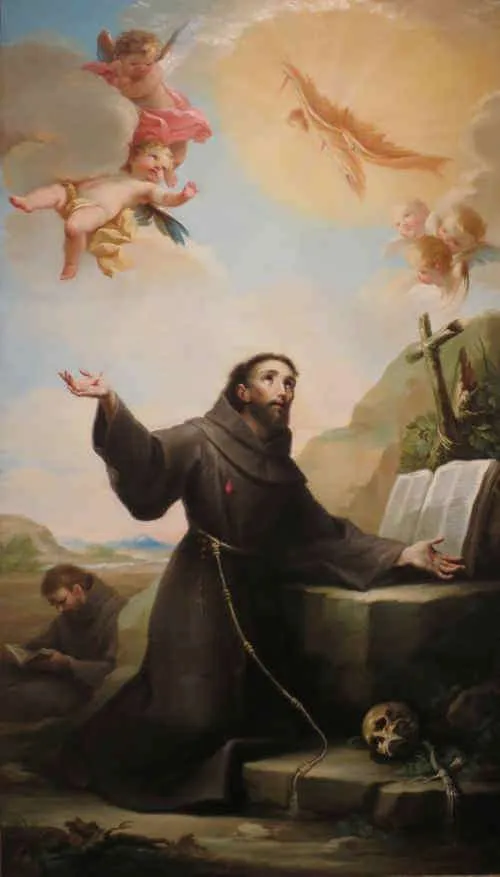
Saint Francis of Assisi

1182–1226; Patron Saint of animals, ecologists, families, lacemakers, merchants, needleworkers, peace, and zoos; Invoked against dying alone and fire; Canonized by Pope Gregory IX on July 16, 1228

Saint Francis of Assisi is perhaps the most known and loved saint within the Catholic Church. Though many flock to him because of his portrayal as one who loved animals and nature, he became one of the greatest saints in history for one simple reason: he was a true servant of the Most High God.

Francis of Assisi was most likely born in the year 1181 in the small town of Assisi, Italy, about 100 miles north of Rome. He was born into the merchant class, his father being a seller of fine silk. As a youth, Francis was known to be quite lively, often the center of attention among friends. As a teenager, he enjoyed parties and singing and was quite worldly.

His father wanted Francis to join him in the family business, which Francis did with disinterest. He was far more interested in his friends and in having a good time than he was in work. This caused tensions at home on a regular basis.

As a young adult, Francis had dreams of doing great things. However, the “great things” he dreamt of had much more to do with obtaining worldly honors than with honoring God. One of his chief desires was to become a great knight. His family also desired he become a knight so that their societal status would be elevated.

Around the year 1202, Francis’s dream of becoming a great knight began to move forward. He was fitted with fine armor, a sword, and a horse and sent into battle against the neighboring town of Perugia. Success in that battle would prepare him to one day become a Crusader in the pope’s army, hopefully earning him the dignity of a knight. But the battle of Perugia was short and ended in Francis’ capture and imprisonment. As Francis waited a year for his father to pay the ransom for his release, he suffered greatly with the other men who were imprisoned.

After his release, Francis spent months with a serious illness. Both his imprisonment and illness affected him greatly, and he began to reevaluate his life. Despite that, in 1205 he set off for another battle in the army of the Count of Brienne, once again well fitted with a horse, sword, and armor. Before he arrived, however, Francis had a vision that would change his life. In that vision, Francis heard a voice say to him, “Who can do more for you? The master or the servant? The rich man or poor man?” Francis quickly answered, “The rich master!” The voice then asked, “Then why do you leave the Lord for the servant and the God of infinite riches for the poor mortal?” This vision was enough for Francis to turn around and return to Assisi in search of God’s will.

Over the next year, Francis and his father regularly were at odds. Francis began to pray and seek God’s will for his life, while his father continued to insist that Francis become a knight or work in the family business. During that year, Francis grew in his love for the poor and even served the lepers at a nearby hospital. While praying one day in the dilapidated Church of San Damiano, Francis heard a voice from Heaven say to him, “Go, repair my house which, as you see, is falling completely to ruin.” With that, he began to physically repair that church, live in solitude, and pray continually.

The family conflict between Francis and his father came to a head in 1206 when Francis was twenty-five years old. He and his father formally parted ways in the presence of the Bishop of Assisi when Francis renounced his inheritance, choosing only God as his Father. Over the next three years, Francis began to live his new life of poverty, prayer, and service of God.

At first, most of the townspeople thought Francis was out of his mind, and they ridiculed him. But as time passed, Francis began to attract some followers. He and his followers spent much time praying, listening to the voice of God, serving the poor and lepers, and working with their hands to repair abandoned churches.

By the year 1209, Francis and his followers numbered twelve. They decided to write a new Rule for their common life and made a pilgrimage to Rome to get papal approval for their Rule. Once the pope verbally approved their Rule, Francis and his companions returned to Assisi and took up residence in a small church called the Portiuncula. From there, Brother Francis and his Friars Minor began their life of prayer and missionary preaching. Now, instead of rebuilding physical churches, they began to rebuild God’s Church, the spiritual Body of Christ.

Over the next ten years, the Order of Friars Minor grew from only twelve to about five thousand. They took up residence across Europe and began to have a powerful effect upon many people. Francis continued to preach and was also the instrument of countless miracles. In 1223, the pope approved the final and definitive Rule of the Friars Minor in writing, and Francis entered into the final years of his life.

In 1224, while on a forty-day retreat, Francis was gifted with the stigmata, the visible wounds of Christ in his hands, feet, and side. Those final two years were also marked with much suffering from various illnesses and the loss of his sight.

On October 4, 1226, after being unable to find a cure for his many illnesses, Saint Francis died surrounded by his brothers in Assisi at the Portiuncula where his life as a Friar Minor began. Just two years later, Pope Gregory IX canonized him as a saint, and his legacy continued to grow.

Saint Francis was unquestionably one of the greatest saints to ever live. The way he accomplished this greatness is worth studying and imitating. Though it is hard to imagine ourselves ever reaching the heights of sanctity that Saint Francis achieved, know that it is possible for us all. Saint Francis embraced the will of God with a radical abandonment and ongoing zeal. This resulted in his becoming one with Christ and doing great things for God and His Church in a very short period of time.

Source: https://mycatholic.life/saints/saints-of-the-liturgical-year/october-4–st-francis-of-assisi/

Saint Francis of Assisi Read More »

Matthew 21:42-43

The New Vineyard of Grace

Jesus said to them, “Did you never read in the Scriptures: The stone that the builders rejected has become the cornerstone; by the Lord has this been done, and it is wonderful in our eyes? Therefore, I say to you, the kingdom of God will be taken away from you and given to a people that will produce its fruit.”

Reflection:

The Parable of the Wicked Tenants is rich in Old Testament imagery. The image of the vineyard comes from the Prophet Isaiah (Isaiah 5:1–7) and represents the people of Israel. The landowner is God, who, from the time of Abraham, has lovingly and intentionally cultivated His people. The hedge, tower, and winepress symbolize God’s providential care, protection, and the structure He established for their spiritual growth, respectively.

The tenants are the religious elite of Israel who were entrusted with guiding the people in holiness. The servants sent by the landowner are the prophets—faithful messengers consistently rejected and mistreated. Finally, the son is Jesus Himself, sent by the Father as the culmination of His divine outreach.

The parable ends in tragedy with the son’s murder. Yet from that tragedy arises a new beginning: “The kingdom of God will be taken away from you and given to a people that will produce its fruit” (Matthew 21:43). Though Jesus was addressing the religious leaders of His time—the scribes, Pharisees, chief priests, Sadducees, and elders—His enduring promise of a new beginning speaks to us today.

We are invited to be part of the people to whom God now entrusts His vineyard, the Church. Today, the hedge, winepress, and tower represent the Sacraments, the teaching authority of the Church, Sacred Scripture, and the communion of the faithful. God continues to cultivate His vineyard with great care, expecting it to bear fruit through our lives of holiness, fidelity, charity, and truth. Each of us, as members of the Body of Christ, is called to receive this trust with gratitude and to labor diligently for the Kingdom, never forgetting the price paid by the Son who was cast out and killed for our redemption.

Sometimes, when we speak of “the Church,” we do so as if it were some distant institution. Our minds may turn immediately to the Vatican, the pope, or the local bishop. While these shepherds hold crucial and foundational roles within the vineyard, we need to understand the Church in a more encompassing way.

To use the image from today’s parable, the vineyard and the fruit it is meant to bear are not equated exclusively with the tenants, the servants, the son, or even the landowner. The vineyard itself represents the entire people of God. The fruit it produces is the grace-filled witness of lives transformed by faith. This includes all of us: clergy, religious, and laity alike. Every member of the Church is a laborer in the vineyard, called to work together, under the guidance of Christ, the true Son, and to offer to the Father a rich harvest of justice, mercy, and truth.

Reflect today on how to make this parable your personal calling. The Kingdom of God has been partly entrusted to you to be one who will labor for the salvation of souls—“people that will produce its fruit.” The work of evangelization is an ongoing and urgent mission. In what ways is God calling you to work in His Divine Vineyard? Is it through faithful prayer, by which the vines of grace are pruned and nourished? Is it through the work of harvesting, where you draw others to Christ by your words, your witness, and your works of love? Is it through quiet perseverance in suffering, offered in union with the Crucified One? However God calls you, do not delay. Receive His trust with humility, and labor with joy. The vineyard is His, but the fruit depends, in part, on you.

Source: https://catholic-daily-reflections.com/2026/10/03/the-new-vineyard-of-grace/

Matthew 21:42-43 Read More »

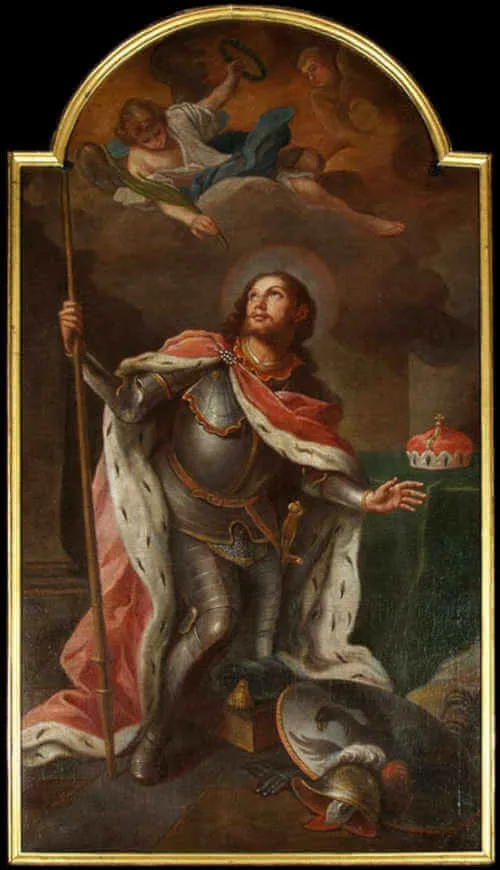
Saint Wenceslaus, Martyr

c. 907–929; Patron Saint of brewers, Czech Republic, Bohemia, and Slovakia; Pre-Congregation canonization

In the early ninth century, Germanic priests and missionaries began arriving in Great Moravia. These German-speaking priests celebrated the Liturgy exclusively in Latin and struggled to communicate the faith to the Slavic people in their native language. Consequently, Prince Rastislav of Moravia asked the Holy Roman Emperor to send Slavic missionaries. In response, two brothers raised by a Slavic mother, Saints Cyril and Methodius, were sent. To evangelize the Slavs, they created an alphabet for the previously unwritten Slavic language and translated the Latin Scriptures and liturgical texts into written Slavic. Among their converts were Duke Bořivoj I and his wife, Duchess Ludmila. Bořivoj and Ludmila were from neighboring Bohemia. After their baptism in Great Moravia, the couple introduced the Catholic faith to Bohemia. Upon Duke Bořivoj’s death, his son Vratislaus I assumed the role of Duke of Bohemia. Although Vratislaus was Catholic, his wife, Princess Drahomíra, was a pagan from a Slavic tribe. The couple bore at least two children: Wenceslaus and Boleslaus.

Wenceslaus, the saint we honor today, was born in Bohemia, present-day western Czech Republic, during a transitional period. Christian conversions caused tensions with those clinging to traditional pagan and Slavic practices. This division was palpable even within the duke’s household. Duchess Drahomíra, Wenceslaus’ mother, staunchly opposed Christianity, in contrast to her Christian mother-in-law, husband, and sons. Of them all, Ludmila was exceptionally devout and ensured that both her son and grandson, Wenceslaus, were nurtured in the Catholic faith.

Upon Duke Vratislaus’ death, thirteen-year-old Wenceslaus became duke. Given his youth, he needed guidance until he was old enough to govern on his own. His pious grandmother, Ludmila, eagerly undertook this role, persistently encouraging her grandson to bolster the Catholic faith, much to Drahomíra’s chagrin. According to one legend, within a few years of Wenceslaus’ ascension, Drahomíra clandestinely orchestrated the assassination of her mother-in-law, Ludmila, to curtail her influence over Wenceslaus’ religious beliefs. Ludmila was reportedly strangled with a scarf at Tetín Castle. Shortly thereafter, she was canonized, by popular demand of the people.

With Ludmila eliminated, Drahomíra initiated a persecution of the Catholic faith. Catholics were ousted from public positions, churches were shut, and Catholic teachings prohibited. However, this oppression was short-lived. As Wenceslaus matured, Catholic nobles pressed him to exert control and counter his mother’s directives. Heartbroken by his mother’s actions towards his grandmother, Wenceslaus still accorded her respect, but he began to dismantle her anti-Catholic mandates, ultimately banishing her.

Duke Wenceslaus was a profoundly devout Catholic. He yearned for the entirety of Bohemia to embrace Christianity and sought to fulfill this mission by fervent prayers. Diligent in his daily duties, he would frequently devote entire nights to prayer before the Blessed Sacrament. He practiced regular penances, beautified the church, and took joy in preparing bread for the Mass, which he attended daily.

Early Bohemian biographers note an episode in which a neighboring prince aimed to annex Bohemia to obliterate the Catholic faith. Passionate about defending the faith, Wenceslaus led his army to confront the prince. As they clashed, Wenceslaus proposed a duel, with the victor ruling Bohemia. The prince consented, but as they charged, Wenceslaus was shielded by two enormous angels, sending fear into the prince and prompting him to immediately repent.

Throughout his rule, Wenceslaus invited numerous Germanic priests into Bohemia. Although Saints Cyril and Methodius had introduced the liturgy in Slavic, Wenceslaus favored Latin, encouraging its revival and widespread adoption. This preference impacted Bohemia’s liturgical customs, with the Latin rite prevailing over the Eastern rites of the Byzantine Empire.

Wenceslaus’ reign was tragically short. In his twenties, his mother, who preferred power to maternal affection, orchestrated his assassination, designating her younger son as the executioner. Boleslaus invited Wenceslaus to a meal and then slew his own brother. Wenceslaus’ last words are recorded as, “May God forgive you, brother.” Shortly after, Wenceslaus was venerated as a martyr and saint, inspiring biographies and becoming a beacon of virtue for future monarchs. Though Wenceslaus died as a duke, Holy Roman Emperor Otto I posthumously crowned him king, earning him the title “Good King Wenceslas.” Moved by the admiration for Wenceslaus and the miracles attributed to his intercession, his assassin-brother Boleslaus the Cruel sought penance. No records indicate Drahomíra’s remorse.

Saint Wenceslaus epitomizes the supremacy of divine love over earthly allurements. His life, marked by devout prayer, resolute leadership, and boundless compassion—even towards adversaries—attests to the primacy of God’s love over the worldly pursuits of power, prestige, or wealth. He serves as an exemplary figure for both leaders and followers. Allow him to inspire you today so that you will make the Gospel the central focus of your life.

Source: https://mycatholic.life/saints/saints-of-the-liturgical-year/september-28–st-wenceslas-martyr/

Saint Wenceslaus, Martyr Read More »

Luke 10:17-20

Spiritual Warfare and Heavenly Glory

The seventy-two disciples returned rejoicing and said to Jesus, “Lord, even the demons are subject to us because of your name.” Jesus said, “I have observed Satan fall like lightning from the sky. Behold, I have given you the power ‘to tread upon serpents’ and scorpions and upon the full force of the enemy and nothing will harm you. Nevertheless, do not rejoice because the spirits are subject to you, but rejoice because your names are written in heaven.”

Reflection:

The seventy-two disciples Jesus sent out on a mission symbolize the whole Church. Though the Twelve Apostles and their apostolic successors, the bishops, hold a unique role in providing the foundation of the Church, the seventy-two represent all disciples who, after choosing to follow Christ in word and deed, are then sent forth to witness to the Gospel and exercise Christ’s authority.

It’s interesting that when the seventy-two returned, their only recorded reaction was, “Lord, even the demons are subject to us because of your name.” Why is that? Why not say, “Lord, many hearts were touched, and many came to believe in You”? Perhaps for a few reasons.

First, given the mixture of many pagan religious practices found in first-century Israel, it’s possible that demonic possession was far more prevalent and visible than it is today. Or perhaps satan is just as active now, but more subtle and deceptive in appearance. It’s also possible that mental illness was often interpreted as demonic possession.

Another reason the seventy-two may have focused on the authority over demons they experienced on mission is because, then as now, many people find evil and demonic activity strangely fascinating. Evil and satanic manifestations can create a dark allure in people’s minds.

Whatever the reason for their fascination, there is something good in the joy they experienced. Demons and demonic possession are jarring and intimidating. Therefore, when these disciples encountered demons directly and then successfully commanded them to be silent or to depart from a possessed person, they were rightly relieved and overjoyed. Christ had given them authority over evil, and the demons were overpowered by a simple command spoken in Jesus’ name.

Jesus acknowledges the value of this spiritual warfare and affirms that it was by His authority that the seventy-two prevailed. However, He also places their mission and its fruits in proper order. Driving out demons is not an end in itself. It may be necessary at times, but it is not the highest good. The salvation of souls, which gives God eternal glory, is the highest good. Therefore, Jesus says, “Nevertheless, do not rejoice because the spirits are subject to you, but rejoice because your names are written in heaven.”

These same principles apply to us. Though we might not encounter demons visibly possessing people and being cast out through an exorcism, we do see the evil one at work in countless ways and are often more fascinated by that evil than by God’s grace quietly building up His Kingdom. For example, consider your interest in the latest headlines. If two stories were covered—one a shocking display of evil, the other an inspiring account of God’s grace at work—which would catch most people’s attention? Likely the shocking and demonic one. Though like the seventy-two, we must be attentive to the demonic forces at work and do our part to overcome them, we must also be careful not to make the fight against evil our primary focus. Rather, combating evil is only a means to a far greater end: the sanctity of every soul and the upbuilding of the Kingdom of God.

Reflect today on your own focus. Are you more fascinated by the darkness of evil or by the light of grace? Are you more intrigued by dramatic spiritual battles or by the quiet workings of sanctity? Rejoice above all that your name, by God’s grace, is written in heaven, and make this the ultimate goal of all you do by God’s grace.

Source: https://catholic-daily-reflections.com/2026/10/02/spiritual-warfare-and-heavenly-glory/

Luke 10:17-20 Read More »

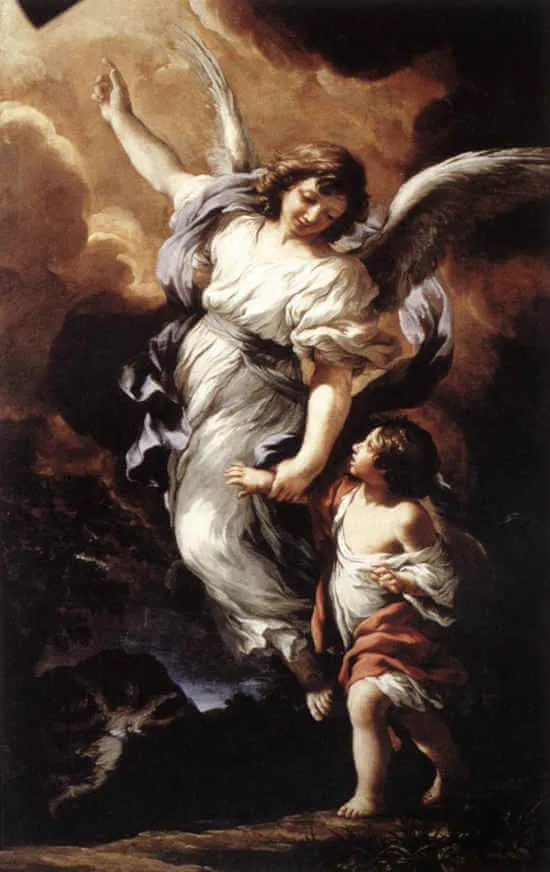
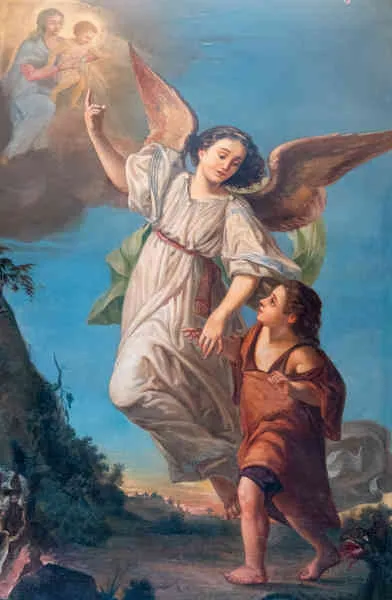
Guardian Angels

“See that you do not despise one of these little ones, for I say to you that their angels in heaven always look upon the face of my heavenly Father” (Matthew 18:10). Jesus speaks these words immediately before He teaches the Parable of the Lost Sheep that shows Jesus’ deep love for each and every person, for each of the “little ones.” Not only does He seek out the lost and straying sheep, He also gives them their own guardian angels, who always look upon the face of God, and whose sole task is to care for us, to get us to Heaven. It is these angelic beings whom we honor today.

The fact that every person is assigned a personal guardian angel is deeply rooted not only in Scripture but also in the writings of the saints and the teachings of the Church. In the Psalms we read, “For he commands his angels with regard to you, to guard you wherever you go. With their hands they shall support you, lest you strike your foot against a stone” (Psalm 91:11–12). Saint Jerome, in commenting on the above-mentioned passage from the Gospel of Matthew, says, “The worth of souls is so great that from birth each one has an angel assigned to him for his protection.” Saint Thomas Aquinas says, “Each man has an angel guardian appointed to him. This rests upon the fact that the guardianship of angels belongs to the execution of Divine providence concerning men” (Summa Theologiae 1.113.2). More recently, Pope Saint John Paul II taught, in a General Audience on August 6, 1986, “God has entrusted to the angels a ministry in favor of people. Therefore the Church confesses her faith in the guardian angels, venerating them in the liturgy with an appropriate feast and recommending recourse to their protection by frequent prayer, as in the invocation “Angel of God.” Finally, the Catechism of the Catholic Church, quoting Saint Basil, says, “Beside each believer stands an angel as protector and shepherd leading him to life” (CCC #336).

Though the reality of guardian angels is often spoken of to children as a comfort to them when they face fears, the guardian angels are for all of us, and we ought not forget about our own. Angels are not only intercessors, they are mediators. This means that God entrusts them with His divine power, to act in His name and on His behalf, to deliver His grace, reveal His Truth, direct us down the right path, and protect us from evil. Though God is fully capable of distributing His grace Himself, it is His will that all He bestows upon us come to us through mediators who are instruments, cooperating with His divine plan.

The memorial that we celebrate today did not become a universal feast until the latter part of the seventeenth century, when Pope Clement X placed it on the Roman Calendar. Pope Leo XIII elevated the feast and emphasized its importance in the late nineteenth century. Around the time he did so, he also composed the “Saint Michael the Archangel” prayer and mandated that it be prayed at the end of every Mass. The feast of the Archangels is celebrated September 29, and a few days later, the memorial for all the guardian angels. These two feasts emphasize the fact that God uses some angels for specific purposes that affect all people and that He uses guardian angels to care for each of our specific needs.

Based upon the Old and New Testaments, the teachings of early Church Fathers, and the detailed teaching of Saint Thomas Aquinas, the Church generally accepts that there is a hierarchy of angels consisting of nine choirs that are further divided into three triads. The first triad consists of the Seraphim, Cherubim, and Thrones. Their duty is exclusively the service of God, worshiping Him continuously. The second triad consists of the Dominions, Virtues, and Powers. These three choirs are tasked with the governance of the created Universe. The third triad consists of the Principalities, Archangels, and Angels. These beings are closest to humanity and act as mediators between God and man. Thus, though Saint Thomas defined the guardian angels as the lowest of the choirs of angels, this should only be understood to mean that their direct concern is the care of humanity. Nonetheless, they continually behold the Beatific Vision.

Regarding the function of the guardian angels, Saint Thomas Aquinas gives the most detail (See Summa Theologiae 1.113). As mentioned, he teaches that every person receives an angel at birth. This means that guardian angels are not tied to baptism but to human activity in this world, specifically human activity that begins at birth. These angels are not recycled, so to speak, but are assigned to one person and one person alone. The guardian angels can act upon our senses and imaginations, inspiring us one way or another. They can put ideas before our minds to direct us toward God’s will, but they cannot control our wills. By working upon our senses, they can cause us to feel what is right or wrong and urge us to make the right choices. They act contrary to the fallen angels, or demons, who tempt us through false reasoning and base sensate delights. Finally, in Heaven, the guardian angel’s role of leading us to salvation will be complete. Saint Thomas believed that even in Heaven they will have the role of communicating with us and will continue to enlighten us with God’s never-ending and deepening Truth.

As we honor the celestial hosts of the guardian angels, ponder your own angel today. Saint Ignatius of Loyola, in the Spiritual Exercises, gave us a detailed map for how they communicate with us. Consider reading his wisdom. In Heaven, we will enjoy an eternal face-to-face relationship with our angels. That relationship will be perfectly steeped in the love of God, and our union with them will be unbreakable. While on earth, we often pay little attention to our angels, but they are forever attentive to us. Though we might not always speak prayerfully to our intercessors and mediators, try to do so. Our angels daily communicate to us. Do you listen? Do you hear? Work to discern your angel’s actions in your life, so that this angelic mission can be better fulfilled. Have confidence that you have a mediator who stands before God and does nothing other than plead on your behalf, continuously working to bring you to eternal salvation.

Source: https://mycatholic.life/saints/saints-of-the-liturgical-year/guardian-angels/

Guardian Angels Read More »

Matthew 18:10

The Angel at Your Side

“See that you do not despise one of these little ones, for I say to you that their angels in heaven always look upon the face of my heavenly Father.”

Reflection:

Angels fascinate both young and old. Countless books and stories have been written and shared about encounters with these heavenly beings. If you were to behold one of God’s angels, you would undoubtedly be filled with awe, marveling at the angel’s beauty, splendor, and power.

Today, the Church honors those members of the Celestial Hierarchy who are most intimately involved in our daily lives: our Guardian Angels. The Gospel for this Memorial offers us insight into both their nature and their greatness.

The passage begins with a worldly question posed by Jesus’ disciples: “Who is the greatest in the Kingdom of Heaven?” Their question reveals a lingering attachment to status and honor, reflective of human preoccupations both then and now. In response, Jesus performs a surprising gesture—He places a child in their midst.

In the first-century Jewish context, children held little societal importance. They had no legal authority, no public voice, and no influence. Therefore, Jesus’ action is radical. By presenting a child as the model of greatness, He overturns conventional standards and introduces new criteria: humility, simplicity, dependence, weakness, and childlike trust in God.

Jesus then offers a deeper reason why a child is truly great: “Their angels in heaven always look upon the face of my heavenly Father.” These angels are the Guardian Angels. If each child is assigned such a noble guardian who stands perpetually in the presence of God, then the child, too, shares in that dignity. In fact, so does every person, for God gifts each one of us with a Guardian Angel.

From this perspective, human greatness is not determined by accomplishments or public acclaim but by the love and care God lavishes upon each soul. The very fact that God entrusts every person with an angel reveals each one’s intrinsic worth and sacred dignity. The gift of a Guardian Angel means that each one of us—whether a powerful ruler or a hidden soul in humble circumstances—has value in God’s eyes.

This first form of greatness arises from our very nature—who we are in God’s sight. Such recognition should be enough for us to honor one another and treat every person with reverence. If the angels of Heaven love and serve those around us—our families, neighbors, even strangers—then we, too, must strive to love and serve them with the same devotion and love.

There is also a second form of greatness worth reflecting on: the greatness that comes from freely cooperating with the will of God. When we submit ourselves to His providence and actively embrace the mission our Guardian Angels are tasked with—to guide, protect, and lead us to holiness—God’s grace abounds in our lives. This does not make us intrinsically “greater” than others, but it allows the greatness of God to shine more brightly through us. In this way, His glory is magnified in and through our cooperation with His will.

Reflect today on the quiet presence of your Guardian Angel. Consider the immense dignity you possess in God’s eyes, a dignity confirmed by the fact that an angel has been appointed to walk with you through life. Then reflect also on the dignity of every person you encounter each day. Even those who sin and stray from God’s will have been entrusted to an angel’s care. We must strive to love and serve them as their angels do. As you ponder this awe-inspiring gift, allow this truth to fill you with peace, humility, and a renewed resolve to follow God’s will and to help others do the same, so that His greatness may radiate through your life.

Source: https://catholic-daily-reflections.com/2026/10/01/the-angel-at-your-side/

Matthew 18:10 Read More »

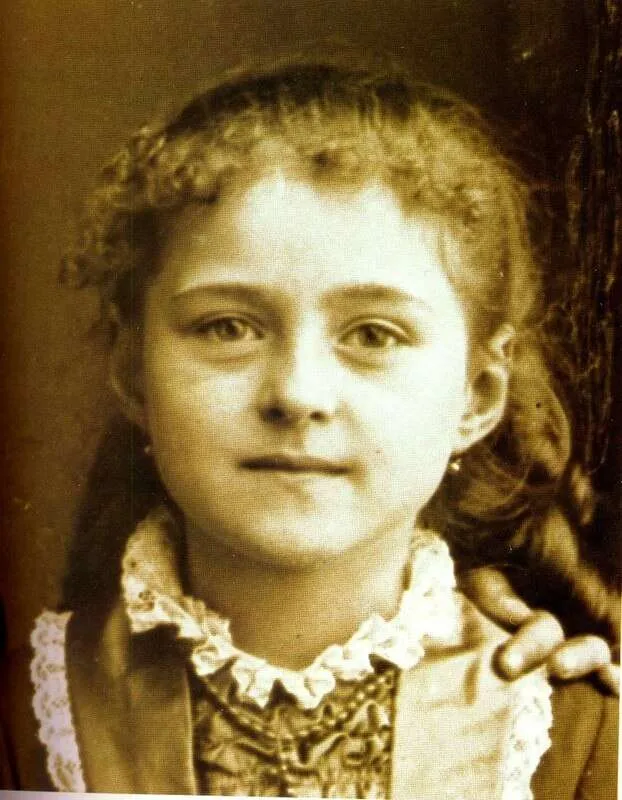
Saint Thérèse of the Child Jesus, Virgin and Doctor

1873–1897; Patron Saint of foreign missions and missionaries, AIDS patients, air crews, florists, flower growers, and sick people; Invoked against illness, tuberculosis, and loss of parents; Canonized by Pope Pius XI on May 17, 1925

For more than a century, Saint Thérèse of Lisieux, also known as “The Little Flower,” has captivated countless minds and hearts. Her simple and pure heart burned with a deep love for our Lord, and that love overflowed into the lives of many. She daily inspired those who knew her, and she continues to inspire those who read her story.

Marie Françoise-Thérèse Martin was born on January 2, 1873, in Rue Saint-Blaise, Alençon, France, to Marie-Azélie Guérin (Zélie), and Louis Martin, a jeweler and watchmaker. Her mother, who often called Thérèse her “little angel,” died from breast cancer only a few months before Thérèse’s fifth birthday. But those early years with her mother had such an impact upon Thérèse that, in many ways, her mother remained with her, in her heart and mind, throughout her life. The love that mother and daughter shared was eternal.

Her father, Louis Martin, who called Thérèse his “little queen,” daily manifested his profound love for her, and she looked up to him as her “king.” As a child, Thérèse would spend hours with her father as he worked in the garden, desiring to be near him as often as she could. She would regularly accompany him on daily walks that always included a visit to the Blessed Sacrament at the nearby convent in Lisieux. She loved being in his presence and found the satisfaction of the love of God in his fatherly embrace. At age sixty-six, Louis suffered from two strokes, resulting in paralysis. He spent the next three years in a hospital and the final two years of his life at home in the care of his family. His daughters Céline and Léonie were his primary caregivers at home until June 24, 1893, when Léonie entered the Visitation Convent in Caen in a second attempt at religious life. Céline faithfully cared for their father during the last year of his life with the help of their uncle, a maid, and a male assistant until his death on July 29, 1894.

Thérèse had four living sisters and four siblings who died at an early age (three as infants and Hélène at age five). Her living sisters all entered religious life, three of them entering the same Carmelite convent in Lisieux as Thérèse. Marie became a Carmelite in Lisieux, taking the name Sister Marie of the Sacred Heart. Pauline became Mother Agnes of Jesus in the Lisieux Carmel. Léonie became Sister Françoise-Thérèse, Visitandine at Caen. Her life of saintly virtue is currently under study for possible canonization. Céline also became a Carmelite in Lisieux, taking the name Sister Geneviève of the Holy Face.

The relationship that Thérèse had with her sisters was both typical and unique. The girls played together and sometimes fought with one another. Yet, the depth of their love and affection for one another transfigured what was otherwise a normal sibling relationship. Thérèse adored her sisters and loved being with them, and her love was reciprocated.

Thérèse’s entire family shared tender, affectionate, and unwavering love for one another. Their home was a true “school of love,” and the lessons of love were learned and lived in their home each and every day. In many ways, Thérèse learned about the love of God first and foremost through the love she experienced within her family.

Just before her fifteenth birthday, after overcoming many obstacles, Thérèse received permission from the Bishop of Bayeux to be received into the Carmelite convent. She formally entered as a postulant on April 9, 1888, at the age of fifteen. She embraced religious life and lived it with fervor and devotion, making her temporary vows on January 10, 1889, and her final vows on September 24, 1890. For the next seven years, Sister Thérèse lived the hidden and holy life of a Carmelite nun.

Just three years before she was to die, Sister Thérèse began to write her autobiography when she was twenty-one years old, under obedience to her sister Pauline who had recently been elected as Mother Superior, Mother Agnes of Jesus. This autobiography, The Story of a Soul, captures the beauty and profundity of her family life, offers beautiful insights into her vocation as a Carmelite nun, and reveals how devoted she was to Jesus, longing to be with Him forever in Heaven, even from the earliest moments of her childhood.

The first manuscript in The Story of a Soul includes Sister Thérèse’s childhood memories, as well as those from her first years as a religious sister. At age twenty-three, Sister Thérèse contracted tuberculosis and spent more than a year suffering greatly. It was during this time that Sister Thérèse added two more manuscripts to her autobiography. One was written for her sister Marie, Sister Marie of the Sacred Heart, who desired to hear more about Sister Thérèse’s spirituality. The final manuscript detailed her life as a religious sister and was written at the request of Mother Agnes of Jesus. Sister Thérèse wrote the final manuscript during the last year of her life after she contracted tuberculosis. She never finished this manuscript due to her diminishing health, but her sister, Sister Agnes of Jesus, kept a detailed notebook of Sister Thérèse’s last months, which was printed in a separate book called, Her Last Conversations. Also available in print is Letters of Sister Thérèse of Lisieux, much of which was first published under the title, General Correspondence. Lastly, Sister Thérèse was an avid writer of poetry, prayers, and plays, many of which are published in various formats.

Sister Thérèse died on September 30, 1897, surrounded by three of the Martin sisters as well as all of her religious sisters in the Carmelite convent of Lisieux. Her final words were, “Oh!… I love Him!… My God, I…love…Thee!”

As we honor this saint who has captivated the hearts and minds of so many, ponder the importance of family life. Some families are broken and divided; others are graced as schools of love. Saint Thérèse was blessed to be raised in a family that formed her deeply in the love of God and others. She was widely unknown outside of her family and religious community when she died, but God shared her precious soul with the world through her detailed autobiography and numerous letters. Allow her soul to touch yours by getting to know her through her writings. Seek her intercession so that she can fulfill her promise that her “Heaven will be spent doing good on earth.”

Source: https://mycatholic.life/saints/saints-of-the-liturgical-year/october-1—st-therese-of-lisieux-religious-and-doctor-of-the-church/

Saint Thérèse of the Child Jesus, Virgin and Doctor Read More »

Luke 10:1-3

Testifying to the Truth

Jesus appointed seventy-two other disciples whom he sent ahead of him in pairs to every town and place he intended to visit. He said to them, “The harvest is abundant but the laborers are few; so ask the master of the harvest to send out laborers for his harvest. Go on your way; behold, I am sending you like lambs among wolves.”

Reflection:

One of the clearest safeguards for ensuring the authenticity and integrity of Christian duty is that we proclaim the Gospel in communion with others. The Christian disciple is never a lone ranger. We do not carry the mission of Christ by private inspiration or isolated insight, but in the context of the Church. The Gospel we preach is not our own. It originates in God, is handed on through Sacred Tradition, and is entrusted to the Church as a whole.

When Jesus sent out the seventy-two disciples, He sent them in pairs. This had deep theological and scriptural significance. According to Mosaic Law, the testimony of two or three witnesses was necessary to establish truth (cf. Deuteronomy 19:15). This standard was well known in Jewish culture and was traditionally applied to legal cases, but Jesus elevated it to strengthen the credibility of evangelization. Two disciples witnessing together to the truth of the Gospel would speak with a kind of moral and spiritual authority that mirrored this ancient tradition. Moreover, when we speak in union with the Church and act in concert with other faithful witnesses, our united work of evangelization becomes a harmonious echo of God’s Word rather than a solitary voice subject to distortion.

Even our Lord Himself respected this principle. When the Pharisees challenged Jesus for speaking on His own authority, He responded, “Even if I do testify on my own behalf, my testimony can be verified… I testify on my behalf and so does the Father who sent me” (cf. John 8:14, 18). Jesus makes clear that He does not speak in isolation; the Father testifies on His behalf. Thus, even the Son, in His earthly mission, models the humility of cooperative testimony.

Consider your own duty to testify to the truth of the Gospel. The Twelve whom Jesus had earlier sent represent the bishops of the Church, who form the foundation of Christ’s mission through their participation in apostolic succession. In today’s Gospel, the seventy-two represent every disciple of Christ, including each of us today. Discipleship is much more than following Jesus through a personal devotion to Him and His teachings. It also includes being sent by Him. Once we receive the Gospel and interiorize it through living faith and prayer, we will then be sent by Christ to go forth and testify to the truth we have received. This is not an option; it’s a necessity.

How well do you do this? Sometimes we can fall into the trap of thinking that our faith is something personal that we keep to ourselves. But it is not. It must be shared, and if we are disciples, then we are also evangelists.

Being an evangelist does not necessarily mean we enter into a full-time apostolate by which we preach and teach as we travel from town to town. For most, evangelization takes place in the ordinary rhythms of life—in our families, workplaces, neighborhoods, and social settings. It means living our faith with authenticity, speaking the truth with charity, and radiating Christ through our actions as well as our words. It means being willing to witness to the Gospel even when it is uncomfortable, unpopular, or rejected, and doing so in union with others in the faith.

Reflect today on whether you are testifying to the truth in the way God is asking of you. Have you embraced both the privilege and the responsibility of being sent? Resolve to go forth with the courage of a lamb in the midst of wolves, never alone, but always in communion with Christ and His Church, bearing witness to the Kingdom that is at hand. Doing so will not only bring blessings to others, it will also deepen your faith and communion with God.

Source: https://catholic-daily-reflections.com/2026/09/30/testifying-to-the-truth/

Luke 10:1-3 Read More »