September 2026

Luke 4:38-39

The Power of His Word

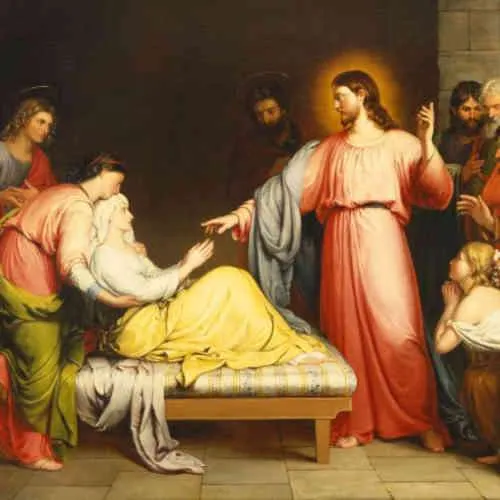
After Jesus left the synagogue, he entered the house of Simon. Simon’s mother-in-law was afflicted with a severe fever, and they interceded with him about her. He stood over her, rebuked the fever, and it left her. She got up immediately and waited on them.

Reflection:

In today’s Gospel, we encounter the first mention of Simon—whose name Jesus would later change to Peter—in Luke’s account. Simon was likely present in the synagogue and witnessed Jesus cast out a demon from a possessed man. With a simple command, “Be quiet! Come out of him!”, Jesus revealed His divine authority. The people were astonished and exclaimed, “What is there about his word? For with authority and power he commands the unclean spirits, and they come out” (Luke 4:35–36).

Having seen His authority firsthand, Simon presumably spoke to Jesus about his mother-in-law, who was suffering from a severe fever. It is striking to imagine the moment of Simon’s first personal encounter with the Lord. Though Jesus, in His divine foresight, knew what Simon would one day become—the first pope entrusted with the spiritual authority of Heaven—Simon himself could not have foreseen how radically his life was about to change.

Upon entering Simon’s home, Jesus rebuked the fever. The Greek word used here, epitimaō, is the same word used in the previous passage when Jesus rebuked the demon. This deliberate parallel reveals that both the spiritual and physical realms are subject to Jesus’ command. What He rebuked were real evils and disorders: demonic possession as a violation of the soul and the fever as a natural affliction of the body.

Later in this Gospel passage, Jesus continues healing many who are sick and casting out demons. Once again, He rebukes the demons, silencing them and forbidding them to speak. Though they cry out, “You are the Son of God,” Jesus does not permit them to bear witness to Him. He has no need of demons to proclaim His identity. His revelation will come in His time, by His own design, especially through the Cross and Resurrection.

Jesus’ rebukes, whether uttered by a word, expressed through a gesture, or conveyed by His mere presence, are divine actions against evil. They are not expressions of wishful hope, but authoritative, efficacious commands. What He speaks comes to be. His word is not just powerful; it accomplishes what it declares.

Understanding this is foundational to our life of faith and our spiritual journey. When we turn to Christ with trust, we must believe that His word has the power to heal, to free, and to transform. He does not speak in vain. His authority extends to every dimension of our lives, body, soul, and spirit, and He desires to restore all that has been wounded by sin, suffering, or disorder.

One of the most tangible and powerful ways this takes place today is through the words of absolution spoken by the priest in the Sacrament of Reconciliation, a spiritual authority first given to Simon Peter and passed down through apostolic succession. The words of absolution are Christ’s words, words that rebuke sin and its effects, restoring the soul to grace and peace. They are divine actions that accomplish what they signify.

Though the words of absolution may be the clearest example, every Sacrament—Baptism, Confirmation, the Eucharist, Anointing of the Sick, Holy Orders, and Matrimony—conveys God’s grace and power through the efficacious word and action of Christ.

Reflect today on your own trust in the power of Jesus’ word. Do you believe He can rebuke the disorders in your life with divine authority? Do you turn to Him with confidence in the Sacraments, knowing that what He speaks, He accomplishes? Surrender all that afflicts you to the power of His Word, and allow Him to restore you to grace, relying especially on the sacramental authority given to Simon Peter and exercised by the priests who have followed after.

Source: https://catholic-daily-reflections.com/2026/09/01/the-power-of-his-word/
Luke 4:38-39 Read More »

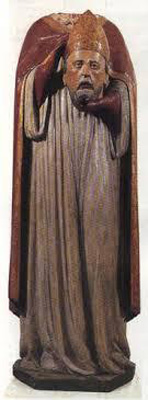
Saint Regulus

Profile

Regulus was an evangelizing archbishop in North Africa. He was exiled with Saint Cerbonius of Populonia and some other Christians to Italy in the persecutions of Arian Vandals. The group settled in the area of Populonia and Piombino, and Regulus lived as a holy and miracle working hermit. He was martyred in the persecutions of Totila of the Ostrogoths.

Born

North Africa

Died

  • beheaded c.545 in the area of Piombino, Italy
  • legend says that Regulus’ body picked up the severed head and walked about 300 yards; where he stopped, the area Christians buried him and built a church dedicated to him
  • relics enshrined in the cathedral of San Martino in Lucca, Italy

Canonized

Pre-Congregation

Patronage

  • in Italy
    – Montaione
    – San Regolo, Gaiole in Chianti
    – Vagli Sotto
    – Metropolitan Chapter of the Cathedral of Saint Martin in Lucca

Source: https://catholicsaints.info/saint-regulus/

Saint Regulus Read More »

Luke 4:33-35

The Holy One of God

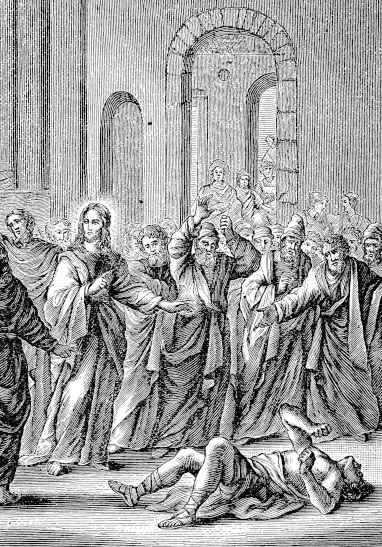
In the synagogue, there was a man with the spirit of an unclean demon, and he cried out in a loud voice, “What have you to do with us, Jesus of Nazareth? Have you come to destroy us? I know who you are—the Holy One of God!” Jesus rebuked him and said, “Be quiet! Come out of him!” Then the demon threw the man down in front of them and came out of him without doing him any harm.

Reflection:

Yesterday, we began reading from the Gospel of Luke in our weekday liturgies, and we will continue to do so until the season of Advent. Luke’s Gospel was written especially for Gentile converts—those unfamiliar with Jewish customs—presenting Jesus not only as the fulfillment of Israel’s hopes but also as the Savior of all humanity. Unlike Matthew, who highlights Christ’s fulfillment of Old Testament prophecy, Luke reveals a broader vision: a universal Savior who brings healing, mercy, and salvation to the poor, the outcast, and the sinner.

In today’s passage, that universal mission is subtly foreshadowed through Jesus’ divine authority. Though the setting is a Jewish synagogue in Capernaum, His actions speak to a power not confined to time, place, or people. With a simple word, Jesus rebukes the demon, silences its protest, and frees the afflicted man. The astonishment of the crowd—“What is there about his word?”—captures the essence of the moment: Here is One whose authority reaches even into the unseen spiritual world and commands it.

Though He ministers among His own people, Jesus is not merely a teacher of the Law or a local prophet. His authority is absolute, His identity divine. The demon’s cry—“I know who you are, the Holy One of God!”—offers a strange testimony: Even the spiritual forces of darkness recognize and submit to Him. This is not just a healing; it is a confrontation between the kingdom of God and the powers of evil. And it is only the beginning.

Luke includes this scene early in his Gospel to show that Jesus’ mission is one of liberation—liberation from sin, bondage, and every form of darkness. The fact that this miracle occurs in a synagogue reminds us that no place, however sacred, is immune to the presence of evil. But more importantly, it reminds us that no evil is immune to the authority of Christ.

It is also helpful to recall the broader context. This event comes shortly after Jesus’ baptism, His forty days in the desert, and His rejection in Nazareth. That rejection led Him to Capernaum, a humble fishing village that would become the center of His Galilean ministry. It is here that He will call Peter, Andrew, James, John, and Matthew—men who will carry His Gospel to the ends of the earth. Thus, what begins in a small synagogue soon echoes to the nations.

Reflect today on the universal scope of Luke’s Gospel, which we will hear over the coming months. Though Jesus begins within Israel, His mission reaches every soul. By beginning His ministry with a confrontation against evil, Jesus reveals that He has come not only to teach but to conquer—to break the chains of darkness and bring divine healing to the world. His Word still speaks with authority. May we listen, believe, and be set free from the evil one and all his demonic powers, so that we may help proclaim Christ’s Kingdom to the ends of the earth in our own unique ways.

Source: https://catholic-daily-reflections.com/2026/08/31/the-holy-one-of-god/

Luke 4:33-35 Read More »