September 2026

Twenty-third Sunday in Ordinary Time

First Reading Ezekiel 33:7-9

Thus says the LORD:
You, son of man, I have appointed watchman for the house of Israel;
when you hear me say anything, you shall warn them for me.
If I tell the wicked, “O wicked one, you shall surely die, “
and you do not speak out to dissuade the wicked from his way,
the wicked shall die for his guilt,
but I will hold you responsible for his death.
But if you warn the wicked,
trying to turn him from his way,
and he refuses to turn from his way,
he shall die for his guilt,
but you shall save yourself.

Responsorial Psalm Psalms 95:1-2, 6-7, 8-9

R. (8) If today you hear his voice, harden not your hearts.
Come, let us sing joyfully to the LORD;
let us acclaim the rock of our salvation.
Let us come into his presence with thanksgiving;
let us joyfully sing psalms to him.
R. If today you hear his voice, harden not your hearts.
Come, let us bow down in worship;
let us kneel before the LORD who made us.
For he is our God,
and we are the people he shepherds, the flock he guides.
R. If today you hear his voice, harden not your hearts.
Oh, that today you would hear his voice:
“Harden not your hearts as at Meribah,
as in the day of Massah in the desert,
where your fathers tempted me;
they tested me though they had seen my works.”
R. If today you hear his voice, harden not your hearts.

Second Reading Romans 13:8-10

Brothers and sisters:
Owe nothing to anyone, except to love one another;
for the one who loves another has fulfilled the law.
The commandments, “You shall not commit adultery;
you shall not kill; you shall not steal; you shall not covet, “
and whatever other commandment there may be,
are summed up in this saying, namely,
“You shall love your neighbor as yourself.”
Love does no evil to the neighbor;
hence, love is the fulfillment of the law.

Alleluia 2 Corinthians 5:19

R. Alleluia, alleluia.
God was reconciling the world to himself in Christ
and entrusting to us the message of reconciliation.
R. Alleluia, alleluia.

Gospel Matthew 18:15-20

Jesus said to his disciples:
“If your brother sins against you,
go and tell him his fault between you and him alone. 
If he listens to you, you have won over your brother.
If he does not listen,
take one or two others along with you,
so that ‘every fact may be established
on the testimony of two or three witnesses.’
If he refuses to listen to them, tell the church. 
If he refuses to listen even to the church,
then treat him as you would a Gentile or a tax collector.
Amen, I say to you,
whatever you bind on earth shall be bound in heaven,
and whatever you loose on earth shall be loosed in heaven.
Again, amen, I say to you,
if two of you agree on earth
about anything for which they are to pray,
it shall be granted to them by my heavenly Father. 
For where two or three are gathered together in my name,
there am I in the midst of them.”

Source: https://bible.usccb.org/bible/readings/090626.cfm

Twenty-third Sunday in Ordinary Time Read More »

Saint Eleutherius the Abbot

Profile

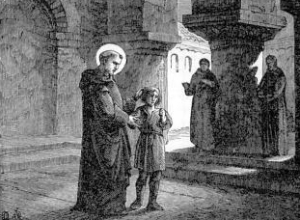
Eleutherius was an abbot of Saint Mark’s Abbey, Spoleto, Italy. He was also a monk in Rome, Italy under the direction of Saint Gregory the Great who wrote about him and described him as a miracle worker and exorcist.

Died

  • c.585 at the monastery of Saint Andrew in Rome, Italy
  • relics later translated to Spoleto, Italy

Canonized

Pre-Congregation

Source: https://catholicsaints.info/saint-eleutherius-the-abbot/

Saint Eleutherius the Abbot Read More »

Matthew 18:15

The Joy of Reconciliation

Jesus said to his disciples: “If your brother sins against you, go and tell him his fault between you and him alone. If he listens to you, you have won over your brother.”

Reflection:

When someone sins against us, especially in a grievous way, anger and condemnation can quickly arise as strong temptations. Our natural sense of justice often takes over, and we may find ourselves rationalizing a response rooted in judgment rather than compassion. In today’s Gospel, however, Jesus offers the much better path—to seek reconciliation, not division. The ultimate goal is to win the sinner back to God and restore the bond of communion.

Sin touches every human relationship, with the sole exception of the one shared between Jesus and His Blessed Mother. Their mutual and perfect charity rendered sin and division entirely absent from their union. What a sublime and singular gift they shared!

But we are not perfect. Even the most loving and holy relationships are affected by human weakness, and sin inevitably creeps in. We sin against others, and others sin against us. Sometimes the sin is deliberate and deeply wounding. Other times, it stems from weakness or the absence of fully formed virtue. Regardless of its source, every sin inflicts harm and weakens the communion we are called to share and deeply desire.

In today’s Gospel, while Jesus appears to be addressing serious sin that severs a person from sanctifying grace—mortal sin—the same principles apply to all offenses, even venial sins and spiritual imperfections. The Christian response to sin must always be grounded in mercy. Whether we are correcting or being corrected, the goal must always be to heal, to restore, and to deepen our unity in Christ.

To begin applying these spiritual principles, call to mind those toward whom you may harbor resentment. Start with your family, since familial bonds—due to their natural closeness—are especially vulnerable to sin. Resentment born of sin is often present in close relationships. While some wounds may have caused deep fractures, even the most loving bonds can suffer subtle injuries. Prayerfully examine these relationships in your life.

If the wounds are deep and hostilities strong, the path forward is usually clear: Seek to win over your brother, sister, parent, or spouse. And if you are the one who has caused the wound, then humbly acknowledge your sin without excuses. This is always the better path. Always.

To aid this process, it is helpful to recognize a hidden dynamic: Holding onto resentment or anger can bring a certain emotional satisfaction. Though it may seem surprising, this is often the case. Anger energizes the emotions and creates a charged feeling that, while disordered, can feel gratifying—like a drug that fuels addiction.

The first step is to recognize this disordered emotional pattern for what it is. The next step is to realize that a healed and reconciled relationship offers a deeper and more lasting fulfillment that is far superior to the fleeting satisfaction of resentment or hostility. Winning over another—or being won over by one we have wronged—is profoundly rewarding. It transcends emotion and enters the realm of grace, producing true peace and spiritual joy.

Reflect today on the first step of reconciliation outlined by Jesus in the Gospel: “If your brother sins against you, go and tell him his fault between you and him alone.” Take sin seriously. Acknowledge its presence in your relationships, especially the close ones. See yourself both as one who is sinned against and as one who sins. Identify the offenses that diminish love. Confront those sins with courage and humility. Reject the false comfort of resentment, and seek instead the true consolation that comes from unity and charity. This is the path that leads to a share in the holy love between Jesus and His Blessed Mother—a love they desire us to know and live.

Source: https://catholic-daily-reflections.com/2026/09/05/the-joy-of-reconciliation/

Matthew 18:15 Read More »

Saint Mother Teresa of Calcutta, Virgin

1910–1997; Patron Saint of Calcutta and the Missionaries of Charity; Canonized by Pope Francis on September 4, 2016

Saint Mother Teresa of Calcutta was born Anjezë Gonxhe Bojaxhiu in Skopje, present-day North Macedonia. At the time of her birth, Anjezë’s hometown was part of the vast, predominantly Muslim Ottoman Empire, which spanned three continents. Today, Skopje is considered the political, cultural, economic, and academic center of North Macedonia, with a rich and ancient history dating back to Roman times. Anjezë was the youngest of five children, two of whom died in infancy. Her parents were devout Catholics who raised her in the faith. Her baptismal name was Gonxhe, meaning “rosebud” or “little flower” in Albanian, and it was by this endearing name that she was often called as a child.

When Gonxhe was eight, her father died suddenly, plunging the family into financial difficulties. At the age of twelve, Gonxhe felt a divine calling to serve the poor. Upon turning eighteen, she left home, never to see her mother or sister again, and entered the Institute of the Blessed Virgin Mary in Ireland, known as the Loreto Nuns, with the desire to serve in India. After learning English in Ireland, she moved to India in 1929 and became a novice at the Loreto house in Darjeeling. In 1931, she made her first profession of vows, taking the name Teresa, after Saint Thérèse of Lisieux. She was assigned to the Loreto Entally community in Calcutta, where she taught at Saint Mary’s Bengali Medium School for girls. She made her final vows in 1937, upon which she assumed the name “Mother Teresa,” as was customary among the Loreto Sisters. She spent the following eleven years in Calcutta with the Loreto Sisters, totaling twenty years in all.

On September 10, 1946, when Mother Teresa was thirty-six, she was traveling by train roughly 400 miles from Calcutta to the mother house in Darjeeling for an annual retreat and time of rest. It was during this trip that something mystical occurred. Although she kept the details of that experience private, she later recounted, “I heard the call to give up all and to follow Him into the slums—to serve Him in the poorest of the poor…I knew it was His will and that I had to follow Him. There was no doubt that it was going to be His work.” How she heard this call remains a mystery, but it was so compelling and convincing that she spent the subsequent two years discerning this call, consulting her spiritual director, and ultimately obtaining permission from her religious superiors. Mother Teresa had received a “call within a call” to quench the thirst of Jesus by serving the poorest of the poor. September 10 would henceforth be celebrated as “Inspiration Day,” the day on which she believed God founded what would become the Missionaries of Charity. Over the next year and a half, Mother Teresa repeatedly heard the “Voice” speak to her, guiding her and calling her to trust, surrender, and love. “Come, come, carry Me into the holes of the poor. Come, be my light.”

The theme of Jesus’ thirst on the Cross would permeate everything Mother Teresa did from that time forward. It was the central mission she had received, the purpose of her life, and the reason God wanted her to found the Missionaries of Charity. Jesus, as the Infinite God, had an infinite thirst. With no end to the depth of Jesus’ thirst, there was no end to the depth of love she was called to give to Him by loving the poorest of the poor and all of God’s children. Not only was Mother Teresa called to quench Christ’s thirst in those whom she served, she was also called to encounter Jesus in them. They were Jesus, hidden in the distressing disguise of the poor.

After her retreat, Mother Teresa spoke to her spiritual director, Father Van Exem, about her calling. Although he knew this was from God, he decided to test the call and forbade her to talk about it or even to think about it. After four months, however, Father Exem felt the time was right and gave her permission to write to the archbishop. She wrote to him, sharing what Jesus spoke to her, “I want Indian nuns, Victims of My love…I want free nuns covered with my poverty of the Cross…I want obedient nuns covered with My obedience of the Cross…I want full of love nuns covered with the charity of the Cross. Will you refuse to do this for Me?”

During the four months prior to sending this letter, the other sisters noticed that Mother Teresa spent an unusually long time in the confessional with Father Exem. Suspecting an unhealthy attachment between them, her superiors transferred her to another convent. Furthermore, the archbishop had concerns about her call and instructed her to wait and pray. He informed her he was traveling to Rome and would not return for several months, at which time he would reconsider her request. After more back-and-forth letters and conversations with Father Exem, Father Exem presented Mother Teresa with a final test. He told her that she was to “drop the whole thing for eternity,” never to bring it up again unless he or the archbishop initiated the conversation. Mother Teresa obeyed, and some months later Father Exem raised the topic again. He and the archbishop continued to test her and even challenge her. She responded from her heart, sharing everything the “Voice” had said to her. Finally, on January 6, 1948, the archbishop gave her permission to proceed. He later wrote to the Loreto superior, “I am deeply convinced that by withholding my consent, I would hamper the realization, through her, of the will of God.” After receiving permission from the Loreto Superior, as well as from the Holy See, Mother Teresa began her new mission on August 17, 1948, almost two years after her “Inspiration Day.”

On December 21, 1948, after completing medical training, Mother Teresa began her life as a Missionary of Charity in the slums of Calcutta. Calcutta had been heavily affected by World War II, famine, and ongoing riots. Countless people were homeless, poor, uneducated, and suffering intensely. After securing a place to live, Mother Teresa began caring for the poor. She dressed their wounds, showed compassion for the suffering, listened to their stories, provided them with food, and treated them as if they were Jesus. This was a novel approach in India where poverty was sometimes viewed as a result of bad karma. In March 1949, one of her former students joined her in the work. By the following year, her companions numbered twelve. On October 7, 1950, with the approval of the Holy See, the Missionaries of Charity were formally established in the Archdiocese of Calcutta. In addition to the usual three vows, the Missionaries of Charity took a fourth vow “to devote themselves with abnegation to the care of the poor and needy who, crushed by want and destitution, live in conditions unworthy of human dignity.”

By the early 1960s, the number of sisters continued to grow, and houses were established in various parts of India. Shortly thereafter, the Missionaries expanded their reach to Venezuela, Rome, and Tanzania. In 1963, the Missionaries of Charity Brothers was established. A contemplative branch of the sisters was founded in 1976, followed by the Contemplative Brothers in 1979, and the Missionaries of Charity Fathers in 1984. In 1962, Mother Teresa received the Padma Shri Award from the Republic of India, and in 1979, she was honored with the Nobel Peace Prize, which she accepted “in the name of the hungry, of the naked, of the homeless, of the crippled, of the blind, of the leprous, of all those people who feel unwanted, unloved, uncared, thrown away of the society, people who have become a burden to the society, and are ashamed by everybody.” After that, she was sought out and welcomed by kings, dictators, presidents, prime ministers, and religious leaders and enjoyed an open door from the pope any time she was in Rome. Her influence on an international level was profound, yet she remained deeply humble and devoted to her central mission of love. By the 1990s, houses had been set up on every continent, including nearly every communist country. By the time of her death in 1997, the Missionaries of Charity numbered about 4,000, across 610 foundations in 123 countries. Two years after her death, Pope John Paul II opened her cause for canonization. He beatified her in 2003, and she was canonized by Pope Francis in 2016.

Saint Mother Teresa of Calcutta was one of the greatest saints in all of history. After her death, those closest to her shared many of her private letters that tell an incredible story. From the time she began her work with the poor and suffering, she started to experience an inner darkness, a complete loss of the sense of God’s presence. This interior darkness mirrors the spiritual writings of the greatest mystics, such as Saints John of the Cross and Teresa of Ávila. God stripped her of every interior consolation so that her charity would be absolutely pure and devoid of all selfish motivation, resulting in pure selfless giving, fueled by unshakable faith, and driven by divine hope. She was truly a mystic in the deepest sense, an icon of the satiation of Christ’s Thirst.

Source: https://mycatholic.life/saints/saints-of-the-liturgical-year/september-5-saint-mother-teresa-calcutta/
Saint Mother Teresa of Calcutta, Virgin Read More »

Luke 6:1-2

Confronting Opposition

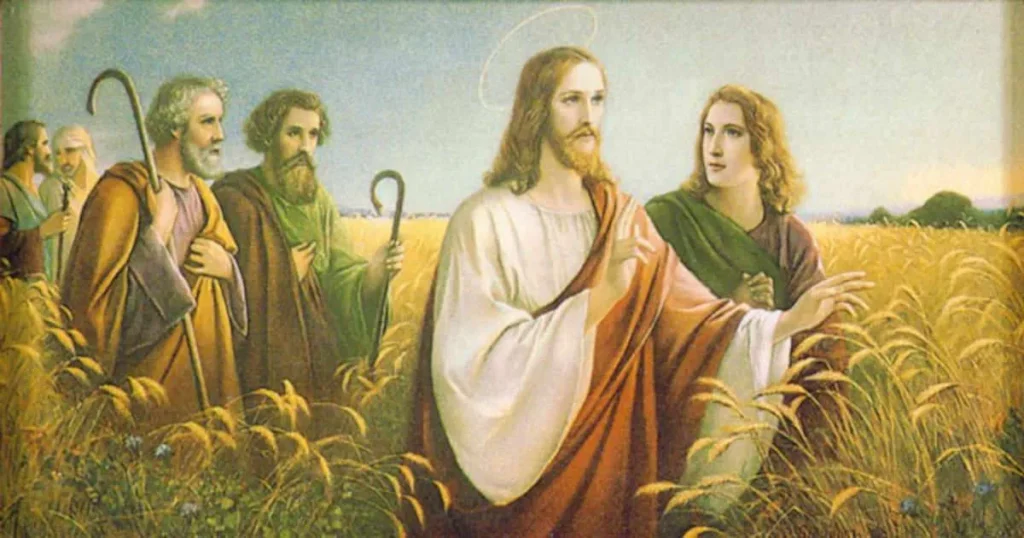
While Jesus was going through a field of grain on a sabbath, his disciples were picking the heads of grain, rubbing them in their hands, and eating them. Some Pharisees said, “Why are you doing what is unlawful on the sabbath?”

Reflection:

Though Jesus’ public ministry was still in its early stages, confrontations with the religious leaders had already become frequent. This episode marks the fourth recorded instance of such tension. In the previous days, the Pharisees had accused Jesus of blasphemy for forgiving the paralytic before healing him, of scandal for eating with tax collectors and sinners after calling Levi, and of impiety for neglecting the traditional practice of fasting. Now, He and His disciples are accused of violating the Sabbath law by picking heads of grain, rubbing them, and eating them.

Slowly, the Pharisees are emerging as hardened opponents of Jesus, increasingly focused not on the divine power and mercy He reveals, but on preserving their own rigid interpretations of the Law. These confrontations reveal both their growing hostility and Jesus’ authority as the true interpreter and fulfillment of the Law.

Though the Pharisees began going out of their way to confront Jesus, He was not intimidated and confronted their opposition directly. Today, as we read the Scriptures, we know well that many of the religious leaders at that time were deeply misguided in their understanding of the Law and its purpose. Such confrontations were shocking in a culture where ordinary Jews rarely challenged religious leaders. While the leaders themselves often debated among one another, it was almost unheard of for ordinary Jews to challenge them openly. For that reason, many of Jesus’ disciples likely felt a sense of surprise and tension as these encounters unfolded. At the same time, they may also have experienced a sense of relief as they witnessed Jesus expose the rigidity and oppressive practices that had long left many Jews feeling burdened, discouraged, and spiritually exhausted.

Though Jesus’ confrontation was necessary, we too must learn from their negative example. While we no longer encounter scribes, Pharisees, Sadducees, Herodians, or elders in the same form as in first-century Israel, the underlying sins that afflicted them remain just as present in our world today.

Those underlying sins could be summed up as a misuse of authority for its own sake, a tendency toward outward religious observance without inward transformation, and a preference for human traditions over divine revelation. These tendencies manifest themselves in every generation. They are found not only within the Church but also in homes, businesses, governments, and every human institution. Wherever pride overshadows humility or control stifles compassion, the spirit of the Pharisees lives on. Therefore, as disciples of Christ, we must be vigilant in our own lives—first examining our hearts for these tendencies, and then responding with the same holy courage and divine clarity that our Lord Himself displayed.

Do you experience oppression from others? Are you the cause of that oppression? Misused authority, whether by individuals or institutions, wounds hearts, stifles freedom, and obscures the gentle call of grace. Before condemning such behavior in others, we must honestly examine whether we, too, have clung to positions of control or influence in ways that burden rather than bless.

Reflect today on the fallen human tendency to love authority for its own sake. Do you struggle with this? Power that is exercised without humility and without charity that seeks only the good of others is dangerous and often abusive. Look for such structures in your life—whether external or internal—and prayerfully surrender them to Christ. Allow Him, the true Lord of the Sabbath, to reorder your heart according to truth, love, and mercy, so that every exercise of authority in your life becomes an act of service, modeled after His own.

Source: https://catholic-daily-reflections.com/2026/09/04/confronting-opposition/

Luke 6:1-2 Read More »

Pope Saint Boniface I

Profile

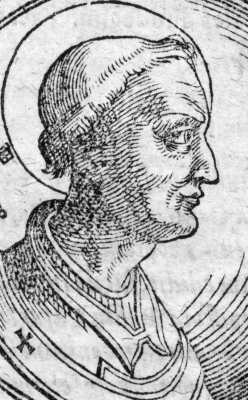
Boniface was the son of the presbyter Jocundus. He was a priest, and apparently ordained by Pope Saint Damasus I. He was also the Papal legate to Constantinople c.405 for Pope Saint Innocent I. He was elected 42nd pope in 418. He was opposed by anti-pope Eulalius who had the support of the minor clergy. Both were exiled from Rome, Italy by Emperor Honorius in order to keep the peace. At Easter, Eulalia returned against orders, causing his followers to rise to violent action; he was exiled again, and Boniface declared pope. Boniface was repeatedly opposed by the patriarch of Constantinople who sought to increase his sphere of influence. He was also a staunch opponent of Pelagianism. Saint Augustine of Hippo dedicated several works to him.

Born

c.350 at Rome, Italy

Papal Ascension

28 December 418

Died

  • 4 September 422 at Rome, Italy of natural causes
  • buried in the cemetery of Maximus on the Via Salaria, Rome

Canonized

Pre-Congregation

Source: https://catholicsaints.info/pope-saint-boniface-i/

Pope Saint Boniface I Read More »

Luke 5:33-35

Spouse of My Soul

The scribes and Pharisees said to Jesus, “The disciples of John the Baptist fast often and offer prayers, and the disciples of the Pharisees do the same; but yours eat and drink.” Jesus answered them, “Can you make the wedding guests fast while the bridegroom is with them? But the days will come, and when the bridegroom is taken away from them, then they will fast in those days.”

Reflection:

Though most of the scribes and Pharisees rejected the ministry of John the Baptist, here they attempt to use his discipline of fasting as a weapon to criticize Jesus. But our Lord, perceiving the hollowness of their accusation, turns it into an opportunity for divine revelation. He discloses to them, and to us, a profound truth about His identity: He is the Bridegroom.

By doing so, Jesus draws from the rich prophetic imagery of Isaiah and Hosea, which portrays God as the divine Spouse of Israel. Isaiah declared, “As a bridegroom rejoices in his bride so shall your God rejoice in you” (Isaiah 62:5). Hosea, speaking the word of the Lord, proclaimed, “You shall call me ‘My husband’… I will betroth you to me forever” (cf. Hosea 2:18–22).

Jesus is not merely using a poetic image. By calling Himself the Bridegroom, He reveals a nuptial mystery: Christ comes in the flesh to unite Himself to His Bride, the Church. The proper response to His presence is not fasting in sorrow but rejoicing in the wedding feast. Fasting will have its place, but only once the Bridegroom is taken away, which is a prophetic reference to His Passion.

This exchange exposes not only the Pharisees’ superficial religiosity but also unveils a central mystery of salvation: In Christ, God draws near in spousal love. To follow Him is to enter into a covenant of joy and grace.

Though nuptial imagery might seem more naturally relatable to women, it expresses a truth that transcends gender. Just as “a man leaves his father and mother and clings to his wife, and the two of them become one body” (Genesis 2:24), so each soul is called to a transforming union with Christ. This is not merely symbolic; it is a real and spiritual union. We are called to become His Mystical Body. Saint Paul captures this mystery when he writes, “I have been crucified with Christ; yet I live, no longer I, but Christ lives in me” (Galatians 2:19–20).

Traditionally, this union has been described as Mystical Marriage or Divine Union. Saint Teresa of Ávila favored the image of Mystical Marriage, emphasizing the soul’s intimate, spousal love for Christ. Saint John of the Cross more often spoke of Divine Union, highlighting the complete transformation of the soul in God. Though they use different terms, both describe the soul’s ultimate vocation: perfect union with Christ.

In Heaven, when this Divine Union is fully realized, fasting and other penitential acts will be unnecessary. During Jesus’ earthly ministry, the disciples did not fast because the Bridegroom was with them—an extraordinary grace unique to those three years. But after He was “taken away,” fasting took on a new importance, becoming a participation in His Passion and a preparation for the Wedding Feast to come.

Reflect today on the glorious end to which you are called: union with Christ, your Bridegroom. This journey requires sacrifice, so fasting and penance remain essential. Yet when we keep our eyes fixed on the joy of Divine Union, every sacrifice becomes lighter and a joyful embrace of love. The difficulty of fasting and penance is overshadowed by the union they help bring about. Resolve to fast, to pray, and to stay close to Christ, the Bridegroom of your soul. He is the faithful Spouse who will never abandon you.

Source: https://catholic-daily-reflections.com/2026/09/03/spouse-of-my-soul/

Luke 5:33-35 Read More »

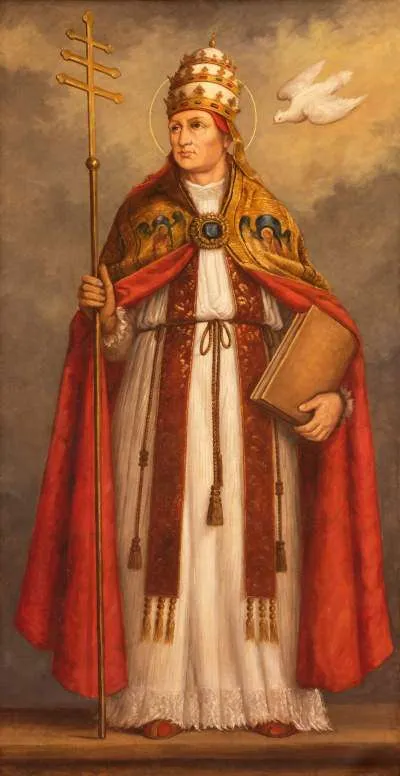
Saint Gregory the Great, Pope and Doctor

c. 540–604; Patron Saint of choir boys, educators, masons, musicians, popes, students, and singers; Invoked against gout and the plague; Pre-Congregation canonization; Declared a Doctor of the Church by Pope Boniface VIII in 1295

Saint Gregory the Great was born in the city of Rome into an aristocratic family whose members filled political and religious offices. Gregory’s father was a senator and later became the Prefect of Rome, similar to the role of mayor. His mother, Silvia, was a virtuous woman who was later recognized as a saint, as were two of his aunts. Thus, Gregory’s influential, wealthy, and saintly family provided him with a stellar education and nurtured him in the Catholic faith from a young age.

During the first fourteen years of his life, Gregory witnessed war and disease ravage the city of Rome. The Ostrogoths had ruled Rome since 479, but from 535–554, the Eastern Roman emperor waged war in an attempt to reclaim control. The war caused significant destruction in Rome and resulted in many deaths. Gregory and his family may have even had to flee for a time. Once peace was restored in 554 and Italy came under the control of the Eastern Roman emperor, people began to return to Rome, rebuild the city, and reestablish order.

From 554–574, Gregory followed in his father’s footsteps, assuming various civil leadership roles. Around the year 573, he was elected to the same position his father had held earlier: Prefect of Rome. However, not long after Gregory assumed this role, his father passed away, prompting Gregory to make a major shift in his life. He resigned as Prefect, turned his family home into a monastery, and took monastic vows. That time of deep prayer was invaluable to him and would prepare him for the important tasks God would later entrust to him.

As a monk, Gregory spent the next four years immersed in quiet prayer and study. These years were some of the happiest of his life. In 578, Pope Pelagius II ordained Gregory as one of the seven deacons of Rome and sent him to Constantinople a year later as his apocrisiarius, or papal ambassador. Despite the challenges of his six years there, Deacon Gregory maintained his monastic life of prayer and study while fulfilling his duties at the imperial court. During this time, Deacon Gregory began writing his famous commentary on the Book of Job, which provided teachings on the nature of God, the problem of evil, the Christian understanding of human suffering, and the virtue of patience.

After completing his service in Constantinople, Deacon Gregory returned to Rome, was chosen as the abbot of his monastery, and enjoyed several more years of peaceful monastic life. In 590, Pope Pelagius II died, and the people of Rome chose Gregory as his successor. He accepted this responsibility, albeit reluctantly. He was the first monk to be elected pope.

Over the next fourteen years, despite constant ill health, Pope Gregory I established himself as one of the most consequential popes in history. Among his accomplishments, he implemented significant reforms in the Church’s administration and liturgy. Administratively, he reformed how the Church’s property and finances were managed. He implemented strict guidelines to ensure the responsible use of these resources, put measures in place to prevent abuses such as nepotism, increased transparency, and greatly expanded charitable works, to the point of emptying the papal treasury. He also forged important strategic military and political alliances that strengthened the papacy and ensured the safety and betterment of those under his care. Many civil leaders even turned to him for guidance.

Liturgically, Pope Gregory contributed to the standardization of the Liturgy by offering clear guidelines and rubrics. He established prayers, the flow of the Mass, and the liturgical year, and helped develop liturgical chant, which came to be known as “Gregorian Chant.”

Pope Gregory also demonstrated his missionary spirit. Most notably, he initiated a mission that began the conversion of the Anglo-Saxon peoples in England. It’s said that Pope Gregory once encountered some slave boys in the Roman market. He asked where they were from and was told they were Angles from England. Gregory replied that the boys were angels. Seeing the boys being sold as slaves planted a desire in Gregory’s heart to convert that pagan nation and a resolve to send missionaries to the Angles and Saxons in England. These missions were ultimately very successful through the efforts of Saint Augustine of Canterbury and forty of his brother monks, who were sent from Pope Gregory’s own monastery.

In addition to his commentaries on Scripture, Pope Gregory authored the “Pastoral Rule” (Regula Pastoralis), an influential guide for bishops and other church leaders. It outlined their pastoral responsibilities and the conduct expected in their personal and public lives. His “Dialogues” are a collection of inspiring visions, miracles, and stories of the lives of the saints, including an early biography of St. Benedict. Pope Gregory’s approximately 800 letters offer a valuable insight into the ecclesiastical, social, and political landscape of his time. These letters contain practical theological and pastoral advice that has formed an enduring legacy and significantly influenced Church leadership throughout the centuries.

Enduring legacies cannot be fabricated, purchased, or contrived. They are the result of true leadership and the profound impact one leaves behind. Pope Gregory I is now known as Saint Gregory the Great. He is “great” because he not only had a major influence upon the people of his time, both religiously and politically, but also because his influence and writings solidified the direction that the Church would take after him. His first loves were of Christ and the monastic way of life. God used Gregory’s humble way of life as a foundation upon which He would continue to build His Church.

As we honor this great pope, ponder the importance of making your life a foundation upon which others will grow and flourish. We establish a firm foundation for our spiritual lives and for the lives of others around us only when we make prayer and union with God our primary mission. Saint Gregory did this well, and God used him in glorious ways. May the same be said of each one of us.

Source: https://mycatholic.life/saints/saints-of-the-liturgical-year/september-3-st-gregory-the-great/

Saint Gregory the Great, Pope and Doctor Read More »

Luke 5:1-4

Do Not Be Afraid: A Call to Evangelize

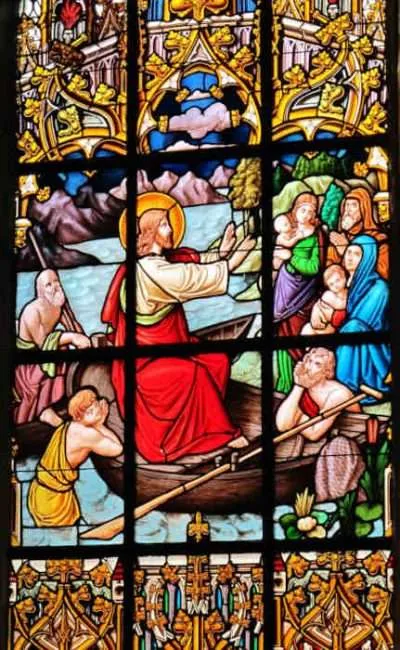
While the crowd was pressing in on Jesus and listening to the word of God, he was standing by the Lake of Gennesaret. He saw two boats there alongside the lake; the fishermen had disembarked and were washing their nets. Getting into one of the boats, the one belonging to Simon, he asked him to put out a short distance from the shore. Then he sat down and taught the crowds from the boat. After he had finished speaking, he said to Simon, “Put out into deep water and lower your nets for a catch.”

Reflection:

At that moment, Simon could not have grasped the full significance of Jesus’ actions. Our Lord chose to preach to the crowds from the boat “belonging to Simon.” When He had finished speaking, He turned to Simon and said, “Put out into deep water and lower your nets for a catch.”

Traditionally, the boat has been understood as a symbol of the Church. It is particularly meaningful that this first use of a boat in Jesus’ public ministry involved Simon’s vessel. Later in Luke’s Gospel, Jesus says: “Simon, Simon, behold Satan has demanded to sift all of you like wheat, but I have prayed that your own faith may not fail; and once you have turned back, you must strengthen your brothers” (Luke 22:31–32).

In this powerful passage, Jesus entrusts Simon with the unique mission of leadership and fraternal support. Though Simon would stumble during the Passion, his faith would be restored, and his role confirmed, not merely as a disciple, but as one called to fortify the faith of others. This divine commission echoes the symbolic act at the Lake of Gennesaret, where Simon’s boat becomes the pulpit from which the Word is proclaimed. And, as is recorded in Matthew’s Gospel, Jesus later changed Simon’s name to Peter, making him the rock foundation upon which He would build His Church, promising the gates of hell would not prevail against it (cf. Matthew 16:17–19).

By choosing Simon’s boat, Jesus foreshadowed that the Gospel would go forth from the Church, built upon Simon Peter’s faith and leadership. Christ remains the cornerstone, yet Simon would serve as the rock: a foundational witness whose confession and fidelity would uphold the apostolic Church.

This moment by the lake is far more than a simple teaching setting. It is a prophetic image of the Church: anchored by Peter, guided by Christ, and commissioned to cast its nets into the deep waters of the world, drawing souls into the Kingdom of God. Christ alone has the power to draw all people to Himself, yet He chooses to do so through Peter, his successors, and all faithful collaborators who serve as fishers of men.

As the passage continues, Simon obeys Jesus’ command and puts out into deep water. The result is an astonishing catch that is so abundant that the nets begin to tear. Others must come to help, a clear symbol of the necessary collaboration among all members of the Church, working together in Christ’s divinely guided mission.

We, too, are called to share in that same mission and to imitate Simon’s humility upon witnessing the miraculous catch. He fell at Jesus’ feet and cried out, “Depart from me, Lord, for I am a sinful man” (Luke 5:8). He was deeply humbled and recognized his unworthiness before the divine presence.

Jesus, however, looked upon Simon and those with him, including Andrew, James, and John, and said, “Do not be afraid; from now on you will be catching men” (Luke 5:10). These words are meant for each of us. Fear is often the greatest obstacle to fully embracing God’s call. But when we respond with humility and courage, trusting in His grace, we will find ourselves part of the great mission to draw others into the safety of the Church.

Reflect today on the sacred image of Simon’s boat. See in it a foreshadowing of the Church, and consider how you are called to serve within her. Christ continues to preach from this vessel, to call others into its safety, and to call you to cast your net into the deep where many souls await the Gospel and God’s mercy.

Source: https://catholic-daily-reflections.com/2026/09/02/do-not-be-afraid-a-call-to-evangelize/

Luke 5:1-4 Read More »

Saint Elpidius the Cappadocian

Profile

Elpidius was a monk and an abbot in Asia Minor. He was a hermit in a cave on Mount Luca, Cappadocia for over twenty years. Legend says that an angel convinced him to immigrate to the area of Ancona, Italy where his reputation for holiness and wisdom attracted many disciples.

Born

Cappadocia

Died

  • 4th century of natural causes
  • relics enshrined in the town of Cluana (modern Sant’Elpidio a Mare), Ancona, Italy in the 7th century
  • the relics are believed to have saved the town from a Lombard siege when Elpidius appeared in the sky asking the inhabitants to defend the village

Canonized

Pre-Congregation

Patronage

  • Sant’Elpidio a Mare, Italy
  • Sant’Elpidio Morico, Italy

Representation

  • man with a vine leaf in winter which recalls a story of him planting a twig in bare ground in winter – and the resulting vine grew so fast and full and that it covered the whole church beside it

Source: https://catholicsaints.info/saint-elpidius-the-cappadocian/

Saint Elpidius the Cappadocian Read More »