April 2026

Matthew 28:11-13

The Witness of the Roman Guards

While they were going, some of the guard went into the city and told the chief priests all that had happened. The chief priests assembled with the elders and took counsel; then they gave a large sum of money to the soldiers, telling them, “You are to say, ‘His disciples came by night and stole him while we were asleep.’”

Reflection:

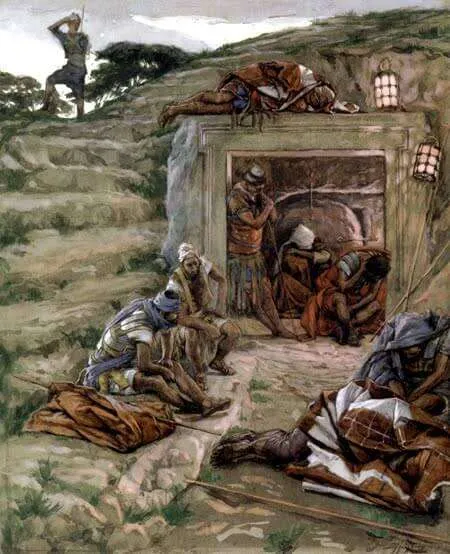
Imagine being one of the Roman guards tasked with keeping watch outside Jesus’ tomb. They likely had little interest in what seemed to them merely a religious dispute between Jesus, the chief priests, and elders. Some of Jesus’ followers believed He would rise from the dead, and there were rumors that they might steal Jesus’ body to claim that He had. With Pilate’s approval, the Roman guards were stationed outside the tomb, perhaps talking, playing games, or just resting.

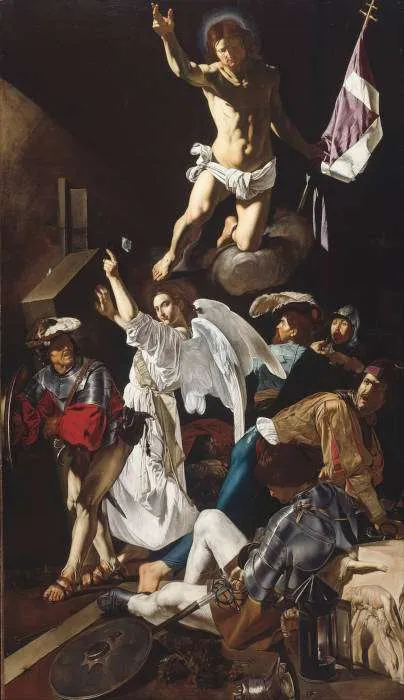
The context of today’s Gospel is important to understand. Matthew 28:2–7 tells us that as the guards were at the tomb, there was suddenly an earthquake, and “an angel of the Lord descended from heaven, approached, rolled back the stone, and sat upon it.” The angel appeared “like lightning, and his clothing was white as snow.” The guards “were shaken with fear of the angel and became like dead men.” It must have been quite a scene to behold.

Recall that prior to Jesus’ death, Roman soldiers had treated Him with cruelty: they scourged Him, mocked Him, forced Him to carry His cross, and killed Him. Yet, Matthew’s Gospel points out that some Roman soldiers were converted when they saw how Jesus died. The earth quaked, rocks split, and tombs were opened. When they witnessed this, they were filled with fear and said, “Truly, this was the Son of God!” (Matthew 27:54).

In addition to the guards, Mary Magdalene and the other Mary had just arrived at the tomb to witness the event. The guards watched and listened as the angel spoke to the women, saying, “Do not be afraid! I know that you are seeking Jesus the crucified. He is not here, for he has been raised just as he said. Come and see the place where he lay…”

Again, imagine being one of those Roman guards. When they reported what happened to the chief priests, they might have expected them to believe their story. Instead, the priests bribed them, instructing them to spread the story that they had fallen asleep and that Jesus’ followers stole the body. Falling asleep on duty for a Roman guard was a serious offense, punishable by death, but fear and greed won out. They took the money and spread the lie. Yet what they saw would have stirred their hearts, likely stirring their consciences for the rest of their lives.

It’s entirely possible that in the years ahead, some of these guards began to speak openly about what they experienced. As they pondered what happened, witnessed faith in Jesus grow, and reflected on their dishonesty, some might have found the strength to repent and speak the truth. God, in His perfect mercy, would have accepted that repentance, healed their consciences, and filled them with strength and consolation. Just as Peter’s denial was transformed by God’s mercy, so too might these soldiers have been transformed with time and grace.

Reflect today on these Roman guards and put yourself in their shoes. Are there times when you have downplayed your faith around others because it was easier? Have you felt fear when your faith was challenged? Have you been pressured to misrepresent your convictions to fit in? If so, you can both relate to the guards and learn from them. Even if you have struggled to profess the Gospel with honesty and courage in the past, it is never too late to change. As we celebrate the octave of the Resurrection, resolve to be a witness to the Resurrection with courage and sincerity. Reflect on any reasons you might hesitate, and pray for the grace to proclaim it joyfully, rejoicing in the incredible privilege of openly professing faith in our resurrected Lord!

Source: https://catholic-daily-reflections.com/2026/04/05/the-witness-of-the-roman-guards/
Matthew 28:11-13 Read More »

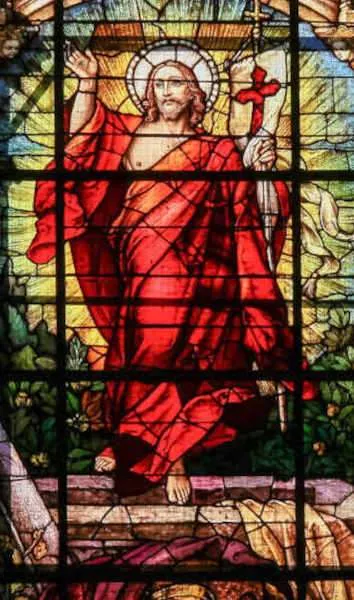
The Resurrection of the Lord The Mass of Easter Day

First Reading Acts 10:34a, 37-43

Peter proceeded to speak and said:
“You know what has happened all over Judea,
beginning in Galilee after the baptism
that John preached,
how God anointed Jesus of Nazareth
with the Holy Spirit and power.
He went about doing good
and healing all those oppressed by the devil,
for God was with him.
We are witnesses of all that he did
both in the country of the Jews and in Jerusalem.
They put him to death by hanging him on a tree.
This man God raised on the third day and granted that he be visible,
not to all the people, but to us,
the witnesses chosen by God in advance,
who ate and drank with him after he rose from the dead.
He commissioned us to preach to the people
and testify that he is the one appointed by God
as judge of the living and the dead.
To him all the prophets bear witness,
that everyone who believes in him
will receive forgiveness of sins through his name.”

Responsorial Psalm Psalms 118:1-2, 16-17, 22-23

R. (24) This is the day the Lord has made; let us rejoice and be glad.
or:
R. Alleluia.
Give thanks to the LORD, for he is good,
for his mercy endures forever.
Let the house of Israel say,
“His mercy endures forever.”
R. This is the day the Lord has made; let us rejoice and be glad.
or:
R. Alleluia.
“The right hand of the LORD has struck with power;
the right hand of the LORD is exalted.
I shall not die, but live,
and declare the works of the LORD.”
R. This is the day the Lord has made; let us rejoice and be glad.
or:
R. Alleluia.
The stone which the builders rejected
has become the cornerstone.
By the LORD has this been done;
it is wonderful in our eyes.
R. This is the day the Lord has made; let us rejoice and be glad.
or:
R. Alleluia.

Second Reading Colossians 3:1-4

Brothers and sisters:
If then you were raised with Christ, seek what is above,
where Christ is seated at the right hand of God.
Think of what is above, not of what is on earth.
For you have died, and your life is hidden with Christ in God.
When Christ your life appears,
then you too will appear with him in glory.

Sequence - Victimæ paschali laudes

Christians, to the Paschal Victim
Offer your thankful praises!
A Lamb the sheep redeems;
Christ, who only is sinless,
Reconciles sinners to the Father.
Death and life have contended in that combat stupendous:
The Prince of life, who died, reigns immortal.
Speak, Mary, declaring
What you saw, wayfaring.
“The tomb of Christ, who is living,
The glory of Jesus’ resurrection;
bright angels attesting,
The shroud and napkin resting.
Yes, Christ my hope is arisen;
to Galilee he goes before you.”
Christ indeed from death is risen, our new life obtaining.
Have mercy, victor King, ever reigning!
Amen. Alleluia.

Alleluia cf. 1 Corinthians 5:7

R. Alleluia, alleluia.
Christ, our paschal lamb, has been sacrificed;
let us then feast with joy in the Lord.
R. Alleluia, alleluia.

Gospel John 20:1-9

On the first day of the week,
Mary of Magdala came to the tomb early in the morning,
while it was still dark,
and saw the stone removed from the tomb.
So she ran and went to Simon Peter
and to the other disciple whom Jesus loved, and told them,
“They have taken the Lord from the tomb,
and we don’t know where they put him.”
So Peter and the other disciple went out and came to the tomb.
They both ran, but the other disciple ran faster than Peter
and arrived at the tomb first;
he bent down and saw the burial cloths there, but did not go in.
When Simon Peter arrived after him,
he went into the tomb and saw the burial cloths there,
and the cloth that had covered his head,
not with the burial cloths but rolled up in a separate place.
Then the other disciple also went in,
the one who had arrived at the tomb first,
and he saw and believed.
For they did not yet understand the Scripture
that he had to rise from the dead.

Source: https://bible.usccb.org/bible/readings/040526.cfm

The Resurrection of the Lord The Mass of Easter Day Read More »

Easter Sunday

Today’s glorious solemnity is the ultimate cause of all joy, fulfillment, happiness, and glory. If Jesus only died on the Cross, destroying death, something would be missing—the restoration of life into a transformed and glorified living. Easter is not only about the forgiveness of sins, it’s about the temporal and eternal glorification of every human soul who dies and rises with Christ. When we focus upon the Gospel and consider the many lessons Jesus taught and the example He set, the Cross is often considered the difficult message and Easter the easy message. But is it?

The message of the Cross, as presented to us through both Jesus’ teachings and His lived example, is certainly challenging. Each one of us is called to the same depth of selfless surrender of our lives to the Father’s will. We must each die completely to ourselves, be purified from every sin and every attachment to sin, from every bad habit and every worldly thought, and from everything that is not God and God alone. When our calling to die with Christ and to embrace His Cross is clearly understood, as it has been by the saints, it is likely that Christians become overwhelmed at the seemingly daunting and impossible task of dying in and with Christ.

When it comes to the Resurrection, one might be tempted to say that it is easy to accept the message it presents. New life in Christ, the fullness of joy, complete transformation, and eternal beatitude in Heaven—these initially appear easy to embrace. However, the challenge that the profound reality of Easter presents to us is that we can be certain that our current understanding of what it means to share in the Resurrection of Christ is but the faintest shadow of the reality. In truth, very few people in this life have come close to understanding the glory to which we are called on account of the Resurrection. Saints Francis of Assisi, Catherine of Sienna, John of the Cross, Thérèse of Lisieux, to name a few, are among those who penetrated the mystery of Easter while still here on earth. They achieved this spiritual knowledge only by fully dying with Christ through a life of profound prayer, penance, and charity that completely united their souls to the Most Holy Trinity.

As we celebrate Easter, it is important to know that we do not yet know all that is promised to us by the Resurrection of Christ. If we can at least know that, then our spiritual appetites will make us hungry to know. Too often, Christians go through life satisfied with the most basic understanding of the Gospel. We know that God became man, lived His life, gathered followers, taught and performed miracles, died on the Cross, rose again, ascended into Heaven, and sent the Holy Spirit. Furthermore, we have hope in His promise that if we remain in His grace, then we will share in Heaven after we die. But this is an exceptionally incomplete view of the full reality that has been comprehended in this life by the saints. It is their understanding we must seek with every power of our souls.

What does it mean to share in the new life of Christ? What does it mean to share in the glory of the Resurrection? What will Heaven be like for those who enter into the highest realms of glory in this life compared to those who only do the basics? What will the New Heavens and the New Earth be like when Jesus returns in all His glory for the Final Judgment? If these are questions you have never deeply pondered and probed, then know that the answers that await you are more glorious than you could ever imagine. In other words, if you were to sit quietly and spend all day trying to imagine the best and most glorious life, trying to use your mind to draw a picture of the happiness and full joy of Heaven, you can be certain that you could never even come close to imagining the reality. That humble fact ought not discourage you; it should fill your conscience with a desire to know what you do not know. That is the first step.

A deep and vast spiritual comprehension of the joy of sharing fully in the Resurrection of Christ can only be given to us by a direct infusion of grace by God Himself. When a soul receives this infused knowledge, they become so overwhelmed with wonder and awe that they realize that committing even the smallest sin is absolute foolishness and is the path to the loss of everything. They realize that if they were to gain everything this world has to offer—every comfort, wealth, power, and prestige—they would be absolutely miserable compared to the person who shares fully in the Resurrection. They realize that the only thing worth anything is the complete abandonment of one’s life to the will of God, a willingness to suffer anything and everything for Christ, to serve and not be served, to forgive everyone completely, to love with every fiber of their being, and to continuously remain in a state of prayerful recollection with God.

If living such a life seems impossible, it’s not. It only seems that way when we fail to grasp the prize that awaits those who strive for the perfection of divine union. The Easter message and mystery is not just about being good and happy. It’s not just about trusting in the hope of Heaven after we die. The fullness of the message and mystery of Easter can only be understood if we begin the long and difficult journey toward divine union. Only those who begin it in haste have a chance of completing it. Begin it today by acknowledging that there is so much that you do not know. There is so much that God is calling you to and wants to bestow upon you. There is more joy in the Resurrection of Christ than anything else in life. Don’t aim for the lowly and passing things of life—aim for the highest heights of glory. Seek to understand the Resurrection this Easter so that you will be able to share more fully in the higher grades of glory that God wants to bestow upon you.

Source: https://mycatholic.life/saints/saints-of-the-liturgical-year/easter-sunday/

Easter Sunday Read More »

John 20:1-2

Understanding the Resurrection

On the first day of the week, Mary of Magdala came to the tomb early in the morning, while it was still dark, and saw the stone removed from the tomb. So she ran and went to Simon Peter and to the other disciple whom Jesus loved, and told them, “They have taken the Lord from the tomb, and we don’t know where they put him.”

Reflection:

Have you ever misunderstood something, even when your intentions were good? We all experience moments when we act with love but still get things wrong. Even our good actions are rarely perfect.

On that first Easter morning, before the sun rose, Mary Magdalene offers an example of this. She got some things right—her love and devotion to Jesus were sincere—but she did not yet understand the full reality of what she witnessed. Though the other Gospels mention other women at the tomb, John highlights Mary. Saint Augustine suggests that this is because she was “undoubtedly the most fervent in love” with Christ.

When Mary Magdalene saw the stone rolled away, her love compelled her to act immediately. Saint John Chrysostom says she “ran to the disciples with all the speed of love.” Her fervor drove her to tell Simon Peter and John what she had seen, showing us how love urges us to seek God without delay.

Despite her deep love, Mary misunderstood the meaning of the empty tomb. Her emotional response—“They have taken the Lord from the tomb, and we don’t know where they put him”—reveals her struggle to grasp the mystery unfolding before her. Like many of us, she was driven by emotion rather than a deeper trust in God.

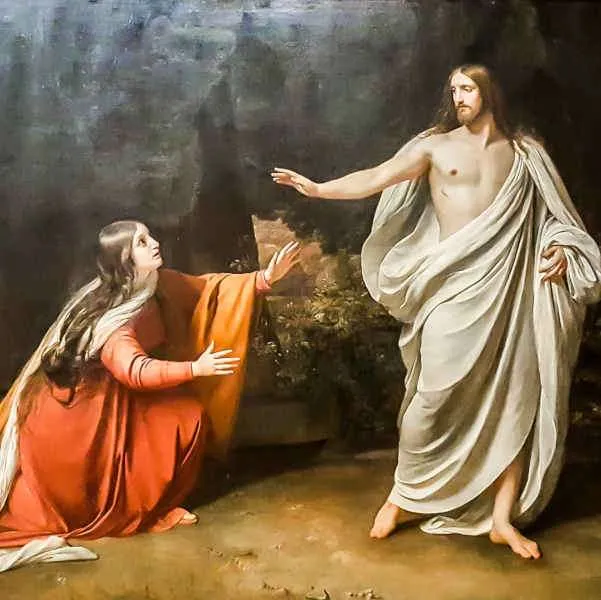
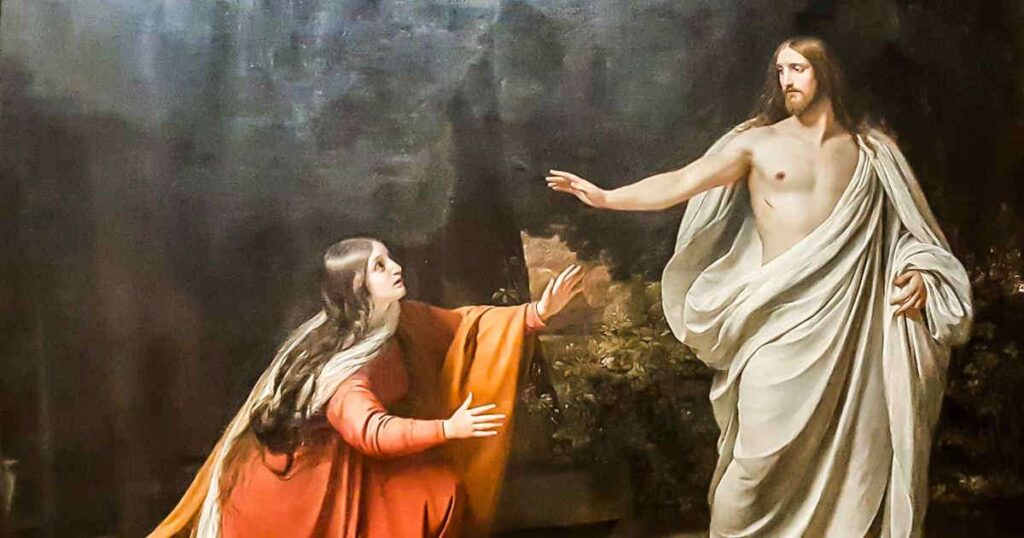
Jesus was certainly not displeased with her misunderstanding, as Scripture identifies her in John 20:11–17 as the first to whom He appeared. When she encountered the risen Christ, she initially mistook Him for the gardener, indicating that her understanding of the Resurrection was still unfolding. Despite that, Jesus met her where she was and guided her toward deeper faith. This reminds us that our emotions, though good, must be purified by faith, allowing love to mature into greater trust and understanding.

Reflect today on Mary Magdalene’s experience on Easter morning. Like her, we are called to seek our Lord with fervor, even when our understanding is incomplete. And like her, we can trust that Jesus will meet us where we are, gently leading us into deeper faith. As we celebrate the Resurrection, pray that your love, with all its emotions, may be more fully purified by grace, so that you, too, will encounter Christ with renewed understanding and joy.

Source: https://catholic-daily-reflections.com/2026/04/04/understanding-the-resurrection/

John 20:1-2 Read More »

Prayer Meditation for Holy Saturday

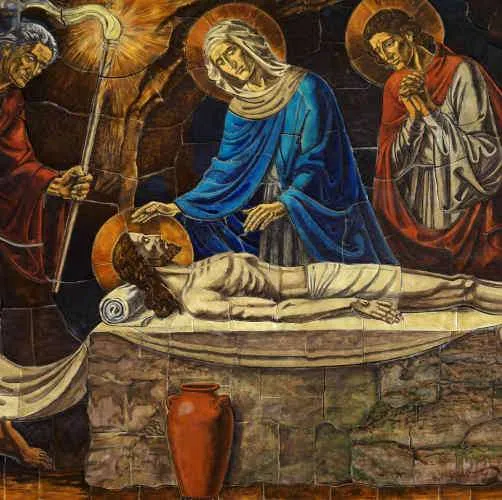
My Lord, today all is silent.  You have given Your precious life for the salvation of the world.  You died a horrific death, poured out all Mercy from Your wounded Heart, and now You rest in peace in the tomb as the soldiers keep vigil.

Lord, may I also keep vigil with You as You sleep.  I know that this day ends with Your glorious triumph, Your victory over sin and death.  But for now I sit quietly mourning Your death.  

Help me, dear Lord, to enter into the sorrow and the silence of this Holy Saturday.  Today no Sacraments are celebrated.  Today the world waits in mourning in anticipation of the glory of new life!  

As I keep vigil, awaiting the celebration of Your Resurrection, fill me with hope.  Help me to look forward to the celebration of Your Resurrection and also to look forward to the hope of my own share in the new life You won for the world.  I entrust my whole being to You, dear Lord, as You lay lifeless and still.  May Your rest transform the brokenness of my own soul, my weaknesses, my sin, and my frailty.  You are glorious, and You bring the greatest good out of Your apparent defeat.  I trust in Your power to do all things, and I entrust my life to You.  Jesus, I trust in You.

Source: https://mycatholic.life/catholic-prayers/triduum-and-easter-prayers/prayer-meditation-for-holy-saturday/

Prayer Meditation for Holy Saturday Read More »

Hopeful Anticipation of Holy Saturday

Though the Holy Sacrifice of the Mass was not offered yesterday, the faithful received Holy Communion during the commemoration of the Lord’s Passion. Today, however, the Church falls into profound silence. No liturgical services are celebrated during the day; the tabernacle remains empty, and the Church waits in expectant stillness for the joyful proclamation of the Resurrection. This silence invites us to enter more deeply into the mystery of Christ’s descent to the dead and to reflect on the unfathomable depths of His sacrifice.

For those who attend daily Mass, this day often brings a sense of emptiness—a longing for the Eucharist that reflects the soul’s spiritual hunger. Yet, in Her wisdom, the Church withholds both the Mass and the reception of the Eucharist. Why? Because Holy Saturday, in itself, communicates a distinct grace. The stillness of this day is not a deprivation but a profound way of receiving; a gift offered in silence, inviting us to trust, wait, and hope.

The Triduum reveals that the liturgical year itself is a source of grace, with each of these three sacred days unfolding the Paschal Mystery in stages. Saint Thomas Aquinas explains it this way: “The figure ceases on the advent of the reality. But this sacrament is a figure and a representation of our Lord’s Passion, as stated above. And therefore, on the day on which our Lord’s Passion is recalled as it was really accomplished, this sacrament is not consecrated” (Summa Theologica III.83.2). In other words, Good Friday, through our participation in the Lord’s Passion, communicates to us the full grace of His redemptive sacrifice, making the celebration of the Eucharist unnecessary on that day.

Similarly, Holy Saturday bestows a unique grace that draws us into the mystery of waiting with hopeful anticipation. Though no liturgical celebrations occur until the Easter Vigil, this day of silence invites us to rest in the hope of Christ’s ultimate triumph. We are called to remain with Our Lady and the disciples in their vigil, trusting that even in the stillness, God is at work and the promise of the Resurrection will soon be fulfilled.

In our lives, hopeful anticipation is an essential spiritual gift, offering the grace to persevere through trials, endure hardships patiently, and remain steadfast in hope, no matter the struggles we encounter. Hope is one of the three theological virtues, grounded in faith and inspiring us to put faith into action, which gives rise to charity—the greatest of all virtues. Without supernatural hope, we cannot fully attain or sustain charity.

Yet, hope is far more than wishful or optimistic thinking. Supernatural hope is anchored in God’s promises, received through faith, and nurtured by prayer and trust. Our Blessed Mother exemplifies this hope. On Holy Saturday, her heart was not filled with doubt but with an unshakable hope that moved her to keep vigil in prayer, awaiting the fulfillment of her Son’s promise. This hope did not end in mere anticipation but blossomed into supernatural charity—a love rooted in God’s will, bearing fruit even in the face of grief and uncertainty.

Reflect today on the silence of Holy Saturday. As you do, consider the anxieties, impatience, or hardships you might be enduring. Pray for hope in the midst of these trials, and anticipate the fulfillment of God’s saving promise in your life. Trust Him, wait on Him, and allow your faith and hope to fill you with the love of God and others, necessary to pass through Christ’s Passion into the glory of His Resurrection.

Source: https://catholic-daily-reflections.com/2026/04/03/hopeful-anticipation-of-holy-saturday/

Hopeful Anticipation of Holy Saturday Read More »

Good Friday of the Lord’s Passion

Perhaps one of the most surprising practices on Good Friday is that the Mass is not celebrated. Instead, Jesus’ saving Sacrifice is commemorated by the full reading of the Passion account, the veneration of the Cross, and the distribution of Holy Communion that was consecrated the day before. Why wouldn’t we celebrate the Sacrifice of the Mass on Good Friday? Saint Thomas Aquinas gives a profound answer to this question in his masterful work, Summa Theologica (See III.83). In part, he says the following:

Reply to Objection 2. The figure ceases on the advent of the reality. But this sacrament is a figure and a representation of our Lord’s Passion, as stated above. And therefore on the day on which our Lord’s Passion is recalled as it was really accomplished, this sacrament is not consecrated.

A careful reading of that passage, as well as the rest of that article, tells us that there is great power in the Liturgical Year, and in our annual Commemoration of the Lord’s Passion on Good Friday. We celebrate Mass daily throughout the year, except on Good Friday, so that we can receive the fruit of the Passion every day. The Church teaches that Mass is an efficacious sign, meaning that the Mass both signifies Christ’s sacrifice and actually makes it present. But on Good Friday, we celebrate our Lord’s Passion in the reality of time. Therefore, in terms of grace, nothing is lost by the absence of Mass on Good Friday. Instead, we must understand that the day of Good Friday itself becomes a powerful instrument of grace. Our liturgical Commemoration of our Lord’s Passion on Good Friday enables us to share in His saving act of redemption, just as the Mass does every other day of the year.

Setting aside the profound depth of theology present in this teaching, what does this mean, practically, for those who participate in the Good Friday Liturgy today? Here are a few thoughts for pondering.

As you prayerfully participate in the Liturgical Commemoration of the Lord’s Passion, know that this day itself is endowed with grace and power. The grace does not come through the sacramental “Memorial” of the Lord’s Passion but from the reality encountered in this once-a-year Commemoration. This day itself is a real and sanctifying participation in the fruit of Jesus’ saving Sacrifice.

To better understand this, look into your own soul and consider any ways that you have experienced God’s grace powerfully and uniquely on Good Friday. Perhaps, in years past, you entered into the Triduum in a prayerful and recollected way. Call that experience to mind, and understand that this deep encounter with our Lord was especially made possible because those days are holy.

Today, as you celebrate Good Friday, understand that the floodgates of Heaven are opened to you in a way unlike any other day of the year. Seize this moment in time. Seize this once-a-year opportunity to enter into our Lord’s suffering and death. Do so prayerfully, meditatively, truly, and intentionally. Especially honor the hours between noon and three o’clock. Try to set that time aside for nothing other than prayer and recollection. This day is sanctified. Time is sanctified. By entering into prayer during these hours of sanctified time, you will discover that God is especially present to you.

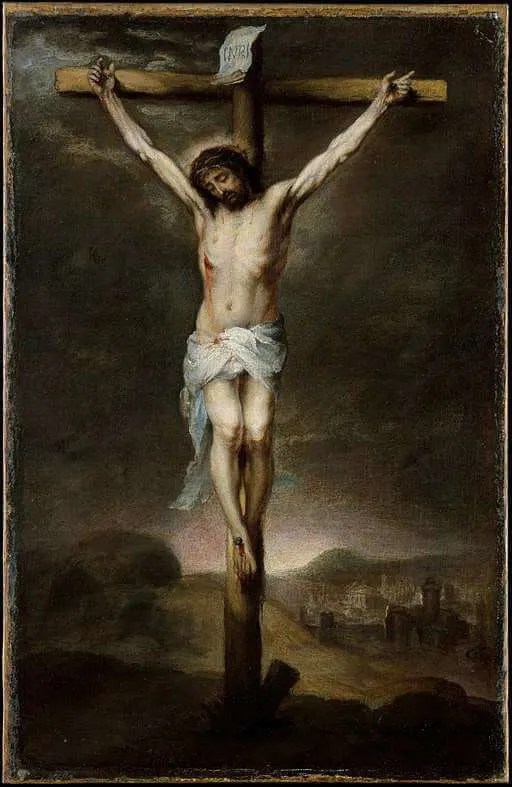
Read the Passion. Pray the Stations of the Cross. Recite the Sorrowful Mysteries of the Rosary. Gaze at a crucifix. Fast, keep vigil, be attentive, and be open to the abundance of grace our Lord wishes to bestow upon you this Good Friday, especially by participating in the liturgical Commemoration of the Lord’s Passion during the sacred hours when our Lord hung on the Cross. Today, “the figure ceases on the advent of the reality.” Today, the reality is here, captured in time, made present to you. Stand before His sacred Cross, and allow His mercy to pour forth upon you from His wounded side.

Source: https://mycatholic.life/saints/saints-of-the-liturgical-year/good-friday/

Good Friday of the Lord’s Passion Read More »

John 19:25-27

Behold, Your Mother

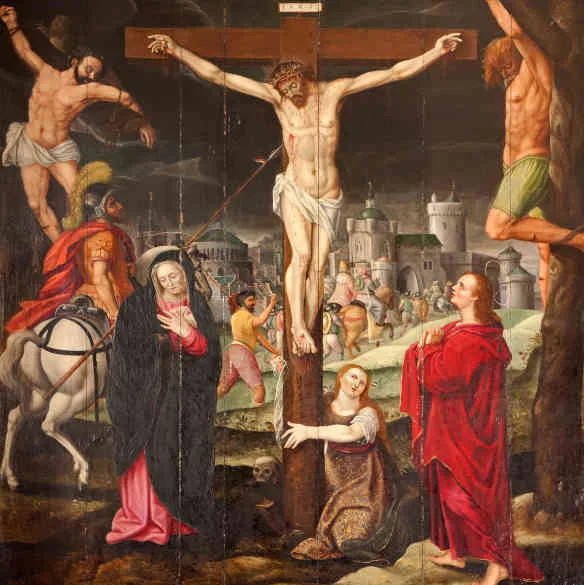
Standing by the cross of Jesus were his mother and his mother’s sister, Mary the wife of Clopas, and Mary of Magdala. When Jesus saw his mother and the disciple there whom he loved, he said to his mother, “Woman, behold, your son.” Then he said to the disciple, “Behold, your mother.” And from that hour the disciple took her into his home.

Reflection:

If God invited you to be present at one moment in the Scriptures, to see it with your eyes, hear it with your ears, and experience it with your heart, what moment would that be? Certainly, Gabriel’s announcement to Mary, Christ’s birth, a miracle, or a sermon would be awe-inspiring. The moment, however, that perhaps best manifests pure and perfect love is the love shared between Mother and Son during Jesus’ three hours on the Cross.

Throughout His life, Jesus’ mother was uniquely privileged to know Him like no other. She bore Him in her womb, nursed Him at her breast, bathed Him as a child, fed Him, watched Him grow, and was attentive to His every virtue. As His ministry attracted both great attention and harsh criticism, her Immaculate and motherly Heart remained perfectly attentive to Him and His mission.

As tensions rose during the week of Passover, her motherly intuition filled her Immaculate Heart with an intertwining of the most holy love and sorrow imaginable. When Jesus was arrested, the pain was deeper than any human heart had ever suffered, and her resolve to be present at her Son’s Passion was stronger than any earthly force could stop. No fear, threat, or sorrow could keep her from accompanying her Son to the very end. In perfect union with the will of God, Mary’s love was unwavering. Her silent presence at the Cross became a testament to the boundless strength of maternal devotion. Just as she had embraced Jesus in the joy of His Nativity, she now held Him in her heart during His Passion, standing as both witness and participant in the work of redemption.

As Jesus looked down at her from the Cross upon which He hung, the human consolation He received from His mother’s gaze was all He needed. Her love and affection were His only remaining earthly possessions. Stripped bare, nailed to the Cross, and suffocating, His mother’s love could not be taken from Him. Yet Jesus came to give all out of love—everything He possessed, including His mother. Out of love, Jesus entrusted her to John, the beloved disciple—and through him, to all of us—so that we might receive her as our own mother.

As He looked at her with the deepest love ever shared between two people, He called her “Woman”—“Woman, behold your son.” By calling her “Woman,” Jesus revealed the fulfillment of her identity in salvation history. She was the woman foretold in Genesis and the woman revealed in the vision of Revelation. In that moment, when the heavens were torn open and grace poured down upon the world, Jesus’ mother fulfilled her role as the New Eve and the new Mother of all the Living. She became the Mother and protector of all God’s children, interceding for them with unparalleled love and participating in the mediation of God’s grace. To John, who stood by her, Jesus said, “Behold, your mother.” With that, He thirsted, drank the bitter wine on a sprig of hyssop, cried out, “It is finished!,” bowed His head, and handed over His spirit.

As we celebrate this Good Friday, fix your gaze upon the moment when human love, united with divine love, was revealed to the world in the most sacred way. The love between this Mother and Son, alongside the gift of His mother and the New Eve to all of us, embodies the selfless nature of divine love. Ponder the mystery. Pray that you may be spiritually drawn into that moment. Gaze upon their love and hear the Messiah, the Son of God, say to you: “Behold, your mother.” Hearing, believing, and responding to those words makes you present at that moment when love was perfected and salvation poured forth upon the world.

Source: https://catholic-daily-reflections.com/2026/04/02/behold-your-mother/

John 19:25-27 Read More »

Holy Thursday

Holy Thursday is also called Maundy Thursday. “Maundy” comes from the Latin word mandatum, which is translated “mandate.” It is on this night that our Lord gave the mandate to “do this in remembrance of me.” That mandate was the command to celebrate the Most Holy Eucharist until the end of time, a mandate that the faithful continue to keep.

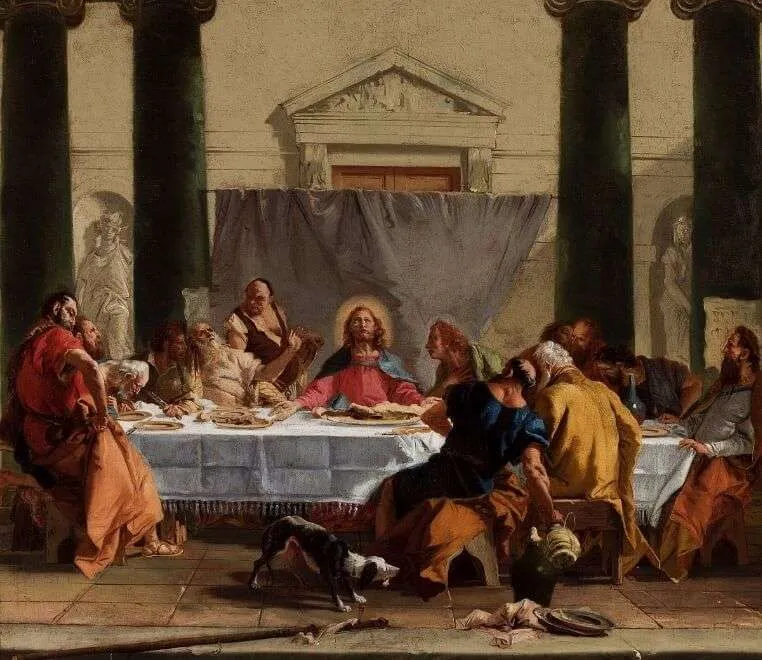
According to Sacred Scripture, Holy Thursday was a power-packed day and night. It began with Jesus sending Peter and John ahead to prepare the Upper Room for the celebration of the Passover meal. That meal would become the beginning of the New Passover. During the meal, Jesus gave a witness of selfless, sacrificial service by fulfilling the role of a servant and washing the feet of the disciples. After that, Jesus transformed the bread and wine into His Body and Blood, Soul and Divinity for the very first time, and the disciples received Holy Communion. By commanding them to “do this in remembrance of me,” Jesus instituted the new sacramental priesthood. He also predicted that one of those priests would betray Him and another would deny Him, a sign that His chosen priests then and now are also sinners. In John’s Gospel, Jesus gave a lengthy sermon and then went out to the Garden of Gethsemane to pray in agony as He awaited His arrest. Peter, James, and John went with Him but fell asleep, abandoning our Lord in His last agony. Jesus was arrested, endured the scrutiny of the High Priests Annas and Caiaphas, and then was imprisoned so that He could be sent for judgment by Pilate. During the interrogations, the disciples fled, and Peter, the future leader of the Church, denied he knew Jesus three times.

Was this truly a “holy” night? Indeed. True holiness is not a matter of having everything in your life be easy. It’s not about having the most entertaining and comfortable life possible. It’s not about avoiding every obstacle and difficulty that might befall you. Holiness is about fidelity to the fulfillment of the will of the Father in Heaven. Jesus fulfilled the Father’s will that night flawlessly. He set the stage for the coming of the Holy Spirit, instituted the Sacraments, and prepared to empower those Sacraments with His very life, which would be sacrificed the following day.

During the evening of Holy Thursday, after the conclusion of the Mass, the faithful accompany Jesus on a procession from the church to an altar of repose where our Lord’s sacred Body is placed until midnight. Whether you are able to kneel before that altar tonight or not, be with our Lord in prayer. Keep vigil with Him. Hear our Lord say to you, “My soul is sorrowful even to death. Remain here and keep watch with me” (Matthew 26:38). If you struggle with accompanying our Lord in prayer, then hear Him say to you what He said to Peter, “So you could not keep watch with me for one hour? Watch and pray that you may not undergo the test. The spirit is willing, but the flesh is weak” (Matthew 26:40–41). If you bring burdens with you tonight, say with our Lord, “My Father, if it is not possible that this cup pass without my drinking it, your will be done!” (Matthew 26:42). With a concerted effort, remain recollected throughout this night, tomorrow, and Saturday. It all begins tonight but culminates with Easter joy on Sunday. Enter Jesus’ suffering and death so that you can also share in His Resurrection!

Source: https://mycatholic.life/saints/saints-of-the-liturgical-year/holy-thursday/

Holy Thursday Read More »

John 13:12-15

Realizing What He Has Done

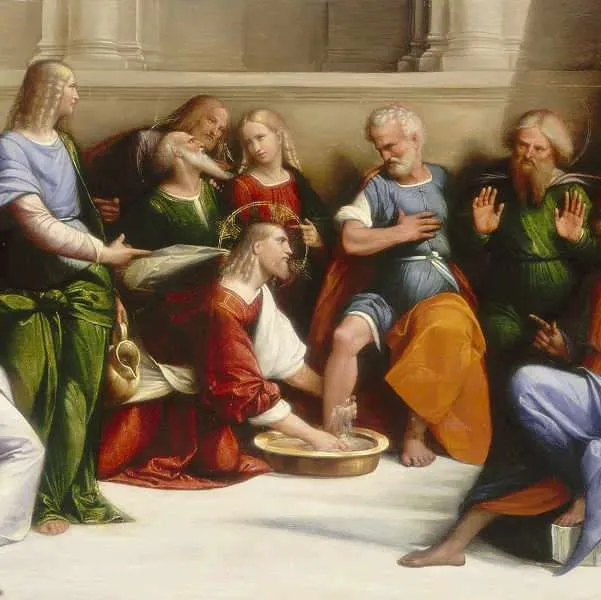
So when he had washed their feet and put his garments back on and reclined at table again, he said to them, “Do you realize what I have done for you? You call me ‘teacher’ and ‘master,’ and rightly so, for indeed I am. If I, therefore, the master and teacher, have washed your feet, you ought to wash one another’s feet. I have given you a model to follow, so that as I have done for you, you should also do.”

Reflection:

The celebration of the evening Mass of the Lord’s Supper on Holy Thursday is one of the most spiritually enriching liturgical celebrations of the year. The Mass begins with an empty tabernacle. After the readings and homily, the ritual of the washing of the disciples’ feet takes place. The Mass culminates with the celebration of the Eucharist, which is then carried in procession to another altar for adoration by the faithful until midnight, during which time we are invited to spend an hour with our Lord, in communion with Him during His Agony in the Garden.

The Gospel for the Mass, from Saint John, presents the beginning of Jesus’ Last Supper with His disciples. Jesus performs the act of a servant by washing the disciples’ feet. Though this surprises them, especially Peter, Jesus insists, saying, “Unless I wash you, you will have no inheritance with me” (John 13:8). Our Lord says the same to us.

Often people understand the washing of the feet only superficially. Perhaps that is why Jesus said to the disciples, “Do you realize what I have done for you?…” This begs the question: Do you understand the deep and transforming meaning of this most sacred act? This was not Jesus’ way of simply telling us that we should be nice to one another and look for opportunities to do each other kind favors. The meaning is much richer. First, we need to be washed by Jesus. Second, we must participate in Jesus’ washing of others.

How are you washed by Jesus? By His Cross and Resurrection that destroyed sin and restored eternal life. We need to be washed by His blood, which was shed for us and first administered to His disciples at the Last Supper. Jesus was telling them that they need the cleansing He was giving them: the cleansing of sin. Today, this cleansing takes place first in Baptism and then in Reconciliation. If we wish to share in the Eucharist fruitfully, we must first be cleansed through Baptism. When we sin later in life, this cleansing takes place by confessing our sins in the Sacrament of Reconciliation, which prepares us to receive Him worthily in the Eucharist. When we receive those sacraments, we should hear our Lord say to us, “Do you realize what I have done for you?”

After that question, Jesus says, “I have given you a model to follow, so that as I have done for you, you should also do.” Of course, we are not Jesus. We cannot forgive sins and give to others His Sacred Body and Blood, right? Remember that Jesus was talking to His Apostles, the first bishops, so, “Yes,” Jesus was commanding them, and all bishops and priests that followed, to perpetuate His ongoing gift through the faithful administration of the Sacraments He instituted.

Though that is the central command, our Lord also calls all of us to participate in His self-gift. Though only He could offer us the cleansing and transformation we need—which is perpetuated throughout time in the Sacraments—He also commands each of us to imitate His sacrificial love in charity, the “model” He has given us to follow. Forgiven of our sins and strengthened by the Eucharist, we must turn our attention to others, choosing to do everything necessary to be Christ to them, laying our lives down, selflessly and without hesitation. This command applies not only to those we like, but to everyone, equally and unwaveringly. Note that Jesus even washed Judas’ feet, despite knowing Judas would soon betray Him. In doing so, Jesus teaches us that charity extends even to those who wrong us, calling us to love as He loves—without conditions or limits.

Reflect today upon Jesus’ question to the Twelve: “Do you realize what I have done for you?” Ponder that question today, especially this evening. Do you understand the depth of His Sacrifice? Do you understand the Sacraments that perpetuate that Sacrifice throughout time? Do you understand the demands that your reception of His gift places on you? Be open to all that Jesus offers you and, in turn, give what you have been given to others.

Source: https://catholic-daily-reflections.com/2026/04/01/realizing-what-he-has-done/

John 13:12-15 Read More »