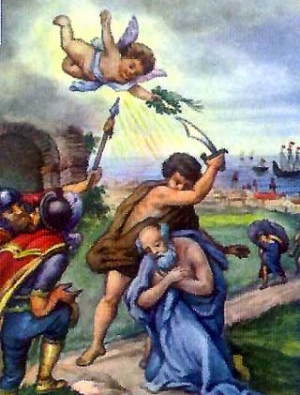
Saint Maro of Rome
Saint Maro of Rome Read More »
Profile
Maro was a friend of Saint Flavia Domitilla, whom they accompanied in exile to the island of Ponza. He was martyred in the persecutions of Trajan.
Died
Canonized
Patronage
Source: https://catholicsaints.info/saint-maro-of-rome/
Saint Maro of Rome Read More »
“And this is the verdict, that the light came into the world, but people preferred darkness to light, because their works were evil. For everyone who does wicked things hates the light and does not come toward the light, so that his works might not be exposed. But whoever lives the truth comes to the light, so that his works may be clearly seen as done in God.
Reflection:
The contrast of light and darkness is a beautiful concept to ponder in prayer. They are not two opposing forces. Darkness is simply the absence of light. In the visual spectrum, darkness does not exist. It is nothingness—no light, no color—making it impossible for our eyes to see. Similarly, within the spiritual realm, the absence of God leaves us spiritually blind. Darkness does not remove our capacity for seeing; rather, our sight is rendered useless without the light that reveals truth and guides our way. In this spiritual darkness, we stumble, unable to discern good from evil or to find the path to holiness. Yet, when we invite the divine light of Christ into our souls, the darkness dissipates and we begin to see clearly, walking confidently in God’s grace and truth.
If you’ve ever been in complete darkness, perhaps at home on a cloudy night when the power goes out, you know that even one small candle is enough to find your way around. So it is with the Light of Christ. Even the faintest presence of grace in our souls enables us to begin to find our way back to God.
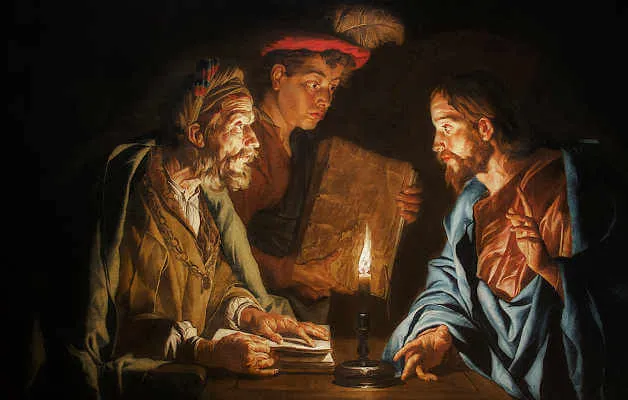
Today’s Gospel begins with that familiar passage from John 3:16: “God so loved the world that he gave his only-begotten Son, so that everyone who believes in him might not perish but might have eternal life.” This line comes toward the end of Jesus’ conversation with Nicodemus, the Pharisee who came to Jesus at night to converse with Him. Nicodemus was searching. Perhaps after he heard some of Jesus’ teachings and witnessed His miracles, Nicodemus discovered a small flickering flame of faith within his soul. That flame enabled him to find his way to Jesus that night in search of greater light. At the beginning of their conversation, Jesus gently but firmly challenged Nicodemus to move beyond what his human reason alone could comprehend and to walk with the light of faith. As Nicodemus listened and conversed, it seems that his mind and heart were opened, which enabled Jesus to teach him and us the beautiful truth found in today’s Gospel.
Perhaps as a way of softening His initial challenge, which was meant to help Nicodemus open himself further to the gift of faith, Jesus continued, “For God did not send his Son into the world to condemn the world, but that the world might be saved through him” (John 3:17). Though God is a perfectly just Judge, Jesus’ earthly mission was to save us from condemnation, to set us free, to flood our souls with the light of truth, and to enable us to see God through faith in this life and face-to-face in the next.
As with Nicodemus, Jesus is able to see any flickering flame of faith within our souls. When He sees it, He will engage us, challenge us, and seek to shine His light more fully within us. He wants not only a flickering flame of light but a radiant light. The more clearly we see, the more firmly our feet are on the path to holiness and the quicker we are able to journey to the source of all light—Jesus Himself.
Reflect today on the contrast of light and darkness within your soul. How clearly is your spiritual mind able to perceive all that God wants to reveal to you? If you find yourself lost at times or confused about life, turn to Jesus and beg for light. We must not be among those who prefer “darkness to light.” If the light of the Gospel reveals your sin, do not turn away. Believe that Jesus does not want to condemn you; He wants to free you. He wants you to believe in Him, so that you “might not perish but might have eternal life.” Allow the light to shine brightly within you so that you will find your way to all the treasures God wants to bestow on you.
Source: https://catholic-daily-reflections.com/2026/04/14/light-or-darkness/

Profile
Bernard was a monk in the Poitou area of France. He was a hermit and a traveling preacher. He founded a Benedictine monastery in the Tiron Forest and served as its abbot. Monks from his house spread throughout the British Isles, spreading the faith and building monasteries.
Born
Died
Patronage
Source: https://catholicsaints.info/saint-bernard-of-tiron/
Saint Bernard of Tiron Read More »
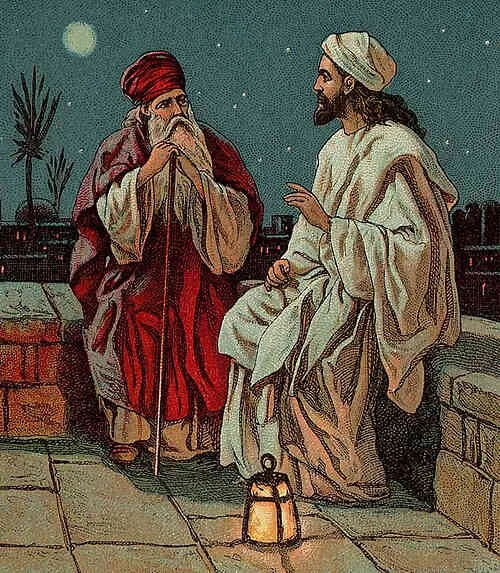
“You are the teacher of Israel and you do not understand this? Amen, amen, I say to you, we speak of what we know and we testify to what we have seen, but you people do not accept our testimony. If I tell you about earthly things and you do not believe, how will you believe if I tell you about heavenly things?”
Reflection:
Today’s Gospel continues Jesus’ conversation with Nicodemus, a respected Pharisee who came to Jesus at night. Nicodemus began by professing a small amount of faith in Jesus: “Rabbi, we know that you are a teacher who has come from God, for no one can do these signs that you are doing unless God is with him” (John 3:2). Perhaps he expected Jesus to be pleased by this acknowledgment, but Jesus, desiring the complete conversion of Nicodemus’ soul, went deeper.
Their conversation focused on Jesus’ statement, “You must be born from above.” This theme recurs throughout their dialogue, forming the backdrop of today’s Gospel. Jesus gently encouraged Nicodemus to move beyond amazement toward a faith made possible only by openness to the Holy Spirit.
Like Nicodemus, many of us approach God in prayer with an initial or superficial faith. We acknowledge Jesus’ divinity, but this is only the starting point. Once we make that first step, Jesus invites us further, challenging us to delve into divine mysteries with hearts open to grace.
Jesus’ question, “You are the teacher of Israel and you do not understand this?” signals both a challenge and an invitation. Unlike the harsh rebukes He gave to those who approached with skepticism and disdain, His tone with Nicodemus was firm yet compassionate. Without condemning Nicodemus, Jesus exposed his limited understanding and called him to greater openness to the truth of Jesus’ identity and His divine mission.
This call to deeper understanding must resonate with us. Jesus invites us to look beyond the surface, beyond what our eyes can see, to the divine mysteries He reveals. He alludes to His crucifixion and His messianic identity when He says, “And just as Moses lifted up the serpent in the desert, so must the Son of Man be lifted up, so that everyone who believes in him may have eternal life” (John 3:14–15). This revelation, veiled and profound, speaks of the mystery of salvation—Jesus, both God and man, being lifted up on the Cross, shedding His blood so that all who believe in Him may attain eternal life.
Why does Jesus speak in mysteries? Because the truths He shares can only be fully grasped when we listen to the Holy Spirit within us, guiding and enlightening our souls. Just as the invisible wind can be felt, so too does the Holy Spirit move in our lives, unseen, yet powerful and transformative.
Reflect today on how you might be like Nicodemus. The good news is that this Pharisee, once hesitant and questioning, ultimately grew in faith and is commemorated as a saint in the Roman Martyrology on August 31. Like him, we are called to move beyond the surface and deepen our openness to the Holy Spirit. Where in your life can you seek deeper understanding and greater surrender to God’s mysterious work? Resolve to listen more intently and to be guided by the Spirit so that you might comprehend the divine mysteries and believe with greater conviction.
Source: https://catholic-daily-reflections.com/2026/04/13/penetrating-divine-mysteries/
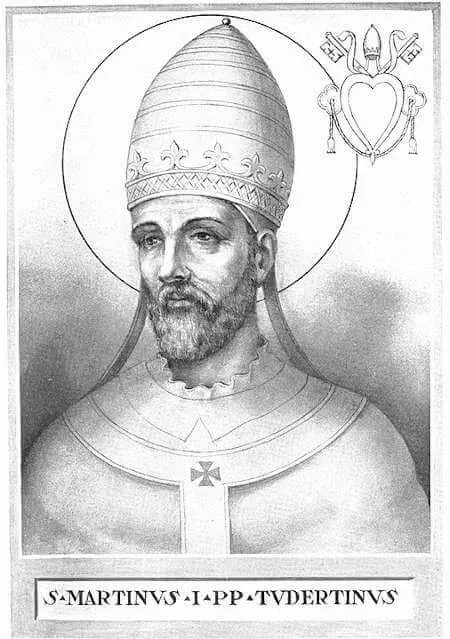
In the seventh century, theological and political tension prevailed between the Western church centered in Rome and the Eastern church centered in Constantinople, largely due to the interference of the Byzantine emperor. The emperor and Patriarch in Constantinople (modern-day Istanbul, Turkey) had enjoyed a strong religious and political influence over the entire Church ever since Constantine the Great Christianized the Roman Empire in the fourth century. This influence grew after the Western Roman Empire fell in the fifth century and was strengthened further in the sixth century when the Byzantine emperor, Justinian I, conquered Italy and forced the Goth-appointed pope to resign in 537, naming the papal legate to Constantinople as the new pope. From that time on, until 752, newly elected popes were required to obtain approval from the emperor before being consecrated. Many emperors saw themselves not only as political leaders, but also as those ultimately in charge of the governance of the Church. It is within this tension that today’s saint lived.
Martin was born in a small town about 100 miles north of Rome. He was of noble birth, an excellent student, and exercised great charity to the poor. As a cleric, he assisted two popes in important roles. In 641, he was sent by Pope John IV across the Adriatic Sea to Dalmatia and Istria (modern-day Croatia) where he assisted those who had suffered the effects of war. After the death of John IV, Theodore I was elected pope. Martin became his papal legate to Constantinople, where he worked closely with the emperor and patriarch, representing Pope Theodore in all matters.
As papal legate to Constantinople, the most pressing theological issue that Martin faced was the ongoing debate about the nature of Christ. Many within the Eastern Church adhered to monothelitism, a heresy claiming that Christ had only one will: a divine will but not a human will. This was contrary to the orthodox position held by the pope that Jesus had both a human and divine will. In 648, in an apparent attempt to bring an end to the debate, the Byzantine emperor Constans II issued an edict, the Type of Constans (Type), in which he tried to forge a middle way by forbidding discussion of the controversy, permitting everyone to adhere to their own position. Though the Patriarch of Constantinople, Paul II, at first held the orthodox position, he embraced the Type issued by the emperor. Martin, however, did not.
One year later, in 649, Pope Theodore died and named Martin as his successor. As had been the custom, the newly elected pope was supposed to receive approval of his appointment from the Byzantine emperor before his installation. However, for the first time in more than 100 years, Martin immediately moved forward with his coronation without the express consent of Constans II. This angered Constans, but he did nothing about it—at first.
Pope Martin, well aware of the most pressing issues within the Church, wasted no time addressing them. He called the Lateran Council of 649, a council that his predecessor Pope Theodore had intended to call, and made monothelitism the topic of discussion. Though the council did not reach the level of an official ecumenical council of the entire Church, given the fact that the Roman emperor was not involved, it was one of the earliest attempts of a pope to act on his own authority without the emperor. Hence, not only the teaching that this council produced, but also the way it was orchestrated, provided much direction for the future of the Church when the role of the emperor would eventually be fully excluded from the governance of the Church. The Lateran Council was attended by 105 bishops, held five sessions, and issued twenty decrees condemning monothelitism. It also condemned Constans’ edict, the Type, as well as some other earlier imperial edicts.
When Pope Martin began publishing this new teaching throughout Rome and beyond, the enraged emperor sought to have him arrested, or killed if necessary. This proved difficult. The emperor first sent a bishop of lower rank to Rome to oppose the pope and cause a schism. He was unsuccessful, so the bishop is said to have ordered a soldier to murder the pope during Mass. That soldier was struck blind, and the bishop repented. Later, the emperor sent another bishop with a Byzantine army to the pope. This time they were successful in capturing the pope and in bringing him back to Constantinople. Pope Martin was already ill when he was captured; abuse and lack of decent food caused his condition to worsen during the three months at sea.
Once he arrived in Constantinople, Pope Martin was placed on trial and found guilty of treason, the primary charge being that he would not accept the emperor’s edict, the Type. Because Patriarch Paul II intervened with the emperor, the emperor exiled Martin to Crimea instead of sentencing him to death. Throughout his imprisonment and exile, though elderly and sick, he was continually abused, malnourished, and ridiculed.
The emperor ordered the Church in Rome to elect a new pope, even though Pope Martin was still alive. The Church in Rome consented and elected a new pope as one final blow to the abused pontiff. Pope Martin, seeking only the good of the Church, acquiesced to this humiliation, and embraced being abandoned by the leaders of the Church in Rome. Of all he suffered, it is said that his abandonment by the Church leaders caused him the most suffering. Not long after being exiled, Pope Martin died because of the abuses, exposure, and malnourishment he endured. For that reason, the Church considers him a martyr, the last pope to receive that crown.
Popes must be courageous, even in the face of persecution and death. They need to set an example to all people so that all the faithful will follow their example. Pope Martin did this well, and his witness has had a profound effect upon generations after him. More than 1,100 years later, Pope Pius VII honored the memory and witness of Pope Martin when he wrote, in part, “Indeed, the famous Martin who long ago won great praise for this See, commends faithfulness and fortitude to Us by his strengthening and defense of the truth and by the endurance of labors and pains…”
Ponder the ways that God is calling you to act with greater courage in the face of persecution, opposition, ridicule, or any form of suffering. Do what is right, no matter the cost, and you will one day be among the saints alongside Saint Martin in Heaven.
Source: https://mycatholic.life/saints/saints-of-the-liturgical-year/april-13-saint-martin-i-pope-and-martyr/
Saint Martin I, Pope and Martyr Read More »
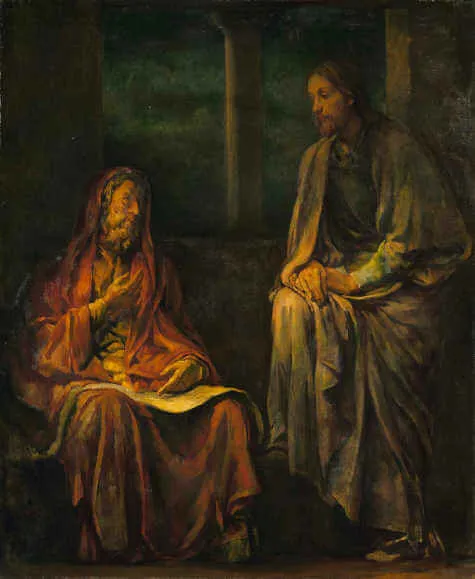
“Do not be amazed that I told you, ‘You must be born from above.’ The wind blows where it wills, and you can hear the sound it makes, but you do not know where it comes from or where it goes; so it is with everyone who is born of the Spirit.”
Reflection:
Today’s Gospel offers us an opportunity to ponder the relationship between faith and reason. Is it good to live our lives according to human reason? Certainly! The natural virtue of prudence is the ability to use our human reason to discern the right course of action in any given situation, choosing what is most reasonable to achieve good and avoid harm. Unfortunately, we often make choices based not on prudence but on unruly passions and disordered desires. Prudence helps us cut through the confusion so we can choose the most reasonable course of action.
Natural prudence, however, is not enough if we want to choose God’s will in all circumstances. God’s will is not contrary to reason and natural prudence; it is above what our natural minds alone can discern. This was the struggle Nicodemus had in today’s Gospel.
Nicodemus, a well-respected Pharisee, “came to Jesus at night” to converse with Him. Jesus warmly welcomed him and their conversation ensued. Some Church Fathers have interpreted the detail that it was at night as a symbol of Nicodemus’ faith: it had not yet been enlightened by divinely revealed truth. He was clearly open and curious, knowing there was something special about Jesus, which is evidenced by his initial greeting: “Rabbi, we know that you are a teacher who has come from God, for no one can do these signs that you are doing unless God is with him” (John 3:2). Nicodemus, familiar with Jesus’ miracles, understood that only God could empower one to do such things. This opened the door to his curiosity, which led him to seek Jesus out for a conversation.
What a beautiful starting point for faith! Like Nicodemus, when we encounter God’s almighty power in some way—such as during prayer, the holy virtues of another, or through our reading of the Scriptures—we will experience a certain tug on our hearts. We might not fully understand such an experience, but we must act on it. If we do not, we silence the gentle promptings of the Holy Spirit.
Nicodemus sought understanding, and Jesus’ response to him was exactly what he needed. Jesus did not address Nicodemus’ compliment; instead, He addressed Nicodemus as a person and said what he needed to hear: “Amen, amen, I say to you, unless one is born from above, he cannot see the Kingdom of God” (John 3:3).
Nicodemus responded in a way we are all tempted to do when we face a divine mystery—he tried to figure it out through the use of his natural reason alone: “How can a person once grown old be born again? Surely he cannot reenter his mother’s womb and be born again, can he?” (John 3:4). This is a common tendency. We want to figure things out so they make sense. However, the only way to make sense of life is to allow our human reason to be informed and elevated by the grace of the Holy Spirit. For that reason, Jesus continued to insist on speaking mysteriously, to draw Nicodemus beyond natural prudential judgments into supernatural understanding.
Reflect today on the mysterious ways the Holy Spirit communicates to you. Like the wind, the Holy Spirit moves through our lives, unseen yet transformative, refreshing our souls with His gentle guidance. We cannot direct His movements, but we can recognize His presence in the stirrings of grace and the fruits of goodness in our lives. When we allow ourselves to be carried by the Spirit, we find ourselves led in directions we might never have chosen on our own but that always lead us closer to God’s will and His Kingdom.
Source: https://catholic-daily-reflections.com/2026/04/12/faith-and-reason/
They devoted themselves
to the teaching of the apostles and to the communal life,
to the breaking of bread and to the prayers.
Awe came upon everyone,
and many wonders and signs were done through the apostles.
All who believed were together and had all things in common;
they would sell their property and possessions
and divide them among all according to each one’s need.
Every day they devoted themselves
to meeting together in the temple area
and to breaking bread in their homes.
They ate their meals with exultation and sincerity of heart,
praising God and enjoying favor with all the people.
And every day the Lord added to their number those who were being saved.
R. (1) Give thanks to the LORD for he is good, his love is everlasting.
or:
R. Alleluia.
Let the house of Israel say,
“His mercy endures forever.”
Let the house of Aaron say,
“His mercy endures forever.”
Let those who fear the LORD say,
“His mercy endures forever.”
R. Give thanks to the LORD for he is good, his love is everlasting.
or:
R. Alleluia.
I was hard pressed and was falling,
but the LORD helped me.
My strength and my courage is the LORD,
and he has been my savior.
The joyful shout of victory
in the tents of the just:
R. Give thanks to the LORD for he is good, his love is everlasting.
or:
R. Alleluia.
The stone which the builders rejected
has become the cornerstone.
By the LORD has this been done;
it is wonderful in our eyes.
This is the day the LORD has made;
let us be glad and rejoice in it.
R. Give thanks to the LORD for he is good, his love is everlasting.
or:
R. Alleluia.
Blessed be the God and Father of our Lord Jesus Christ,
who in his great mercy gave us a new birth to a living hope
through the resurrection of Jesus Christ from the dead,
to an inheritance that is imperishable, undefiled, and unfading,
kept in heaven for you
who by the power of God are safeguarded through faith,
to a salvation that is ready to be revealed in the final time.
In this you rejoice, although now for a little while
you may have to suffer through various trials,
so that the genuineness of your faith,
more precious than gold that is perishable even though tested by fire,
may prove to be for praise, glory, and honor
at the revelation of Jesus Christ.
Although you have not seen him you love him;
even though you do not see him now yet believe in him,
you rejoice with an indescribable and glorious joy,
as you attain the goal of your faith, the salvation of your souls.
R. Alleluia, alleluia.
You believe in me, Thomas, because you have seen me, says the Lord;
blessed are they who have not seen me, but still believe!
R. Alleluia, alleluia.
On the evening of that first day of the week,
when the doors were locked, where the disciples were,
for fear of the Jews,
Jesus came and stood in their midst
and said to them, “Peace be with you.”
When he had said this, he showed them his hands and his side.
The disciples rejoiced when they saw the Lord.
Jesus said to them again, “Peace be with you.
As the Father has sent me, so I send you.”
And when he had said this, he breathed on them and said to them,
“Receive the Holy Spirit.
Whose sins you forgive are forgiven them,
and whose sins you retain are retained.”
Thomas, called Didymus, one of the Twelve,
was not with them when Jesus came.
So the other disciples said to him, “We have seen the Lord.”
But he said to them,
“Unless I see the mark of the nails in his hands
and put my finger into the nailmarks
and put my hand into his side, I will not believe.”
Now a week later his disciples were again inside
and Thomas was with them.
Jesus came, although the doors were locked,
and stood in their midst and said, “Peace be with you.”
Then he said to Thomas, “Put your finger here and see my hands,
and bring your hand and put it into my side,
and do not be unbelieving, but believe.”
Thomas answered and said to him, “My Lord and my God!”
Jesus said to him, “Have you come to believe because you have seen me?
Blessed are those who have not seen and have believed.”
Now, Jesus did many other signs in the presence of his disciples
that are not written in this book.
But these are written that you may come to believe
that Jesus is the Christ, the Son of God,
and that through this belief you may have life in his name.
Source: https://bible.usccb.org/bible/readings/041226.cfm
Second Sunday of Easter (or Sunday of Divine Mercy) Read More »
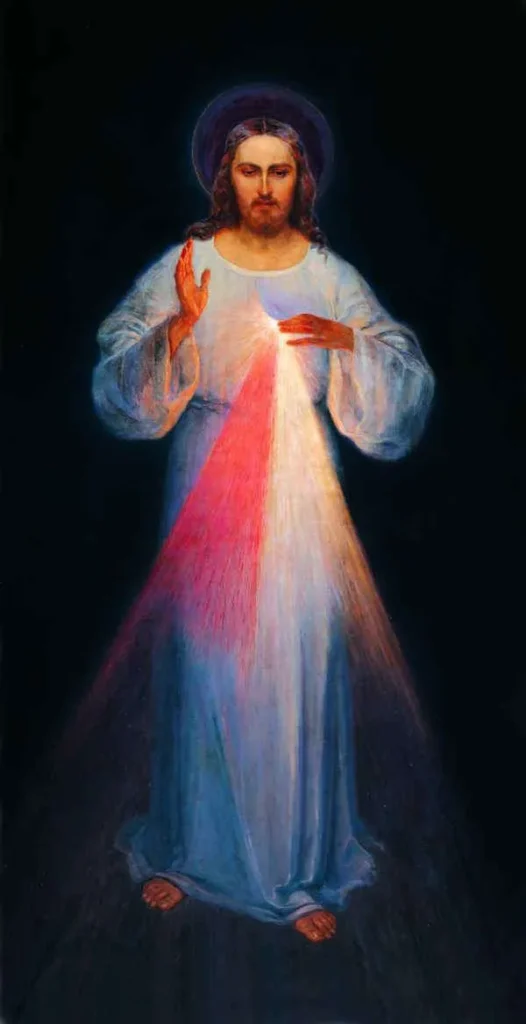
In the year 2000, Pope John Paul II canonized Saint Maria Faustina Kowolska and added the Feast of Divine Mercy to the Church’s official calendar. Saint Faustina, who died in 1938, was a member of the Congregation of Sisters of Our Lady of Mercy in Krakow, Poland. She came from a simple and poor family of farmers, had only three years of rudimentary education, and performed the humblest of tasks in her convent. But she also was a mystic who was privileged to have many private revelations from our Lord. In obedience to her superior and spiritual director, she recorded these private revelations in six notebooks. Those notebooks are known today under the title: Divine Mercy in My Soul: Diary of Saint Maria Faustina Kowalska. The messages contained within her diary present profound communications from God for our day and age. Though the messages are many, there are several new ways that God is calling us to a new form of devotion.
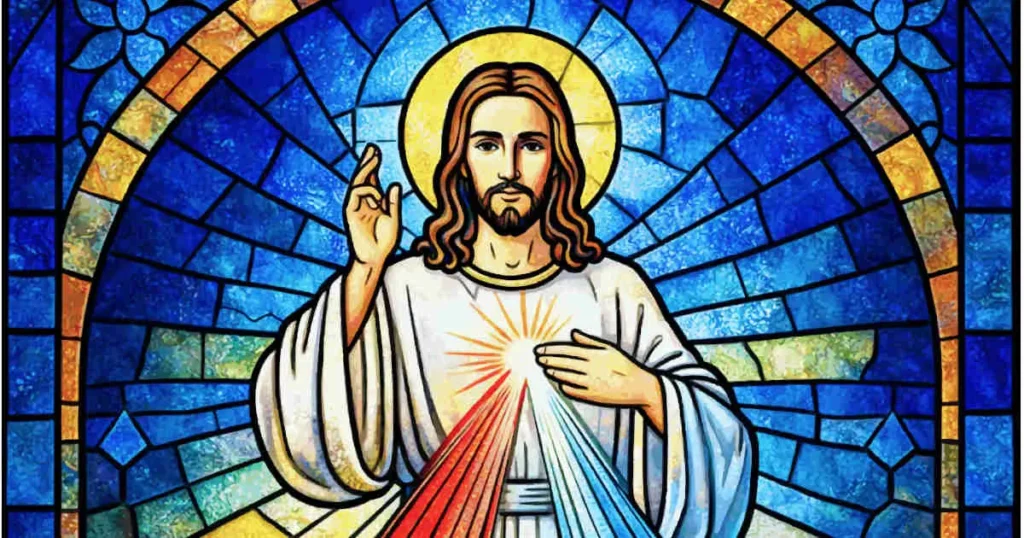
A first way is through meditation on the image of Divine Mercy. Of this, Saint Faustina wrote:
In the evening, when I was in my cell, I became aware of the Lord Jesus clothed in a white garment. One hand was raised in blessing, the other was touching the garment at the breast. From the opening of the garment at the breast there came forth two large rays, one red and the other pale. In silence I gazed intently at the Lord; my soul was overwhelmed with fear, but also with great joy. After a while Jesus said to me, “paint an image according to the pattern you see, with the inscription: Jesus, I trust in You” (#47).
“The pale ray stands for the Water which makes souls righteous; the red ray stands for the Blood which is the life of souls. These two rays issued forth from the depths of My most tender Mercy at that time when My agonizing Heart was opened by a lance on the Cross….Fortunate is the one who will dwell in their shelter, for the just hand of God shall not lay hold of him” (#299).
A second way is through our participation in the Solemnity of Divine Mercy:
“On that day (the 8th day of Easter each year) the very depths of My tender mercy are open. I pour out a whole ocean of graces upon those souls who approach the fount of My mercy. The soul that will go to Confession and receive Holy Communion shall obtain complete forgiveness of sins and punishment. On that day all the divine floodgates through which grace flow are opened. Let no soul fear to draw near to Me, even though its sins be as scarlet. My mercy is so great that no mind, be it of man or of angel, will be able to fathom it throughout all eternity” (#699).
A third way is through the recitation of the Chaplet of Divine Mercy:
Once, as I was going down the hall to the kitchen, I heard these words in my soul: “Say unceasingly the chaplet that I have taught you. Whoever will recite it will receive great mercy at the hour of death. Priests will recommend it to sinners as their last hope of salvation. Even if there were a sinner most hardened, if he were to recite this chaplet only once, he would receive grace from My infinite mercy. I desire that the whole world know My infinite mercy. I desire to grant unimaginable graces to those souls who trust in My mercy” (#687).
A fourth way is by honoring Jesus’ passion at the 3 o’clock hour:
At three o’clock, implore My mercy, especially for sinners; and, if only for a brief moment, immerse yourself in My Passion, particularly in My abandonment at the moment of agony. This is the hour of great mercy for the whole world. I will allow you to enter into My mortal sorrow. In this hour, I will refuse nothing to the soul that makes a request of me in virtue of My Passion” (#1320).
A fifth way is through an apostolic movement to spread the message of Divine Mercy. During her lifetime, Sister Faustina believed Jesus was calling her to found a new congregation, but that never materialized. Jesus, nonetheless, spoke to her in ways that revealed His desire that this “new congregation” be established. Since a formal religious congregation was never founded in her lifetime, we must look to the founding of subsequent congregations and apostolic movements that seek to spread the messages of Divine Mercy. God is calling each of us not only to receive His mercy but to spread that mercy to others in personal and organized ways.
Though Saint Faustina died in 1938, we should see the messages in her Diary as messages God especially desires we learn and live today. God moves slowly and methodically. He first revealed these messages, then allowed them to be studied by the Church for decades, then led Pope John Paul to canonize her and establish the universal Feast of Mercy on the last day of the octave of Easter in the year 2000. For these reasons, we should see this as one of the newest and most relevant devotions in our lifetimes.
As we celebrate Divine Mercy Sunday, ponder the profound significance of this new form of devotion for the Church and world today. We need God’s abundant Divine Mercy to flow from the gates of Heaven upon us more than ever. Only in Heaven will we understand the full depths of God’s Mercy. For now, we must trust all that He has revealed through his humble servant Saint Faustina and respond to the requests He has given to us through her. Commit yourself to the various ways God has called us to call upon His Mercy and do so with as much vigor and devotion you can offer Him. The following is the 3 o’clock prayer Jesus gave to Saint Faustina:
Prayer: You expired, Jesus, but the source of life gushed forth for souls, and the ocean of mercy opened up for the whole world. O Fount of Life, unfathomable Divine Mercy, envelop the whole world and empty Yourself out upon us (#1319). Jesus, I trust in You.
Source: https://mycatholic.life/catholic-prayers/triduum-and-easter-prayers/divine-mercy-sunday/
Divine Mercy Sunday Read More »
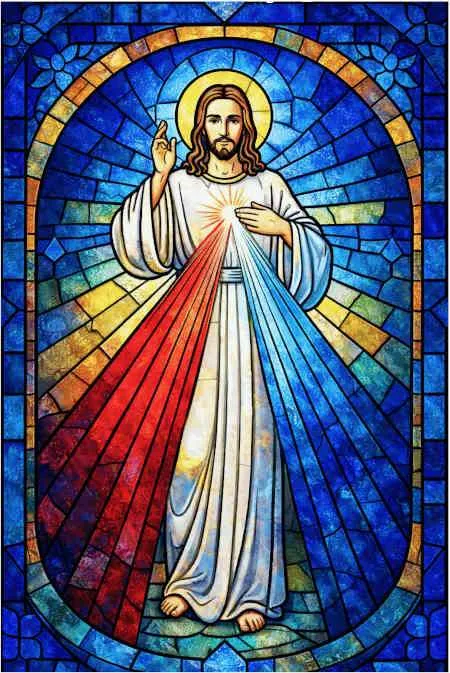
Now Jesus did many other signs in the presence of his disciples that are not written in this book. But these are written that you may come to believe that Jesus is the Christ, the Son of God, and that through this belief you may have life in his name.
Reflection:
Do you believe that Jesus is the Christ, the Son of God, and that through that belief you will inherit eternal life? Belief begins with an intellectual assent but must continuously deepen. The belief Saint John speaks of in today’s Gospel is one that draws us deeper into the mystery of Christ’s Paschal Mystery—His Life, Death, and Resurrection—so as to receive the gift of His abundant and transforming Mercy.
Today is the eighth day of Easter. The Church, in Her wisdom, celebrates the most important days of the liturgical year for eight days. Historically, there were a number of feasts celebrated with octaves: Easter, Epiphany, Corpus Christi, Ascension, All Saints, and in some locales, the Sacred Heart and various Marian feasts. After Vatican II, the Church focused on two—Christmas and Easter—so as to give greater emphasis to the core of the Paschal Mystery.
In the year 2000, the Octave of Easter took on a new focus when Saint Pope John Paul II instituted the Solemnity of Divine Mercy on the eighth day of Easter. This was done in response to Jesus’ personal request, communicated to the Church through a humble cloistered Polish nun. Canonized in 2000, she is known as Saint Maria Faustina Kowalska.
Between 1931 and 1938, Sister Faustina received numerous mystical visions that she recorded in six notebooks, now referred to collectively as Divine Mercy in My Soul: Diary of Saint Maria Faustina Kowalska. Almost two years before her death, Sister Faustina recorded the following entry in her diary:
On one occasion, I heard these words: “My daughter, tell the whole world about My inconceivable mercy. I desire that the Feast of Mercy be a refuge and shelter for all souls, and especially for poor sinners. On that day the very depths of My tender mercy are open. I pour out a whole ocean of graces upon those souls who approach the fount of My mercy. The soul that will go to Confession and receive Holy Communion shall obtain complete forgiveness of sins and punishment. On that day all the divine floodgates through which grace flows are opened. Let no soul fear to draw near to Me, even though its sins be as scarlet. My mercy is so great that no mind, be it of man or of angel, will be able to fathom it throughout all eternity. Everything that exists has come forth from the very depths of My most tender mercy. Every soul in its relation to Me will contemplate My love and mercy throughout eternity. The Feast of Mercy emerged from My very depths of tenderness. It is My desire that it be solemnly celebrated on the first Sunday after Easter. Mankind will not have peace until it turns to the Fount of My Mercy” (Diary #699).
When we reflect on this beautiful private revelation in the light of today’s Gospel, we are invited to consider that even though the Gospels present us with all we need to know in order to come to faith in Christ and share in the new life He bestows, the treasure of His Divine Mercy is inexhaustible. Just as “Jesus did many other signs in the presence of his disciples that are not written in this book,” so also the depths of His ongoing work, His Divine Mercy, will only be seen in Heaven.
Divine Mercy Sunday is a day on which we are to profess our belief in this Mercy. To do so, we must ponder these inexhaustible treasures, probe their depths with the aid of Saint Faustina’s private revelations, and then allow our Lord to reveal them to us within the depths of our souls.
Reflect today on the infinite and inexhaustible treasures found in the Person of Christ and His Divine Mercy. His Mercy draws us into countless unrecorded and glorious graces that we are called to receive and rejoice in. Believe in His Mercy. Be open to it. Call upon it today, and receive it more abundantly.
Source: https://catholic-daily-reflections.com/2026/04/11/the-inexhaustible-depths-of-divine-mercy/
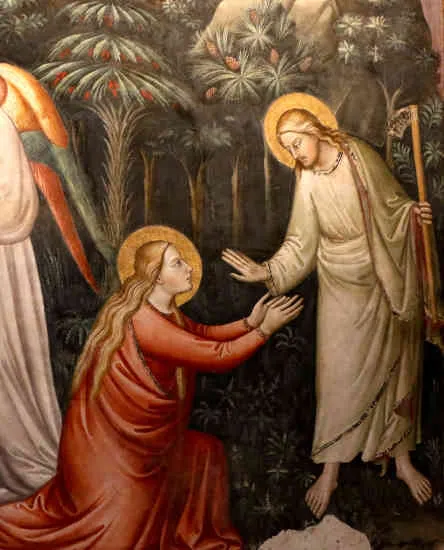
In 966, Mieszko I, duke and ruler of Poland, along with many others in his ruling court, converted to the Catholic faith. Their conversion marked the beginning of what is often referred to as “The Baptism of Poland.” In the years that followed, many more conversions took place throughout the land, especially through the efforts of missionary bishop Saint Adalbert. Just over a century later, another significant event took place in Poland. The Archbishop of Krakow, Stanislaus of Szczepanów, was brutally martyred by King Bolesław II. In 1979, Pope Saint John Paul II, the former Archbishop of Krakow himself, referred to Saint Stanislaus’ martyrdom analogously as “Poland’s Confirmation” (see above).
Very little is known for certain about Saint Stanislaus, since his first biography was not written until more than a century after his death. Nonetheless, his influence upon Poland has been great. He is believed to have been born and raised in southern Poland, in the village of Szczepanów. His town and the surrounding area stood out from the rest of Poland for their unique culture, architecture, traditional costumes, dances, food, and dialect. The capital and largest city of the territory was Krakow. His parents were prominent and wealthy, as well as devout and charitable. For most of their marriage, they were without children. When his mother conceived Stanislaus later in their lives, his parents saw their child as a gift from Heaven.
As a youth, Stanislaus became very devout, charitable toward the poor, fervent in mortifications, and dedicated to growth in virtue. As a young man, it is believed that he was sent to study in the then capital of Poland, Gniezno, and later completed his theological studies in Paris. After his parents died, Stanislaus received a huge inheritance, which he immediately gave to the poor. He was ordained to the priesthood by the Bishop of Krakow and appointed canon at the cathedral, became a well-respected preacher, was later appointed as a pastor, and eventually became the Vicar General of Krakow, a position of great importance in the local church. When the Bishop of Krakow died, Stanislaus was chosen as his successor by popular acclaim. At first he refused the position, but on the explicit order of the pope, he accepted and was ordained a bishop around the age of forty-two.
As a bishop, Stanislaus vigorously preached against immoralities at all social levels. He even confronted the king. When he was met with opposition, he remained steadfast in his convictions. It is believed that, to help solve various ecclesiastical matters, he brought papal legates to Poland, reestablished the Diocese of Gniezno as an archdiocese, and worked with the king to found new monasteries to help with the ongoing efforts of evangelization.
At that time, Bolesław II was King of Poland. Legend has it that Bishop Stanislaus had purchased land for the church from a man named Piotr. After Piotr’s death, however, his three sons disputed the sale and took the matter to the king. The king, agitated with Bishop Stanislaus for condemning his immoralities, sided with the sons and ordered that the bishop return the property. Bishop Stanislaus is said to have asked for three days to produce Piotr as his witness of the sale. The king and his court laughed and gave him his three days. After three days of prayer and fasting, Bishop Stanislaus led a procession to the cemetery where Piotr’s body was exhumed and the bishop ordered him to rise, which he did. The group then proceeded to the king and Piotr testified that he did indeed sell the property, scolding his sons before returning to his grave.
Though King Bolesław enjoyed many honors as a successful military leader, he also continued to manifestly indulge in immoralities, such as lusts and heavy-handed cruelty to anyone who opposed him. Tensions continued to grow between the bishop and the king. Eventually, after the king ignored the bishop’s warnings, Bishop Stanislaus excommunicated Bolesław. Outraged, Bolesław held a mock trial and found the bishop guilty of treason, punishable by death. When Bolesław’s soldiers refused to carry out the order, Bolesław himself slew the bishop with his sword while the bishop was celebrating Mass. The legend continues that after Stanislaus’ death, the soldiers were ordered to dismember the bishop’s body and scatter the pieces on the land to be devoured by wild beasts. Miraculously, eagles guarded the pieces until the canons of the cathedral were able to gather them and bury them properly. Outrage against Bolesław’s actions quickly reached a fever pitch in the kingdom, and the king had to flee to Hungary, where he died an unhappy death.
Saint Stanislaus has become a legend and inspiration for all of Poland for many centuries. Like many kingdoms throughout the ages, Poland has gone through times of division, later to be reunited once again. Through it all, Saint Stanislaus has been a guiding light to Poles and a source of hope when it was needed the most. There is little doubt that his martyrdom confirmed Poland as a Christian country, strengthening its people throughout the years to become true witnesses to Christ no matter the cost.
Ponder your own call to courageously lay down your life for the faith. When fear keeps you from fidelity, turn to prayer and seek to imitate Saint Stanislaus. Allow his prayers and witness to confirm you more firmly in the faith so that you will be a witness to those who need it the most.
Source: https://mycatholic.life/saints/saints-of-the-liturgical-year/april-11-saint-stanislaus-bishop-and-martyr/
Saint Stanislaus, Bishop and Martyr Read More »
Add San Jose Filipino Ministry as a new recipient, Send your donation using"donate@dosjfm.org"
Payable to - San Jose Filipino Ministry
Address - Poong Jesus Nazareno Filipino Catholic Center (PJNFCC); 3700 W. Orange Ave., Anaheim CA 92804
Poong Jesus Nazareno Filipino Catholic Center (PJNFCC); 3700 W. Orange Ave., Anaheim CA 92804
Phone: (657) 214-2507
Mobile (657) 208-2038
info@dosjfm.org

Poong Jesus Nazareno Filipino Catholic Center (PJNFCC); 3700 W. Orange Ave., Anaheim CA 92804
Phone: (657) 214-2507
Mobile (657) 208-2038
info@dosjfm.org
Add San Jose Filipino Ministry as a new recipient, Send your donation using"donate@dosjfm.org"
Payable to - San Jose Filipino Ministry
Address - 1235 S Magnolia Ave
Anaheim, CA 92804-5115
San Jose Filipino Ministry. All rights reserved. 2021 © Powered by Phoenix Virtual Solutions
Sponsored by EverClear Hospice and Palliative Care