2024

Matthew 28:5-7

Glory Beyond Imagination

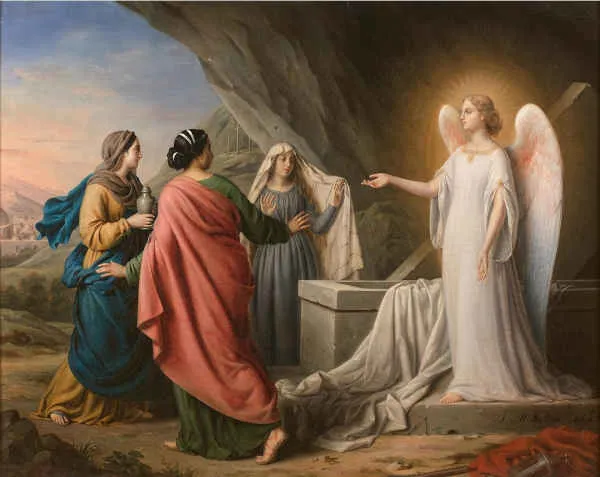
“Do not be afraid! I know that you are seeking Jesus the crucified. He is not here, for he has been raised just as he said. Come and see the place where he lay. Then go quickly and tell his disciples, ‘He has been raised from the dead, and he is going before you to Galilee; there you will see him.’ Behold, I have told you.”

Reflection:

The Lord has truly risen! Alleluia! Sin and death have been destroyed, and new life has been offered to all who cling to the Savior in faith. What a glorious day we celebrate today!

Matthew’s Gospel, quoted above, is read at the Easter Vigil Mass. Prior to the reading of this Gospel are seven Old Testament readings, each followed by a psalm, as well as a New Testament reading, another psalm and the Gospel. There are seventeen readings in all at the Easter Vigil! For that reason, the Easter Vigil is called “the mother of all vigils.” Though many people have not had the opportunity to participate in the Easter Vigil, it is helpful to understand it, because its structure and length reflect the awe and wonder we must have at the Resurrection of Christ. 

The Easter Vigil Mass begins in darkness, after the sun sets, with all the lights out in the Church. Outside, a new “blazing fire” is lit and blessed that symbolizes the Light of Christ that dispels all darkness. From that fire, the Easter candle and other candles held by the faithful in the church are lit, and the new light illuminates the church.

The procession into the church with the candles is followed by the singing of the ancient hymn the Exaultat. That hymn is the Church’s announcement of the Resurrection of Christ and is filled with profound theology, presented with youthful excitement and amazement. The tabernacle remains empty as a way of inviting the faithful to anticipate the celebration of the Eucharist once again. The lengthy Liturgy of the Word follows, as it recounts the history of God’s plan of salvation. Finally, the Sacraments of Initiation are celebrated within the Mass that culminates with the celebration of the Most Holy Eucharist.

Why is so much solemnity given to this celebration? Because Easter is worth it! Nothing ever has been and nothing ever will be more glorious than the triumph of the Son of God over sin and death. Easter must fill us with awe and wonder. Because of His death and Resurrection, our lives are changed forever. Therefore even if you are not able to participate in the “mother of all vigils,” try to learn the lessons this vigil teaches.

Among the many lessons we can learn from the Easter Vigil is that God’s glorious plan of salvation unfolds over time and then culminates with glory beyond imagination. This is especially depicted through the many readings in the Liturgy of the Word. The first reading for that Mass comes from Genesis and recounts the six days of creation.

We then read the story of Abraham, our father in faith, and how his trust in God was tested when he was told to offer his son Isaac as a sacrifice, in a prefiguration of the Father in Heaven offering His only Son for us all. We then read the story of Moses leading the people out of Egypt from slavery through the Red Sea. The waters of the Red Sea are a symbol of Baptism that crushes sin and leads us to freedom. Readings from the prophets Isaiah, Baruch and Ezekiel follow, revealing the unfolding of God’s promise of the gift of salvation to come.

At times in life, we can become impatient. We tend to want what we want when we want it. But the lesson of the Holy Scriptures is that God’s plan is not only perfect but is also fulfilled only in accord with God’s timing. This is His perfect wisdom. It’s a wisdom that we cannot always comprehend. In the end, if we embrace the perfect plan of God in our lives, we will share in the Resurrection of Christ. Nothing could ever be better than this. There is nothing that this world can offer us that even comes close to the glorious reward of sharing in the Resurrection of Christ.

As we celebrate the great Solemnity of Easter, reflect, today, upon the fact that God’s plan for your life is perfect. It’s a plan that God wants to unfold for you one step at a time. The end result is the glory of the Resurrection! It’s a life of perfection with Him in Heaven when every tear will be wiped away. It’s a plan that removes every sin, sorrow and suffering, and leads you to the fullness of joy.

The way to embrace that plan is to take one step at a time as God leads. Little by little, God wants to change you, free you, forgive you, strengthen you and set you on the path to glory. Believe in the most awe-inspiring glory that you could ever share in. Believe in the promise of the Resurrection. Make sharing in it your one and only goal in life, and let God lead you down that path, one step at a time.

Source: https://catholic-daily-reflections.com/2024/03/30/glory-beyond-imagination/
Matthew 28:5-7 Read More »

Holy Saturday with Mother Mary

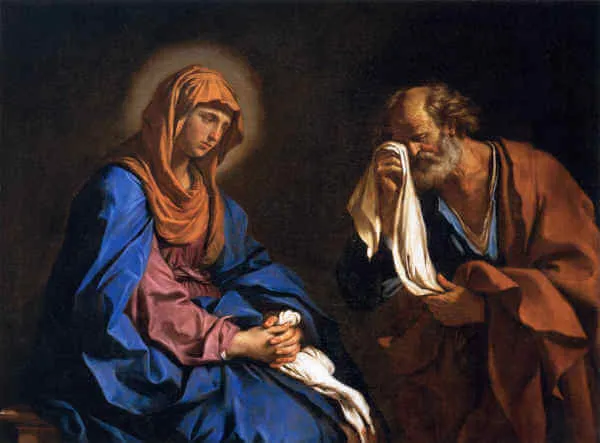
The Savior of the World died a cruel death upon the Cross. His broken body was laid in the tomb. His disciples scattered and were fearful that they would be next. But our Blessed Mother kept vigil in the perfect hope that her Son would soon rise.

Traditionally, Saturdays within the Church year are dedicated to the Blessed Virgin Mary. This ancient tradition developed in part due to the belief that, as others were filled with fear and confusion, Mother Mary kept vigil on Holy Saturday in prayerful anticipation of Jesus’ resurrection. She knew her Son would rise. She had hope beyond hope. Her faith was certain. Her love kept her vigilant as she awaited the return of her Son.

For many centuries, it has been suggested that the first person to whom Jesus appeared after His Resurrection was His own mother. Pope Saint John Paul II believed this. Saint Ignatius of Loyola believed it. And many others throughout the centuries shared this belief.

For these reasons, Holy Saturday is an ideal day to ponder the pondering heart of our Blessed Mother. There are several times in Sacred Scripture where we are told that Mother Mary pondered the mysteries of her Son’s life in her heart. She was one of the few who stood by Him in His agony and death. She stood before the Cross and prayerfully pondered His perfect sacrifice. The Blessed Mother held His dead body in her arms and pondered where His spirit had gone. And today she keeps vigil, pondering His imminent return to her.

Ponder her pondering heart. Try to unite your own heart with hers. Try to understand what she was thinking and hoping. Try to feel what she felt this sorrowful day. Try to experience her faith, her trust and her joyful expectation.

So many people in this world walk in despair and confusion. So many have lost hope in the new life that awaits them. So many have their own form of interior death without allowing God to draw them into His Resurrection. So many people today need the hope that was so alive in the heart of our Blessed Mother that first Holy Saturday.

Ponder the reality of Holy Saturday in silence this day and allow the glorious heart of our Blessed Mother to inspire you and draw you more deeply into her life of faith, hope and love.

Source: https://catholic-daily-reflections.com/2023/04/07/holy-saturday-with-mother-mary-2/

Holy Saturday with Mother Mary Read More »

The Lord’s Descent into Hell

What is happening? Today there is a great silence over the earth, a great silence, and stillness, a great silence because the King sleeps; the earth was in terror and was still, because God slept in the flesh and raised up those who were sleeping from the ages. God has died in the flesh, and the underworld has trembled.

Truly he goes to seek out our first parent like a lost sheep; he wishes to visit those who sit in darkness and in the shadow of death. He goes to free the prisoner Adam and his fellow-prisoner Eve from their pains, he who is God, and Adam’s son.

The Lord goes in to them holding his victorious weapon, his cross. When Adam, the first created man, sees him, he strikes his breast in terror and calls out to all: ‘My Lord be with you all.’ And Christ in reply says to Adam: ‘And with your spirit.’ And grasping his hand he raises him up, saying: ‘Awake, O sleeper, and arise from the dead, and Christ shall give you light.

‘I am your God, who for your sake became your son, who for you and your descendants now speak and command with authority those in prison: Come forth, and those in darkness: Have light, and those who sleep: Rise.

‘I command you: Awake, sleeper, I have not made you to be held a prisoner in the underworld. Arise from the dead; I am the life of the dead. Arise, O man, work of my hands, arise, you who were fashioned in my image. Rise, let us go hence; for you in me and I in you, together we are one undivided person.

‘For you, I your God became your son; for you, I the Master took on your form; that of slave; for you, I who am above the heavens came on earth and under the earth; for you, man, I became as a man without help, free among the dead; for you, who left a garden, I was handed over to Jews from a garden and crucified in a garden.

‘Look at the spittle on my face, which I received because of you, in order to restore you to that first divine inbreathing at creation. See the blows on my cheeks, which I accepted in order to refashion your distorted form to my own image.

‘See the scourging of my back, which I accepted in order to disperse the load of your sins which was laid upon your back. See my hands nailed to the tree for a good purpose, for you, who stretched out your hand to the tree for an evil one.

`I slept on the cross and a sword pierced my side, for you, who slept in paradise and brought forth Eve from your side. My side healed the pain of your side; my sleep will release you from your sleep in Hades; my sword has checked the sword which was turned against you.

‘But arise, let us go hence. The enemy brought you out of the land of paradise; I will reinstate you, no longer in paradise, but on the throne of heaven. I denied you the tree of life, which was a figure, but now I myself am united to you, I who am life. I posted the cherubim to guard you as they would slaves; now I make the cherubim worship you as they would God.

‘The cherubim throne has been prepared, the bearers are ready and waiting, the bridal chamber is in order, the food is provided, the everlasting houses and rooms are in readiness; the treasures of good things have been opened; the kingdom of heaven has been prepared before the ages.’

Source: https://mycatholic.life/catholic-prayers/triduum-and-easter-prayers/prayer-meditation-for-holy-saturday/#office

The Lord’s Descent into Hell Read More »

Prayer Meditation for Holy Saturday

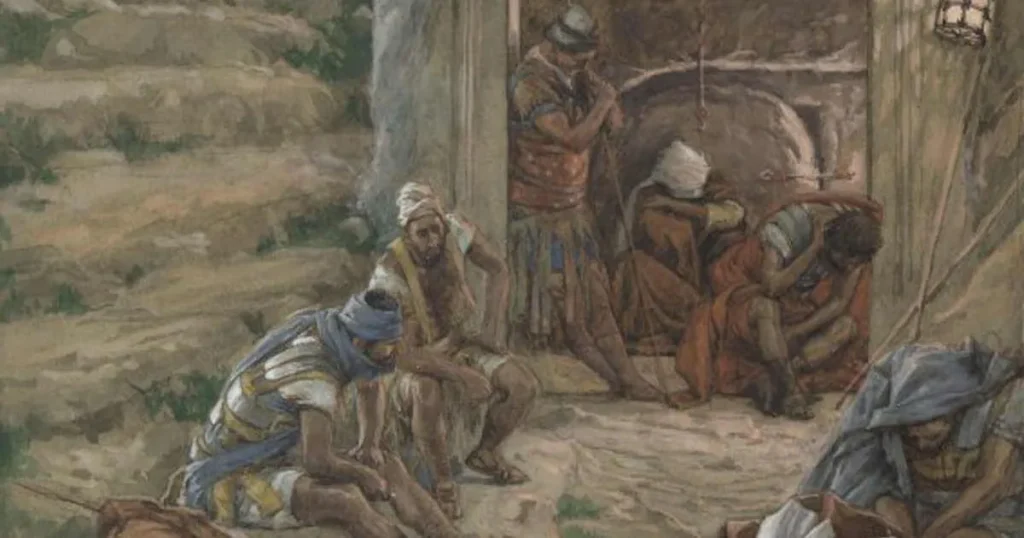
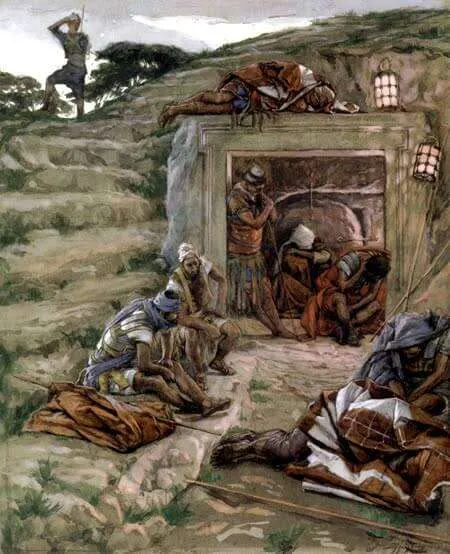
My Lord, today all is silent.  You have given Your precious life for the salvation of the world.  You died a horrific death, poured out all Mercy from Your wounded Heart, and now You rest in peace in the tomb as the soldiers keep vigil.

Lord, may I also keep vigil with You as You sleep.  I know that this day ends with Your glorious triumph, Your victory over sin and death.  But for now I sit quietly mourning Your death.  

Help me, dear Lord, to enter into the sorrow and the silence of this Holy Saturday.  Today no Sacraments are celebrated.  Today the world waits in mourning in anticipation of the glory of new life!

As I keep vigil, awaiting the celebration of Your Resurrection, fill me with hope.  Help me to look forward to the celebration of Your Resurrection and also to look forward to the hope of my own share in the new life You won for the world.  I entrust my whole being to You, dear Lord, as You lay lifeless and still.  May Your rest transform the brokenness of my own soul, my weaknesses, my sin, and my frailty.  You are glorious, and You bring the greatest good out of Your apparent defeat.  I trust in Your power to do all things, and I entrust my life to You.  Jesus, I trust in You.

Source: https://mycatholic.life/catholic-prayers/triduum-and-easter-prayers/prayer-meditation-for-holy-saturday/

Prayer Meditation for Holy Saturday Read More »

Good Friday of the Lord’s Passion

Perhaps one of the most surprising practices on Good Friday is that the Mass is not celebrated. Instead, Jesus’ saving Sacrifice is commemorated by the full reading of the Passion account, the veneration of the Cross, and the distribution of Holy Communion that was consecrated the day before. Why wouldn’t we celebrate the Sacrifice of the Mass on Good Friday? Saint Thomas Aquinas gives a profound answer to this question in his masterful work, Summa Theologica (See III.83). In part, he says the following:

Reply to Objection 2. The figure ceases on the advent of the reality. But this sacrament is a figure and a representation of our Lord’s Passion, as stated above. And therefore on the day on which our Lord’s Passion is recalled as it was really accomplished, this sacrament is not consecrated.

A careful reading of that passage, as well as the rest of that article, tells us that there is great power in the Liturgical Year, and in our annual Commemoration of the Lord’s Passion on Good Friday. We celebrate Mass daily throughout the year, except on Good Friday, so that we can receive the fruit of the Passion every day. The Church teaches that Mass is an efficacious sign, meaning that the Mass both signifies Christ’s sacrifice and actually makes it present.

But on Good Friday, we celebrate our Lord’s Passion in the reality of time. Therefore, in terms of grace, nothing is lost by the absence of Mass on Good Friday. Instead, we must understand that the day of Good Friday itself becomes a powerful instrument of grace. Our liturgical Commemoration of our Lord’s Passion on Good Friday enables us to share in His saving act of redemption, just as the Mass does every other day of the year.

Setting aside the profound depth of theology present in this teaching, what does this mean, practically, for those who participate in the Good Friday Liturgy today? Here are a few thoughts for pondering.

As you prayerfully participate in the Liturgical Commemoration of the Lord’s Passion, know that this day itself is endowed with grace and power. The grace does not come through the sacramental “Memorial” of the Lord’s Passion but from the reality encountered in this once-a-year Commemoration. This day itself is a real and sanctifying participation in the fruit of Jesus’ saving Sacrifice.

To better understand this, look into your own soul and consider any ways that you have experienced God’s grace powerfully and uniquely on Good Friday. Perhaps, in years past, you entered into the Triduum in a prayerful and recollected way. Call that experience to mind, and understand that this deep encounter with our Lord was especially made possible because those days are holy.

Today, as you celebrate Good Friday, understand that the floodgates of Heaven are opened to you in a way unlike any other day of the year. Seize this moment in time. Seize this once-a-year opportunity to enter into our Lord’s suffering and death. Do so prayerfully, meditatively, truly, and intentionally. Especially honor the hours between noon and three o’clock. Try to set that time aside for nothing other than prayer and recollection. This day is sanctified. Time is sanctified. By entering into prayer during these hours of sanctified time, you will discover that God is especially present to you.

Read the Passion. Pray the Stations of the Cross. Recite the Sorrowful Mysteries of the Rosary. Gaze at a crucifix. Fast, keep vigil, be attentive, and be open to the abundance of grace our Lord wishes to bestow upon you this Good Friday, especially by participating in the liturgical Commemoration of the Lord’s Passion during the sacred hours when our Lord hung on the Cross. Today, “the figure ceases on the advent of the reality.” Today, the reality is here, captured in time, made present to you. Stand before His sacred Cross, and allow His mercy to pour forth upon you from His wounded side.

Source: https://mycatholic.life/saints/saints-of-the-liturgical-year/good-friday/

Good Friday of the Lord’s Passion Read More »

Saint Ludolf of Ratzeburg

Profile

Ludolf was the Praemonstratensian canon of the cathedral of Ratzeburg (modern Landkreis Herzogtum Lauenburg), Schleswig-Holstein, Germany. He was a priest, a noted preacher, and a Bishop of Ratzeburg in 1236.

Ludolf was imprisoned, severely beaten, and exiled by Duke Albert Urso of Lauenburg, Saxony for defending the cathedral and preventing the Duke from confiscating its property. He was taken in by Duke John of Mecklenburg, but his injuries were so severe that he did not survive long. He became a martyr.

Died

  • 29 March 1255 in Wismar, Holstein, Germany from injuries received in prison
  • buried in the cathedral of Ratzeburg, Schleswig-Holstein, Germany
  • some relics at the Saint Johann Premonstratensian abbey in Duisburg-Hamborn, Nordrhein-Westfalen, Germany

Canonized

  • 14th century

Source: http://catholicsaints.mobi/calendar/29-march.htm

Saint Ludolf of Ratzeburg Read More »

John 19:28-30

I Thirst!

“After this, aware that everything was now finished, in order that the Scripture might be fulfilled, Jesus said, “I thirst.” There was a vessel filled with common wine. So they put a sponge soaked in wine on a sprig of hyssop and put it up to his mouth. When Jesus had taken the wine, he said, “It is finished.” And bowing his head, he handed over the spirit.”

Reflection:

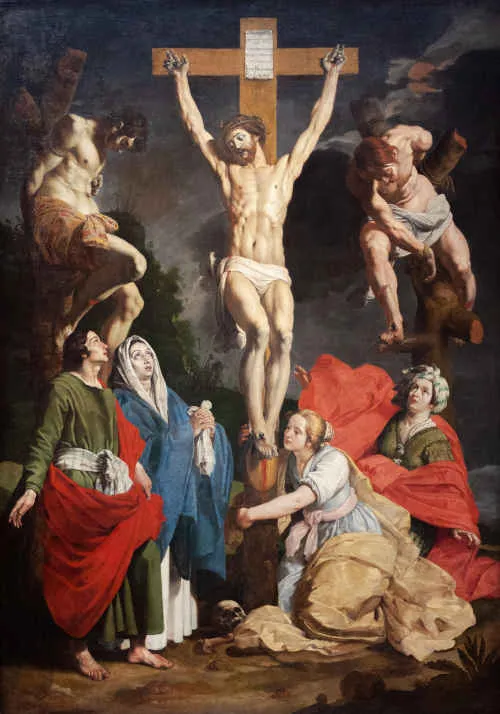
Consider the thirst of Jesus. Though His physical thirst must have been excruciating as He hung upon the Cross, pouring forth His precious blood upon the world, the spiritual thirst our Lord felt would have greatly overshadowed His physical thirst. His spiritual thirst is for you, for your soul, for your salvation. As He hung upon the Cross, Jesus did not think of Himself, His suffering or His wretched physical condition. Instead, He thought of you and of all those for whom He was giving His life.

Psalm 69:22 says, “Instead they gave me poison for my food; and for my thirst they gave me vinegar.” Jesus fulfilled this Scripture passage as He thirsted on the Cross. The vinegar symbolically refers to each one of us. The vinegar given to our Lord on the Cross was spoiled wine. Each one of us, symbolically speaking, is this spoiled wine. The purity of our humanity has been corrupted by original sin. As a result, we are not the people God intended us to be by nature. But in our fallen state, we have the potential to satiate Jesus’ spiritual thirst.

As you think about your own life, what do you see? Can you see yourself as spoiled wine? Perhaps it is a bit humiliating to think of yourself this way. But humility is good, especially when we understand that our Lord longs for us in our brokenness. Upon the Cross, Jesus did not cry out for the best of wine, the finest and most delicious. As He thirsted on the Cross, He longed to be satiated by you, in your weakened and broken state, just as you are, so that He can pour forth His cleansing mercy upon you.

As soon as Jesus tasted the sour wine, He cried out, “It is finished.” This symbolically represents His soul being satiated by you every time you turn to Him in your need. It’s amazing to consider the fact that you have the ability to console the Heart of Jesus and satiate His thirst this way. Saint Thérèse of Lisieux was very fond of a devotion dedicated to consoling Jesus’ Heart. As a child, she was given a prayer card that pictured Jesus in prison, looking out at one small flower. Thérèse saw herself as that one small flower who was given the mission to console Jesus’ Heart by visiting Him regularly in the prison of the tabernacle.

Spiritually speaking, that moment of Jesus’ thirst on the Cross permeates all time and continues today. Every time you come to Him in your need, especially when you come before Him in the Eucharist, He turns His eyes to you and calls to you, inviting you to console Him by offering Him the humility and brokenness of your life. 

Today our churches are empty. The Blessed Sacrament has been removed. As a result, we should seek to satiate the thirst of our Lord by thirsting for His divine presence that will return on Easter when the Mass is celebrated once again. Today is a day to grow in our desire for the presence of our Lord in our lives. We must allow ourselves to feel His loss, experience His death, and mourn His suffering. As we do, we must open ourselves to a deep spiritual longing to consume His broken Body and precious Blood once again. Doing so will not only prepare us to be satiated ourselves, it will also enable us to satiate the Heart of our Lord.

Reflect, today, upon Jesus on the Cross. Gaze at Him as He gazes at you. See the longing in His Heart for you. Know that He gave His life for you, so that you could receive the gift of new life. Know, also, that your openness to this gift of His life poured out for you will console our Lord’s Heart and bring His divine mission of salvation to fruition. Satiate our Lord’s thirst today so that He can once again say, “It is finished.”

Source: https://catholic-daily-reflections.com/2024/03/28/i-thirst/

John 19:28-30 Read More »

Holy Thursday

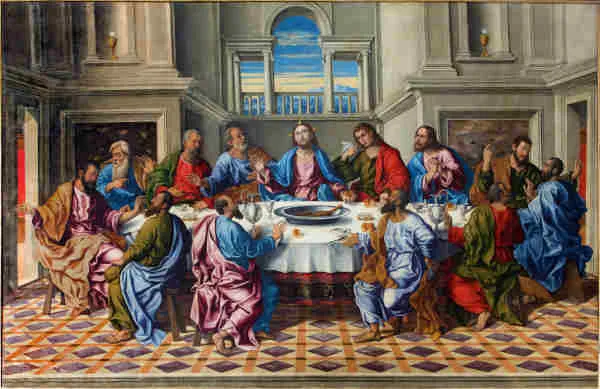
Holy Thursday is also called Maundy Thursday. “Maundy” comes from the Latin word mandatum, which is translated “mandate.” It is on this night that our Lord gave the mandate to “do this in remembrance of me.” That mandate was the command to celebrate the Most Holy Eucharist until the end of time, a mandate that the faithful continue to keep.

According to Sacred Scripture, Holy Thursday was a power-packed day and night. It began with Jesus sending Peter and John ahead to prepare the Upper Room for the celebration of the Passover meal. That meal would become the beginning of the New Passover. During the meal, Jesus gave a witness of selfless, sacrificial service by fulfilling the role of a servant and washing the feet of the disciples.

After that, Jesus transformed the bread and wine into His Body and Blood, Soul and Divinity for the very first time, and the disciples received Holy Communion. By commanding them to “do this in remembrance of me,” Jesus instituted the new sacramental priesthood. He also predicted that one of those priests would betray Him and another would deny Him, a sign that His chosen priests then and now are also sinners.

In John’s Gospel, Jesus gave a lengthy sermon and then went out to the Garden of Gethsemane to pray in agony as He awaited His arrest. Peter, James, and John went with Him but fell asleep, abandoning our Lord in His last agony. Jesus was arrested, endured the scrutiny of the High Priests Annas and Caiaphas, and then was imprisoned so that He could be sent for judgment by Pilate. During the interrogations, the disciples fled, and Peter, the future leader of the Church, denied he knew Jesus three times.

Was this truly a “holy” night? Indeed. True holiness is not a matter of having everything in your life be easy. It’s not about having the most entertaining and comfortable life possible. It’s not about avoiding every obstacle and difficulty that might befall you. Holiness is about fidelity to the fulfillment of the will of the Father in Heaven. Jesus fulfilled the Father’s will that night flawlessly. He set the stage for the coming of the Holy Spirit, instituted the Sacraments, and prepared to empower those Sacraments with His very life, which would be sacrificed the following day.

During the evening of Holy Thursday, after the conclusion of the Mass, the faithful accompany Jesus on a procession from the church to an altar of repose where our Lord’s sacred Body is placed until midnight. Whether you are able to kneel before that altar tonight or not, be with our Lord in prayer. Keep vigil with Him. Hear our Lord say to you, “My soul is sorrowful even to death. Remain here and keep watch with me” (Matthew 26:38).

If you struggle with accompanying our Lord in prayer, then hear Him say to you what He said to Peter, “So you could not keep watch with me for one hour? Watch and pray that you may not undergo the test. The spirit is willing, but the flesh is weak” (Matthew 26:40–41). If you bring burdens with you tonight, say with our Lord, “My Father, if it is not possible that this cup pass without my drinking it, your will be done!” (Matthew 26:42).

With a concerted effort, remain recollected throughout this night, tomorrow, and Saturday. It all begins tonight but culminates with Easter joy on Sunday. Enter Jesus’ suffering and death so that you can also share in His Resurrection!

Source: https://mycatholic.life/saints/saints-of-the-liturgical-year/holy-thursday/

Holy Thursday Read More »

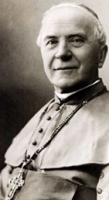
Saint Joseph Sebastian Pelczar

Profile

Joseph was raised in a pious family. He studied in Rzeszów, and entered the seminary at Przemysl in 1860. He was ordained on 17 July 1864 and became a Parish priest at Sambor.

Joseph transferred to Rome in 1866, and studied at the Collegium Romanum (Gregorian University) and the Institute of Saint Apollinaris (Lateran University). He was a doctor of theology and a canon lawyer.

Joseph became a professor at the seminary at Przemysl from 1869 to 1877, and at the University of Krakow from 1877 to 1899. He was known as a great educator who was always available to students. He became a dean of the Theology Department and Rector of the University of Krakow from 1882 to 1883.

All the while he was teaching, Joseph was still involved at the parish level. He worked with the Saint Vincent de Paul Society and was president of the Society for the Education of the People for 16 years. He started hundreds of libraries, delivered free lectures, published over a thousand books, wrote several books of history, theology and canon law himself, and started a school for servants.

He founded the Fraternity of Our Lady, Queen of the Polish Crown in 1891; the Fraternity cared for the poor, orphans, apprentices, servants, the sick and unemployed. With Blessed Klara Szczesna, he co-founded the Sister Servants of the Most Sacred Heart of Jesus on 15 April 1894 in Krakow to work with the sick and young women, and to spread devotion to the Sacred Heart of Jesus.

Joseph was the Bishop of Przemysl in 1900 until his death in 1924. He made frequent visits to the parishes, supported the religious orders, conducted three synods, and worked for the education and religious formation of his priests. He encouraged devotion to the Blessed Sacrament, Eucharistic devotions, the Sacred Heart of Jesus, and the Virgin Mary. He built and restored churches, built nurseries, kitchens, homeless shelters, schools for the poor, and gave tuition assistance to poor seminarians. He worked for the implementation of the social doctrine described in the writings of Pope Leo XIII. He left behind a large body of work including books, pastoral letters, sermons, addresses, prayers and other writings.

Born

  • 17 January 1842 at Korczyn bei Krosno, Poland

Died

  • 28 March 1924 at Przemysl, Poland
  • relics in Przemysl Cathedral

Canonized

  • 18 May 2003 by Pope John Paul II at the Vatican Basilica

Source: http://catholicsaints.mobi/calendar/28-march.htm

Saint Joseph Sebastian Pelczar Read More »

Exodus 12:11

Eucharistic Freedom

“This day shall be a memorial feast for you, which all your generations shall celebrate with pilgrimage to the LORD, as a perpetual institution.” 

Reflection:

The holy Triduum begins. Today we fulfill this Old Testament passage, revealing that the Passover would become “a perpetual institution.” This passage concludes our First Reading instruction from the LORD given to Moses and Aaron on how to prepare for the Israelites’ liberation from Egypt. Plague after plague had been inflicted upon the Egyptians, and none of them resulted in the Israelites being set free.

Therefore, the LORD instructed the Israelites to celebrate the first Passover by killing a year-old lamb, sprinkling its blood on their doorposts, and feasting on the flesh in preparation for the journey to the Promised Land. Today, we continue this Passover celebration as we share in the Sacrifice of the Lamb of God, Whose Blood has been shed, Whose flesh we consume, and Who leads us through the desert of life to the new and eternal Promised Land of Heaven.

Just as the first Passover was a prefiguration of the Sacrifice of the Lamb of God, so also the plagues that led up to the Passover present us with much meaning. At first, all the water in Egypt turned to blood. Then frogs, gnats, flies and pestilence covered the land. Boils covered the skin of humans and animals. Hail rained down, locusts covered the land, and finally darkness covered the land for three days.

None of these plagues was ultimately successful in convincing Pharaoh to let God’s people go; therefore, the final plague to be inflicted was the death of the firstborn. It was the blood of the paschal lamb, sprinkled on the doorposts of the Israelites’ houses that signaled to the angels to pass over their homes.

The plagues inflicted on Pharaoh and the Egyptians were severe. But because of their obstinacy, God continued until they changed. Recall, also, that even after the Israelites were set free, Pharaoh changed his mind and pursued them into the Red Sea where his army perished.

Though these prefiguring events might not be that pleasant to consider, they must be reflected upon. We must see in them God’s tireless and relentless efforts to set us free from sin. The obstinacy and oppression of Pharaoh are  clear signs of the oppressive evil within our world today, and within our own souls. When we seek to embrace the freedom to which we are called, we will be met with much temptation and oppression from the evil one, as well as from our own fallen human nature.

But if we trust in God, as Moses did, then we will be given all we need to begin the journey to freedom. Most specifically, the Flesh and Blood of the Son of Man is our Paschal Lamb. The Eucharist, which was instituted on Holy Thursday, protects us from the final death. Consuming the Body of Christ also strengthens us for our spiritual journeys. Without it, we have no protection from the evil one and lack the strength we need to be faithful on our journey.

Reflect, today, upon God’s incredible commitment to set you free. He came to earth, took on human form, offered His life in sacrifice, and now feeds you with His sacred flesh. Without the Eucharist as your spiritual food and His Sacred Blood covering you, you will not survive. We all need the Eucharist. We need the Bread of Heaven. We need the Body and Blood, Soul and Divinity of the Savior of the World. God went to the greatest length to save you. Accept His Gift that we especially commemorate and participate in today.

Source: https://catholic-daily-reflections.com/2024/03/27/eucharistic-freedom/

Exodus 12:11 Read More »