2024

Luke 24:45-48

Becoming a Witness to the Truth

“Then he opened their minds to understand the Scriptures. And he said to them, “Thus it is written that the Christ would suffer and rise from the dead on the third day and that repentance, for the forgiveness of sins, would be preached in his name to all the nations, beginning from Jerusalem. You are witnesses of these things.”

Reflection:

Jesus once again appears to a group of His disciples, and He once again gets straight to the point. He “opened their minds” so that they would understand all that the Scriptures revealed about Him. He helped them to see that His death and Resurrection were fulfillments of the teachings of Moses and the prophets. And then Jesus says something new: “You are witnesses of these things.”

As we saw in yesterday’s Gospel, it’s clear that the disciples did not yet understand why Jesus had to die and then rise again. They were still in shock and traumatized by these events. Therefore, Jesus had to carefully explain to His disciples the meaning of what had just taken place. They needed to understand this on a level that they couldn’t comprehend by themselves. They needed Jesus’ clear and detailed explanation as well as a special grace by which their minds would be opened to an understanding of these profound mysteries of faith.

We are no different than these disciples. It’s easy to believe in Jesus for insufficient reasons which only result in superficial faith. Some believe simply because that’s what they were taught when they were young. Some believe because it makes them feel better to believe. Some believe because they don’t know of anything better to believe. But then there are those who believe for the right reason. Like the disciples in this resurrection appearance, they have listened to Jesus speak clearly and in detail to them, such as through their study of Scripture, the Catechism, or other holy sources, and then they were given a special grace from God that “opened their minds” to an understanding that goes far beyond human rational abilities alone. Are you one of those people?

If you are, then you have another duty. Not only must you continue to internalize these truths, allowing them to deepen and change your own life completely and totally, but you must also become a “witness” to these things. When you grow in an authentic knowledge of the faith revealed by our Lord, you must also share it with others. Real faith must be shared!

Reflect, today, upon this powerful resurrection appearance. As you do, ponder whether or not you have allowed our Lord to speak to you in the same way that He did to these disciples, and whether or not you have truly internalized all that He has spoken to you and explained to you. If you are among this grouping of people, reflect also upon your duty to be a witness of these truths to others.  Jesus wants to appear in His resurrected form to many others, but He especially does this, today, through the mediation of His faithful followers who are now sent forth to be witnesses to Christ and His glorious Resurrection.

Source: https://catholic-daily-reflections.com/2024/04/03/becoming-a-witness-to-the-truth-3/

Luke 24:45-48 Read More »

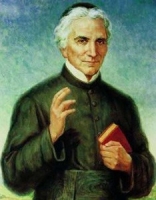
Saint Luigi Scrosoppi of Udine

Profile

Luigi was the youngest of three brothers born to Domenico Scrosoppi, a jeweler, and Antonia Lazzarini; his brother Carlo was ordained when Luigi was six, and his brother Giovanni several years later. When Luigi was 11 or 12 years old, his home region was struck by drought, famine, typhus, and smallpox in quick succession; the sight of such misery, complete poverty, and the number of orphans had a lasting effect on the boy.

In his teens, Luigi felt a call to the priesthood, and he entered the same seminary as his brother Giovanni. He became a deacon in 1826, and was ordained on 31 March 1827 at the cathedral in Udine; he was assisted at his first Mass by his brothers.

Luigi became the director of the Pious Union of the Heart of Jesus Christ. He helped manage the children’s center run by his brother Carlo.

Luigi was a Franciscan tertiary. He was also an assistant director of Carlo’s orphanage in 1829. The orphanage fell on harder times than usual; Luigi, in desperation, hit the streets to beg for their support, and the school soon had a great lesson in faith – and enough money to buy their building.

As there were more orphans than space, the brothers decided to enlarge the house; Luigi went through the countryside to beg building materials and labor. Work began in 1834 with Luigi coordinating, begging, supervising, and working construction; it was completed in 1836, and named the House for the Destitute. That year also saw another cholera epidemic, and the orphanages, again, were full.

The need of the orphans, and the constant work of the brother priests, attracted the attention of several area women who were also working with the poor and the abandoned. Among them were Felicita Calligaris, Rosa Molinis, Caterina Bros, Cristina and Amalia Borghese and Orsola Baldasso. These women, under the spiritual direction of Carlo and Luigi, founded what would become the Congregation of Sisters of Providence who taught basic academic subjects and needle crafts. Luigi placed them under the patronage of Saint Cajetan, and the Congregation received final approval from Pope Blessed Pius IX on 22 September 1871.

In 1846, Luigi joined the Oratory of Saint Philip Neri, a congregation devoted to charity and learning; elected provost of the community on 9 November 1856. On 4 October 1854, he finished work on the Rescue Home for abandoned girls. On 7 March 1857, he opened the school and home for deaf-mute girls; sadly, it survived only 15 years. He opened Providence House for his unemployed former students, and he worked in hospitals with the sickest and poorest of patients.

In his later years, Luigi had to combat anti-clerical sentiments that swept through the Italian peninsula during the political unification of the country; many houses and groups, including the Oratory, were seized, closed, and their assets sold off. While he could not save the Oratory or parish property, Luigi did protect his charitable institutions, and saw the Congregation grow and spread.

Born

  • 4 August 1804 at Udine Italy

Died

  • 3 April 1884 at Udine Italy of fever and the postulant skin disease pemphigus

Canonized

  • 10 June 2001 by Pope John Paul II
  • his canonization miracle was the cure of a Zambian AIDS victim, Peter Changu Shitima in 1996

Source: http://catholicsaints.mobi/calendar/3-april.htm

Saint Luigi Scrosoppi of Udine Read More »

The Word of God Burning Within

The Word of God Burning Within

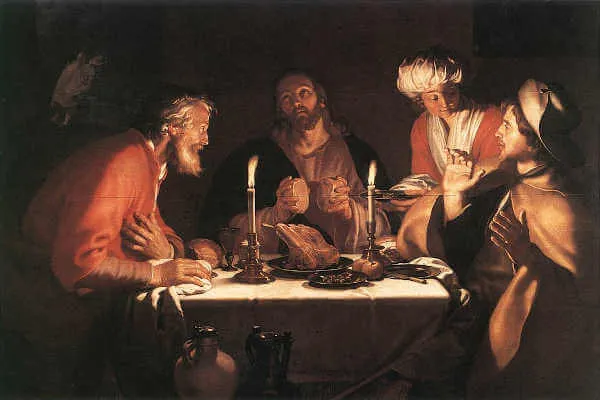
And it happened that, while he was with them at table, he took bread, said the blessing, broke it, and gave it to them. With that their eyes were opened and they recognized him, but he vanished from their sight. Then they said to each other, “Were not our hearts burning within us while he spoke to us on the way and opened the Scriptures to us?”

Reflection:

Two of Jesus’ disciples had been discussing the events of the past week as they walked the seven-mile journey along the road from Jerusalem to Emmaus. They previously had hoped that Jesus was the one Who would redeem Israel—but then He was killed. And three days later, there were rumors of His Resurrection, which only left them confused.

As they journeyed, Jesus appeared to the two disciples, but they did not recognize Him at first. His identity was hidden from their eyes. Jesus listened to them and expressed sorrow at their lack of understanding, so He explained to them the teachings of Moses and the prophets and that the Messiah needed to suffer, die and rise on the third day. As Jesus spoke, the disciples began to understand, and their hearts burned within them. Finally, in the gift of the Holy Eucharist, in the breaking of the Bread, their eyes were opened to see that it was Jesus with them.

Why did Jesus hide His risen presence from these disciples? It appears that He did so because they lacked faith. They said, “…we were hoping that he would be the one to redeem Israel.”  But the Crucifixion was too much for them to handle. They could not comprehend why the Redeemer had to suffer as Jesus did, so they began to doubt.

Too often we are like these disciples who are confused about matters of faith and who struggle with doubts. For that reason, we must see ourselves in the persons of these disciples as they walked the road to Emmaus. Jesus offered these disciples a wonderful gift of mercy by helping them to understand His saving act. He explained to them all that was taught in Scripture regarding Him. And as these disciples listened to Jesus teach them, they slowly came to believe.

We, too, must allow Jesus to teach us about the transforming power of His death and Resurrection. We must listen attentively and allow our hearts to burn within us as we listen to His holy Word. Only in this way will we come to the level of faith we need to more fully comprehend and accept the transforming power of the Paschal Mystery.

Reflect, today, upon these disciples and their need to reflect upon the Word of God so as to understand, believe and have their eyes opened. Know that you need this same grace. You need to spend time with our Lord, immersed in His Word, listening to His voice, so that you will come to believe more fully. Allow the message of Jesus’ death and Resurrection to burn within you so that you, too, will come to believe.

Source: https://catholic-daily-reflections.com/2024/04/02/the-word-of-god-burning-within-3/

The Word of God Burning Within Read More »

Saint Francis of Paola, Hermit

Patron Saint of boatmen, mariners, and naval officers Canonized by Pope Leo X on May 1, 1519

James Martotille and his bride wedded and lived in the town of Paola, in the southernmost region of Italy. During the first years of their marriage, they were unable to conceive a child. Being devout Catholics, they turned to prayer and beseeched the intercession of Saint Francis of Assisi. Their prayers were answered when they were blessed with the birth of a son. As an expression of gratitude to Saint Francis of Assisi, the couple named their son Francis. 

While still an infant, Francis suffered from a swelling of the eyes, which endangered his sight. The Martotilles once again turned to the intercession of Saint Francis of Assisi for healing. In keeping with a pious medieval custom, they vowed that if their son were healed, they would entrust him to a friary for a year as a youth so he could be educated and formed in the practice of the faith. Their infant was indeed cured, and his parents later fulfilled their vow.

As a youth, Francis showed many signs of piety. He regularly abstained from meat as penance, sought solitude, and found great joy in prayer. When he was entrusted to the care of the Franciscan friars at age thirteen (in the nearby Friary of Saint Mark), his love of God and devotion to prayer and penance grew stronger. Though he was not a professed brother, he lived out the Franciscan vows in ways that surpassed even the friars themselves. After faithfully fulfilling the yearlong stay, in accord with the vow made by his parents, Francis and his parents took a pilgrimage north to Assisi. After stopping in Rome and other places along the way, they completed their pilgrimage and returned home to Paola.

Back in Paola, Francis’ desire for prayer, penance, and solitude grew strong. In response, Francis sought permission from his father to live as a hermit. His father granted Francis’ request, permitting him to live on a nearby portion of his property. Francis quickly discovered that life as a hermit suited him well and was his calling. The only problem was that his solitude was too often interrupted by friendly visits.

To remedy this, he moved to an even more remote spot, taking up residence in a cave by the sea. In that “hermitage,” Francis relied solely upon divine providence. He ate what he could gather from the land and what people would bring to him from time to time. His bed was the ground, and his pillow a rock or log. He lived this life for six years, alone in peace and fulfillment.

When Francis was about twenty years old, his holy example inspired two other young men to join him in the wilderness. With the help of some local townsmen, who were inspired by Francis’ vocation, they built small hermitages and a chapel in which a nearby priest would come to offer Mass for them. The three of them engaged in a common life of prayer, penance, and solitude. In the years that followed, more were drawn to join them to live as hermits.

Over the next few decades, the local archbishop gave Francis and his companions permission to build a larger church and monastery, and Pope Sixtus IV asked Francis to formally write down a rule of life and submit it for approval. The pope also gave these men of God the name “Hermits of Saint Francis.” Some years later, Pope Alexander VI changed their name to the “Hermits of the Order of the Minims,” and then just to “Order of Minims,” or Minims friars. This simplified name meant they were to be seen as the least of all the friars. In everything they did, they sought lowliness and humility as their central aim.

Many quickly came to know and admire the newly established hermits who attempted to inspire a revival of the practice of Lenten penance among the faithful by practicing a perpetual Lent themselves. Their perpetual penance consisted of limiting their diet to only plants, refraining not only from meat and eggs but from everything derived from animals. This fast became a fourth vow of the order, in addition to poverty, chastity, and obedience.

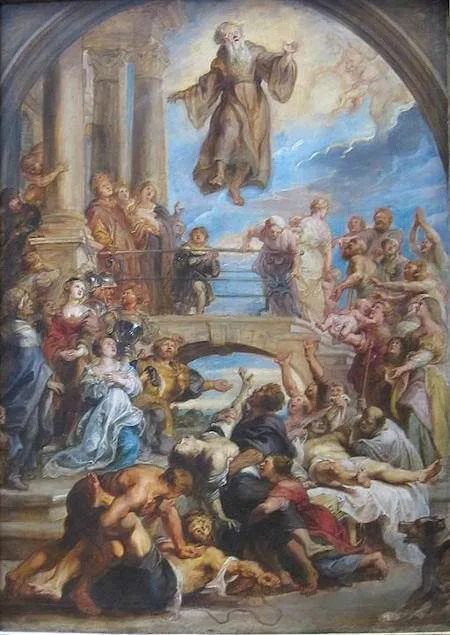
When Jesus walked the earth, He continually performed miracles, which confirmed His sacred identity in the eyes of His first followers. By the grace of God, Francis of Paola also performed many miracles, read minds, and spoke prophetically. One day Francis was on a journey to Sicily and was hungry. He encountered some poor men looking for work along the way and asked the men for food, but they had none.

Francis told them to look in their bags, and there they found freshly baked bread that seemed to multiply as they ate it. On another occasion, a boatman refused to take Francis to Sicily one day because Francis was poor and could not pay him, so Francis simply walked or sailed across the ocean on his cloak. On other occasions, Francis is said to have raised the dead; healed the sick and crippled; averted plagues; expelled demons; spoken prophetically to bishops, popes, and kings; and performed many other miracles.

As a result of Francis’ holy life, coupled with miraculous signs, many people sought him out, despite his vocation of solitude. Popes called on him, and kings sought his counsel. Through it all, Francis continually proclaimed that all he did was done “out of love.” Love, the pure and holy love of charity, was the sole purpose of his life.

At the age of ninety-one, Francis sensed death was coming for him, so he returned to complete solitude for his final three months. On Holy Thursday he went to confession, received Holy Communion, and prayed in preparation for death. Holy death came for him on Good Friday, April 2, 1519. He had lived a perpetual Lent throughout his life; thus, it was fitting that his Lent come to an end on Good Friday.

Twelve short years later, Pope Leo X canonized Francis a saint. Fifty-three years after his death, a group of French Calvinists broke into the church where he was buried, dug up his grave and found his body incorrupt. They quickly desecrated his body and burned it so that the faithful would no longer pray before his tomb. This final act of humility that God permitted Saint Francis of Paola to embrace flowed from the glories of Heaven.

From an early age, Francis sensed God calling him to a radical vocation. Francis responded in such a way that his actions quickly became extraordinary. Each one of us is called to an extraordinary life of holiness. We are called to become radical, totally given to God, doing all out of love of God and others. Ponder how radical you are every day, and deepen your commitment to radical holiness so that “radical” eventually becomes normal for you, just as it was for Saint Francis.

Source: https://mycatholic.life/saints/saints-of-the-liturgical-year/april-2-saint-francis-of-paola-hermit/
Saint Francis of Paola, Hermit Read More »

John 20:17

Cling to Jesus Now!

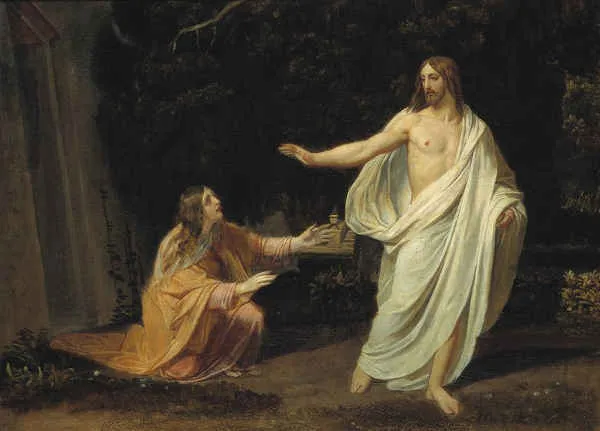
Jesus said to her, “Stop holding on to me, for I have not yet ascended to the Father. But go to my brothers and tell them, ‘I am going to my Father and your Father, to my God and your God.’”

Reflection:

Mary of Magdala was one of the first persons to whom Jesus appeared. She was deeply devoted to Him, especially because of the great mercy He offered her when He forgave her manifest sins and expelled seven demons from her. After He had done that, Mary became a devout follower and was one of the few who remained faithful to Him, even as He hung upon the Cross.

On the first day of the week, the Sunday after the Crucifixion, Mary came to the tomb to anoint Jesus’ body in accord with Jewish custom. But when she arrived, Jesus’ body was gone. And when Jesus appeared to her as she was weeping, she didn’t immediately recognize Him, for He had His new glorified body. But when Jesus spoke her name, Mary, she recognized Him. But rather than embracing her, Jesus said, “Stop holding on to me…” Why would Jesus say this?

Even though Mary’s attachment and devotion to Jesus was beautiful and holy, it wasn’t yet perfected. She wanted her Lord Whom she had come to know and followed. She wanted her former relationship with Jesus to be returned to her. But for this reason, Jesus said, “Stop holding on to me…” Jesus wanted much more. He was telling her that her relationship with Him was soon to change for the better. No longer would He simply be her earthly companion; instead, He would soon live within her, dwell within her very heart, become one with her, and be her Bridegroom for eternity. But this could only happen once Jesus ascended to the Father in Heaven to complete His divine mission of salvation.

At times, we also seek favors from our Lord that are purely temporal. Though we do need to trust Him for “our daily bread,” meaning, for all the basic necessities of life, we must realize that the gifts God wants to give us far surpass anything in this world. The supernatural gift of grace, the gift of the Indwelling of the Most Holy Trinity, the gift of oneness with our Lord is what we are made for and is the end goal and desire of our Lord.

Reflect, today, upon these words Jesus spoke to Mary: “Stop holding on to me, for I have not yet ascended to the Father.” But do so with the knowledge that, now, Jesus has indeed ascended to the Father. Therefore, He now invites us all to cling to Him as He reigns in Heaven. Ponder the deep desire in the heart of our Lord that you cling to Him with every fiber of your being. He wants to dwell within you, to become one with you and to transform you in every way. This holy union is now being enjoyed for all eternity by Saint Mary of Magdala, and this same gift is being offered to you. Cling to Him and never let go, for this will be your eternal joy.

Source: https://catholic-daily-reflections.com/2024/04/01/cling-to-jesus-now-3/

John 20:17 Read More »

Saint Ludovico Pavoni

Profile

Ludovico was trained in theology by the Dominican Father Carlo Ferrari, future bishop of Brescia, Italy. He was ordained in 1807.

Ludovico founded an Oratory for Christian education of poor boys in Brescia. He was the secretary to bishop Gabrio Nava in 1812.

Ludovico became the Rector of Saint Barnabas church in 1818 where soon after he founded an orphanage and associated trade school, basing his work on the idea that improving social conditions will improve the spiritual life, and improving the spiritual life will improve social conditions. In 1821 the school became the Institute of Saint Barnabas. Along with carpentry, silversmithing, blacksmithing, shoemaking, agriculture, and tool and dye makers, the school stressed the trades of printing and publishing.

In 1823, Ludivico established The Publishing House of the Institute of Saint Barnabas; it exists today under the name Ancora. That same year, the school began taking in deaf and mute students.

In 1825, he founded a religious congregation of priests and brothers to run the school; it became the Sons of Mary Immaculate (Pavoniani or Pavonians). Pope Gregory XVI authorized it for Brescia in 1843, and on 8 December 1847, Ludovico and the first members made their religious profession. Today, there are 210 members in Brazil, Colombia, Eritrea, Germany, Italy and Spain, and they still publish books.

On 24 March 1849, Brescia was in rebellion against the Austrians. Both sides were ready to pillage the city and Father Ludovico led his boys to safety at Saiano, seven miles away. He died a week later as Brescia was in flames, but his boys were safe.

Born

  • 11 September 1784 at Brescia, Italy

Died

  • Palm Sunday, 1 April 1849 at Saianco, Italy of natural causes

Beatified

  • 14 April 2002 by Pope John Paul II
  • the beatification miracle involved the 1909 cure of Maria Stevani from typhoid fever

Canonized

  • 16 October 2016 by Pope Francis

Patronage

  • Sons of Mary Immaculate

Source: http://catholicsaints.mobi/calendar/1-april.htm

Saint Ludovico Pavoni Read More »

Matthew 28:12-14

Humility in the Face of the Resurrection

“The chief priests assembled with the elders and took counsel; then they gave a large sum of money to the soldiers, telling them, ‘You are to say, ‘His disciples came by night and stole him while we were asleep.’ And if this gets to the ears of the governor, we will satisfy him and keep you out of trouble.’”

Reflection:

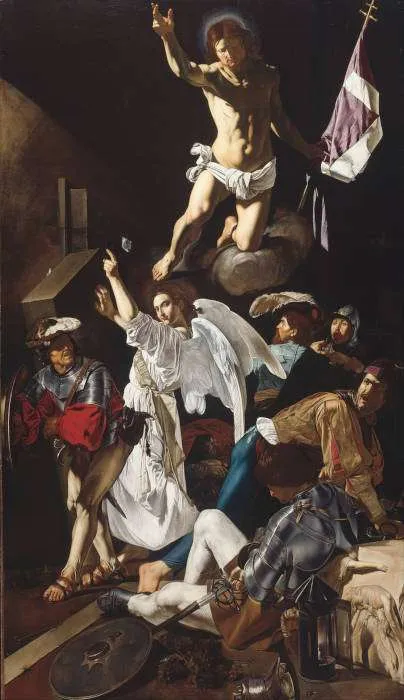
The Lord of all rose from the grave, conquering sin and death, making it possible for us all to share in His glorious Resurrection! Death had lost. Satan had lost. The corrupt religious leaders had lost. And all those who believed in Jesus now had their eternal hope renewed. Sadly, though, what was the greatest victory ever known for humanity, a victory that opened the doors to eternal glory for all who believe, could not be accepted by the chief priests and elders of the people. They saw to His death, and, now that He had risen, they scrambled to do all they could to hide that truth.

Pride is hard to overcome. When a person professes they are right, when in fact they are wrong, and when they are then confronted with their error, the sin of pride will inevitably tempt them to further sin. This is what we see today in this passage from our Gospel. The chief priests and elders were informed by the soldiers that when the women came to the tomb early in the morning, there was a great earthquake, and they saw an angel of the Lord descend from Heaven, roll back the stone, and sit on it. When they saw this, “The guards were shaken with fear of him and became like dead men” (Matthew 28:4). And after they heard the angel tell the women that Jesus had risen, the guards went off to tell the chief priests and elders.

After all the miracles and powerful preaching of Jesus, you would think that the chief priests and elders would have believed. But they didn’t. And then, after hearing the testimony of these soldiers, you would think they would have fallen on their knees, repented of their hardness of hearts, and come to believe. But they didn’t. They doubled down in their sin and added sin upon sin.

Some forms of sin can more easily be admitted, especially sins of weakness. When one is weak and falls, it may not be always easy to overcome that sin in the future, but it is easier to acknowledge it as sin when it is caused by human weakness. But a sin of weakness is much different than a sin of obstinate pride. Obstinate pride is not only hard to overcome, it’s hard to admit. It’s hard to admit our sin when it is based on our obstinacy and pride. As a result, this type of sin often leads to other sins such as ongoing deception, manipulation and anger. This is illustrated by these chief priests and elders. But if you can humble yourself and admit your sin when it comes from your pride, that humility can have a powerful and transformative effect upon your life.

Reflect, today, upon these chief priests and elders of the people. Try to ponder their hardness of heart and the sad situation they found themselves in as they attempted to cover up their error and sin. Resolve never to fall into this form of sin yourself. However, if this is a struggle for you, seek humility so that you can be freed of this heavy burden by the grace of the Resurrection of our Lord.

Source: https://catholic-daily-reflections.com/2024/03/31/humility-in-the-face-of-the-resurrection-3/

Matthew 28:12-14 Read More »

Easter Sunday, The Resurrection of the Lord

First Reading Acts 10:34a, 37-43

Peter proceeded to speak and said:
“You know what has happened all over Judea,
beginning in Galilee after the baptism
that John preached,
how God anointed Jesus of Nazareth
with the Holy Spirit and power.
He went about doing good
and healing all those oppressed by the devil,
for God was with him.
We are witnesses of all that he did
both in the country of the Jews and in Jerusalem.
They put him to death by hanging him on a tree.
This man God raised on the third day and granted that he be visible,
not to all the people, but to us,
the witnesses chosen by God in advance,
who ate and drank with him after he rose from the dead.
He commissioned us to preach to the people
and testify that he is the one appointed by God
as judge of the living and the dead.
To him all the prophets bear witness,
that everyone who believes in him
will receive forgiveness of sins through his name.”

Responsorial Psalm Psalms 118:1-2, 16-17, 22-23

R (24) This is the day the Lord has made; let us rejoice and be glad.

Give thanks to the LORD, for he is good,
for his mercy endures forever.
Let the house of Israel say,
“His mercy endures forever.”

R This is the day the Lord has made; let us rejoice and be glad.

“The right hand of the LORD has struck with power;
the right hand of the LORD is exalted.
I shall not die, but live,
and declare the works of the LORD.”

R This is the day the Lord has made; let us rejoice and be glad.

The stone which the builders rejected
has become the cornerstone.
By the LORD has this been done;
it is wonderful in our eyes.

R This is the day the Lord has made; let us rejoice and be glad.

Second Reading Colossians 3:1-4

Brothers and sisters:
If then you were raised with Christ, seek what is above,
where Christ is seated at the right hand of God.
Think of what is above, not of what is on earth.
For you have died, and your life is hidden with Christ in God.
When Christ your life appears,
then you too will appear with him in glory.

Sequence Victimae Paschali Laudes

Christians, to the Paschal Victim
            Offer your thankful praises!
A Lamb the sheep redeems;
            Christ, who only is sinless,
            Reconciles sinners to the Father.
Death and life have contended in that combat stupendous:
            The Prince of life, who died, reigns immortal.
Speak, Mary, declaring
            What you saw, wayfaring.
“The tomb of Christ, who is living,
            The glory of Jesus’ resurrection;
bright angels attesting,
            The shroud and napkin resting.
Yes, Christ my hope is arisen;
            to Galilee he goes before you.”
Christ indeed from death is risen, our new life obtaining.
            Have mercy, victor King, ever reigning!
            Amen. Alleluia.

Alleluia Cf. 1 Corinthians 5:7b-8a

R. Alleluia, alleluia.

Christ, our paschal lamb, has been sacrificed;
let us then feast with joy in the Lord.

R. Alleluia, alleluia.

Gospel John 20:1-9

On the first day of the week,
Mary of Magdala came to the tomb early in the morning,
while it was still dark,
and saw the stone removed from the tomb.
So she ran and went to Simon Peter
and to the other disciple whom Jesus loved, and told them,
“They have taken the Lord from the tomb,
and we don’t know where they put him.”
So Peter and the other disciple went out and came to the tomb.
They both ran, but the other disciple ran faster than Peter
and arrived at the tomb first;
he bent down and saw the burial cloths there, but did not go in.
When Simon Peter arrived after him,
he went into the tomb and saw the burial cloths there,
and the cloth that had covered his head,
not with the burial cloths but rolled up in a separate place.
Then the other disciple also went in,
the one who had arrived at the tomb first,
and he saw and believed.
For they did not yet understand the Scripture
that he had to rise from the dead.

Source: https://bible.usccb.org/bible/readings/033124.cfm

Easter Sunday, The Resurrection of the Lord Read More »

Saint Guy of Pomposa

Profile

Guy was known in his youth for being meticulous about his clothing and appearance – until the day he realized it was simply vanity and traded his fine clothes for a beggar’s rags. He was a pilgrim to Rome, Italy and became a spiritual student for three years of a hermit name Martin on an island in the River Po.

Guy became a monk at Pomposa abbey near Ferrera, Italy and a Benedictine monk at Saint Severus abbey, Ravenna, Italy. He was an abbot at Ravenna and at Pomposa.

Guy was a student of scripture, at the request of Saint Peter Damian. He taught Bible studies for two years. Many were attracted to his teaching, his leadership, and his example of the Christian life that his house doubled in size; his father and brother joined the order.

Guy finally handed off the administrative elements of his position to concentrate on spiritual direction. He periodically retreated to a hermitage near Ferrara to spend his days in prayer and fasting. Near the end of his life, he was unjustly persecuted for personal reasons by archbishop Heribert of Ravenna.

Guy died while on a trip to Piacenza, Italy to advise Emperor Henry III on spiritual matters.

Born

  • at Ravenna, Italy

Died

  • 1046 at Borgo San Donnino, Italy of natural causes
  • interred in the church of Saint John the Evangelist, Speyer, Germany, which was renamed Saint Guido-Stift

Patronage

  • Speyer, Germany

Source: http://catholicsaints.mobi/calendar/31-march.htm

Saint Guy of Pomposa Read More »

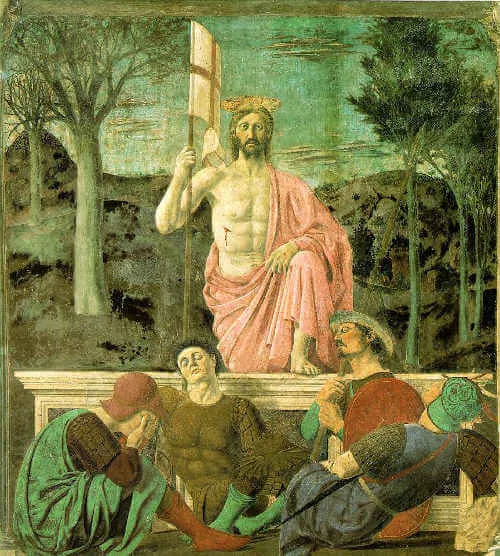
Easter Sunday

Today’s glorious solemnity is the ultimate cause of all joy, fulfillment, happiness, and glory. If Jesus only died on the Cross, destroying death, something would be missing—the restoration of life into a transformed and glorified living. Easter is not only about the forgiveness of sins, it’s about the temporal and eternal glorification of every human soul who dies and rises with Christ. When we focus upon the Gospel and consider the many lessons Jesus taught and the example He set, the Cross is often considered the difficult message and Easter the easy message. But is it?

The message of the Cross, as presented to us through both Jesus’ teachings and His lived example, is certainly challenging. Each one of us is called to the same depth of selfless surrender of our lives to the Father’s will. We must each die completely to ourselves, be purified from every sin and every attachment to sin, from every bad habit and every worldly thought, and from everything that is not God and God alone. When our calling to die with Christ and to embrace His Cross is clearly understood, as it has been by the saints, it is likely that Christians become overwhelmed at the seemingly daunting and impossible task of dying in and with Christ.

When it comes to the Resurrection, one might be tempted to say that it is easy to accept the message it presents. New life in Christ, the fullness of joy, complete transformation, and eternal beatitude in Heaven—these initially appear easy to embrace. However, the challenge that the profound reality of Easter presents to us is that we can be certain that our current understanding of what it means to share in the Resurrection of Christ is but the faintest shadow of the reality. In truth, very few people in this life have come close to understanding the glory to which we are called on account of the Resurrection. Saints Francis of Assisi, Catherine of Sienna, John of the Cross, Thérèse of Lisieux, to name a few, are among those who penetrated the mystery of Easter while still here on earth. They achieved this spiritual knowledge only by fully dying with Christ through a life of profound prayer, penance, and charity that completely united their souls to the Most Holy Trinity.

As we celebrate Easter, it is important to know that we do not yet know all that is promised to us by the Resurrection of Christ. If we can at least know that, then our spiritual appetites will make us hungry to know. Too often, Christians go through life satisfied with the most basic understanding of the Gospel. We know that God became man, lived His life, gathered followers, taught and performed miracles, died on the Cross, rose again, ascended into Heaven, and sent the Holy Spirit. Furthermore, we have hope in His promise that if we remain in His grace, then we will share in Heaven after we die. But this is an exceptionally incomplete view of the full reality that has been comprehended in this life by the saints. It is their understanding we must seek with every power of our souls.

What does it mean to share in the new life of Christ? What does it mean to share in the glory of the Resurrection? What will Heaven be like for those who enter into the highest realms of glory in this life compared to those who only do the basics? What will the New Heavens and the New Earth be like when Jesus returns in all His glory for the Final Judgment? If these are questions you have never deeply pondered and probed, then know that the answers that await you are more glorious than you could ever imagine. In other words, if you were to sit quietly and spend all day trying to imagine the best and most glorious life, trying to use your mind to draw a picture of the happiness and full joy of Heaven, you can be certain that you could never even come close to imagining the reality. That humble fact ought not discourage you; it should fill your conscience with a desire to know what you do not know. That is the first step.

A deep and vast spiritual comprehension of the joy of sharing fully in the Resurrection of Christ can only be given to us by a direct infusion of grace by God Himself. When a soul receives this infused knowledge, they become so overwhelmed with wonder and awe that they realize that committing even the smallest sin is absolute foolishness and is the path to the loss of everything. They realize that if they were to gain everything this world has to offer—every comfort, wealth, power, and prestige—they would be absolutely miserable compared to the person who shares fully in the Resurrection. They realize that the only thing worth anything is the complete abandonment of one’s life to the will of God, a willingness to suffer anything and everything for Christ, to serve and not be served, to forgive everyone completely, to love with every fiber of their being, and to continuously remain in a state of prayerful recollection with God.

If living such a life seems impossible, it’s not. It only seems that way when we fail to grasp the prize that awaits those who strive for the perfection of divine union. The Easter message and mystery is not just about being good and happy. It’s not just about trusting in the hope of Heaven after we die. The fullness of the message and mystery of Easter can only be understood if we begin the long and difficult journey toward divine union. Only those who begin it in haste have a chance of completing it. Begin it today by acknowledging that there is so much that you do not know. There is so much that God is calling you to and wants to bestow upon you. There is more joy in the Resurrection of Christ than anything else in life. Don’t aim for the lowly and passing things of life—aim for the highest heights of glory. Seek to understand the Resurrection this Easter so that you will be able to share more fully in the higher grades of glory that God wants to bestow upon you.

Source: https://mycatholic.life/saints/saints-of-the-liturgical-year/easter-sunday/

Easter Sunday Read More »