2024

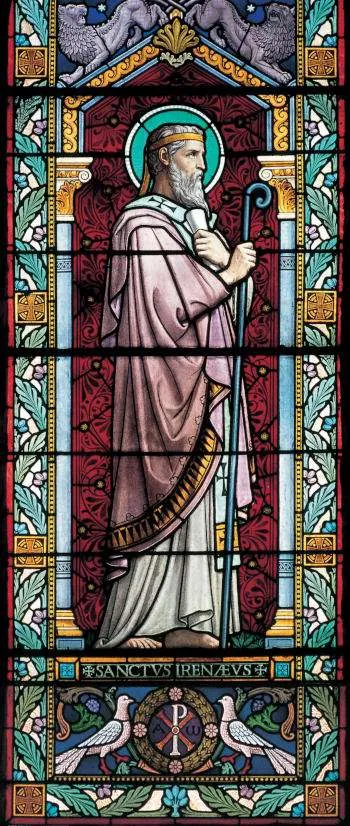
Saint Irenaeus, Bishop and Martyr

c. 135–c. 202; Patron Saint of those who work for the unity of the Eastern and Western Churches; Invoked against Christological heresies, and by apologists and catechists; Pre-Congregation canonization; Declared a Doctor of the Church (Doctor of Unity) by Pope Francis in 2022

After Pentecost, the Apostles preached the Gospel and established the Church in numerous cities. Saint John the Apostle is believed to have preached in Ephesus, modern-day Turkey. It was there that Saint Polycarp learned from him about Christ, was ordained a bishop, and was sent to the town of Smyrna, just fifty miles north, to govern the Church for approximately sixty-five years. In Smyrna, a young man named Irenaeus, raised in a Christian family, became Polycarp’s disciple, learning more about the faith from this disciple of the Apostle John. After his ordination as a priest, Irenaeus ministered in modern-day Lyon, France, under Bishop Pothinus.

Around the year 177, the Christian community of Lyon sent Irenaeus to Rome to assist the pope with a theological dispute over a heretical teaching. The teaching, later referred to as Montanism, claimed that certain individuals possessed superior prophetic insights directly inspired by the Holy Spirit. This mission attests to the respect Irenaeus commanded among the Christians of Lyon and his grasp of vital theological concepts. Providentially, the mission to Rome likely spared Irenaeus’s life. While Irenaeus was in Rome, a severe persecution of the Church broke out in Lyon and roughly fifty Christians were martyred, among them Bishop Pothinus. Upon returning to Lyon, Irenaeus was chosen as the next bishop.

As Bishop of Lyon, Irenaeus was a faithful pastor with a profound understanding of the Gospel as communicated from Jesus through the Apostles, and he articulated the faith with great clarity. He was energetic in his evangelization efforts throughout the region, sending missionaries to convert the many citizens who adhered to pagan beliefs. As the faith began to spread, errors concerning the faith started to emerge alongside Apostolic teachings. Although many of the early heretics might have had good intentions, they were not rooted in the pure faith and required correction to ensure the Church stayed on the straight and narrow path towards salvation. Irenaeus was one of the most influential figures in the early Church to guide the newly formed Christian communities down that safe road. He is especially known for two of his surviving writings: “Against Heresies” and “Demonstration of the Apostolic Teaching.” These two works constitute what is considered the very first catechism of the Catholic faith.

The most prevalent heresy in the early Church was what is now known as Gnosticism. Gnosticism is a broad term for many smaller deviations, all sharing similar premises. Generally, Gnosticism claimed that true knowledge was beyond the grasp of the ordinary person, and that the true intellectuals were privileged to possess a secret knowledge or insight necessary for eternal salvation. This secret knowledge was related to human nature, God, and the universe. 

Irenaeus begins his defense of the faith by highlighting the “absurd ideas” of the heretical group called the Valentinians: “They maintain, then, that in the invisible and ineffable heights above there exists a certain perfect, pre-existent Æon, whom they call Proarche, Propator, and Bythus, and describe as being invisible and incomprehensible. Eternal and unbegotten, he remained throughout innumerable cycles of ages in profound serenity and quiescence.” Irenaeus went on to describe the Valentinians’ fantasy-like view that an offspring of one of these Æons, named the Demiurge, foolishly created the universe. The Valentinians identified this Demiurge as the evil god of the Old Testament. Jesus and His Father, by contrast, were good and were attempting to rescue humanity from their physical natures by helping them to obtain full knowledge of this spiritual history so that the enlightened ones could then enter into a purely spiritual realm, shedding the evil of the material world. After exposing the errors of the Valentinians, Irenaeus went on to expose the errors of others who fell into similar Gnostic camps.

Irenaeus’ approach was first to explain the errors by demonstrating the absurdity of the complex and confusing views of the Gnostics, that they employed poor reasoning in their beliefs, borrowed their ideas from other popular stories, and rejected the Rule of Faith handed down through Tradition from the Apostles. He then took a more positive approach by clearly articulating that the life, sufferings, death, and resurrection of Christ were central to human salvation, and that, in the humanity of Christ, we are all saved and made one with Him, being reunited with the Father. This was achieved by carefully expounding on the Scriptures, both the Old and the New Testaments, and showing that the faith handed down from Jesus to the Apostles to the wider Church was comprehensible by all and easily embraced with simplicity and faith.

In a General Audience, Pope Benedict XVI explained it this way: “Irenaeus tells us, there is no secret doctrine concealed in the Church’s common Creed. There is no superior Christianity for intellectuals. The faith publicly confessed by the Church is the common faith of all. This faith alone is apostolic, it is handed down from the Apostles, that is, from Jesus and from God” (March 28, 2007). Thus, this so-called special “knowledge” that the Gnostics claimed to possess was purely fabricated by them, as it did not originate from the Apostles.

It’s hard to overestimate the importance of Irenaeus’ teachings for two main reasons. First, he aided the early Church in navigating through the initial confusion it encountered as new and erroneous ideas emerged. Second, his writings were among the first comprehensive catechetical instructions of the early Church, and those writings enabled numerous others who came after him to build upon what he had taught. Jesus promised the Apostles that the Holy Spirit would lead the Church into all truth. This happens when holy men and women listen to all that is handed down to them, remain faithful to that sacred Tradition, build upon it, and pass it on to others to develop it further. The Gospels were the first and most important foundation for this ongoing process. Irenaeus’ writings came shortly afterwards and remain an important foundation today. In fact, even in the most recent Church council, the Second Vatican Council, Irenaeus was one of the most quoted of the Church Fathers, showing an unbroken succession of faith from the early Church until today. Interestingly, it was not until 2022 that Saint Irenaeus was declared a Doctor of the Church under the title “Doctor of Unity.” This unique title particularly points Catholics of the East and West to the foundations of faith that we share with every other Apostolic Church, such as the Orthodox, with whom reunification is continuously sought.

As we honor this great Doctor of the Church, ponder the fact that your own faith has been believed and lived since the time of Christ. At times, our modern world seeks to undermine this ancient faith by labeling it as “old-fashioned” or “out-of-date.” Nothing could be further from the truth. The Truth that was revealed by Christ and His Apostles is as true today as it was at that time. Seek to immerse yourself in that unchanging yet ever-deepening deposit of faith, and you will discover that your family of faith includes all Christians of every era, making up the one Body of Christ.

Source: https://mycatholic.life/saints/saints-of-the-liturgical-year/june-28—saint-irenaeus-bishop-and-martyr/

Saint Irenaeus, Bishop and Martyr Read More »
Matthew 8:1-4

Homage, Reverence, and Respect

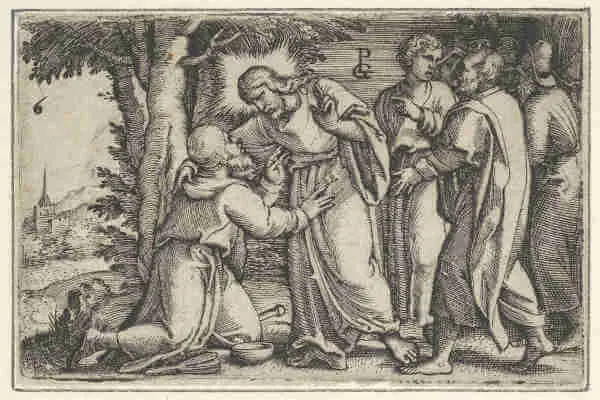
When Jesus came down from the mountain, great crowds followed him. And then a leper approached, did him homage, and said, “Lord, if you wish, you can make me clean.”

Reflection:

To do homage to another is to publicly express reverence and respect. This is what this leper did to Jesus. He “did him homage.” But the leper went even further. He also expressed his certain faith that Jesus could cure him if He wished to do so. And Jesus did desire this. Jesus stretched out His hand to touch the leper and pronounced the words, “I will do it. Be made clean.” And with that, the leper was cleansed.

The first thing to note in this passage is that Jesus “touched” the leper. This was a forbidden practice, since lepers were unclean, and touching them could spread their disease. But Jesus broke the norm and touched the man, revealing to him his innate dignity.

It’s interesting to consider the question: Who paid whom a greater act of homage? Was the act of homage shown by the leper greater? Or the act of touching and cleansing the leper greater? Though we need not compare these two acts, it is helpful to reflect upon the profound fact that Jesus did show a form of homage to this unclean leper.

As was said above, to do homage to another is to publicly express reverence and respect to them. Without a doubt, Jesus did just this. He not only honored the leper by His touch and healing, but He publicly expressed His love and respect for this man through this act.

Of course, the homage we owe to God is unique. It is the homage of worship. We must bow down before Him, surrendering our lives in total abandonment and trust. We must honor Him as God and express our love accordingly. But, in addition to Jesus showing His almighty power by this miracle, He also sets for us an example of how we must treat others. Every person, because they are made in the image and likeness of God, deserves our utmost respect, and they deserve to receive that respect in a public way. We must continually seek to honor and respect others and express that honor and respect for others to see. This is especially difficult when the person we are called to show respect for is considered by others as “unclean.” The leper is only a symbol of the many types of people whom the world considers unclean and unworthy. Criminals, the poor, the confused, the sinner, the homeless, the political opponent and every other person in our world deserves our utmost respect and reverence. Doing so does not justify their sin; rather, it cuts through the surface and looks at their innate dignity.

Reflect, today, upon the act of homage done by this leper to Jesus. And then reflect upon the act of homage Jesus offers this leper by publicly confirming his innate dignity. Who in your life is represented by this leper? Who is “unclean” because of the condition of their life, the sin they commit, or the public stigma they have? Whom is God calling you to reach out and touch with love and respect, for others to see? Seek out the leper in your life and do not be afraid to imitate this holy act of homage exemplified by our Lord.

Source: https://catholic-daily-reflections.com/2024/06/27/homage-reverence-and-respect-3/

Matthew 8:1-4 Read More »

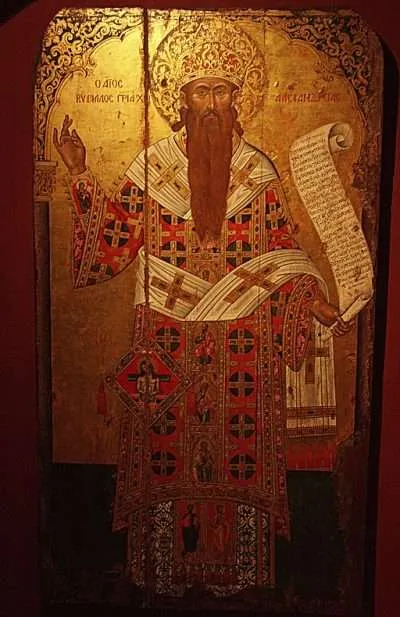
Saint Cyril of Alexandria, Bishop and Doctor

c. 376–444; Patron Saint of Alexandria, Egypt; Invoked against Christological heresies; Pre-Congregation canonization; Declared a Doctor of the Church by Pope Leo XIII in 1883

After Jesus’ life, death, and resurrection, it is believed that Saint Mark, the Evangelist and Gospel writer, preached in Alexandria, Egypt, thus establishing the Christian faith in that city. Alexandria, founded in 331 BC by Alexander the Great, was situated on the northern edge of Africa, along the coast of the Mediterranean Sea. This strategic location rapidly turned it into an important trade center for Egypt, as well as a renowned hub for science, the arts, and learning. In 30 BC, Alexandria became a province of the Roman Empire, a status it would maintain for the next 700 years.

Christianity was legalized in the Roman Empire by Constantine the Great in 313. After that, major centers of Christian learning, such as Rome, Jerusalem, Antioch, Constantinople, and Alexandria became the stage for intense debates and developments in theology. Notably, these debates often revolved around Christ’s divine and human natures, His relationship with the Father and the Holy Spirit, and the appropriate title for the Blessed Virgin Mary. The outcomes of these debates provided the Church with a clear and foundational understanding of faith, which continues to deepen and evolve even today.

The fourth century saw the emergence of the Arian heresy, which taught that the Son was subordinate to the Father and not co-eternal. Saint Athanasius, then Bishop of Alexandria, tirelessly fought this heresy, enduring years of exile as a result. After the defeat of Arianism, other heresies surfaced. Fifty years after Athanasius’ death, Bishop Cyril of Alexandria would battle Nestorianism. 

Cyril was born in the town of Theodosius, about eighty-five miles east of Alexandria. Given its proximity to Alexandria, Theodosius shared in the rich Greco-Roman culture and learning. Its close location to the Nile Delta also meant that farming and fishing were common activities. As a youth, Cyril’s uncle, Theophilus, the Patriarch of Alexandria, ensured that Cyril received an excellent education in theology, philosophy, rhetoric, and science. However, his uncle was a controversial figure in the Church. Less of an intellectual and more of a politician, Theophilus was power-hungry, harsh, often antagonizing Jews and pagans, and was known for stirring up controversy and violence. He was even responsible for deposing Saint John Chrysostom as Patriarch of Constantinople.

Around the year 412, Cyril succeeded his uncle as Patriarch, quickly discovering the challenge of following in his controversial footsteps. After a group of violent monks murdered a prominent pagan philosopher, astronomer, and mathematician, Cyril was blamed, despite his lack of involvement. Being the nephew of Patriarch Theophilus had its drawbacks, and Cyril proceeded in his ministry with caution. He eventually moved out of the shadow of his uncle, establishing himself to be an intelligent and faithful servant of God and His Church. He began to write Scripture commentaries with theological precision, especially when it came to the nature of Christ, addressing the various heresies of the time. Within a decade of being a bishop, Cyril had established the reputation of being a trustworthy and articulate teacher of the faith.

In 428, the emperor appointed Nestorius as Patriarch of Constantinople. Shortly afterward, Patriarch Nestorius assigned a priest from Antioch to preach throughout Constantinople. The priest began challenging the widely accepted notion that Mary was rightly called the Mother of God (Theotokos), suggesting instead she should only be referred to as the Mother of Christ (Christotokos). This proclamation stirred controversy among the faithful in Constantinople, and news quickly spread across the empire, eventually reaching Patriarch Cyril, over 1,000 miles away in Alexandria.

Cyril vehemently disagreed with this new heresy, which later became known as Nestorianism. He began to preach and teach against it among his own people, clarifying that Mary was rightfully termed the Mother of God. He explained that this title was not solely about the Blessed Mother, but also about the essence of Christ. If Mary wasn’t the Mother of God, then Christ’s essence was divided. Nestorianism proposed that Jesus was a divine person somehow united with a distinct human person, and Mary was only the mother of His humanity. Cyril corrected this misinterpretation, emphasizing that there was only one Person in Christ, both human and divine. This made Mary not only the mother of her human Son but also the mother of His personhood, thereby justifying her title as the Mother of God. After teaching his people, Cyril wrote private letters to Nestorius to correct him. Nestorius rejected the correction. Consequently, Cyril broadened his correspondence, involving other bishops, members of the emperor’s court, and the pope in Rome. This pleased the faithful in Constantinople but enraged Nestorius. The pope investigated and authorized Cyril to deal with Nestorius with the pope’s authority.

In 431, the Roman emperor felt the need to intervene and called a Church Council in Ephesus to settle the dispute. Ephesian Christians were known for their devotion to the Mother of God, partly due to the deeply held tradition that Mary had settled in Ephesus later in life with Saint John. Thus, the council’s location signaled the emperor’s opposition to Nestorius. Once many of the bishops from across the empire had gathered, but before Nestorius and his supporters arrived, Cyril opened the council. He took the lead and eloquently articulated his position, which was consistent with the teachings of earlier Church Fathers. The bishops present at the council accepted his explanation and voted to condemn Nestorius. On arrival, Nestorius and his supporters were outraged that the council had proceeded without them. In retaliation, they held their own meeting, voted in opposition, and attempted to depose Cyril. When the emperor heard of this, his representative attempted to resolve the dispute by jailing both Nestorius and Cyril to force an agreement. Eventually, however, the emperor sided with Cyril, due to his popular support among the people. When Nestorius refused to accept this position, he was exiled to the Egyptian desert.

Upon returning to Alexandria, Cyril continued to write and teach. Later generations conferred upon him the titles “Guardian of Exactitude” and “Seal of the Fathers,” for he successfully synthesized the teachings of the Church Fathers who preceded him, applying those teachings to the present disputes. As we honor him today, ponder the significance of precision in your faith. Without precision that is consistent with all that has been taught before us, we risk failing to fully understand Christ. Reflect on your commitment to a deep and clear understanding of God and our faith, and reaffirm your fidelity to the truth.

Source: https://mycatholic.life/saints/saints-of-the-liturgical-year/june-27—saint-cyril-of-alexandria-bishop-and-doctor/

Saint Cyril of Alexandria, Bishop and Doctor Read More »

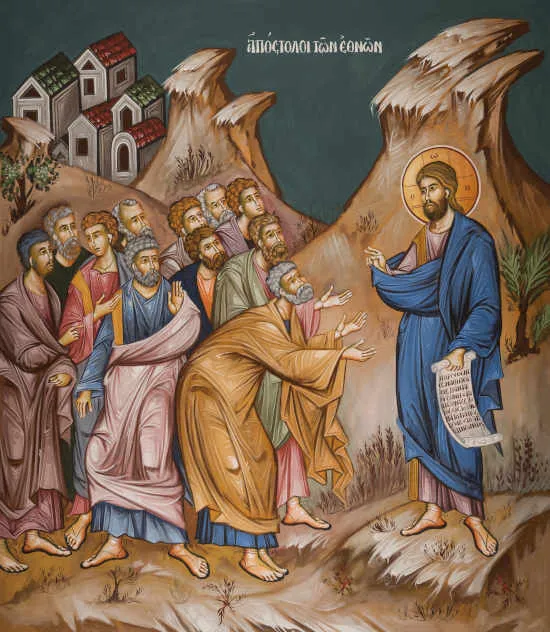
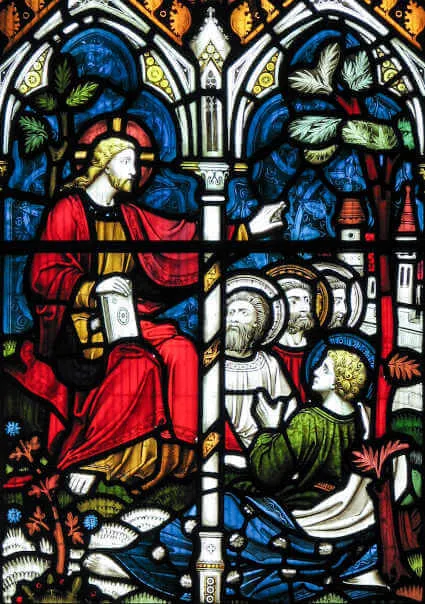
Matthew 7:28-29

An Authoritative New Law

When Jesus finished these words, the crowds were astonished at his teaching, for he taught them as one having authority, and not as their scribes.

Reflection:

These lines conclude the Sermon on the Mount found in Matthew’s Gospel chapters 5–7. In that lengthy sermon, Jesus touches on many topics and presents us with a summary of all we need to know in our lives of faith. In these concluding lines of His sermon, the words “astonished” and “authority” should stand out. Why were the crowds astonished at Jesus’ teaching? Because His teaching was new and relied upon a new authority that the people hadn’t experienced before.

The authority with which the scribes taught was based upon their knowledge of the traditions handed down to them from earlier teachers. The scribes studied long and hard and then presented what they had learned. This was the form of religious teaching that the people were used to receiving.

Jesus, however, arrived on the scene and astonished the crowds, because He spoke with a new authority that they had not seen before. Jesus’ authority came forth from His very Person. It was not based upon what He had studied and learned from those who preceded Him. Instead, when He spoke, it was He Himself Who was not only the mouthpiece of the New Law of grace, He was also the Author of the Law and its source.

Try to ponder the idea of authority. For example, a child knows that a parent has authority over them. They may not like it at times, but they understand that they do not set the rules of the house but must abide by the rules set by their parents. Or consider the authority of civil leaders. Law enforcement officers, for example, have an authority entrusted to them by their office. They are not only well versed in the rule of law, they can also enforce it and everyone knows it.

Similarly, Jesus did not just know about the new and glorious truths He taught. He did not simply learn them from the Father in Heaven and then pass them on verbally. Instead, when He taught, He did so as the One Who knew the New Law of grace, the One from Whom it originated, and the one and only Person sent to enact and enforce this New Law.

Reflect, today, upon the New Law of grace and mercy taught by our Lord, especially as it is contained in the lengthy Sermon on the Mount. Reading those words is much more than something we study and learn. The words themselves are alive; they are the Word of God. Reading them makes present to us the same authority that the crowds experienced in Jesus’ time. Everything Jesus taught was and is new, deep, profound, transforming and alive. And when He teaches it, He also establishes His divine authority to enforce it upon the world. This is good news, because His New Law is not an imposition; it is the one and only source of freedom and new life. Reflect upon this New Law of our Lord and pray that you will more fully come under its authority.

Source: https://catholic-daily-reflections.com/2024/06/26/an-authoritative-new-law/

Matthew 7:28-29 Read More »

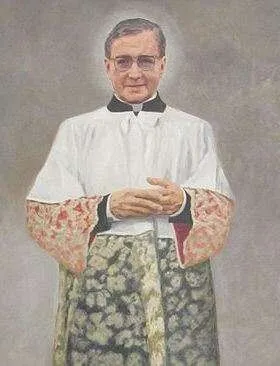
Saint Josemaria Escriva, Priest

1902–1975; Patron Saint of diabetics; "The earth is our altar, and work is our sacrifice"

When today’s saint was a young priest, he was a rather well-known speaker in Madrid, Spain. Besides being an excellent homilist, he also preached retreats, gave parish missions, and taught classes. A young woman heard that Father Josemaria was scheduled to give some lectures nearby and, in light of his reputation, was eager to hear him. But first she went to one of his Masses. After that, the woman had no interest in hearing him lecture; instead she wanted to discover God’s will for her life. Saint Josemaria’s example of intense devotion and prayerfulness in saying Mass made her rethink her entire vocation. A good priest disappears into his vocation, submerges himself in Christ, and communicates a divine, not a personal, message. He makes people think of God, not him. At Mass the priest is not himself, yet is fully himself. He performs a sacrament because he is a sacrament. The Sacrament of Holy Orders is hidden behind the aspects of a man, the Holy Eucharist under the aspects of bread and wine.

It is the theology of the Church that every sacrament validly performed is efficacious, that it transmits sanctifying grace to the soul. But the fruitfulness of a sacrament for its recipient, either psychologically or spiritually, fluctuates. It can hinge on any number of factors, from the beauty of a Church, the quality of a homily, the sacredness of the music, or the intellectual preparation and ardor of the one receiving the sacrament. A holy, charitable, and educated priest infuses every sacrament he celebrates with a theological meaning that yields spiritual fruit that goes beyond efficaciousness. Saint Josemaria’s writings, preaching, lectures, and talks were so rich, so chock-full of practical purpose and high meaning, that a great international family gathered around him, harvesting from his sustained example and insights an abundant banquet for their spiritual table.

Josemaria Escriva was born in a small town in rural Spain. He attended diocesan seminaries in the nearby city of Zaragoza and was ordained a priest in 1925. In 1928, he experienced a vision which spurred him to found Opus Dei, an institution that quickly spread to all the major Christian countries. Opus Dei consists primarily of married lay men and women, while some members are unmarried and consecrated celibates. A few members are priests.  After two thousand years of Catholic spirituality, it might be asked what new insight warranted the foundation of a new Church institution? It is a sign of the Church’s theological and spiritual fecundity that Saint Josemaria did offer a new, innovative approach to living as a disciple of Christ nineteen hundred years after Christ returned to the Father.

In a homily from 1967, Josemaria states his spirituality in clear terms: “…God is calling you to serve Him ‘in and from’ the ordinary, material, and secular activities of human life. He waits for us every day in the laboratory, in the operating room, in the army barracks, in the university, in the factory, in the workshop, in the fields, in the home and in the immense panorama of work. Understand this well: there is something holy, something divine hidden in the most ordinary situations, and it is up to each one of you to discover it.”

In other words, there is no need for a serious lay Catholic to abandon his work and routine, his family life, or his everyday relationships to fulfill God’s will. God is found in and through ordinary life. Cardinal Albino Luciani, later Pope John Paul I, perceptively noted that Saint Josemaria was not teaching a ‘spirituality for lay people,’ as Francis de Sales taught, but a ‘lay spirituality.’ It is not a question of praying the rosary while sweeping the floor, or contemplating scripture while driving. It is about “materializing” holiness by converting ordinary, well-done work into a sacrifice and prayer to God. Ordinary work, then, is not just the context, but the raw material, for lay holiness. All jobs are important. Daily life is not a distraction from God’s will for us. Daily life is God’s will for us. When we get to work, we get to God.

Source: https://mycatholic.life/saints/saints-of-the-liturgical-year/june-26—josemara-escriv-priest—optional-memorial/

Saint Josemaria Escriva, Priest Read More »

Matthew 7:16-17

Good Fruit–Bad Fruit

“Do people pick grapes from thornbushes, or figs from thistles? Just so, every good tree bears good fruit, and a rotten tree bears bad fruit.”

Reflection:

“So by their fruits you will know them.” This is how our Gospel passage for today concludes. It offers us an exceptionally practical way by which you can discern the working of God in your own life and in the life of others.

When you look at your own life, what good fruit, born for the upbuilding of the Kingdom of God, do you see? Some people may find little to no fruit born, either for good or bad. Such complacency is, in and of itself, bad fruit. Other people may see an abundance of fruit, thus producing many consequences in this world. They influence the lives of many, and their public actions make a true difference. Sometimes for good…and other times for evil.

When discerning the actions of God in our world, we must first be very objective. The evil one is always very deceptive and regularly presents his bad fruit as good. For example, the legalization of abortion is often presented by many within our world as a “right to choose” or a “health service.” But the intentional death of any unborn child is clearly “bad fruit” from a “rotten tree.” There are even many so-called “humanitarian groups” or very wealthy “philanthropists” who present their work as “good fruit,” when it is anything but good. And on the contrary, there are many who work hard to bring forth a greater respect for life from the moment of conception to natural death, or strive to uphold the sacredness of marriage as God designed it, or work to promote the freedom to worship in accord with the will of God, but are labeled by the secular world as prejudiced, bigoted, fearmongers and even hateful. But their work, done very sacrificially, truly does bear good fruit for the Kingdom of God.

How about your own life? When you examine your actions and the fruit born of those actions, from where does that fruit originate? Does it come from a false sense of compassion, a misguided “charity,” and a fear of being criticized for standing for the truth? Or does it come from a deep love of God, an awareness of the truth God has revealed to us, and through a courageous proclamation of the pure Gospel?

Good fruit, born from the heart of the Father in Heaven, will always mirror the truths of our faith. A false sense of compassion, false accusations, persecutions and the like will flow from the rotten trees in our world. We must work diligently to be those good trees that bear the good fruit coming from God. This requires a radical commitment to do what is right in the face of the evil all around us.

Reflect, today, upon these images Jesus presents. Do you see clearly both the good and bad fruit around you? Is your life helping to foster the lies of the evil one or the truth and love of God? Look at the fruit your life bears, as well as the fruit within our world, in an objective way, comparing it to the clear and unambiguous teachings of Jesus. Seek out that good fruit with all your heart and do all you can to bring it forth, no matter the cost, and you will not only save your soul, you will also help feed others with the good fruit of Heaven.

Source: https://catholic-daily-reflections.com/2024/06/25/good-fruit-bad-fruit-3/

Matthew 7:16-17 Read More »

Saint Tigre of Maurienne

Profile

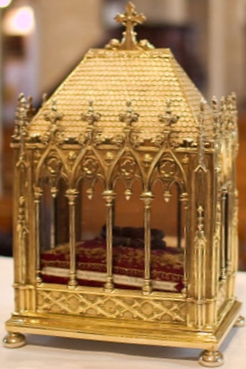
Tigre was a lay woman in the late 6th or early 7th century from Maurienne, Gaul (in modern France) swore that she would obtain a relic of the body of Saint John the Baptist, to whom she had a great devotion, and bring it back to her city. Having travelled to a shrine that was supposed to contain such relics (possibly in Sebaste or Alexandria, Egypt or somewhere in the Holy Lands; records vary), she was told that she could not have any of them. Rather then give up, she took up a life of fasting and prayer in front of the shrine, asking that Saint John provide her with a relic. After three years of this, a shining thumb suddenly appeared over the altar. Tigre put it in a small, golden reliquary, and went home. She gave the relic to the keeping of the cathedral (today Saint-Jean-de-Mauirenne), gave away her remaining possessions, and lived the rest of her life as a hermit, seeing other people only when she went to Mass. Saint Gregory the Great recounts her story as an example of perseverance, as described in Luke 11:8 – “I tell you, if he does not get up to give him the loaves because of their friendship, he will get up to give him whatever he needs because of his persistence.”

Born

  • Valloires, Mauirenne, Gaul (in modern France)

Canonized

  • Pre-Congregation

Source: https://catholicsaints.info/saint-tigre-of-maurienne/

Saint Tigre of Maurienne Read More »

Matthew 7:13-14

The Narrow Gate

“Enter through the narrow gate; for the gate is wide and the road broad that leads to destruction, and those who enter through it are many. How narrow the gate and constricted the road that leads to life. And those who find it are few.”

Reflection:

Is fear helpful? That depends. It depends upon which form of fear we are speaking of. First, there is a form of fear that is contrary to faith. It’s a fear that leads us to doubt and even despair. It’s a fear that results from the attack of the evil one and others who may sin against us. This form of fear is unhealthy and must be overcome through a faith that turns to our Lord with the utmost confidence and hope.

But there is also a holy fear that is most useful and one of the seven gifts of the Holy Spirit. Recall the Proverb that says, “The fear of the Lord is the beginning of wisdom…” (Proverbs 9:10). At a minimal level, this holy fear makes you aware of your sins and the consequences of those sins, especially serious sin. And this holy fear leads you to fear the punishment that results from sin, leading you to avoid serious sin. But the ideal form of “fear of the Lord” we must strive for is “filial fear,” which is the holy fear of a son or daughter of God. This fear is one that is grounded in a profound love of God and leaves you so filled with a wonder and awe of the glory, goodness and majesty of God that you are filled with a desire to please Him and give Him great glory with your life. Thus, this “fear” leads you to a desire to avoid even the smallest of sin, because, in your love of God, you not only want to avoid offending Him, you also want to honor Him to the greatest extent possible.

The Scripture passage above should lead us to, at a minimum, a fear of not entering the gate to the “road that leads to life.” It is useful to consider Jesus’ teaching in a very straightforward way. Jesus essentially says that it is quite easy to walk through the gate that is “wide” and down the road that is “broad” in this life. In other words, it’s exceptionally easy to embrace a life of sin and head toward “destruction.” Jesus further says that those who walk through this wide gate and down this broad road are “many.” This fact should be the cause of our honest daily examination. If this broad road is so easy, then we should honestly admit that we can easily find ourselves walking it.

The “narrow gate” and the “constricted” road are found and walked by only a “few,” according to Jesus’ words. Again, we should take notice of this and take it seriously. Jesus would not say this if it were not true. Therefore, if the gift of the fear of the Lord is alive in your life, and if you truly are a son or daughter of God, then you will daily strive to be one of those “few” who find this narrow way to holiness. And, ideally, you will do so out of your love for God and your desire to give Him the greatest glory you can.

Reflect, today, upon this challenging teaching of our Lord. Take Him at His word and evaluate your life in light of this teaching. What are you doing in life to be certain that you are one of those few who have begun to walk through this narrow gate? Does your love for God leave you with such a wonder and awe of the greatness of God that your deepest desire is to not only please Him but to glorify Him fully with your actions? Strive to enter the narrow gate and the constricted road and do not turn back. Though this requires much determination, sacrifice and love, the goal and end of the road are worth it.

Source: https://catholic-daily-reflections.com/2024/06/24/the-narrow-gate-5/

Matthew 7:13-14 Read More »

Birth of Saint John the Baptist

First Century Patron Saint of baptism, bird dealers, converts, monastic life, motorways, printers, tailors, lambs, and prisoners; Invoked against epilepsy, convulsions, hailstorms, and spasms; Pre-Congregation canonization

At the time of Saint John the Baptist’s birth, it was commonly thought that a woman’s inability to conceive was a sign of God’s disfavor and a punishment for sin. Although we know that’s not the case, it’s important to understand that God often brought forth great leaders from those who had long begged God for a child. Sarah was barren before conceiving Isaac. Rebekah was barren before giving birth to Esau and Jacob. Rachel was barren before giving birth to Joseph. Manoah’s wife was barren until she gave birth to Samson. And Hannah was barren until she gave birth to Samuel. Today’s solemnity celebrates one of the greatest births in history. Recall that Jesus himself would later say, “Amen, I say to you, among those born of women there has been none greater than John the Baptist” (Matthew 11:11).

When Elizabeth conceived John the Baptist, she and her husband, Zechariah, “were advanced in years” (Luke 1:7). The announcement of the child’s birth came to Zechariah when he was chosen by lot from his priestly clan to enter the Temple sanctuary to burn incense to the Lord. This was among the highest honors of the Old Testament priests. While in the sanctuary, the Archangel Gabriel, who stands before God, appeared to him to announce the good news. Zechariah was told that his wife would not only conceive and bear a son, but that his son “will be great in the sight of the Lord…be filled with the Holy Spirit even from his mother’s womb…turn many of the children of Israel to the Lord…will go before him in the spirit and power of Elijah…turn the hearts of fathers toward children…to prepare a people fit for the Lord” (Luke 1:15–17). This announcement of the birth of Saint John the Baptist was not only a joyous announcement, it was almost beyond belief. Zechariah certainly would have been sorrowful throughout his marriage that he had no children, and now an Archangel was telling him that his soon-to-be-conceived child would be great beyond belief. Of course, we know that Zechariah did, at first, disbelieve and was struck mute until John was born.

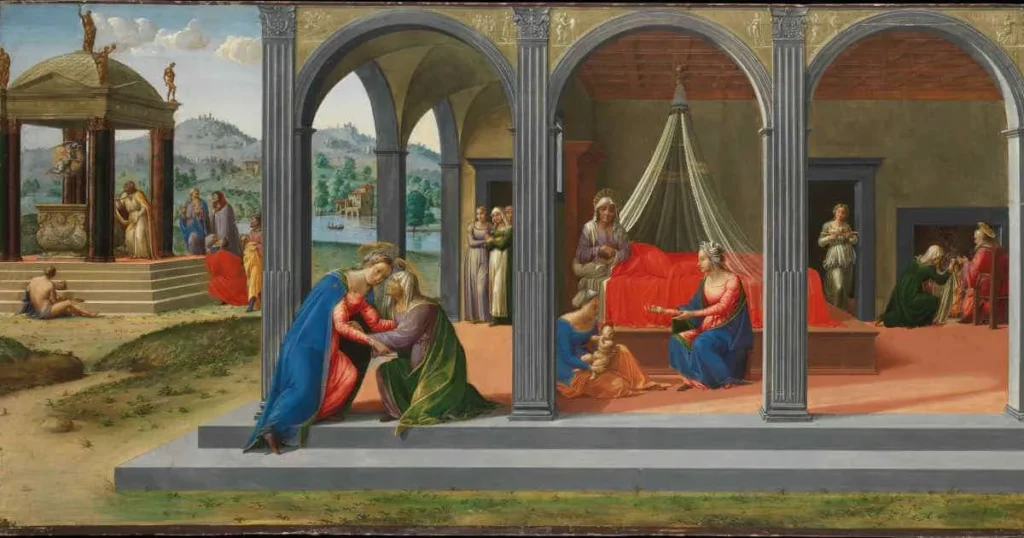
The next glorious chapter in the story of Saint John the Baptist came when that same Archangel, Gabriel, appeared to Mary, the Immaculate Conception, and announced that she would conceive the Savior of the World by the overshadowing of the Holy Spirit. After that announcement, Gabriel said to her, “And behold, Elizabeth, your relative, has also conceived a son in her old age, and this is the sixth month for her who was called barren; for nothing will be impossible for God” (Luke 1:36–37). This reveals the fact that, in the Father’s plan of salvation, John’s mission was intimately connected to that of Jesus. This is further confirmed when Mary travels in haste to her cousin Elizabeth to help her in the final months of her pregnancy. At the sound of Mary’s greeting, the unborn infant, John, leaped for joy in Elizabeth’s womb. Of this event, Saint Thomas Aquinas teaches that John was sanctified in the womb at that moment, meaning he was freed from sin and prepared for his sacred mission of preparing the way for Jesus’ ministry. Saint Thomas even goes so far as to speculate about that moment of sanctification as follows: “Perhaps also in this child the use of reason and will was so far accelerated that while in his mother’s womb he was able to acknowledge, believe, and consent, whereas in other children we have to wait for these things till they grow older: this again I count as a miraculous result of the divine power” (Summa Theologica 3.27.6).

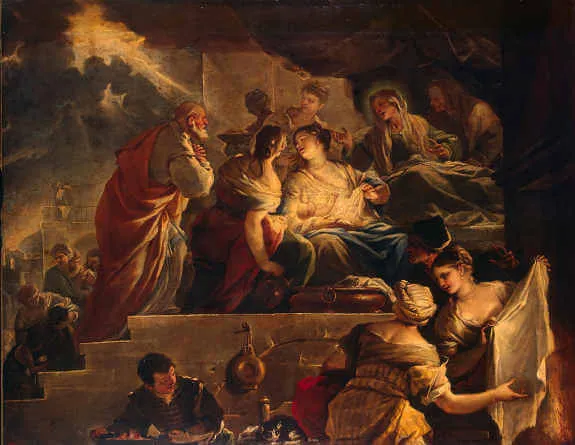
John’s birth, which we celebrate today, was surrounded by mystery, amazement, awe, and intrigue. The reaction to John’s birth is recorded this way by Saint Luke: “Then fear came upon all their neighbors, and all these matters were discussed throughout the hill country of Judea. All who heard these things took them to heart, saying, ‘What, then, will this child be?’ For surely the hand of the Lord was with him” (Luke 1:65–66).

Other than the Solemnity of the Birth of Christ (Christmas), Saint John the Baptist is the only person whom the Church honors with a solemnity to celebrate his birth. Our Blessed Mother’s birth is celebrated with a feast, although her Immaculate Conception is commemorated with the greater honor of a solemnity. It is a great honor, indeed, to honor this unique man’s birth with the highest rank of celebration within our Church.

As we mark the birth of Saint John the Baptist, ponder this birthday from two perspectives. First, look at it from a Heavenly and eternal perspective. The angels and saints will forever glorify God for this great event and for the significant role that John played in the history of salvation. Second, look at it from a purely human perspective. Try to ponder the wonder and awe that would have enfolded Elizabeth and Zechariah. Consider their humanity. They were real people who became real parents and were told great things about their child. Despite that, John was still their child, just as Jesus was Mary’s Child. The proper perspective of every event we celebrate in salvation history is to unite the human and divine perspectives, the transcendent and the imminent, the personal and the supernatural, to more fully understand, participate in, and believe these glorious and historical events that have opened the gates of Heaven to all who have faith.

Source: https://mycatholic.life/saints/saints-of-the-liturgical-year/june-24—birth-of-saint-john-the-baptist/

Birth of Saint John the Baptist Read More »

Luke 1:65-66

Formed by the Hand of the Lord

All who heard these things took them to heart, saying, “What, then, will this child be?” For surely the hand of the Lord was with him. The child grew and became strong in spirit, and he was in the desert until the day of his manifestation to Israel.

Reflection:

John the Baptist was formed by the hand of the Lord. Saint Thomas Aquinas goes so far as to say that John was sanctified in the womb of his mother, Elizabeth, as is written: “He will be filled with the holy Spirit even from his mother’s womb” (Luke 1:15). From the moment that the Blessed Virgin Mary greeted Elizabeth and John leaped for joy, the hand of the Lord was upon John, making him holy and leading him to the fulfillment of God’s holy will.

John’s early life is not recorded for us, other than in the passage quoted above. We are told that he “grew and became strong in spirit, and he was in the desert until the day of his manifestation to Israel.” We should see in this passage the truth that John was not only sanctified within the womb of his mother but that, throughout his childhood and on into adulthood, he remained deeply united to God and was filled with the Holy Spirit.

Today we honor one particular aspect of John’s life—his birth. We know that he was blessed to not only be born into the blessed family of Elizabeth and Zechariah but that the Blessed Virgin Mary, the Mother of God, was also his relative and was present at his birth. Zechariah, his father, gave him the name “John” even though it would have been the custom to call him Zechariah after his father. Zechariah did this in obedience to the Archangel Gabriel, who appeared to him prior to John’s birth and instructed him to do so.

Great mystery and excitement surrounded the birth of John, and there is little doubt that those who were present at his birth would have been caught up in the intrigue and hope of who he would become. And John didn’t disappoint. It was of him that Jesus one day would say, “I tell you, among those born of women, no one is greater than John…” (Luke 7:28).

Though you may not have had the privilege of being sanctified in the womb of your mother, or to have had your father receive a revelation from the Archangel Gabriel prior to your birth, you are, nonetheless, called to be guided by the hand of the Lord each and every day. God wants you to become “strong in spirit” so that you can fulfill the unique will given to you. We honor the great saints, in part, because they give us an example of how to live. For that reason, we must see in each of their lives the model to which we must conform. The primary witness set by Saint John the Baptist is that he was unwaveringly obedient to God and to being formed by His hand. The result was the glorious fulfillment of his unique mission in life, all the way to giving his life as a martyr.

Reflect, today, upon the very real fact that, though you were not sanctified in the womb, you were sanctified by Baptism. From there, you were strengthened by the Spirit through Confirmation and are regularly fed by the Most Holy Eucharist. In many ways, you are just as blessed as John. Reflect upon the simple yet profound fact that God wants to use you for His holy mission. He gives to you some particular mission He has not entrusted to another. Say “Yes” to that mission today so that you, too, will be seen as “great” in the Kingdom of Heaven.

Source: https://catholic-daily-reflections.com/2024/06/23/formed-by-the-hand-of-the-lord-3/

Luke 1:65-66 Read More »