2024

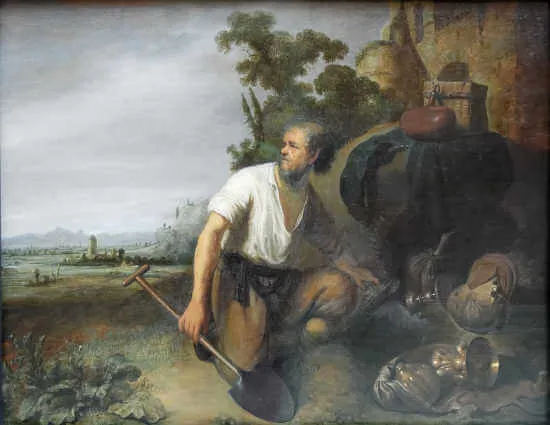
Matthew 13:44

Discovering the Riches of Heaven

Jesus said to his disciples: “The Kingdom of heaven is like a treasure buried in a field, which a person finds and hides again, and out of joy goes and sells all that he has and buys that field.”

Reflection:

Today’s Gospel presents us with two very short and similar parables. In the first, quoted above, the Kingdom of Heaven is likened to a “treasure.” In the second parable, the Kingdom of Heaven is likened to a “pearl of great price.” Though these parables are very similar to each other, there are also subtle differences worth pondering. It appears that the treasure mentioned in the first parable is discovered almost by accident. The person simply “finds” it. This is in contrast to the second parable, in that the merchant who finds the pearl of great price did so after “searching” for it. 

We often encounter the Treasure of the Gospel without even looking for it. We do so any time God intervenes in our lives without us seeking His intervention. For example, if someone were to offer an act of charity to you without you seeking it out, this is God giving you a treasure of His Kingdom. Or if someone shares with you their faith, or an inspiration they received, this is indeed a treasure given to you by God. The problem is that many times when we are given these treasures of the Gospel, we do not always see them as treasures. Imagine, for example, if the person in this parable were to stumble upon the treasure in the field and fail to open it out of indifference. They see it from a distance, have a bit of curiosity about what is in the box, but they are not energetic enough to actually open the box and look inside. In that case, the person would have no reason to go and sell all that they have so as to buy the field in which the treasure is found.

One clear message that this first parable reveals is that we must be attentive to the countless treasures of God’s graces given to us each and every day. God is so prolific in offering us grace, that we truly do stumble upon His grace all the time. Thus, having eyes to perceive His actions and ears to Hear His Voice is essential.

A second message clearly given in both of these parables is that once we discover the graces God gives us every day, we must foster within ourselves a desire for those graces that is so strong that we are willing to do anything necessary to obtain them. The discovery is made through the gift of faith, but the discovery by faith must then be followed with a zeal that drives our will to conform to that discovery.

Reflect, today, upon two things. First, have you discovered the treasures God has given to you? If you hesitate in answering this, then it’s most likely the case that there is much you have yet to discover. Secondly, as you do discover the riches that come with the gift of faith, then have you allowed that which God has spoken to you to consume you to such a point that you are willing to sell all you have, meaning, do whatever it takes to further accept all God wants to bestow? Resolutely determine to go forth on this holy search and you will find that the riches of grace that you obtain are of infinite value.

Source: https://catholic-daily-reflections.com/2024/07/30/discovering-the-riches-of-heaven-3/
Matthew 13:44 Read More »

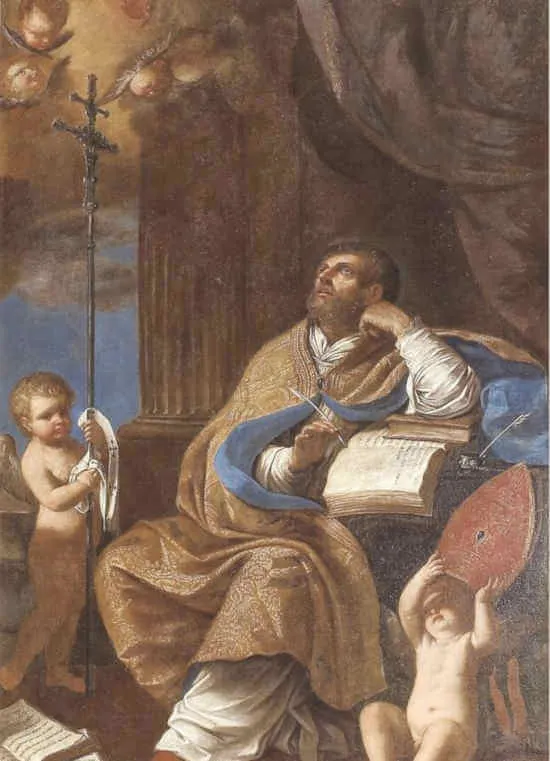
Saint Peter Chrysologus, Bishop and Doctor

c. 380 or 406–c. 450; Patron Saint of Imola, Italy; Invoked against fevers and vicious dogs; Pre-Congregation canonization; Proclaimed a Doctor of the Church by Pope Benedict XIII in 1729

Saint Peter Chrysologus was born in Imola, modern-day Italy, during a period of great turmoil within the Church and the Roman Empire. In 410, when Peter was about four years old, Rome was sacked by the Visigoths, leading to political corruption and economic difficulties. The era he lived in also witnessed a series of short-lived and ineffective Roman emperors, contributing to the prevailing instability. Arianism and its related heresies had also caused divisions within the Church, particularly between the East and West. During his lifetime, Peter witnessed the rise of new heresies and fiercely defended the Church. Reliable information about Peter’s youth is scarce, including discrepancies in his birth dates, with some accounts suggesting around 380 and others around 406.

In Imola, Peter developed a close relationship with the local bishop, Cornelius, who is believed to have baptized, educated, and ordained him as an archdeacon for the Diocese of Imola. Peter regarded Bishop Cornelius as his spiritual father and praised his manifest virtue. Around 433, when the bishop of Ravenna passed away, the clergy and people of that diocese sought a new bishop. They requested Bishop Cornelius, a neighboring bishop, to go to Rome and secure the consent of Pope Sixtus III for their chosen candidate. According to tradition, Bishop Cornelius brought Archdeacon Peter with him to Rome. The night before their meeting with the pope, the pope had a vision of Saint Peter the Apostle and Saint Apollinaris, the first bishop of Ravenna, with Archdeacon Peter standing beside Apollinaris. The following day, when the pope saw Archdeacon Peter alongside Bishop Cornelius, he selected Peter as the next Bishop of Ravenna.

As Ravenna was the capital of the Roman Empire, Bishop Peter had the opportunity to become acquainted with the emperor. Following his episcopal ordination, Bishop Peter soon gained admiration for his preaching and his holy and penitential way of life. He also earned the esteem of the Christian Emperor Valentinian III and his devout mother, Galla Placidia. It might have been Galla who first bestowed the title “Chrysologus” upon Bishop Peter, which means “golden-mouthed,” in reference to his powerful preaching style. Bishop Peter Chrysologus delivered unique sermons, with around 176 of them surviving to this day. These sermons were relatively short, scripturally grounded, and often centered on the Person of Christ and the consequences of His Incarnation. They were characterized by their evangelical approach, seeking to win hearts and minds for Christ rather than being purely theological discourses. Galla, who was actively involved in charitable works and church-building, collaborated with Bishop Peter Chrysologus in constructing many churches in Ravenna.

During that period, just as in the previous century, the Church faced internal conflicts over the nature of Christ. A new heresy arose, later known as Monophysitism. Eutyches, a monk from Constantinople, emerged as one of its leading proponents. He taught that after the Incarnation, the human nature of Christ was absorbed into His divine nature, resulting in a single divine nature. Though distinct from the earlier Arian heresy, which denied the divinity of Christ, Monophysitism similarly rejected the orthodox position established at the Council of Nicaea in 325 that affirmed the two natures of Christ, both human and divine, perfectly united in His Person. When Eutyches sought support for his heretical position, Bishop Peter wrote to him a firm but compassionate letter, exhorting him to submit to the authority of the pope on the matter. Though the letter itself has been lost, some of the content of his letter was preserved in the Acts of the Council of Chalcedon.

Despite debates regarding the Church controversies of the time, Bishop Peter Chrysologus understood the importance of theological precision. He recognized Jesus as the Son of God, fully divine, sharing the same substance with the Father and the Holy Spirit. Additionally, he grasped the truth that the divine Son assumed human nature, uniting His divinity with humanity in His Person to redeem humanity. Thus, Jesus was both fully God and fully man, with His divinity and humanity united, providing the pathway to eternal salvation for humanity.

As the Bishop of Ravenna, Peter Chrysologus vigorously defended the true and pure faith against the Monophysite heresy, introducing people to the Savior of the World through his concise, well-formed, theologically precise, and heartfelt homilies. Although he passed away before the Church officially ruled on the Monophysite heresy at the Council of Chalcedon in 451, Bishop Peter Chrysologus’s letters, homilies, and personal influence paved the way for subsequent bishops to follow the correct path. Over his approximately twenty-seven years as Bishop of Ravenna, he fervently promoted religious practices, such as daily reception of the Eucharist, fasting, almsgiving, Lenten penance, and pious devotions, with his primary concern always being the salvation of souls.

It was not until 1729 that Pope Benedict XIII declared Saint Peter Chrysologus a Doctor of the Church. This proclamation highlights the enduring value of his writings. Although he lived over 1500 years ago, his teachings transcend specific times, cultures, and conflicts. His clear, concise, and profound teachings about Christ continue to resonate in official Church documents, the Office of Readings, and are widely used for spiritual reading.

As we honor this fifth-century Bishop of Ravenna, let us contemplate the timeless truth that truth itself is eternal. Whether it originates in the Old Testament, the New Testament, the early Church Fathers, or a fifth-century bishop, when truth is articulated, it remains relevant for people of all times and circumstances. Let us reflect on the enduring understanding of the nature of Christ that Saint Peter Chrysologus vigorously defended and taught. May we pray for greater clarity in comprehending the Person of Christ and offer gratitude for the great saints who have paved the way for us, building a foundation of truth on which we now stand.

Source: https://mycatholic.life/saints/saints-of-the-liturgical-year/july-30—saint-peter-chrysologus-bishop-and-doctor/

Saint Peter Chrysologus, Bishop and Doctor Read More »

Matthew 13:43

Our Final Destiny

“Then the righteous will shine like the sun in the Kingdom of their Father. Whoever has ears ought to hear.”

Reflection:

This passage concludes Jesus’ explanation of the Parable of the Weeds in the Field. Recall that in this parable there were good seeds sown in a field. The Sower is the Son of Man, Jesus, and the seed He sows are the children of the Kingdom, which includes all those who are in a state of grace. The field is the whole world. Thus, Jesus is saying that He has sent His followers, each one of us, into the world to build His Kingdom. But the evil one also sows his “children,” which refers to all of those who live evil lives that are contrary to the will of God. The passage above refers to the reward that the children of the Kingdom receive, whereas the passage just prior to this points out that at the end of the age, the children of the evil one will be condemned and sent “into the fiery furnace, where there will be wailing and grinding of teeth.”

The end result of being the children of the Kingdom is quite hopeful. “Then the righteous will shine like the sun in the Kingdom of their Father.” This promise from our Lord should be pondered, believed and become the driving force of our hope in life.

Hope is an essential virtue that we often do not speak of enough. The gift of hope is not simply wishful thinking, such as when one hopes they win the lotto. The theological virtue of hope is a gift from God that is based on truth. The truth that it is based on is the promise of eternal life in Heaven if we accept all that God speaks to us and if we fulfill His glorious will in our lives.

By analogy, say that you have a large mortgage on your home. And say that the bank was doing a promotion in which they were going to pay off the mortgage for one lucky family. And that family was yours. They contacted you and let you know that all you need to do is fill out an application for this grant and that it would then be given to you. What would you do? Of course you would go and fill out the application. The bank is trustworthy, and you are confident that if you do what they ask, a small task of filling out the application, then they will follow through with the promise they made of paying off your mortgage. In a sense, there is hope established within you once you learn of this offer; and that hope, which is based on a true promise, is what drives you to do the small task of filling out the application.

So it is with God. The “mortgage” that He promises to pay is the debt of all our sin. And the requirement to receive this promise is fidelity to all He commands of us for our good. The problem is that we often do not fully understand the reward we are promised. That is: to “shine like the sun” in the Kingdom of our Father in Heaven. Having your mortgage paid off by the bank is something concrete and clear and very desirable. But the reward of shining like the sun in the Kingdom is of infinitely greater value. Do you believe that?

The best way to strengthen the virtue of theological hope in our lives is to become more and more certain of the truthful promise of our Lord. We need to understand Heaven and the infinite value we receive by obtaining it. If we truly understood what Jesus was promising us, we would become so intensely driven to do all that He commands us to do that this would become the single focus of our life. The hope would become a strength so strong that we would become consumed with doing anything and everything necessary to obtain such a reward.

Reflect, today, upon the depth of hope you have in your life. How driven are you by the promises made by our Lord? How clearly do you understand those promises? If you struggle with hope, then spend more time on the end reward that is promised to you by Jesus. Believe what He says and make that end goal the central focus of your life.

Source: https://catholic-daily-reflections.com/2024/07/29/our-final-destiny-3/

Matthew 13:43 Read More »

Saints Martha, Mary, and Lazarus

First Century

Martha—Patron Saint of cooks, butlers, dieticians, homemakers, innkeepers, maids, single laywomen, servers, and travelers

Mary—Patron Saint of spiritual studies and lectors

Lazarus—Patron Saint of gravediggers Pre-Congregation canonization

“Jesus loved Martha and her sister and Lazarus” (John 11:5). This is how John’s Gospel describes Jesus’ relationship with these siblings whom we honor together today. Of course, Jesus loves all people equally with the perfection of divine charity. So why does John’s Gospel single these three out this way? In the Gospel passage, the word “love” does not only mean the perfect charity in the Heart of Christ for all people. It also implies that Jesus had a special relationship with them, perhaps throughout His life, but at least during the time of His public ministry. This fact is helpful to ponder since it gives us a glimpse into the authentic humanity of Jesus. He formed friendships. He enjoyed spending time with those friends. As both God and man, He ate with them, laughed with them, listened to them, and loved them. Now, from Heaven, Jesus wants to extend that human and divine love He perfectly offers to everyone.

In Luke’s Gospel, after Jesus begins His public ministry in Galilee, northern Israel, He travels with His disciples to Jerusalem and continues His ministry. It is on that journey that Martha and Mary are introduced. Luke 10:38–42 tells the familiar story of Jesus entering their home in Bethany, just several miles east of Jerusalem, where He is a guest for dinner. As Jesus reclines, Mary also reclines with Him, at His feet, listening to Him. Martha, busy preparing the meal, rebukes her sister by asking Jesus to tell Mary to help her with the meal preparation. “Lord, do you not care that my sister has left me by myself to do the serving? Tell her to help me.” Jesus responds, “Martha, Martha, you are anxious and worried about many things. There is need of only one thing. Mary has chosen the better part and it will not be taken from her.”

This passage provides us with much to prayerfully ponder. First, it’s clear that Jesus is very familiar with Martha and Mary. Martha would not have spoken so bluntly, in an almost critical way toward Jesus, if she did not know Jesus well.  Hence, this passage highlights the very real human friendships Jesus enjoyed. Second, Martha’s work of preparing the meal should be seen as a labor of love. Though she is frustrated, that doesn’t change the fact that her service is a service of love and is very important to the fostering of the siblings’ friendship with Jesus. Third, the image of Mary sitting at Jesus’ feet is often used as an image of the contemplative life in which we are all called to sit at His feet in adoration. This “better part” must remind us that nothing is better or more important than prayer. The activity and good works we do will always pale in comparison to the act of adoration of God. Furthermore, only when adoration and worship of God come first do good works follow.

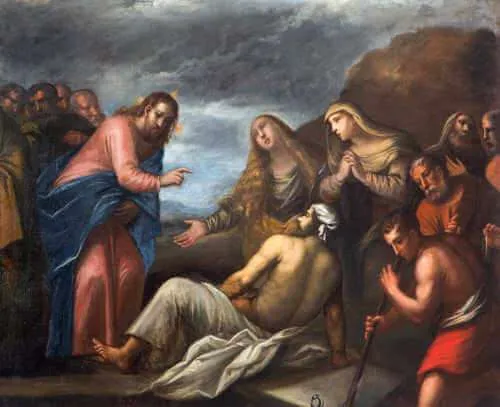
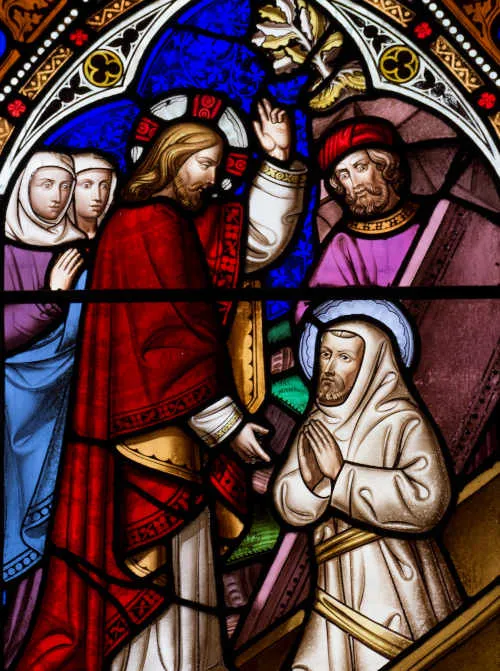
Martha, Mary, and Lazarus appear for the first time in John’s Gospel toward the end of Jesus’ public ministry, just prior to the first Holy Week (see John 11:1–44). The context of the story makes it clear that Jesus and His apostles are all very familiar with these three siblings from Bethany. Lazarus is ill, at the point of death, and Martha and Mary summon Jesus. Jesus waits for two days until Lazarus dies before He journeys to Bethany, converses with Mary and Martha, and then raises Lazarus from the dead. In this passage, Martha emerges as the witness to faith, not Mary. In her conversation with Jesus, Martha proclaims, “I have come to believe that you are the Messiah, the Son of God, the one who is coming into the world.” This is true faith in the face of the painful situation of the death of her beloved brother.

In contrast to Martha who had run out to meet Jesus when He arrived, Mary stayed home, sorrowful, perhaps sulking. When Martha told Mary that Jesus wanted to see her, she went out to see Jesus in apparent despair. The Gospel says that Jesus became “perturbed” at the weeping of Mary and “the Jews who had come with her.” The Greek word literally means “He snorted in spirit,” which seems to be a response to Mary’s lack of hope. After this, Jesus raises Lazarus from the dead.

In the next chapter of John’s Gospel, John 12:1–8, Jesus is once again at dinner in Bethany with Martha, Mary, and Lazarus, just six days before Passover, six days before His death. While there, Mary enters the room with a “liter of costly perfumed oil made from genuine aromatic nard” and pours it on Jesus’ feet, drying them with her hair. Though some have associated this act with the sinful woman in Luke 7:36–39 who came crying at Jesus’ feet, the two people might or might not be the same. What is clear, however, is that the anointing of Jesus in Bethany is not the same as the anointing in the home of Simon the Pharisee in Luke 7, which took place in Galilee to the north. Was Mary of Bethany the sinful woman? Did she first anoint Him in Galilee and then later, again, in Bethany? We will never know for certain, but most scholars agree today that she is not the same person as Mary Magdalene. Hence, there might be two or even three women who have traditionally been confused as the same person: Mary Magdalene, Mary of Bethany, and the unnamed sinful woman in Luke 7.

All three of today’s saints appeared in the 1749 (updated in 1916) Roman Martyrology, the Church’s official list of saints. Of them it says, “At Tarascon, in France, Saint Martha, virgin, the hostess of our Savior, and sister of blessed Mary Magdalene and Saint Lazarus.” However, only Saint Martha appeared on the General Roman Calendar as a memorial until 2021 when Pope Francis added Saint Mary and Saint Lazarus to the July 29 memorial, and clarified that Mary of Bethany was not the same person as Mary Magdalene, although either of them might be the sinful woman.

As we honor these sibling saints, ponder the real, personal, and human friendship that the Savior of the World had with them. He loved them as God and as a man, with a pure, perfect, and holy love. In so many ways, this is exactly what Jesus wants with you. He wants you to know Him, spend time with Him, converse with Him, worship Him, and trust Him in good times and bad. Today’s sibling saints are not much different than you. Seek to imitate them, learn from their holy witness, and even from their mistakes. Become a friend of our Lord by inviting Him to dine in the home of your soul.

Source: https://mycatholic.life/saints/saints-of-the-liturgical-year/saints-martha-mary-and-lazarus/

Saints Martha, Mary, and Lazarus Read More »

John 11:19-22

A Holy and Imperfect Family

Many of the Jews had come to Martha and Mary to comfort them about their brother [Lazarus, who had died]. When Martha heard that Jesus was coming, she went to meet him; but Mary sat at home. Martha said to Jesus, “Lord, if you had been here, my brother would not have died. But even now I know that whatever you ask of God, God will give you.”

Reflection:

Today’s memorial is relatively new within our Church. In the year 2021, Pope Francis replaced the Memorial of Saint Martha with this memorial in honor of all three siblings: Martha, Mary and Lazarus. In commenting on the reason for this new memorial, the Congregation for Divine Worship stated: “Martha generously offered him hospitality, Mary listened attentively to his words, and Lazarus promptly emerged from the tomb at the command of the One who humiliated death.” Furthermore, these three siblings gave an evangelical witness to us all. They model for us how to be Christians within our imperfections. They did this by welcoming Jesus into their home, by listening to Him attentively, and by believing that He is the Resurrection and the Life.

These three siblings each had their own unique personality and loved Jesus in their own way. Though not much is said about Lazarus’ personal interactions with Jesus, we do have some helpful insights into both Martha and Mary. In one Gospel story, Martha complained to Jesus that her sister left her to do all the cooking. Jesus gently corrected her. Mary, on the other hand, gave a witness of deep prayer and love of Jesus by sitting at His feet listening to Him. However, in the story of the raising of Lazarus from the dead, there is a reversal of roles. Martha is the one who runs out to meet Jesus and expresses her deep faith in Him. Mary, on the other hand, heard that Jesus was coming and appeared to stay at home because she was upset.

Perhaps the most helpful way to ponder these siblings is to acknowledge two things. First, they are now saints in Heaven enjoying eternal beatitude and glory. Second, on earth they were people of faith and love, but they were also very clearly imperfect. Therefore, the witness they give to us should be twofold. We hope to share in the glory in which they now share, and we trust this will happen if we also befriend our Lord and welcome Him into our homes, imperfect though we may be.

Reflect, today, upon this holy but imperfect family. The imperfections and manifest weaknesses of these three siblings should encourage us to press on in our practice of the faith when things are not perfect in our lives either. There are many reasons why we might get discouraged or feel like doubting or giving up at times. Perhaps things are not perfect within the Church—or at the particular church you attend. Perhaps you are struggling with loving someone in your family. Perhaps you are struggling with an emotional issue. Perhaps there is some sin you seem to be incapable of overcoming. Perhaps you struggle with a physical ailment and wonder why God permitted it to happen. If you are able to relate to any of these, or any other forms of imperfection, then take inspiration from this family of Martha, Mary and Lazarus. Invite Jesus into the home of your heart, your family home and everywhere you go. He will come, gently correct you when needed, and give you the gift of new life, raising you up from your sins and weaknesses.

Source: https://catholic-daily-reflections.com/2024/07/28/a-holy-and-imperfect-family-2/ 

John 11:19-22 Read More »

Seventeenth Sunday in Ordinary Time

First Reading 2 Kings 4:42-44

A man came from Baal-shalishah bringing to Elisha, the man of God,
twenty barley loaves made from the firstfruits,
and fresh grain in the ear.
Elisha said, “Give it to the people to eat.”
But his servant objected,
“How can I set this before a hundred people?”
Elisha insisted, “Give it to the people to eat.”
“For thus says the LORD,
‘They shall eat and there shall be some left over.'”
And when they had eaten, there was some left over,
as the LORD had said.

Responsorial Psalm Psalms 145:10-11, 15-16, 17-18

R. (cf. 16) The hand of the Lord feeds us; he answers all our needs.

Let all your works give you thanks, O LORD,
and let your faithful ones bless you.
Let them discourse of the glory of your kingdom
and speak of your might.

R. The hand of the Lord feeds us; he answers all our needs.

The eyes of all look hopefully to you,
and you give them their food in due season;
you open your hand
and satisfy the desire of every living thing.

R. The hand of the Lord feeds us; he answers all our needs.

The LORD is just in all his ways
and holy in all his works.
The LORD is near to all who call upon him,
to all who call upon him in truth.

R. The hand of the Lord feeds us; he answers all our needs.

Second Reading Ephesians 4:1-6

Brothers and sisters:
I, a prisoner for the Lord,
urge you to live in a manner worthy of the call you have received,
with all humility and gentleness, with patience,
bearing with one another through love,
striving to preserve the unity of the spirit through the bond of peace:
one body and one Spirit,
as you were also called to the one hope of your call;
one Lord, one faith, one baptism;
one God and Father of all,
who is over all and through all and in all.

Alleluia Luke 7:16

R. Alleluia, alleluia.

A great prophet has risen in our midst.
God has visited his people.

R. Alleluia, alleluia.

Gospel John 6:1-15

Jesus went across the Sea of Galilee.
A large crowd followed him,
because they saw the signs he was performing on the sick.
Jesus went up on the mountain,
and there he sat down with his disciples.
The Jewish feast of Passover was near.
When Jesus raised his eyes
and saw that a large crowd was coming to him,
he said to Philip,
“Where can we buy enough food for them to eat?”
He said this to test him,
because he himself knew what he was going to do.
Philip answered him,
“Two hundred days’ wages worth of food would not be enough
for each of them to have a little.”
One of his disciples,
Andrew, the brother of Simon Peter, said to him,
“There is a boy here who has five barley loaves and two fish;
but what good are these for so many?”
Jesus said, “Have the people recline.”
Now there was a great deal of grass in that place.
So the men reclined, about five thousand in number.
Then Jesus took the loaves, gave thanks,
and distributed them to those who were reclining,
and also as much of the fish as they wanted.
When they had had their fill, he said to his disciples,
“Gather the fragments left over,
so that nothing will be wasted.”
So they collected them,
and filled twelve wicker baskets with fragments
from the five barley loaves
that had been more than they could eat.
When the people saw the sign he had done, they said,
“This is truly the Prophet, the one who is to come into the world.”
Since Jesus knew that they were going to come and carry him off
to make him king,
he withdrew again to the mountain alone.

Source: https://bible.usccb.org/bible/readings/072824.cfm

Seventeenth Sunday in Ordinary Time Read More »

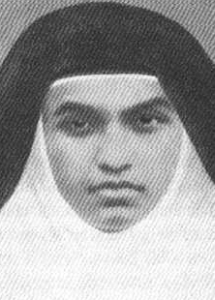
Saint Alphonsa of India

Profile

Anna was born in a rural area to Joseph and Mary Muttathupadathu. She was baptized on 27 August 1910. Anna’s mother died when she was very young, and she was raised by her maternal aunt, and educated by her great-uncle Father Joseph Muttathupadathu. At age 3, she contracted an infected eczema from which she suffered for over a year. She made her first communion on 27 November 1917. She was badly burned on her feet when she accidentally fell into a pit of burning chaff, leaving her permanently partially disabled. She joined the Poor Clare convent at Bharananganam on 2 August 1928, taking the name Alphonsa, and making her vows on 12 August 1936.

Anna lost her aunt/foster-mother in 1930. She worked as a primary school teacher, and the children loved her for her gentleness and cheery way, but health problems often kept her from the classroom. In December 1936, she was miraculously cured from her ailments through the intervention of Saint Therese of Lisieux and Blessed Kuriakose Elias Chavara. However, in June 1939, she was struck by a severe attack of pneumonia, weakening her overall. On 18 October 1940, a thief stumbled into her room in the middle of the night; the shock of the event caused Alphonsa to suffer a loss of memory, and further weakened her. Her condition continued deteriorating for months, and she was given last rites on 29 September 1941; the next day, she regained her memory, but not her complete health. She enjoyed some improvement over the next few years, but in July 1945, she developed a stomach problem that eventually led to her death.

She was noted for her suffering, and suffering in silence. Incidents of her intervention began almost immediately upon her death, and often involved the children in the convent school. Hundreds of miraculous cures are claimed for her intervention, many of which involved straightening of clubbed-feet, possibly because of her having lived with deformed feet herself; two of these were submitted to the Congregation for the Causes of Saints as proof of her miraculous intervention. The continuing cures are chronicled in the magazine Passion Flower. Thousands converge on the small town of Bharananganam when they celebrate the feast of Saint Alphonsa from 19 to 28 July each year.

Born

  • 19 August 1910 at Kudamalloor, Kerala, India

Died

  • 28 July 1946 at Bharananganam, India, of natural causes
  • buried in the chapel connected with the cemetery of Saint Mary’s church, Bharananganam, India, which has become an important place of pilgrimage

Venerated

  • declared Servant of God, and her Cause began on 2 December 1953
  • declared Venerable on 9 July 1985 by Pope John Paul II

Beatified

  • 8 February 1986 by Pope John Paul II

Canonized

  • Sunday 12 October 2008 by Pope Benedict XVI

Name Meaning

  • noble ready; battle ready

Patronage

  • against bodily ills
  • against illness
  • against sickness
  • against the death of parents
  • sick people
  • Bhadravathi, India, diocese of

Source: https://catholicsaints.info/saint-alphonsa-of-india/

Saint Alphonsa of India Read More »

John 6:11-12

Journeying in Faith and Prayer

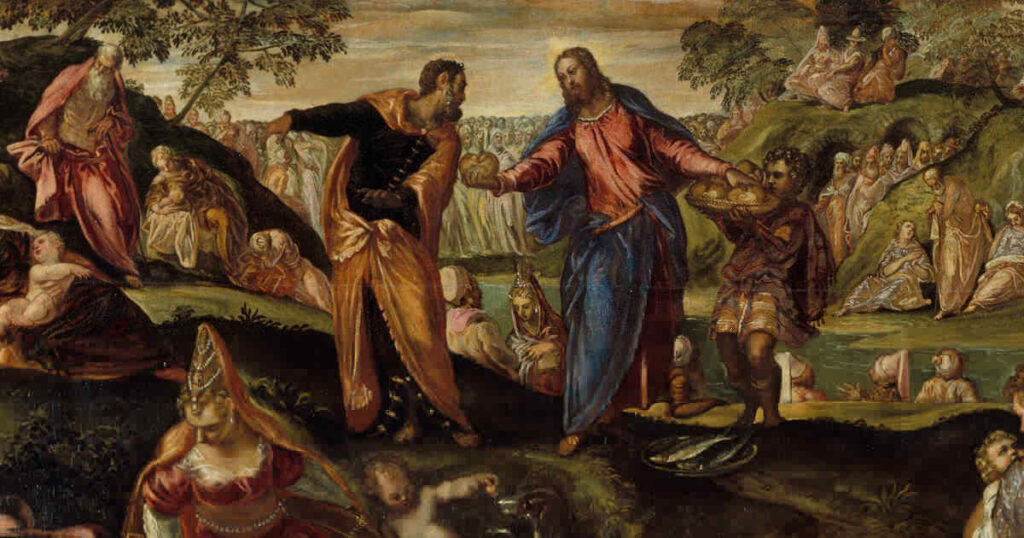
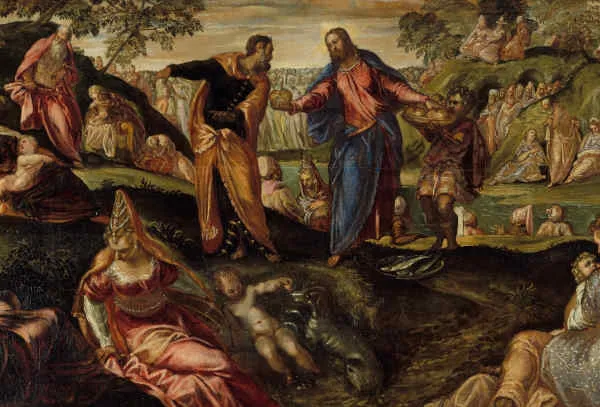
Then Jesus took the loaves, gave thanks, and distributed them to those who were reclining, and also as much of the fish as they wanted. When they had had their fill, he said to his disciples, “Gather the fragments left over, so that nothing will be wasted.” 

Reflection:

The people who were present for this miracle of the multiplication of loaves and fish had to journey to be there. First, they followed Jesus to the other side of the Sea of Galilee, and then they followed Him up a mountain in a remote area. This is significant because it tells us that a miracle of such magnitude could only take place for those who had faith and acted on that faith. Jesus could have easily performed this miracle in the Temple in Jerusalem or in a synagogue where people doubted Him. If He did that, then many of His skeptics and critics would have seen His almighty power with their own eyes. Jesus could have also done this miracle in Nazareth, His hometown, in the presence of His extended family and friends. Perhaps if He had done this, then they would have come to believe in Him. But Jesus didn’t do this incredible miracle in places where faith was lacking. Instead, He went to a remote area where only those who truly wanted to be with Him were present.

Note that the actions by which Jesus performed this miracle are similar to the way He instituted the Holy Eucharist during the Last Supper. We read above that Jesus “took the loaves, gave thanks, and distributed them…” Though this miracle is recorded in all four Gospels, in John’s Gospel it is a prelude to Jesus’ Bread of Life Discourse in which Jesus teaches, “I am the bread of life; whoever comes to me will never hunger, and whoever believes in me will never thirst.” Therefore, this miracle of the multiplication of the loaves and fish should be seen as a teaching about the Eucharist. It is in the Eucharist that Jesus feeds us to superabundance. The Eucharist is the gift of His very life and the food that will bring us to eternal life.

Unfortunately, it seems that very few people ever discover the gift of the Eucharist. Many people look at their participation in Mass as a duty that they must fulfill rather than as an invitation to share in the superabundant life. The only way we will discover the superabundant life given to us through the Eucharist is by working to imitate the faith of the people whom Jesus fed on that mountain. Again, the people who received this miracle had to journey either around or across the sea and climb a mountain. So also with us, the only way to come to a fruitful participation in the Eucharist is to make a concerted effort. The journey we make is one of faith, and the mountain we climb is one of prayer. Unless we believe deeply in our Lord, believe in the superabundant and transforming power of the Eucharist, seek it out faithfully every week and do so prayerfully, we will never be fed in this superabundant way.

Reflect, today, upon the symbolism of Jesus traveling to this remote area so as to perform this most incredible miracle. See this journey that you are invited to take as a journey toward the discovery of the superabundant grace bestowed upon you through the Most Holy Eucharist. The only way that you will receive this grace is by committing yourself to the journey of faith and prayer. Don’t miss out. Don’t ignore the incredible value of this Gift. Seek out our Lord and discover His Gift of superabundant grace within your fruitful participation in the Holy Mass.

Source: https://catholic-daily-reflections.com/2024/07/27/journeying-in-faith-and-prayer/

John 6:11-12 Read More »

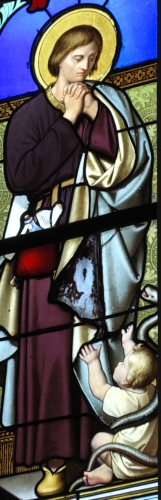
Saint Pantaleon

Profile

Raised by a Christian mother and pagan father, Pantaleon chose Christianity, and became a physician to emperor Maximian. He was a life-long layman and bachelor. At one point he abandoned his faith, and fell in with a worldly and idolatrous crowd. However, he was eventually overcome with grief, and with the help of the priest Hermolaus, he returned to the Church. Pantaleon brought his father to the faith. He gave his fortune to the poor, treated them medically, and never charged. Some of his cures were miraculous, being accomplished by prayer.

Pantaleon was denounced to the anti–Christian authorities by other doctors during the persecutions of Diocletian. At trial, he offered a contest to see whose prayers would cure the incurable – his or the pagan priests’. The pagans failed to help the man, a palsied paralytic, but Pantaleon cured the man by mentioning the name Jesus. Many of the witnesses converted.

The authorities tried to bribe him to denounce the faith, but failed. They then threatened him; that failed. They followed up the threats with torture. When that failed, he was executed. He was a martyr. He was one of the Fourteen Holy Helpers.

Died

  • nailed to a tree and beheaded c.305
  • a phial of his blood is preserved at Constantinople, and is reported to become liquid and bubble on his feast day
  • some relics enshrined at the church of Saint Denis in Paris, France
  • some relics enshrined at Lyons, France

Canonized

  • Pre-Congregation

Patronage

  • against consumption or tuberculosis
  • against fatigue
  • bachelors
  • doctors
  • midwives
  • nurses
  • physicians
  • surgeons
  • torture victims
  • in Italy

– Courmayeur
– Crema, city of
– Crema, diocese of
– Dolianova
– Gimillan
– Vallo della Lucania, diocese of

Source: https://catholicsaints.info/saint-panteleon/

Saint Pantaleon Read More »

Matthew 13:24-25

Vigilance with the Gospel

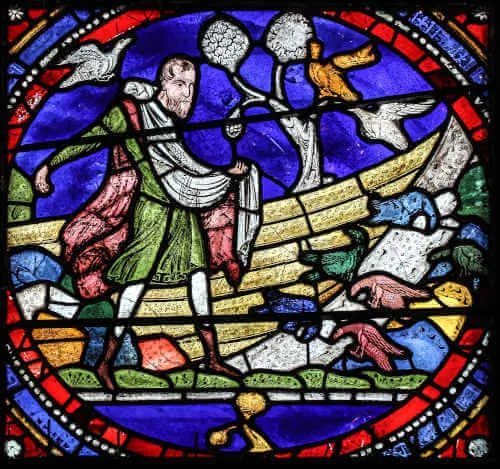
Jesus proposed a parable to the crowds. “The Kingdom of heaven may be likened to a man who sowed good seed in his field. While everyone was asleep his enemy came and sowed weeds all through the wheat, and then went off.”

Reflection:

This parable begins in a very good way. It states that good seed was sown. In other words, the pure Gospel was preached into good soil. This should be understood as any situation where the preacher is truly effective and where the Gospel reaches many ears and is planted in many hearts. This is worth rejoicing over. But this parable quickly points out that those responsible for guarding the good soil in which the Word of God was planted, failed in their duty to protect it. As a result, the “enemy came and sowed weeds all through the wheat.” In other words, the evil one also had sown his lies into the hearts of those who heard the Word of God, and those lies took root and began to grow.

This is a clear description of the world we live in today. First, it’s a description of the hearts of many Christians who have heard the Word of God and have responded, only to also struggle with doubts, confusions and lies sown by the evil one. But it is also a clear description of the world as a whole and even of the Church on earth. There are many divisions within societies and even within the Church. There are many competing voices. And among those whose hearts are good soil, it can be hard to distinguish between that which is from God and that which is a subtle deception from the evil one.

The weed referred to in this parable is called cockle. Cockle was a weed that, as it grew, looked much like wheat. It was very difficult to distinguish from wheat until the grain began to appear. But when the grain did begin to appear, it was clearly distinguishable. And if the cockle were to accidentally be ground in with the wheat, it would cause nausea when eaten.

The parable is quite clear. The lies that the evil one sows in the hearts of the faithful, those with fertile hearts, are very subtle, especially at first. It is easy for those subtle lies to confuse us. The evil one rarely succeeds in misleading the faithful through grave and obvious errors. Therefore, he deceives with small errors. As a result, the error is often not understood until much later as the fruit is born. The result is division, confusion, conflict and the like—conflict within our own souls, within our world and even within our Church.

What is the solution? Vigilance. We, as followers of Christ, must be exceptionally vigilant in regard to that which we allow our hearts to receive. Just because something sounds good at first doesn’t make it good. This is why we have the Scripture, the Magisterium of the Church and the teachings of the saints. We must constantly examine all that we allow into our hearts, our families, our world and our churches in the light of the pure and consistent teachings of our faith. And when we see divisions, this is a clear sign of some subtle error that has crept in. In the end, at the harvest time, when we all face Christ our Lord at our judgments, He will separate the good from the bad. But for our part, vigilance is essential so that only the pure seed of God’s Word is received by us and sown by us.

Reflect, today, on your own soul as fertile ground. What “seed” is sown there? What do you allow to penetrate your heart and take root? Are you vigilant, remaining attentive to the ways that the evil one tries to mislead you through subtle lies and errors? Ponder these questions honestly, and if you find conflict and confusion in your life, look more deeply at the source of these troubles. If there are lies that you have allowed into your own life, then turn them over to our Lord so that He can remove them at the proper time.

Source: https://catholic-daily-reflections.com/2024/07/26/vigilance-with-the-gospel/

Matthew 13:24-25 Read More »