2024

Eighteenth Sunday in Ordinary Time

First Reading Exodus 16:2-4, 12-15

The whole Israelite community grumbled against Moses and Aaron.
The Israelites said to them,
“Would that we had died at the LORD’s hand in the land of Egypt,
as we sat by our fleshpots and ate our fill of bread!
But you had to lead us into this desert
to make the whole community die of famine!”

Then the LORD said to Moses,
“I will now rain down bread from heaven for you.
Each day the people are to go out and gather their daily portion;
thus will I test them,
to see whether they follow my instructions or not.

“I have heard the grumbling of the Israelites.
Tell them: In the evening twilight you shall eat flesh,
and in the morning you shall have your fill of bread,
so that you may know that I, the LORD, am your God.”

In the evening quail came up and covered the camp.
In the morning a dew lay all about the camp,
and when the dew evaporated, there on the surface of the desert
were fine flakes like hoarfrost on the ground.
On seeing it, the Israelites asked one another, “What is this?”
for they did not know what it was.
But Moses told them,
“This is the bread that the LORD has given you to eat.”

Responsorial Psalm Psalms 78:3-4, 23-24, 25, 54

R. (24b) The Lord gave them bread from heaven.

What we have heard and know,
and what our fathers have declared to us,
We will declare to the generation to come
the glorious deeds of the LORD and his strength
and the wonders that he wrought.

R. The Lord gave them bread from heaven.

He commanded the skies above
and opened the doors of heaven;
he rained manna upon them for food
and gave them heavenly bread.

R. The Lord gave them bread from heaven.

Man ate the bread of angels,
food he sent them in abundance.
And he brought them to his holy land,
to the mountains his right hand had won.

R. The Lord gave them bread from heaven.

Second Reading Ephesians 4:17, 20-24

Brothers and sisters:
I declare and testify in the Lord
that you must no longer live as the Gentiles do,
in the futility of their minds;
that is not how you learned Christ,
assuming that you have heard of him and were taught in him,
as truth is in Jesus,
that you should put away the old self of your former way of life,
corrupted through deceitful desires,
and be renewed in the spirit of your minds,
and put on the new self,
created in God’s way in righteousness and holiness of truth.

Alleluia Matthew 4:4b

R. Alleluia, alleluia.

One does not live on bread alone,
but by every word that comes forth from the mouth of God.

R. Alleluia, alleluia.

Gospel John 6:24-35

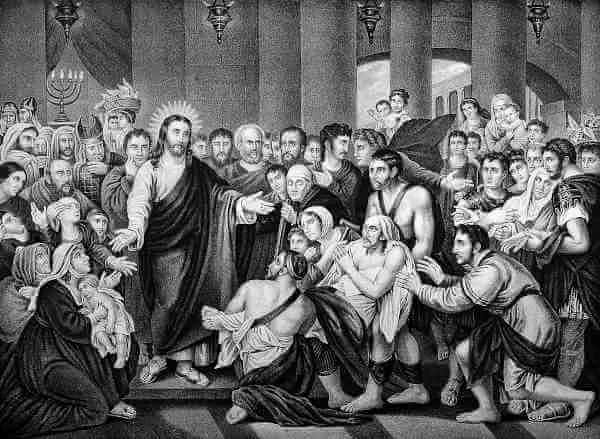
When the crowd saw that neither Jesus nor his disciples were there,
they themselves got into boats
and came to Capernaum looking for Jesus.
And when they found him across the sea they said to him,
“Rabbi, when did you get here?”
Jesus answered them and said,
“Amen, amen, I say to you,
you are looking for me not because you saw signs
but because you ate the loaves and were filled.
Do not work for food that perishes
but for the food that endures for eternal life,
which the Son of Man will give you.
For on him the Father, God, has set his seal.”
So they said to him,
“What can we do to accomplish the works of God?”
Jesus answered and said to them,
“This is the work of God, that you believe in the one he sent.”
So they said to him,
“What sign can you do, that we may see and believe in you?
What can you do?
Our ancestors ate manna in the desert, as it is written:
He gave them bread from heaven to eat.
So Jesus said to them,
“Amen, amen, I say to you,
it was not Moses who gave the bread from heaven;
my Father gives you the true bread from heaven.
For the bread of God is that which comes down from heaven
and gives life to the world.”

So they said to him,
“Sir, give us this bread always.”
Jesus said to them,
“I am the bread of life;
whoever comes to me will never hunger,
and whoever believes in me will never thirst.”

Source: https://bible.usccb.org/bible/readings/080424.cfm

Eighteenth Sunday in Ordinary Time Read More »
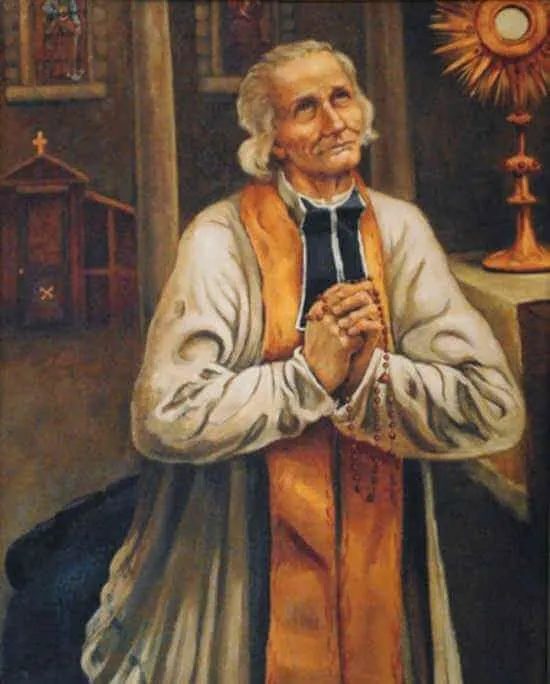
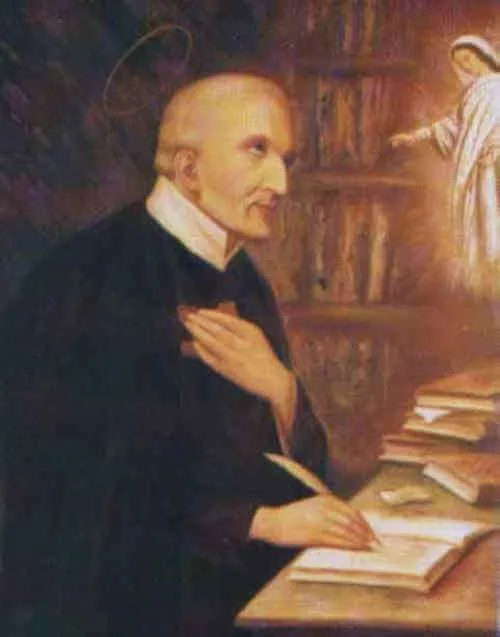
Saint John Vianney (the Curé of Ars), Priest

1786–1859; Patron Saint of parish priests, all priests, and confessors; Canonized by Pope Pius XI in 1925

John Mary Baptiste Vianney was the fourth of six children born to devout Catholic parents in Dardilly, a rural village located near Lyon in the eastern part of France. John was born just three years before the start of the French Revolution, during which the Catholic Church came under ferocious attack. Public worship was suppressed, churches were closed or repurposed, and many priests either swore allegiance to the new state under duress, went into hiding, or were killed. During the Reign of Terror, from 1793-1794, thousands of clergy in France were executed by the guillotine. It was a chaotic time in France and an even more chaotic time to be a priest.

During this time, the Vianney family often hid priests and attended their clandestine Masses at nearby farms. The witness of the priests who risked their lives to offer the Sacraments was a powerful source of inspiration for young John, and later motivated him to become a priest. Given the chaos of the time, John spent most of his childhood helping on the family farm and tending to the flocks, rather than attending school. He received a simple education from his mother but was functionally illiterate through his teenage years. He secretly received catechetical instruction from two nuns to prepare him for his First Holy Communion, which he received at the age of thirteen in a neighbor’s house.

In 1799, Napoleon seized power in France and, in 1801, he and Pope Pius VII signed an agreement called the Concordat. This agreement did not fully restore the Catholic Church to its former rights but did recognize Catholicism as the faith of the majority of French citizens and permitted public worship, albeit worship that was regulated by the state. In 1806, the parish priest of John’s neighboring village of Écully, Father Balley, opened a school for prospective seminarians. At the age of twenty, John began his formal education there. Although he struggled, especially with Latin, his faith was manifest and his humility profound.

In 1809, John’s education was interrupted when he was drafted into Napoleon’s army to help fight the Spanish during the War of the Fifth Coalition. Prior to this, seminary students were exempt from the draft, but Napoleon, facing heavy losses, abolished the exemption. After joining his regiment, John fell ill, was hospitalized, and was left behind. He was then appointed to another regiment and this time, was so immersed in prayer at a nearby church that he missed their departure. He was sent after the troops but couldn’t find them and was instead misdirected to the village of Noes where a number of deserters were hiding. He was convinced to stay with them, change his name, hide, and teach in the school. He did this for more than a year. Eventually, he was granted amnesty and was able to return to Écully to continue his education under Father Balley.

Though John continued to struggle with his studies, Father Balley supported him, seeing in John a true vocation, a deep love for the Blessed Mother, and a profound prayer life. After John completed his studies in Écully, Father Balley convinced the Vicar General of the diocese to permit John into the diocesan seminary. John struggled but persevered. When he was up for ordination, the diocesan authorities questioned his suitability. When the bishop asked about John’s piety, he was told that John prayed the rosary like an angel. That was all the bishop needed to know. John was ordained a priest on August 12, 1815, and was sent to serve as an assistant priest in Écully, under the supervision of Father Balley, where he served for two years until Father Balley’s death.

In 1817, Father Vianney was sent to be a chaplain at the church of Saint Sixtus, in Ars, a farming community of just over 200 people. He would remain there for the next forty-one years. As Father Vianney walked to Ars, one story relates that he came upon a young boy tending sheep. He asked the boy how far away Ars was and the boy pointed him in the right direction, accompanying him on the way. When he saw the steeple in the distance, Father Vianney knelt in prayer for a long time, rose, and continued on. When he and the boy arrived, Father Vianney said to the boy, “You have shown me the way to Ars, I will show you the way to Heaven!”

Ars was known as a community that enjoyed its dancing, drunkenness, and swearing. Although the church was in disrepair, morals were lacking, and church attendance was scarce, Father Vianney went straight to work. The townspeople did not know they were receiving a chaplain, so no one attended Father’s first Masses. But as word spread, people became curious. When some stopped by the church, they saw Father Vianney kneeling in prayer before the Blessed Sacrament. Then others saw the same. And others. Eventually, people started to attend Mass. They were touched by Father Vianney’s simple homilies that presented the basic Gospel message. Sin must be avoided; those who remain in sin will go to hell. Those who turn to God will be saved and welcomed into Heaven. He often conveyed these messages by preaching on the love of God, prayer, the sacraments (especially Confession and the Eucharist), and the duty to live a life of charity and virtue.

Within the first three years of Father Vianney’s priestly ministry, Ars was being transformed. Father Vianney not only spent hours in prayer every day, endured severe penances and fasting (mainly eating boiled potatoes), and restored the church building, but he also made many home visits to his parishioners and even to the surrounding villages. This impressed many and drew them to the church. In 1823, things were going so well that the bishop raised Saint Sixtus Church to the level of a parish, appointing Father Vianney as pastor. In 1827, Father Vianney said from the pulpit, “Ars, my brothers and sisters, is no longer Ars!” Ars had been converted, people were flocking to confession and Mass, praying, overcoming sin, and turning to the love of God. But Ars was not the only place being affected; Father Vianney’s reputation had traveled far and wide. As a result, thousands of people were traveling to Ars every year to attend his Masses and confess their sins. On many days, Father Vianney spent up to sixteen hours in the confessional. By the 1850s, tens of thousands, or according to some estimates, hundreds of thousands of people were coming to Ars. A new and larger church had to be built, and a new railroad was even constructed to help people get to this small village.

Father Vianney’s method of being a priest was simple. He allowed God to consume him, live in him, and minister to the people through him. It was God who did the absolving, preaching, and loving. Father Vianney was just the human instrument. It is said that the devil appeared to Father Vianney many times, harassing him and trying to intimidate him. One time the devil spoke the truth when he said, “If there were only three like you in France, I would not be able to set foot there.”

As we honor this holy priest of God, reflect upon the importance of the priesthood. Saint John Vianney once said, “If I were to meet a priest and an angel, I would greet the priest first and then the angel…. If there were no priest, the Passion and death of Jesus would serve no purpose. What use is a treasure chest full of gold if there is no one who can unlock it? The priest has the key to the treasures of Heaven.” Though few priests live up to the dignity and responsibility they are given, every priest carries within him the sacred power of dispensing the mercy of God, absolving sins, and making the Passion of Christ present in the Eucharist. Call to mind your own priest today and pray for him, that he will become a holy and humble instrument of Christ.

Source: https://mycatholic.life/saints/saints-of-the-liturgical-year/august-4—saint-jean-vianney-the-cur-of-ars-priest/

Saint John Vianney (the Curé of Ars), Priest Read More »

John 6:25-27

Hunger for God

“Rabbi, when did you get here?” Jesus answered them and said, “Amen, amen, I say to you, you are looking for me not because you saw signs but because you ate the loaves and were filled. Do not work for food that perishes but for the food that endures for eternal life, which the Son of Man will give you.”

Reflection:

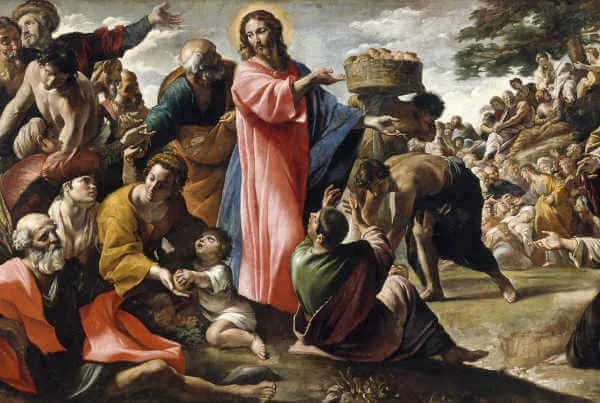
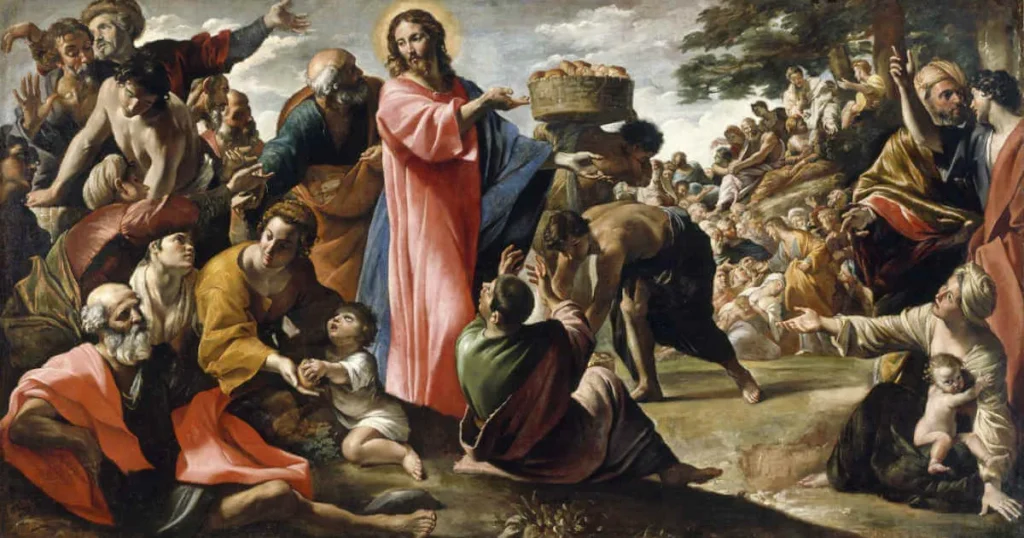
The day before, Jesus fed the crowds at the miracle of the multiplication of the loaves and fish. The next day, the people were hungry again, so they went looking for Jesus thinking that He might miraculously feed them again. In the passage above, Jesus uses their physical hunger to point them to a deeper spiritual reality.

Each one of us is hungry. We continually have cravings that we want satiated. Certainly, food and drink are among our cravings, but the deepest craving we each have is a spiritual one. The problem is that we often try to satiate ourselves in ways that will never satisfy us. Therefore, we each need to hear Jesus say, “Do not work for food that perishes but for the food that endures for eternal life, which the Son of Man will give you.” What is that food that the Son of Man will give to us? Of course, it is His very Body and Blood, Soul and Divinity. It is the Most Holy Eucharist.

This passage begins the lengthy “Bread of Life Discourse” from which we will read over the next three Sundays. Throughout this discourse, Jesus makes it clear that His flesh is true food and His blood is true drink. Eating Jesus’ flesh and blood is the only way to eternal life. Some who listen to this teaching find that it is too difficult to accept and, as a result, reject Jesus and His teaching. The discourse ends with Jesus asking the Twelve if they want to leave too. Peter gives the perfect response by saying, “Master, to whom shall we go? You have the words of eternal life. We have come to believe and are convinced that you are the Holy One of God.”

As we ponder this teaching of Jesus over the next few weekends, it is important to start with the foundation. The foundation is our spiritual hunger. We each experience it. We each are aware of it. We cannot escape it. For that reason, look into your own soul. What do you see? Do you see a certain restlessness and unfulfilled desire? Do you sense the cravings within your own soul? When you see this, know that you have discovered the starting point of the life of fulfillment. Unless you can see that hunger within, you cannot turn to the source of satiation.

The Eucharist is the source of all that we long for in life; however, too often we fail to see that. We can easily fall into the trap of seeing the Eucharist as an obligation we must meet each week. Sometimes Mass can even be seen as an inconvenience. If this is your struggle, try to use the next few Sundays to reexamine your understanding of the Most Holy Eucharist.

Sunday Mass, more than anything else in life, must be understood as the source of our deepest satisfaction in life. It must be seen as the answer to every interior longing and restlessness we have. It is not money, recognition, status, power, or anything else in life that fulfills us. It is God. And God comes to us first and foremost in the celebration of the Mass. Do you believe this? Do you understand?

Reflect, today, and for the next few weeks, upon the Gift of the Most Holy Eucharist. As you do, try to see it as the answer to every interior longing and hunger that you have in life. Try to make an act of faith in this spiritual truth. If you do not regularly experience the satiation offered by consuming the Eucharist, ask yourself why not. Believe in everything that Jesus teaches in this holy discourse of the Bread of Life. If you do, you will also begin to receive the nourishment that our Lord promises.

Source: https://catholic-daily-reflections.com/2024/08/03/hunger-for-god/

John 6:25-27 Read More »

Saint Peter Julian Eymard, Priest

1811–1868; Invoked for an increase of devotion to the Holy Eucharist; Canonized by Pope John XXIII in 1962

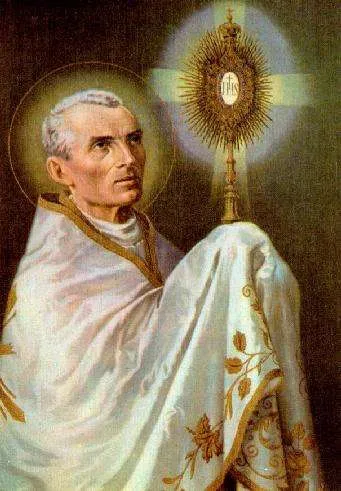
Peter Julian Eymard was born to devout parents and was the youngest of ten children, eight of whom died in infancy. His mother, especially devout, taught him the faith well. From an early age, Peter developed a profound devotion to the Blessed Mother and the Eucharist. His devotion to the Blessed Mother was intensified as a child when he made a pilgrimage to the Marian shrine of Our Lady of Laus, where the Blessed Mother had appeared to a young shepherd girl a century earlier. Peter’s love for the Eucharist also began at a young age. One story relates that, at the age of five, Peter was missing from home. He was found in the local church standing next to the tabernacle. When his sister asked what he was doing, he reportedly said, “I am near Jesus and I am listening to him!” Another story relates that before Peter received his First Holy Communion, he would eagerly await his sister’s return from Holy Communion and would place his head on her heart and say, “I can feel His presence!” Finally, when he received his First Holy Communion at the age of twelve, he promised Jesus he would become a priest. His love for our Eucharistic Lord was so intense that he could consider nothing else.

In his teenage years, Peter asked his father to allow him to become a priest, but his father initially refused. His father, an artisan who made cutlery, wanted Peter to work in the family business, especially since Peter was his only surviving son. As a result, Peter studied Latin in private to prepare himself for eventual theological studies. In 1827, when Peter was seventeen years old, his father finally consented and Peter began to study under a hospice chaplain near Grenoble, about twenty miles from his home. The following year, his mother died and Peter returned home, partly due to his mother’s death, partly to help his father, and partly because the priest-chaplain did not teach him Latin as promised.

In 1829, at the age of nineteen, Peter moved about 150 miles south to Marseille, France, where he entered the Oblates of Mary Immaculate. Five months later, Peter became seriously ill and had to return home again. In 1831, Peter’s father died. Peter left the family business, traveled back to Grenoble, and was reluctantly admitted to the diocesan seminary. Though he was a bit behind in his education, his zeal got him through, and he was ordained a diocesan priest on July 20, 1834, at the age of twenty-three.

As a newly ordained priest, Father Peter suffered from some health problems but was eventually able to serve as a parish priest in the countryside. In 1839, after sensing a call to religious life, he joined the Society of Mary (Marist Fathers) and a year later was assigned to the Marist College of Belley where he fulfilled the duties of preaching, religious instruction, administration of the sacraments, and acted as a liaison with pupils and parents. After four years, Father Peter was appointed Provincial of the Society of Mary and made Visitor-General. As Visitor-General, he traveled to various Marist houses to inspect their health and fidelity to the Marist mission. At the age of thirty-eight, during a visit to Paris in 1849, Father Peter came in contact with a group called the Association of Nocturnal Adorers, whose mission was to practice and promote perpetual adoration of Christ in the Eucharist. This was a life-changing experience for him and the beginning of the rest of his life’s work. After some missteps, perhaps due to excess zeal, Father Peter was demoted from his position within the Marists and sent to the Marist College at La Seyne-Sur-Mer, where he served from 1851–1855. This was a period of prayerful discernment for him, and the desire began to grow within him to found an order dedicated to the Blessed Sacrament. In 1856, despite initial strong resistance from his Marist superior, Father Peter received permission to leave the Marists and found the Congregation of the Blessed Sacrament, a new congregation dedicated to Eucharistic adoration and the fostering of this devotion.

Upon leaving the Marists, Father Peter was joined by another priest named Father Raymond de Cuers. They traveled to Paris where they sought the approval of the Archbishop of Paris. After a twelve-day hearing, conducted by the archbishop and two other bishops, the three unanimously offered their support, agreeing that his mission was the will of God. They encouraged Peter and his order not only to promote Eucharistic adoration but also to catechize adults and prepare them for Holy Communion. Before the end of the year, despite being dirt poor, Father Peter and Father de Cuers had moved into a run-down house they rented from the archdiocese, began raising money to build a chapel that he called a “cenacle,” and welcomed two other priests and a novice as his congregation’s first members. The congregation’s purpose was the salvation of souls and fostering devotion to the Eucharist. Their works were preaching, offering retreats, and preparing people for their First Holy Communion through catechesis. By the beginning of 1857, they opened their chapel for adoration three days a week, and a few people came. However, within a few months, Father Peter became ill, the two priests and novice left, the archdiocese wanted the rented property back, and Father de Cuers left but returned a day later.

Though the establishment of this new congregation proved to have many difficulties, Father Peter pressed on, moved to a new location, and began again. This time he and Father de Cuers added catechesis to their ministry, exposed the Blessed Sacrament, invited the poor and the sinner to repent, adored Jesus, and encouraged frequent reception of Holy Communion. Over the next nine years until his death, Father Peter worked tirelessly on his God-given mission. As members joined, he opened up additional houses, began a contemplative branch of his order for women called the Servants of the Blessed Sacrament, started the Priests’ Eucharistic League, intended for diocesan clergy to help them grow in and spread a love for the Eucharist, and formed a lay organization to share their mission called the Archconfraternity of the Blessed Sacrament.

When Father Peter began his work, he sensed the need to make reparation through adoration for sins committed against our Lord. As time went on, his focus included reparation but also expanded to adoration purely for the love of God and as a means to make a gift of oneself to God.

As we honor this great saint, ponder your own devotion to Christ in the Holy Eucharist. Saint Peter Eymard discovered the holiness of God, hidden behind the appearance of bread and wine. His devotion to adoration led him to catechesis about the Eucharist. Allow him to inspire you to renew your own commitment to learning more about the Blessed Sacrament, so that you will more fully give yourself to our Lord as a total gift of yourself, out of love for God, the reparation of sin, and the salvation of souls.

Source: https://mycatholic.life/saints/saints-of-the-liturgical-year/august-2—saint-peter-julian-eymard-priest/

Saint Peter Julian Eymard, Priest Read More »

Matthew 14:1-2

Overcoming Regret

Herod the tetrarch heard of the reputation of Jesus and said to his servants, “This man is John the Baptist. He has been raised from the dead; that is why mighty powers are at work in him.”

Reflection:

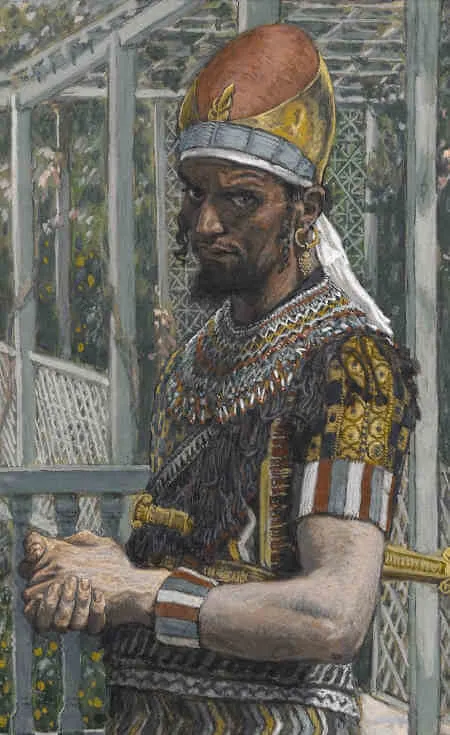
Herod the tetrarch was one of three brothers and a sister who became 1st-century rulers to succeed their father, Herod the Great, when he died in 4 B.C. Herod governed much of the territory west of the Sea of Galilee, which was the territory in which Jesus spent most of His time during His public ministry. He also ruled a territory just east of the Dead Sea, which is where he had imprisoned and ultimately killed John the Baptist. Herod was known for being a very busy builder and is prominently known for his role in the deaths of Saint John the Baptist and Jesus.

Recall that Herod had taken his brother’s wife, Herodias, as his own, and John the Baptist publicly opposed this. For that reason, Herod had John arrested and ultimately beheaded at the request of Herodias, who took the Baptist’s criticism very personally. Herod, on the other hand, had a strange sort of admiration for the Baptist.

The Gospel passage quoted above reveals a somewhat unusual statement by Herod. After he had killed Saint John the Baptist, he heard about the reputation of Jesus Who was traveling throughout Herod’s territory preaching and performing many mighty deeds. Word spread fast about Jesus and quickly reached even the ears of Herod. So why did Herod strangely think that Jesus must have been John the Baptist raised from the dead? Though we do not know for certain, we certainly can speculate.

In the version of this story found in the Gospel of Mark, we read, “Herod feared John, knowing him to be a righteous and holy man, and kept him in custody. When he heard him speak he was very much perplexed, yet he liked to listen to him” (Mark 6:20). Herod may have been a man who had a spark of faith but was ultimately ruled by his passions and desire for power. Perhaps that is why he initially kept John the Baptist alive in his prison. It also appears that Herod had some form of either regret or fear over his beheading of John. And it is most likely for this reason that Herod immediately thought of John when he initially heard of Jesus and the “mighty powers” that were at work within Him.

Regret, fear and guilt are common effects of a conscience that is in conflict. Herod the tetrarch is a good example of what happens when we do not resolve that conflict within ourselves. The only way to resolve the interior confusion of a conflicted conscience is to humbly submit to the truth. Imagine if Herod would have repented. Imagine if he would have sought out Jesus, confessed his sins, and begged for forgiveness. What a glorious story that would have been. Instead, we have the witness of a man who has gone astray and remained obstinate in his sin.

Reflect, today, upon this unholy witness of Herod. God can use all things for His glory, and He can even use the example of Herod to reveal to ourselves any similar tendency. Do you struggle with regret, fear and guilt? Does this cause conflict within you? The good news is that this conflict is easily resolved by a humble heart that seeks the truth. Seek the truth by admitting any long-lasting sin you need to resolve and permit the mercy of God to enter in so as to set you free.

Source: https://catholic-daily-reflections.com/2024/08/02/overcoming-regret-3/

Matthew 14:1-2 Read More »

Saint Eusebius of Vercelli, Bishop

c. 283 (or early Fourth Century)–371; Patron Saint of Piedmont, Italy; Pre-Congregation Canonization

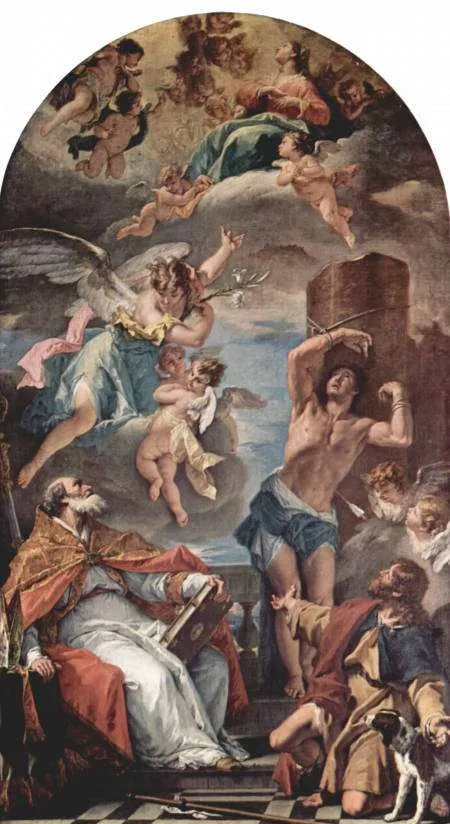
Saint Eusebius of Vercelli was born on the island of Sardinia, located in the Mediterranean Sea, west of modern-day Italy. His birthdate remains uncertain. Some accounts suggest it was around 283, but more reliable sources propose a date after the year 300. At the time of Eusebius’ birth, Sardinia was a province of the Roman Empire. Though Christianity had endured various persecutions in the Roman Empire up to the time of Eusebius’ birth, there was relative peace until 303 when Emperor Diocletian issued a series of edicts ordering the arrest and execution of Christians. Some accounts of Eusebius’ early life state that his Christian father was martyred when Eusebius was young, leading him and his mother to move to Rome. There, Eusebius practiced his faith diligently, becoming a lector and a respected figure within the Catholic community.

During Eusebius’ time in Rome, a priest named Arius from Alexandria, modern-day Egypt, began to propagate a theological position that later became known as the Arian Heresy. He taught that the Son of God was not co-eternal with the Father and was inferior to Him. To disseminate his beliefs, he frequently repeated the phrase, “there was a time when the Son was not.” This phrase became popular in songs as a means of promoting Arius’ belief among the laity. His erroneous ideas rapidly spread to various parts of the Roman Empire, causing significant division. As a result, Emperor Constantine the Great called a Church council in Nicaea in 325 to address the issue. The Nicene Creed, which emerged from that council and is still professed today, addressed the Arian Heresy, stating, “I believe in one Lord Jesus Christ, the Only Begotten Son of God, born of the Father before all ages. God from God, Light from Light, true God from true God, begotten, not made, consubstantial with the Father…” Despite resolving the theological debate, the heresy did not easily subside, and divisions continued. One of the staunchest defenders of the Church against this heresy was Saint Athanasius, then the Bishop of Alexandria. In 335, due to ongoing tensions, Arius and two Arian bishops manipulated Emperor Constantine the Great into exiling Bishop Athanasius from his diocese.

Around 340, Eusebius’ exemplary holiness and support for the true faith led the pope to ordain him as a bishop and appoint him as the first Bishop of Vercelli, in modern-day northern Italy. In Vercelli, Bishop Eusebius was passionate about his faith. He not only ministered to his congregation but also actively reached out to pagans, working toward their conversion. He was the first bishop to establish a form of monastic life for diocesan clergy. The clergy lived in common but served the needs of the diocese under Bishop Eusebius, who himself lived among them. This novel approach led to fraternity, spiritual growth, accountability, and the positive outcomes of pursuing a common mission.

Following the death of Emperor Constantine the Great, his three sons co-ruled the empire. One, Constantius II, sympathized with Arianism. Consequently, in 355, Constantius II convened a council in Milan to attempt to exile Bishop Athanasius again, as well as the pope, due to their opposition to Arianism. During the council, Bishop Eusebius and a few other bishops staunchly supported both the pope and Bishop Athanasius. As a result, the emperor forced Eusebius and the other orthodox bishops into exile. Bishop Eusebius was first sent to Scythopolis, which is located in the Jordan Valley just south of the Sea of Galilee, then to Cappadocia in modern-day Turkey, and finally to Thebaid, Egypt, south of Cairo. Thebaid was a remote and desolate territory, and Bishop Eusebius had to endure the harsh environment, as well as abuse by his jailers.

Exile aimed to separate the shepherd from his flock, thus severing his ability to minister to them. However, the plan backfired. Like Bishop Athanasius, Bishop Eusebius became a prolific letter writer during his exile, continuing to guide his flock and encourage other bishops throughout the empire. A few of his letters, theological treatises, and homilies have survived either in whole or in part to this day. Eusebius remained in exile until 361 when Emperor Constantius II died, and the succeeding Emperor Julian allowed all of the exiled bishops to return to their dioceses. Reunited with his flock, Bishop Eusebius ministered to his people for ten more years until his death. During that time, he continued to defend the Nicene Creed and to oppose Arianism. In 362, he participated in the Second Council of Alexandria, which reaffirmed the teachings of the Council of Nicaea in 325 and addressed the theological concerns of Arianism. It also declared that repentant Arians who professed the Nicene Creed could be readmitted into full communion with the Church. Thus, it served as both a theological and pastoral council.

Saint Eusebius is remembered today not only as a staunch defender of the true nature of Christ but also as a holy pastor who bravely endured exile and much suffering for his faith. For this reason, he is considered one of the great confessors of the early Church. During his lifetime, he ministered among some of the other great confessors of the Church—a “confessor” being one who suffered for the faith but did not endure martyrdom. These included Saint Athanasius of Alexandria, Saint Basil the Great, Saint Gregory of Nazianzus, Saint Gregory of Nyssa, Saint Hilary of Poitiers, and Saint Ambrose of Milan.

As we honor this great saint and bishop, reflect on his courage that was interwoven with a profound love for his people. He endured exile and immense suffering, remaining firmly committed to his faith. Consider ways in which God may be calling you to joyfully endure suffering for your faith. As you do so, pray for the courage that Saint Eusebius demonstrated so that you, too, can make a difference in the lives of others.

Source: https://mycatholic.life/saints/saints-of-the-liturgical-year/august-2—saint-eusebius-of-vercelli-bishop/

Saint Eusebius of Vercelli, Bishop Read More »

Matthew 13:54

Seeing the Greatness of Christ

Jesus came to his native place and taught the people in their synagogue. They were astonished and said, “Where did this man get such wisdom and mighty deeds?” 

Reflection:

Today’s Gospel goes on to say that the people in Jesus’ hometown of Nazareth took offense at Him, which led Jesus to say, “A prophet is not without honor except in his native place and in his own house.” It is somewhat surprising that they took offense at Jesus after witnessing His wisdom and mighty deeds. Jesus was very familiar to the townspeople, and it seems that that familiarity led them to doubt that Jesus was someone special.

It should be noted that, in many ways, the people who knew Jesus for many years should have been the first people to see His greatness. And most likely there were some from His hometown who did. They would have known Jesus’ mother, the Blessed Virgin Mary, and she would have given daily witness to incredible virtues. They would have known Joseph as a truly righteous and just man. And Jesus would have exuded every human virtue to perfection as He grew. And again, that should have been easily noticeable. But many failed to see the holiness of Jesus and the Holy Family.

This experience of our Lord should remind us that it is easy to miss the presence of God all around us. If those who were closest to Jesus did not recognize Him as a man of exceptional virtue and holiness, then how much more might we fail to see the presence of God in the lives of those we encounter every day? For some reason, perhaps because of our struggles with pride and anger, it is easier to look at the faults of another than at their virtues. It’s easy to be critical of them and to dwell upon their perceived weaknesses and sins. But this Gospel story should encourage us to do all we can to look beyond the surface and to see God present in every life we encounter.

On the most fundamental level, God dwells within each and every person He has created. Even those who remain in a state of persistent mortal sin are still made in the image of God and reflect God by their very nature. And we must see this. And those who are in a state of grace carry the presence of God, not only within themselves by nature but also through God’s action in their lives. Every virtue that every person has is there because God is at work in them. And we must work to see this divine activity in their lives.

Begin by thinking about the people with whom you are closest. When you think about them, what comes to mind? Over the years, we can build habits of dwelling upon others’ faults. And those habits are hard to break. But they can only be broken by intentionally seeking out the presence of God in their lives. As noted, if Jesus’ own townspeople had a difficult time doing this with Him Who was perfect, then this should tell us that it will be even harder for us to do with those who lack perfection. But it must be done and is a very holy endeavor.

Reflect, today, upon the important mission you have been given to see the presence of God in the lives of those all around you. What if Jesus had grown up in your town? As your neighbor? And though the Incarnate Son of God does not live next door as He did in Nazareth, He does live in each and every person you encounter every day. Honestly reflect upon how well you see Him and commit yourself to the holy mission of seeing Him more clearly so that you can rejoice in His greatness which is truly manifest all around you.

Source: https://catholic-daily-reflections.com/2024/08/01/seeing-the-greatness-of-christ-3/

Matthew 13:54 Read More »

Saint Alphonsus Maria de Liguori, Bishop and Doctor of the Church

1696–1787; Patron Saint of confessors and moral theologians Invoked against scrupulosity, arthritis, and for final perseverance; Canonized by Pope Gregory XVI in 1839; Proclaimed a Doctor of the Church by Pope Pius IX in 1871

Alphonsus Marie was born into the noble Liguori family in Marinella, of the Kingdom of Naples, modern-day Italy. He was the eldest of seven children and was raised in a devout Catholic home. As a boy, he mastered the harp and enjoyed fencing, horseback riding, and card games. He also exhibited a strong will and moral character. His father was a naval officer who achieved the high rank of Captain of the Royal Galleys. Due to poor eyesight and asthma, Alphonsus couldn’t follow in his father’s military footsteps. However, Alphonsus’ remarkable intelligence led his father to send him to the University of Naples. There he earned a degree in both civil and Church law at the age of sixteen, three years earlier than usual.

For the next eight years, Alphonsus won case after case as a lawyer in Naples, but his worldly success didn’t satisfy him.  Indeed, he might never have lost a case until his last and life-changing one. One day, instead of rebutting Alphonsus’ excellent argument, the defense lawyer asked Alphonsus if he saw any error in his argument. Alphonsus identified a small flaw in his own case and spoke about it openly. He lost the case but was praised for his honesty. He said afterward, “False world, I know you now. Courts, you shall never see me again.” He left his profession, relinquishing wealth and prestige.

After this experience, Alphonsus went on a three-day retreat, guided by an Oratorian priest. Having found worldly success unsatisfying, he resolved to serve God alone, choosing to embark on theological studies, grow in virtue, and become a priest. His father opposed his joining the Oratorians, so Alphonsus agreed to live at home while he completed his studies. With the blessing of the Cardinal Archbishop of Naples, he was ordained a priest in 1726 at the age of thirty.

For the next three years, Father Alphonsus lived in his family home and ministered to the poor and sinners in Naples. He gathered them in the streets, speaking to them lovingly and convincingly, winning over many to Christ. The archbishop asked him to conduct his services in the local churches, which came to be known as “Evening Chapels.” These gatherings included catechesis and prayer, especially for the young and the poor, and were often led by the young people themselves, after receiving proper training from Father Alphonsus. Father Alphonsus also became a beloved confessor. People found him to be a man of great compassion, attentiveness, and concern. He treated every penitent with mercy and always offered absolution, never doubting the sincerity of the sinner’s repentance. From the pulpit, Father Alphonsus preached in such a way that everyone understood him, even the poorest and most uneducated, the saint and the sinner. In a short time, his ministry had such an effect upon the morally decadent parts of Naples that the most serious sins in the town all but disappeared.

In 1729, to deepen his life of prayer and commitment to ministry, he moved into a newly formed school for the Chinese missions but continued his ministry to the poor and sinners. He expanded his ministry beyond Naples to the even poorer and decadent peoples in the surrounding countryside. Seeing a great need to increase the work he was doing, he gained the support of the neighboring bishop of Scala to form a new congregation. In 1732, Father Alphonsus was joined by thirteen companions (ten priests, two seminarians, and a lay brother) who formed the Congregation of the Most Holy Redeemer.

The new congregation began well. Its members lived lives of deep prayer, severe penance, and radical poverty. They went out on missions as itinerant missionaries, devoting themselves to preaching repentance and mercy throughout the countryside. However, dissension soon arose over their mission and way of life. Father Alphonsus’ proposals were rejected by everyone but one lay brother and a seminarian. The rest left and formed another congregation. Father Alphonsus was ridiculed in Naples, and even the bishop was criticized for supporting him. The bishop and Father Alphonsus persevered, however, and soon new companions joined the congregation, and their ministry flourished.

For the next thirty years, Father Alphonsus worked tirelessly to form his congregation and minister to the people of God with compassion. One of the emerging heresies at that time came to be known as Jansenism, which was a movement that denied the universality of free will and that the grace and mercy of God were given to all. Jansenists viewed human nature as so flawed that only God could save souls—and was selective about whom He chose for salvation. Father Alphonsus saw grace and mercy as available to everyone and fervently preached that message. In addition to his preaching, he became an exceptionally prolific writer. In his lifetime, he wrote about 100 books and 400 pamphlets and booklets used to evangelize the people in easy-to-understand language that was also orthodox. He mastered moral theology, making it accessible and acceptable to those who needed to turn from sin. He wrote beautifully about the Blessed Virgin Mary, the way of the Cross, and the Person of Jesus Christ.

In 1762, Father Alphonsus was appointed Bishop of Sant’Agata dei Goti, the diocese just northeast of Naples. As bishop, he sought to reform the diocese, especially the clergy, and worked to implement an organized plan of evangelization. Though his rigorous approach was met with resistance, he pressed on. By 1775, Bishop Alphonsus’ health had deteriorated to the point that he suffered greatly. He became partially paralyzed and bent over, and is often depicted this way in art. He offered his resignation, and the pope reluctantly accepted it. He spent the last twelve years of his life in one of his congregation’s religious houses, writing, praying, and suffering. He eventually became blind and deaf but never stopped loving God and serving His will. In his final years, he saw divisions attack his congregation, and he himself spent his final three years being tempted with extreme scruples, demonic attacks, and spiritual darkness. All of this only led to his greater sanctity.

At times, it’s tempting to think that holiness ensures an easy life. On the contrary, the Father often permits great suffering to those who love Him the most in imitation of His divine Son. Though Saint Alphonsus suffered greatly in many different ways, he remained faithful to his heartfelt mission of saving souls. He believed in the mercy of God, brought that mercy and truth to the greatest sinners, and ensured that his mission endured time by founding a religious congregation and leaving behind voluminous writings that are understandable to all. As we honor this holy saint, ponder his central message that God is merciful and welcomes even the greatest sinner. See yourself as that sinner in need of God’s mercy, and do not hesitate to run to the Heart of the Most Holy Redeemer to find rest and peace.

Source: https://mycatholic.life/saints/saints-of-the-liturgical-year/august-1—st-alphonsus-liguori/

Saint Alphonsus Maria de Liguori, Bishop and Doctor of the Church Read More »

Matthew 13:51-52

Understanding the Voice of God

“Do you understand all these things?” They answered, “Yes.” And he replied, “Then every scribe who has been instructed in the Kingdom of heaven is like the head of a household who brings from his storeroom both the new and the old.”

Reflection:

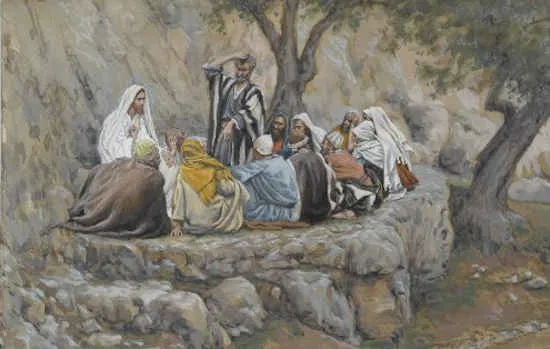
At times, Jesus’ words are difficult to understand. How well do you understand what He teaches you? He often teaches in figures of speech, as well as with parables. The passage quoted above concludes a section in which He speaks three subsequent parables. The third of these parables, the parable about the fishnet, is contained in the beginning of today’s Gospel passage. But just prior to that parable are the parables about the pearl of great price and the treasure buried in a field. Upon the conclusion of these three parables, Jesus asked His disciples, “Do you understand all these things?” After they affirmed that they did understand, Jesus gave an overview of the mission to which they had been entrusted. These soon-to-be bishops would become the new scribes who were instructed in the Kingdom of Heaven. Their mission would be to bring forth both the “new and the old.”

Many Church Fathers identify the “new and the old” as a reference to the Old Testament and the New Testament. Thus, the Twelve are being entrusted with the mission of being the scribes of the full revelation contained in what will become the full Bible as we have it today. Other commentators suggest that the “old” refers to the old life of sin and the “new” refers to the new life of grace. It will be the mission of the Twelve to instruct people in the full Gospel message, so as to draw them from their old life of sin to the new life of grace.

Though Jesus’ words can be difficult to understand from the perspective of a biblical scholar, the first of His words quoted above are very straightforward. “Do you understand all these things?” As we ponder that question in particular, try to hear our Lord asking that question of you. Though many scholars and saints of old have offered much clarity on what Jesus’ teachings actually mean, the question that Jesus posed to the Twelve must be answered in a more personal way for each of us. As you hear Jesus ask you if you understand these things, the answer you give is not primarily based upon whether or not you have sufficiently studied the text of His teaching and can rationally explain it as a scholar. Instead, the answer He is seeking is whether or not you can respond from faith. He wants you to say, “Yes, I hear You speaking to me, Lord. Yes, my heart is convicted by the words You have spoken. Yes, I understand what I must do. Yes, Lord, I believe.” The Word of God is alive and can only be “understood” properly when we allow our Living Lord to speak to us, personally, as we listen to His holy Word.

Reflect, today, upon this question that Jesus posed to the Twelve. As you do, hear Him asking you this question. How fully do you understand what God is saying to you, right now at this moment in your life? As you read the Scriptures, do you sense God revealing Himself to you? Do you understand what He wants of you? If hearing the voice of God is a challenge at times, then spend more time prayerfully pondering His holy Word so that His Living Voice will more clearly resonate within your soul.

Source: https://catholic-daily-reflections.com/2024/07/31/understanding-the-voice-of-god-2/

Matthew 13:51-52 Read More »

Saint Ignatius of Loyola, Priest

1491–1556; Patron Saint of the Society of Jesus (Jesuits), Spiritual Exercises, soldiers, and retreats; Canonized by Pope Gregory XV on March 12, 1622

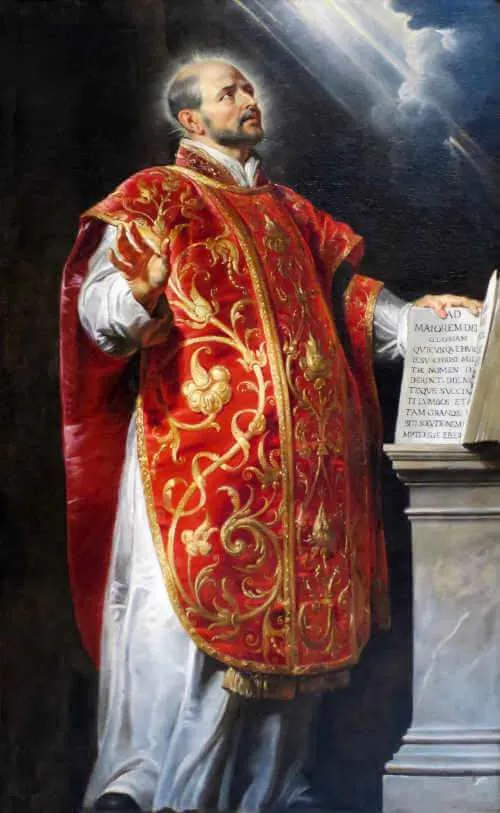
Íñigo López de Oñaz y Loyola (Ignatius in Latin) was born at the Castle of Loyola in the municipality of Azpeitia, in modern-day Gipuzkoa, Spain. He was the youngest of thirteen children. Shortly after his birth, his mother died, and he was cared for by a local woman named Maria. When he was seven, his father died, and he was sent to live with a local noble family where he fulfilled the duties of a page, introducing him to the idea of knighthood and military service. As a result, Ignatius became an enthusiastic man who dreamed of being a great military officer. Captivated by thoughts of worldly honor and glory, he became a soldier around the age of seventeen. For the next twelve years he fought in many battles and advanced in rank. In 1521, at the age of thirty, Ignatius was wounded in battle and bedridden for months as his wounded leg healed. In his boredom, he asked for books to read. He had hoped to receive some books on chivalry and romance for entertainment, but no such books were in the house where he was recovering. Instead, he was given The Life of Christ by Ludolph of Saxony, a Carthusian monk, and Flowers of the Saints. As he read and re-read these two books, he began to be inspired and started to imagine himself living a saintly life.

Ignatius also spent much time daydreaming about romance, chivalry, and other worldly endeavors. But since he was only in possession of these two books, his imagination would wander between the two: Christ and the saints, then romance and chivalry. But there was a difference. Ignatius noticed that even though both of these trains of thought excited him, the worldly thoughts eventually left him feeling dry and sad, whereas the thoughts about Christ and the saints left him inspired and enthused long after he had ended his daydream. It was this realization that first compelled him to intensify his conversion, and it was this insight that led to much of the wisdom that he would later leave to his followers and to the Church.

After his recovery, Ignatius desired to make a pilgrimage to the Holy Land. Before embarking on that trip, he first made a journey to the town of Montserrat. Two powerful influences on him during that time were his penitential practices and his thorough confession. For penance, he wore clothing that was rough and uncomfortable, tied a cord below his knee, and only wore one shoe. He spent much time in prayer and spoke to our Lord and our Blessed Mother while kneeling and standing for long periods. While in Montserrat, he spent three days preparing for a general confession of the sins of his whole life. During his confession, Ignatius also revealed to his confessor, for the first time, his intention to devote his entire life to the service of God. After his confession, he consecrated himself to our Lord and our Blessed Mother, and spent the entire night in prayer. Thus, Ignatius had begun a very radical journey toward a life of sainthood.

After his short stay in Montserrat, Ignatius journeyed to the town of Manresa and stayed there from March 25, 1522, until mid-February 1523. His months in Manresa were months of deep conversion. He spent many long hours in prayer, attended daily Mass, engaged in severe penances, sought out spiritual counsel, and studied the Gospels. He spent much time in silence and solitude, especially in a cave that he frequented. Ignatius neglected his physical appearance and sought only to beautify his soul.

This period of interior formation had a profound impact on Ignatius, and he began to experience deep spiritual insights and consolations from God. However, soon after these consolations arrived, he also began to experience severe interior trials that left him agitated and struggling. These struggles began when he sensed the evil one saying to him that he could never keep up this life of vigor, zeal, and penance. The evil one tried to lead him to doubt and despair, but Ignatius ultimately discerned the voice of the evil one and rebuked his lies, reminding the evil spirit that he could offer him nothing of value. In the end, these trials were a gift in that they allowed Ignatius to grow deeper and deeper in his resolve to seek out and follow the will of God for his life while rejecting the lies of the evil one.

At this time, Ignatius also suffered severe scruples. He regularly recollected various sins he had committed that he feared he had never confessed. This struggle with scrupulosity caused much interior suffering. In fact, at one point, the scruples were so severe that he briefly considered suicide. In the end, God broke Ignatius free to be able to discern that his irrational thinking was not from God but from the evil one. Once he understood this, Ignatius rebuked and rejected these scrupulous and erroneous thoughts, and God freed him from this burden.

While in Manresa, Ignatius continued to engage in severe fasts (at one point neither eating nor drinking for seven days), scourged himself three times daily, and spent seven hours a day in prayer. Our Blessed Mother and Jesus regularly communicated with him, revealing deep spiritual truths to his soul. It was in Manresa that Ignatius began to write what has become one of the great spiritual classics in the Church: The Spiritual Exercises.

The Spiritual Exercises are not so much a book as they are a guide for a structured thirty-day retreat. The ideal way to accomplish this is for the individual to enter into silence and solitude for thirty days under the direction of a well-trained spiritual director who is able to lead the individual through the structure set forth by Saint Ignatius. This structure provides directions for what the retreatant should do each day, under the guidance of the spiritual director, as well as rules by which a director leads the directee toward discernment of God’s will.

After this period of prayer and the completion of the first draft of his exercises, Ignatius spent the next several years studying at Barcelona, Alcalá, and Salamanca where he also began promoting his new ideas. His writings, however, were scrutinized by the Spanish Inquisition, and he was briefly imprisoned a few times before being cleared of the charge of heresy. Afterward, he moved to Paris to obtain a master’s degree in theology, and it was there that he met Francis Xavier and Peter Faber, both of whom would later become saints.

In 1537, Ignatius and his companions moved to Venice and were ordained priests. Then in 1540, Ignatius, Francis, and Peter co-founded what would become the Society of Jesus, or Jesuits. The following year, Ignatius was elected the first superior, a role he would hold until his death. Over the next two decades, the Jesuits grew to an estimated 1,000 members, served in about thirty-five schools they founded, and became missionaries to non-Christian territories. Over the next century, the Jesuits played a significant role in the Catholic Counter-Reformation, becoming staunch defenders of orthodoxy and the pope.

Saint Ignatius of Loyola is one of the most inspirational figures in the history of the Church. He left behind a spiritual classic in The Spiritual Exercises, helped found the Jesuits who became one of the most consequential religious orders in the Church, and left behind other writings, including an estimated 7,000 letters filled with his wisdom. As we honor Saint Ignatius, ponder his initial conversion that led to so much good fruit. He noticed that God’s will produced a joy and peace that remained, versus worldly excitement that quickly passed and resulted in dryness. That insight has led countless people to discern God’s will for their lives through the use of Ignatius’ method. Ponder God’s will for your life today. As you do, learn from Saint Ignatius and seek that path which leads to great joy and ongoing spiritual peace and consolation.

Source: https://mycatholic.life/saints/saints-of-the-liturgical-year/july-31-saint-ignatius-loyola-priest/

Saint Ignatius of Loyola, Priest Read More »