2023

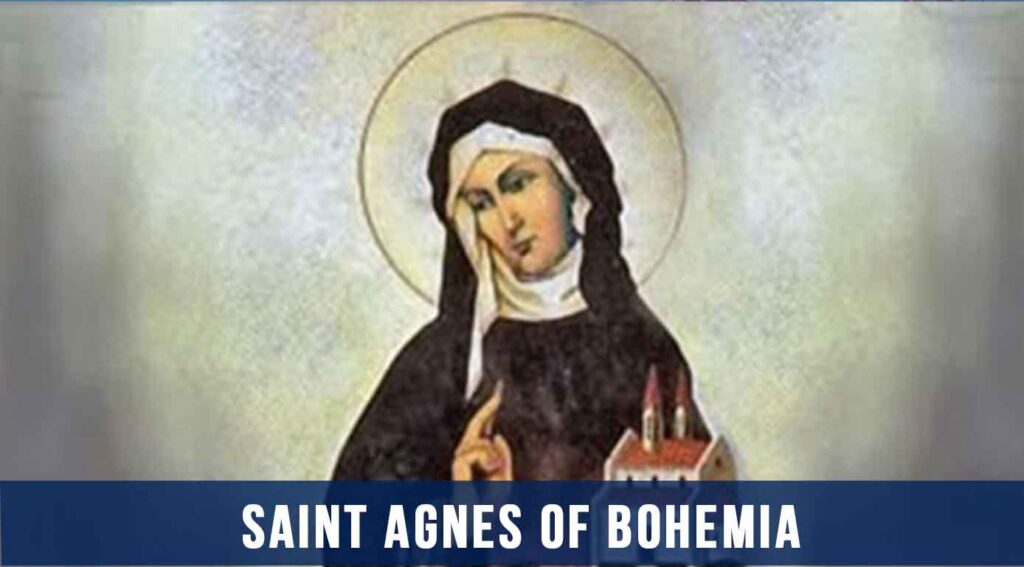
Saint Agnes of Bohemia

Saint Agnes had no children of her own but was certainly life-giving for all who knew her.

Agnes was the daughter of Queen Constance and King Ottokar I of Bohemia. She was betrothed to the Duke of Silesia, who died three years later. As she grew up, she decided she wanted to enter the religious life.

After declining marriages to King Henry VII of Germany and King Henry III of England, Agnes was faced with a proposal from Frederick II, the Holy Roman Emperor. She appealed to Pope Gregory IX for help. The pope was persuasive; Frederick magnanimously said that he could not be offended if Agnes preferred the King of Heaven to him.

After Agnes built a hospital for the poor and a residence for the friars, she financed the construction of a Poor Clare monastery in Prague. In 1236, she and seven other noblewomen entered this monastery. Saint Clare sent five sisters from San Damiano to join them, and wrote Agnes four letters advising her on the beauty of her vocation and her duties as abbess.

Agnes became known for prayer, obedience and mortification. Papal pressure forced her to accept her election as abbess, nevertheless, the title she preferred was “senior sister.” Her position did not prevent her from cooking for the other sisters and mending the clothes of lepers. The sisters found her kind but very strict regarding the observance of poverty; she declined her royal brother’s offer to set up an endowment for the monastery.

Devotion to Agnes arose soon after her death on March 6, 1282. Canonized in 1989, her liturgical feast is celebrated on March 6.

Sources:

https://www.franciscanmedia.org/saint-of-the-day/saint-agnes-of-bohemia/

Saint Agnes of Bohemia Read More »
Romans 1:17

Verse:

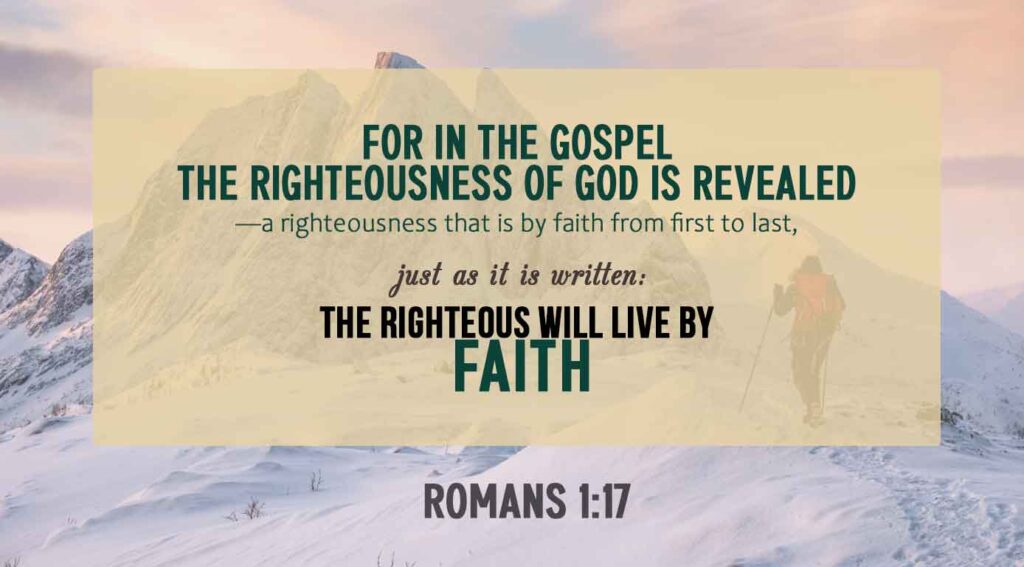
“For in the gospel the righteousness of God is revealed—a righteousness that is by faith from first to last, just as it is written: “The righteous will live by faith.” ” - Romans 1:17

A Prayer for Peace Making

Jesus, rightful Advocate of peace, Elegant Champion of reconciliation, Your victories echo harmoniously. You taught me the way towards peace, My assurance of congenial oneness. Teach me to carry the torch of peace, That it may reside within my heart And radiate in my surroundings. Through the Grace of Your power, Transform the world into a Heaven. You are the only hope of mankind: You are the most gracious Peace Maker!

Romans 1:17 Read More »

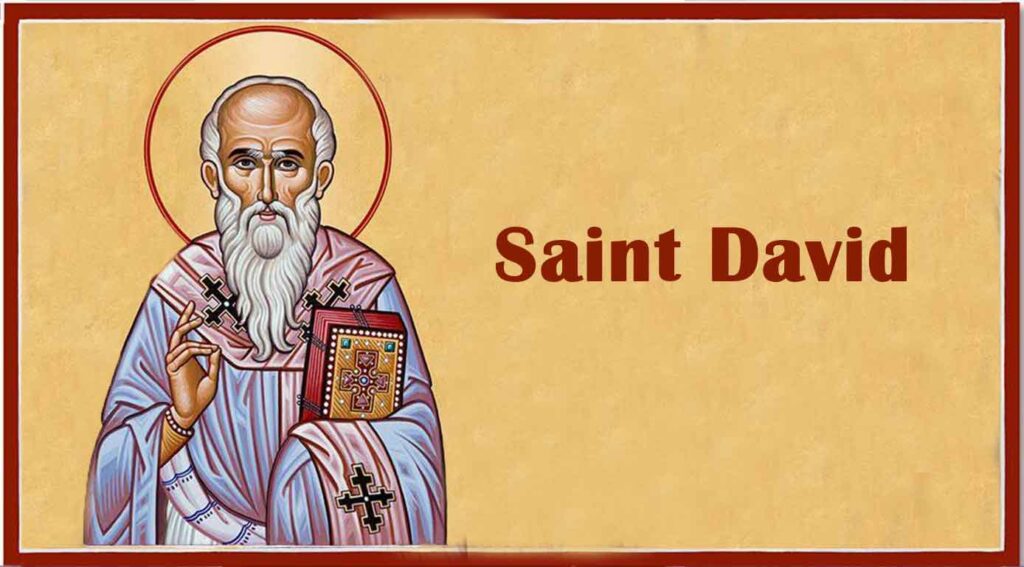
Saint David

Saint David was born in Caerfai, south west Wales into an aristocratic family. He founded a Celtic monastic community at Glyn Rhosyn (The Vale of Roses). His foundation at Glyn Rhosyn became an important Christian shrine. David’s fame as a teacher and his asceticism spread among Celtic Christians, and he helped found about 12 monasteries.

For centuries, 1 March has been a national festival. Saint David was recognised as a national patron saint in the 12th century. Traditional festivities include wearing daffodils and leeks, recognised symbols of Wales and Saint David, respectively, eating traditional Welsh food including cawl and Welsh rarebit, and women wearing traditional Welsh dress. An increasing number of cities and towns across Wales including Cardiff, Swansea and Aberystwyth also put on parades throughout the day.

The date of Saint David’s death is believed to be 1 March 589. His final words to the community of monks were: “Brothers be ye constant. The yoke which with single mind ye have taken, bear ye to the end; and whatsoever ye have seen with me and heard, keep and fulfil.”

Sources:

https://en.wikipedia.org/wiki/Saint_David%27s_Day
St David's Day 2017: everything you need to know about Wales' patron saint". The Daily Telegraph.
"St David (?-589)". BBC News. Archived from the original on 13 March 2017
Jenkins, Simon (2008). Wales: churches, houses, castles. Allen Lane. p. 125.

Saint David Read More »

Psalm 33:4

Verse:

“For the word of the Lord is right and true; he is faithful in all he does.” - Psalm 33:4

Fatima Morning Offering

O Jesus, through the Immaculate Heart of Mary, I offer You my prayers, works, joys and sufferings, all that this day may bring, be they good or bad: for the love of God, for the conversion of sinners, and in reparation for all the sins committed against the Sacred Heart of Jesus and the Immaculate Heart of Mary.

Psalm 33:4 Read More »

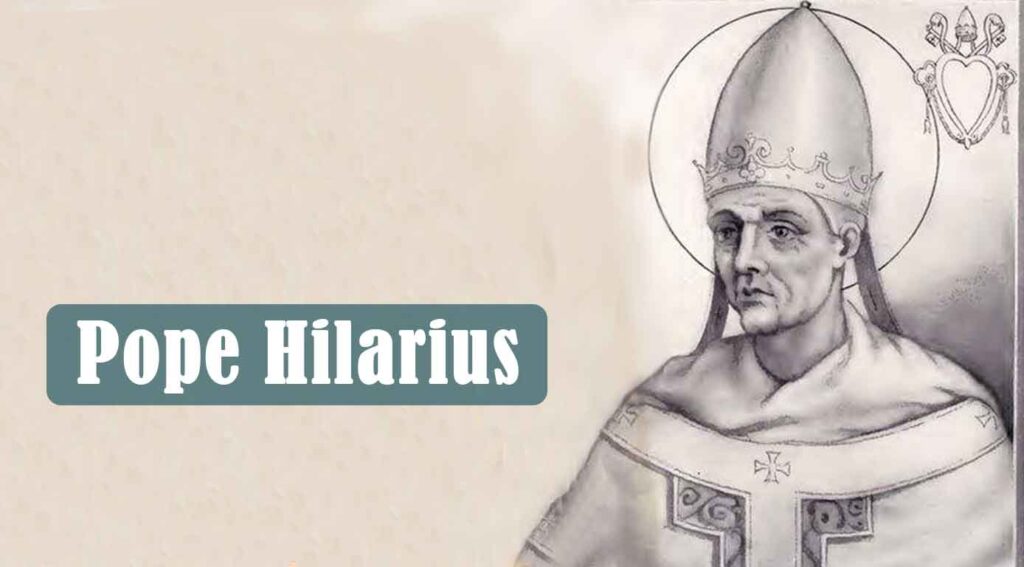
Pope Hilarius

Pope Hilarius was born in Sardinia. In 449, Hilarius served as a legate for Pope Leo I at the Second Council of Ephesus. His opposition to the condemnation of Flavian of Constantinople incurred the enmity of Dioscurus of Alexandria, who attempted to prevent him from leaving the city. Hilarius was able to make his escape and returned to Rome by an indirect route. He later erected an oratory at the Lateran in honor of John the Evangelist, to whom he attributed his safe passage.

As pope, he continued the policy of his predecessor, Leo I, who, in his contest with Hilary of Arles, had obtained from Emperor Valentinian III a famous rescript of 444 (called Novel 17) confirming the supremacy of the bishop of Rome. Hilarius continued to strengthen ecclesiastical government in Gaul and Spain.

In Rome, Hilarius worked zealously to counter the new emperor’s 467 edict of toleration for schismatic sects, which had been inspired, according to a letter of Pope Gelasius I, by a favourite of Emperor Anthemius named Philotheus, who espoused the Macedonian heresy. On one of the emperor’s visits to St Peter’s Basilica, the pope openly called him to account for his favourite’s conduct, exhorting him by the grave of St Peter to promise that he would allow no schismatical assemblies in Rome.

He was the bishop of Rome from 19 November 461 to his death on 29 February 468.

Sources:

https://en.wikipedia.org/wiki/Pope_Hilarius
Alban Butler, Paul Burns. Butler's Lives of the Saints: February, p. 266. A&C Black, 1995
https://www.catholic.org/saints/saint.php?saint_id=3774

Pope Hilarius Read More »

Ephesians 5:25-26

Verse:

“Husbands, love your wives, just as Christ loved the church and gave himself up for her to make her holy, cleansing her by the washing with water through the word.” - Ephesians 5:25-26

Prayer to Love God Above All Things

God, my Father, may I love You in all things and above all things. May I reach the joy which You have prepared for me in Heaven. Nothing is good that is against Your Will, and all that is good comes from Your Hand. Place in my heart a desire to please You and fill my mind with thoughts of Your Love, so that I may grow in Your Wisdom and enjoy Your Peace.

Ephesians 5:25-26 Read More »

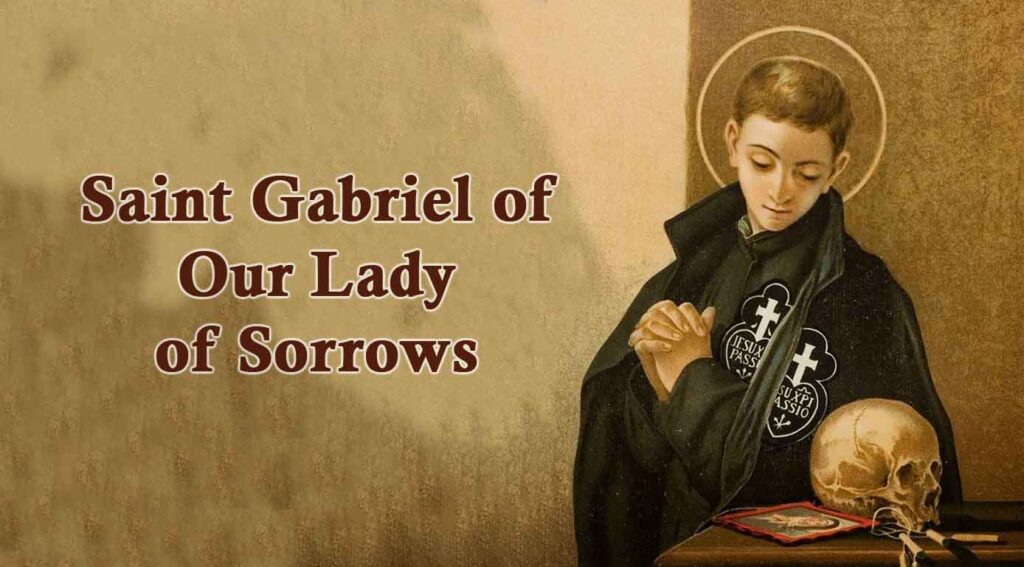
Saint Gabriel of Our Lady of Sorrows

Born in Italy into a large family and baptized Francis, Saint Gabriel lost his mother when he was only four years old. He was educated by the Jesuits and, having been cured twice of serious illnesses, came to believe that God was calling him to the religious life. Young Francis wished to join the Jesuits but was turned down, probably because of his age, not yet 17. Following the death of a sister to cholera, his resolve to enter religious life became even stronger and he was accepted by the Passionists. Upon entering the novitiate he was given the name Gabriel of Our Lady of Sorrows.

Ever popular and cheerful, Gabriel quickly was successful in his effort to be faithful in little things. His spirit of prayer, love for the poor, consideration of the feelings of others, exact observance of the Passionist Rule as well as his bodily penances—always subject to the will of his wise superiors— made a deep impression on everyone.
His superiors had great expectations of Gabriel as he prepared for the priesthood, but after only four years of religious life symptoms of tuberculosis appeared. Ever obedient, he patiently bore the painful effects of the disease and the restrictions it required, seeking no special notice. He died peacefully on February 27, 1862, at age 24, having been an example to both young and old.
Saint Gabriel of Our Lady of Sorrows was canonized in 1920.

Sources:

https://www.franciscanmedia.org/saint-of-the-day/saint-gabriel-of-our-lady-of-sorrows/

Saint Gabriel of Our Lady of Sorrows Read More »

First Sunday of Lent

Liturgy of the Word

First Reading: Gn 2:7-9, 3:1-7

The LORD God formed man out of the clay of the ground
and blew into his nostrils the breath of life,
and so man became a living being.

Then the LORD God planted a garden in Eden, in the east,
and placed there the man whom he had formed.
Out of the ground the LORD God made various trees grow
that were delightful to look at and good for food,
with the tree of life in the middle of the garden
and the tree of the knowledge of good and evil.

Now the serpent was the most cunning of all the animals
that the LORD God had made.
The serpent asked the woman,
"Did God really tell you not to eat
from any of the trees in the garden?"
The woman answered the serpent:
"We may eat of the fruit of the trees in the garden;
it is only about the fruit of the tree
in the middle of the garden that God said,
'You shall not eat it or even touch it, lest you die.'"
But the serpent said to the woman:
"You certainly will not die!
No, God knows well that the moment you eat of it
your eyes will be opened and you will be like gods
who know what is good and what is evil."
The woman saw that the tree was good for food,
pleasing to the eyes, and desirable for gaining wisdom.
So she took some of its fruit and ate it;
and she also gave some to her husband, who was with her,
and he ate it.
Then the eyes of both of them were opened,
and they realized that they were naked;
so they sewed fig leaves together
and made loincloths for themselves.

Responsorial Psalm: Psalm 51:3-4, 5-6, 12-13, 14 and 17

Response– Be merciful, O Lord, for we have sinned

Have mercy on me, O God, in your goodness;
in the greatness of your compassion wipe out my offense.
Thoroughly wash me from my guilt
and of my sin cleanse me.
R– Be merciful, O Lord, for we have sinned

For I acknowledge my offense,
and my sin is before me always:
"Against you only have I sinned,
and done what is evil in your sight."
R– Be merciful, O Lord, for we have sinned

A clean heart create for me, O God,
and a steadfast spirit renew within me.
Cast me not out from your presence,
and your Holy Spirit take not from me.
R– Be merciful, O Lord, for we have sinned

Give me back the joy of your salvation,
and a willing spirit sustain in me.
O Lord, open my lips,
and my mouth shall proclaim your praise.
R– Be merciful, O Lord, for we have sinned

Second Reading: Rom 5:12-19

Brothers and sisters:
Through one man sin entered the world,
and through sin, death,
and thus death came to all men, inasmuch as all sinned—
for up to the time of the law, sin was in the world,
though sin is not accounted when there is no law.
But death reigned from Adam to Moses,
even over those who did not sin
after the pattern of the trespass of Adam,
who is the type of the one who was to come.
But the gift is not like the transgression.
For if by the transgression of the one, the many died,
how much more did the grace of God
and the gracious gift of the one man Jesus Christ
overflow for the many.
And the gift is not like the result of the one who sinned.
For after one sin there was the judgment that brought condemnation;
but the gift, after many transgressions, brought acquittal.
For if, by the transgression of the one,
death came to reign through that one,
how much more will those who receive the abundance of grace
and of the gift of justification
come to reign in life through the one Jesus Christ.
In conclusion, just as through one transgression
condemnation came upon all,
so, through one righteous act,
acquittal and life came to all.
For just as through the disobedience of the one man
the many were made sinners,
so, through the obedience of the one,
the many will be made righteous.

Verse Before the Gospel: Mt 4:4b

One does not live on bread alone, but on every word that comes forth from the mouth of God.

Gospel: Mt 4: 1-11

A reading from the holy Gospel according to Matthew

At that time Jesus was led by the Spirit into the desert
to be tempted by the devil.
He fasted for forty days and forty nights,
and afterwards he was hungry.
The tempter approached and said to him,
"If you are the Son of God,
command that these stones become loaves of bread."
He said in reply,
"It is written:
One does not live on bread alone,
but on every word that comes forth
from the mouth of God."

Then the devil took him to the holy city,
and made him stand on the parapet of the temple,
and said to him, "If you are the Son of God, throw yourself down.
For it is written:
He will command his angels concerning you
and with their hands they will support you,
lest you dash your foot against a stone."
Jesus answered him,
"Again it is written,
You shall not put the Lord, your God, to the test."
Then the devil took him up to a very high mountain,
and showed him all the kingdoms of the world in their magnificence,
and he said to him, "All these I shall give to you,
if you will prostrate yourself and worship me."
At this, Jesus said to him,
"Get away, Satan!
It is written:
The Lord, your God, shall you worship
and him alone shall you serve."

Then the devil left him and, behold,
angels came and ministered to him.

The Readings and Gospel were sourced from:

First Sunday of Lent Read More »

Isaiah 30:18

Verse:

“Yet the Lord longs to be gracious to you; therefore he will rise up to show you compassion.
For the Lord is a God of justice. Blessed are all who wait for him!” - Isaiah 30:18

Grace Before and After Meals

Before: Bless us, O Lord! and these Thy gifts, which we are about to receive from Thy bounty, through Christ our Lord.
Amen.
After: We give Thee thanks for all Thy benefits, O Almighty God, who livest and reignest world without end. Amen. May the souls of the faithful departed, through the mercy of God, rest in peace. Amen.

Isaiah 30:18 Read More »

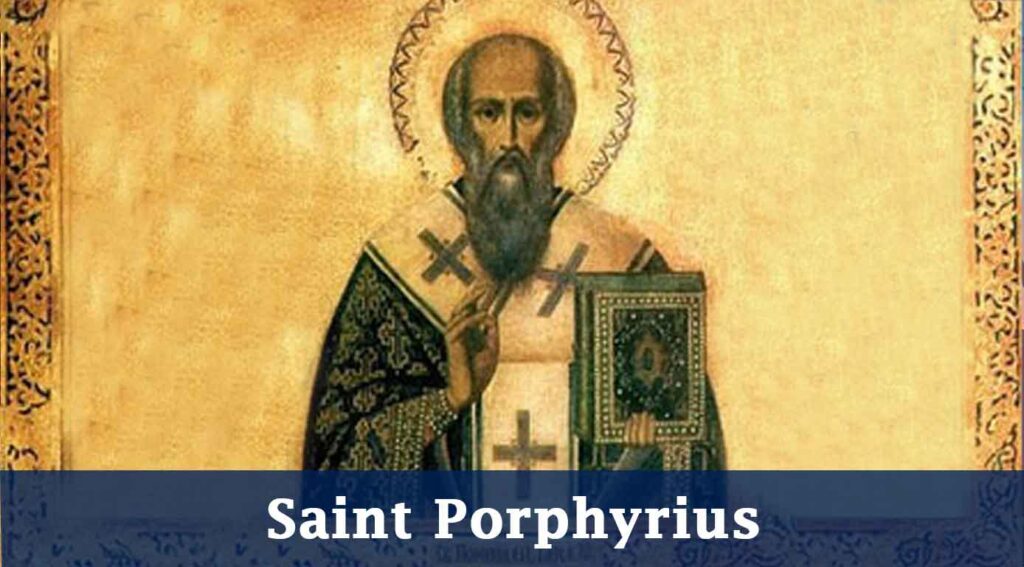
Saint Porphyrius

Saint Porphyrius was bishop of Gaza from 395 to 420, known, from the account in his Life, for Christianizing the recalcitrant pagan city of Gaza, and demolishing its temples.

Saint Porphyrius was appointed bishop at the age of 45. He sent Marcus, his deacon and chronicler, to Constantinople in 398 to obtain an order to close the pagan temples of Gaza. An official named Hilarius duly arrived with soldiers to close the temples, but the Marneion remained open because Hilarius was bribed with a large sum of money (Vita 27). There was no great change, however, in the attitude of the people, who refused to allow Christians “to hold any civil office, but entreated them as naughty slaves”. He then went to Constantinople during the winter of 401–402, accompanied by the bishop of Caesarea Palaestina, and together they convinced the Empress Eudoxia.

The saint’s body is said to be buried in Saint Porphyrius’ Church, in Gaza City, in the State of Palestine.

Saint Porphyrius Read More »