2023

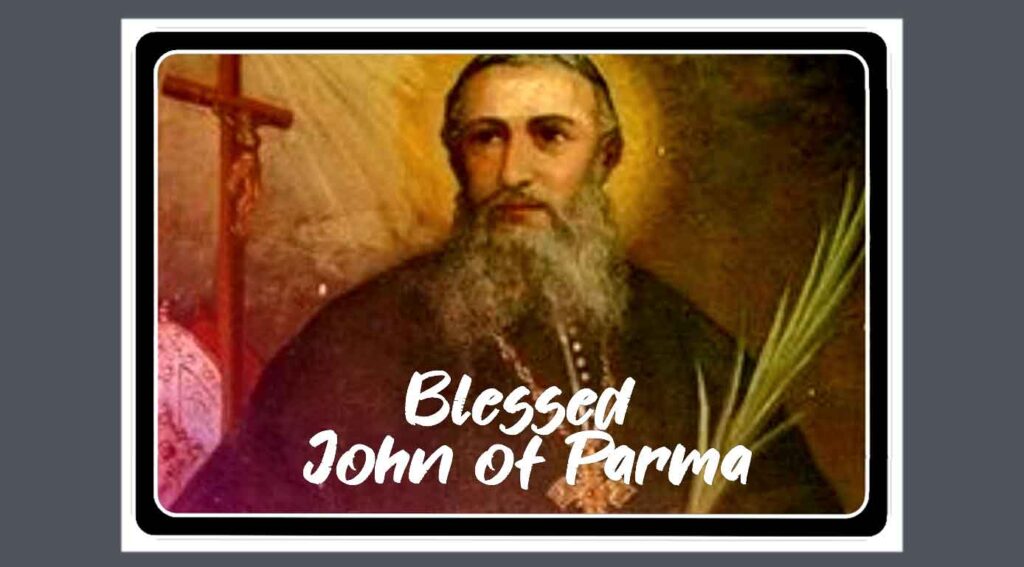
Blessed John of Parma

The seventh general minister of the Franciscan Order, John was known for his attempts to bring back the earlier spirit of the Order after the death of Saint Francis of Assisi.

He was born in Parma, Italy, in 1209. It was when he was a young philosophy professor known for his piety and learning that God called him to bid good-bye to the world he was used to and enter the new world of the Franciscan Order. After his profession, John was sent to Paris to complete his theological studies. Ordained to the priesthood, he was appointed to teach theology at Bologna, then Naples, and finally Rome.

In 1245, Pope Innocent IV called a general council in the city of Lyons, France. Crescentius, the Franciscan minister general at the time, was ailing and unable to attend. In his place he sent Friar John, who made a deep impression on the Church leaders gathered there. Two years later, when the same pope presided at the election of a minister general of the Franciscans, he remembered Friar John well and held him up as the man best qualified for the office.

And so in 1247, John of Parma was elected to be minister general. The surviving disciples of St. Francis rejoiced in his election, expecting a return to the spirit of poverty and humility of the early days of the Order. And they were not disappointed. As general of the Order, John traveled on foot, accompanied by one or two companions, to practically all of the Franciscan convents in existence. Sometimes he would arrive and not be recognized, remaining there for a number of days to test the true spirit of the brothers.

The pope called on John to serve as legate to Constantinople, where he was most successful in winning back the schismatic Greeks. Upon his return, he asked that someone else take his place to govern the Order. At John’s urging, Saint Bonaventure was chosen to succeed him. John took up a life of prayer in the hermitage at Greccio.

Many years later, John learned that the Greeks who had been reconciled with the Church for a time, had relapsed into schism. Though 80 years old by then, John received permission from Pope Nicholas IV to return to the East in an effort to restore unity once again. On his way, John fell sick and died. He was beatified in 1781.

Sources:

https://www.franciscanmedia.org/saint-of-the-day/blessed-john-of-parma/

Blessed John of Parma Read More »
Fourth Sunday of Lent

Liturgy of the Word

First Reading: 1 Sm 16:1b,6-7, 10-13a

The LORD said to Samuel:
"Fill your horn with oil, and be on your way.
I am sending you to Jesse of Bethlehem,
for I have chosen my king from among his sons."

As Jesse and his sons came to the sacrifice,
Samuel looked at Eliab and thought,
"Surely the LORD's anointed is here before him."
But the LORD said to Samuel:
"Do not judge from his appearance or from his lofty stature,
because I have rejected him.
Not as man sees does God see,
because man sees the appearance
but the LORD looks into the heart."
In the same way Jesse presented seven sons before Samuel,
but Samuel said to Jesse,
"The LORD has not chosen any one of these."
Then Samuel asked Jesse,
"Are these all the sons you have?"
Jesse replied,
"There is still the youngest, who is tending the sheep."
Samuel said to Jesse,
"Send for him;
we will not begin the sacrificial banquet until he arrives here."
Jesse sent and had the young man brought to them.
He was ruddy, a youth handsome to behold
and making a splendid appearance.
The LORD said,
"There—anoint him, for this is the one!"
Then Samuel, with the horn of oil in hand,
anointed David in the presence of his brothers;
and from that day on, the spirit of the LORD rushed upon David.

Responsorial Psalm: Psalm 23:1-3a, 3b-4, 5, 6

Response– The Lord is my shepherd; there is nothing I shall want

The LORD is my shepherd; I shall not want.
In verdant pastures he gives me repose;
beside restful waters he leads me;
he refreshes my soul.
R– The Lord is my shepherd; there is nothing I shall want

He guides me in right paths
for his name's sake.
Even though I walk in the dark valley
I fear no evil; for you are at my side
With your rod and your staff
that give me courage.
R– The Lord is my shepherd; there is nothing I shall want

You spread the table before me
in the sight of my foes;
you anoint my head with oil;
my cup overflows.
R– The Lord is my shepherd; there is nothing I shall want

Second Reading: Eph 5:8-14

Brothers and sisters:
You were once darkness,
but now you are light in the Lord.
Live as children of light,
for light produces every kind of goodness
and righteousness and truth.
Try to learn what is pleasing to the Lord.
Take no part in the fruitless works of darkness;
rather expose them, for it is shameful even to mention
the things done by them in secret;
but everything exposed by the light becomes visible,
for everything that becomes visible is light.
Therefore, it says:
"Awake, O sleeper,
and arise from the dead,
and Christ will give you light."

Verse Before the Gospel: Jn 8:12

I am the light of the world, says the Lord; whoever follows me will have the light of life.

Gospel: Jn 9: 1-41

A reading from the holy Gospel according to John

As Jesus passed by he saw a man blind from birth.
His disciples asked him,
"Rabbi, who sinned, this man or his parents,
that he was born blind?"
Jesus answered,
"Neither he nor his parents sinned;
it is so that the works of God might be made visible through him.
We have to do the works of the one who sent me while it is day.
Night is coming when no one can work.
While I am in the world, I am the light of the world."
When he had said this, he spat on the ground
and made clay with the saliva,
and smeared the clay on his eyes,
and said to him,
"Go wash in the Pool of Siloam" —which means Sent—.
So he went and washed, and came back able to see.

His neighbors and those who had seen him earlier as a beggar said,
"Isn't this the one who used to sit and beg?"
Some said, "It is, "
but others said, "No, he just looks like him."
He said, "I am."
So they said to him, "How were your eyes opened?"
He replied,
"The man called Jesus made clay and anointed my eyes
and told me, 'Go to Siloam and wash.'
So I went there and washed and was able to see."
And they said to him, "Where is he?"
He said, "I don't know."

They brought the one who was once blind to the Pharisees.
Now Jesus had made clay and opened his eyes on a sabbath.
So then the Pharisees also asked him how he was able to see.
He said to them,
"He put clay on my eyes, and I washed, and now I can see."
So some of the Pharisees said,
"This man is not from God,
because he does not keep the sabbath."
But others said,
"How can a sinful man do such signs?"
And there was a division among them.
So they said to the blind man again,
"What do you have to say about him,
since he opened your eyes?"
He said, "He is a prophet."

Now the Jews did not believe
that he had been blind and gained his sight
until they summoned the parents of the one who had gained his sight.
They asked them,
"Is this your son, who you say was born blind?
How does he now see?"
His parents answered and said,
"We know that this is our son and that he was born blind.
We do not know how he sees now,
nor do we know who opened his eyes.
Ask him, he is of age;
he can speak for himself."
His parents said this because they were afraid of the Jews,
for the Jews had already agreed
that if anyone acknowledged him as the Christ,
he would be expelled from the synagogue.
For this reason his parents said,
"He is of age; question him."

So a second time they called the man who had been blind
and said to him, "Give God the praise!
We know that this man is a sinner."
He replied,
"If he is a sinner, I do not know.
One thing I do know is that I was blind and now I see."
So they said to him,
"What did he do to you?
How did he open your eyes?"
He answered them,
"I told you already and you did not listen.
Why do you want to hear it again?
Do you want to become his disciples, too?"
They ridiculed him and said,
"You are that man's disciple;
we are disciples of Moses!
We know that God spoke to Moses,
but we do not know where this one is from."
The man answered and said to them,
"This is what is so amazing,
that you do not know where he is from, yet he opened my eyes.
We know that God does not listen to sinners,
but if one is devout and does his will, he listens to him.
It is unheard of that anyone ever opened the eyes of a person born blind.
If this man were not from God,
he would not be able to do anything."
They answered and said to him,
"You were born totally in sin,
and are you trying to teach us?"
Then they threw him out.

When Jesus heard that they had thrown him out,
he found him and said, "Do you believe in the Son of Man?"
He answered and said,
"Who is he, sir, that I may believe in him?"
Jesus said to him,
"You have seen him,
the one speaking with you is he."
He said,
"I do believe, Lord," and he worshiped him.
Then Jesus said,
"I came into this world for judgment,
so that those who do not see might see,
and those who do see might become blind."

Some of the Pharisees who were with him heard this
and said to him, "Surely we are not also blind, are we?"
Jesus said to them,
"If you were blind, you would have no sin;
but now you are saying, 'We see,' so your sin remains.

OR

Gospel: Jn 9:1, 6-9, 13-17, 34-38

As Jesus passed by he saw a man blind from birth.
He spat on the ground and made clay with the saliva,
and smeared the clay on his eyes, and said to him,
"Go wash in the Pool of Siloam" — which means Sent —.
So he went and washed, and came back able to see.

His neighbors and those who had seen him earlier as a beggar said,
"Isn't this the one who used to sit and beg?"
Some said, "It is, "
but others said, "No, he just looks like him."
He said, "I am."

They brought the one who was once blind to the Pharisees.
Now Jesus had made clay and opened his eyes on a sabbath.
So then the Pharisees also asked him how he was able to see.
He said to them,
"He put clay on my eyes, and I washed, and now I can see."
So some of the Pharisees said,
"This man is not from God,
because he does not keep the sabbath."
But others said,
"How can a sinful man do such signs?"
And there was a division among them.
So they said to the blind man again,
"What do you have to say about him,
since he opened your eyes?"
He said, "He is a prophet."

They answered and said to him,
"You were born totally in sin,
and are you trying to teach us?"
Then they threw him out.

When Jesus heard that they had thrown him out,
he found him and said, "Do you believe in the Son of Man?"
He answered and said,
"Who is he, sir, that I may believe in him?"
Jesus said to him,
"You have seen him, and
the one speaking with you is he."
He said,
"I do believe, Lord," and he worshiped him.

The Readings and Gospel were sourced from:

Fourth Sunday of Lent Read More »

2 Corinthians 5:1

Verse:

“For we know that if the earthly tent we live in is destroyed, we have a building from God, an eternal house in heaven, not built by human hands.” - 2 Corinthians 5:1

Prayer to God - My Saviour And Provider

Give us wisdom as we put this house into the hands of a selling agency, and we pray that You would go ahead and prepare the way for the right person to come at Your time and in Your way to buy this house. Lord, You know my needs and those of my family and it is to You alone that I cry at this time and plead for your grace in time of need.

Lord, I pray that Your will be done in this part of my life, and that You would give me the strength and wisdom to trust You in all things, for You alone are worthy. In Jesus' name I pray,

2 Corinthians 5:1 Read More »

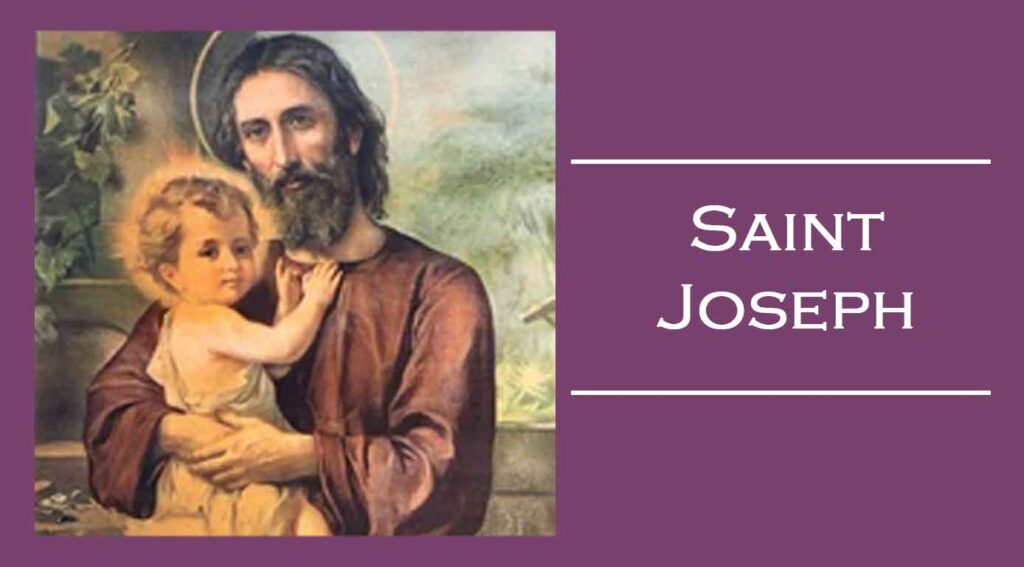
Saint Joseph

The Feast of Saint Joseph, also referred to as the Solemnity of Saint Joseph, commemorates the life of Joseph. He was the earthly father of Jesus and the husband of Mary. After Jesus’ birth at Bethlehem in Judaea, where the Holy Family received the Magi, an angel warned Joseph and Mary about the impending violence against the child by King Herod the Great of Judaea, whereupon they fled to Egypt. There the angel again appeared to Joseph, informing him of Herod’s death and instructing him to return to the Holy Land.

Saint Joseph is venerated differently in various countries. In Sicily, Italy, Saint Joseph is regarded by many as their patron saint. According to legend, Saint Joseph interceded to relieve a famine in Sicily during the Middle Ages. There was a severe drought at the time, and the people prayed for their patron saint to bring them rain. They promised that if God answered their prayers through Joseph’s intercession, they would prepare a large feast to honor him. The rain did come, and the people of Sicily prepared a large banquet for their patron saint.

In the Philippines, some families maintain the ritual of holding a banquet for the Holy Family. The Novena to Saint Joseph is also recited at a nearby temporary altar.

St. Joseph is the patron of the universal church in Roman Catholicism, and his life is recorded in the Gospels, particularly Matthew and Luke.

Saint Joseph Read More »

Revelation 22:20

Verse:

“He who testifies to these things says, “Yes, I am coming soon.” Amen. Come, Lord Jesus.” - Revelation 22:20

A Prayer For Godly Grace

How I thank and praise You for the everlasting life that You have given to me by Your wonderful grace and love. May I grow day by day to be more like You, full of compassion and kindness. Saturate my heart with Your love so that I may love You more with every passing breath, my Jesus.

Thank you for Your Holy Spirit, Who is making me to be more like You Lord Jesus. I want to reflect Your grace and Your beauty in thought, word and deed. I ask that I may devote my time and heart to reflect on all You are and all You have done for me, so that You are magnified more and more in my life, so that the beauty of my Lord Jesus may be seen and reflect in me. In Jesus' name,

Amen.

Source: https://prayer.knowing-jesus.com/prayer/a-prayer-for-godly-grace-1426

Revelation 22:20 Read More »

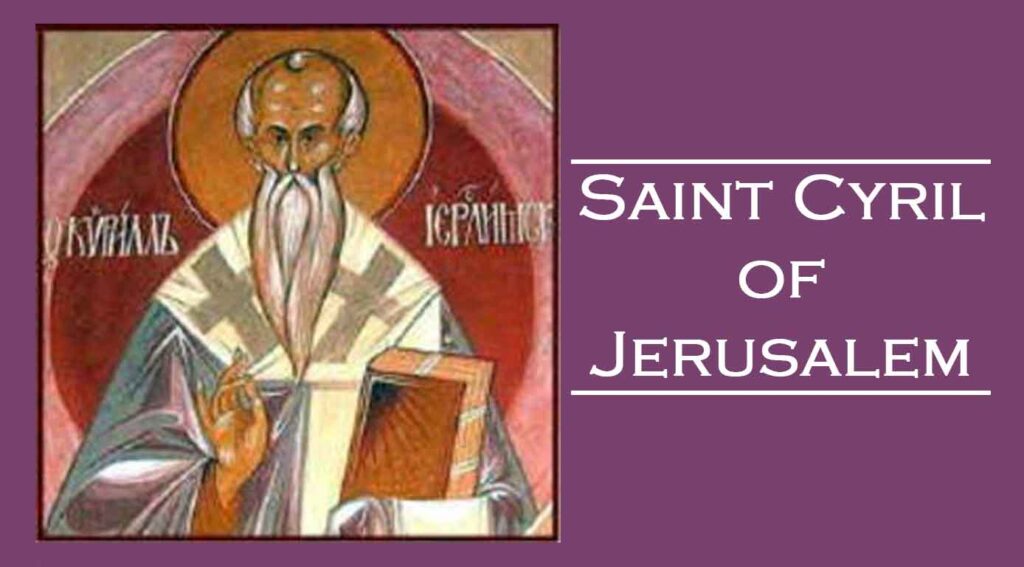
Saint Cyril of Jerusalem

The crises that the Church faces today may seem minor when compared with the threat posed by the Arian heresy, which denied the divinity of Christ and almost overcame Christianity in the fourth century. Cyril was to be caught up in the controversy, accused of Arianism by Saint Jerome, and ultimately vindicated both by the men of his own time and by being declared a Doctor of the Church in 1822.

Raised in Jerusalem and well-educated, especially in the Scriptures, he was ordained a priest by the bishop of Jerusalem and given the task during Lent of catechizing those preparing for Baptism and catechizing the newly baptized during the Easter season. His Catecheses remain valuable as examples of the ritual and theology of the Church in the mid-fourth century.

There are conflicting reports about the circumstances of his becoming bishop of Jerusalem. It is certain that he was validly consecrated by bishops of the province. Since one of them was an Arian, Acacius, it may have been expected that his “cooperation” would follow. Conflict soon rose between Cyril and Acacius, bishop of the rival nearby see of Caesarea. Cyril was summoned to a council, accused of insubordination and of selling Church property to relieve the poor. Probably, however, a theological difference was also involved. He was condemned, driven from Jerusalem, and later vindicated, not without some association with and help from Semi-Arians. Half his episcopate was spent in exile; his first experience was repeated twice. He finally returned to find Jerusalem torn with heresy, schism and strife, and wracked with crime. Even Saint Gregory of Nyssa, who was sent to help, left in despair.

They both went to the Council of Constantinople, where the amended form of the Nicene Creed was promulgated in 381. Cyril accepted the word consubstantial—that is, Christ is of the same substance or nature as the Father. Some said it was an act of repentance, but the bishops of the Council praised him as a champion of orthodoxy against the Arians. Though not friendly with the greatest defender of orthodoxy against the Arians, Cyril may be counted among those whom Athanasius called “brothers, who mean what we mean, and differ only about the word consubstantial.”

Sources:

https://www.franciscanmedia.org/saint-of-the-day/saint-cyril-of-jerusalem/

Saint Cyril of Jerusalem Read More »

Proverbs 11:13

Verse:

“A gossip betrays a confidence, but a trustworthy person keeps a secret.” - Proverbs 11:13

Prayer for Kindness to Others

Dear God, Grant us so much Love and compassion so that we could treat each other with Love and compassion. Bless us with so much wisdom, Love, and brotherhood so that we could think and act kindly. Amen.

Sources:

https://bigbraincoach.com/prayer-for-kindness-and-compassion/

Proverbs 11:13 Read More »

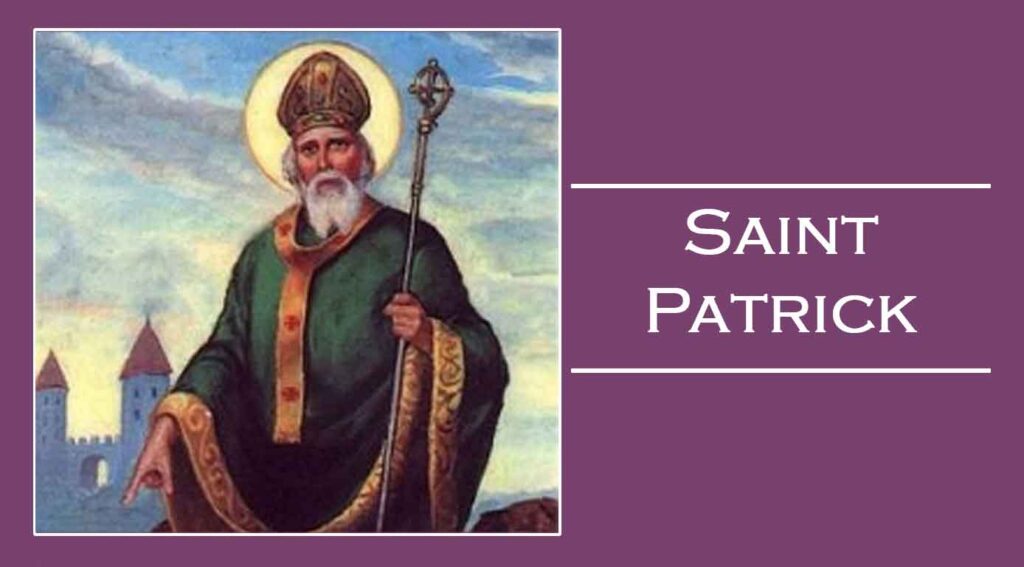
Saint Patrick

Saint Patrick was a 5th-century Romano-British Christian missionary and Bishop in Ireland. Much of what is known about Saint Patrick comes from the Declaration, which was allegedly written by Patrick himself. It is believed that he was born in Roman Britain in the fourth century, into a wealthy Romano-British family.

According to tradition, Patrick returned to Ireland to convert the pagan Irish to Christianity. The Declaration says that he spent many years evangelising in the northern half of Ireland and converted thousands. Patrick’s efforts were eventually turned into an allegory in which he drove “snakes” out of Ireland, despite the fact that snakes were not known to inhabit the region.
Saint Patrick’s Day, or the Feast of Saint Patrick, is a cultural and religious celebration held on the traditional death date of Saint Patrick (c. 385 – c. 461), the foremost patron saint of Ireland. The day commemorates Saint Patrick and the arrival of Christianity in Ireland, and celebrates the heritage and culture of the Irish in general.

Sources:

https://en.wikipedia.org/wiki/Saint_Patrick%27s_Day

Saint Patrick Read More »

Luke 6:30

Verse:

“Give to everyone who asks you, and if anyone takes what belongs to you, do not demand it back.” - Luke 6:30

Prayer for Kindness to Others

“Dear God, Grant us so much Love and compassion so that we could treat each other with Love and compassion. Bless us with so much wisdom, Love, and brotherhood so that we could think and act kindly. Amen.”

Sources:

https://bigbraincoach.com/prayer-for-kindness-and-compassion/

Luke 6:30 Read More »

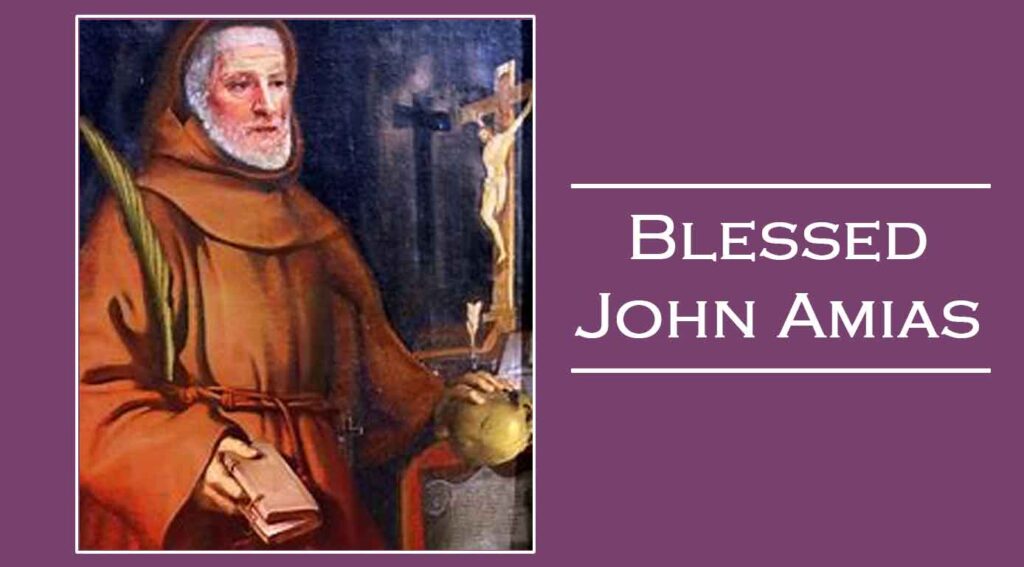
Blessed John Amias

Blessed John Amias was a Roman Catholic priest who was martyred in England. There is some doubt about his early life and his real name.

In an account of his life, a widower calling himself “John Amias” entered the English College at Rheims to study for the priesthood on June 22, 1580. He was ordained a priest in Rheims Cathedral on 25 March 1581.

Of his missionary life we know little. Towards the end of 1588 he was seized at the house of a Mr. Murton at Melling in Lancashire and imprisoned in York Castle. Given the 1585 Act making it a capital offence to be a Catholic priest in England the sentence of hanging, drawing and quartering was inevitable. It was carried out outside the city of York on 16 March 1589. Amias was beginning to address the assembled people, and explain that it was for religion, and not treason, that he suffered, but was not allowed to proceed.

Sources:

https://en.wikipedia.org/wiki/John_Amias
Ryan, Patrick W.F. "Ven. John Amias." The Catholic Encyclopedia. Vol. 1. New York: Robert Appleton Company, 1907. 2 Feb. 2013
Stanton, Richard, A Menology of England and Wales, p.119, Burns 7 Oates, Ltd., London, 1892

Blessed John Amias Read More »