Verse

John 4:46-48

Faith in All Things

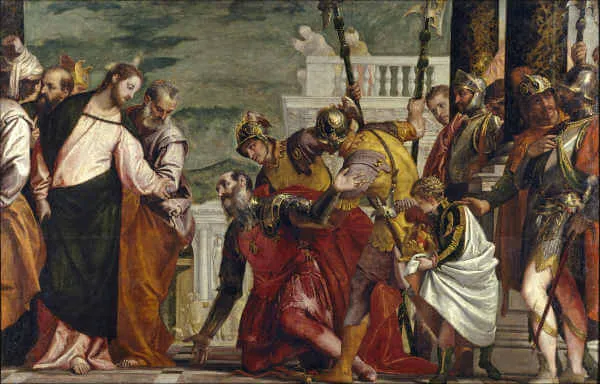
Now there was a royal official whose son was ill in Capernaum. When he heard that Jesus had arrived in Galilee from Judea, he went to him and asked him to come down and heal his son, who was near death. Jesus said to him, “Unless you people see signs and wonders, you will not believe.”

Reflection:

Jesus did end up healing the royal official’s son. And when the royal official returned to discover his son healed, we are told that “he and his whole household came to believe.” Some came to believe in Jesus only after He performed miracles. There are two lessons we should take from this.

First of all, the fact that Jesus performed miracles is a testimony to Who He is. He is a God of abundant mercy. As God, Jesus could have expected faith from those to whom He ministered without offering them the “proof” of signs and wonders. This is because true faith is not based upon external evidence, such as seeing miracles; rather, authentic faith is based upon an interior revelation from God by which He communicates His very self to us and we believe. Therefore, the fact that Jesus did signs and wonders shows just how merciful He is. He offered these miracles, not because anyone deserved them but simply because of His abundant generosity to help spark faith in the lives of those who found it hard to believe through the interior gift of faith alone.

With that said, it’s important to understand that we should work to develop our faith without relying upon external signs. Imagine, for example, if Jesus would have never performed any miracles. How many would have come to believe in Him? Perhaps very few. But there would have been some who came to believe, and those who did would have had a faith that was exceptionally deep and authentic. Imagine, for example, if this royal official did not receive a miracle for his son but, nonetheless, chose to believe in Jesus anyway through the transforming interior gift of faith.

In each one of our lives, it is essential that we work to develop our faith, even if God doesn’t seem to act in powerful and evident ways. In fact, the deepest form of faith is born in our lives when we choose to love God and serve Him, even when things are very difficult. Faith in the midst of difficulty is a sign of very authentic faith.

Reflect, today, upon the depth of your own faith. When life is hard, do you love God and serve Him anyway? Even if He doesn’t remove the crosses you carry? Seek to have true faith at all times and in every circumstance and you will be amazed at how real and sustaining your faith becomes.

Source: https://catholic-daily-reflections.com/2025/03/30/faith-in-all-things-3/
John 4:46-48 Read More »

Luke 15:1-3

Seeking the Lost

Tax collectors and sinners were all drawing near to listen to Jesus, but the Pharisees and scribes began to complain, saying, “This man welcomes sinners and eats with them.” So to them Jesus addressed this parable.

Reflection:

This is good news! Our Lord “welcomes sinners and eats with them.” For that reason, there is room at His table for you!

Sometimes it’s hard to admit that we are sinners. Of course we know in our minds that we are. But our pride can easily lead us to justify our sin, downplay it and conclude that we are not that bad after all. If you find yourself thinking this way, be careful. Doing so will make you like the Pharisees and scribes in the passage above. Clearly they did not see themselves as sinners, which is why they condemned Jesus for welcoming sinners and eating with them. 

The passage above comes from the beginning of Chapter 15 of Luke’s Gospel and serves as an introduction to three subsequent parables. First, our Lord tells the Parable of the Lost Sheep, then the Parable of the Lost Coin, and then the Parable found in the rest of today’s Gospel passage, the Parable of the Lost Son. In the first parable, the shepherd who finds his lost sheep rejoices. In the second parable, the woman who finds her lost coin rejoices. And in the parable we read today, the father who finds his lost son rejoices and throws a party to celebrate.

Return, again, to the passage above that introduces these three parables: “Tax collectors and sinners were all drawing near to listen to Jesus.” Once they drew near, Jesus spoke to them about the joy of finding that which was lost. Perhaps as Jesus initially spoke about the finding of the lost sheep and lost coin, this would have resonated with these tax collectors and sinners to a certain degree. But then our Lord tells them the long and detailed story about this boy who disrespects his father, takes his inheritance, squanders it on illicit living, and ends up with nothing. The story expresses the confusion of this boy, his desperation, his guilt and his shame. We learn of his interior thinking, reasoning, fears and anxiety.

As you ponder this parable, try to understand the effect that it would have had upon the tax collectors and sinners who all drew near to our Lord. They were spiritually hungry, just as the prodigal son was. They had a past full of regret, just as this boy. They were unsatisfied in life and were looking for a way out, just as this son of the loving father was. For these reasons, those tax collectors and sinners who drew near Jesus would have been mesmerized by all that Jesus taught them and filled with hope that they, too, could share in the joy that was so generously bestowed upon this wayward son.

Reflect, today, upon the touching image of these tax collectors and sinners drawing near to Jesus. Though they may have had a certain fear and caution, they would have also had hope. Try to understand what they must have thought and felt as they heard this story of the father’s abundant mercy. Think about how they would have related as they discovered that there was hope for them, too. If you struggle with being like the scribes and Pharisees, reject that temptation. Instead, see yourself as one of those sinners who drew near to our Lord and you will be the cause of joy in the Heart of the Father in Heaven.

Source: https://catholic-daily-reflections.com/2025/03/29/seeking-the-lost/

Luke 15:1-3 Read More »

Luke 18:9-10

Being Justified by Mercy

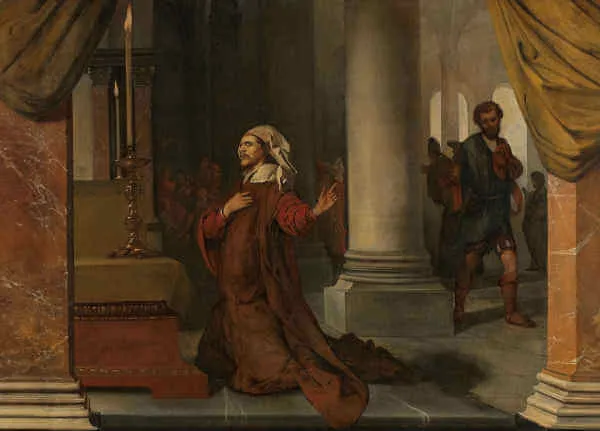
Jesus addressed this parable to those who were convinced of their own righteousness and despised everyone else. “Two people went up to the temple area to pray; one was a Pharisee and the other was a tax collector.”

Reflection:

This Scripture passage introduces the Parable of the Pharisee and the Tax Collector. They both go to the Temple to pray, but their prayers are very different from each other. The prayer of the Pharisee is very dishonest, whereas the prayer of the tax collector is exceptionally sincere and honest. Jesus concludes by saying that the tax collector went home justified but not the Pharisee. He states, “…for everyone who exalts himself will be humbled, and the one who humbles himself will be exalted.”

True humility is simply being honest. Too often in life we are not honest with ourselves and, therefore, are not honest with God. Thus, for our prayer to be true prayer, it must be honest and humble. And the humble truth for all of our lives is best expressed by the prayer of the tax collector who prayed, “O God, be merciful to me a sinner.”

How easy is it for you to admit your sin? When we understand the mercy of God, this humility is much easier. God is not a God of harshness but is a God of the utmost mercy. When we understand that God’s deepest desire is to forgive us and to reconcile us to Himself, then we will deeply desire honest humility before Him.

Lent is an important time for us to deeply examine our conscience and make new resolutions for the future. Doing so will bring new freedom and grace into our lives. So do not be afraid to honestly examine your conscience so as to see your sin clearly in the way God sees it. Doing so will put you in a position to pray this prayer of the tax collector: “O God, be merciful to me a sinner.”

Reflect, today, upon your sin. What do you struggle with the most right now? Are there sins from your past that you have never confessed? Are there ongoing sins that you justify, ignore and are afraid to face? Take courage and know that honest humility is the road to freedom and the only way to experience justification before God.

Source: https://catholic-daily-reflections.com/2025/03/28/being-justified-by-mercy-4/

Luke 18:9-10 Read More »

Mark 12:29-30

Hold Nothing Back

Hear, O Israel! The Lord our God is Lord alone!  You shall love the Lord your God with all your heart, with all your soul, with all your mind, and with all your strength.

Reflection:

Why would you choose anything less than to love the Lord your God with ALL your heart, with ALL your soul, with ALL your mind, and with ALL your strength? Why would you choose anything less? Of course, we do choose many other things to love in life, even though Jesus is clear with this commandment.

The truth is that the only way to love others, and even to love ourselves, is to choose to love God with ALL we are. God must be the one and only focus of our love. But what’s amazing is that the more we do this, the more we realize that the love we have in our lives is the kind of love that overflows and overflows in superabundance. And it is this overflowing love of God that then pours forth on others.

On the other hand, if we try to divide our loves by our own effort, giving God only part of our heart, soul, mind and strength, then the love we have for God cannot grow and overflow in the way God wants. We limit our capacity for love, and we fall into selfishness. Love of God is a truly amazing gift when it is total and all-consuming.

Each one of these parts of our lives are worth pondering and examining. Think about your heart and how you are called to love God with your heart. And how does this differ from loving God with your soul? Perhaps your heart is more focused on your feelings, emotions and compassion. Perhaps your soul is more spiritual in nature. Your mind loves God the more it probes the depth of His Truth, and your strength is your passion and drive in life. Regardless of how you understand the various parts of your being, the key is that every part must love God in fullness.

Reflect, today, upon the beautiful commandment of our Lord. It’s a command of love, and it is given to us not so much for God’s sake but for ours. God wants to fill us to the point of overflowing love. Why would we ever choose anything less?

Source: https://catholic-daily-reflections.com/2025/03/27/hold-nothing-back-4/

Mark 12:29-30 Read More »

Luke 11:20

The Kingdom of God is Upon Us

But if it is by the finger of God that I drive out demons, then the Kingdom of God has come upon you.

Reflection:

The Kingdom of God can come upon us in a variety of ways. The line from today’s Gospel above comes in the middle of a story of Jesus casting out a demon from a man who was mute. Once the demon was cast out, the mute man began to speak, and all were amazed. And though some were amazed and grew in faith as a result, others turned their amazement into irrationality. 

The irrationality of some was that they saw what Jesus did, but they didn’t want to accept that His power was divine. Therefore, some of them said, “By the power of Beelzebul, the prince of demons, he drives out demons.” They couldn’t deny that Jesus drove out a demon, since they saw it happen with their own eyes. But they were unwilling to accept Jesus’ divinity, so they jumped to the irrational conclusion that Jesus’ act was done by the power of “the prince of demons.”

This irrational stance of some people is one of the most dangerous stances one can take. It’s the stance of an obstinate heart. They were given the incredible witness of the power of God at work but refused to respond in faith to what they witnessed. For those who are obstinate, when the Kingdom of God comes upon them, as Jesus stated above, the effect is that they react in a violent, angry and irrational way. This form of reaction is exceptionally prevalent today in the secular world. Many in the secular media, for example, constantly react violently and irrationally to all that is part of the Kingdom of God. As a result, the evil one easily misleads many, causing confusion and chaos.

For those who have eyes to see clearly, this violent and irrational rejection of the Kingdom of God is very clear. And for those with faith and an open heart, the pure message of the Gospel is like water to a dry and parched soul. They soak it up and find great refreshment. For them, when the Kingdom of God comes upon them, they are energized, inspired and driven with a holy passion to further God’s Kingdom. Irrationality disappears, and God’s pure Truth prevails.

Reflect, today, upon your heart. Are you obstinate in any way? Are there teachings from Christ and His Church that you are tempted to reject? Is there some truth that you need to hear in your personal life to which you find it difficult to be open? Pray that the Kingdom of God come upon you today and every day and, as it does, that you will be a powerful instrument of its establishment in this world.

Source: https://catholic-daily-reflections.com/2025/03/26/the-kingdom-of-god-is-upon-us-4/

Luke 11:20 Read More »

Matthew 5:17-18

The Height of the New Law

I have come not to abolish but to fulfill. Amen, I say to you, until heaven and earth pass away, not the smallest letter or the smallest part of a letter will pass from the law, until all things have taken place.

Reflection:

The Old Law, the law from the Old Testament, prescribed various moral precepts, as well as ceremonial precepts for worship. Jesus makes it clear that He is not abolishing all that God taught through Moses and the Prophets. This is because the New Testament is the culmination and completion of the Old Testament. Thus, nothing of old was abolished; it was fulfilled and brought to completion.

The moral precepts of the Old Testament were laws that flowed primarily from human reason. It made sense that one should not kill, steal, commit adultery, lie, etc. It also made sense that God should be honored and respected. The Ten Commandments and the other moral laws still hold today. But Jesus brings us much further. He not only called us to go much deeper in the keeping of these commandments, He also promised the gift of grace so that they could be fulfilled. Thus, “Thou shall not kill” is deepened to the requirement of complete and total forgiveness of those who persecute us. 

It’s interesting to note that the new depth of the moral law Jesus gives actually goes beyond human reason. “Thou shall not kill” makes sense to almost everyone, but “love your enemies and pray for those who persecute you” is a new moral law that makes sense only by the help of grace. But without grace, the natural human mind alone cannot arrive at this new commandment.

This is extremely helpful to understand, because oftentimes we go through life relying upon our human reason alone when it comes to making moral decisions. And though our human reason will always direct us away from the most obvious moral failures, it will be insufficient alone to guide us to the heights of moral perfection. Grace is necessary for this high calling to make sense. Only by grace can we understand and fulfill the call to take up our crosses and follow Christ.

Reflect, today, upon your own calling to perfection. If it doesn’t make sense to you how God can expect perfection of you, then pause and reflect upon the fact that you are right—it doesn’t make sense to human reason alone! Pray that your human reason will be flooded with the light of grace so that you will be able to not only understand your high calling to perfection but that you will also be given the grace you need to achieve it.

Source: https://catholic-daily-reflections.com/2025/03/25/the-height-of-the-new-law-4/

Matthew 5:17-18 Read More »

Luke 1:26-28

Let It Be

The angel Gabriel was sent from God to a town of Galilee called Nazareth, to a virgin betrothed to a man named Joseph, of the house of David, and the virgin’s name was Mary. And coming to her, he said, “Hail, full of grace! The Lord is with you.”

Reflection:

Imagine if the Angel Gabriel, the glorious Archangel who stands before the Most Holy Trinity, were to come to you and announce to you that you were “full of grace” and that “The Lord is with you.” What an indescribable and awe-inspiring experience that would be! And yet this is exactly what happened to this young teenager, the Blessed Virgin Mary.

We celebrate today this amazing event that took place, marking the moment when God took on human flesh within her blessed womb. Note that today is nine months before Christmas. The Church gives us this Solemnity today to invite us to walk with Mary over these coming nine months so as to join her in her rejoicing over the birth of her divine Son.

Much could be said about this glorious Solemnity. We could ponder Mother Mary and her Immaculate Conception. We could ponder the very words spoken by the Archangel. We could ponder the mystery surrounding her pregnancy and the way in which God chose to set this gift into motion. And we could ponder so much more. Though all of these aspects are worth fully pondering and praying over, let’s focus upon the reaction of this young woman to the angelic announcement.

First, we read that Mary was “greatly troubled” and “pondered” these words spoken by the Archangel. Being troubled reveals that Mary did not have full knowledge of what the Archangel was revealing. But the fact that she pondered the words also reveals her openness to a fuller understanding. She then seeks a deeper gift of knowledge by asking, “How can this be, since I have no relations with a man?” This response is first an assent of belief in faith followed by a request for a deeper understanding of this revelation. Faith is the ability to assent to that which we do not fully understand, but true faith always seeks a deeper understanding—and this is what Mary did.

After being given some further revelation by the Archangel, Mary fully accepts what was revealed and trusts that what she was told was all she needed to know at that time. And then she offers what has come to be known as her “fiat.” She says, “Behold, I am the handmaid of the Lord. May it be done to me according to your word.” This fiat of Mary is her perfect prayer of surrender to the will of God, and it is also the perfect model for how we all must respond to the will of God. We must see ourselves as true servants of His will, and we must fully embrace whatsoever God asks of us, completely uniting our wills to His.

Reflect, today, upon these words of our Blessed Mother: “Behold, I am the handmaid of the Lord. May it be done to me according to your word.” How is God asking you to make this your prayer also? How is God calling you to serve His most holy will? Are you willing to fully assent to anything and everything God asks of you? As you prayerfully reflect upon this fiat of our Blessed Mother, seek to unite her response to yours so that you, too, will be a servant of the most high God.

Source: https://catholic-daily-reflections.com/2025/03/24/let-it-be-4/

Luke 1:26-28 Read More »

Luke 4:28-30

The Permissive Will of God

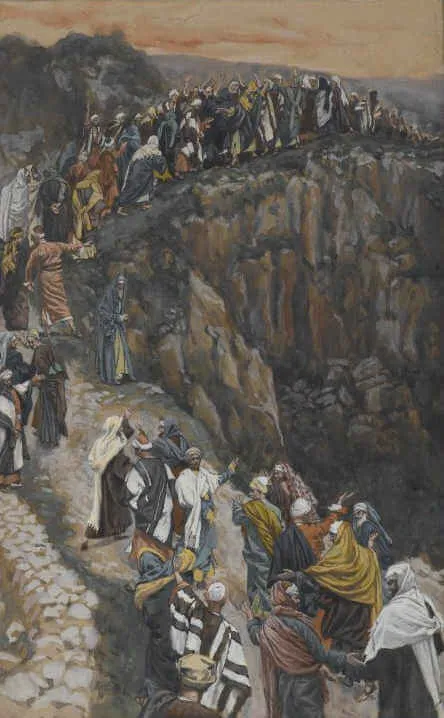
When the people in the synagogue heard this, they were all filled with fury. They rose up, drove him out of the town, and led him to the brow of the hill on which their town had been built, to hurl him down headlong. But he passed through the midst of them and went away.

Reflection:

One of the first places Jesus went to begin His public ministry was His own home town. After entering the Synagogue and reading from the Prophet Isaiah, Jesus proclaimed that the prophecy of Isaiah was now fulfilled in His very person. This caused His townspeople to be outraged at Him, thinking He was blaspheming. So they shockingly sought to immediately kill Jesus by driving Him out of their town to the brow of a hill off which they meant to throw Him. But then something fascinating happened. Jesus “passed through the midst of them and went away.”

The Father eventually permitted the grave evil of the death of His Son to take place, but only in His time. It’s unclear from this passage how Jesus was able to avoid being killed right then at the beginning of His ministry, but what’s important to know is that He was able to avoid this because it was not His time. The Father had more for Jesus to do before He would permit Him to offer His life freely for the salvation of the world.

This same reality is true for our own lives. God does permit evil to happen, at times, because of the irrevocable gift of free will. When people choose evil, God will allow them to proceed—but always with a caveat. The caveat is that God only permits evil to be inflicted upon others when that evil is able to be ultimately used for God’s glory and for some form of good. And it is only permitted in God’s time. If we do evil ourselves, choosing sin rather than the will of God, then the evil that we do will end in our own loss of grace. But when we are faithful to God and some external evil is imposed upon us by another, God permits this only when that evil can be redeemed and used for His glory.

The best example of this is, of course, the passion and death of Jesus. A far greater good came forth from that event than the evil itself. But it was only permitted by God when the time was right, in accord with God’s will.

Reflect, today, upon the glorious fact that any evil or any suffering inflicted upon you unjustly can end in the glory of God and the greater salvation of souls. No matter what you may suffer in life, if God permits it, then it is always possible for that suffering to share in the redeeming power of the Cross. Consider any suffering you have endured and embrace it freely, knowing that if God permitted it, then He certainly has some greater purpose in mind. Surrender that suffering over with the utmost confidence and trust and allow God to do glorious things through it.

Source: https://catholic-daily-reflections.com/2025/03/23/the-permissive-will-of-god-4/

Luke 4:28-30 Read More »

Luke 13:7-9

The Divine Gardener

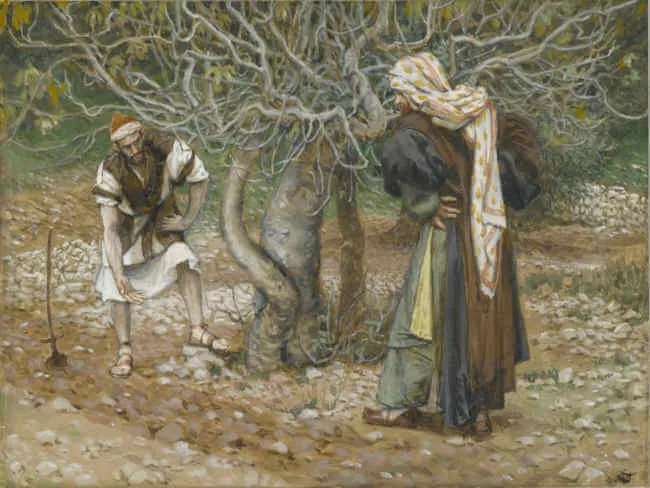
For three years now I have come in search of fruit on this fig tree but have found none. So cut it down. Why should it exhaust the soil?’ He said to him in reply, ‘Sir, leave it for this year also, and I shall cultivate the ground around it and fertilize it; it may bear fruit in the future. If not you can cut it down.

Reflection:

Imagine for a moment that you were the owner of the orchard in which this fig tree was planted. After the gardener asked you to wait for one more year and promised to fertilize the unfruitful fig tree and cultivate the ground around it, you agreed. Then imagine coming to inspect that same fig tree the next year. Imagine three scenarios. First, what would you do if, once again, there were no figs present? Second, what if there were only a few figs? Third, what if the tree suddenly produced an abundance of good fruit?

It seems clear that in the first scenario, if for the fourth year in a row not a single fig was produced, it would be time to cut down the tree. This depicts the justice of God sent forth on those who obstinately resist His grace. In the second scenario, the decision might be more difficult. If the tree produced only a few figs for the first time, then perhaps that would provide enough hope for the future of that tree to ask the gardener to continue caring for it. This depicts those who are in a state of grace but are still lazy in their service of the will of God. In the third scenario, however, the reaction of the owner of the orchard would be clear. There would be much excitement and gratitude that the gardener’s good work paid off.

Jesus is the Gardener, and we are the fig tree. This parable should lead us to look at our lives and examine whether or not we bear good fruit for the Kingdom of Heaven. Jesus comes to you to cultivate the soil of your heart, fertilizing it with His holy Word, watering it with His Sacraments and doing all He can to give you the opportunity to produce the fruit of charity in your life. How successful are these actions of our Lord in your life?

Too often, when we see only a little good fruit being borne from our lives, we are satisfied. And though any good fruit is good, we are wasting our lives if we do not do all we can to become as abundantly fruitful as possible. Imagine the joy in the Hearts of our Lord and the Father in Heaven if they were to look upon you and see good fruit being produced beyond expectation. Why wouldn’t this be your goal in life? Our Lord is patient, but He is also just. Do not try His patience, and do not succumb to His justice. 

Reflect, today, upon the image of you being this fig tree and our Lord as the divine Gardener. Commit yourself to His actions of tilling and fertilizing. You do so by strengthening your commitment to reading and understanding the Word of God, by participating more fully in the Sacraments, by being more focused upon your daily prayer, by examining your conscience more fully, and by sincerely confessing your sins. Do all you can to cooperate with the action of our divine Gardener and you will be amazed at the good fruit that begins to pour forth from your life.

Source: https://catholic-daily-reflections.com/2025/03/22/the-divine-gardener/

Luke 13:7-9 Read More »

Luke 15:22-24

Consolation for the Repentant Sinner

Look, all these years I served you and not once did I disobey your orders; yet you never gave me even a young goat to feast on with my friends. But when your son returns who swallowed up your property with prostitutes, for him you slaughter the fattened calf.

Reflection:

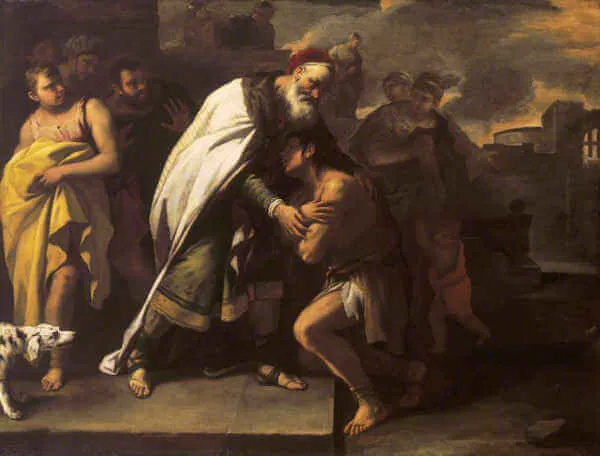
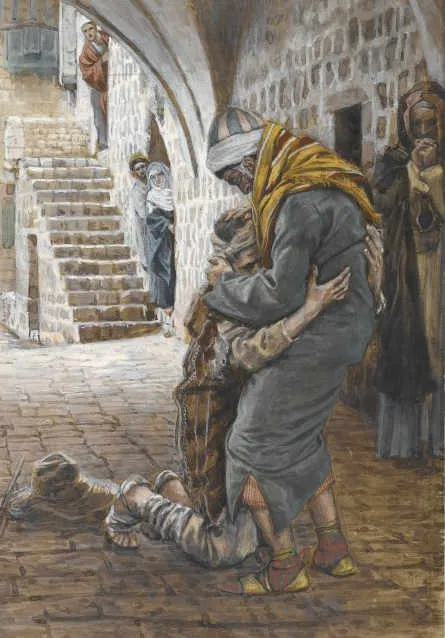
This was the reaction of the faithful son in the Parable of the Prodigal Son. Recall that after squandering his inheritance, the Prodigal Son returns home humiliated and poor, asking his father if he will take him back and treat him as if he were a hired hand. But the father surprises him and throws a huge party for the son to celebrate his return. But the father’s other son, the one who remained with him throughout the years, would not join in the celebration.

Was it fair that the father killed the fatted calf and threw this large party to celebrate his wayward son’s return? Was it fair that that same father apparently never even gave his faithful son a young goat to feast on with his friends? The right answer is that this is the wrong question.

It’s easy for us to live in such a way that we always want things to be “fair.” And when we perceive that another receives more than us, we can get angry and bitter. But asking whether or not this is fair is not the right question. When it comes to the mercy of God, God’s generosity and goodness far exceed what is perceived as fair. And if we are to share in the abundant mercy of God, we too must learn to rejoice in His superabundant mercy.

In this story, the act of mercy given to his wayward son was exactly what that son needed. He needed to know that no matter what he had done in the past, his father loved him and rejoiced in his return. Therefore, this son needed an abundance of mercy, partly to reassure him of his father’s love. He needed this extra consolation so as to become convinced that he made the right choice in returning.

The other son, the one who had remained faithful throughout the years, was not treated unfairly. Rather, his discontent came from the fact that he himself lacked the same abundant mercy present in the heart of his father. He failed to love his brother to the same extent and, therefore, failed to see the need to offer this consolation to his brother as a way of helping him understand he was forgiven and welcomed back. Mercy is very demanding and far exceeds what we may at first perceive as rational and just. But if we desire to receive mercy in abundance, we must be ready and willing to offer it to those who need it the most.

Reflect, today, upon how merciful and generous you are willing to be, especially toward those who do not appear to deserve it. Remind yourself that the life of grace is not about being fair; it’s about being generous to a shocking extent. Commit yourself to this depth of generosity toward all and look for ways that you can console another’s heart with the mercy of God. If you do, that generous love will also bless your heart in abundance.

Source: https://catholic-daily-reflections.com/2025/03/21/consolation-for-the-repentant-sinner-4/

Luke 15:22-24 Read More »