Verse

Matthew 8:19-20

Wherever God Leads You

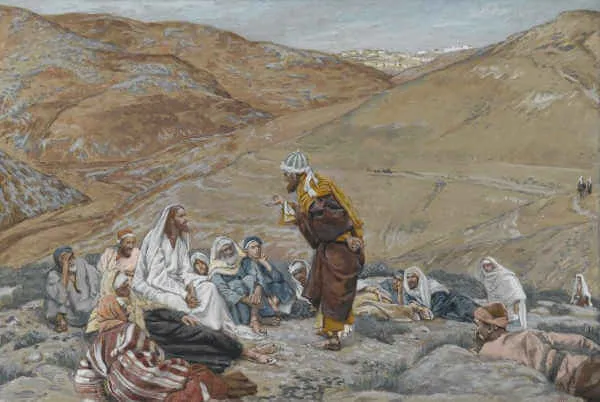
Teacher, I will follow you wherever you go.” Jesus answered him, “Foxes have dens and birds of the sky have nests, but the Son of Man has nowhere to rest his head.

Reflection:

It is unclear from this passage alone why Jesus answered this scribe the way He did. At first, the statement of the scribe seems very devout: “Teacher, I will follow you wherever you go.” But many of the Church Fathers, in their reflections of this conversation between Jesus and the scribe, offer helpful insights.

First of all, note that Jesus neither accepts the proposal of the scribe to be His follower nor rejects it. Rather, Jesus simply makes a statement which clarifies just what is involved in being His follower. Some Church Fathers suggest that this scribe was desirous of following Jesus because he thought there would be great rewards given to him by doing so. After all, Jesus was a miracle worker, was becoming quite popular, and showed potential to be a great leader. Therefore, the interior motivation of this scribe to follow Jesus wherever Jesus went was a questionable motivation. Did he want to follow Jesus because he thought it would benefit him in some worldly way?

Jesus’ response to this scribe does two things. First, it removes all misconceptions of what it means to follow Jesus. If the scribe wanted to follow Jesus, then he had to be prepared to follow Him into poverty and homelessness rather than riches and possessions. Jesus wanted it to be clear to the scribe just what he was choosing. Secondly, Jesus’ response was certainly an invitation to the scribe to follow Him, but only in the light of this new knowledge. In other words, Jesus was saying, “Yes, come follow me. But be aware of what that means. Following me will not result in your earthly riches but in your earthly poverty.”

Why do you follow Jesus? It’s important to consider your motivations at times. Some choose to follow Jesus because this was simply the way they were raised. Others do so because it makes them feel better to do so. And still others do so because they think it will make their lives better in various ways. But what is the ideal motivation for following our Lord? The ideal motivation for following Jesus in a total and unwavering way is very simple: we follow Him because He is the Son of God and the Savior of the World. Jesus came to call us to Himself and has invited us to live in union with Him through faith. So ideally, we will follow Jesus simply because it is the right thing to do. We will not do so because of the so-called benefits. Love, in its purest form, does not love the other because of what we get out of it. Pure love is a gift given to another because they are worthy of our love. And with Jesus, He is worthy of our love and worship simply because of Who He is.

Reflect, today, upon Jesus inviting you to follow Him into poverty, detachment from all, simplicity of life and ultimately the sacrifice of your entire life. Do you understand what it means to be a follower of Christ Jesus? Do you understand that following Jesus cannot be done for selfish reasons? Do you realize that saying “Yes” to our Lord is saying “Yes” to His Cross? Ponder Jesus’ life and reflect upon whether or not you are willing to follow Him to the poverty of the Cross. If you can make the choice to follow our Lord, knowing full well what you are saying “Yes” to, then the end result will also be a glorious sharing in His resurrected life.

Source: https://catholic-daily-reflections.com/2025/06/29/wherever-god-leads-you-3/
Matthew 8:19-20 Read More »

Matthew 16:17-19

Pillars of the Church

And so I say to you, you are Peter, and upon this rock I will build my Church, and the gates of the netherworld shall not prevail against it. I will give you the keys to the Kingdom of heaven. Whatever you bind on earth shall be bound in heaven; and whatever you loose on earth shall be loosed in heaven.

Reflection:

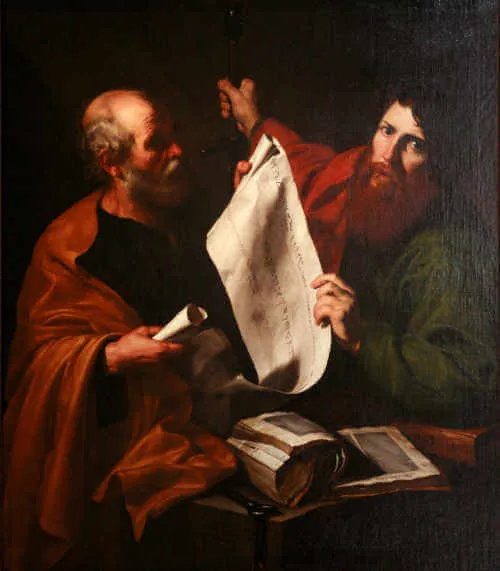
Saints Peter and Paul are often referred to as two of the great “Pillars of the Church.” They each played an incredibly essential role in the establishment of the early Church. And though each of their roles was essential and foundational, their roles were as different as they were different as persons.

Peter was a family man, a local fisherman, uneducated and quite ordinary. From what we know about him prior to being called by Jesus, there was nothing that made him uniquely qualified to become one of the pillars of the new Church to be established by the Son of God. Jesus simply called him, and he responded. Jesus got into Peter’s boat, ordered him to lower the nets, and produced a huge catch of fish. When Peter saw this miracle, he fell down at Jesus’ feet and acknowledged that he was “a sinful man” who was unworthy of being in Jesus’ presence (See Luke 5:8). But Jesus informed Peter that he would from now on be catching men. Peter immediately left everything behind and followed Jesus.

Paul describes himself as “a Jew, born at Tarsus in Cili′cia, but brought up in this city at the feet of Gama′li-el, educated according to the strict manner of the law of our fathers, being zealous for God as you all are this day” (Acts 22:3). Paul was well educated in the strictest interpretation of the Jewish law, understood philosophy and was quite zealous as a young man. Recall, also, that prior to becoming a convert to Christianity, he “persecuted the church of God violently and tried to destroy it” (Galatians 1:13). In many ways, Paul would have been seen as the most unlikely person to be chosen to be a pillar of the Church, because he so vigorously opposed it at first. He even supported the killing of Saint Stephen, the first Christian martyr.

Though each of these men would have been considered by many as very unlikely founders of the Christian Church, this is exactly what they became. Paul, after his conversion, traveled far and wide to preach the Gospel, founding several new Churches throughout Asia Minor and Europe. Eventually he was arrested in Jerusalem, brought to Rome for trial and was beheaded. Over half of the New Testament books are attributed to Paul and half of the Acts of the Apostles detail Paul’s missionary journeys. Paul is especially known for his missionary activity to the Gentiles, those who were not Jews.

Peter’s role was truly a unique one. His name was changed from “Simon” to “Peter” by Jesus. Recall Jesus saying, “And I tell you, you are Peter (Petros), and on this rock (petra) I will build my church…(Matthew 16:18). “Peter” in Greek is Petros. However, the Greek word petra means a rock as a solid formation that is fixed, immovable, and enduring. Therefore, Jesus chose to make Peter a solid foundation of immovable rock on which the Church was to be built.

You, too, have been called by our Lord to a unique mission within the Church that has not been entrusted to another. In your own way, God wants to use you to reach certain people with the Gospel as He did with Saint Paul. And like Saint Peter, God wants to continue to establish His Church upon you and your faith.

Reflect, today, upon these two holy and unique pillars of our Church. As you do, ponder how God may want to use you to continue their mission in this world. Though Saints Peter and Paul are among the greatest and most consequential Christians within our world, their mission must continue, and you are among the instruments that God wants to use. Commit yourself to this mission so that the preaching of the Gospel and the rock foundation of our Church will remain strong within our day and age just as it was of old.

Source: https://catholic-daily-reflections.com/2025/06/28/pillars-of-the-church-4/

Matthew 16:17-19 Read More »

Matthew 8:14-15

Touched by Grace

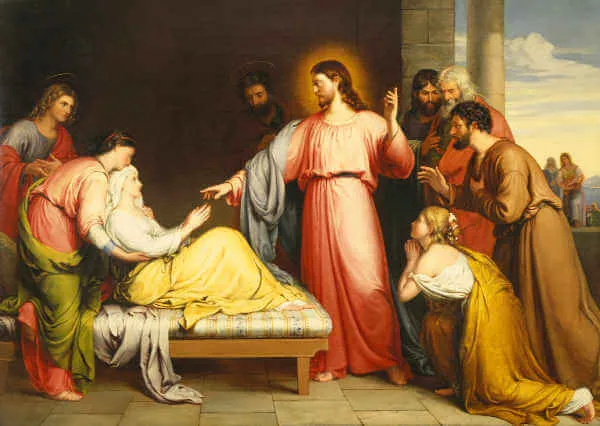
Jesus entered the house of Peter, and saw his mother-in-law lying in bed with a fever. He touched her hand, the fever left her, and she rose and waited on him.

Reflection:

How do we properly respond to the action of God in our lives? In the passage above, we are given the witness of Peter’s mother-in-law to answer that question. It should be noted that Jesus was on a continual mission of healing. In fact, before arriving at the house of Peter, Jesus had just healed a centurion’s servant. When the centurion came to Jesus stating that he was not even worthy to have Him enter his house, Jesus saw the centurion’s faith and healed his servant from a distance. After arriving at the house of Peter, we are told that many people brought to Jesus those who were possessed by demons, and Jesus healed them all. But between the healing of the servant and the healings of the many, another healing occurred. The response to this healing sets for us a wonderful example.

Peter’s mother-in-law was ill and in bed with a fever. It’s unclear just how ill she was, but the fact remains that she was ill to the point of being in bed. Notice, first, that Jesus was not even asked to heal her. Rather, He “saw” her ill and in bed, approached her of His own choosing, “touched her hand,” and she was healed.

Within the same sentence describing Jesus’ healing, we are told that “she rose and waited on him.” First of all, “she rose.” This should be seen as a symbolic depiction of what we must do when we are touched by grace. The grace of God, when it is given to us, must have the effect of causing us to rise. We rise from sin when we confess that sin and receive forgiveness, especially in the Sacrament of Reconciliation. We rise up every time God enters our lives to give us direction, clarity and hope. To rise is to be strengthened to dispel the burden that sin and confusion causes. We rise in strength, renewed and determined to go about the will of God.

After this woman rose, she “waited” on Jesus. This is the reason we rise up when touched by grace. We are not given God’s grace so that we can go back to our sin, or pursue our own ventures, or do our own will. We rise so that we can serve our Lord and His holy will. In a sense, Jesus’ actions in our lives impose upon us a holy burden. But it is a burden that is light. It’s an obligation to serve and give ourselves to our Lord to attend to Him, His holy will, and to all that He calls us to do.

Reflect, today, upon this threefold action of the Gospel. See Jesus approaching you and touching you in your prayer. Know that He comes to you not only because you pray to Him but out of His own initiative when He sees you will respond. Then consider your response. Rise from that which keeps you down. Let God’s grace free you from the burdens you carry. And as He grants you this grace, determine to wait on Him and to serve His will alone. The service of our Lord is what we are made for, and doing so will enable us to continually receive His grace through His touch of love.

Source: https://catholic-daily-reflections.com/2025/06/27/touched-by-grace-3/

Matthew 8:14-15 Read More »

John 19:33-34

The Font of Mercy

But when they came to Jesus and saw that he was already dead, they did not break his legs, but one soldier thrust his lance into his side, and immediately blood and water flowed out.

Reflection:

John’s Gospel is filled with deep spiritual imagery and symbolism. It is clear that this imagery and symbolism was divinely inspired so as to give us spiritual food for reflection and meditation. One such image is given to us today as we celebrate the Solemnity of the Sacred Heart of Jesus.

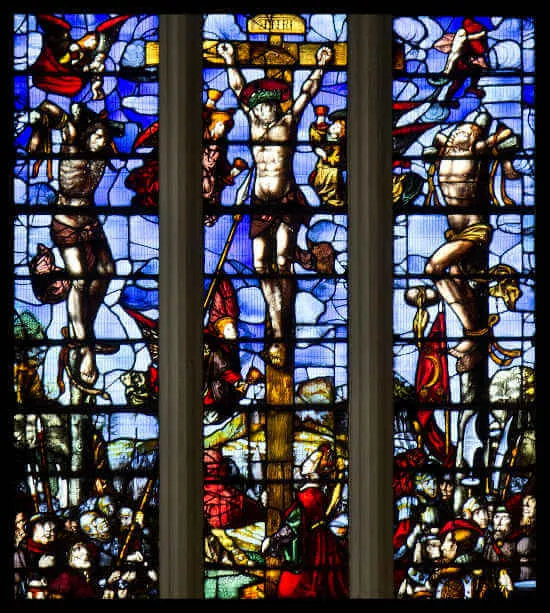
As Jesus and the two criminals on either side of Him hung upon their crosses, the soldiers came to hasten their deaths by breaking their legs to cause them to more quickly suffocate. But when they came to Jesus, He had already died. So one of the soldiers, traditionally known as Longinus, thrust his spear into Jesus’ side, and blood and water flowed forth. Some traditions identify Longinus with the centurion who cried out after Jesus’ death, “Truly, this was the Son of God!” (See Matthew 27:54.) Other traditions state that he converted at that moment, making him the first convert to Christianity. And still other traditions state that Longinus could not see well, and the blood and water from Jesus’ side poured upon his eyes, healing him. Regardless of whether these traditions are true, we know that Jesus’ side was pierced and blood and water flowed forth.

The symbolism of this act was more than a mere human symbol. It was an instrument of the profound spiritual reality that was taking place at that moment. As Jesus’ Sacred Heart was pierced, the blood and water that poured forth was the new sacramental life of the Church. The Blood was the Most Holy Eucharist and the Water was the gift of Baptism. And when Jesus had previously “breathed His last” and “handed over His Spirit,” the Sacrament of Confirmation was bestowed.

When we celebrate those Sacraments today, it is easy to see them as mere symbols of what we partake in. But in our Christian Tradition, the Sacraments are so much more. The symbol is also the reality. It is the instrument of what it symbolizes. Therefore, every time we witness a Baptism or partake in the Holy Eucharist, we are mystically present with Longinus, receiving the grace and mercy of our redemption, pouring forth from Jesus’ wounded side, so as to heal us and make us whole.

The human heart is, physically speaking, a bodily organ responsible for pumping blood throughout. But from a spiritual perspective, given that we are both body and soul, the human heart is also the source of our life. Without it, we physically and spiritually die. So it is with the Sacred Heart of Jesus. It was not only a physical heart that was physically pierced by the lance long ago. It is now also the source of our ongoing spiritual life, and, without Jesus’ Sacred Heart of Mercy, we will die in our sins.

Reflect, today, upon the Most Sacred Heart of Jesus. See His Heart as the ongoing source of your new life in grace. Understand that His Heart is more than a symbol of His grace and mercy, it is the spiritual source and the font of that mercy. Prayerfully place yourself before His Cross, this day, and allow the blood and water, flowing from His wounded side, to cover you so that you, too, may believe.

Source: https://catholic-daily-reflections.com/2025/06/26/the-font-of-mercy-4/

John 19:33-34 Read More »

Matthew 7:28-29

An Authoritative New Law

When Jesus finished these words, the crowds were astonished at his teaching, for he taught them as one having authority, and not as their scribes.

Reflection:

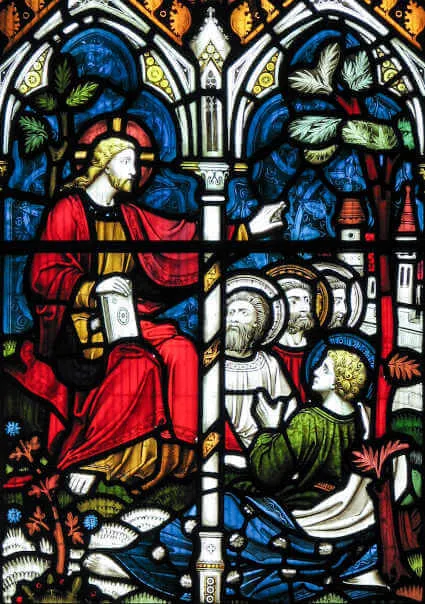
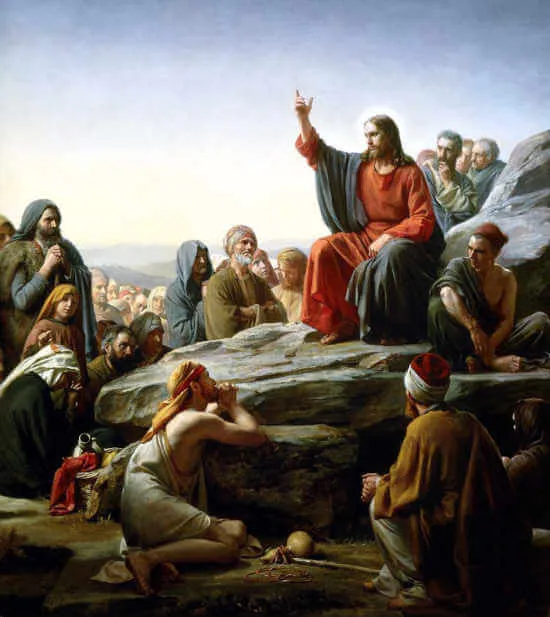
These lines conclude the Sermon on the Mount found in Matthew’s Gospel chapters 5–7. In that lengthy sermon, Jesus touches on many topics and presents us with a summary of all we need to know in our lives of faith. In these concluding lines of His sermon, the words “astonished” and “authority” should stand out. Why were the crowds astonished at Jesus’ teaching? Because His teaching was new and relied upon a new authority that the people hadn’t experienced before.

The authority with which the scribes taught was based upon their knowledge of the traditions handed down to them from earlier teachers. The scribes studied long and hard and then presented what they had learned. This was the form of religious teaching that the people were used to receiving.

Jesus, however, arrived on the scene and astonished the crowds, because He spoke with a new authority that they had not seen before. Jesus’ authority came forth from His very Person. It was not based upon what He had studied and learned from those who preceded Him. Instead, when He spoke, it was He Himself Who was not only the mouthpiece of the New Law of grace, He was also the Author of the Law and its source.

Try to ponder the idea of authority. For example, a child knows that a parent has authority over them. They may not like it at times, but they understand that they do not set the rules of the house but must abide by the rules set by their parents. Or consider the authority of civil leaders. Law enforcement officers, for example, have an authority entrusted to them by their office. They are not only well versed in the rule of law, they can also enforce it and everyone knows it.

Similarly, Jesus did not just know about the new and glorious truths He taught. He did not simply learn them from the Father in Heaven and then pass them on verbally. Instead, when He taught, He did so as the One Who knew the New Law of grace, the One from Whom it originated, and the one and only Person sent to enact and enforce this New Law.

Reflect, today, upon the New Law of grace and mercy taught by our Lord, especially as it is contained in the lengthy Sermon on the Mount. Reading those words is much more than something we study and learn. The words themselves are alive; they are the Word of God. Reading them makes present to us the same authority that the crowds experienced in Jesus’ time. Everything Jesus taught was and is new, deep, profound, transforming and alive. And when He teaches it, He also establishes His divine authority to enforce it upon the world. This is good news, because His New Law is not an imposition; it is the one and only source of freedom and new life. Reflect upon this New Law of our Lord and pray that you will more fully come under its authority.

Source: https://catholic-daily-reflections.com/2025/06/25/an-authoritative-new-law-2/

Matthew 7:28-29 Read More »

Matthew 7:16-17

Good Fruit—Bad Fruit

Do people pick grapes from thornbushes, or figs from thistles? Just so, every good tree bears good fruit, and a rotten tree bears bad fruit.

Reflection:

“So by their fruits you will know them.” This is how our Gospel passage for today concludes. It offers us an exceptionally practical way by which you can discern the working of God in your own life and in the life of others.

When you look at your own life, what good fruit, born for the upbuilding of the Kingdom of God, do you see? Some people may find little to no fruit born, either for good or bad. Such complacency is, in and of itself, bad fruit. Other people may see an abundance of fruit, thus producing many consequences in this world. They influence the lives of many, and their public actions make a true difference. Sometimes for good…and other times for evil.

When discerning the actions of God in our world, we must first be very objective. The evil one is always very deceptive and regularly presents his bad fruit as good. For example, the legalization of abortion is often presented by many within our world as a “right to choose” or a “health service.” But the intentional death of any unborn child is clearly “bad fruit” from a “rotten tree.” There are even many so-called “humanitarian groups” or very wealthy “philanthropists” who present their work as “good fruit,” when it is anything but good. And on the contrary, there are many who work hard to bring forth a greater respect for life from the moment of conception to natural death, or strive to uphold the sacredness of marriage as God designed it, or work to promote the freedom to worship in accord with the will of God, but are labeled by the secular world as prejudiced, bigoted, fearmongers and even hateful. But their work, done very sacrificially, truly does bear good fruit for the Kingdom of God.

How about your own life? When you examine your actions and the fruit born of those actions, from where does that fruit originate? Does it come from a false sense of compassion, a misguided “charity,” and a fear of being criticized for standing for the truth? Or does it come from a deep love of God, an awareness of the truth God has revealed to us, and through a courageous proclamation of the pure Gospel?

Good fruit, born from the heart of the Father in Heaven, will always mirror the truths of our faith. A false sense of compassion, false accusations, persecutions and the like will flow from the rotten trees in our world. We must work diligently to be those good trees that bear the good fruit coming from God. This requires a radical commitment to do what is right in the face of the evil all around us.

Reflect, today, upon these images Jesus presents. Do you see clearly both the good and bad fruit around you? Is your life helping to foster the lies of the evil one or the truth and love of God? Look at the fruit your life bears, as well as the fruit within our world, in an objective way, comparing it to the clear and unambiguous teachings of Jesus. Seek out that good fruit with all your heart and do all you can to bring it forth, no matter the cost, and you will not only save your soul, you will also help feed others with the good fruit of Heaven.

Source: https://catholic-daily-reflections.com/2025/06/24/good-fruit-bad-fruit-4/

Matthew 7:16-17 Read More »

Luke 1:65-66

Formed by the Hand of the Lord

All who heard these things took them to heart, saying, “What, then, will this child be?” For surely the hand of the Lord was with him. The child grew and became strong in spirit, and he was in the desert until the day of his manifestation to Israel.

Reflection:

John the Baptist was formed by the hand of the Lord. Saint Thomas Aquinas goes so far as to say that John was sanctified in the womb of his mother, Elizabeth, as is written: “He will be filled with the holy Spirit even from his mother’s womb” (Luke 1:15). From the moment that the Blessed Virgin Mary greeted Elizabeth and John leaped for joy, the hand of the Lord was upon John, making him holy and leading him to the fulfillment of God’s holy will.

John’s early life is not recorded for us, other than in the passage quoted above. We are told that he “grew and became strong in spirit, and he was in the desert until the day of his manifestation to Israel.” We should see in this passage the truth that John was not only sanctified within the womb of his mother but that, throughout his childhood and on into adulthood, he remained deeply united to God and was filled with the Holy Spirit.

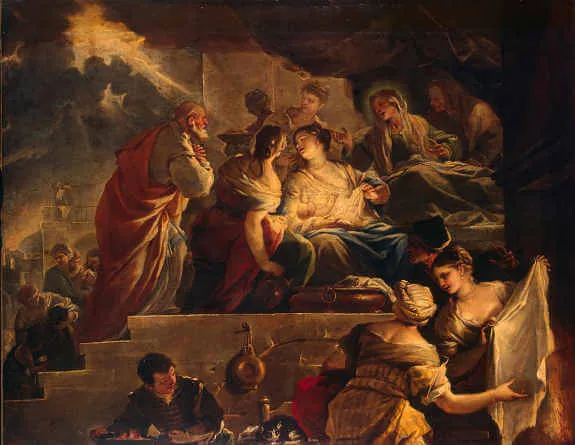
Today we honor one particular aspect of John’s life—his birth. We know that he was blessed to not only be born into the blessed family of Elizabeth and Zechariah but that the Blessed Virgin Mary, the Mother of God, was also his relative and was present at his birth. Zechariah, his father, gave him the name “John” even though it would have been the custom to call him Zechariah after his father. Zechariah did this in obedience to the Archangel Gabriel, who appeared to him prior to John’s birth and instructed him to do so.

Great mystery and excitement surrounded the birth of John, and there is little doubt that those who were present at his birth would have been caught up in the intrigue and hope of who he would become. And John didn’t disappoint. It was of him that Jesus one day would say, “I tell you, among those born of women, no one is greater than John…” (Luke 7:28).

Though you may not have had the privilege of being sanctified in the womb of your mother, or to have had your father receive a revelation from the Archangel Gabriel prior to your birth, you are, nonetheless, called to be guided by the hand of the Lord each and every day. God wants you to become “strong in spirit” so that you can fulfill the unique will given to you. We honor the great saints, in part, because they give us an example of how to live. For that reason, we must see in each of their lives the model to which we must conform. The primary witness set by Saint John the Baptist is that he was unwaveringly obedient to God and to being formed by His hand. The result was the glorious fulfillment of his unique mission in life, all the way to giving his life as a martyr.

Reflect, today, upon the very real fact that, though you were not sanctified in the womb, you were sanctified by Baptism. From there, you were strengthened by the Spirit through Confirmation and are regularly fed by the Most Holy Eucharist. In many ways, you are just as blessed as John. Reflect upon the simple yet profound fact that God wants to use you for His holy mission. He gives to you some particular mission He has not entrusted to another. Say “Yes” to that mission today so that you, too, will be seen as “great” in the Kingdom of Heaven.

Source: https://catholic-daily-reflections.com/2025/06/23/formed-by-the-hand-of-the-lord-4/

Luke 1:65-66 Read More »

Matthew 7:1-3

The Judgmental Heart

Jesus said to his disciples: “Stop judging, that you may not be judged. For as you judge, so will you be judged, and the measure with which you measure will be measured out to you. Why do you notice the splinter in your brother’s eye, but do not perceive the wooden beam in your own eye?”

Reflection:

Sadly, this tendency is far more common than most of us would like to admit. We live in a world in which it is very common to condemn, criticize and judge. This growing secular tendency, in turn, powerfully influences our thinking and actions.

Why is it so easy to judge others? Why is it so easy to see the failures of others, dwell on their sin, point out their weaknesses and speak of their faults to others? Perhaps part of the reason is that many people are not at peace within their own souls. In an unfortunate way, condemning another brings with it a certain twisted satisfaction. But it’s a “satisfaction” that will never satisfy. The desire to condemn, criticize and judge will only grow all the stronger the more these actions are committed. If you struggle with these sins, then listen to the words of Jesus. “Stop judging…”

Oftentimes the person who judges others does not even realize they are judging. This is why our Lord poses the question, “Why do you notice the splinter in your brother’s eye, but do not perceive the wooden beam in your own eye?” If that stings even a little bit, then know that our Lord asks that question of you. And He asks it with deep love for you, desiring that you will hear Him, understand, and respond. 

The truth is that being judgmental of others causes far more harm to the one who judges than to the one who is judged. Certainly being judged is not pleasant. But the act of being judged by others is not a sin. However, the act of judging others is a sin. And it can be a grave sin. This sin leaves the one who judges with an empty and angry heart. Love is lost in the soul who judges.

If these words seem unpleasant, that’s because they are. But sometimes we need to face the unpleasant truth in order to change. The Cross was unpleasant, but it was also the greatest act of love ever known. Facing our sin of judgmentalness is unpleasant, but doing so is the only way to be free. Honesty with ourselves is an act of love given to God, to ourselves and to those whom we need to stop judging.

Reflect, today, upon these challenging words from Jesus. Read the Scripture passage above a few times and then prayerfully ponder it. Use it as an examination of your own conscience. Try to be honest, humble and attentive to any ways that Jesus speaks this to you. Some will find that they have grave tendencies toward judgmentalness. Others will see less serious ways. But everyone who lacks complete perfection will find some ways in which they need to be more compassionate, merciful, forgiving and understanding of others. Be open to these truths and allow our Lord to lift the heavy burden of this sin from your own life.

Source: https://catholic-daily-reflections.com/2025/06/22/the-judgmental-heart-3/

Matthew 7:1-3 Read More »

Mark 14:22-24

Wonder and Awe Before the Eucharist

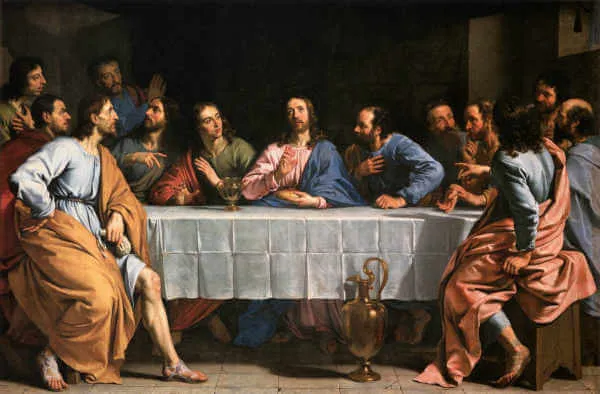
While they were eating, he took bread, said the blessing, broke it, gave it to them, and said, “Take it; this is my body.” Then he took a cup, gave thanks, and gave it to them, and they all drank from it. He said to them, “This is my blood of the covenant, which will be shed for many.”

Reflection:

At the holy Mass, as soon as the priest pronounces the words of the consecration, transforming the bread and wine into the Body and Blood, Soul and Divinity of Jesus Christ our Lord, he genuflects, rises, and then says, “The mystery of faith.” What is “the mystery of faith?” Oftentimes, when we say that something is a mystery, we mean that the conclusion is hidden but that there are certain clues to help solve the mystery. And once the mystery is solved, everything is clear and it is no longer a mystery.

“The mystery of faith” is much different. Those words are spoken at Mass immediately after the consecration as a way of drawing the faithful into a holy awe and amazement of what just took place. But this mystery can only produce wonder and awe if the reality of what just took place is understood through the gift of faith. Faith is knowing and believing without perceiving the reality before us with our five senses or through logical deduction. In other words, faith produces true knowledge of a spiritual reality that can only be known, understood and believed through spiritual insight. Therefore, if we attend the Mass and have been gifted with the knowledge of faith, then as soon as the consecration of the bread and wine takes place, we will cry out interiorly, “My Lord and my God!” We will know that God the Son is present before us in a veiled way. Our eyes do not perceive, nor do any of our senses reveal to us the great reality before us. We cannot rationally deduce what just took place. Instead, we come to know and believe that the Son of God, the Savior of the World, is now present before us in His fullness, under the veil of mere bread and wine.

In addition to the divine presence of our Lord and our God, the entire Mystery of our Redemption is made present. Saint Pope John Paul II tells us that in this moment there is a “oneness in time” that links the Paschal Mystery, that is, the Life, Death and Resurrection of Jesus, to every moment that the Eucharist is celebrated and made present through the words of consecration. And that unity between each Mass and the Paschal Mystery “leads us to profound amazement and gratitude” (Ecclesia de Eucharistia, #5). Do you sense and experience this profound amazement and gratitude each time you attend the Holy Sacrifice of the Mass? Do you realize as you attend the Mass and as the words of consecration are spoken that the entire Mystery of your redemption is made present before you, hidden from your eyes but visible to your soul by faith? Do you understand that it is God the Second Person of the Most Holy Trinity Who descends to us to dwell with us in that moment of time in this glorious Sacrament?

Reflect, today, upon the hidden but real Mystery of Faith. Allow yourself to be drawn into a wonder and awe at what you are privileged to attend. Let your faith in the Most Holy Eucharist grow by being open to a deepening of this gift of faith through spiritual insight and belief. Behold this great Gift of the Eucharist with the eyes of faith and you will be drawn into the wonder and awe that God wants to bestow upon you.

Source: https://catholic-daily-reflections.com/2025/06/21/wonder-and-awe-before-the-eucharist-4/

Mark 14:22-24 Read More »

Matthew 6:24

Singularly Devoted

Jesus said to his disciples: “No one can serve two masters. He will either hate one and love the other, or be devoted to one and despise the other. You cannot serve God and mammon.

Reflection:

Mammon is another word for money. Jesus is clear that you must choose to serve either God or money, but not both. A divided heart does not suffice. Saint John of the Cross, in His spiritual classic “Ascent to Mount Carmel,” explains something similar. He says that our desires must become completely purified to the point that all we desire is God and His holy will. Every other desire in life must be purged away so that we are singularly devoted to God. Does this mean that God and God alone should be the object of all of our love? Yes, indeed. But that truth must be properly understood.

When we consider the calling we have been given from God to love, it is true that we must love not only God but also many other things in life. We must love family, friends, neighbors, and even our enemies. Hopefully we also love other aspects of our lives, such as our vocation, our job, our home, a certain pastime, etc. So how do we love God with singular devotion when we also have many other things we must love?

The answer is quite simple. The love of God is such that when we make God the singular object of our love and devotion, the love we have for God will supernaturally overflow. This is the nature of the love of God. As we love God, we will find that God calls us to love Him by loving other people and even various aspects of our lives. As we love what God wills us to love and as we express our love for all that is contained in the will of God, we are still loving God with all our heart, mind, soul and strength.

But back to our Scripture above. Why is it that we cannot love God and money? “Mammon” in this passage must be understood as a love that becomes an unhealthy attachment and desire. Money is such that we can “love” it by allowing our desires for it to become disordered and, thus, exclude the will of God from that “love.” Money is not evil when it is used solely in accord with the will of God. In that case, the money we use will give God great glory. But when money, or any other object of our desire, begins to take on a life of its own, so to speak, then that desire will be at odds with our love of God. To love God and God alone means we love God and all that He wills us to love in life.

Reflect, today, upon the necessity of being singularly devoted to God. As you commit yourself to this exclusive love, consider also whom and what God calls you to love in and through Him. Where does His perfect will lead you, and how are you called to show your love of God through the love of others? Consider, also, any ways in which you have allowed an unhealthy attachment to money or anything else in life to distract you from the one and ultimate purpose of your life. Allow God to purge those unhealthy desires and false “loves” from your heart so that you will be free to love as you were made to love.

Source: https://catholic-daily-reflections.com/2025/06/20/singularly-devoted-3/ 

Matthew 6:24 Read More »