Verse

Matthew 5:20

Humiliation Fosters Humility

Jesus said to his disciples: “I tell you, unless your righteousness surpasses that of the scribes and Pharisees, you will not enter into the Kingdom of heaven.”

Reflection:

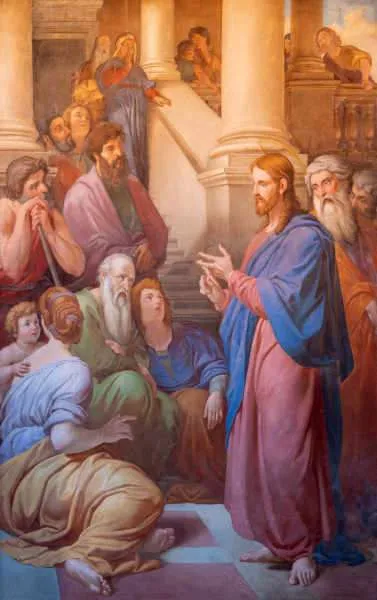
This statement would have been shocking to Jesus’ audience. At that time, the scribes and Pharisees were well-known for their meticulous observance of the Law of Moses, attending scrupulously to even the smallest details. They prided themselves on their strict adherence and often made their “righteousness” highly visible, earning them great respect among the people as models of holiness and fidelity to the covenant. However, their fidelity was often purely external, lacking the interior disposition of love and worship of God, which is the heart of the covenant. For this reason, Jesus spoke bluntly to the people, even in the presence of the scribes and Pharisees, declaring that their level of righteousness was insufficient to enter the Kingdom of Heaven.

Imagine the humiliation felt by these religious leaders. Jesus’ words would have stung deeply, confronting them with the inadequacy of their righteousness. Such a confrontation can lead to one of two responses: Either the sting of humiliation fosters the virtue of humility, repentance, and conversion, or it magnifies pride, leading to anger and rejection. While some of the scribes and Pharisees might have chosen the path of humility and repentance, the majority likely did not.

Jesus followed up this statement with a teaching on anger and how it can move from an interior disposition to severe hatred. While that teaching is important, it is also useful to pause and place ourselves in the shoes of the scribes and Pharisees, pondering how we would have reacted if we were them. Many of them had spent their whole lives studying the Law, following it, and teaching others to do the same. When Jesus came along, He essentially told them that much of what they had been doing was worthless and fruitless because they were not following the will of God. Place yourself in their shoes.

Consider your ability—or inability—to endure the humiliation that those religious leaders felt. Imagine that you had put great time and effort into cultivating a particular moral and spiritual attitude and approach to your faith, only for Jesus to reveal that you have not been listening to God at all, but have gone astray from His will. Hearing such a holy rebuke would be painful and humiliating, requiring profound humility to accept. Imagine further that you listened to all that Jesus said to you. You felt the sting of wounded pride and self-righteousness, but you humbled yourself, repented, and began to change. When that happens, external humiliation produces internal humility and bears an abundance of good fruit. When it doesn’t happen, we reject the truth and become even more obstinate in our ways, allowing pride to harden our hearts further.

In truth, none of us is righteous enough to attain the Kingdom of Heaven by our own efforts. We all fall short of fulfilling God’s will and cooperating with His grace. The real question is not whether we need ongoing change, but whether we are willing to receive Jesus’ loving rebuke and change our ways.

Saint Faustina, in her Diary, stated, “O my Jesus, nothing is better for the soul than humiliations” (#593). Humiliations are a gift from God because they reveal our self-righteousness and pride, and invite us to rely more fully on His grace. The sting of having that pointed out is itself a humiliation, but that humiliation has the power to lead us to profound humility, repentance, and ultimately, holiness.

Reflect today on the many humbling truths God desires to reveal to you. Each humiliation, though painful, is a step on the path to true righteousness and holiness, drawing us closer to the Beatific Vision in Heaven. Only in Heaven will we be fully purified of every sin. Until that day, we must embrace every humiliation God allows, recognizing these painful truths as gifts that correct us, purify us, and set us firmly on the path to true righteousness.

Source: https://catholic-daily-reflections.com/2026/06/10/humiliation-fosters-humility/

Matthew 5:20 Read More »

Matthew 5:14-16

Radiating the True Light of Heaven

“You are the light of the world. A city set on a mountain cannot be hidden. Nor do they light a lamp and then put it under a bushel basket; it is set on a lampstand, where it gives light to all in the house. Just so, your light must shine before others, that they may see your good deeds and glorify your heavenly Father.”

Reflection:

Light and darkness are not opposing forces; rather, darkness is simply the absence of light. When light enters, darkness is dispelled. In a similar way, good and evil are not equal forces. Evil is the absence of God’s presence and grace, and where God’s light shines, evil is overcome.

Today’s Gospel is part of the Sermon on the Mount, one of Jesus’ most well known teachings. The simile of light follows the Beatitudes, in which Jesus reveals the paradox of true blessedness in the Kingdom of God compared to fleeting worldly blessings. After teaching that true happiness is found in spiritual poverty, holy sorrow, meekness, righteousness, mercy, purity, peacemaking, and love in the face of persecution, Jesus calls His followers to radiate this blessedness to the world. They are to shine as a light in the midst of darkness, becoming beacons of God’s presence and grace, dispelling evil by their witness to divine truth and love.

In John’s Gospel, Jesus proclaims, “I am the light of the world. Whoever follows me will not walk in darkness, but will have the light of life” (John 8:12). In today’s Gospel from Matthew, Jesus extends this mission to His followers, teaching that they are the light of the world. As bearers of His light, they must not hide this gift but allow it to shine brightly for others, so that through their good works, God may be glorified.

This invitation to be light in the world, dispelling darkness, resonates deeply within the natural longing of every human heart. As beings created in the image and likeness of God, we are naturally drawn to goodness, truth, and beauty. The desire to make a positive difference and to bring goodness into the world is inscribed into our very nature by God. No one living in accord with human reason seeks to make the world worse. Even those who choose evil often do so out of a distorted or misguided understanding of what is good. This confusion arises from the absence of God’s light in their hearts, leading them to pursue false or incomplete goods instead of the ultimate good, which is found in union with God.

This call to be light, therefore, is not simply a duty—it is a return to our truest selves, a fulfillment of our deepest purpose. In choosing to reflect the light of Christ through our good deeds, we not only dispel the darkness around us but also restore within ourselves the divine image that sin seeks to obscure. We become who we were made to be.

Yet, Jesus’ teaching points us beyond the fulfillment of a natural desire to make a positive difference. He elevates this longing by inviting us to participate in His supernatural mission, by which the Father is glorified. Through the grace of the Holy Spirit we are transformed into vessels of God’s light and love. It is not by our own power but through God’s light within us that we are able to radiate His truth and goodness to the world.

Reflect today on the desire God has placed within your heart to make a difference in the world. Begin with that desire but allow Christ to elevate it. Recognize that the greatest good you can do is to radiate God’s light. Jesus is the True Light, but He calls you to be a beacon, reflecting His love for all to see. When God’s light shines through us, we do not glorify ourselves but give glory to the Father, leading others to share in His glory. This mission—to be a lampstand for God’s light—is the highest calling of your life and the only way to fulfill the longing He has written into your heart. Embrace that mission, nourish it through prayer and the sacraments, and rejoice as God uses you to further His eternal glory.

Source: https://catholic-daily-reflections.com/2026/06/08/radiating-the-true-light-of-heaven/

Matthew 5:14-16 Read More »

Matthew 5:1–3

Beyond Worldly Wisdom

When Jesus saw the crowds, he went up the mountain, and after he had sat down, his disciples came to him. He began to teach them, saying: “Blessed are the poor in spirit, for theirs is the Kingdom of heaven…”

Reflection:

Like Moses, Jesus “went up the mountain” to deliver divine teaching. Rather than issuing commandments, He proclaimed invitations to partake in God’s very life. The Beatitudes do not merely set forth a moral code; they unveil the interior dispositions of those who live in communion with God’s grace, revealing a blessedness that transcends worldly notions of morality. Jesus did not receive these divine laws as a prophet; He delivered them as God—not inscribed on stone tablets, but written upon the hearts of those who receive His wisdom in faith.

The Ten Commandments, given by God through Moses, present moral precepts that are easily understood. The Beatitudes, however, can only be grasped through the gift of divine insight. For this reason, they can be challenging at first. Why would anyone desire to be poor in spirit, to mourn, to be meek, to hunger and thirst for righteousness, to be merciful, pure of heart, a peacemaker, or to suffer persecution and insult? Because those who embrace this way of life are rewarded with the Kingdom of Heaven: They will receive divine comfort, be satisfied, obtain mercy, see God, be called children of God, and receive great reward in Heaven.

The Beatitudes are divine paradoxes. They reveal how true blessedness is found not in earthly power, wealth, or comfort, but in spiritual poverty, humility, and even suffering for the sake of righteousness. They overturn worldly expectations, teaching that those who seem least in the eyes of the world are, in fact, greatest in the eyes of God. By embracing these paradoxes, a disciple of Christ discovers that what appears to be weakness is, in reality, the path to divine strength, and what seems like loss is, in truth, the means to eternal gain.

For those who enjoy earthly power, wealth, or comfort, the Beatitudes are exceptionally challenging. Yet for those who are weak, poor, or afflicted, the Beatitudes offer profound consolation. Divine Wisdom is the fullness of Truth, accessible only through the gift of grace. No amount of human reasoning or philosophical argument can fully unveil the depth of the Beatitudes—only God, through His grace, can open the mind and heart to their truth.

Throughout life, we are confronted with countless competing opinions about how we ought to live. A deep desire for happiness is inscribed upon every human soul, yet people seek its fulfillment in vastly different ways. While worldly wisdom may offer guidance for a healthy and comfortable life, only divine Wisdom can fulfill the soul’s deepest longing for true and lasting happiness.

Do you want to be happy? Of course you do. Though many people experience unhappiness and even engage in actions that lead to misery, human nature is such that every choice we make is ultimately driven by our innate longing for happiness. As the saying goes, “You can’t not want to be happy!” The key to attaining happiness is discovering the true path. Since God Himself has placed this natural longing within our souls, we must turn to Him for its fulfillment. The answer He has given is the Beatitudes.

Reflect today on your desire for happiness. Because of our fallen human nature, we suffer from what the Church calls “concupiscence.” Concupiscence distorts our passions and desires, obscures our thinking, and weakens our will, making it difficult to discover the true path to the fulfillment we desire. The Beatitudes remedy concupiscence by exposing our fallen tendencies and the false promises of happiness we so easily believe, redirecting us toward the truth. Embrace the wisdom of the Beatitudes, strive to live them by the aid of grace, and you will discover that your deepest desires are fulfilled—not in passing pleasures, but in the truth of these interior dispositions.

Source: https://catholic-daily-reflections.com/2026/06/07/beyond-worldly-wisdom/

Matthew 5:1–3 Read More »

Mark 12:43–44

Radical Generosity

“Amen, I say to you, this poor widow put in more than all the other contributors to the treasury. For they have all contributed from their surplus wealth, but she, from her poverty, has contributed all she had, her whole livelihood.”

Reflection:

How generous are you? This is a challenging question, yet one worth considering. Does your generosity reflect God’s boundless generosity? Do you struggle with selfishness and greed, failing to live out the Gospel call to poverty, detachment, and charity? Most people likely fall short of this ideal. Acknowledging this, though difficult, is an act of honesty and humility. Such humility disposes us to receive an outpouring of heavenly riches, which far surpass any earthly possessions or attachments we may cling to or desire.

In today’s Gospel, set just days before His Passion, Jesus warns the people about the scribes. In a previous discourse, He had highlighted their limited understanding of His divine identity and their overly legalistic approach to Scripture. Today, He condemns them for their excessive attachment to external displays of piety—such as “long robes” and public honors—as well as their greed, neglect of the poor, and hypocritical religiosity. He concludes His warning with a sobering statement: “They will receive a very severe condemnation” (cf. Mark 12:38–40).

The scribes likely thought highly of themselves and sought to outdo one another in outward show. They fasted, meticulously followed the Law as they interpreted it, recited lengthy prayers in public, and cultivated a religious culture that held them in high esteem. Yet Jesus’ harsh condemnation of them was spoken out of love. They, more than anyone in the Temple area, needed to hear His words and repent. Perhaps some were convicted by His rebuke, but for most, His words only hardened their hearts—ultimately leading to their plot to crucify Him.

That same day, Jesus taught the people—and the scribes who were listening—that the Law’s fulfillment is found in love, not in multiplying empty displays of piety. When asked by a scribe which commandment in the Law was the greatest, He proclaimed: “You shall love the Lord your God with all your heart, with all your soul, with all your mind, and with all your strength…. You shall love your neighbor as yourself” (Mark 12:30–31).

In today’s discourse, Jesus provided the people and the scribes who were listening with a concrete, visual example of His teaching. He pointed to a poor widow who placed two small coins in the Temple treasury, declaring that she had “put in more” than all the others. The coins she gave were called lepta (sometimes referred to as “mites”), the smallest denomination in circulation at the time. A single lepton was worth approximately 1/128 of a denarius, the standard daily wage for a laborer. In modern terms, if a daily wage were $170 USD, her two coins would amount to roughly $2.66—a seemingly insignificant sum, yet one of immense spiritual value in God’s eyes.

When God looks at your generosity, He looks into your heart and judges according to what He sees. He is not impressed by wealth or poverty, nor does He measure generosity by the size of a gift. Rather, He looks at your willingness to put love into action—loving “with all your heart, with all your soul, with all your mind, and with all your strength.” This love is first directed to God and then expressed through an unwavering love of neighbor. How much should we give to God and others? Like the poor widow, we must give our “whole livelihood,” meaning the totality of who you are and what you can do. That is what Jesus praised, and it is what He expects of us.

Reflect today on the radical generosity to which we are all called. As finite beings, we cannot meet every need in the world—but that is not our duty. Our duty is to offer all that we are and have to God in service of His will. Though such generosity may feel difficult, the pain we experience does not come from giving but from the remnants of selfishness resisting detachment. Pray for the grace to be so generous that it purges all selfishness from your heart, soul, mind, and strength. When that happens, God will see your goodness and bless you abundantly.

Source: https://catholic-daily-reflections.com/2026/06/05/radical-generosity/

Mark 12:43–44 Read More »

Mark 12:35–37

Understanding “with delight”

As Jesus was teaching in the temple area he said, “How do the scribes claim that the Christ is the son of David? David himself, inspired by the Holy Spirit, said: The Lord said to my lord, ‘Sit at my right hand until I place your enemies under your feet.’ David himself calls him ‘lord’; so how is he his son?” The great crowd heard this with delight.

Reflection:

Today’s Gospel presents us with one of Jesus’ many teachings in the Temple area just days before His Passion. Just prior to this Gospel, Jesus praised one of the scribes for his understanding of Scripture, saying to him, “You are not far from the kingdom of God” (Mark 12:34). He then turned His attention to a large crowd and revealed the limited understanding that many of the scribes and teachers of the Law had about the Messiah.

Though the scribes rightly understood from Scripture that the Messiah would be born of King David’s lineage, their understanding of the Messiah was incomplete. Many believed that, as David’s descendant, the Messiah would be a great king who would lead the Jewish nation militarily and free them from Roman oppression. What they failed to understand was that the Messiah was not only a “Son of David” but also divine.

Jesus quotes Psalm 110:1, one of the most frequently cited Old Testament passages in the New Testament: “The LORD says to my lord: ‘Sit at my right hand while I make your enemies your footstool.’” King David, who was inspired by the Holy Spirit, refers to the Messiah as his lord or master, expressing that the Messiah would not only be his descendant but also greater than David. Furthermore, David reveals that the LORD—the Father in Heaven—would exalt the Messiah to a position of divine authority.

To “sit at my right hand” was a favor granted only to one who was divine; not even David could sit at God’s right hand. To “make your enemies your footstool” was a reference to the ancient practice by which a victorious king would have his enemies lay prostrate before him, placing his foot upon them as a symbol of absolute dominion. However, Jesus’ kingship is not merely earthly but spiritual and eternal. The true enemies placed under His feet are sin, death, and the demons (1 Corinthians 15:25–26, Colossians 2:15).

Though we understand Jesus’ identity as the Son of David, the Messiah, and God Himself, it is important to humbly recognize that, like the scribes, we, too, struggle to fully grasp the mysteries of faith. In Heaven, when we see God face to face in the Beatific Vision, we will receive a full and immediate understanding of Him in His essence, far greater than anything we can comprehend today. Though this full revelation will be given to us at that time, we must continuously strive for greater clarity now.

The first and most important foundational step toward that end is to prayerfully reflect on the Scriptures. This is more than merely acquiring intellectual knowledge of Scripture, as the scribes did. Study is a human effort, and while valuable, the only way to arrive at true understanding of Scripture—and of God, Whom Scripture reveals—is through the guidance of the Holy Spirit. Here and now, we must be open to illumination that comes only from God.

Many of the scribes criticized Jesus because they relied solely on their own interpretation of Scripture. Most of them failed to be open to the guidance of the Holy Spirit in their study. Perhaps the one scribe who spoke to Jesus with understanding and was “not far from the kingdom of God” stirred Jesus’ Sacred Heart with a longing that all scribes—and all of us—would approach His Word with the same openness.

Reflect today on the scribes and see yourself in them. Pray for the gift of divine illumination as you spend time in God’s Word, seeking to follow the example of the one scribe who understood. Invite the Holy Spirit to guide your understanding so that, like those listening to Jesus in the Temple, you, too, may understand His Word “with delight.”

Source: https://catholic-daily-reflections.com/2026/06/04/understanding-with-delight/

Mark 12:35–37 Read More »

Mark 12:18–20

Turning Our Eyes to Eternity

Some Sadducees, who say there is no resurrection, came to Jesus and put this question to him, saying, “Teacher, Moses wrote for us, ‘If someone’s brother dies, leaving a wife but no child, his brother must take the wife and raise up descendants for his brother.’ Now there were seven brothers…”

Reflection:

The Sadducees were a Jewish sect composed mainly of the Temple leaders, including many priests. They held theological and political views that differed significantly from those of the Pharisees. The Sadducees accepted only the Torah (the first five books of the Old Testament) as authoritative, whereas the Pharisees recognized the entire Hebrew Scriptures, including the Prophets, historical books, and Wisdom literature, and upheld a highly developed oral tradition based on centuries of rabbinic interpretation. This led to tension and theological disagreements.

The Sadducees denied the resurrection of the dead, the immortality of the soul, and the existence of angels—all of which were central to Pharisaic belief—because they believed those truths were not found in the Torah. They believed that God’s blessings were given for this life and that when one died, the soul perished with the body.

Despite their theological disputes with the Pharisees, both groups found common ground in opposing Jesus. Today’s Gospel illustrates the Sadducees’ failed attempt to trap Jesus in a legalistic theological dilemma, using the law of Levirate marriage (cf. Deuteronomy 25:5–10) to challenge the doctrine of the resurrection.

The Sadducees took their turn to trap Jesus not only to prove Jesus wrong but also to justify their beliefs before the Pharisees. They pose an extreme hypothetical scenario, in which seven brothers successively marry the same woman, each dying childless and ask: “At the resurrection when they arise, whose wife will she be? For all seven had been married to her” (Mark 12:23). Their intent is not to seek truth, but to mock the very idea of life after death.

Jesus responds, not with complicated legal reasoning, but with divine wisdom that lifts their minds beyond earthly concerns. He begins by rebuking their limited understanding: “You do not know the Scriptures or the power of God” (Mark 12:24). Then, He offers a twofold response (cf. Mark 12:24–27).

First, Jesus addresses the question of marriage after the resurrection: “When they rise from the dead, they neither marry nor are given in marriage, but they are like the angels in heaven.” After the resurrection of the dead, human existence will be radically transformed. Earthly institutions such as marriage—good and holy as they are—belong to this world, not the next. In the life to come, every soul will find its perfect fulfillment in the Beatific Vision.

Second, Jesus refutes their denial of the resurrection of the dead using the Torah: “As for the dead being raised, have you not read in the Book of Moses, in the passage about the bush, how God told him, ‘I am the God of Abraham, the God of Isaac, and the God of Jacob’? He is not God of the dead but of the living.”

Though the Sadducees had built their entire theology on the Torah, they failed to recognize the implication of God’s words to Moses. If God is “the God of Abraham, Isaac, and Jacob,” then these patriarchs must still be alive in His presence. God did not say, “I was the God of Abraham, Isaac, and Jacob,” but “I AM.” With this statement, Jesus shatters their disbelief and unveils the reality of eternal life. Perhaps even the Pharisees enjoyed His answer.

Reflect today on the central truth Jesus revealed to the Sadducees: The soul is immortal, and those who die in God’s grace will rise again to live eternally in His presence, in perfect communion with all the angels and saints. This truth must always be our focal point in life. Too often, we live as the Sadducees did—as if this life is an end in itself. By turning our eyes toward eternity, we not only better our lives here and now, but we also live in the hope of Heaven, knowing that all we do now must be for the sake of eternal treasure in the life to come.

Source: https://catholic-daily-reflections.com/2026/06/02/turning-our-eyes-to-eternity/

Mark 12:18–20 Read More »

Mark 12:28

The Law Fulfilled in Love

One of the scribes came to Jesus and asked him, “Which is the first of all the commandments?”

Reflection:

We continue to read about Jesus’ various interactions, teachings, and prophetic actions in the Temple area during Passover, just days before He would be arrested and killed. During the week, Jesus cleansed the Temple of moneychangers and merchants and was confronted with hostility by various religious and political factions.

First, a group of chief priests, scribes, and elders challenged His authority to cleanse the Temple and then unsuccessfully conspired with some Pharisees and Herodians to trap Him in a legal dilemma. Next, some Sadducees confronted Him, but Jesus’ answer exposed their misunderstanding of the Scriptures and the power of God. In today’s Gospel, after witnessing that exchange, a scribe—impressed by Jesus’ answer—came forward. Rather than trying to trap Him, he asks a sincere question: “Which is the first of all the commandments?”

At that time, the scribe’s question reflected a common rabbinical discussion about the hierarchy of the Law. Perhaps because of the widespread disagreements among the various religious factions—priests, scribes, Pharisees, Sadducees—scholars often sought to determine a guiding principle for what had been identified in Jewish tradition as 613 commandments within the Torah. Some commandments, like the prohibition of idolatry, seemed weightier, while others, like dietary laws, were considered less important.

Jesus’ response does not simply rank the commandments; it reveals their true purpose by uniting them in a way that fulfills the entire Law. Instead of engaging in legalistic debates, He elevates the discussion by going directly to the heart of the Law with a twofold summary: “You shall love the Lord your God with all your heart, with all your soul, with all your mind, and with all your strength” and “You shall love your neighbor as yourself” (Mark 12:30–31). By doing so, Jesus shows that love—of God first and of neighbor as an extension of that law—is the foundation and fulfillment of every commandment.

The scribe’s response—“Well said, teacher”—demonstrates both humility and wisdom, and Jesus affirms his understanding: “You are not far from the Kingdom of God.” This interaction contrasts with the previous confrontations between Jesus and the religious leaders. Rather than trying to trap or discredit Jesus, the scribe listens attentively and responds with sincerity, and “No one dared to ask him any more questions” (Mark 12:3234).

Many in the crowd had likely been following Jesus’ encounters with the various religious and political factions throughout the week. At first, they may have been uneasy, seeing the repeated attempts to discredit Him. But as Jesus responded with authority and truth, they witnessed the growing contrast between those who sought to manipulate the Law for their own purposes and those who, like this scribe, genuinely desired to understand it.

Our own lives are sometimes burdened with controversy and division. Whether in politics, religion, academics, or daily life, disagreements arise that can easily lead to contention. When unchecked, these conflicts can foster division, hostility, and even obsessions that steal our peace. Jesus’ interaction with this scribe offers us a path forward: the way of humble inquiry, sincere dialogue, and the pursuit of Truth grounded in love. When we approach discussions with a heart open to God rather than with a desire to win an argument, we draw closer to His Kingdom.

Reflect today on the witness of this scribe. Though Jesus’ teaching on love of God and neighbor is of paramount importance, so is the example this scribe set in pursuit of the Truth. Consider your own approach to God’s Truth by examining your daily interactions with others. Do you struggle with being combative, resort to trickery, or obsess over being right and getting your way? Or do you seek the Truth that brings understanding and unity? Seek to imitate this scribe in humility and sincerity, and you, too, will not be far from the Kingdom of God.

Source: https://catholic-daily-reflections.com/2026/06/03/the-law-fulfilled-in-love/

Mark 12:28 Read More »

Mark 12:13–14

The Path to True Unity

Some Pharisees and Herodians were sent to Jesus to ensnare him in his speech. They came and said to him, “Teacher, we know that you are a truthful man and that you are not concerned with anyone’s opinion. You do not regard a person’s status but teach the way of God in accordance with the truth. Is it lawful to pay the census tax to Caesar or not? Should we pay or should we not pay?”

Reflection:

Just prior to today’s Gospel, the chief priests, scribes, and elders confronted Jesus in the Temple area while He taught, challenging His authority to drive out the moneychangers and merchants. Though they withdrew out of fear of opposition from the crowds, they sent the Pharisees and Herodians to trap Him (cf. Mark 11:27–33). The alliance of these five groups, who were often opposed to one another—especially the Pharisees and the Herodians—well illustrates the old adage: “The enemy of my enemy is my friend.”

The Pharisees were known for their strict adherence to oral traditions derived from the Mosaic Law. They frequently clashed with the chief priests and elders, who focused on Temple worship and ceremonial rites.

The Herodians were despised by both the Pharisees and the other leaders for their support of Herod and Roman occupation. Their allegiance to Rome enabled them to maintain political influence under Herod’s rule. Despite their usual animosity, these groups united in their shared opposition to Jesus. His ongoing influence among the people, His teachings that exposed their hypocrisy, and His actions in the Temple all threatened their authority and control.

Though all five of these groups are less than inspirational, we can learn from them. They depict fallen human tendencies—such as pride, fear, and self-interest—that we all struggle with. First, true unity only comes from aligning ourselves with God and His Truth, which fosters humility, charity, and a desire to seek God’s will above our own interests. By contrast, the “unity” shared by this coalition of factions was grounded in malice. Hatred can so blind us that we turn from our core values and seek ways to fuel our resentment. This is precisely what these normally divided groups did: Their mutual hatred for Jesus and fear of losing influence over the community drove them to unite in a shared mission of opposition—something we, too, can fall into if we let malice guide us.

In today’s Gospel, we can also learn from the questioning of the Pharisees and Herodians. They begin with flattery, which is always deceptive and manipulative. Their insincere praise was not meant to honor Jesus but to disarm Him and lure Him into their trap. Perhaps they failed to recall the wisdom found in Proverbs: “Those who speak flattery to their neighbor cast a net at their feet” (29:5) or “Charm is deceptive…” (31:30). Flattery not only deceives others but often ensnares those who use it, leading them into sin, as seen in today’s Gospel.

Second, the question they ask is a carefully constructed trap. If Jesus said, “Yes, it is lawful to pay the census tax to Caesar,” the Pharisees could accuse Him of disregarding Jewish law and collaborating with Roman oppressors. If He said, “No,” the Herodians could report Him to Herod as a revolutionary opposing Roman authority. Their malice was cunning, but Jesus’ wisdom transcends theirs, and He escapes their trap. His response not only avoids their deceit but also exposes their hypocrisy, turning their malicious scheme into an opportunity to teach eternal truths.

Reflect today on these fallen human tendencies vividly illustrated by these five groups who were aligned in their opposition to our Lord. When you look at your own “alliances,” what is it that unites you? Shared hate and resentment? A common fear or opposition to something? Bonds formed over shared negativity or resentment are fleeting and destructive. True and lasting unity is found only in aligning ourselves with the Truth of the Word of God, striving together for holiness, and building relationships grounded in Christ. Reflect on whether your relationships draw you closer to Christ or distract you from Him, and seek to realign them with His Truth.

Source: https://catholic-daily-reflections.com/2026/06/01/the-path-to-true-unity/

Mark 12:13–14 Read More »

Mark 12:10–12

Rejection Transformed

Jesus began to speak to the chief priests, the scribes, and the elders in parables. “A man planted a vineyard, put a hedge around it, dug a wine press, and built a tower. Then he leased it to tenant farmers and left on a journey. At the proper time he sent a servant to the tenants to obtain from them some of the produce of the vineyard.”

Reflection:

Today’s Gospel takes place during the Passover at the Temple in Jerusalem, just days before Jesus’ Passion and Death. The chief priests, scribes, and elders of the people were outraged and wanted to put Jesus to death, but they feared the people who were hanging on His every word.

In today’s parable, the “vineyard” is a biblical metaphor for Israel. The Prophet Isaiah chastised the people of Israel for being like a fruitless vineyard, and Jesus’ parable would have been immediately understood by His audience as a reference to that prophecy (cf. Isaiah 5:1–7). Fearlessly yet mercifully, Jesus brings this metaphor to life, applying it directly to Israel and the religious leaders who were present and plotting His death.

Jesus’ parable teaches that God is the owner of the vineyard and has provided everything necessary for it to flourish: the hedge for protection, the wine press for fruitfulness, and the tower for vigilance. These symbolize God’s providence, blessings, and the spiritual resources given to His chosen people to bear fruit. The tenant farmers, to whom the vineyard is leased, represent Israel’s leaders, who were entrusted with shepherding God’s people.

The servants sent by the owner symbolize the Old Testament prophets, whom God sent to call the people of Israel to repentance and fidelity. These prophets were often rejected, mistreated, or killed by Israel’s leaders—a sobering reminder of humanity’s resistance to God’s call throughout history, and our resistance to His grace today.

The beloved son represents Jesus Himself, sent by the Father in a final appeal for repentance. However, the tenants of Israel—now referring to the chief priests, scribes, and elders before Him—plot to kill the son, mistakenly believing they can maintain their control over the Jewish people. Their envy and pride blind them to their God-given responsibilities within the community and their duty to accept Jesus as the Messiah.

Though tensions were high and anger filled the hearts of the religious leaders, Jesus spoke boldly. While the people were amazed at His authority and teaching, they were likely uncertain and fearful of what might happen next.

Most people in Jesus’ position, risking their lives as our Lord was, would quickly become worried for their own safety. Jesus was not. He knew the Father’s will and the eternal value that would come from His Passion and Death. For that reason, He quotes Psalm 118:22–23: “The stone the builders rejected has become the cornerstone. By the LORD has this been done; it is wonderful in our eyes.”

Jesus knew that He was about to be rejected: betrayed, falsely accused, arrested, tortured, and killed. Yet He also knew that He was the fulfillment of Psalm 118. He was the “stone” that, once rejected, would become the “cornerstone” of the Church and the New Covenant of grace. With this divine hope and mission in mind, Jesus didn’t run and hide; He confronted rejection directly. He knew that His rejection would transform the worst—the murder of the Son of God—into the best—salvation for all who believe in Him and repent.

Reflect today on Jesus’ courage during that sermon as He foresaw all that would unfold that week. While we might expect such courage from the Son of God, He invites us to imitate Him. Every evil that befalls us has the potential, through grace, to become part of that cornerstone. As members of Christ’s Body, the Church, we are called to courageously allow grace to transform our own rejections and sufferings in Christ. In doing so, the foundation of Christ’s Church continues to be made manifest in our world today through us.

Source: https://catholic-daily-reflections.com/2026/05/31/rejection-transformed-3/

Mark 12:10–12 Read More »

John 3:16–18

God is Love and Loving

God so loved the world that he gave his only Son, so that everyone who believes in him might not perish but might have eternal life. For God did not send his Son into the world to condemn the world, but that the world might be saved through him. Whoever believes in him will not be condemned, but whoever does not believe has already been condemned, because he has not believed in the name of the only Son of God.

Reflection:

Saint John the Apostle is identified in his Gospel as “the disciple whom Jesus loved,” a title that appears multiple times and has been consistently understood in the Church’s tradition to refer to John himself (cf. John 13:2319:2620:221:721:20). By calling himself the beloved disciple, John was revealing his interior experience of the perfect love he encountered in Jesus. Certainly, Jesus loved everyone—equally and without limit. Yet John includes this personal designation not to claim favoritism, but to offer a personal testimony to the divine love made manifest in Christ’s humanity—love he experienced firsthand and which changed his life.

Love plays a central role in John’s writings—not only in his Gospel but also in his letters and the Book of Revelation. In his First Letter, likely written to the Christian communities he helped convert and shepherd, John declares: “God is love, and whoever remains in love remains in God and God in him” (1 John 4:16). This is both a personal sentiment and a profound theological affirmation. John speaks from both divine inspiration and lived experience; he had walked with Love Incarnate. To say “God is love” is to profess that love is not something God merely does—it is who God is. God’s love is not a feeling, not sentimentality, but the pure, self-giving, eternal communion of Father, Son, and Holy Spirit—a love that precedes and surpasses all creation.

That mystery lies at the very heart of today’s Solemnity. Because God is Love in His very essence, love naturally flows from His divine nature in superabundance. God loves because He is Love. Today’s Gospel reveals the most perfect expression of that divine essence: “God so loved the world that he gave his only Son…” This eternal, Trinitarian love is made visible in time when the Father sends the Son, conceived by the overshadowing of the Holy Spirit in the womb of the Blessed Virgin Mary.

Why does God give His Son? So that we might not perish but have eternal life. That is, so we may be drawn into the very life of God—into the Trinitarian communion of love. God desires to rescue us from condemnation and to share with us His Divine Existence.

This is the essence of Divine Love. This is the Trinity. And this is the astonishing invitation extended to every soul: To believe in the Son is to begin participating in the eternal love that flows ceaselessly between the Father and the Son in the Holy Spirit—a love that never ends. We are invited to be caught up by the love of God into Love Himself: the eternal communion of the Father, Son, and Holy Spirit.

Trinity Sunday is set apart on the Church’s calendar to renew our awe, deepen our understanding, and intensify our worship of the central mystery of our faith: that God is One in essence and Three in Persons. While every liturgy honors the Trinity—through prayers to the Father, in the Son, by the power of the Holy Spirit—this solemnity invites us to pause and gaze more intentionally into the inner life of God as it has been revealed to us. We do not celebrate a theological abstraction but a divine Personhood: the eternal exchange of love between the Father and the Son, perfectly expressed and eternally proceeding in the Holy Spirit.

Reflect today on the Most Holy Trinity. We were made to share in Their Life and Love. Though the fullness of the Trinity remains a mystery beyond human grasp, it is not beyond human encounter. Through grace, revelation, and contemplative union, God draws us to Himself—not to explain Himself, but to be consumed by Him. Celebrate this day by repeatedly praying one of the most ancient and simple prayers in the Church:

Glory be to the Father, and to the Son, and to the Holy Spirit, as it was in the beginning, is now, and ever shall be, world without end. Amen! Most Holy Trinity, I love You and trust in You!

Source: https://catholic-daily-reflections.com/2026/05/30/god-is-love-and-loving/

John 3:16–18 Read More »