Verse

Matthew 13:10-13

Lifting the Sacred Veil

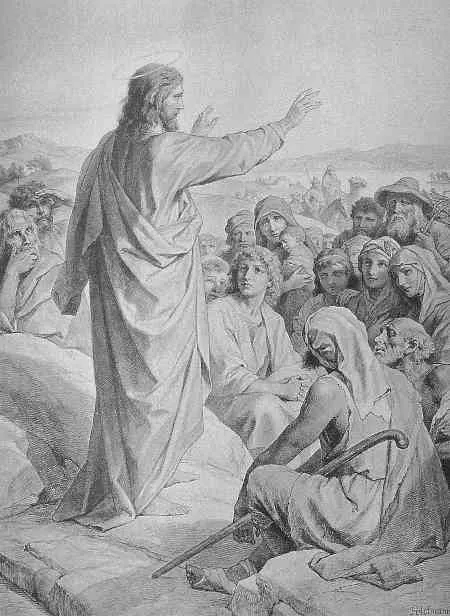
The disciples approached Jesus and said, “Why do you speak to the crowd in parables?” He said to them in reply, “Because knowledge of the mysteries of the Kingdom of heaven has been granted to you, but to them it has not been granted. To anyone who has, more will be given and he will grow rich; from anyone who has not, even what he has will be taken away. This is why I speak to them in parables, because they look but do not see and hear but do not listen or understand.”

Reflection:

Have you ever looked but failed to truly see? Or heard something without really listening or understanding? Jesus’ words teach us that seeing is more than the use of our eyes, and listening is more than the mere act of hearing. The mysteries of the Kingdom are not grasped through sensory perception; they require a deeper interior awareness. Seeing, listening, and understanding demand a receptive heart—a heart attuned to grace.

When the heart is attuned to grace, the mind becomes capable of perceiving life from God’s perspective. This is the gift of Wisdom. Wisdom is the pinnacle of the intellectual gifts, perfecting knowledge, understanding, and counsel by ordering them toward divine truth. Thus, a person who truly sees and listens perceives, not just information, but God’s Eternal Truth. The veil is lifted, and the mysteries of faith come into focus. This interior illumination produces peace, amazement, and a profound sense of gratitude.

Parables are like sacred veils, at once concealing and revealing divine mysteries. For those who are humble, docile to the Holy Spirit, and eager for truth, parables become radiant windows into the heart of God. They are like floodgates, pouring divine light into the soul and drawing it to the very threshold of eternal mysteries. Does the floodgate of divine light pour truth into your mind and grace into your will?

For the proud or indifferent, however, the veil remains drawn—but not without purpose. Jesus does not arbitrarily withhold the divine mysteries from those whose hearts are hardened. Rather, the parable, in veiling the truth, invites the soul to seek more deeply. It stirs a holy curiosity and awakens spiritual desire. It is as if Jesus presents a sacred gift, wrapped in a beautiful veil. He sets it down, says, “This is for you, but don’t peek,” and then smiles and walks away. The hiddenness of the truth is not a rejection; it is an invitation.

Even before this moment, Jesus had already begun to lift the veil. In the Parable of the Sower, just preceding today’s Gospel, He cast seed upon the hearts of His listeners. Some received it attentively, understood it, and were filled with interior consolation as divine light shone within them. Others might have enjoyed the story and found it interesting, but failed to grasp its deeper meaning. Of these, Jesus quotes the prophet Isaiah, saying, in part: “Gross is the heart of this people, they will hardly hear with their ears, they have closed their eyes…” (Matthew 13:15).

“Gross is the heart of this people…”—what a powerful statement. The Greek word translated here as “gross” is not condescending but descriptive. More literally, it means that the heart of the people “has become dull,” “has thickened,” or “has grown insensitive.” Jesus is not condemning; He is lamenting. And even in His lament, He does not give up hope. He continues to teach. He offers the Parable of the Sower, and then, after today’s Gospel, teaches several more parables. Why? Because He is determined to sow the seed of His Word into every heart—no matter how hard the soil may be.

Reflect today on the disposition of your own heart. Are you truly open to the deeper truths of God? Do you seek to understand, or are you content merely to hear? Ask the Lord to lift the sacred veil from your eyes and ears so that you may behold the mysteries of His Kingdom with clarity and awe. Let His Word penetrate your soul like seed falling on rich soil. And if you discover areas of dullness or resistance within, do not be discouraged. Christ continues to sow generously. All He asks is that you receive His Word with humility and allow it to take root.

Source: https://catholic-daily-reflections.com/2026/07/22/lifting-the-sacred-veil/

Matthew 13:10-13 Read More »

John 20:1-2

A Model of Holy Love and Desire

On the first day of the week, Mary Magdalene came to the tomb early in the morning, while it was still dark, and saw the stone removed from the tomb. So she ran and went to Simon Peter and to the other disciple whom Jesus loved, and told them, “They have taken the Lord from the tomb, and we don’t know where they put him.”

Reflection:

When Jesus first encountered Mary Magdalene, she was afflicted by seven demons. Many Church Fathers interpret this number as symbolizing a complete domination by evil spirits. Though later traditions identified Mary Magdalene with the repentant prostitute or the woman caught in adultery, the Gospels themselves do not explicitly make that identification. What is certain is that she had been grievously afflicted by demons (cf. Luke 8:2).

To fall into such spiritual bondage suggests a life marked by serious sin. However, diabolical possession is not always the direct result of mortal sin; at times, God may permit such affliction for reasons known only to His providence, allowing a greater good to emerge from it. Whatever the cause of Mary Magdalene’s prior affliction, it is clear that God, in His infinite mercy, transformed her into a radiant model of holy love and desire. From her profound healing flowed a singular devotion to Christ.

Today’s Gospel beautifully portrays the emotion, desire, sorrow, and love flowing from Mary’s heart. She was one of the few faithful disciples who remained with Jesus during His Passion and death. She stood by the Cross alongside Jesus’ mother, the Apostle John, and a few other holy women. Her strength and devotion likely sprang from her heartfelt gratitude toward Jesus for delivering her from diabolical affliction. The freedom she experienced through Him enkindled in her an unwavering faith, recognizing Him as the Messiah and the Son of God.

On Easter Sunday morning, before the sun had even risen, Mary made her way to the tomb to anoint Jesus’ body. Since Jesus had died shortly before the Sabbath began—sunset on Friday to sunset on Saturday—Mary and the other women had been unable to properly anoint His sacred Body. We can imagine that from the moment the Sabbath began, her heart was fixed on one desire: to return to the tomb and perform this final act of love. Her devotion could not wait. Love compelled her to act as soon as it was permitted, and in doing so, she became the first to behold the empty tomb—and soon after, the Risen Lord.

We see Mary’s holy love and desire also in her determination to remain at the empty tomb. After seeing the stone rolled away, she ran to tell the Apostles, and then returned with Peter and John. But after they departed, Mary remained. She stayed, weeping, loving, and longing. She was so consumed with desire for her Lord that, when she saw two angels seated in the tomb, she was neither startled nor impressed—not even when they spoke to her: “Woman, why are you weeping?” Her only thought was for Jesus: “They have taken my Lord, and I don’t know where they laid him.”

Even when Jesus appeared, His identity veiled from her eyes, she still sought only His body. Yet it was His voice—tender, familiar, unmistakable—that pierced the veil and opened her eyes of faith: “Mary!” She responded with that beautiful, personal cry of recognition, “Rabbouni!”

Reflect today on the transformed soul of Saint Mary Magdalene. She went from diabolical affliction to a heart overflowing with holy love and desire for our Lord. She is a model for each of us. We must allow ourselves to be filled with the same gratitude for His grace and reconciliation, cultivate the same unwavering devotion, and burn with the same longing to find Him. When our hearts mirror Mary’s, we too will hear the Lord call us by name. Be grateful. Desire Him. Listen for Him. And like Mary, you will find that He is already standing before you.

Source: https://catholic-daily-reflections.com/2026/07/21/a-model-of-holy-love-and-desire/

John 20:1-2 Read More »

Matthew 12:47-50

Familial Kinship in the Kingdom

Someone told him, “Your mother and your brothers are standing outside, asking to speak with you.” But he said in reply to the one who told him,“Who is my mother? Who are my brothers?” And stretching out his hand toward his disciples, he said, “Here are my mother and my brothers. For whoever does the will of my heavenly Father is my brother, and sister, and mother.”

Reflection:

Those unfamiliar with Catholic teaching and devotion to the Blessed Virgin Mary might misinterpret this passage as diminishing Jesus’ love for His mother or the singular role she holds in salvation history. Such an interpretation is gravely mistaken.

The purpose of Jesus’ words is to highlight the eternal reality of spiritual kinship in the Kingdom of Heaven that begins here on earth. In God’s Kingdom, our communion is not based on earthly bloodlines. While biological relationships—between parents, children, and siblings—may retain a unique bond in Heaven, the deepest and most enduring union is forged through shared obedience to the will of the Father.

This spiritual kinship does not begin in Heaven; it begins now. Through the grace of Baptism, we become sons and daughters of the Father and members of Christ’s Body. From that moment, we are united not by flesh, but by adoption—through faith and the indwelling of the Holy Spirit. The Church, as God’s family on earth, is already a foretaste of the eternal communion we hope to enjoy in glory.

This truth is clearly expressed in the Lord’s Prayer. When Jesus taught us to address God as “Our Father,” the “our” does not refer to earthly relatives, but to all who live as God’s children, united by grace and fidelity to His will. On earth and in Heaven, it is filial obedience that binds us to the Eternal Son and forms the Mystical Body of Christ. In that union, we cry out together, “Father!”

Among those who have conformed themselves well to the will of God, none has equaled the perfection of the Blessed Virgin Mary. From the moment of her Immaculate Conception, she listened attentively to the Father’s voice and responded with unwavering fidelity. Her cooperation with grace was complete, so that the Angel Gabriel rightly called her “full of grace.” To be full is to lack nothing—to be wholly receptive to God’s will.

Therefore, when Jesus said, “Whoever does the will of my heavenly Father is my brother, and sister, and mother,” His words applied supremely to His own mother. Far from diminishing her, they reveal the depth of her sanctity. She was not only His mother according to the flesh, but also His most perfect spiritual kin. In her, the ideal of divine sonship and discipleship is fulfilled to the highest degree.

Alongside the Blessed Mother—who is uniquely and perfectly united to her Son in spiritual kinship—we, too, are invited to share in God’s family. In Christ, we become kin to Jesus, to His mother, to the angels and saints, and to one another as children of the Father. Though we remain pilgrims on earth, we share in these bonds to the extent that we conform ourselves to the Father’s will. In Heaven, those bonds will be perfected, and we will forever rejoice in the reward of belonging to God’s household. Nothing could be greater.

Reflect today on your deep longing to belong. We often seek acceptance from family, friends, and those around us, but that longing is ultimately fulfilled only by grace, in the spiritual communion that flows from obedience to the Father’s will. Obeying God is a blessing, not a burden. It makes us who we are meant to be. The fruit of that obedience is the deepest peace and joy the heart can know: the joy of belonging to God’s eternal family.

Source: https://catholic-daily-reflections.com/2026/07/20/familial-kinship-in-the-kingdom/

Matthew 12:47-50 Read More »

Matthew 12:38-39

The Certitude of Faith

Some of the scribes and Pharisees said to Jesus, “Teacher, we wish to see a sign from you.” He said to them in reply, “An evil and unfaithful generation seeks a sign, but no sign will be given it except the sign of Jonah the prophet.”

Reflection:

Imagine if Jesus had responded differently to the scribes and Pharisees, saying, “Yes, I will perform a sign right now. Whatever you ask of Me, I will do.” Suppose they then asked Him to part the Sea of Galilee—just as Moses parted the Red Sea—and walk through on dry land, and Jesus fulfilled their request. Would that have been enough for them? Most likely not. The problem was not a lack of miracles, or even dramatic ones. The real issue was the hardness of their hearts, which closed them off to the transforming and supernatural gift of faith.

Had Jesus done this, they might have been temporarily impressed. They might even have professed belief that He was the Messiah and the Son of God—but not through faith. And there lies the deeper problem. Believing in Jesus’ divinity solely because of witnessing a miracle requires no faith. They would have seen the proof with their eyes but not received it into their hearts.

The supernatural gift of faith is far greater and more certain than anything we see. Faith leads to a conviction so deep that it transforms the soul. Countless saints have endured persecution, clung to the truth, and embraced martyrdom for this gift. But if one believes merely because of external signs—like parting the Sea of Galilee—then that belief remains shallow, always dependent on more visible proof rather than rooted in divine revelation.

Now consider an exaggerated scenario. Suppose you walk past a street preacher who declares himself to be the Son of God. You respond, “Prove it.” The man levitates, spins in the air, and lifts the cars on the street with a single command. He descends and says, “Worship me.” What would you do? Would such a spectacle bring about a true conversion of heart and lead you into divine worship?

Now imagine a real scenario. You are praying alone in a church. Your heart is open to God, and you express your deepest love for Him. Suddenly, the Holy Spirit enters your soul—convicting you of the Father’s will, illuminating your mind, and strengthening your resolve. You rise from prayer with clarity, courage, and peace.

Though the first scenario is unreal, it serves as a useful contrast. Its proof is external and sensational. Though extraordinary, many might suspect a demonic deception or illusion. It is unlikely to move the heart to true conversion. Rather, it would stir curiosity, not commitment—an appetite for signs, not surrender.

In the second, the proof is entirely interior, which is unquestionably greater. When God speaks within the depths of the soul and the soul responds with surrender, life is truly transformed. That encounter becomes a fountain of divine peace, strength, and love, satisfying the heart more deeply than any external sign ever could.

Jesus refused to offer the scribes and Pharisees the sign they demanded because He loved them and sought to draw even their hardened hearts to faith. By refusing a miracle and speaking instead in veiled language—“no sign will be given it except the sign of Jonah the prophet,” referring to His death and resurrection—Jesus moves their hearts, inviting them to ponder the mystery of His life, to be open to the Spirit’s revelation, and to respond in faith. Perhaps some of these religious leaders did eventually open their hearts. Many did not.

Reflect today on your own heart. Why do you believe in God? Why do you profess Jesus as your Lord and Savior? Has faith truly taken hold of you? Have you heard God speak within and responded with surrender? If so, then this is the transforming power of faith at work. Pray for this gift—that it may take deeper root and grow stronger each day—so that, unlike the scribes and Pharisees, the gift of faith will be the only sign from Heaven you need.

Source: https://catholic-daily-reflections.com/2026/07/19/the-certitude-of-faith/

Matthew 12:38-39 Read More »

Matthew 13:33

Transformed by God’s Word

He spoke to them another parable. “The kingdom of heaven is like yeast that a woman took and mixed with three measures of wheat flour until the whole batch was leavened.”

Reflection:

Yeast is small—invisible once it is worked into the dough. And yet, its influence is pervasive and powerful. This simple image—yeast worked into three measures of flour, causing it to slowly rise—reveals that the Kingdom of Heaven is built quietly, almost imperceptibly, from within. Like leaven silently transforming dough from the inside, so too does God’s grace operate—hidden yet active—in the heart, in the Church, and in the world.

Patiently watching dough rise can be a small wonder, especially for children. In this brief parable, the yeast symbolizes the Word of God, and the wheat flour, the human soul. When God’s Word is welcomed by faith, it possesses the power to transform the entire soul. Just as yeast elevates and expands flour into bread, so God’s Word elevates human nature and conforms it to Himself. How awe-inspiring it is to behold the gradual transformation of a soul animated by divine grace!

Saint Augustine offers several interpretations of the “three measures” of wheat flour. He suggests they can represent the threefold interior life of the human person: heart, soul, and mind (cf. Matthew 22:37); or the three degrees of fruitfulness described in the parable of the sower—“a hundredfold, sixtyfold, and thirtyfold” (cf. Matthew 13:23); or even the three righteous men mentioned in Ezekiel—Noah, Daniel, and Job (cf. Ezekiel 14:14), each representing a distinct path of fidelity under trial. Each of these interpretations reveals how God’s transforming Word is at work not only in the individual soul, but within the Church and throughout all humanity.

Though “three measures” might not sound like much, it was in fact a substantial amount. According to ancient Jewish and Roman measurements, three measures (or satons) could equal nearly fifty pounds of flour—enough to feed more than a hundred people. The parable, therefore, is about abundance—the superabundant fruitfulness of God’s Word when it is thoroughly received—penetrating deeply into the individual soul, the Church, and society. Like leaven in dough, this transformation takes time. Though not immediate, it is steady, enduring, and complete.

Consider your own life: Has the Word of God been thoroughly mixed into your whole being—into your heart, your soul, and your mind? Has it leavened your interior life so completely that even your smallest actions are touched by grace? Has divine love taken hold of you—not in part, but in whole?

Furthermore, do you see your interconnectedness with the Church and rejoice in the many ways God is at work within Her and Her members? Do you gaze upon the world and, with wonder and awe, perceive God’s hidden activity? It is easy to focus on the worldly chaos and to be drawn into the sensationalism of evil. But it takes a truly perceptive soul—like a child watching dough rise—to behold the quiet, steady work of God, who is ever bringing His Kingdom to life—quietly, steadily, and far and wide.

Reflect today on the quiet ways God is at work within you, within the Church, and throughout the world. Though you might not always perceive the movement of grace, trust that it is active—like yeast in dough—gently transforming, sanctifying, and preparing hearts for the glory to come. Resist the temptation to measure your spiritual growth by visible signs or immediate results. Instead, remain faithful to prayer, attentive to the Word, and docile to the promptings of the Holy Spirit. God’s Kingdom unfolds in time, and its rising is certain. Even when the world seems overwhelmed by sin or division, remember that the leaven is at work. The final loaf is being prepared for the eternal banquet—and you are being made ready, one hidden grace at a time, until you are fully prepared to share in the joy of the eternal feast.

Source: https://catholic-daily-reflections.com/2026/07/18/transformed-by-gods-word/

Matthew 13:33 Read More »

Matthew 12:14-16

The Quiet Strength of Meekness

The Pharisees went out and took counsel against Jesus to put him to death. When Jesus realized this, he withdrew from that place. Many people followed him, and he cured them all, but he warned them not to make him known.

Reflection:

To souls who love God and are united to Him, today’s Gospel reveals a profound lesson about facing opposition. “The Pharisees went out and took counsel against Jesus to put him to death.” Why? Because of their rigid interpretation of the Sabbath law of rest. But Jesus, as the Son of God, in union with the Father and the Holy Spirit, is the origin of that law. The Sabbath was meant to call to mind God’s rest after the six days of creation—a contemplative rest in which the people reflected upon God’s goodness.

The Pharisees had turned the Sabbath into a burdensome obligation, a scrupulous and empty duty. Jesus, the Author and Lord of the Sabbath, saw it very differently. Acts of charity are never to be refrained from—not even on the Sabbath. For the “offense” of healing a man with a withered hand on the Sabbath, the Pharisees began plotting Jesus’ murder.

When Jesus realized this, He withdrew from that place. This retreat was not born of cowardice but of meekness—a virtue often misunderstood in our world. Biblical meekness is not weakness or timidity; it is power under perfect control. It is strength harnessed by wisdom and love. Jesus possessed all power yet chose restraint. He could have called down legions of angels to destroy His enemies, but instead, He quietly stepped away. His hour had not yet come.

This divine meekness allowed Jesus to continue His mission with quiet determination. Many people followed Him, and He cured them all, bringing healing and restoration to broken lives. In this moment, we see Jesus’ quiet strength perfectly expressed. He did not come to wage war against the leaders of the synagogue but to establish the Kingdom of grace and truth.

In keeping with Isaiah’s prophecy, Jesus draws hearts to Himself in silence and mercy. “A bruised reed”—fragile, bent, and seemingly worthless—He will not snap. “A smoldering wick”—flickering, nearly extinguished—He will not quench. Instead, He heals and rekindles, patiently leading justice to victory (cf. Matthew 12:18–21).

Consider your own mission and the opposition you face. Do coworkers mock your Catholic practices—perhaps your fasting on Fridays or stepping away for daily prayer? Do family members dismiss your commitment to Church teaching on marriage, sexuality, or the sanctity of life? Do friends challenge your dedication to serving the poor as “wasted time” that could be spent advancing your career?

Each of us is called to respond as Christ did—with meekness that reflects true strength. Prayerfully discern whether it is your “hour” to suffer rebuke, or if you are being called, like Christ in today’s Gospel, to turn away from the hostility and focus on those whom God is drawing to Himself through your witness.

Reflect today on any opposition you face as you strive to fulfill God’s will. Not every battle must be fought today. Humility and meekness often call us to quietly retreat so we can build up the foundation of God’s Kingdom in other hearts. Of course, the hour of the Cross will come for each of us. When it does, we must embrace it with love. But until that moment, we follow Jesus in discerning, listening, and loving—even in silence.

Source: https://catholic-daily-reflections.com/2026/07/17/the-quiet-strength-of-meekness/

Matthew 12:14-16 Read More »

Matthew 11:28–30

The Heavy Burdens of Life

Jesus said: “Come to me, all you who labor and are burdened, and I will give you rest. Take my yoke upon you and learn from me, for I am meek and humble of heart; and you will find rest for yourselves. For my yoke is easy, and my burden light.” 

Reflection:

Everything Jesus says is pure truth and pure love. Sometimes we need a loving rebuke to awaken us, but other times—when we are weighed down with heavy burdens—our Lord comes to us with the utmost empathy and care. He overlooks the things that burden us externally and looks instead into our hearts, calling us gently to Himself: “Come to me, all you who labor and are burdened, and I will give you rest.”

There are many things that burden us: sin, guilt, suffering, anxiety. Sometimes our burdens are physical; other times they are emotional or spiritual. When these burdens leave us oppressed, confused, or despairing, Jesus does not come to condemn us—even if we are steeped in sin. He comes with the tenderness of His love. If our burdens stem from sin, it is His merciful love that gives us the courage to turn to Him, that He might lift the burden and set us free. If our burdens are physical, He draws near to unite Himself with us, to show us His wounds, and to give us strength to carry the cross. If our burdens come from trials beyond our control or from emotional trauma that weighs heavily on the heart, Jesus is always near—present, caring, and deeply moved by our suffering.

In this passage, the Greek word for “labor” suggests more than ordinary effort—it implies exhaustive toil. Likewise, the word translated as “burdened” conveys a weight so heavy that it cannot be borne alone. These burdens may come from the world, from others, from sin, or even from within ourselves. Whatever their origin, Jesus offers Himself as the one who gives rest, who walks beside us, and who makes our burden light through the strength of His love.

When we are overwhelmed, it’s hard to notice Jesus’ consoling presence. We might even cry out in frustration, “Where are You, Lord?” When that happens, we need to close our eyes and pray in silence. During the greatest trials, Jesus’ words in today’s Gospel ring most true. He is always near, especially when we are overwhelmed. By stopping, quieting our racing minds, and surrendering our weary souls, we will discover that Jesus is present to us, speaking His tender words: “Come to me, all you who labor and are burdened, and I will give you rest.”

Jesus doesn’t always remove our burdens; He does something far greater. He enters into them with us. He lifts us up and carries our burdens alongside us, strengthening us and drawing good even from what we perceive as evil.

In those moments He says, “Take my yoke upon you,” which might at first seem confusing. Why, when we are already burdened, would Jesus ask us to carry His yoke as well? Because Jesus’ yoke is not a new weight; it is a gentle invitation into discipleship and communion. The ancient yoke bound two oxen together so they could share the load. When Jesus says, “Take my yoke,” He is inviting us to be yoked to Him. He walks beside us, bearing the greater share of the weight, making this new and graced yoke light. As we walk with Him, we “learn from Him”—not merely by instruction, but through intimacy and imitation.

Once yoked to Christ, “you will find rest for yourselves.” This is not the rest that frees us from our crosses. The yoke must still be carried. But now, it is carried with Christ. And carrying our burdens in union with Him becomes an act of supernatural grace, lighter and more restful than even carrying the lightest of burdens alone.

Reflect today on the burdens you carry. Identify them honestly. Then close your eyes, breathe deeply, and listen. Hear Jesus say to you personally: “Come to me.” Surrender to Him your toil, your struggles, your griefs, your guilt, and your sin. Take His yoke, walk with Him, and discover the rest that only His meek and humble Heart can give.

Source: https://catholic-daily-reflections.com/2026/07/15/the-heavy-burdens-of-life/

Matthew 11:28–30 Read More »

Matthew 12:1-3

Loving Beyond Legalism

Jesus was going through a field of grain on the sabbath. His disciples were hungry and began to pick the heads of grain and eat them. When the Pharisees saw this, they said to him, “See, your disciples are doing what is unlawful to do on the sabbath.” He said to them, “Have you not read what David did when he and his companions were hungry…?”

Reflection:

At the heart of the Old Testament Law were the Ten Commandments. But the Law also included numerous statutes, ordinances, and ritual prescriptions. This Old Covenant was good because it reflected God’s Eternal Law yet it lacked the full clarity and interior transformation that would come only in Christ. It is similar to looking through a pair of binoculars that are out of focus—you may perceive the general form, but the finer details are obscured.

Jesus did not abolish the Old Covenant. He fulfilled it by revealing its true meaning and restoring its original purpose. In Him, the Law is clarified, elevated, and perfected. Today’s Gospel offers us a glimpse of that divine clarity, as our Lord unveils the deeper meaning of the Sabbath and the spirit that animates the Law—a spirit not rooted in rigid formalism, but in mercy, love, and communion with God.

The Pharisees who accused Jesus’ disciples of violating the Sabbath by picking heads of grain misunderstood the very Law they claimed to uphold. Throughout the Gospels, we see how many religious leaders corrupted God’s commandments by reducing them to external legalism—cut off from the life of charity that the Law was meant to foster.

Perhaps you have struggled with this same tendency in your own spiritual journey, mentally checking off boxes—Mass on Sunday, Confession once a month, morning and evening prayers. Though these are good, our hearts can still remain distant from God. Like the Pharisees, we too can fall into treating God’s beautiful invitation to relationship as a mere transaction.

To emphasize the true spirit of the Law, Jesus quotes the prophet Hosea: “I desire mercy, not sacrifice” (Matthew 12:7; cf. Hosea 6:6). Though sacrifice was good, when external observances become divorced from love, justice, and the desire for union with God, they become lifeless—and even offensive—in God’s eyes.

In Christ, we’ve received the complete revelation of truth—the New Law of grace, mercy, and redemption. Through Him, we’re invited to go beyond external observance and enter into the interior transformation the Law was always meant to inspire. This transformation touches every aspect of our daily lives: When we refrain from gossip, it’s not merely to follow a rule, but a recognition of Christ’s presence in others. When we make time for prayer, it’s not to satisfy an obligation, but to nurture the relationship at the center of our existence. When we choose to forgive, it’s not because forgiveness is commanded, but because we’ve experienced God’s mercy and long to extend it to others.

This principle extends to every one of Christ’s teachings and precepts faithfully handed down by the Church. We are called to obey not for the sake of obedience alone, but to receive the Divine Mercy that flows from Christ’s Word and to become instruments of that mercy for others.

Reflect today on all that God has revealed through the Scriptures and the Church. His teachings are not burdensome rules, but luminous pathways to communion with God. The ultimate purpose of every command God gives is our sanctification and fruitfulness, which culminate in God’s glory. Keep that end in mind, so that all you do may be in harmony with the true purpose of God’s Eternal Law—and never reduced to empty obedience.

Source: https://catholic-daily-reflections.com/2026/07/16/loving-beyond-legalism/

Matthew 12:1-3 Read More »

Matthew 11:25–27

Gratitude for Divine Wisdom

“I give praise to you, Father, Lord of heaven and earth, for although you have hidden these things from the wise and the learned you have revealed them to the childlike. Yes, Father, such has been your gracious will. All things have been handed over to me by my Father. No one knows the Son except the Father, and no one knows the Father except the Son and anyone to whom the Son wishes to reveal him.”

Reflection:

Jesus’ praise of the Father, as recorded in today’s Gospel, is highly significant. Being both human and divine, His praise originated in His divinity and was expressed through His human nature as a perfect act of divine gratitude. This is significant not only for Jesus, but also for us.

As human beings, we are incapable of performing divine acts or attaining the perfection of divine gratitude unless God Himself acts in and through us. Since Jesus’ divinity and humanity are perfectly united in the one Person of the Son of God, He not only offered the perfection of praise to the Father, He also elevated human nature itself, enabling us to do the same in Him.

When we pray with Jesus as He says, “I give praise to you, Father, Lord of heaven and earth,” we join in His perfect praise of the Father for His divine wisdom and action in our lives. Our praise, in union with Christ’s, is raised beyond mere emotional thanksgiving. It becomes an all-consuming adoration of the Father and a divinely inspired confession of Who He is and what He has accomplished in us. This praise glorifies God and transforms us. No prayer is more perfect or more consequential in our lives than to give praise to the Father in union with the Son.

The cause for Jesus’ praise is also significant. His thanksgiving is directed at the Father’s wisdom in both hiding and revealing “these things.” In the Greek, the verbs for hiding and revealing are strong and deliberate, emphasizing the dramatic contrast between these two actions. From the “wise and learned,” the Father hides these mysteries. The wise and learned, in this context, are not necessarily those who possess education or intelligence, but those who are self-reliant, proud in their intellectual strength, and closed to divine mystery.

To the “childlike,” however, the Father reveals these things. The word translated as “childlike” is literally “infants” or “babes” in Greek, referring to those who are humble, open, and trusting—those who recognize their absolute dependence on God. To be childlike is not to be unintelligent; in fact, it implies a higher wisdom. True intelligence is found in the comprehension of divine Wisdom, not merely in worldly knowledge or human learning.

This divine wisdom stems from the gift of faith, which opens the soul to deeper understanding. Saint Augustine captures this beautifully when he says, “Understanding is the reward of faith. Therefore seek not to understand that you may believe, but believe that you may understand.” Humble, open, and trusting faith comes first. From there, the gifts of Wisdom and Understanding are granted.

This, then, is what Jesus refers to as “these things”: the sacred mysteries of Divine Wisdom and Understanding. They are not accessible to the proud or the self-sufficient, but are freely given to those who approach the Father with the simplicity and trust of spiritual childhood. And when they are granted, this is the cause for Jesus to praise the Father and for us to join in that praise.

Reflect today on your own disposition before God. Are you tempted to approach Him with self-reliance, pride in your accomplishments, or a desire to understand everything before believing? Or do you come as a child—humble, trusting, and open to receive the mysteries of grace? Seek the Wisdom and Understanding given to the childlike. When they are bestowed, unite your voice to Jesus’ in offering perfect praise to the Father. In that united praise, you will not only glorify God but also be transformed by the very Wisdom you adore.

Source: https://catholic-daily-reflections.com/2026/07/14/gratitude-for-divine-wisdom/

Matthew 11:25–27 Read More »

Matthew 11:20–21

Loving as is Needed

Jesus began to reproach the towns where most of his mighty deeds had been done, since they had not repented. “Woe to you, Chorazin! Woe to you, Bethsaida! For if the mighty deeds done in your midst had been done in Tyre and Sidon, they would long ago have repented in sackcloth and ashes.”

Reflection:

Have you ever felt the urge to publicly rebuke someone, crying out in condemnation, “Woe to you!”? Most of us, at one time or another, have experienced that impulse. When we are hurt, dismissed, or sinned against, pride wells up within us, and our wounded hearts may long to strike back with words of righteous anger.

But this human reaction is not what moved Jesus when He reproached the towns of Chorazin, Bethsaida, and Capernaum in today’s Gospel. He did not condemn them because He was personally offended or emotionally wounded by their failure to repent. His pride was not injured, nor was He overcome by anger. Christ was fully in control, always responding with divine wisdom, offering exactly what each person needed in that moment.

At times, He was gentle, consoling, and compassionate. At other times, He chastised and rebuked. Sometimes He refrained from performing signs and wonders; at other times, He lavished miracles upon the people. At times, He taught in the veiled language of parables, and at other times, He spoke plainly and directly.

Jesus always knew how to love in every situation because every situation called for love expressed in different ways. True love is not defined by the one who gives it; it is defined by the one who receives it. What does that mean? It means that Jesus didn’t offer a “one-size-fits-all” kind of love. He didn’t say, “This is me, and this is how I love. Take it or leave it—I’m not changing for you.” No, Jesus’ love was so pure, so other-focused, that it always sought the good of the one He loved and adjusted its expression in order to achieve that good.

This is clearly seen in Jesus’ rebuke of the people of these three towns, located on the northern shore of the Sea of Galilee, which were central to much of His public ministry. Capernaum was His home base; Chorazin and Bethsaida were places He frequented. Near this region He delivered the Sermon on the Mount and performed many miracles. Yet despite His tireless preaching and countless signs, few repented. And repentance was the very purpose of His mission. By chastising them—“Woe to you!”—Jesus lovingly sought to jolt them out of their complacency so that they might repent and receive the abundant mercy He and His Father so deeply desired to bestow. In this case, the rebuke was the precise expression of love that these towns needed at that time.

Understanding the various expressions of Jesus’ love teaches us much about the nature of divine charity—how God loves us, and how we, in turn, are called to love one another. Though the essence of God’s love is always the same—perfect, complete, selfless, and sacrificial—the expression of that love varies, depending upon what each person most needs and what will most effectively lead them to eternal life.

What expression of love do you need to give and receive in your life right now? Do you need God’s consoling hand, His gentle encouragement, or His firm challenge to awaken you from spiritual complacency? Because God’s perfect and unchanging love is expressed in various ways, according to our needs, it is essential to remain open to however He chooses to love us in this moment. In the same way, we should love others generously, purely, and selflessly, mirroring Christ, but the outward expression of that love must be shaped by the real needs of those before us.

Reflect today on how God is loving you right now, and ask for the grace to receive that love with trust and humility. Then consider how you are called to extend that same discerning and sacrificial love to others—not merely as you prefer to give it—but as they most need to receive it. Let your love, like Christ’s, always be guided by wisdom and formed by charity, loving others in the way that will best draw them closer to God’s abundant mercy.

Source: https://catholic-daily-reflections.com/2026/07/13/loving-as-is-needed/

Matthew 11:20–21 Read More »