Daily Saints

Saint Pedro Calungsod

Profile

Pedro was educated by the Jesuits in the Visayas, a section of the Philippines. Pedro could read, write and speak Visayan, Spanish, and Chamorro, paint, draw, sing, and worked as a carpenter. He was a teenage catechist who worked with Spanish Jesuit missionaries to the violent Chamorros in the Ladrones Islands (modern Marianas) in 1668. Because he was a Christian on a mission to catechize the Chamorros, and Baptisms, Calungsod was murdered by two natives. He died trying to defend Father Diego Luis de San Vitores. He was a martyr.

Born

  • c.1654 in Ginatilan, Cebu, Philippines
    named for Saint Peter the Apostle

Died

  • hacked to death with a catana on 2 April 1672 at Tomhom, Guam
  • mutilated body thrown into the sea

Venerated

  • 27 January 2000 by Pope John Paul II (decree of martyrdom)

Beatified

  • 5 March 2000 by Pope John Paul II at Vatican City
  • the investigation proved the miraculous cure of bone cancer through Pedro’s intercession

Canonized

  • 21 October 2012 by Pope Benedict XVI

Patronage

  • young people

Source: https://catholicsaints.info/saint-pedro-calungsod/

Saint Pedro Calungsod Read More »

Saint Francis of Paola, Hermit

1416–1507; Patron Saint of boatmen, mariners, and naval officers; Canonized by Pope Leo X on May 1, 1519

James Martotille and his bride wedded and lived in the town of Paola, in the southernmost region of Italy. During the first years of their marriage, they were unable to conceive a child. Being devout Catholics, they turned to prayer and beseeched the intercession of Saint Francis of Assisi. Their prayers were answered when they were blessed with the birth of a son. As an expression of gratitude to Saint Francis of Assisi, the couple named their son Francis. 

While still an infant, Francis suffered from a swelling of the eyes, which endangered his sight. The Martotilles once again turned to the intercession of Saint Francis of Assisi for healing. In keeping with a pious medieval custom, they vowed that if their son were healed, they would entrust him to a friary for a year as a youth so he could be educated and formed in the practice of the faith. Their infant was indeed cured, and his parents later fulfilled their vow.

As a youth, Francis showed many signs of piety. He regularly abstained from meat as penance, sought solitude, and found great joy in prayer. When he was entrusted to the care of the Franciscan friars at age thirteen (in the nearby Friary of Saint Mark), his love of God and devotion to prayer and penance grew stronger. Though he was not a professed brother, he lived out the Franciscan vows in ways that surpassed even the friars themselves. After faithfully fulfilling the yearlong stay, in accord with the vow made by his parents, Francis and his parents took a pilgrimage north to Assisi. After stopping in Rome and other places along the way, they completed their pilgrimage and returned home to Paola.

Back in Paola, Francis’ desire for prayer, penance, and solitude grew strong. In response, Francis sought permission from his father to live as a hermit. His father granted Francis’ request, permitting him to live on a nearby portion of his property. Francis quickly discovered that life as a hermit suited him well and was his calling. The only problem was that his solitude was too often interrupted by friendly visits. To remedy this, he moved to an even more remote spot, taking up residence in a cave by the sea. In that “hermitage,” Francis relied solely upon divine providence. He ate what he could gather from the land and what people would bring to him from time to time. His bed was the ground, and his pillow a rock or log. He lived this life for six years, alone in peace and fulfillment.

When Francis was about twenty years old, his holy example inspired two other young men to join him in the wilderness. With the help of some local townsmen, who were inspired by Francis’ vocation, they built small hermitages and a chapel in which a nearby priest would come to offer Mass for them. The three of them engaged in a common life of prayer, penance, and solitude. In the years that followed, more were drawn to join them to live as hermits. Over the next few decades, the local archbishop gave Francis and his companions permission to build a larger church and monastery, and Pope Sixtus IV asked Francis to formally write down a rule of life and submit it for approval. The pope also gave these men of God the name “Hermits of Saint Francis.” Some years later, Pope Alexander VI changed their name to the “Hermits of the Order of the Minims,” and then just to “Order of Minims,” or Minims friars. This simplified name meant they were to be seen as the least of all the friars. In everything they did, they sought lowliness and humility as their central aim.

Many quickly came to know and admire the newly established hermits who attempted to inspire a revival of the practice of Lenten penance among the faithful by practicing a perpetual Lent themselves. Their perpetual penance consisted of limiting their diet to only plants, refraining not only from meat and eggs but from everything derived from animals. This fast became a fourth vow of the order, in addition to poverty, chastity, and obedience.

When Jesus walked the earth, He continually performed miracles, which confirmed His sacred identity in the eyes of His first followers. By the grace of God, Francis of Paola also performed many miracles, read minds, and spoke prophetically. One day Francis was on a journey to Sicily and was hungry. He encountered some poor men looking for work along the way and asked the men for food, but they had none. Francis told them to look in their bags, and there they found freshly baked bread that seemed to multiply as they ate it. On another occasion, a boatman refused to take Francis to Sicily one day because Francis was poor and could not pay him, so Francis simply walked or sailed across the ocean on his cloak. On other occasions, Francis is said to have raised the dead; healed the sick and crippled; averted plagues; expelled demons; spoken prophetically to bishops, popes, and kings; and performed many other miracles.

As a result of Francis’ holy life, coupled with miraculous signs, many people sought him out, despite his vocation of solitude. Popes called on him, and kings sought his counsel. Through it all, Francis continually proclaimed that all he did was done “out of love.” Love, the pure and holy love of charity, was the sole purpose of his life.

At the age of ninety-one, Francis sensed death was coming for him, so he returned to complete solitude for his final three months. On Holy Thursday he went to confession, received Holy Communion, and prayed in preparation for death. Holy death came for him on Good Friday, April 2, 1519. He had lived a perpetual Lent throughout his life; thus, it was fitting that his Lent come to an end on Good Friday. Twelve short years later, Pope Leo X canonized Francis a saint. Fifty-three years after his death, a group of French Calvinists broke into the church where he was buried, dug up his grave and found his body incorrupt. They quickly desecrated his body and burned it so that the faithful would no longer pray before his tomb. This final act of humility that God permitted Saint Francis of Paola to embrace flowed from the glories of Heaven.

From an early age, Francis sensed God calling him to a radical vocation. Francis responded in such a way that his actions quickly became extraordinary. Each one of us is called to an extraordinary life of holiness. We are called to become radical, totally given to God, doing all out of love of God and others. Ponder how radical you are every day, and deepen your commitment to radical holiness so that “radical” eventually becomes normal for you, just as it was for Saint Francis.

Source: https://mycatholic.life/saints/saints-of-the-liturgical-year/april-2-saint-francis-of-paola-hermit/

Saint Francis of Paola, Hermit Read More »

Saint Ludovico Pavoni

Profile

Ludovico was trained in theology by the Dominican Father Carlo Ferrari, future bishop of Brescia, Italy. He was ordained in 1807. He founded an Oratory for Christian education of poor boys in Brescia. He was a secretary to bishop Gabrio Nava in 1812.

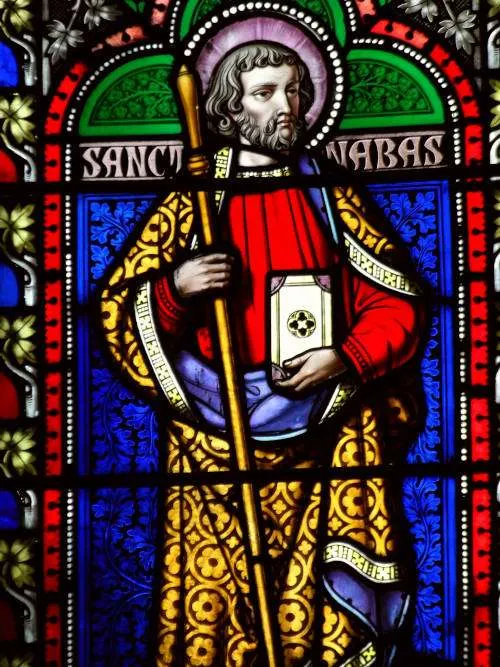
Ludovico was a rector of Saint Barnabas church in 1818 where soon after he founded an orphanage and associated trade school, basing his work on the idea that improving social conditions will improve the spiritual life, and improving the spiritual life will improve social conditions. In 1821, the school became the Institute of Saint Barnabas. Along with carpentry, silversmithing, blacksmithing, shoemaking, agriculture, and tool and dye makers, the school stressed the trades of printing and publishing. In 1823, Ludivico established The Publishing House of the Institute of Saint Barnabas; it exists today under the name Ancora. That same year, the school began taking in deaf and mute students.

In 1825, he founded a religious congregation of priests and brothers to run the school; it became the Sons of Mary Immaculate or Pavoniani, Pavonians. Pope Gregory XVI authorized it for Brescia in 1843, and on 8 December 1847, Ludovico and the first members made their religious profession. Today, there are 210 members in Brazil, Colombia, Eritrea, Germany, Italy and Spain, and they still publish books.

On 24 March 1849, Brescia was in rebellion against the Austrians. Both sides were ready to pillage the city and Father Ludovico led his boys to safety at Saiano, seven miles away. He died a week later as Brescia was in flames, but his boys were safe.

Born

  • 11 September 1784 at Brescia, Italy

Died

  • Palm Sunday, 1 April 1849 at Saianco, Italy of natural causes

Venerated

  • 5 June 1947 by Pope Pius XII (decree of heroic virtues)

Beatified

  • 14 April 2002 by Pope John Paul II
  • beatification celebrated in Saint Peter’s Square, Vatican City, Rome, Italy
  • the beatification miracle involved the 1909 cure of Maria Stevani from typhoid fever

Canonized

  • 16 October 2016 by Pope Francis
  • canonization celebrated in Saint Peter’s Square, Vatican City, Rome, Italy
  • the canonization miracle involves the healing of a man from “acute postoperative cerebrovascular accident; bilateral aspiration pneumonia complicated by acute respiratory failure; kidney failure” in the archdiocese of São Paulo, Brazil through the intercession of Saint Ludovico

Patronage

  • Sons of Mary Immaculate

Source: https://catholicsaints.info/saint-ludovico-pavoni/

Saint Ludovico Pavoni Read More »

Saint Guy of Pomposa

Profile

Guy was known in his youth for being meticulous about his clothing and appearance – until the day he realized it was simply vanity and traded his fine clothes for a beggar‘s rags. He became a pilgrim to Rome, Italy. He was a spiritual student for three years of a hermit name Martin on an island in the River Po. He became a monk at Pomposa abbey near Ferrera, Italy. He became a Benedictine monk at Saint Severus abbey, Ravenna, Italy. He became an Abbot Ravenna and Pomposa. A student of scripture, he taught Bible studies for two years at the request of Saint Peter Damian. So many were attracted to his teaching, his leadership, and his example of the Christian life that his house doubled in size; his father and brother joined the order. Guy finally handed off the administrative elements of his position to concentrate on spiritual direction. He periodically retreated to a hermitage near Ferrara to spend his days in prayer and fasting. Near the end of his life he was unjustly persecuted for personal reasons by archbishop Heribert of Ravenna. He died while on a trip to Piacenza, Italy to advise Emperor Henry III on spiritual matters.

Born

  • at Ravenna, Italy

Died

  • 1046 at Borgo San Donnino, Italy of natural causes
  • interred in the church of Saint John the Evangelist, Speyer, Germany, which was renamed Saint Guido-Stift

Patronage

  • Speyer, Germany

Source: https://catholicsaints.info/saint-guy-of-pomposa/

Saint Guy of Pomposa Read More »

Saint Pierre Aumaître

Profile

Pierre was the eldest of five children in a peasant family; his father was a farmer, his mother a seamstress. Pierre was baptized in Verteuil, France on 26 May 1837, confirmed in Aizecq, France on 21 May 1844, and made his first Communion on 2 May 1847. He felt a call to the priesthood, walked seven miles a day to take Latin lessons, and entered the Petit Séminaire de Richemont near Cognac, France in 1852, then the Société des Missions Etrangères (Paris Foreign Missions Society) seminary in Paris, France in 1857. He was ordained as a priest on 14 June 1862. He left for missionary work in Korea on 18 August 1862, arriving in June 1863; he studied the language and customs in Seoul and Saemgol, and then began working in the Naep’o region. He worked with Saint Marie-Nicolas-Antoine Daveluy and his bishop, Saint Siméon-François Berneux. To prevent his parishioners in Saemgol from being interrogated and abused by government authorities, he surrendered in March 1866; he was taken to Seoul, imprisoned, tortured, and finally executed for his faith and his work. Martyr.

Born

  • 8 April 1837 in Aizecq, Charente, France

Died

  • beheaded on 30 March 1866 in Galmaemot, Boryeong, Chungcheong-do, South Korea
  • buried in the sand at the execution site
  • remains later recovered and buried in the cathedral in Seoul, South Korea
  • some relics in the Salle des Martyrs des Missions Étrangères in Paris, France

Venerated

  • 4 July 1968 by Pope Pauli VI (decree of martyrdom)

Beatified

  • 6 October 1968 by Pope Paul VI

Canonized

  • 6 May 1984 by Pope John Paul II

Source: https://catholicsaints.info/saint-pierre-aumaitre/

Saint Pierre Aumaître Read More »

Saint Jonas of Hubaham

Profile

Jonas was a monk. He went with Saint Barachisius, his brother and fellow monk, to Hubaham, Persia, to minister to Chistians imprisoned for their faith during the reign of King Sapor II. They were arrested, beaten, tortured, and martyred for this service, and for refusing to worship the sun, moon, fire and water. Eyewitness descriptions of their trial and execution have survived to today.

Born

  • at Beth-Asa, Persia

Died

  • martyred 24 December 327 by being beaten with clubs, a stake pushed into his abdomen, and left in a freezing pond; when he survived the night, his fingers and toes were cut off, and he was crushed to death in a wine press
  • his corpse was cut in two, thrown in a dry cistern, and guarded to keep other Christians from recovering relics

Canonized

  • Pre-Congregation

Source: https://catholicsaints.info/saint-jonas-of-hubaham/

Saint Jonas of Hubaham Read More »

Saint Stephen Harding

Profile

Stephen was born to the English nobility. After a somewhat misspent youth, he was drawn to religious life and entered the Benedictine Sherborne Abbey. Following the Norman conquest of England in 1066, Stephen left the monastic life, moved to Scotland and then to Paris, France to study. He was a pilgrim to Rome, Italy, seeking forgiveness for having abandoned monasticism. He became a monk at Molesme Abbey. With Saint Robert of Molesme, he helped begin the Cistercian reform by helping found Citeaux Abbey in 1098. Chosen abbot of the house in 1109, he came in with a reformer’s zeal and administrative skill. He accepted Saint Bernard of Clairvaux into the Order with all the reform and expansion that he and his brothers brought with them. He helped found a dozen other Cistercian houses. and gave the statutes that started the Cistician nuns. His reform work aimed at simplicity in all things including liturgical rites, church decor, monastic dress, and life in the Order.

Born

  • c.1060 in Meriot, Sherborne, England

Died

  • 28 March 1134 at Citeaux, France of natural causes
  • buried at Citeaux Abbey

Canonized

  • 1623 by Pope Urban VIII

Patronage

  • Cîteaux Abbey
    Sherborne, Dorset, England

Source: https://catholicsaints.info/saint-stephen-harding/

Saint Stephen Harding Read More »

Saint Rupert of Salzburg

Profile

Rupert was a relative of Saint Ermentrude. Rupert was a Benedictine and became a Bishop of Worms, Germany. He was an evangelist to southern Germany. In 696, Theodo, Duke of Bavaria, gave him the ruined town of Iuvavum, which Rupert rebuilt. There, he founded the monastery of Saint Peter, serving as its first abbot. He also founded a Benedictine convent. He worked with Saint Chuniald, Saint Vitalis of Salzburg, and Saint Gislar. To support the houses and his missionary work, he promoted the mining of salt, which led to the renaming of the place as Salzburg (salt mountain). He became the Bishop of Salzburg. He was considered a confessor of the faith.

Born

  • probably in France

Died

  • 718 in Salzburg, Austria

Canonized

  • Pre-Congregation

Patronage

  • in Austria
    – Gurk, diocese of
    – Klosterneuburg
    – Salzburg, city of
    – Salzburg, province of

Representation

  • man holding a container of salt (refers to Salzburg and the salt mining there)

Source: https://catholicsaints.info/saint-rupert-of-salzburg/

Saint Rupert of Salzburg Read More »

Saint Castulus of Rome

Profile

Castulus was married to Saint Irene of Rome. He was a military officer in the imperial palace in Rome during the reign of Emperor Diocletian. A quiet Christian, he was denounced to authorities for sheltering fellow Christians; arrested, tortured and martyred.

Died

  • buried alive in 288 on the Via Labicana outside Rome, Italy
  • a cemetery named for him developed on the land
  • a church dedicated to him was built in the 7th century on the site of his execution
  • relics transferred to a Benedictine monastery in Moosburg an der Isar, Germany c.768
  • relics transferred to Landshut, Germany in 1604

Canonized

  • Pre-Congregation

Patronage

  • against blood poisoning
  • against drowning
  • against erysipelas
  • against fever
  • against horse theft
  • against lightning
  • against storms
  • against wildfire
  • cowherds
  • farmers
  • shepherds
  • Hallertau, Germany
  • Moosburg an der Isar, Germany

Representation

  • spade a reference to being buried alive; it and his feast day in early spring led to his association with farmers and then shepherds

Source: https://catholicsaints.info/saint-castulus-of-rome/

Saint Castulus of Rome Read More »

Annunciation of the Lord

In the fifth century, bishops engaged in a fierce theological debate over the unity of the divine and human natures of Christ, referred to as the “hypostatic union.” Nestorius, the Archbishop of Constantinople, argued that there were two underlying hypostases, or substances, in Christ, one human and one divine. He believed that the humanity of Christ was born of the Virgin Mary, but not His divinity. Therefore, Nestorius believed Mary should only be called the “Christ-bearer” and not the “God-bearer” (Theotokos). Saint Cyril, the Archbishop of Alexandria, argued that the divine and human natures of Jesus were united in one hypostasis. Divinity and humanity were perfectly united and, therefore, Mary is properly called the Theotokos, or “Mother of God,” not just the “Mother of Christ.” God was born of her, not just His body. Mary conceived a Person in her womb, and that Person was both God and man, perfectly united as one. In 431 the Church held a council at Ephesus at which Cyril’s position was adopted and Nestorius’ position was condemned. Nestorius was then removed as Archbishop of Constantinople.

The Solemnity we celebrate today came into practice around the time of this controversy, possibly as a way of emphasizing the theological teaching that emerged from the Council of Ephesus. Throughout Church history, when a theological truth is defined, that truth is then celebrated liturgically as a lived expression of the Church’s faith.

The date of this celebration is interesting. It is set nine months before Christmas, but most likely, the date of Christmas was set nine months after the Annunciation. Many early Christians believed that Jesus’ death occurred on March 25, and, therefore, His Incarnation must have also taken place on this day. Interestingly, as early as the third century, it has been suggested that March 25 was also the date of the creation of Adam, the fall of Adam, the fall of the angels, the sacrifice of Isaac by Abraham, and the passing of the Israelites through the Red Sea.

Today’s celebration of the Solemnity of the Annunciation of the Lord recalls the historical event of the Angel Gabriel appearing to the Virgin Mary, as found in Luke 1:26–38. It also celebrates the Church’s faith in the underlying reality that took place at that moment in time. It celebrates the Incarnation, making this solemnity not only a Marian solemnity, but first and foremost a Christological one. Though Christmas commemorates the birth of Christ, the Annunciation commemorates the Incarnation within the womb of the Blessed Virgin Mary.

Most certainly, this solemnity is also a Marian celebration. We celebrate the Virgin Mary’s perfect “Yes” to the plan of the Father. We celebrate her humility, obedience, docility, and especially her motherhood of God and man.

This solemnity is also a celebration of the Father in Heaven because it reveals the beginning of the pinnacle of His perfect plan of salvation. That moment in time, the moment of the Incarnation, holds significance beyond comprehension. This moment was in the mind of the Father in Heaven from all eternity and took place in a hidden way, known only to this lowly and humble virgin.

As we celebrate this glorious solemnity, ponder all these central mysteries of our faith. Faith must be celebrated, not only believed. It must be proclaimed, rejoiced in, loved, and lived. Profess your faith in the Incarnation and seek the intercession of the Virgin Mary. Ask her to pray for you that you may imitate her “Yes” to the will of the Father in Heaven, so that you can continue to bring forth His divine Son in your soul, so that He will continue to be made manifest to the world through you.

Source: https://mycatholic.life/saints/saints-of-the-liturgical-year/march-25-annunciation-of-the-lord/

Annunciation of the Lord Read More »