Daily Saints

Saint Paola Elisabetta Cerioli

Profile

Paola was born to Italian nobility, the youngest of 16 children of Francesco Cerioli and Francesca Corniani; she was born with a heart condition and slight spinal deformity that gave her a lifetime of frail health. She was educated in Bergamo, Italy. On 30 April 1835, at age 19, she entered into an arranged marriage with 59 year old Gaetano Busecchi; he was a difficult man with poor health, and their 19-year marriage was a bit of a trial. She was a mother of three–one died in infancy, one at age one, and her son Carlo died in 1854 at age 16; her husband died a few months later. A wealthy widow alone, Paola began sharing her wealth with poor and caring for orphans and neglected children, sometimes taking them into her own home. Feeling a call to religious life, she took a vow of chastity on 25 December 1856, vows of poverty and obedience on 8 February 1857. She founded the Institute of the Sisters of the Holy Family in Comonte di Seriate, Bergamo, Italy in December 1867, taking taking the name Paola Elisabetta; it’s mission is to help abandoned children and work with new parents. She founded a corresponding men’s Congregation of the Holy Family on 4 November 1863.

Born

  • 28 January 1816 in Soncino, Cremona, Italy as Constanse Honorata Cerioli

Died

  • 24 December 1865 in Comonte di Seriate, Bergamo, Italy of natural causes

Venerated

  • 2 July 1939 by Pope Pius XII (decree of heroic virtues)

Beatified

  • 19 March 1950 by Pope Pius XII

Canonized

  • 16 May 2004 by Pope John Paul II

Source: https://catholicsaints.info/saint-paola-elisabetta-cerioli/

Saint Paola Elisabetta Cerioli Read More »

Saint John of Kanty (Cantius), Priest

c. 1390–1473; Patron Saint of teachers, students, priests, pilgrims, Lithuania, and Poland; Canonized by Pope Clement XIII on July 16, 1767

Jan Kanty (John Cantius in English) was born in 1390 in the small town of Kęty, in the Kingdom of Poland. Kęty is about ten miles south of Oświęcim, which the Nazis renamed Auschwitz, the location of the largest and most horrific concentration camp in World War II. Kęty is also thirteen miles west of Wadowice, where Pope Saint John Paul II was born 530 years later.

As a youth, John proved to be both intelligent and devout, receiving his early education in his hometown. Around the age of twenty-three, he enrolled in the Kraków Academy where he studied philosophy. Kraków Academy was the only university in the Kingdom of Poland at that time, being founded in 1364 by King Casimir III the Great. In 1817 it was renamed the Jagiellonian University and is where Pope John Paul II studied. During John Cantius’ studies, he was introduced to the spiritual movement called Devotio Moderna (Modern Devotion), which emphasized personal devotion, humility, and interior conversion, especially through the meditation upon Sacred Scripture and personal prayer.

Around the year 1418, John earned his doctorate in philosophy, taught philosophy classes at the Kraków Academy, and studied theology for three years. Upon completing his theological studies, John was ordained a priest and became the rector at the school of the Canons Regular of the Most Holy Sepulcher in Miechow, about twenty-five miles north of Kraków, where he served for about eight years. The Canons Regular of the Most Holy Sepulcher followed the Rule of Saint Augustine. One of Father John’s duties was to work as a copyist of Scripture and books, since the printing press had not yet been invented. As a copyist, Father John grew in an intimate knowledge of Sacred Scripture. He also copied the works of Saint Augustine, inspiring within him a deep love of Augustinian philosophy and theology. Throughout his life, Father John copied more that 18,000 pages of text that still exist, and most likely many more that do not. 

In 1429, Father John happily accepted a position at Kraków Academy. He became a beloved professor of Sacred Scripture, philosophy, and theology. His disposition was always humble, cheerful, serious, and godly. Most notably, Father John had a reputation for making complex philosophical and theological concepts accessible to his students, combining depth with clarity and practical application. He also continued his theological studies at the Kraków Academy, earning a doctorate in theology, and later fulfilled additional administrative responsibilities as the head of the Philosophy Department, and eventually as head of the Theology Department.

In addition to being an excellent professor, Father John took care of the spiritual needs of his students with compassion and concern. In the pulpit, Father John was known as a powerful preacher and a defender of orthodoxy. At that time, one of the raging debates within the Church was conciliarism, an assertion that the pope should submit to the authority of Church councils. Father John became a staunch defender of the papacy, which had a profound effect upon his colleagues and students.

Father John also became well known and well loved within the city of Kraków for his exceptional generosity and love of the poor. Whatever he had was theirs, minus the meager amount he needed to provide for his own needs. His clothing, money, and food were not off limits. One story relates that one time he even gave away his shoes to a poor person. When asked why he was going barefoot, he replied that a poor person needed his shoes more than he did.

Father John’s prayer life was greatly enhanced by his penitential life. He slept on the floor and ate very little. He made an 1,800-mile pilgrimage on foot to the Holy Land, carrying with him his one sack of belongings. He made four such pilgrimages to Rome, a mere 900-mile walk each way. 

As with many saints, miracles are also attributed to him. One legend relates that he came upon a poor young lady who was a servant to a strict and severe woman. While on an errand to fetch some milk, she accidentally dropped her jar, breaking it and spilling the milk. Father John had compassion for her, prayed over the jar, and miraculously fixed it. Even the milk was returned. Other stories relate miraculous healings of the sick and the recovery of stolen money. Many more miracles were attributed to his intercession by those who visited his tomb after his death. These later miracles drew pilgrims from across Europe to the university’s Collegiate Church of Saint Anne, where he was buried.

As we honor Saint John Cantius, ponder the fact that his attributes that made him so beloved were his humility, generosity, simplicity, concern for others, and diligence in his daily duty. These are qualities that we can all imitate in our own lives and are qualities that can produce saints. Consider any ways that you struggle with these qualities, and seek to imitate this humble servant of God.

Source: https://mycatholic.life/saints/saints-of-the-liturgical-year/23-december-saint-john-of-kanty-priest–optional-memorial/

Saint John of Kanty (Cantius), Priest Read More »

Saint Flavian of Acquapendente

Profile

Flavian was the father of Saint Bibiana and Saint Demetria; He was married to Saint Dafrosa of Acquapendente. He was a former prefect of imperial Rome. Julian the Apostate had him branded on the forehead as a slave for remaining loyal to his faith. He was exiled to Acquapendente, Tuscany, Italy. He was a martyr.

Died

  • 362 at Acquapendente, Italy of the results of torture and abuse
  • he collapsed and died while in prayer

Canonized

  • Pre-Congregation

Source: https://catholicsaints.info/saint-flavian-of-acquapendente/

Saint Flavian of Acquapendente Read More »

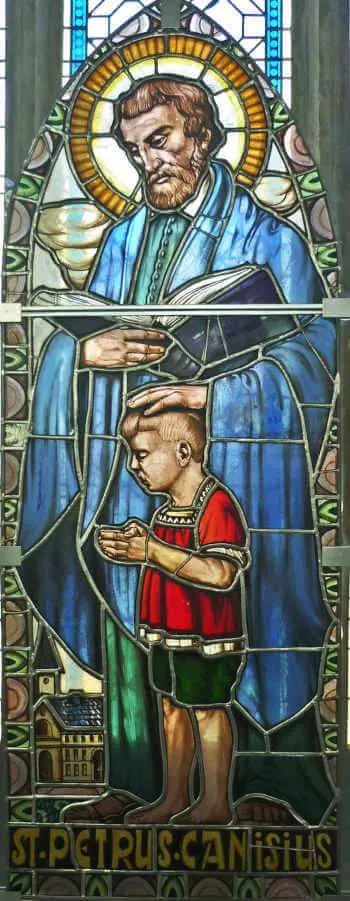
Saint Peter Canisius, Priest and Doctor

1521–1597; Patron Saint of the Catholic press, Germany, and writers of catechisms; Canonized and declared a Doctor of the Church by Pope Pius XI on May 21, 1925

On October 31, 1517, Father Martin Luther, a German Augustinian monk and theologian, nailed his Ninety-five Theses that criticized various Catholic Church practices to the door of the Castle Church in Wittenberg, Germany. This event is often considered to be the beginning of the Protestant Reformation that threw the Church into turmoil over the next century. Theological debates were fierce, the Church began to splinter, and cities and nations fought, leading to violence and deaths. Though the sixteenth century was chaotic for the faith, many saints emerged to defend the truth and reform the Church. We honor one of those saints today—Saint Peter Canisius.

Pieter Kanis (Peter) was born in the city of Nijmegen, in the Duchy of Guelders of the Holy Roman Empire, modern-day Netherlands. His father was well educated and served as the mayor of the town. Shortly after Peter’s birth, his mother died. In 1536, when Peter was fifteen, his father sent him to the University of Cologne, and for a short time to the University of Louvain, where he studied the arts, civil and canon law, and theology. In Cologne, Peter frequently visited the Cologne Charterhouse of the Carthusian monks of Saint Barbara. Though much of Germany had been thrown into turmoil as a result of the Protestant Reformation, the Cologne Charterhouse remained firmly Catholic. Peter especially learned from the monks a spirituality referred to as Devotio Moderna (Modern Devotion), which emphasized personal conversion, the internalization of faith, prayerful meditation on Christ’s life, simplicity, and humility. This spirituality would become a defining characteristic of Peter’s life and future ministry.

In 1540, at the age of nineteen, Peter received his Master’s Degree of Arts. His father wanted him to marry a wealthy noblewoman, but Peter’s deepening faith led him to make a personal commitment to a life of celibacy. That same year, the future Saints Ignatius of Loyola, Francis Xavier, Peter Faber, and four others co-founded what would become the Society of Jesus, or Jesuits. Over the next two decades, the Jesuits grew to an estimated 1,000 members, founded about thirty-five schools, and became missionaries to non-Christian territories. The Jesuits also played a significant role in the Catholic Counter-Reformation, becoming staunch defenders of the Catholic Church.

In 1543, Peter made a thirty-day retreat with the new Jesuit Father Peter Faber using the Spiritual Exercises written by Father Ignatius of Loyola. The primary goals of the Spiritual Exercises are personal conversion and the discernment of God’s will. They are especially designed to help a person arrive at a major life decision and resolution. Upon the completion of his thirty-day retreat, Peter Kanis discerned a call to enter the Jesuits. It was around that time that Peter began using the Latinized form of his name, Peter Canisius.

In 1545, the Holy Father opened the Council of Trent that helped lay the theological groundwork for the Catholic-Counter Reformation. The council clarified Catholic doctrines that were under attack due to the Protestant Reformation and enacted various reforms that were sorely needed within the Church. The Council of Trent continued to hold sessions until 1563.

In 1546, Peter Canisius was ordained a priest and was asked to attend the Council of Trent as an assistant to Cardinal Otto Truchsess von Waldburg, Bishop of Augsburg. In 1548, Peter went to Rome with Father Ignatius for further studies, and the following year was sent to Sicily where he assisted at the College of Messina, preaching and carrying out humble domestic duties. In 1549, he received his doctoral degree and made his final profession as a Jesuit.

Fully professed, well trained in Catholic doctrine, and intimately united to Christ through a life of personal prayer and devotion, Father Peter Canisius was ready for his life’s mission. At that time, Pope Paul III asked Father Ignatius of Loyola to recommend a Jesuit priest whom he could send to Germany to help renew the Catholic faith that was in turmoil. Father Peter Canisius was chosen. After meeting with the pope, Father Peter went to Saint Peter’s Basilica to pray to Saints Peter and Paul, asking them to make the apostolic blessing he received from the Holy Father permanent, so he could fulfill the daunting task ahead of him. He later wrote in his journal that he sensed great consolation at that moment. He had a conviction that he was being sent as an apostle to Germany, and that the Apostles Peter and Paul would accompany him.

In 1549, Father Peter set out for the Duchy of Bavaria, modern-day southern Germany, where he first served as dean, rector, and vice chancellor of the University of Ingolstadt. He quickly sought to personalize the faith and to win over hearts and minds. His concern for the students and faculty reached far beyond academics and good doctrine. He was also concerned with forming them spiritually, helping them come to know Christ through prayer and the Sacraments.

In 1554, he was asked to become the Bishop of Vienna, but he declined, preferring to continue his Jesuit mission of teaching and preaching. Instead, he served as the interim diocesan administrator for a year where he continued to share his intimate love for Christ and the people by engaging in pastoral work, such as serving in hospitals and prisons. It was there that he also took up the pen and began to write his influential German catechism: Summa Doctrinae Christianae (Summary of Christian Doctrine). This three-volume catechism was written for three different groups of people: theology students, older youth who were educated, and younger youth needing initial instruction. He wrote in a clear, concise, and down-to-earth way, using a question-and-answer format. One of Father Peter’s deep convictions was that those who had left the faith often did so out of ignorance, not out of ill-will. He believed that if their questions were answered with kindness and clarity, the true faith would once again be accepted. Pope Benedict XVI, a German born in 1927, said of these catechisms, “So it was that still in my father’s generation people in Germany were calling the Catechism simply ‘the Canisius.’ He really was the Catechist of Germany for centuries…”

After his time in Vienna, Father Peter worked nonstop. He founded the College of Prague in 1556, served as the first superior of the Jesuits in northern Germany, coordinated a network of Jesuit communities and colleges, was entrusted with diplomatic missions, and continued to contribute to the Council of Trent. In 1580, he moved to Fribourg, Switzerland, where he spent the last seventeen years of his life preaching and writing. His writings were voluminous, flooding Germany with devotionals, theological commentaries, spiritual texts, apologetic works, educational guides, and translations of Latin texts into German. He was so influential that 300 years after his death, Pope Leo XIII proclaimed him the “Second Apostle of Germany” (after Saint Boniface).

As we honor this great apostle of the Catholic faith, ponder the reasons for his success. He loved Christ, and he loved God’s people. He didn’t teach with arrogance or pride. He wasn’t harsh or heavy-handed. Instead, he won hearts as he won minds, gently but clearly leading people back to the faith, introducing them to the Person of Christ, and showing them the way to Heaven. Seek Saint Peter Canisius’ intercession today, praying that you, too, will become an evangelist in his mold. Commit yourself to sharing the Gospel with compassion, while never wavering from the truth.

Source: https://mycatholic.life/saints/saints-of-the-liturgical-year/21-december-saint-peter-canisius-priest-and-doctor–optional-memorial/

Saint Peter Canisius, Priest and Doctor Read More »

Saint Ursicinus of Saint-Ursanne

Profile

Ursicinus was a friend of Saint Columbanus. He was a missionary to Switzerland. He built a monastery at Saint Ursanne in the Swiss Juras, and served as its abbot. He could not bear wine nor those who served it to him.

Born

  • c.552 in Ireland

Died

  • c.625 near modern St-Ursanne, Jura, Switzerland of natural causes

Canonized

  • Pre-Congregation

Patronage

  • against stiff neck
    –
  • in France
    – Besançon
  • in Germany
    – Mainz
  • in Switzerland
    – Basel
    – Saint-Ursanne

Representation

  • abbot with three lilies in his hand
  • abbot holding a book and fleur-de-lys, surrounded by fleur-de-lys

Source: https://catholicsaints.info/saint-ursicinus-of-saint-ursanne/

Saint Ursicinus of Saint-Ursanne Read More »

Saint Bernard Valeara of Teramo

Profile

Bernard was born to the nobility; He was the brother of Blessed Colomba of Mount Brancastello. He was a Benedictine monk at Monte Cassino abbey and a priest Bishop of Teramo, Italy in 1115. He was known as a zealous reformer, evangelist, and for his charity.

Born

  • c.1050 in the castle of Pagliara near Castelli, Isola del Gran Sasso, Teramo, Abruzzo, Italy

Died

  • 19 December 1122 of natural causes
  • buried in the chapel of Saint Anne in the Old Cathedral of Teramo, Italy
  • relics transferred to the new cathedral in 1174
  • relics transferred to a chapel devoted to Saint Bernard in 1776

Patronage

  • Teramo, Italy, city of
  • Teramo-Atri, Italy, diocese of

Source: https://catholicsaints.info/saint-bernard-valeara-of-teramo/

Saint Bernard Valeara of Teramo Read More »

Saint Lazarus of Bethany

Profile

Lazarus was the brother of Saint Martha and Saint Mary of Bethany. He was the man whom Jesus raised from the dead after having been dead and in his tomb for four days. The Bible does not trace his history after the miracle, but tradition says he became a missionary to Gaul, the first bishop of Marseilles, France, and a martyr in the persecutions of Domitian.

Died

  • beheaded in the 1st century in a cave near Marseilles, France
  • some relics remain in Marseilles
  • some relics later enshrined in the Cathedral of Saint Lazare, Autun, France

Canonized

  • Pre-Congregation

Patronage

  • gravediggers
  • homemakers
    –
  • Cyprus
  • in France
    – Aix-en-Provence
    – Autun, city of
    – Autun – Châlon-sur-Saône – Mâcon – Cluny, diocese of
    – Marseille, archdiocese of
    – Marseille, city of
    –
  • San Lazzaro di Sarzana, Italy

Source: https://catholicsaints.info/saint-lazarus-of-bethany/

Saint Lazarus of Bethany Read More »

Saint Ado of Vienne

Profile

Ado was born to the French nobility. He was educated at Ferrières Abbey. Ado renounced his title and inheritance, and became a Benedictine monk at Ferrières. He taught at Prüm Abbey at the request of its abbot, but dissension among the brothers forced him to return home. He was a pilgrim to Rome, Italy for two years. He moved to Ravenna, Italy where he revised and published a version of the Roman Martyrology in 858. He became a pastor of Saint Romanus church at Lyon, and was appointed by the archbishop, Saint Remigius. He became the Archbishop of Vienne, France in 859, appointed by Pope Saint Nicholas I. He was a noted reformer in his diocese. He wrote biographies of Saint Desiderius and Saint Theuderius, and a world history text. He opposed the efforts of Lothair II of Lorraine to put aside his wife, Theutberga, in favour of his mistress, and he led the effort to annul the synod of Metz’s approval of Lothair’s actions.

Born

  • Sens, France

Died

  • 875 in Vienne, France of natural causes
  • relics destroyed by the Huguenots

Canonized

  • Pre-Congregation

Representation

  • monk studying Scripture in a library

Source: https://catholicsaints.info/saint-ado-of-vienne/

Saint Ado of Vienne Read More »

Saint Mary di Rosa

Profile

Mary was one of nine children born to the industrialist Clement di Rosa and Countess Camilla Albani. Her father owned a large spinning mill, and Mary grew up in a happy and pious family. She was educated by Visitandine nuns. Mary’s mother died when the she was seventeen, and she left school to help manage her father‘s estate. Her heart set on a religious life; she turned down many suitors. She worked with young girls in her community, those who worked in her father‘s mills, and the sick in local hospital, including endless work during the cholera epidemic of 1836. She founded a home dedicated to the spiritual needs of young girls, and a school for deaf children. In 1840, she became the superior of the Handmaids of Charity, nuns who cared for the sick, and she took the name Mary Crucifixa. The community received their bishop‘s approval in 1843 and papal approval in 1850. Mary led them until her death.

Born

  • 6 November 1813 in Brescia, Italy as Paula Frances Mary di Rosa

Died

  • 15 December 1855 in Brescia, Italy of natural causes

Venerated

  • 10 July 1932 by Pope Pius XI (decree of heroic virtues)

Beatified

  • 26 May 1940 by Pope Pius XII

Canonized

  • 12 June 1954 by Pope Pius XII

Source: https://catholicsaints.info/saint-mary-di-rosa/

Saint Mary di Rosa Read More »

Saint John of the Cross, Priest and Doctor

c. 1542–1591; Patron Saint of contemplatives, mystical theology, and Spanish poets; Canonized by Pope Benedict XIII on December 27, 1726; Declared a Doctor of the Church by Pope Pius XI in 1926; Commonly referred to as the “Mystical Doctor”

Juan de Yepes y Álvarez was born in Fontiveros, Ávila, Spain. His family descended from Jewish converts who settled in Fontiveros. His father, Gonzalo, was an accountant who worked for relatives who were involved in the silk trade. In 1529, Gonzalo married Catalina who was poor and an orphan. Gonzalo’s wealthy family did not receive the news well. As a result, he was shunned by his relatives and no longer able to work as their accountant. Therefore, Gonzalo joined his new bride in her trade of weaving to support his own family. Gonzalo and Catalina had three boys: Francisco, Luis, and Juan.

In 1545, when Juan was only three years old, his father died, leaving Catalina to raise and provide for their boys, a difficult responsibility for a widow at that time. She sought assistance from Gonzalo’s family but was rejected. Therefore, she and her boys lived in destitution. Two years after Gonzalo’s death, Luis died of malnutrition. Eventually, Catalina took Francisco and Juan and moved to Medina del Campo, a larger city, and resumed her work as a weaver.

In Medina, Juan was able to attend a boarding school for poor children. He received a basic education, housing, and food. Juan proved to be an excellent student and, in 1559, was invited to study at the nearby newly founded Jesuit school at the age of seventeen. With the Jesuits, Juan studied the humanities, grammar, rhetoric, Latin, and Greek. Four years later, in 1563, he entered the Carmelite Order, taking the name John of Saint Matthias.

John made his profession as a Carmelite in 1564 and subsequently received special permission from his superiors to follow the ancient Carmelite rule to the letter, rather than embrace the various changes to the rule that occurred over the years. After his professions, he was sent to study theology and philosophy at the prestigious university in Salamanca. There he excelled in his studies and was known for his intelligence and insights. At the end of his studies, John had second thoughts about his vocation as a Carmelite, preferring instead to live a more contemplative life. As a result, he decided that he would enter the Carthusians once he was ordained. John was ordained a priest in 1567.

Father John returned to Medina to offer his first Mass. However, his intention to join the Carthusians all changed after meeting the Carmelite nun Teresa of Ávila. Mother Teresa was a reformer of the Carmelite Order and was in Medina to found a new convent. While there, she heard of the newly ordained priest, Father John, and attended his first Mass. Later, she spoke to him about her ideas on reforming the Carmelites in hopes that he would become her first friar in the reform. Father John was intrigued and accepted her invitation to remain a Carmelite and assist her with the new reforms, reviving the ancient rule.

After returning with Mother Teresa to Valladolid, he participated in a period of formation under her guidance and founded the first house for friars, along with two other Carmelite brothers. This first house began formally on November 28, 1568. Father John gave up his old name and took on the new name of Father John of the Cross. As more friars joined them, Father John, now the subprior and novice master, moved to a larger house in nearby Alcalá where he also became the rector of the university.

In May of 1572, Mother Teresa asked him to move to Ávila to become the spiritual director for the sisters at the Monastery of the Incarnation. He remained there for five years, working closely with the sisters and growing deep in his own spiritual life. He was especially blessed to act as spiritual director to Mother Teresa who, in many ways, acted as a spiritual guide to him. Shortly after his arrival in 1572, Mother Teresa entered into the spiritual transformation of the Divine Union while Father John acted as her spiritual director. At times, their conversations led both of them into ecstasy as the Holy Spirit worked powerfully in their lives and through their spiritual friendship.

Sadly, politics had its place in the Church at that time, and there were some who did not like the idea of reforming the Carmelite order. In January of 1576, Father John was arrested for the first time by the more contemporary and well-established Carmelites of the Observance. They wanted to end the reforms of Father John and Mother Teresa and their Discalced Carmelites (meaning those who wore sandals rather than shoes). His arrest was quickly ended by the intervention of the papal nuncio, Nicolás Ormaneto, who was favorable toward the reforms of the Discalced Carmelites. However, the following year, in June of 1577, the nuncio died. A new nuncio was appointed who was not in favor of the reforms. In December of that year, Father John was once again arrested by the Carmelites of the Observance and put in prison in their monastery in Toledo, where he remained for nine months.

After Father John’s arrest, the Provincial ordered him to “repent” of his reforms and to return to the monastery in Medina. Father John refused to do so, arguing that he was not bound by the Provincial’s demands, since he had received permission for his work on the reform from the nuncio Ormaneto while he was alive. As a result, Father John was judged as being rebellious and willfully disobedient to their authority and was imprisoned in a six-by-ten-foot dungeon cell.

During the nine months of his imprisonment, Father John was regularly abused by the friars in attempts to get him to “repent.” He was given no change of clothing, very little food, endured a severe case of lice, and had only his breviary to read. He endured the severe cold of the winter and the heat of the summer in the small dark cell that had only one small window high up on the wall. However, it was during this time of abuse that some of the greatest spiritual treasures to fill our Church were born. Father John, in the darkness of this prison, composed numerous poems, including Dark Night of the Soul and portions of the Spiritual Canticle. God did not allow this abuse to go fruitless. Father John grew deep in the spiritual life and entered into interior freedom through his prayer and surrender to God.

In August of 1578, it is said that God miraculously enabled Father John to escape at night “in the darkness,” as his poem relates, and find refuge with Mother Teresa’s sisters in Toledo. Eventually, he escaped to Santa Cruz, where he was cared for secretly and nursed back to full health. Over the coming years, his prison experience, the poems he composed, and his life of deep prayer and study prepared him to write four of the greatest works on mystical theology the Church has ever known: Ascent to Mount Carmel, Dark Night of the Soul, Living Flame of Love, and Spiritual Canticles. Each book was a commentary on the mystical poems he had composed. The poems themselves are considered to be among the most beautiful poems written in the Spanish language.

During the year after Father John escaped imprisonment, the Discalced Carmelites did all they could to regularize their situation within the larger Carmelite order and within the Church. Though the new nuncio tried to stop them, the king intervened. In April of 1579, a new provincial was appointed to oversee the Discalced Carmelites and to assist them with their reforms. In 1580, the Holy See allowed the Discalced Carmelites to enjoy independence from the Carmelites of the Observance, and Father John was appointed as prior of one of the new monasteries. Mother Teresa died in 1582. In 1585, the Discalced Carmelites were given even greater independence from the Carmelites of the Observance when they were established as an independent province. Father John was elected Vicar Provincial.

The charisms of this reform in which Father John and Mother Teresa were so instrumental included the following: 1) a strong Marian devotion, 2) a daily plan carefully set forth to maintain a life of continual prayer, and 3) a strict rule of enclosure focused on the asceticism of solitude, manual labor, perpetual abstinence, fasting, and fraternal charity. Many were attracted to this new strict Carmelite life. Therefore, monasteries of both nuns and friars continued to be founded.

Father John continued to found monasteries and oversee the reform until September of 1591, when he developed gangrene on his leg. He went to a monastery in Ubeda to receive care for his illness. Instead, the superior treated him coldly, arguing that Father John was a burden to the monastery. On December 13, just hours before his death, Father John called the prior to his cell and humbly begged his forgiveness for being a burden. This act of humility completely transformed the prior who was overwhelmed by Father John’s sanctity. At midnight, the saintly friar went home to Heaven to his Beloved to sing Matins with the angels, thus completing his mystical journey to divine union.

Saint John of the Cross endured many trials throughout his life, but God used those trials as a foundation for the spiritual formation he would provide to the Church through his masterful mystical theology. It could be argued that no one has captured the depths of the spiritual life, leading us to Divine Union and Mystical Marriage, better than Saint John of the Cross. He did not shy away from describing, in great detail, the interior purifications a soul must endure on that journey to complete freedom.

As we honor that great saint and mystical doctor of the Church, ponder the profound spiritual truth—that complete union with God is an ongoing process that requires total surrender, interior purgations of the senses and spirit, mortification, and mystical annihilation. Though these concepts are deep and utterly otherworldly, they are beautiful truths that the Church continues to uphold. Allow Saint John to inspire you to go deeper in your faith journey so that your divine union will evolve and blossom into the glorious life God desires for you.

Source: https://mycatholic.life/saints/saints-of-the-liturgical-year/14-december-saint-john-of-the-cross-priest-and-doctor–memorial/
Saint John of the Cross, Priest and Doctor Read More »