“Jesus loved Martha and Mary and Lazarus.” This unique statement in John’s gospel tells us of the special relationship Jesus had with the three siblings. They were evidently close friends of Jesus. He came to their home simply as a welcomed guest, rather than as one celebrating the conversion of a sinner like Zacchaeus or one unceremoniously received by a suspicious Pharisee. Martha and Mary felt free to call on Jesus at their brother’s death, even though a return to Judea at that time seemed to spell almost certain death. Their lives showed us how to balance work with prayer, ora et labora.
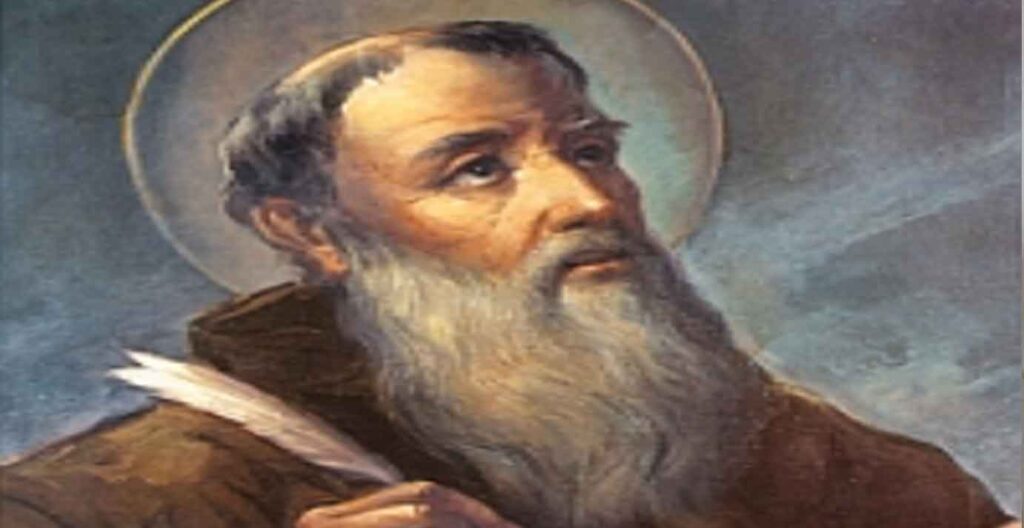
According to his biographer in the Liber Pontificalis, Innocent was a native of Albano Laziale and the son of a man called Innocentius, but his contemporary Jerome referred to him as the son of the previous pope, Anastasius I, probably a unique case of a son succeeding his father in the papacy. According to Urbano Cerri, Pope Innocent was a native of Albania. He was the bishop of Rome from 401 to his death on 12 March 417. From the beginning of his papacy, he was seen as the general arbitrator of ecclesiastical disputes in both the East and the West. Accordingly, his feast day is celebrated on 12 March, though from the thirteenth to the twentieth century he was commemorated on 28 July.
St. Pantaleon came from Nicomedia, near the Black Sea, in Asia. He was such a famous doctor that the Emperor himself chose him for his own doctor. When the Emperor Diocletian began his persecution, Pantaleon at once gave away everything he owned to the poor. Not long afterwards, he was accused of being a Christian. He was given the choice of denying his Faith or being put to death. No torture could force Pantaleon to deny his Faith.
There has been strong devotion in past ages to this Saint. In the East he is called the “Great Martyr and Wonder-worker.”
Saints Joachim and Anne, are the parents of the Virgin Mary. Nothing was mentioned of them in the Bible or Gospels, what we know comes from Catholic legend and the Gospel of James, which is an unsanctioned, apocryphal writing form the second century AD.
Whether these are their real names or not—they represent the entire quiet series of generations who faithfully perform their duties, practice their faith, and establish an atmosphere for the coming of the Messiah, yet remain obscure. Joachim and Anne serve as role models for parents and both deserve to be honored and emulated for their devotion to God and Our Lady Mary, the Mother of God.
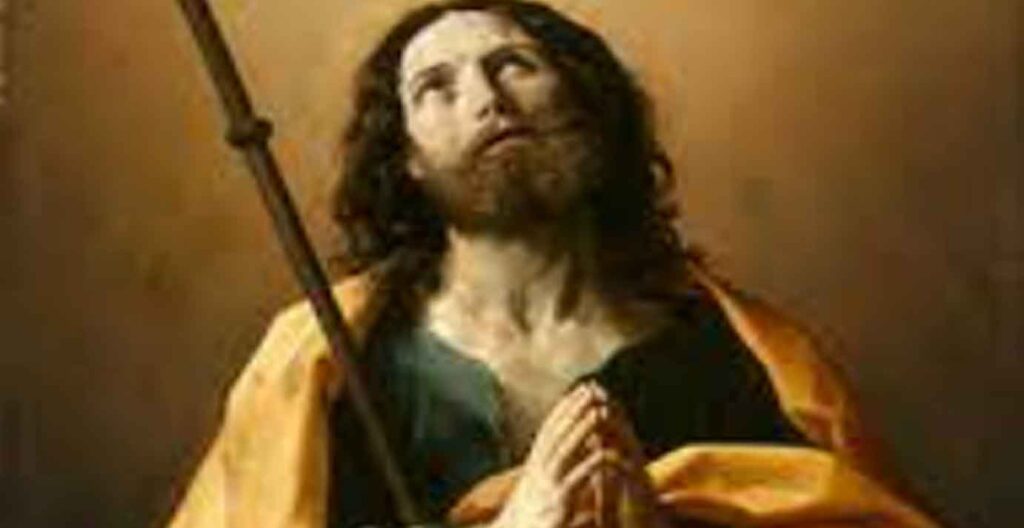
Nothing is known of St. James the Great’s early life, though it has been established that he is the son of Zebedee and Salome and brother of John the disciple. The title “the Greater” was added to St. James’ name to help distinguish him from the Apostle James “the Less,” who is believed to have been shorter than James “the Greater.” He was one of first disciples of Jesus.
Moreover, he was one of the favored three (with Simon Peter and John) who had the privilege of witnessing the Transfiguration of the Lord, the raising to life of the daughter of Jairus, and the agony in Gethsemani.
After spreading the Gospel across Israel to Spain, he returned to Jerusalem. There he was decapitated under King Herod. He is known as the first apostle to die. In the Catholic tradition, Saint James is the patron saint of Spain and, according to legend, his remains are held in Santiago de Compostela in Galicia. This name ”Santiago” is the local evolution of Latin genitive Sancti Iacobi, ”Holy or Saint James” (evolved into a personal name in Spanish, and also in Portuguese -Tiago-, with its derivatives Diego/Diogo).
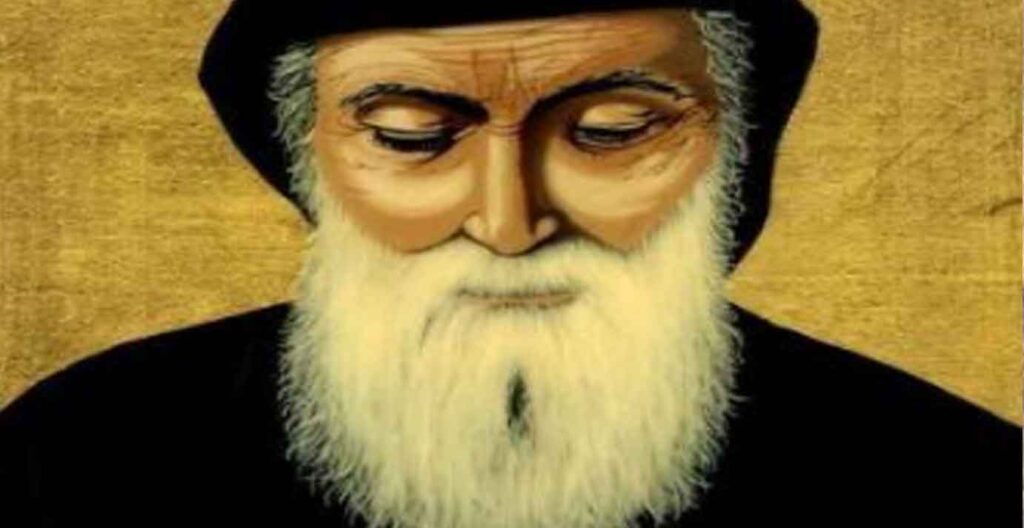
Although this saint never traveled far from the Lebanese village of Beka-Kafra where he was born, his influence has spread widely. Youssef Antoun Makhlouf was raised by his uncle because his father, a mule driver, died when Joseph was only three. At the age of 23, Joseph joined the Monastery of St. Maron at Annaya, Lebanon, and took the name Sharbel or Charbel in honor of a second-century martyr. He professed his final vows in 1853, and was ordained six years later.
He died in the late afternoon on Christmas Eve. Christians and non-Christians soon made his tomb a place of pilgrimage and of cures. Pope Paul VI beatified Sharbel in 1965, and canonized him 12 years later.
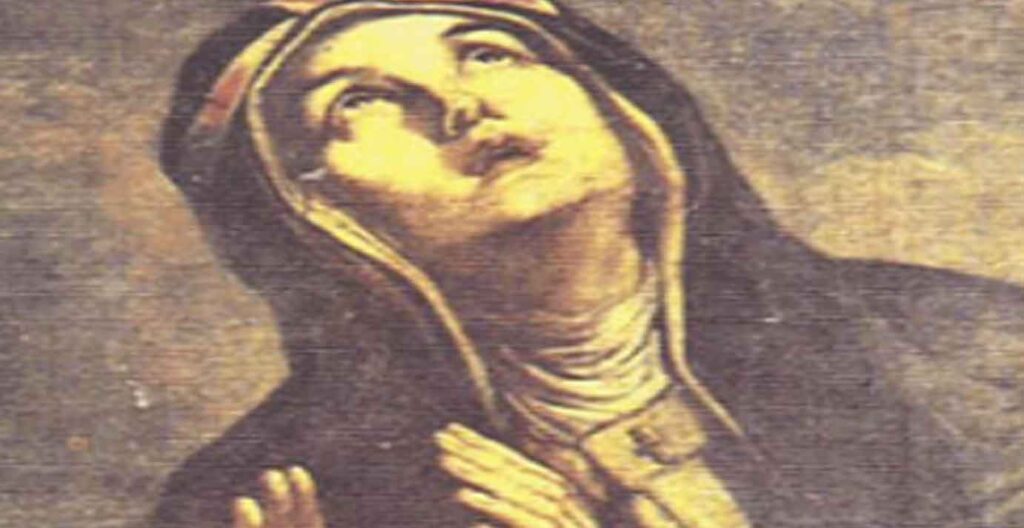
Throughout the life of Brigitta or Bridget she saw visions concerning the reform of the Church, messages to kings and popes and many other persons in high places, directing them to work for the Church. It may be noted that Birgitta never wrote in the first person. She always said the she carried a message from a very High Lord. Although she had longed to become a nun, she never even saw the monastery in Vadstena. In fact, nothing she set out to do was ever realized.
She never had the pope return to Rome permanently, she never managed to make peace between France and England, she never saw any nun in the habit that Christ had shown her, and she never returned to Sweden but died, worn out old lady far from home in July 1373. She can be called the Patroness of Failures. In this she was like the Lord, who was also classed as a failure, as He was hung on the Cross.
Birgitta was a successful failure as she was canonized in 1391. Birgitta was the only women ever to found a religious Order, Ordo Sanctissimi Salvatoris. She is the patroness of Sweden.
St. Mary Magdalene is one of the greatest saints of the Bible and a legendary example of God’s mercy and grace. The precise dates of her birth and death are unknown, but we do know she was present with Christ during his public ministry, death and resurrection.
She was the one to whom that privilege was given. She is known as the “Apostle to the Apostles.” Although, there has been many speculations and disputes of her background, what she did in her subsequent life, after meeting Jesus, is much more significant. She was certainly a sinner whom Jesus saved, giving us an example of how no person is beyond the saving grace of God.
Lawrence was born on July 22, 1559, and died 60 years later on his birthday in 1619. His parents William and Elizabeth Russo gave him the name of Julius Caesar, Caesare in Italian. After the early death of his parents, he was educated by his uncle at the College of St. Mark in Venice. Lawrence’s sensitivity to the needs of people, a character trait, perhaps unexpected in such a talented scholar began to surface. Lawrence was appointed papal emissary and peacemaker, a job which took him to a number of foreign countries.
An effort to achieve peace in his native kingdom of Naples took him on a journey to Lisbon to visit the king of Spain. Serious illness in Lisbon took his life in 1619. In 1956, the Capuchins completed a 15-volume edition of Lawrence’s writings. Eleven of these 15 contain his sermons, each of which relies chiefly on scriptural quotations to illustrate his teaching.
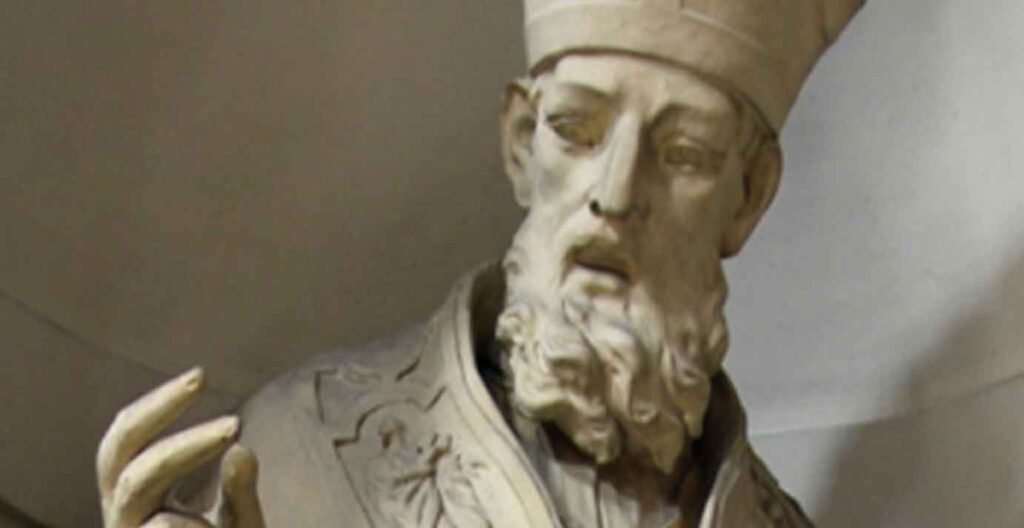
According to tradition, Saint Peter sent Apollinaris to Ravenna, Italy, as its first bishop. His preaching of the Good News was so successful that the pagans there beat him and drove him from the city. He returned, however, and was exiled a second time.
After preaching in the area surrounding Ravenna, he entered the city again. After being cruelly tortured, he was put on a ship heading to Greece. Pagans there caused him to be expelled to Italy, where he went to Ravenna for a fourth time.
He died from wounds received during a savage beating at Classis, a suburb of Ravenna. A beautiful basilica honoring him was built there in the sixth century.