Daily Reflections

Mark 14:22-24

Wonder and Awe Before the Eucharist

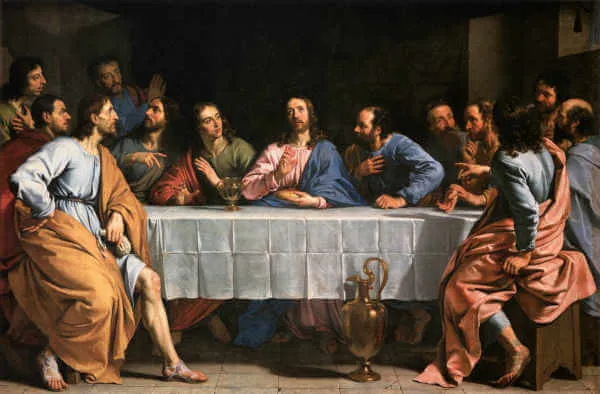
While they were eating, he took bread, said the blessing, broke it, gave it to them, and said, “Take it; this is my body.” Then he took a cup, gave thanks, and gave it to them, and they all drank from it. He said to them, “This is my blood of the covenant, which will be shed for many.”

Reflection:

At the holy Mass, as soon as the priest pronounces the words of the consecration, transforming the bread and wine into the Body and Blood, Soul and Divinity of Jesus Christ our Lord, he genuflects, rises, and then says, “The mystery of faith.” What is “the mystery of faith?” Oftentimes, when we say that something is a mystery, we mean that the conclusion is hidden but that there are certain clues to help solve the mystery. And once the mystery is solved, everything is clear and it is no longer a mystery.

“The mystery of faith” is much different. Those words are spoken at Mass immediately after the consecration as a way of drawing the faithful into a holy awe and amazement of what just took place. But this mystery can only produce wonder and awe if the reality of what just took place is understood through the gift of faith. Faith is knowing and believing without perceiving the reality before us with our five senses or through logical deduction. In other words, faith produces true knowledge of a spiritual reality that can only be known, understood and believed through spiritual insight. Therefore, if we attend the Mass and have been gifted with the knowledge of faith, then as soon as the consecration of the bread and wine takes place, we will cry out interiorly, “My Lord and my God!” We will know that God the Son is present before us in a veiled way. Our eyes do not perceive, nor do any of our senses reveal to us the great reality before us. We cannot rationally deduce what just took place. Instead, we come to know and believe that the Son of God, the Savior of the World, is now present before us in His fullness, under the veil of mere bread and wine.

In addition to the divine presence of our Lord and our God, the entire Mystery of our Redemption is made present. Saint Pope John Paul II tells us that in this moment there is a “oneness in time” that links the Paschal Mystery, that is, the Life, Death and Resurrection of Jesus, to every moment that the Eucharist is celebrated and made present through the words of consecration. And that unity between each Mass and the Paschal Mystery “leads us to profound amazement and gratitude” (Ecclesia de Eucharistia, #5). Do you sense and experience this profound amazement and gratitude each time you attend the Holy Sacrifice of the Mass? Do you realize as you attend the Mass and as the words of consecration are spoken that the entire Mystery of your redemption is made present before you, hidden from your eyes but visible to your soul by faith? Do you understand that it is God the Second Person of the Most Holy Trinity Who descends to us to dwell with us in that moment of time in this glorious Sacrament?

Reflect, today, upon the hidden but real Mystery of Faith. Allow yourself to be drawn into a wonder and awe at what you are privileged to attend. Let your faith in the Most Holy Eucharist grow by being open to a deepening of this gift of faith through spiritual insight and belief. Behold this great Gift of the Eucharist with the eyes of faith and you will be drawn into the wonder and awe that God wants to bestow upon you.

Source: https://catholic-daily-reflections.com/2025/06/21/wonder-and-awe-before-the-eucharist-4/
Mark 14:22-24 Read More »

Matthew 6:24

Singularly Devoted

Jesus said to his disciples: “No one can serve two masters. He will either hate one and love the other, or be devoted to one and despise the other. You cannot serve God and mammon.

Reflection:

Mammon is another word for money. Jesus is clear that you must choose to serve either God or money, but not both. A divided heart does not suffice. Saint John of the Cross, in His spiritual classic “Ascent to Mount Carmel,” explains something similar. He says that our desires must become completely purified to the point that all we desire is God and His holy will. Every other desire in life must be purged away so that we are singularly devoted to God. Does this mean that God and God alone should be the object of all of our love? Yes, indeed. But that truth must be properly understood.

When we consider the calling we have been given from God to love, it is true that we must love not only God but also many other things in life. We must love family, friends, neighbors, and even our enemies. Hopefully we also love other aspects of our lives, such as our vocation, our job, our home, a certain pastime, etc. So how do we love God with singular devotion when we also have many other things we must love?

The answer is quite simple. The love of God is such that when we make God the singular object of our love and devotion, the love we have for God will supernaturally overflow. This is the nature of the love of God. As we love God, we will find that God calls us to love Him by loving other people and even various aspects of our lives. As we love what God wills us to love and as we express our love for all that is contained in the will of God, we are still loving God with all our heart, mind, soul and strength.

But back to our Scripture above. Why is it that we cannot love God and money? “Mammon” in this passage must be understood as a love that becomes an unhealthy attachment and desire. Money is such that we can “love” it by allowing our desires for it to become disordered and, thus, exclude the will of God from that “love.” Money is not evil when it is used solely in accord with the will of God. In that case, the money we use will give God great glory. But when money, or any other object of our desire, begins to take on a life of its own, so to speak, then that desire will be at odds with our love of God. To love God and God alone means we love God and all that He wills us to love in life.

Reflect, today, upon the necessity of being singularly devoted to God. As you commit yourself to this exclusive love, consider also whom and what God calls you to love in and through Him. Where does His perfect will lead you, and how are you called to show your love of God through the love of others? Consider, also, any ways in which you have allowed an unhealthy attachment to money or anything else in life to distract you from the one and ultimate purpose of your life. Allow God to purge those unhealthy desires and false “loves” from your heart so that you will be free to love as you were made to love.

Source: https://catholic-daily-reflections.com/2025/06/20/singularly-devoted-3/ 

Matthew 6:24 Read More »

Matthew 6:22-23

Your Intentions in Life

“The lamp of the body is the eye. If your eye is sound, your whole body will be filled with light; but if your eye is bad, your whole body will be in darkness. And if the light in you is darkness, how great will the darkness be.”

Reflection:

Every Scripture passage, in a spiritual sense, can teach us many lessons. Saint Thomas Aquinas, in his commentary on Matthew’s Gospel, offers one interpretation to the passage quoted above by saying that the “eye” in this passage refers to your intention and “your whole body” refers to all of your actions that follow from your intention. Therefore, when your intentions are in line with God’s will, the actions that follow will be also. This is a very practical and useful lesson for your journey toward holiness.

With this insight from Saint Thomas, we must look at our intentions in an honest and complete way. What are your intentions in life? It’s easy for us to form various intentions that may seem good as well as some that are contrary to the will of God without even realizing it. We may intend to get a good night’s sleep on one occasion. Or intend to have fun with family and friends on a certain day. Or we may intend to cook a good meal, clean the house, do well at work, etc. There are many momentary intentions that are good and are a normal part of daily living. However, the most important intention to consider is that which is the deepest of them all. What is the most central, foundational, and fundamental intention by which your life is directed?

The primary intention that you should work to acquire is to give God the greatest glory possible in all that you do. Giving glory to God is accomplished when you choose Him and His holy will above everything else in life. When this is the deepest and most fundamental intention of your life, everything else will flow from it. All secondary intentions and actions will align with this central focus and work toward its accomplishment. But when there are other “first intentions” that you have on the most fundamental level, then all the rest of your intentions and actions will be misguided and directed in a disordered way.

Reflect, today, upon the most fundamental intention you have in life. Doing so will require a considerable amount of interior reflection and honesty. It will require that you sort through the many things that motivate you and the decisions you make each and every day. Reflect upon the primary purpose of your life, which must be to give God the greatest glory possible by choosing and living His perfect will. Do all of your daily actions align with this ultimate goal? Commit yourself to the holy work of examining all of your actions in this light so that you will more fully achieve the purpose for which you were created.

Source: https://catholic-daily-reflections.com/2025/06/19/your-intentions-in-life-4/

Matthew 6:22-23 Read More »

Matthew 6:14-15

Forgiving Others

“If you forgive others their transgressions, your heavenly Father will forgive you. But if you do not forgive others, neither will your Father forgive your transgressions.”

Reflection:

It’s truly amazing how often our Lord exhorts us to forgive. Much of Jesus’ Sermon on the Mount, from which we have been reading all week, continually calls us to offer mercy and forgiveness to others. And in the passage above from the end of today’s Gospel, Jesus offers us the consequences of not heeding His exhortations.

This passage is a sort of addendum to the “Our Father” prayer which immediately precedes it. The Our Father prayer gives us seven petitions, one of them being “forgive us our trespasses, as we forgive those who trespass against us.” It’s interesting to note that as soon as Jesus taught us this prayer with its seven petitions, He then re-emphasised one of those petitions by stating it again as is seen in the passage quoted above. This added emphasis should assure us of the seriousness of this petition.

At first, Jesus simply tells us to pray for forgiveness “as we forgive.” But He then makes it clear that if we fail to do so, we will not be forgiven ourselves. This should highly motivate us to make every effort possible to completely forgive others from the deepest depths of our hearts.

Who do you need to forgive? Forgiveness can be a confusing endeavor at times. The act of forgiveness gets confusing when our feelings do not reflect the choice we make in our will. It is a common experience that when we make the interior choice to forgive another, we still feel anger toward them. But these disordered feelings should not deter us nor should we allow them to cause doubt in what we need to do. Forgiveness is first an act of the will. It’s a prayerful choice to say to another that you do not hold their sin against them. Forgiveness does not pretend that no sin was committed. On the contrary, if there were no sin committed, then there would be no need for forgiveness. So the very act of forgiving is also an acknowledgment of the sin that needs to be forgiven.

When you make the choice to forgive another, and if your feelings do not immediately follow after, keep forgiving them in your heart. Pray for them. Try to change the way you think about them. Do not dwell upon the hurt that they have inflicted. Think, instead, about their dignity as a person, the love God has for them and the love you must continue to foster for them. Forgive, forgive and forgive again. Never stop and never tire of this act of mercy. If you do this, you may even discover that your feelings and passions eventually align with the choice you have made.

Reflect, today, upon any lingering feelings of anger you experience. Address those feelings by the free and total choice to forgive the person with whom you are angry. Do so now, later today, tomorrow and on and on. Go on the offensive against anger and bitterness by overwhelming it with your personal act of forgiveness and you will find that God will begin to free you of the heavy burden that a lack of forgiveness imposes.

Source: https://catholic-daily-reflections.com/2025/06/18/forgiving-others-4/

Matthew 6:14-15 Read More »

Matthew 6:16-18

Transformed by Silent Sacrifices

“When you fast, do not look gloomy like the hypocrites. They neglect their appearance, so that they may appear to others to be fasting. Amen, I say to you, they have received their reward. But when you fast, anoint your head and wash your face, so that you may not appear to others to be fasting, except to your Father who is hidden. And your Father who sees what is hidden will repay you.”

Reflection:

Many today have abandoned the holy practice of fasting. Fasting is a powerful penitential practice that bestows great benefits upon the soul. The act of self-denial from certain food and drink, choosing instead simple nourishment from time to time, such as bread and water, or a reduced amount of food, greatly strengthens the soul and disposes a person to many spiritual blessings. Too often, we live for fleshly satisfactions and fall into the trap of trying to indulge our appetites on a regular basis. But doing so has the negative effect of tempting us to neglect the more important spiritual desires for holiness. By depriving ourselves of sensory delights from time to time, we become more disposed to seek the true and lasting delights that come only from God’s grace. Therefore, this passage above presumes that we do regularly fast and engage in other forms of self-denial. 

Do you fast? Do you engage in other forms of self-denial on a regular basis? Daily prayer, reading the Scriptures, learning about the lives of the saints, and regular participation in the Sacraments all lead us closer to God and make us holy. But fasting and self-denial are also very important, so it is essential that we strive to embrace them as a part of our spiritual growth.

In this passage, Jesus specifically calls us to seek the interior rewards that come from fasting and self-denial. He points out that if we use fasting as a way of gaining praise from others, then we lose the spiritual benefits of our fasting. Prayer, fasting, and almsgiving must all be done in a way that they are as hidden as possible so that our acts are truly sincere and not done so as to receive the earthly rewards of the admiration of others.

Additionally, the lesson taught in this Gospel can also be applied to other areas of our lives. For example, if you are suffering from some illness or some form of bodily pain or discomfort, then of course you should seek the necessary medical attention. But these physical ailments also offer us another opportunity for spiritual growth when they are embraced in a silent and interior way. Even our pain or discomfort can be transformed into grace if we choose to embrace it with joy, offer it to God as a sacrifice, and keep it to ourselves as a silent gift given to God.

Reflect, today, upon your practice of fasting, as well as every other opportunity you have each day to make silent and interior sacrifices to God. If you do suffer from some daily cross that is beyond your control, then try to turn it into a spiritual offering to our Lord. And if you are able to freely embrace fasting on a regular basis, then try to prayerfully commit to this practice. Try to do it every week, especially on Friday in honor of the Good Friday sacrifice made by our Lord. Don’t underestimate the value of these hidden sacrifices. Make them a regular part of your spiritual life and God will bestow upon you many spiritual riches from Heaven.

Source: https://catholic-daily-reflections.com/2025/06/17/transformed-by-silent-sacrifices-4/

Matthew 6:16-18 Read More »

Matthew 5:43-45

The “Gift” of Being Persecuted

Jesus said to his disciples: “You have heard that it was said, You shall love your neighbor and hate your enemy. But I say to you, love your enemies and pray for those who persecute you, that you may be children of your heavenly Father, for he makes his sun rise on the bad and the good, and causes rain to fall on the just and the unjust.”

Reflection:

Jesus continues to deepen and clarify His call to His new command to love of others. The love to which He calls us is radical, total, and can be very challenging at first. He calls us to move far beyond the Old Testament understanding of justice by commanding that we love everyone, including those who persecute us. This call to love is not an option but a command. It’s a requirement for every Christian.

In implementing this command, Jesus gives us not only the command itself but also offers some very practical advice on how we can achieve this depth of love. He says that we should not only love our enemies but that we should pray for them when they persecute us. First of all, an “enemy” is one who tries to inflict some form of harm on us and, generally speaking, sins against us. The common response to these experiences is to defend ourselves and fight back. So the first step is to reject any such temptation. As Jesus said in the Gospel passage prior to this one, “offer no resistance to one who is evil.”

Today’s Gospel passage takes us even further. The practical advice our Lord gives is to “pray for those who persecute you.” This command not only requires that you reject the temptation to “get back” at a person or even to simply “resist” what they do to us. You must now pray for them. Praying for someone who sins against you is an act of the greatest charity and generosity. And it’s a very practical way to imitate the abundant mercy of God. For that reason, praying for your persecutors radically transforms you interiorly and makes you holy. In a sense, the evil another does to you has the potential to be transformed into a gift given to you, because it gives you an opportunity to return prayer for an injury inflicted. And that is a very real and practical gift we must embrace by this new command of our Lord.

Reflect, today, upon those for whom this new commandment calls you to pray. Whose sin has inflicted some hurt or injury upon you or your family? Who do you hold a grudge toward? Whoever comes to mind, commit yourself to deep and sustained prayer for that person. Pray often for them and continue that prayer for as long as the persecution continues. Doing so will transform any and every attempted malice issued toward you into grace for them and holiness for you.

Source: https://catholic-daily-reflections.com/2025/06/16/the-gift-of-being-persecuted-4/

Matthew 5:43-45 Read More »

Matthew 5:41-42

A New Depth of Mercy

Should anyone press you into service for one mile, go with him for two miles. Give to the one who asks of you, and do not turn your back on one who wants to borrow.

Reflection:

As the faith of Israel developed over the centuries, prior to the coming of Christ, there were various stages of advancement in morality. Prior to the establishment of moral laws in the Old Testament, it was common for families to inflict severe vengeance upon other families when harm was done to them. This caused ongoing violence and feuds. But advancements were made when the law of retaliation was established which said, “When a man causes a disfigurement in his neighbor, as he has done it shall be done to him, fracture for fracture, eye for eye, tooth for tooth; as he has disfigured a man, he shall be disfigured” (Leviticus 24:19–20). This was a new form of justice that forbade the vengeance from being more severe than the crime that was retaliated against. At the time, this helped end ongoing family feuds that continually escalated.

It is this law of retaliation that Jesus addresses in our Gospel today. The new and much higher form of morality that Jesus taught called His disciples to “offer no resistance to one who is evil” and to turn the other cheek when evil was done to them. Though strict justice requires satisfaction for sin, Jesus’ new teaching was that mercy pays every debt. First, His mercy bestowed upon us, for the forgiveness of our sins, pays the debt of our sins when we truly repent and change. But if we desire our debts to God for our sins to be forgiven and repaid, then we must do the same to others, holding nothing against them.

But Jesus goes even further. In the passage quoted above, Jesus exhorts His disciples to a new and radical form of charity and generosity. This new moral code was how the children of the Kingdom of God were now called to act. It was not enough to only forgive and to forget the debt one owes you because of their sin. Mercy now requires us to “Give to the one who asks” and to walk “two miles” with one who only asks you to walk one mile with them. In other words, Christian charity far exceeds every concept of strict justice and even goes beyond basic forgiveness. This was certainly a new and radical teaching from our Lord.

Think about this new moral law in your own life. What level of “justice” do you most commonly live by? When someone wrongs you, do you live like those prior to the Old Testament laws by seeking to get back at them to an even greater degree than the harm done to you? Do you live by the law that seeks the equal justice of an eye for an eye? Do you seek to forgive and offer mercy as a payment for the debt another has incurred by the sin they have committed against you? Or, ideally, do you strive to go even beyond the act of forgiveness and bestow mercy in a new and generous, superabundant way? This last level of love is difficult to obtain and live, but it is the way our Lord treats us and it is the way that He calls us to treat others.

Reflect, today, upon any hurt you may currently be struggling with. And consider the way in which you have been dealing with that hurt. As you seek to understand this new law of love and mercy given by our Lord, pray to Him that He will give you the grace you need to give to others the same level of mercy that God gives to you.

Source: https://catholic-daily-reflections.com/2025/06/15/a-new-depth-of-mercy-4/

Matthew 5:41-42 Read More »

Matthew 28:19-20

The Essence of the Most Holy Trinity

“All power in heaven and on earth has been given to me. Go, therefore, and make disciples of all nations, baptizing them in the name of the Father, and of the Son, and of the Holy Spirit, teaching them to observe all that I have commanded you. And behold, I am with you always, until the end of the age.”

Reflection:

Of all the great feasts we celebrate within the Church throughout the year, today’s Solemnity presents us with a Mystery that is so deep and transcendent that our eternity will be spent in perpetual contemplation. The Trinity, the life of the Father, Son and Holy Spirit, will never get old, never be fully understood, and will be the cause of our everlasting adoration and joy. Though the Church has used philosophical concepts to explain the Trinity, no human concept or description will ever fully explain Who God is. Though we can point to some general truths about God, we will never be able to fully depict the inner essence, depth, beauty and omnipotence of the Trinity.

As we consider that fact, it’s important to understand that the Trinity is not first a theological mystery we try to define. Rather, the Trinity is first a communion of Persons we are invited to know. We do not primarily come to know God through intellectual deduction. We come to know God through prayerful union with Him. Though theology is exceptionally useful and important, the essence of God is beyond any and every philosophical concept we can define.

The Father, Son and Holy Spirit are Persons. And as Persons, they want to be known. And they want to be known primarily through a life of deep and intimate prayer. Praying to One Person, of course, is praying to all, since they are One God. But we are, nonetheless, called to a relationship of love with the Father, the Son and the Holy Spirit. And though our feeble minds may not be able to fully comprehend the essence of God, He will draw us deeper and deeper into a knowledge of Him if we let Him.

Prayer often begins by saying prayers, by meditating upon Scripture, and by listening. But true prayer is something much deeper. True prayer is contemplative prayer that ultimately leads to divine union. Only God can initiate this form of prayer in our lives, and only God, through this deep form of prayer, can communicate Himself to us as He is. Some of the greatest mystics of our Church, such as Saint John of the Cross and Saint Teresa of Ávila, explain in their mystical theology that the deepest knowledge of God does not come through concepts or images. In fact, if we wish to obtain a knowledge of God in His essence, we must allow Him to purge every concept of Who He is so that the pure light of His essence can be poured forth upon our minds. This knowledge, they say, is beyond knowing “about” God. It’s the beginning of a knowledge “of” God.

Reflect, today, upon the Most Holy Trinity. As you do, say a prayer to God asking for a deeper and more intimate knowledge of Him. Ask Him to communicate to you His divine love and to open your mind and heart to a deeper understanding of Who He is. Try to humble yourself before the great Mystery of the inner life of God. Humility before the Mystery of God means that we know how little we know about Him and how little we know of Him. But that humble truth will help you move closer to the deeper relationship of love to which you are called.

Source: https://catholic-daily-reflections.com/2025/06/14/the-essence-of-the-most-holy-trinity-4/

Matthew 28:19-20 Read More »

Matthew 5:33-34

Daily Sincerity and Honesty

Jesus said to his disciples: “You have heard that it was said to your ancestors, Do not take a false oath, but make good to the Lord all that you vow. But I say to you, do not swear at all…” 

Reflection:

The purpose of an oath was to guarantee the truthfulness of the statement made. Sometimes this can be very good. For example, many of the Sacraments involve making a public vow before God and the Church. In these cases, the vow is a form of oath that is solemnized so as to invite the grace of God to enter and strengthen it. It becomes a way of making a public witness to one’s faith and an expression of one’s need for God’s grace to be faithful to the promise that is made.

Jesus is not speaking about these forms of public vows, oaths and promises in the Gospel today. Instead, He is addressing a practice that some engaged in, whereby they regularly swore on God’s name about the truthfulness of what they were saying. The problem with this is that it takes something solemn and sacred and carelessly turns it into something ordinary. There is no need to “swear to God” about everything one says.

First of all, if one feels a need to call on God’s name regularly so as to convince another of the truthfulness of their statements, then it is most likely the case that they do so because they are struggling with dishonesty. Oath-taking on a regular basis seems to presuppose a human tendency to lie. For that reason, it is not ideal to go about one’s daily interactions with this presupposition. Instead, as Christians we must strive for a fundamental disposition of truthfulness. Jesus concludes this Gospel teaching by saying, “Let your ‘Yes’ mean ‘Yes,’ and your ‘No’ mean ‘No.’ Anything more is from the Evil One.” In other words, work to become a person of true honesty and integrity. Be sincere in all of your dealings, and do not begin with a presupposition of dishonesty. Begin with the intention of complete honesty and sincerity, and that will suffice.

Furthermore, if one were to go about their day making one oath after another, swearing on God’s name to the truthfulness every time, this would have the effect of lessening the solemnity of those few times when this is a good and holy practice. Making public vows, such as marriage vows, or public promises, such as priests make, are unique and solemn. Publicly renewing our faith within the Church, taking an oath as one begins the responsibility of some public office, or any other more solemn opportunity for oath-taking should be seen as a special occasion. Therefore, our daily commitments must simply be the fruit of our honesty and integrity as persons.

Reflect, today, upon your own daily approach to honesty and sincerity. Do you go about your day with the goal of living in the truth, speaking the truth and seeking the truth? Are you honest with others, seeking good and clear communication with them? Ponder these questions and know that interior integrity requires these virtues of honesty and sincerity. Seek that integrity and others will benefit as they grow to trust you each and every day.

Source: https://catholic-daily-reflections.com/2025/06/13/daily-sincerity-and-honesty-2/

Matthew 5:33-34 Read More »

Matthew 5:29-30

The Love of Friendship

If your right eye causes you to sin, tear it out and throw it away. It is better for you to lose one of your members than to have your whole body thrown into Gehenna. And if your right hand causes you to sin, cut it off and throw it away. It is better for you to lose one of your members than to have your whole body go into Gehenna.

Reflection:

This imagery of tearing out your eye and cutting off your hand is clearly meant to get our attention. Though we can be certain that Jesus is not actually suggesting we mutilate our bodies, we should not hesitate to prayerfully ponder this imagery so as to understand the truths Jesus is speaking.

Saint Augustine, in reflecting upon this passage, states: “By the eye we must understand our most cherished friend…” Augustine further points out that Jesus specifically mentions the “right eye” as a way of denoting those friendships that have a “higher degree of affection” (Serm. in Mont. i. 13.). Thus, although friendship—especially very close friendship—is a gift, sometimes those close to us can become a source of sin or an occasion of sin. In that case, they are not truly friends, and it might be better to limit or even end that relationship rather than to allow it to lead us into sin.

Think about the people in your own life. Though we must love all people with the love of God, friendship is more than love. Friendship establishes a special bond with another and opens you up to their presence and influence in your life. When you establish a friendship, you allow another a certain influence in your life. When that influence is good, then the friendship produces much good fruit. But when that influence is evil, then that friendship becomes a danger to the good of your soul. In that case, it may need to be torn out or cut off so that you are not drawn into serious sin or even the occasion of sin.

When a friend in your life becomes an occasion of sin to you, your love for them must remain, but it must also change. Love, in this case, may take on the form of a loving rebuke, a withdrawal of your own heart, or a limiting of your interactions. But this is love. By analogy, when a person sins against God, their relationship with God also changes. God withdraws His friendship. He is less present to the person, and their internal communion diminishes or even ends when the sin is serious. This is not a lack of love on God’s part; it is simply the effect of sin. So also in our relations with another, when the grace of God is not mutually given and received between two people, then friendship in the truest sense is not possible. True friendship is always centered in God’s grace and dependent upon it. Therefore, when God is excluded from a relationship, that relationship must change from a true friendship to a relationship that imitates God’s love for a sinner. Mercy, compassion and forgiveness must continually be offered, but interior communion and unity will end. But this is love.

Reflect, today, upon those in your life whom God has given you to love. First, reflect upon those relationships that do have God at the center. These relationships will become true friendships and will produce an abundance of good fruit in your life. Rejoice in these friendships and give thanks to God for them. Second, reflect upon any relationship that does not bear good fruit. As you do, prayerfully consider how you approach that relationship. Do you attempt to maintain a “friendship” even though God is not able to be the center of that relationship? If so, ponder how God is calling you to change that relationship so that it more fully reflects the love God has for you and for that other person in your life.

Source: https://catholic-daily-reflections.com/2025/06/12/the-love-of-friendship-2/

Matthew 5:29-30 Read More »