Daily Reflections

Luke 10:1-2

Evangelizing the World

The Lord Jesus appointed seventy-two disciples whom he sent ahead of him in pairs to every town and place he intended to visit. He said to them, “The harvest is abundant but the laborers are few; so ask the master of the harvest to send out laborers for his harvest.”

Reflection:

Saint Luke, whom we honor today, was a true evangelist. As an evangelist, he followed the inspiration from our Lord and was used to bring God’s saving message to the ends of the earth. And there is little doubt that his ministry will continue to have a transforming effect on the lives of many until the end of the world. Tradition states that Saint Luke became a martyr, being hanged on an olive tree. He is identified in the New Testament as a physician and as a disciple of Saint Paul. Both the Gospel of Luke and the Acts of the Apostles are attributed to him.

Saint Luke is often spoken of as an evangelist to the gentiles. His Gospel was written in such a way that it didn’t presume a full understanding of the Jewish faith and customs. Therefore, it is believed to have been primarily written for those who are not of Jewish origin. Thus, the life and mission of Saint Luke must remind us that the Gospel needs to be shared with all people, especially with those who do not have a deep and sustaining relationship with God.

In today’s Gospel from Saint Luke, we read that Jesus sent seventy-two disciples “to every town and place he intended to visit.” Only Luke mentions the larger scale sending of seventy-two disciples. The other Gospels only mention the sending of the Twelve. Though many of these seventy-two disciples would have gone to Jewish territory, some would have unquestionably gone to non-Jewish territory. The mission of these seventy-two was to prepare everyone they encountered for the preaching of Jesus and for the establishment of the Kingdom of God.

As we honor Saint Luke today and read this passage from his Gospel, we are reminded that we are all sent by our Lord. We are sent to those who share our faith, such as family, friends and fellow parishioners. We are sent to love them and do all we can to help deepen their faith and love of God. But we are also called to share the Gospel with those who do not yet know Jesus as their Savior. There are so many people we encounter every day who have never truly met our Lord. Are there people in your life that God is calling you to reach out to? Who do you know that God may be calling you to share the Gospel with?

Reflect, today, upon the fact that the Gospel is meant for everyone. Speak to our Lord and tell Him that you are ready and willing to be used by Him to bring His saving message to others. As you do so, wait on the Lord, listen to His inspiration, and respond when He calls. If someone comes to mind whom you sense God is calling you to evangelize, begin to pray for that person. Pray for them every day and be attentive to any inspiration God gives you to share His love and saving message with them. Do not be afraid to be an evangelist like Saint Luke. Doing so might make an eternal difference in someone’s life.

Source: https://catholic-daily-reflections.com/2025/10/17/evangelizing-the-world-4/

Luke 10:1-2 Read More »

Luke 12:2–3

Sincerity and Integrity

“There is nothing concealed that will not be revealed, nor secret that will not be known. Therefore whatever you have said in the darkness will be heard in the light, and what you have whispered behind closed doors will be proclaimed on the housetops.”

Reflection:

Immediately prior to this passage quoted above, Jesus told His disciples: “Beware of the leaven—that is, the hypocrisy—of the Pharisees.” This comes after Jesus gives a long and very direct series of condemnations of these leaders in the previous chapter. Jesus is quite serious about their destructive actions. So, after directly confronting them, He then turns to His disciples to warn them of the consequences of these hypocritical leaders.

A hypocrite is one who pretends to have some moral virtues but, in truth, is only deceiving himself and attempting to deceive others. For that reason, Jesus assists His disciples by sharing with them the fact that all truth will eventually come to light. Thus, every good deed will eventually be seen by all for its goodness, and every evil intent, no matter how hidden, will eventually come to light. 

Though the immediate temptation for many in hearing this passage will be to think about others who they think fall into the sin of hypocrisy, it may be far more useful to ponder these truths for oneself. The simple message that Jesus preaches is that we must be people who are truthful in every way. We must be honest with ourselves and make sure that we are fully aware of our inner life, seeing ourselves only in the way that God sees us. This act of honesty and integrity is one of the best ways by which we prepare ourselves for eternal life. How sad it would be if we went through life pretending, on the surface, to be something we were not, only to have the full truth divulged at our final judgment when it is too late to change.

Being honest with ourselves can be difficult. It’s normal for us to want to be good, to want to be holy, and to want others to think this way about us. For that reason, it is very common for us to put forth only the best image of ourselves, hiding many other things that may embarrass us and even humiliate us. And though we do not have any moral obligation to tell everyone about every sin we struggle with interiorly, it is morally essential that we face it ourselves and do so with the grace of God.

One practical way to do this is to ponder the above Scripture passage. Jesus makes it clear that at some time, in some way, everything within us in our hearts and minds will come to light. For some this will happen, by God’s grace, during this life as a way for them to change. For others, these secrets will only come to light at their final judgment. The truth, however, is that all that we are, all that we think, and all that we do in a hidden way will come to light. And if that frightens you in some way, that is good. Sometimes we need a holy fear to encourage us to look inward and to deal with all that we keep hidden from others.

Reflect, today, upon the importance of striving for a life of true transparency and integrity. The best way to do this is to live every day as if everything within your heart were visible for all to see. If that means you need to change in some way so as to be at peace with what will eventually come to light, then work diligently on making that change here and now. The opposite of hypocrisy, for which the Pharisees were firmly condemned, is honesty and sincerity. Spend time reflecting upon these beautiful virtues and pray that the Lord will gift you with them so that you can live a life of true integrity here and now in preparation for that glorious day of judgment, when all will be “known” and “proclaimed on the housetops.”

Source: https://catholic-daily-reflections.com/2025/10/16/sincerity-and-integrity-3/

Luke 12:2–3 Read More »

Luke 11:53-54

Overcoming Plotting

When Jesus left, the scribes and Pharisees began to act with hostility toward him and to interrogate him about many things, for they were plotting to catch him at something he might say.

Reflection:

Over the past few days, we have been reading Saint Luke’s version of Jesus’ “Woe to you” rebukes of the scribes, Pharisees and the scholars of the law. Today’s Gospel concludes these rebukes of love by pointing out that these religious leaders did not convert. Instead, they began plotting against Jesus so as to “catch him at something he might say.” This is what happens when people use God’s holy law as a weapon to attack.

Normally, we take inspiration from the Holy Scriptures in a positive way, meaning, by reflecting upon Jesus’ words and actions and applying them to our lives. However, we can also learn from the evil others commit and allow their actions to inspire us to avoid their sin. In today’s Gospel, we are invited to ponder the obsessive plotting of these religious leaders so as to consider whether we also are guilty of their sin.

First, note that at the conclusion of Jesus’ rebukes, these religious leaders “began to act with hostility” toward Jesus. Normally, when we act with hostility toward another, it is done with the mindframe that we are right and they have done something wrong. We justify our hostility by pointing to their perceived sin. However, it must be understood that every act of hostility on our part is a clear indication that we have started down the road of sin and are not justified in our obsession.

Notice also that these religious leaders exercised their hostility toward Jesus by interrogating Him. In other words, in their anger, they kept asking Him questions so as to find some fault with Him. They tried to trick Him and trap Him with their speech using God’s very Law handed down through Moses and the prophets. But they manipulated that Law so as to justify their hostility and, out of pride, to falsely accuse Jesus.

Think about any times in your life in which you found yourself somewhat obsessed with what you judged to be the sin of another. Hostility in this case can even be passive, meaning you may present a kind disposition on the surface, but interiorly you are obsessively thinking about how you can condemn the person. Often when this happens, we can feel justified in that we convince ourselves that justice must be done and that we are the dispensers of that justice. But if God is in control of our lives, He will not call us to obsessive plotting in regard to another. Instead, when we are following the will of God, we will sense Him inspiring us to act with immediacy, calm, joy, kindness, honesty, and freedom from all anger and obsession.

Reflect, today, upon any way that you have seen this misguided tendency within your own life. If you can identify a time when you struggled with hostility toward another, look at the fruit it bore. Was God glorified through your actions? Did this leave you at peace or agitated? Were you fully objective in your thinking? Be honest with these questions and you will begin to discover the road to freedom from such obsessive thinking. God wants you to be at peace. If there is injustice, trust that our Lord will sort it out. You, for your part, must continually work to forgive, act with charity, and direct your attention to the will of God as it is gently presented to you.

Source: https://catholic-daily-reflections.com/2025/10/15/overcoming-plotting-4/

Luke 11:53-54 Read More »

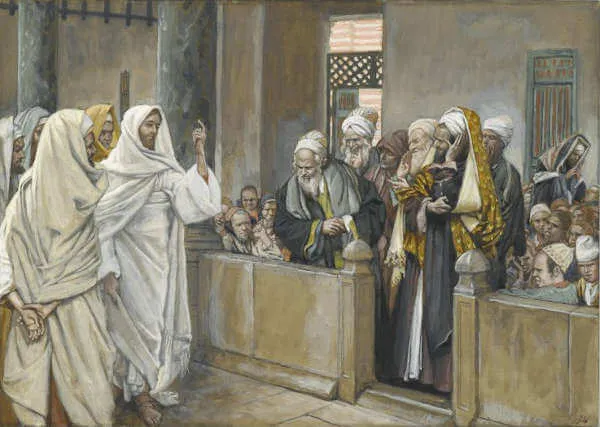
Luke 11:45-46

A Pricked Conscience

Then one of the scholars of the law said to him in reply, “Teacher, by saying this you are insulting us too.” And he said, “Woe also to you scholars of the law! You impose on people burdens hard to carry, but you yourselves do not lift one finger to touch them.” 

Reflection:

This scholar of the law had been listening to Jesus firmly rebuke the Pharisees. As he listened, his own conscience was pricked, and he challenged our Lord. What does Jesus do? He quickly and firmly rebukes the scholar of the law, pointing out that the scholar uses the law to impose heavy burdens on people. Jesus did not back down in this rebuke of love. Instead, He directed it to the very place that His rebuke was bearing fruit: in the conscience of this scholar of the law.

This experience of the scholar of the law teaches us two important lessons. First, we learn from him the importance of paying attention to our conscience when it is “pricked.” Second, it teaches us that when this happens, it is very easy to become defensive.

What is it that pricks your own conscience? Think back over the past month and reflect upon anything that you became defensive about. Did something someone said bother you? If so, pay attention to this. Sometimes we are bothered for reasons other than our own sin. But oftentimes, what actually bothers us is that we come face-to-face with some sin with which we struggle, and we do not want to admit it.

What if this scholar of the law would have listened to Jesus and, instead of being offended, became grateful for Jesus’ words? What if he would have humbly looked at his own life and realized that he was also guilty of the very things that Jesus was condemning the Pharisees for? If he would have done that, he would have been put in a position to sincerely examine his actions and begin a process of change. But this is hard to do.

Reflect, today, upon anything that has recently offended you. Be honest and admit that it is often the case that when God presents you with your sin through some means such as the loving rebuke of another, you must work diligently to overcome any pride. And when you feel defensive, you must immediately see that as an indication that there is something in your life that you need to change. A pricked conscience is a gift from God. Rejoice when that happens, rather than being offended, and you will discover one of the best ways by which you can grow in holiness of life by becoming free of the very sin our Lord is presenting to you.

Source: https://catholic-daily-reflections.com/2025/10/14/a-pricked-conscience-3/

Luke 11:45-46 Read More »

Luke 11:37-40

Interior Transformation

After Jesus had spoken, a Pharisee invited him to dine at his home. He entered and reclined at table to eat. The Pharisee was amazed to see that he did not observe the prescribed washing before the meal. The Lord said to him, “Oh you Pharisees! Although you cleanse the outside of the cup and the dish, inside you are filled with plunder and evil. You fools!”

Reflection:

It’s hard to imagine Jesus calling someone a fool. But that’s exactly what He did. This Pharisee had just finished listening to Jesus give a series of teachings and then invited our Lord to His home for dinner in an apparent gesture of kindness. But as the passage unfolds, it’s clear that this Pharisee is no friend of Jesus. Instead, his hospitality and kindness are a cloak for the evil within his soul.

Why does Jesus respond so fiercely, calling the Pharisee a fool? Because this Pharisee is filled with hypocrisy. His exterior actions do not flow from a heart filled with charity and faith. Instead, his exterior actions are a show. He is a fraud. He, like many of the Pharisees, was very concerned with various external rituals, such as scrupulously washing his hands before he ate. He believed that doing so was a sign of his holiness and closeness to God. But it wasn’t. His heart was one that was filled with judgment and self-righteousness. He looked down on others and elevated himself. In doing so, he deceived others and even deceived himself.

The central message we must take from this is that we must diligently focus upon that which is in our hearts. Our hearts, our interior life, must be blooming with love of God and others. We must place all of our efforts on cultivating a sincere life of virtue within. This is done by prayer and humility. Humility will open our eyes to see the truth of who we are. Prayer will strengthen us to change as we see that which needs to be changed within. Only then, when we see clearly the truth of who we are and prayerfully rely upon grace obtained by prayer, will we be able to become people of true integrity and holiness. And only then will our interior holiness be made manifest externally in our actions.

Reflect, today, upon these powerful words of Jesus: “You fools!” Don’t be offended by these words; they are words of love from our Lord. They are His fierce attempt to wake this Pharisee up and lead him away from his hypocrisy. Listen to these words as if they were also spoken to you. Every one of us can humbly benefit from this loving chastisement from Jesus. Every one of us needs to humbly be transformed more fully interiorly. Let Jesus’ words speak to you and reveal to you the ways that you need to change. Perhaps your pride has led you to an interior practice of judgment of others. Perhaps it has blinded you to sins that you need to confess. If you can listen to these words as if they were spoken to you, then Jesus’ fervor will reach you, and your eyes will be opened to that which is in your soul that needs to be changed. Do not turn a blind eye to this. Be open, be humble and listen.

Source: https://catholic-daily-reflections.com/2025/10/13/interior-transformation-4/

Luke 11:37-40 Read More »

Luke 11:29-30

A Sign From God

“This generation is an evil generation; it seeks a sign, but no sign will be given it, except the sign of Jonah. Just as Jonah became a sign to the Ninevites, so will the Son of Man be to this generation.”

Reflection:

Do you ever find yourself looking for signs from God? Often when we go through life, navigating through the ups and downs we all experience, we can easily find ourselves looking for signs from God about what we should do about this or that. And though God certainly communicates to us at times through special graces that are signs from Heaven, the passage above gives clarity to what sign we must be most attentive to.

The simple message in this Gospel passage from our Lord is that we must discover the meaning of the most profound sign ever given and use that as the foundation of all our decisions in life. Jesus’ life, death, and resurrection were not only the source of eternal life, they are also the clearest sign we need as we make all of our decisions in life.

A sign is some action that reveals a deep and hidden mystery. One mystery that Jesus’ life, death and resurrection reveals is that if we are to share in the new life won for us by His Cross, then we must follow the example He set by living a life of selfless sacrifice, laying down our lives for others, so that they will discover and embrace the new life of Christ’s Resurrection. Practically speaking, if you find yourself looking for answers in life, seeking signs from God about what you should do at times, then turn your eyes to the life of Christ and ponder ways in which you can more fully imitate His life in every daily practical decision you make. This is true whether you are discerning some important decision in life or some small practical decision. 

It is common to engage in such a discernment by looking at ourselves in a more selfish way. It’s difficult to move away from this line of thinking, but if we are to use the “sign” of the Son of Man, then we will discern our life decisions very differently. When we use the life, death and resurrection of our Lord as the source of our discernment and decision making in life, then we will end up making decisions that imitate His selfless sacrifice of love. So if you are faced with a decision, you will not ponder what is easier or what you prefer; rather, you will ponder what is more selfless and best for others. What is it that best imitates the sacrificial love of Jesus?

Reflect, today, upon any decision you are trying to make. Then reflect upon how you are going about this decision. Do you use the witness Jesus gave to us as the foundation of your discernment? Do you reflect upon how you can lay your life down as a sacrificial gift for others? Do you look at love from the point of view of the Cross of our Lord and strive to imitate His glorious and selfless dedication to the salvation of those whom He loves? Seek to imitate our Lord, using the witness of His actions as the foundation of all of your discernment and decisions in life, and you will have discovered the only true sign you need to navigate the challenges of life.

Source: https://catholic-daily-reflections.com/2025/10/12/a-sign-from-god-4/

Luke 11:29-30 Read More »

Luke 17:11-13

Praying for More than Our Needs

As Jesus continued his journey to Jerusalem, he traveled through Samaria and Galilee. As he was entering a village, ten lepers met him. They stood at a distance from him and raised their voices, saying, “Jesus, Master! Have pity on us!” 

Reflection:

This story begins very well for all ten of these lepers. For nine of them, it ends tragically. For one, it ends in an even better and more glorious way than it began.

The lepers represent us all. Their illness was a symbol of all sin and the consequences of sin. When the disease began, the lepers began to experience the effects of their disease. Discolored and thick dry skin, sores, and rashes would set in. Once detected, each leper was removed from the community to stop the spread of the disease and was only free to associate with other lepers. They no longer could gather freely with their loved ones as the lepers entered isolation and shame. Analogously, all sin has similar effects. Sin causes pain within our souls as we discover the growing wounds it causes. Sin affects our relationships and our ability to freely relate to those whom we love.

The initial cure for sin is simple. We cry out, “Jesus, Master! Have pity on me!” But that is only the first step. By curing the lepers, Jesus was showing us that He had power over our sin. He could forgive us and will forgive us when we seek His mercy. But forgiveness will end in tragedy if it does not lead us to faith and to a following of the will of God with zeal and determination. If we take the forgiveness of sins for granted, then we will be in an even more miserable state than before. The nine lepers who failed to return and give thanks to God represent those who do not convert their lives when touched by God’s merciful hand.

This story highlights the importance of our response to God when He does touch us. We must glorify God with a loud voice, fall on our knees before Him and express our deepest gratitude. When the one leper does this, Jesus says to him, “Stand up and go; your faith has saved you.” That mercy from our Lord was a mercy that touched his soul. It imparted the gift of faith and enabled this man to go forth and be healed with eternal graces.

Too often we turn to God in prayer only when we have a problem. Then, once the problem is taken care of, we pay little to no attention to our Lord. God’s role in our lives is not to fix our problems so that we can then go about our daily lives as normal. His mercy must evoke ongoing and profound gratitude. Gratitude to God is nothing other than an acknowledgement of the truth. We owe everything to God. Without Him, we are nothing. We are dead in our sins. Just one leper realized this and was blessed with the gift of faith that saved not only his body, but also his soul.

Reflect, today, upon the ways in which you turn to God in prayer. It is good to come to Him with your needs and problems. It is good to cry out “Jesus, Master! Have pity on me!” It is good to come to Him as the Physician of your soul and the source of healing you need. But that is not enough. In fact, if you stop there in your life of prayer, you will end in a most miserable state. You will be using God for your selfish advantage. Reflect upon whether you are able to take the next and most important step in faith. Do you come to Him when all is well? Do you praise Him with all your might for all that He has done for you? Do you fall on your knees before Him with the deepest gratitude in your heart? Reflect upon your prayer and seek to imitate this one leper. If you do, your faith will also save you and our Lord will invite you to rise and go forth, healed in the truest way possible.

Source: https://catholic-daily-reflections.com/2025/10/11/praying-for-more-than-our-needs/

Luke 17:11-13 Read More »

Luke 11:27-28

Living a Truly Blessed Life

While Jesus was speaking, a woman from the crowd called out and said to him, “Blessed is the womb that carried you and the breasts at which you nursed.” He replied, “Rather, blessed are those who hear the word of God and observe it.” 

Reflection:

This short Gospel reading reveals much about what makes one “blessed” in life. Specifically, Jesus considers those truly blessed who do two things: “hear the word of God” and then “observe it.” Though this seems quite obvious at first read, it is often harder than it seems.

The first step to a blessed life is hearing the Word of God. To “hear” implies that we do much more than become familiar with the Gospels. Hearing means we are not only aware of all that our Lord has revealed, it also means that we have truly internalized it, understanding all that our Lord requires of us.

Have you heard our Lord? It’s important to understand that the Gospel is alive. In other words, becoming familiar with the Word of God is not the same as reading some ancient book of lessons. Rather, hearing the Word of God means we hear a Person: the Son of God, speaking to us and guiding us each step of our lives. God’s Word is something that must speak to us every moment of every day, inspiring us to do this and avoid that. It is accomplished through a lifelong habit of prayerful communion with our Lord through which we are attentive to His voice always.

Hearing the very Person of the Son of God, the Word made flesh, necessarily implies that we also observe all that He speaks to us. In fact, failure to follow His continuous and gentle command to love will result in us being unable to clearly hear Him at all. We will become confused and will easily become directed by the many other voices in our world, unable to discern the glorious path chosen for us by our Lord.

Reflect, today, upon whether or not you struggle in any way with both hearing and observing the voice of God. If this is your struggle, then recommit yourself to a time of humble and wholehearted discovery. Tell our Lord that you are sorry for not being attentive to Him and set yourself on a mission to seek and find Him. Reject the confusion and anxiety of life, reject the many other voices of “wisdom” within our world, and listen for His gentle but clear voice. He is always speaking. He is always calling you. He is always present. Open the eyes of your soul and give Him your full attention. And when you sense Him speaking to you, respond with the utmost generosity and obedience. Doing so will result in you discovering what it means to be truly blessed by our Lord.

Source: https://catholic-daily-reflections.com/2025/10/10/living-a-truly-blessed-life-4/

Luke 11:27-28 Read More »

Luke 11:23

Overcoming “Neutrality”

“Whoever is not with me is against me, and whoever does not gather with me scatters.”

Reflection:

These words are embedded within several powerful teachings of Jesus, but, in many ways, this single sentence can stand alone as an important Christian truth. Specifically, it tells us that we cannot be neutral in our position regarding Jesus and all that He has taught us. This is an important message in the world today.

Today, there seems to be a growing secular value that we might call “neutrality.” We are told by many in the world that we must accept any morality, any lifestyle, any choice that others make. And though it is true that we must always love and accept every person and treat them with the utmost dignity and respect, it is not true that we should be neutral to the choices and secular values that some choose to live and express. Sadly, when we do speak the full truth, especially the many moral truths our Lord has revealed, we are often labeled as judgmental. But this is not the truth.

This quote above from today’s Gospel makes it clear that we cannot remain indifferent to the teachings of our Lord and still remain in His good graces. In fact, Jesus makes it clear that the opposite is true. He says that if we are not with Him, meaning, if we do not accept all that He has revealed, then we are, in fact, against Him. Being neutral on matters of faith and morality is not actually being neutral at all. It’s a choice that some make that has the clear effect of separating them from Jesus.

For example, regarding matters of faith, if someone were to say, “I do not believe in the Eucharist,” then they are, in fact, rejecting God. And though it is not our duty to be their judge, it is our duty to acknowledge that they have expressed a belief contrary to the truth. They are in error, and if they persist in this error, then they do separate themselves from God. That’s what Jesus is saying.

The same is true regarding morality. There are many examples in the moral life that are becoming more and more blatant in their opposition to our Lord’s teaching. Thus, we must remind ourselves that when we reject a moral teaching given to us by our Lord, we reject Jesus Himself.

Jesus goes even further when He says that “whoever does not gather with me scatters.” In other words, it’s not enough to simply personally believe all that Jesus taught, we must also teach it to others. If we do not and if we, instead, offer a false form of “acceptance” of another’s error, then we are actually working against Jesus. We all have a moral duty to actively promote the truths of the Gospel given to us by our Lord.

Reflect, today, upon how fully you are “with” our Lord and “gather” with Him. Do you fully accept all that He has taught and also seek to gather many others for the Kingdom of God? If you do not see yourself actively believing in and participating in the mission of our Lord, then heed these words of Jesus and allow them to gently but firmly challenge you, so that you will more fully work to build up God’s Kingdom in your own heart and in the world all around you.

Source: https://catholic-daily-reflections.com/2025/10/09/overcoming-neutrality-4/

Luke 11:23 Read More »

Luke 11:5-6

Praying with Fervor and Detachment

Jesus said to his disciples: “Suppose one of you has a friend to whom he goes at midnight and says, ‘Friend, lend me three loaves of bread, for a friend of mine has arrived at my house from a journey and I have nothing to offer him…’” 

Reflection:

Unless your friend were truly a very close friend, you may hesitate in waking them and their family at midnight to ask to borrow some food. And even if it were a very close friend, you would probably hesitate for fear of disturbing them. But in this parable, the “friend” is God. Jesus just finished giving His disciples the “Our Father” prayer, and now He adds this parable as a way of expressing the great confidence and determination with which we must pray to the Father. The parable concludes by stating that even if the person in bed does not get up to meet the request, they will do so “because of his persistence.” And though God always is attentive to our prayer, our persistence is an essential quality we must have.

When we pray to God with persistence, never doubting the goodness and generosity of God, God will pour forth upon us everything that is good. Of course, if our prayer is for something that is selfish or not in accord with the will of God, then all the begging in the world will not be effective. But when we pray as the “Our Father” prayer teaches us, then we can be certain that our fidelity to that prayer, prayed with the utmost trust and persistence, will effect the good gifts of the will of God in our lives.

One of the seven petitions of the “Our Father” prayer is “Thy Kingdom come, Thy will be done on earth as it is in Heaven.” This is a truly beautiful petition that requires not only ongoing persistence but also detachment from our preference in life. To pray that “God’s” will be done and that “His” Kingdom come is a way of also saying that you surrender all of your preferences to God. You come to God acknowledging that your will may not be God’s will. Thus, this petition expresses detachment in a powerful way.

Reflect, today, upon the importance of praying with the utmost fervor and persistence to God. Reflect, also, upon the importance of doing so with detachment. What does God want of you? What is His holy will for your life? Seek that will and that will alone with all your heart and you will discover that His will truly will come to be in your life.

Source: https://catholic-daily-reflections.com/2025/10/08/praying-with-fervor-and-detachment-4/

Luke 11:5-6 Read More »