Daily Reflections

Luke 4:38-39

The Power of His Word

After Jesus left the synagogue, he entered the house of Simon. Simon’s mother-in-law was afflicted with a severe fever, and they interceded with him about her. He stood over her, rebuked the fever, and it left her. She got up immediately and waited on them.

Reflection:

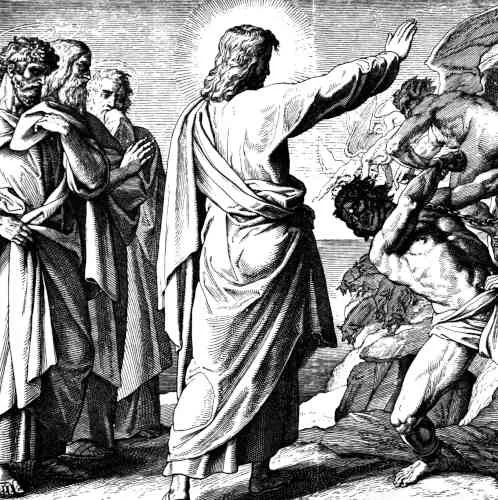
In today’s Gospel, we encounter the first mention of Simon—whose name Jesus would later change to Peter—in Luke’s account. Simon was likely present in the synagogue and witnessed Jesus cast out a demon from a possessed man. With a simple command, “Be quiet! Come out of him!”, Jesus revealed His divine authority. The people were astonished and exclaimed, “What is there about his word? For with authority and power he commands the unclean spirits, and they come out” (Luke 4:35–36).

Having seen His authority firsthand, Simon presumably spoke to Jesus about his mother-in-law, who was suffering from a severe fever. It is striking to imagine the moment of Simon’s first personal encounter with the Lord. Though Jesus, in His divine foresight, knew what Simon would one day become—the first pope entrusted with the spiritual authority of Heaven—Simon himself could not have foreseen how radically his life was about to change.

Upon entering Simon’s home, Jesus rebuked the fever. The Greek word used here, epitimaō, is the same word used in the previous passage when Jesus rebuked the demon. This deliberate parallel reveals that both the spiritual and physical realms are subject to Jesus’ command. What He rebuked were real evils and disorders: demonic possession as a violation of the soul and the fever as a natural affliction of the body.

Later in this Gospel passage, Jesus continues healing many who are sick and casting out demons. Once again, He rebukes the demons, silencing them and forbidding them to speak. Though they cry out, “You are the Son of God,” Jesus does not permit them to bear witness to Him. He has no need of demons to proclaim His identity. His revelation will come in His time, by His own design, especially through the Cross and Resurrection.

Jesus’ rebukes, whether uttered by a word, expressed through a gesture, or conveyed by His mere presence, are divine actions against evil. They are not expressions of wishful hope, but authoritative, efficacious commands. What He speaks comes to be. His word is not just powerful; it accomplishes what it declares.

Understanding this is foundational to our life of faith and our spiritual journey. When we turn to Christ with trust, we must believe that His word has the power to heal, to free, and to transform. He does not speak in vain. His authority extends to every dimension of our lives, body, soul, and spirit, and He desires to restore all that has been wounded by sin, suffering, or disorder.

One of the most tangible and powerful ways this takes place today is through the words of absolution spoken by the priest in the Sacrament of Reconciliation, a spiritual authority first given to Simon Peter and passed down through apostolic succession. The words of absolution are Christ’s words, words that rebuke sin and its effects, restoring the soul to grace and peace. They are divine actions that accomplish what they signify.

Though the words of absolution may be the clearest example, every Sacrament—Baptism, Confirmation, the Eucharist, Anointing of the Sick, Holy Orders, and Matrimony—conveys God’s grace and power through the efficacious word and action of Christ.

Reflect today on your own trust in the power of Jesus’ word. Do you believe He can rebuke the disorders in your life with divine authority? Do you turn to Him with confidence in the Sacraments, knowing that what He speaks, He accomplishes? Surrender all that afflicts you to the power of His Word, and allow Him to restore you to grace, relying especially on the sacramental authority given to Simon Peter and exercised by the priests who have followed after.

Source: https://catholic-daily-reflections.com/2026/09/01/the-power-of-his-word/

Luke 4:38-39 Read More »

Luke 4:33-35

The Holy One of God

In the synagogue, there was a man with the spirit of an unclean demon, and he cried out in a loud voice, “What have you to do with us, Jesus of Nazareth? Have you come to destroy us? I know who you are—the Holy One of God!” Jesus rebuked him and said, “Be quiet! Come out of him!” Then the demon threw the man down in front of them and came out of him without doing him any harm.

Reflection:

Yesterday, we began reading from the Gospel of Luke in our weekday liturgies, and we will continue to do so until the season of Advent. Luke’s Gospel was written especially for Gentile converts—those unfamiliar with Jewish customs—presenting Jesus not only as the fulfillment of Israel’s hopes but also as the Savior of all humanity. Unlike Matthew, who highlights Christ’s fulfillment of Old Testament prophecy, Luke reveals a broader vision: a universal Savior who brings healing, mercy, and salvation to the poor, the outcast, and the sinner.

In today’s passage, that universal mission is subtly foreshadowed through Jesus’ divine authority. Though the setting is a Jewish synagogue in Capernaum, His actions speak to a power not confined to time, place, or people. With a simple word, Jesus rebukes the demon, silences its protest, and frees the afflicted man. The astonishment of the crowd—“What is there about his word?”—captures the essence of the moment: Here is One whose authority reaches even into the unseen spiritual world and commands it.

Though He ministers among His own people, Jesus is not merely a teacher of the Law or a local prophet. His authority is absolute, His identity divine. The demon’s cry—“I know who you are, the Holy One of God!”—offers a strange testimony: Even the spiritual forces of darkness recognize and submit to Him. This is not just a healing; it is a confrontation between the kingdom of God and the powers of evil. And it is only the beginning.

Luke includes this scene early in his Gospel to show that Jesus’ mission is one of liberation—liberation from sin, bondage, and every form of darkness. The fact that this miracle occurs in a synagogue reminds us that no place, however sacred, is immune to the presence of evil. But more importantly, it reminds us that no evil is immune to the authority of Christ.

It is also helpful to recall the broader context. This event comes shortly after Jesus’ baptism, His forty days in the desert, and His rejection in Nazareth. That rejection led Him to Capernaum, a humble fishing village that would become the center of His Galilean ministry. It is here that He will call Peter, Andrew, James, John, and Matthew—men who will carry His Gospel to the ends of the earth. Thus, what begins in a small synagogue soon echoes to the nations.

Reflect today on the universal scope of Luke’s Gospel, which we will hear over the coming months. Though Jesus begins within Israel, His mission reaches every soul. By beginning His ministry with a confrontation against evil, Jesus reveals that He has come not only to teach but to conquer—to break the chains of darkness and bring divine healing to the world. His Word still speaks with authority. May we listen, believe, and be set free from the evil one and all his demonic powers, so that we may help proclaim Christ’s Kingdom to the ends of the earth in our own unique ways.

Source: https://catholic-daily-reflections.com/2026/08/31/the-holy-one-of-god/

Luke 4:33-35 Read More »

Luke 4:28-30

A Holy Provocation

When the people in the synagogue heard this, they were all filled with fury. They rose up, drove him out of the town, and led him to the brow of the hill on which their town had been built, to hurl him down headlong. But he passed through the midst of them and went away.

Reflection:

What a sobering beginning to our Lord’s public ministry. Shortly after His baptism in the Jordan River and the establishment of Capernaum as the center of His ministry, Jesus began calling His disciples and performing powerful miracles. News of His preaching and healing spread rapidly, reaching His hometown of Nazareth.

When Jesus returned to Nazareth, those who had known Him from His youth were not prepared for what they witnessed. In the synagogue, He stood and read from the scroll of the Prophet Isaiah. It was a messianic passage foretelling the One anointed by the Spirit to bring glad tidings to the poor, liberty to captives, sight to the blind, and freedom to the oppressed. After reading, Jesus sat down and solemnly proclaimed, “Today this Scripture passage is fulfilled in your hearing.” With these words, He revealed Himself to be the long-awaited Messiah.

At first, the people were amazed at the gracious words He spoke. But their awe quickly turned to confusion, then to hostility. “Is this not the son of Joseph?” they asked, unable to reconcile the divine authority they had just encountered with the humble figure they remembered from years past. Their familiarity bred contempt. Their hearts, bound by human reasoning and pride, could not accept the divine mystery standing before them.

Perceiving their thoughts, Jesus addressed the unspoken demand in their hearts—the desire to see in Nazareth the same wonders He had performed elsewhere. But He offered them no signs. Instead, He offered truth, recalling that in the days of Elijah and Elisha, God’s blessings were extended not to Israelites, but to Gentiles—a widow in Zarephath and a leper from Syria. This comparison deeply offended their national pride and shattered their assumptions about divine favor. Rather than receiving His rebuke with humility, they were filled with fury. The crowd attempted to kill the very One they had once known as neighbor and craftsman. Yet Jesus, untouched, “passed through the midst of them and went away.”

Jesus certainly knew this would happen. In His divine wisdom, He foresaw the reaction He would receive. And in a mysterious way, He even appears to draw it out. Why? Because this holy provocation was an act of mercy. In exposing the hardness of their hearts, Jesus gave them an opportunity to confront their pride, repent, and receive the Kingdom in truth.

In the months and years ahead, many of the people of Nazareth likely benefited from this initial encounter. There is little doubt that after Jesus left Nazareth, He remained the talk of the town. There is no record of Him returning. However, as He continued His public ministry, the people who had rejected Him would have continued to hear reports of His authoritative preaching and miraculous works. Some may have even traveled to nearby towns, such as Capernaum, to witness Him for themselves. In doing so, their initial rejection would have confronted them anew—forcing a choice: Either repent and believe, or grow in bitterness and confusion. Either Jesus of Nazareth was the Messiah or He was a false prophet. There could be no middle ground.

Reflect today on the mysterious ways Jesus continues to provoke hearts—including your own. Sometimes His Word unsettles us not because it is harsh, but because it is true, and we are unprepared to accept it and change. The people of Nazareth teach us that we—like them—sometimes need our pride stirred up so we can see it and reject it. As you consider the people of Nazareth from that moment forward, see yourself in them. Recognize any ways that you respond with hostility to humbling truths that are hard to accept, and allow time and grace to heal you—helping you to repent and grow in gratitude for Jesus’ humbling and holy provocation.

Source: https://catholic-daily-reflections.com/2026/08/30/a-holy-provocation/

Luke 4:28-30 Read More »

Matthew 16:23

A Stark Contrast

“Get behind me, Satan! You are an obstacle to me. You are thinking not as God does, but as human beings do.”

Reflection:

This scene likely unfolds in or near Caesarea Philippi, a Gentile region steeped in pagan worship. There, at the mouth of a cave long associated with the entrance to the netherworld—believed by some pagans to be the very gate of Hades—Jesus had just questioned His disciples: “Who do people say that the Son of Man is?” and then more directly, “But who do you say that I am?” (cf. Matthew 16:13–15). Peter, speaking with conviction on behalf of the Twelve, boldly proclaimed, “You are the Messiah, the Son of the living God” (Matthew 16:16). Jesus responded by declaring him “Peter,” the rock upon which He would build His Church, promising that “the gates of hell shall not prevail against it.”

Just moments later, Jesus issues one of the strongest rebukes recorded in the Gospels: “Get behind me, Satan!” The same Peter who had just spoken divine truth now speaks human fear and shortsightedness. In trying to dissuade Jesus from His suffering and death, Peter unknowingly opposes the very mission of the Messiah. Jesus calls this mindset not merely a mistake, but a diabolical temptation—echoing the same temptation He faced in the desert, when satan sought to lure Him away from the Cross with promises of worldly glory.

What a stark contrast. Peter goes from being the rock of faith to an obstacle in the Lord’s path. But why was Jesus so severe in His response?

Because the stakes were eternal. The Cross is not optional. It is the means of salvation—not just for Jesus, but for all who would follow Him. To think otherwise, even with good intention, is to prefer human comfort over divine wisdom. Peter’s protest reflects a natural aversion to suffering, but Jesus exposes it for what it truly is: a stumbling block to the will of the Father.

This dramatic Gospel scene is recorded for a reason. By calling Peter “Satan,” Jesus wanted to warn him, and us, of the real and ever-present danger of rejecting the way of the Cross. Like Peter, we can easily fall into the trap of wishful thinking and misguided compassion by saying about ourselves or those close to us, “God forbid, Lord! No such thing shall ever happen…” We are saying, in essence: “Lord, please make sure that neither I nor anyone I love ever has to suffer!” But such a prayer, though well-meaning, is clearly mistaken, and Jesus wants that point to be clearly understood.

Peter was troubled because “Jesus began to show his disciples that he must go to Jerusalem and suffer greatly from the elders, the chief priests, and the scribes, and be killed and on the third day be raised.” But all that Jesus revealed about His suffering was good—very good. Though His suffering was inflicted by the sins of others, His free and loving embrace of that suffering was the greatest act of love the world has ever known. Peter was blinded to this truth. He could not yet see beyond the horror of suffering to the divine good that would come through Jesus’ sacrificial embrace of it.

Reflect today on Peter’s and Jesus’ words: “God forbid, Lord!” and “Get behind me, Satan!” In this exchange, Jesus is also speaking to each of us, saying, “Never run from the Cross!” We must never flee from a selfless and sacrificial embrace of suffering, even when that suffering is unjust. God can and will transform all freely embraced suffering into a means of His eternal glory and our sanctification. With our Lord, reject the evil one’s false empathy. Reject the lie that suffering is meaningless. Choose instead to lay down your life in love with Christ, and in doing so, you will rise with Him, victorious over every sin and diabolical lie, overcoming even the sufferings of this life through your free and faithful embrace.

Source: https://catholic-daily-reflections.com/2026/08/29/a-stark-contrast/

Matthew 16:23 Read More »

Matthew 25:1-4

Final Discourses

Jesus told his disciples this parable: “The Kingdom of heaven will be like ten virgins who took their lamps and went out to meet the bridegroom. Five of them were foolish and five were wise. The foolish ones, when taking their lamps, brought no oil with them, but the wise brought flasks of oil with their lamps.”

Reflection:

Today’s Gospel comes from Jesus’ final discourses with His disciples. It was the week of Passover. Jesus had already concluded His public preaching in the Temple and was now offering some final words to His closest companions. Though He was fully aware of the suffering He was about to endure, His disciples did not yet understand what was to come. Therefore, we should recognize in these final teachings the urgency of Jesus’ message—an urgent appeal received by the Twelve but not yet fully grasped.

The final discourses all center around the theme of vigilance, judgment, and the coming of the Kingdom of Heaven. Jesus, knowing that His Passion was near, sought to prepare His disciples for the trials to come—not only the immediate trial of His crucifixion, but also the long vigil of the Church as she awaits His glorious return. In this parable of the ten virgins, Christ emphasizes the need for constant spiritual preparedness. The wise virgins symbolize those who live in a state of grace, are nourished by prayer, perform acts of charity, and remain faithful to God’s will. The oil in their flasks represents both good deeds and the inner life of the soul—alive through faith and love, and sustained by the Holy Spirit.

The foolish virgins represent those who give the appearance of belonging to the Bridegroom but fail to cultivate the interior life. They are unprepared for the delay, which signifies the mystery and hiddenness of God’s providential will and the unpredictability of the moment of our particular and final judgment. The final discourses, therefore, call us to an active and discerning faith that does not grow lax or presume upon last-minute conversion. Christ urges His disciples to “stay awake,” not in fear, but in hopeful readiness, living each day as if the Bridegroom might arrive at any hour.

Though this exhortation carries eschatological tones—pointing to our particular death and Jesus’ return in glory—it also refers to the countless ways God comes to us by grace, night and day, as we journey through this life. Attentiveness to those graced moments is, in many ways, the most important form of vigilance, because it prepares us to stand confidently before God when this life is over.

For that reason, hear Jesus’ concluding words in today’s Gospel as an exhortation to diligently await every graced moment of your day: “Therefore, stay awake, for you know neither the day nor the hour.” God’s grace can come to us at any time and in any circumstance. We might be shopping, doing chores, eating a meal, or working, and—if our souls are attuned to His coming—we may sense an immediate and clear spiritual prompting by which God inspires us to act or refrain. The good news is that when God communicates His will, He offers more than instruction; He also imparts the providential grace we need to respond at once. Responding to Him is more than a choice we make; it is a cooperation with His grace, by which we act more fully as members of His Body, the Church.

Reflect today on the oil in your own flask. Are you spiritually prepared not only for the coming of the Bridegroom at the end of your life or the end of time, but also for the daily, hidden comings of His grace? Seek to live each moment in a state of spiritual readiness, with your heart alert and open. When the Bridegroom comes—whether at the end of days or in the everyday quiet whispers of grace—blessed will you be to rise, lamp in hand, and enter the wedding feast with Him. Responding in this life gives us an immediate foretaste of the joy and peace we will experience in the Eternal Wedding Feast of the Lamb in Heaven.

Source: https://catholic-daily-reflections.com/2026/08/27/final-discourses/

Matthew 25:1-4 Read More »

Matthew 24:46-47

Momentary and Lasting Fulfillment

“Who, then, is the faithful and prudent servant, whom the master has put in charge of his household to distribute to them their food at the proper time? Blessed is that servant whom his master on his arrival finds doing so. Amen, I say to you, he will put him in charge of all his property.”

Reflection:

In the verse that follows, Jesus contrasts the “faithful and prudent servant” with a “wicked servant.” The wicked servant is the one who says in his heart, “My master is long delayed.” Believing this, he acts sinfully. Convinced that his master’s return is far off, the wicked servant lowers his guard, mistreats others, indulges in excess, and neglects his responsibilities. Why? Because he foolishly concludes that such a way of living is more desirable than a life of fidelity. This deceptive reasoning is rooted in a lie and ultimately leads to misery and destruction.

Most people do not choose sin because they desire misery. Rather, they sin because they fail to grasp the surpassing worth and eternal reward of holiness. They mistakenly believe—often without full awareness—that sin will bring greater satisfaction. On a superficial and momentary level, that may seem to be the case. It is easier to indulge the flesh, lash out in anger, or ignore one’s duties than it is to practice virtue, self-restraint, and discipline.

But is that which is easier necessarily better? More pointedly, is the path of least resistance ever the road to deep and lasting fulfillment? The Gospel offers a clear answer: no. 

The faithful and prudent servant, who labors with diligence even during the master’s absence, is the one to whom the master will entrust everything. The reward of fidelity far exceeds the fleeting comforts of sin. What appears easier often leads to ruin, while the more demanding path of virtue leads to glory.

This truth is easy to affirm intellectually but much harder to live out daily. To live faithfully, diligently, and prudently requires perseverance and sacrifice. But it is always worth it—both in the present moment and in eternity. Consider the present moment: Though sin may tempt us with immediate pleasure, the peace that flows from doing God’s will is far greater than any passing pleasure that sin offers. Those who embrace a life of virtue become increasingly aware of God’s abiding presence and the dignity it confers. This spiritual joy far surpasses the shallow consolations of sin.

As time moves forward, the contrast becomes even more striking. The one who chooses faithfulness day after day becomes like a flourishing vine, bearing fruit in abundance. As virtue matures, temptation loses its grip, and the soul becomes deeply rooted in truth. On the other hand, those who live for momentary indulgence discover that even sinful pleasures lose their appeal. The soul, unsatisfied, becomes restless—seeking ever more desperate forms of gratification.

Hence, holiness offers far greater fulfillment than sin. While this may be easy to affirm in theory, it is often difficult to live out in practice. That is why it is essential to begin with firm conviction by acknowledging that the life of virtue, though demanding, brings rewards that far surpass the fleeting comforts of sin. We must let this truth take root in our minds, speak it with confidence, choose it with intention, and allow it to shape our actions gradually and faithfully. Spiritual maturity does not unfold overnight; it grows steadily, like a fruitful vine that is nourished by one faithful choice at a time.

Reflect today on how this truth challenges any habits or temptations that lead you down the easier path of self-indulgence. Consider where compromise may have crept into your daily life, and resolve instead to be the faithful and prudent servant, living with integrity, even when no one is watching. This is the way of holiness and the path to peace, authentic joy, and eternal glory in the presence of your Master.

Source: https://catholic-daily-reflections.com/2026/08/26/momentary-and-lasting-fulfillment/

Matthew 24:46-47 Read More »

Matthew 23:27-28

Jesus’ Final Public Sermon

Jesus said, “Woe to you, scribes and Pharisees, you hypocrites. You are like whitewashed tombs, which appear beautiful on the outside, but inside are full of dead men’s bones and every kind of filth. Even so, on the outside you appear righteous, but inside you are filled with hypocrisy and evildoing.”

Reflection:

For the third day in a row, we read from Jesus’ fierce denunciation of the scribes and Pharisees. His words are exactly what these religious leaders needed to hear—strong medicine meant to awaken them from their self-righteousness, so that they might repent and receive the superabundant grace that would soon pour forth from His Cross. Though His rebukes may sound shocking—especially to those who heard them for the first time—we must receive them not with shock, but with humility and openness, applying them to our own spiritual journey.

Immediately after this lengthy denunciation, Jesus turns inward and offers a heart-wrenching lament over Jerusalem, especially over the hardened hearts of the very leaders He had just addressed. Though not included in today’s Gospel, the very next verse reveals His sorrow: “Jerusalem, Jerusalem, you who kill the prophets and stone those sent to you, how many times I yearned to gather your children together, as a hen gathers her young under her wings, but you were unwilling!” (Matthew 23:37). This tender image opens a window into Jesus’ Sacred Heart—the same heart that had just delivered such relentless rebukes.

Consider that image: a hen gathering her young under her wings. By natural instinct, a mother hen shields her chicks, even risking her life to protect them. In placing that instinct within creation, God reveals something of His own divine love. He, too, longs to gather, shield, and save us from eternal harm. Nothing—not even the hardness of our hearts—can stop Him from extending His merciful embrace. Yet just as a chick that strays from its mother forfeits her protection, so do we when we resist Christ’s call. His lament is not rooted in anger, but in grief over those who are unwilling to be gathered and saved. Even His fiercest rebukes flow from a heart burning with love.

Though these words were originally addressed to the scribes and Pharisees, they apply to each of us. God will stop at nothing to bring us safely into His care. If gentle compassion moves our hearts, that is what He offers. If firm rebuke is what we need, He offers that too. Whether He draws us with tenderness or corrects us with firmness, His purpose is always the same: to keep us safe from sin and eternal separation, and to draw us into the Kingdom of grace.

Interestingly, this rebuke was Jesus’ final public sermon in Matthew’s Gospel. If we were writing the script for His final week, we might envision a message of consolation or encouragement to close His public ministry. But instead, He ends with a sobering warning. Why? Because it was a final act of mercy. His last words to the crowds were meant to awaken hearts before it was too late. It was love speaking its final appeal, a shepherd crying out for His wandering sheep.

Reflect today on Jesus delivering this final sermon to you. Heed His warning and receive it in the way it was delivered: with love. Feel His urgency and His desire to do whatever it takes to draw you closer to Himself. Respond to this sermon, and do not remain among the unwilling. Let these final words of Jesus pierce your heart, so that you may be gathered under the shelter of His wings and never stray again.

Source: https://catholic-daily-reflections.com/2026/08/25/jesus-final-public-sermon/

Matthew 23:27-28 Read More »

Matthew 23:23-24

A Confrontation of Love

Jesus said: “Woe to you, scribes and Pharisees, you hypocrites. You pay tithes of mint and dill and cummin, and have neglected the weightier things of the law: judgment and mercy and fidelity. But these you should have done, without neglecting the others. Blind guides, who strain out the gnat and swallow the camel!”

Reflection:

Over the course of yesterday, today, and tomorrow, the Church presents nearly all of Chapter 23 of Matthew’s Gospel, which contains Jesus’ powerful denunciation of the scribes and Pharisees. This confrontation took place in the Temple area during Passover week—the days leading up to His Passion and Death. After His triumphal entry into Jerusalem on what we now commemorate as Palm Sunday, Jesus spent the following days preaching, healing, and facing mounting opposition from religious leaders. He began by cleansing the Temple, overturning the tables of the moneychangers and declaring, “My house shall be a house of prayer, but you are making it a den of thieves” (Matthew 21:13). In the days that followed, He was challenged by the chief priests, scribes, Herodians, elders, and Pharisees, and He responded to each with unwavering clarity—firmly, yet lovingly rebuking them in an attempt to win them over.

In this particular encounter, Jesus condemns the scribes and Pharisees for neglecting “the weightier things of the law: judgment and mercy and fidelity,” while appearing outwardly righteous. He accuses them of being “full of plunder and self-indulgence,” revealing the dissonance between their external piety and their inner corruption. Though meticulous in tithing even the smallest herbs—mint, dill, and cummin—they ignored the heart of the law: love of God and neighbor. Their spiritual blindness led them to fixate on minor religious details while disregarding justice and mercy. By calling them “blind guides,” Jesus exposes their failure as leaders who burden others without embracing the deeper demands of righteousness themselves.

This rebuke is not born of anger but of love. Jesus calls them to interior conversion—to cleanse the heart so that external actions may be authentically holy. His image of straining out a gnat while swallowing a camel vividly illustrates their misplaced priorities. Jesus challenges them, and us, to examine whether our religious practices are rooted in grace or driven by appearances and habit. True fidelity to God requires both faithful observance and the necessary virtues that give those actions meaning. In confronting these leaders, Jesus offers not condemnation but a merciful warning meant to awaken their hearts before His Passion begins.

What stands out in this confrontation is the fierce and unrelenting nature of Jesus’ rebukes. He calls them hypocrites and blind guides, comparing them to cups that are clean outside but filthy within. These are not vague criticisms, but pointed and prophetic warnings. Like the prophets of old, Jesus demands more than superficial religiosity—He calls for integrity of heart. Each rebuke is a summons to repentance from the One who sees both actions and intentions. Sadly, many of His listeners refused to be moved.

Reflect today on the gravity of Jesus’ words. Though most of the scribes and Pharisees appear to have rejected His rebukes, they are recorded in Scripture so that every generation may apply them to their own lives. Hear them as if spoken to you—not to discourage, but to inspire conversion. While we may not mirror the scribes and Pharisees in every detail, we all benefit from confronting our own spiritual complacency. This can be a challenging exercise, but when undertaken with humility and trust—recognizing that Jesus’ words are meant to heal and draw us closer to Him—it becomes a path to deeper grace. Let His rebukes take root within you, pulling up even the smallest weeds of pride or neglect, so that true virtue may flourish.

Source: https://catholic-daily-reflections.com/2026/08/24/a-confrontation-of-love/

Matthew 23:23-24 Read More »

John 1:45-46

You Are the Son of God!

Philip found Nathanael and told him, “We have found the one about whom Moses wrote in the law, and also the prophets, Jesus son of Joseph, from Nazareth.” But Nathanael said to him, “Can anything good come from Nazareth?” Philip said to him, “Come and see.”

Reflection:

The name “Bartholomew” is listed in the Synoptic Gospels as one of Jesus’ chosen Twelve Apostles. His name means, “son of Tolmai.” In John’s Gospel, he is traditionally identified as Nathanael. It’s possible that his full name was Nathanael, son of Tolmai.

In John’s Gospel, Andrew and John—two fishermen from Capernaum—were the first to be called by Jesus. Andrew then told his friend Philip, who subsequently told Nathanael, “We have found the one about whom Moses wrote in the law, and also the prophets, Jesus son of Joseph, from Nazareth.”

Nathanael’s immediate response was one of doubt: “Can anything good come from Nazareth?” This reflected the fact that Nazareth was a small and seemingly insignificant town at that time; moreover, the Messiah was expected to come from Bethlehem, the City of David. Neither Philip nor Nathanael knew Jesus had actually been born in Bethlehem. Yet Philip’s response opened the door to a dramatic transformation in Nathanael’s life: “Come and see.”

Because Nathanael was open, he did go to see Jesus. When Jesus saw him approaching, He said, “Here is a true child of Israel. There is no duplicity in him.” Jesus had seen Nathanael sitting under a fig tree earlier, and upon revealing this, Nathanael responded in a way that must have surprised even himself: “Rabbi, you are the Son of God; you are the King of Israel.”

According to ancient tradition, after Pentecost, Nathanael evangelized in regions that included India, Armenia, and Mesopotamia, ultimately giving his life as a martyr, possibly by being flayed alive. What a change from his initial skepticism to his final act of witness! Little did Nathanael realize that the humble carpenter from Nazareth would change not only his life, but the entire world.

As we honor Saint Bartholomew today, ponder the one quality Jesus attributed to him: “There is no duplicity in him.” To be without duplicity is to be sincere, honest, and transparent before God and others. It is to possess an integrity of heart that seeks the truth and responds wholeheartedly when that truth is revealed. Bartholomew’s journey from skepticism to a bold profession of faith reveals the transformation that takes place in a soul open to grace. His life teaches us that God can use even our hesitation to draw us deeper into faith if we are only willing to “come and see.”

In what ways do you hesitate in your response to God? Today, we do not meet Jesus for the first time, as did Bartholomew. We know Him through prayer, through the witness of the saints, and especially through the Sacred Scriptures. There are many profound and life-altering truths contained in God’s Word. We are called to approach these truths as disciples ready to be transformed. Like Nathanael, we may initially struggle with doubt, indifference, or preconceived notions, but the invitation stands: “Come and see.” Jesus continues to reveal Himself to us in countless ways, if we are only open. If we approach Him with sincerity and without duplicity, He will speak to our hearts, reveal our true selves to us, and call us into deeper communion with Him.

Reflect today on the witness of Saint Bartholomew’s life. See in him any hesitation you may have about wholeheartedly following Christ. With him, come and see our Lord. Seek Him in prayer and in His Word. Let Him speak to your heart. Approach Him without duplicity. Be open, attentive, sincere, and honest. And when He speaks, do not hesitate to follow Him, declaring with Saint Bartholomew: “Rabbi, you are the Son of God; you are the King of Israel.”

Source: https://catholic-daily-reflections.com/2026/08/23/you-are-the-son-of-god/

John 1:45-46 Read More »

Matthew 16:13-16

Overcoming the Gates of hell

Jesus went into the region of Caesarea Philippi and he asked his disciples, “Who do people say that the Son of Man is?” They replied, “Some say John the Baptist, others Elijah, still others Jeremiah or one of the prophets.” He said to them, “But who do you say that I am?” Simon Peter said in reply, “You are the Christ, the Son of the living God.”

Reflection:

The symbolism associated with Caesarea Philippi is central to today’s Gospel. Located north of Jesus’ home base in Capernaum, it was a predominantly pagan city known for its shrines to false gods. One of the most prominent was Pan, after whom the region was named Panias (later Banias). Pan, a Greek god, was honored at a shrine near a large cave and spring considered the entrance to Hades. Pan was the god of nature, shepherds, flocks, wild places, fertility, and rustic music, and was often depicted as half man, half goat, with horns and hooves. He played the pan flute and was associated with lust, chaos, and sudden fear—from which we get the word panic.

Additionally, the city was the site of a temple dedicated to the late emperor, Caesar Augustus, who was worshiped as a god throughout the Roman Empire. It was into this spiritually dark pagan setting that Jesus led His disciples—on what may have been a two-day journey—for what culminated in a single, monumental question.

Jesus took the Twelve away from the comfort of their familiar fishing village and Jewish neighbors for a reason. He wanted them to answer His question not in the midst of the familiar and safe, but in a place marked by spiritual confusion and idolatry. Why? So that faith could be professed even there, and divine grace could confront the darkness that permeated the region.

At first, He asked who the people said He was. They answered, “Some say John the Baptist, others Elijah, still others Jeremiah or one of the prophets.” But then He posed the question that reached the heart of His mission: “But who do you say that I am?” This was a moment of divine testing—one which Simon passed with profound faith: “You are the Christ, the Son of the living God.” Jesus’ extraordinary and consequential response has enduring significance to this day. He declared:

“Blessed are you, Simon son of Jonah. For flesh and blood has not revealed this to you, but my heavenly Father. And so I say to you, you are Peter, and upon this rock I will build my Church, and the gates of the netherworld shall not prevail against it. I will give you the keys to the kingdom of heaven. Whatever you bind on earth shall be bound in heaven; and whatever you loose on earth shall be loosed in heaven” (Matthew 16:17–19).

With these sacred words, Jesus founded His Church upon Peter, making him the first pope. In biblical tradition, a change of name signifies a new mission and identity. Simon, son of Jonah, was now to be called Peter—Petros in Greek and Cephas in Aramaic—meaning “rock.” Peter became the solid foundation upon which Christ’s Church would be built. No pagan power, false god, or earthly ruler would ever overcome what Christ established with divine authority.

Reflect today on the significance of the papacy. Even now, in the successor of Saint Peter, the words of Simon continue to echo throughout the world: “You are the Christ, the Son of the living God.” This is the pope’s first and most important duty—to bear witness to Christ, the Son of God. Despite the personal weaknesses of some popes and the saintliness of others, it is Jesus who established Peter and his successors as the visible foundation of the Church. Pray for the Holy Father, and trust in the timeless witness of every pope since that first moment in Caesarea Philippi—a witness upheld not by human strength, but by Christ’s own promise. To profess faith in the papacy is to profess faith in the One who instituted it and endowed it with His divine authority.

Source: https://catholic-daily-reflections.com/2026/08/22/overcoming-the-gates-of-hell/

Matthew 16:13-16 Read More »