Daily Reflections

Luke 1:26-28

Gazing Upon the Mother of God

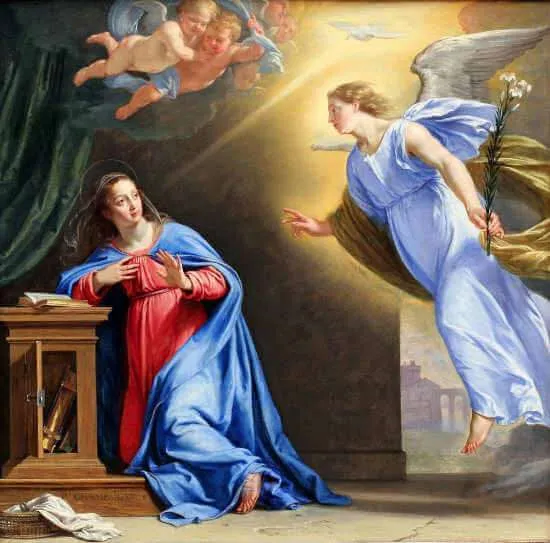
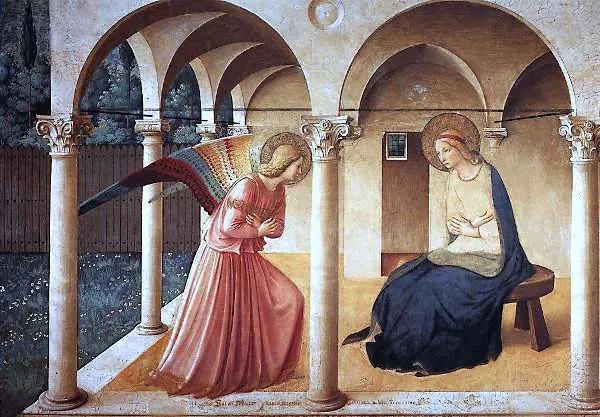
“The angel Gabriel was sent from God to a town of Galilee called Nazareth, to a virgin betrothed to a man named Joseph, of the house of David, and the virgin’s name was Mary. And coming to her, he said, “Hail, full of grace! The Lord is with you.”

Reflection:

What an amazing experience this would have been. This humble servant of God, a young girl, was visited by the Archangel Gabriel and greeted with the salutation, “Hail, full of grace! The Lord is with you.” Try to imagine her experience. She was humble beyond comprehension, filled with every heavenly virtue, loved God with all her heart and suddenly came face-to-face with this glorious and most magnificent Archangel. And this heavenly visitor showered the deepest of praises upon this lowly servant of the Lord.

At first, in her humility, Mary simply pondered this greeting. She pondered it in her heart through prayer and faith. Then the Archangel spoke further: “Do not be afraid, Mary, for you have found favor with God. Behold, you will conceive in your womb and bear a son, and you shall name him Jesus. He will be great and will be called Son of the Most High, and the Lord God will give him the throne of David his father, and he will rule over the house of Jacob forever, and of his kingdom there will be no end.”

Though Mary inquired further about how this could be, she quickly gave her consent: “Behold, I am the handmaid of the Lord. May it be done to me according to your word.” And it was these words of this young woman that continuously echoed in her heart throughout her life.

Mother Mary was great for many reasons. She was the Immaculate Conception—the one singularly conceived without sin in the womb of her own mother. She was the one chosen by the Father to bring forth the Savior of the World as her only begotten Son. But her greatness is especially found in her ongoing submission to the will of God. “May it be done to me according to your word.”

This is what she said over and over throughout her life. This is her perfect “fiat” to her God. All she knew was surrender and submission to all that God asked of her. And it is this, more than anything else, that made her the worthy Mother of God.

Though none of us were immaculately conceived within our mother’s wombs and none of us have remained without sin throughout our lives, we must all strive to be inspired by this holy woman. We must all ponder her deep humility and her willing acceptance of God’s will in her life. And we must all strive to imitate her fiat and her perfect virtue.

Imitation of our Blessed Mother is accomplished by first coming to know her, understand her and love who she is. Gazing upon her interior beauty and holiness presents us with the vision of the perfection to which we are all called. As we prayerfully gaze upon her heart and come to understand her virtues more clearly, we will be inspired to open our own hearts so as to imitate her by the grace of God. This prayerful exercise is one of the best and quickest ways to obtain the heights of holiness to which God has called us.

Reflect, today, upon this holy daughter of the Most High. She is not one we can “figure out.” Instead, she is one whom we can come to know through prayer and through God’s inspiration. Ponder her prayerfully. Be open to her inspiration. And allow the Holy Spirit to also overshadow you so that you will more closely be able to imitate her in her holy virtues.

Source: https://catholic-daily-reflections.com/2023/12/23/gazing-upon-the-mother-of-god/
Luke 1:26-28 Read More »

Luke 1:64

Zechariah's Victory

“Immediately his mouth was opened, his tongue freed, and he spoke blessing God.”

Reflection:

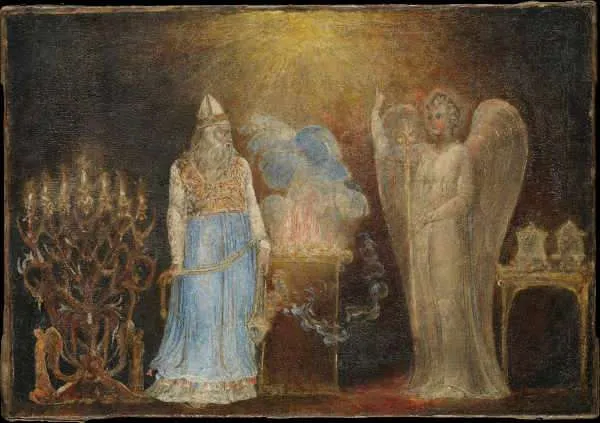
This line reveals the happy conclusion to Zechariah’s initial failure to believe in what God revealed to him. Recall that nine months earlier, as Zechariah was fulfilling his priestly duty of offering sacrifice within the Holy of Holies in the Temple, he received a visit from the glorious Archangel Gabriel, who stands before God.

Gabriel revealed to Zechariah the good news that his wife would conceive in her old age and that this child would be the one to prepare the people of Israel for the coming Messiah. What an incredible privilege that would have been! But Zechariah disbelieved. And as a result, the Archangel struck him mute for the nine months of his wife’s pregnancy.

The punishments of the Lord are always gifts of His grace. Zechariah was not punished out of spite, or for punitive reasons. Instead, this punishment was more like a penance. He was given the humbling penance of losing his ability to speak for nine months for a good reason.

It appears as if God knew that Zechariah needed nine months to silently reflect upon what the Archangel had said. He needed nine months to ponder his wife’s miraculous pregnancy. And he needed nine months to ponder who this child would be. And those nine months produced the desired effect of a full conversion of heart.

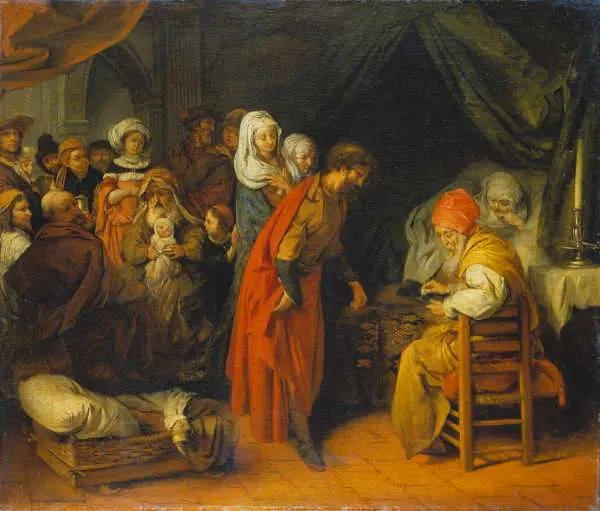
After the child was born, it was expected that this firstborn son would be named after the father, Zechariah. But the Archangel had told Zechariah that the child was to be named John. Therefore, on the eighth day, the day of his son’s circumcision when he was presented to the Lord, Zechariah wrote on a tablet that the baby’s name was John. This was an act of faith and a sign that he had fully turned from disbelief to belief. And it was this act of faith that undid his prior doubt.

Every one of our lives will be marked by failures to believe on the deepest level of faith. For that reason, Zechariah is a model for us of how we are to deal with our failures. We deal with them by allowing the consequences of past failures to change us for the good. We learn from our mistakes and move forward with new resolutions. This is what Zechariah did, and this is what we must do if we wish to learn from his good example.

Reflect, today, upon any sin you have committed that has had painful consequences in your life. As you ponder that sin, the real question is where you go from here. Do you allow that past sin, or lack of faith, to dominate and control your life? Or do you use your past failures to make new resolutions and decisions for the future so as to learn from your mistakes? It takes courage, humility and strength to imitate the example of Zechariah. Seek to bring these virtues into your life this day.

Source: https://catholic-daily-reflections.com/2023/12/22/zechariahs-victory-3/

Luke 1:64 Read More »

Luke 1:46-47

Proclaim and Rejoice!

“My soul proclaims the greatness of the Lord; my spirit rejoices in God my savior.”

Reflection:

There is an age-old question that asks, “Which came first, the chicken or the egg?” Well, perhaps it’s an age-old “question” because only God knows the answer to how He created the world and all the creatures within it.

Today, this first line from the glorious song of praise of our Blessed Mother, the Magnificat, poses to us another question. “Which comes first, to praise God or to rejoice in Him?” Perhaps you’ve never asked yourself that question, but it’s worth pondering both the question and the answer.

This first line of Mary’s song of praise identifies two actions taking place within her. She “proclaims” and she “rejoices.” Think about those two interior experiences. The question can be better phrased like this: Did Mary proclaim God’s greatness because she was first filled with joy? Or was she filled with joy because she first proclaimed the greatness of God? Perhaps the answer is a bit of both, but the ordering of this line in Sacred Scripture implies that she first proclaimed and as a result was filled with joy.

This is not just a philosophical or theoretical reflection; rather, it is a very practical one that offers significant insight into our daily lives. Oftentimes in life we wait to be “inspired” by God before we thank and praise Him. We wait until God touches us, fills us with a joyful experience, answers our prayer and then we respond with gratitude. This is good. But why wait? Why wait to proclaim the greatness of God? 

Should we proclaim the greatness of God when things are difficult in life? Yes. Should we proclaim the greatness of God when we do not feel His presence in our lives? Yes. Should we proclaim the greatness of God even when we encounter the heaviest of crosses in life? Most certainly yes.

Proclaiming the greatness of God should not only be done after some powerful inspiration or answer to prayer. It should not only be done after we experience the closeness of God. Proclaiming God’s greatness is a duty of love and must always be done, every day, in every circumstance, no matter what. We proclaim God’s greatness primarily because of Who He is. He is God. And He is worthy of all our praise for that fact alone.

Interestingly, however, the choice to proclaim the greatness of God, both in good times and in difficult times, often also leads to the experience of joy. It appears that Mary’s spirit rejoiced in God her Savior primarily because she first proclaimed His greatness. Joy comes from first serving God, loving Him and giving Him the honor due His name.

Reflect, today, upon this twofold process of proclaiming and rejoicing. Proclaiming must always come first, even if we feel as though there is nothing to rejoice about. But if you can commit yourself to the proclamation of the greatness of God, you will suddenly find that you have discovered the deepest cause of joy in life: God Himself.

Source: https://catholic-daily-reflections.com/2023/12/21/proclaim-and-rejoice-3/

Luke 1:46-47 Read More »

Luke 1:35

Running to the Will of God

“And the angel said to her in reply, “The Holy Spirit will come upon you, and the power of the Most High will overshadow you. Therefore the child to be born will be called holy, the Son of God.”

Reflection:

Try to set aside all that you know about Jesus and simply ponder these words of the Archangel Gabriel as if you were to hear them as our Blessed Mother did for the very first time. She was told she would have a child, even though she had not had relations with a man. She was told that this pregnancy would happen by the overshadowing of the Holy Spirit. And she was told that her Child would be the Son of God. What was Mary to think about these amazing revelations given to her by this most glorious Archangel?

The ordinary person would most likely conclude that this was some sort of hallucination and that what they were seeing and hearing was the result of some temporary psychological disorder. Perhaps she was dreaming? Or perhaps it was something she unknowingly ingested that has led to this experience?

But our Blessed Mother was no ordinary person, and she had no ordinary mind. Her mind was perfectly sharp on account of her immaculate nature. And her mind was continually “full of grace,” as Gabriel said in his greeting to her. She knew God’s voice, and she knew that this Archangel was speaking to her a message from on high. As a result, she listened, accepted, believed and consented.

We can also conclude that Mary did even more than merely consent. The love she had for God and His will would have been so strong that she would have been filled with an immediate and burning desire to fulfill this command of the Archangel. She would have been filled with a holy desire to do all she could to bring about this miraculous calling she had received. And this calling would have immediately become the central purpose of her life.

Though none of us has been given the unique and glorious vocation that was given to our Blessed Mother, we are all most certainly given a mission by God. Sometimes we listen and consider it. Sometimes we choose to embrace it. But the ideal is that we imitate our Blessed Mother and run to it. We must not only be open. We must not only submit. We must also allow every desire within our soul, every passion we have and every longing within us to work toward the accomplishment of God’s will.

What is it that God is calling you to do in life? What is your purpose? What is your mission? If you struggle in answering these questions, then perhaps start by praying for the deep and all-consuming holy desire to accomplish that which God has chosen for you. If all you desire is the fulfillment of the will of God, then when God reveals His will to you, you will more easily and more quickly be able to accomplish it.

Reflect, today, upon the unique mission that God has given to you. Whatever He has called you to do with your life is a calling given only to you. Do not run from it. Do not reluctantly accept it. Instead, run to it with your whole being and allow God to do great things through you.

Source: https://catholic-daily-reflections.com/2023/12/19/running-to-the-will-of-god-2/ 

Luke 1:35 Read More »

Luke 1:39-40

Bringing Christ to Others

“Mary set out in those days and traveled to the hill country in haste to a town of Judah, where she entered the house of Zechariah and greeted Elizabeth.”

Reflection:

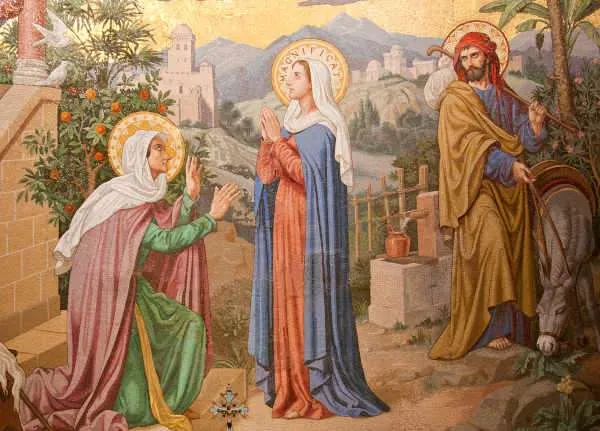
We are presented today with the glorious story of the Visitation. When Mary was about two months pregnant, she traveled to be with her cousin Elizabeth who was to give birth within a month. Though much could be said about this as an act of familial love given from Mary to Elizabeth, the central focus immediately becomes the precious Child within the womb of Mary.

Imagine the scene. Mary had just traveled about 100 miles. She was most likely exhausted. As she finally arrived, she would have been relieved and joyful at the completion of her journey. But Elizabeth says something quite inspiring at that moment, which elevates the joy of all present, including the joy of Mother Mary. Elizabeth says, “For at the moment the sound of your greeting reached my ears, the infant in my womb leaped for joy” (Luke 1:44).

Again, imagine the scene. It was this tiny child within Elizabeth’s womb, John the Baptist, who immediately perceived the presence of the Lord and leaped for joy. And it was Elizabeth who immediately perceived the joy in her child living within her womb. As Elizabeth expressed this to Mary, who was already joyful at completing her journey, Mary was suddenly all the more overjoyed at the realization that she had brought to Elizabeth and John the Savior of the World living within her womb.

This story should teach us much about what is most important in life. Yes, it’s important to reach out in love to others. It’s important to care for our relatives and friends when they need us the most. It’s important to be sacrificial with our time and energies for the good of others, because through these acts of humble service, we certainly share the love of God. But most importantly, we must bring Christ Jesus Himself to others.

Elizabeth was not filled with joy first and foremost because Mary was there to help her in her pregnancy. Rather, she was overjoyed primarily because Mary brought her Jesus, her Lord, living within her womb.

Though we do not bring Christ in the same way as our Blessed Mother did, we nonetheless must make this our central mission in life. First, we must foster a love and devotion to our Lord so deep that He truly dwells within us. Then, we must bring Him who dwells within us to others. This is unquestionably the greatest act of charity we will ever be able to offer to another.

Reflect, today, not only upon your mission to invite your Lord to dwell within you as our Blessed Mother did but also upon your Christian duty to then bring Him who dwells within you to others. Do others encounter Christ living within you with joy? Do they sense His presence in your life and respond with gratitude? Regardless of their response, commit yourself to this holy calling of bringing Christ to others as an act of the deepest love.

Source: https://catholic-daily-reflections.com/2023/12/20/bringing-christ-to-others-3/ 

Luke 1:39-40 Read More »

Luke 1:19-20

Faith or Doubt

“I am Gabriel, who stand before God.  I was sent to speak to you and to announce to you this good news.  But now you will be speechless and unable to talk until the day these things take place, because you did not believe my words, which will be fulfilled at their proper time.”

Reflection:

Imagine if the Archangel Gabriel appeared to you. What would that have been like? This particular Archangel stands before the incomprehensible beauty and splendor of the Most Holy Trinity and brings forth messages of the greatest importance. Gabriel is God’s most notable messenger. Take a moment to ponder what such a glorious apparition would have been like.

In the passage above, this glorious Archangel appears to Zechariah as he is fulfilling his priestly duty to burn incense before the Lord within the Holy of Holies.

As Zechariah enters the sanctuary while all the people remain outside praying, he suddenly has a vision of the Archangel telling him that his wife Elizabeth will have a child, even though she is advanced in years. But even though Zechariah hears this message from Gabriel, the Archangel who stands before God, he doubts what he is being told.

Would you have believed the Archangel Gabriel if you were Zechariah? Or would you have doubted? Though there may not be a way to know the answer to that question, it’s helpful to ponder the humble truth that you very well may have doubted. It takes true humility to admit that possibility.

Like Zechariah, we are all weak and sinful. We lack the perfect faith that our Blessed Mother had. And if you can humbly admit this, then you are in a great position to overcome the weakness of faith you struggle with. Zechariah suffered much for his lack of faith, but that suffering led to a renewal of faith when he named his child John in obedience to the Archangel.

Reflect, today, upon how well you listen to all that God says to you. Do you listen, believe and obey? Or do you question and doubt God’s voice. Know that God speaks to you each and every day. Admit the ways that you lack perfect faith and allow that act of humble acknowledgment to strengthen you where you need help the most.

Source: https://catholic-daily-reflections.com/2023/12/18/faith-or-doubt-3/

Luke 1:19-20 Read More »

Matthew 1:18-19

A Mysterious Pregnancy and Apparent Scandal

“This is how the birth of Jesus Christ came about. When his mother Mary was betrothed to Joseph, but before they lived together, she was found with child through the Holy Spirit. Joseph her husband, since he was a righteous man, yet unwilling to expose her to shame, decided to divorce her quietly.”

Reflection:

Mary’s pregnancy was truly mysterious. In fact, it was so mysterious that even Saint Joseph initially couldn’t accept it. But, to Joseph’s defense, who could accept such a thing? He was faced with what was a most confusing situation. The woman to whom he was engaged was suddenly with child, and Joseph knew he was not the father. But he also knew that Mary was a holy and pure woman. So, naturally speaking, it makes sense that this situation simply did not make immediate sense.

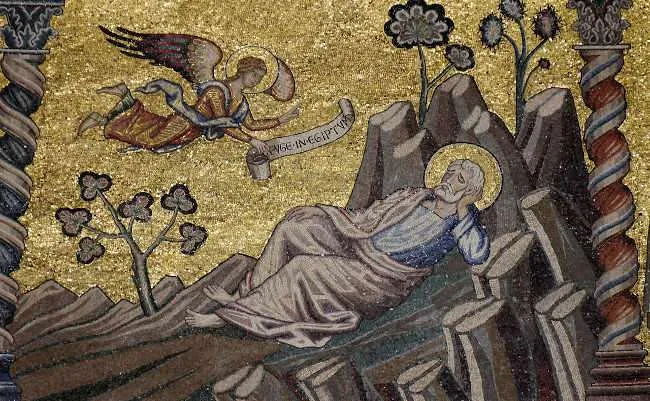
But that’s the key. “Naturally speaking” this did not make immediate sense. The only way to understand the situation of Mary’s sudden pregnancy was through supernatural means. Thus, an angel of the Lord appeared to Joseph in a dream, and that dream was all he needed to accept this mysterious pregnancy in faith.

It’s amazing to consider the fact that the greatest event to ever take place in human history happened under a cloud of apparent scandal and confusion. The angel revealed the deep spiritual truth to Joseph secretly, in a dream. And though Joseph may have shared his dream with others, it’s most likely the case that many people still assumed the worst.

Most would have presumed that Mary was pregnant either by Joseph or by someone else. The idea that this conception was the working of the Holy Spirit would have been a truth beyond what their friends and relatives could ever comprehend.

But this presents us with a great lesson about judgment and the action of God. There are countless examples in life when God and His perfect will lead to judgment, apparent scandal and confusion. Take, for example, any martyr of old. We now look at the many acts of martyrdom in a heroic way.

But when the martyrdom actually happened, many would have been deeply saddened, angered, scandalized and confused. Many, at the time of a loved one being martyred for the faith, would be tempted to question why God permitted this.

The holy act of forgiving another could also lead some to a form of “scandal” in life. Take, for example, the crucifixion of Jesus. From the Cross, He cried out, “Father, forgive them…” Were not many of His followers confused and scandalized? Why didn’t Jesus defend Himself? How could the promised Messiah have been found guilty by the authorities and killed? Why did God allow this? 

Reflect, today, upon the mystery of God’s actions in life. Are there things in your own life that are hard to accept, to embrace, or to understand? Know that you are not alone in this. Even Saint Joseph experienced this. Prayerfully commit yourself to a deeper faith in God’s wisdom in the face of any mystery with which you struggle. And know that this faith will help you to live more fully in accord with the glorious wisdom of God.

Source: https://catholic-daily-reflections.com/2023/12/17/a-mysterious-pregnancy-and-apparent-scandal-2/

Matthew 1:18-19 Read More »

John 1:23

Meeting Christ in the Desert

“I am the voice of one crying out in the desert, ‘make straight the way of the Lord,’” as Isaiah the prophet said.”

Reflection: 

In the passage above, Saint John the Baptist quotes Isaiah 40:3: “A voice proclaims: In the wilderness prepare the way of the LORD! Make straight in the wasteland a highway for our God!” This was a prophecy of Isaiah who was speaking about the return of the Jewish exiles from Babylon back to Jerusalem.

Normally, people would travel along the well-watered routes from Mesopotamia to Israel. Those routes were safer than the desert and provided the necessary food and water for the journey. But Isaiah prophesied that the Jewish exiles would travel the shortest route—straight across the desert—and that God would provide for their needs during that journey. Such a journey required much trust in the providence of God.

John the Baptist, in quoting Isaiah, applies this prophecy to himself. He was called to cry out in the desert and point people directly to the Messiah. It was in the desert that they would discover their Savior.

First of all, John cries out in the “desert.” His message is for those who experience dryness, destitution, need and loss in life due to sin. His message of repentance is first for those who are without the spiritual nourishment God wants to bestow upon them through grace. The message of John is pointed to those who humbly see the difficult situation they are facing in life and acknowledge their need for the Living Water of the Savior of the World.

Second, this new “straight” way implies that many are not walking the direct path to Christ. Instead, they are taking unnecessary detours in life. John’s message is one that calls everyone to the straight and direct way of repenting of their sins so that they can come to faith in Christ Jesus.

Third, walking through the desert to find Christ requires trust in God’s providence. It takes courage to make such a journey. Trust in the ongoing providence of God, Who promises to meet all of our needs, is key. One would not walk straight through the desert if they did not trust their guide.

Advent is a time to reexamine the road you are on. Are you trying to find your own way to happiness? Are you trusting in your own abilities, your own intelligence and your own plan for the future? If so, then listen to the “voice of one crying out in the wilderness.” Listen to Saint John speak to you, calling you to the simplicity of the desert, to a greater detachment from all things, to an abandonment of all that is not of God, and to a more willing trust in the providence of God to lead you.

Reflect, today, upon this calling from the desert and listen to the message God is speaking to you, personally. Abandon all worldly concerns, repent of sin, trust in Him and go out to meet Him so that you can more quickly and more easily come to a deeper faith in our Lord during this Advent season.

Source: https://catholic-daily-reflections.com/2023/12/16/meeting-christ-in-the-desert/

John 1:23 Read More »

Matthew 17:12-13

Approaching the Word of God

“I tell you that Elijah has already come, and they did not recognize him but did to him whatever they pleased.  So also will the Son of Man suffer at their hands.”  Then the disciples understood that he was speaking to them of John the Baptist.”

Reflection:

The last of the Old Testament Prophets was Malachi. He concluded his ministry about 400 years prior to the coming of Christ. Malachi prophesied that a “messenger” would come before the Messiah so as to prepare the way before Him. Malachi goes on further to say that “Elijah the Prophet” will come before the day of the Lord (See Malachi 3:1–24).

Many of the people at the time of Jesus did not understand this prophecy and were not even aware of it. Therefore, the scribes used this prophecy to confuse many of the people by claiming that since “Elijah” had not come, then clearly Jesus was not the promised Messiah.

Jesus clarified to the disciples that the “messenger,” who was to be the new Elijah, had already come in the person of John the Baptist. Thus, in clarifying this, Jesus also clarified that the scribes were not accurate in their attempt to interpret the Scriptures and were actively misleading the people on account of their errors.

One thing this tells us is that we must approach the word of God with humility. The pride of the scribes led them to believe that they had some sort of extraordinary wisdom that they did not. Thus, they acted as poor spiritual teachers of the people of God.

Humility before the Word of God is essential if we are to properly understand not only the Old Testament prophecies but also the very words of Jesus Himself. Without humility before the Word of God, we can all easily misinterpret the beautiful and holy words spoken by our Lord.

Everything in the Scriptures is profound, deep and true. And by this holy Word of God we come to meet God Himself. But if we allow pride to seep in, we may find ourselves imitating the scribes and misunderstanding God’s Word.

The result will be a skewed image of God which will become an impediment to our personal encounter with our loving Lord. But if we can always remain humble before all that God has revealed to us, then we will more easily be open to those deepest and most beautiful truths God wants to speak to our hearts.

Reflect, today, upon any way that you have found yourself confused by the Word of God. Try to humbly open your heart more fully to that which our Lord wants to speak to you. Listen with an open mind and heart and allow the pure gift of faith to become your guide so that you will be led to those deepest truths of our faith.

Source: https://catholic-daily-reflections.com/2023/12/15/approaching-the-word-of-god-2/

Matthew 17:12-13 Read More »

Matthew 11:16-17

Dancing and Mourning

“Jesus said to the crowds: “To what shall I compare this generation? It is like children who sit in marketplaces and call to one another, ‘We played the flute for you, but you did not dance, we sang a dirge but you did not mourn.’”

Reflection:

What does Jesus mean when He says “We played the flute for you…” and “we sang a dirge…?” The Church Fathers clearly identify this “flute” and “dirge” as the word of God that has been preached by the prophets of old. So many came before Jesus to prepare the way, but so many failed to listen. John the Baptist was the final and greatest prophet, and he called people to repentance, but few listened. Thus, Jesus points out this sad truth.

In our day and age, we have so much more than the prophets of the Old Testament. We have the incredible witness of the saints, the infallible teaching of the Church, the gift of the Sacraments and the life and teaching of the Son of God Himself as recorded in the New Testament. Yet, sadly, so many refuse to listen. So many fail to “dance” and “mourn” in response to the Gospel.

We must “dance” in the sense that the gift of Christ Jesus, by His life, death and resurrection should be the cause of our wholehearted rejoicing and eternal adoration. Those who truly know and love the Son of God are filled with joy! Furthermore, we must “mourn” on account of the countless sins in our own lives and in the lives of those all around us. Sin is real and prevalent, and a holy sorrow is the only appropriate response. Salvation is real. Hell is real. And both of these truths demand a total response from us.

In your own life, how fully have you allowed the Gospel to affect you? How attentive are you to the voice of God as it has been spoken through the lives of the saints and through our Church? Are you tuned in to the voice of God as He speaks to you in the depths of your conscience in prayer? Are you listening? Responding? Following? And giving your whole life in the service of Christ and His mission?

Reflect, today, upon the clear, unmistakable, transforming and life-giving words and presence of the Savior of the world. Reflect upon how attentive you have been in life to all that He has clearly spoken and to His very presence. If you do not find yourself “dancing” for God’s glory and “mourning” over the evident sins of your life and within our world, then recommit yourself to a radical following of Christ. In the end, the Truth that God has spoken throughout the ages and His holy and divine presence are all that matter.

Source: https://catholic-daily-reflections.com/2023/12/14/dancing-and-mourning-3/

Matthew 11:16-17 Read More »