2025

John 20:3-8

John, an Icon of Love

So Peter and the other disciple went out and came to the tomb. They both ran, but the other disciple ran faster than Peter and arrived at the tomb first; he bent down and saw the burial cloths there, but did not go in. When Simon Peter arrived after him, he went into the tomb and saw the burial cloths there, and the cloth that had covered his head, not with the burial cloths but rolled up in a separate place. Then the other disciple also went in, the one who had arrived at the tomb first, and he saw and believed.

Reflection:

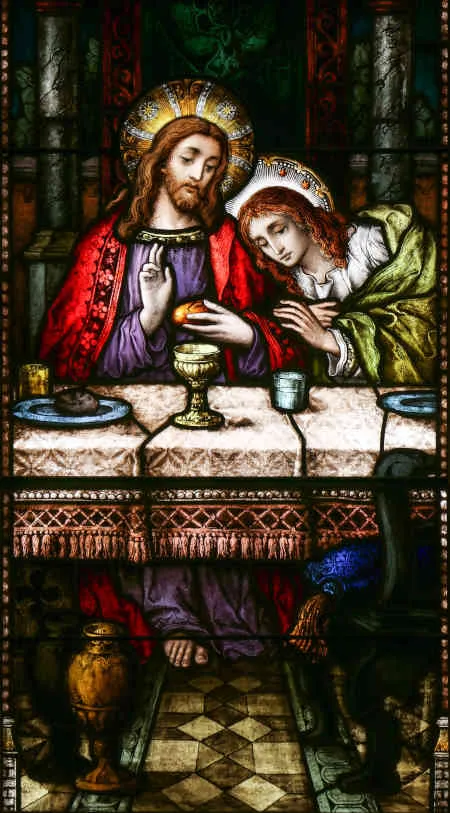
The “other disciple,” the one who “saw and believed,” was John the Apostle whom we honor today. In his Gospel, John often refers to himself as “the one whom Jesus loved.” This title indicates not that Jesus loved John more than the others but that John’s heart was perhaps the most open and receptive to Jesus’ love, allowing our Lord’s charity to fill him more completely.

Celebrating the Feast of Saint John within the octave of Jesus’ birth invites us to reflect not only on John but also on the deep and intimate love that he and Jesus shared—a love that serves as an icon of the love Jesus desires to bestow on each of us.

Today’s Gospel beautifully highlights three of John’s virtues. First, his all-consuming love for Jesus is evident in his immediate response to Mary Magdalene’s news of the empty tomb. John’s love compelled him to run to the tomb with Peter, showing how deeply he cherished his relationship with the Lord.

Second, John’s respectful nature is revealed when he arrives at the tomb first but waits for Peter, the elder and leader among the Apostles, to enter before him. This act of deference speaks volumes about John’s humility and respect for authority.

Finally, after entering the tomb, John “saw and believed.” This moment reflects the depth of his faith, a faith that did not require physical proof but was grounded in a profound trust in Jesus. John’s belief was a response to the infused gift of faith, a virtue that allowed him to recognize the truth of the Resurrection even before seeing the risen Lord.

John’s example challenges us to examine our own spiritual lives. Is our love for the Lord so strong that it draws us toward Him with the same urgency that led John to run to the tomb? Does our love for God translate into a genuine respect for others? Is our faith so deep that we trust in God’s promises without needing visible proof?

As we honor Saint John, reflect today on his identity as “the one whom Jesus loved.” His receptivity to Jesus’ love made him stand out as a model disciple. Seek to imitate John by expanding the capacity of your heart to receive more of God’s love, so that His presence within you becomes evident to others.

Source: https://catholic-daily-reflections.com/2025/12/26/john-an-icon-of-love/

John 20:3-8 Read More »

Saint Stephen, the First Martyr

Early First Century–c. 33–36; Patron Saint of altar servers, builders, casket makers, deacons, horses, masons, and quarrymen; Invoked against headaches; Pre-Congregation canonization

Saint Stephen, whom we honor today, is the first Christian martyr, thus giving him the unique title “Protomartyr.” All we know about Saint Stephen comes from the Acts of the Apostles, Chapters 6–7. His name is of Greek origin, suggesting that he was a Hellenistic Jew. Nothing else is known about Stephen’s early life. Stephen came on the scene within the early Church in Jerusalem, where he was chosen as a deacon to assist with the fair distribution of daily provisions within the Christian community so as to relieve the Apostles of that responsibility.

As Jesus walked the earth, His community of followers became a close-knit community. In order to devote themselves to following Jesus full-time, some of His disciples provided for the needs of the whole community (see Luke 8:3). After Jesus ascended into Heaven and sent the Holy Spirit, the Apostles remained in Jerusalem, and the community of believers continued to deepen their communal life. They ate together, celebrated the Eucharist, and shared their financial resources with each other.

The community of believers was of one heart and mind, and no one claimed that any of his possessions was his own, but they had everything in common. With great power the apostles bore witness to the resurrection of the Lord Jesus, and great favor was accorded them all. There was no needy person among them, for those who owned property or houses would sell them, bring the proceeds of the sale, and put them at the feet of the apostles, and they were distributed to each according to need (Acts 4:32–35).

The early Jerusalem community was made up of both Hebrew and Hellenistic Jews. Hebrew Jews were native to Judea and primarily spoke Aramaic as their common language. They closely adhered to traditional Jewish customs and used the Hebrew language in religious practices. The Hellenistic Jews typically spoke Greek and were influenced by Greek culture, due to their assimilation into the broader Greco-Roman society throughout the Roman Empire. Both Hellenists and Hebrews were converting to Christ and were living as one united people in Jerusalem. However, biases reportedly remained: “At that time, as the number of disciples continued to grow, the Hellenists complained against the Hebrews because their widows were being neglected in the daily distribution” (Acts 6:1).

Because the Apostles chose to devote themselves to prayer and the preaching of the Word, they asked the community to select “seven reputable men, filled with the Spirit and wisdom” (Acts 6:3). The Apostles then appointed them to the task of overseeing the daily distribution of provisions. The Apostles prayed and laid their hands on these seven men, ordaining them the Church’s first deacons. They were “Stephen, a man filled with faith and the Holy Spirit, also Philip, Prochorus, Nicanor, Timon, Parmenas, and Nicholas of Antioch, a convert to Judaism” (Acts 6:5). Some ancient traditions identify Stephen as the eldest and the leader of the others, making him what has become known as “Archdeacon.” Stephen was likely a Greek, so he might have been chosen, in part, to help ensure that the Hellenistic women, especially the widows, received their share of the daily distribution.

As a deacon, Stephen also preached the Word of God and performed many miracles. Various Hellenistic Jews even debated him in public, “but they could not withstand the wisdom and the spirit with which he spoke” (Acts 6:10). This so agitated them that they dragged him before the Sanhedrin, just as they had done to Jesus. The Sanhedrin was the highest religious, judicial, and legislative body within the Jewish community. The charges brought against Stephen were that he spoke against the Temple and the Law of Moses. As Stephen stood before the angry Sanhedrin, his face appeared like that of an angel.

Acts 7:1–53 presents a lengthy speech Stephen made before the Sanhedrin. It is one of the longest and most significant speeches in the New Testament. In that speech, Stephen traced the history of Israel from Abraham to Solomon, who built the Temple. He emphasized God’s actions that took place outside of the Temple, as well as Israel’s recurring disobedience. Of the Temple, he said, “the Most High does not dwell in houses made by human hands” (Acts 7:48). In other words, the Temple had outlived its purpose. The Most High came to us in the Person of Jesus, and Jesus is the New Temple and the New Priest Who offered Himself as the New and Perpetual Sacrifice. Stephen re-read and reinterpreted the Old Testament in the light of Christ. He was among the first followers of Christ to clearly unite the Old Testament with the unfolding New Testament. He also referred to the members of the Sanhedrin and those accusing him as “stiff-necked people.”

Recall from Jesus’ trial that the Sanhedrin, while under Roman occupation, could not condemn a person to death. The Romans reserved that to themselves. In Stephen’s case, his accusers were so infuriated that they immediately dragged him outside the city (probably the northern gate) and stoned him to death. This horrible situation, however, turned truly beautiful and glorious on account of Stephen’s faith. Before being dragged to the spot of his death, he looked up to Heaven and exclaimed, “Behold, I see the heavens opened and the Son of Man standing at the right hand of God” (Acts 7:56). Once they dragged him out and began stoning him, he prayed, “Lord Jesus, receive my spirit” and “Lord, do not hold this sin against them” (Acts 7:59–60). Notice the similarities to Jesus Who cried out from the Cross, “Father, forgive them…” (Luke 23:34) and “Father, into Your hands I commend my spirit” (Luke 23:46). As the author of the Gospel and the Acts of the Apostles,  it is clear from those passages that Saint Luke intended this connection.

Among those who consented to Saint Stephen’s martyrdom was the Pharisee Saul, who would later convert, become the great Apostle to the Gentiles, and go by his Roman name, Paul. After his conversion, Saint Paul built upon the teaching of Saint Stephen, developed it and deepened it, continuing the mission of one whom he helped persecute and kill. It is clear that Saint Stephen’s final prayer was heard by God and especially applied to Saul.

Saint Paul would later write in a letter to the Romans, “We know that all things work for good for those who love God, who are called according to his purpose” (Romans 8:28). Nothing truer could be said about Saint Stephen’s martyrdom. At first, there was great fear and chaos. “On that day, there broke out a severe persecution of the church in Jerusalem, and all were scattered throughout the countryside of Judea and Samaria, except the apostles” (Acts 8:1). The close Christian community scattered, running for their lives. In God’s wisdom, this scattering became the first great means of evangelization. Christians brought Christ within the temple of their souls to people far and wide. One by one, new hearts were converted, and the scattered community shared the New Law of Christ with others.

One tradition states that Saint Stephen was buried in the town of Beit Jimal, about twenty miles west of Jerusalem. Legend has it that in 415, a priest named Lucian had a dream in which Saint Stephen’s burial place was revealed to him. The priest brought his remains back to Jerusalem, and some years later Stephen was buried at the site of his martyrdom, in what is today the Church of Saint Étienne (French for Stephen). In his book, City of God, Saint Augustine says that some of Saint Stephen’s relics were brought to “waters of Tibilis,” which was most likely in North Africa. Augustine then recounts many stories of miracles that took place in the lives of those who encountered his relics.

As we honor the Church’s protomartyr, ponder the profound truth that God always brings good out of suffering when that suffering is prayerfully united to Christ. In honor of Saint Stephen, as you reflect upon his life and death, call to mind any sufferings you endure. Whether those are physical, mental or emotional, are caused by illness, persecution or any other source, seek to unite yourself and your sufferings to Christ. If part of your suffering results from the sins of others, pray the prayer Saint Stephen prayed, “Lord, do not hold this sin against them.” And throughout your life, pray with him, “Lord Jesus, receive my spirit.” Pray, also, for his intercession, especially for courage and strength to fulfill God’s will in your life.

Source: https://mycatholic.life/saints/saints-of-the-liturgical-year/26-december-saint-stephen-the-first-martyr–feast/
Saint Stephen, the First Martyr Read More »

Matthew 10:17-18

The Fruit of Martyrdom

Jesus said to his disciples: “Beware of men, for they will hand you over to courts and scourge you in their synagogues, and you will be led before governors and kings for my sake as a witness before them and the pagans.”

Reflection:

These words capture the essence of the martyrdom of Saint Stephen, the Church’s first martyr, whom we honor today. The day after celebrating the birth of Christ, the Church, in her wisdom, reflects on the reality of persecution as a consequence of worshiping the newborn King.

The Jewish community in Jerusalem was diverse, with traditional Hebraic Jews and Hellenistic Jews who were influenced by the Greco-Roman culture. As Jews began to convert to Christianity, a new unified community of believers emerged. Despite this unity, tensions arose, particularly when Hellenistic widows were neglected in the daily distribution of bread. To address this, the Apostles appointed seven deacons, with Stephen being the first, likely a Hellenist himself.

Stephen, described as “a man filled with faith and the Holy Spirit,” performed great wonders among the people. When confronted by Hellenistic Jews, he defended the faith with wisdom and courage, leading to his being dragged before the Sanhedrin. His eloquent defense angered his opponents, resulting in his stoning. In his final moments, Stephen commended his spirit to Jesus and prayed for his persecutors.

At first, his martyrdom seemed a tragic loss that sparked a wave of persecution and scattered the Christian community throughout the countryside of Judea and Samaria. This dispersion, however, spread the Gospel beyond Jerusalem, leading to many new converts. What appeared to be a tragedy became a catalyst for the growth of the early Church.

As we honor Saint Stephen, reflect on the truth that God permits evil only to draw greater good from it. If you face suffering or persecution, let today’s feast inspire hope. Trust in God’s plan, reject fear, and embrace His will, knowing that He can use every cross for His glory.

Source: https://catholic-daily-reflections.com/2025/12/25/the-fruit-of-martyrdom/

Matthew 10:17-18 Read More »

The Nativity of the Lord (Christmas)

First Reading Isaiah 52:7-10

How beautiful upon the mountains
        are the feet of him who brings glad tidings,
    announcing peace, bearing good news,
        announcing salvation, and saying to Zion,
        “Your God is King!”

    Hark!  Your sentinels raise a cry,
        together they shout for joy,
    for they see directly, before their eyes,
        the LORD restoring Zion.
    Break out together in song,
        O ruins of Jerusalem!
    For the LORD comforts his people,
        he redeems Jerusalem.
    The LORD has bared his holy arm
        in the sight of all the nations;
    all the ends of the earth will behold
        the salvation of our God.

Responsorial Psalm Psalms 98:1, 2-3, 3-4, 5-6

R. (3c)  All the ends of the earth have seen the saving power of God.
Sing to the LORD a new song,
   for he has done wondrous deeds;
his right hand has won victory for him,
   his holy arm.
R. All the ends of the earth have seen the saving power of God.
The LORD has made his salvation known:
   in the sight of the nations he has revealed his justice.
He has remembered his kindness and his faithfulness
   toward the house of Israel.
R. All the ends of the earth have seen the saving power of God.
All the ends of the earth have seen
   the salvation by our God.
Sing joyfully to the LORD, all you lands;
   break into song; sing praise.
R. All the ends of the earth have seen the saving power of God.
Sing praise to the LORD with the harp,
   with the harp and melodious song.
With trumpets and the sound of the horn
   sing joyfully before the King, the LORD.
R. All the ends of the earth have seen the saving power of God.

Second Reading Hebrews 1:1-6

Brothers and sisters:
In times past, God spoke in partial and various ways 
    to our ancestors through the prophets; 
    in these last days, he has spoken to us through the Son, 
    whom he made heir of all things 
    and through whom he created the universe,
        who is the refulgence of his glory,
            the very imprint of his being,
        and who sustains all things by his mighty word.
        When he had accomplished purification from sins,
        he took his seat at the right hand of the Majesty on high,
        as far superior to the angels
        as the name he has inherited is more excellent than theirs.

For to which of the angels did God ever say:
    You are my son; this day I have begotten you?
Or again:
    I will be a father to him, and he shall be a son to me?
And again, when he leads the firstborn into the world, he says:
    Let all the angels of God worship him.

Alleluia

R. Alleluia, alleluia.
A holy day has dawned upon us.
Come, you nations, and adore the Lord.
For today a great light has come upon the earth.
R. Alleluia, alleluia.

Gospel John 1:1-18

In the beginning was the Word,
        and the Word was with God,
        and the Word was God.
    He was in the beginning with God. 
    All things came to be through him,
        and without him nothing came to be.
    What came to be through him was life,
        and this life was the light of the human race;
    the light shines in the darkness,
        and the darkness has not overcome it.
A man named John was sent from God.
He came for testimony, to testify to the light, 
so that all might believe through him.
He was not the light,
but came to testify to the light.
The true light, which enlightens everyone, was coming into the world.
    He was in the world,
        and the world came to be through him,
        but the world did not know him.
    He came to what was his own,
        but his own people did not accept him.

But to those who did accept him
he gave power to become children of God, 
to those who believe in his name, 
who were born not by natural generation 
nor by human choice nor by a man’s decision 
but of God.
    And the Word became flesh
        and made his dwelling among us,
        and we saw his glory,
        the glory as of the Father’s only Son,
        full of grace and truth.
John testified to him and cried out, saying, 
“This was he of whom I said, 
‘The one who is coming after me ranks ahead of me 
because he existed before me.’”
From his fullness we have all received,
grace in place of grace,
because while the law was given through Moses, 
grace and truth came through Jesus Christ.
No one has ever seen God.
The only Son, God, who is at the Father’s side, 
has revealed him.

Source: https://bible.usccb.org/bible/readings/122525-Day.cfm

The Nativity of the Lord (Christmas) Read More »

Nativity of the Lord

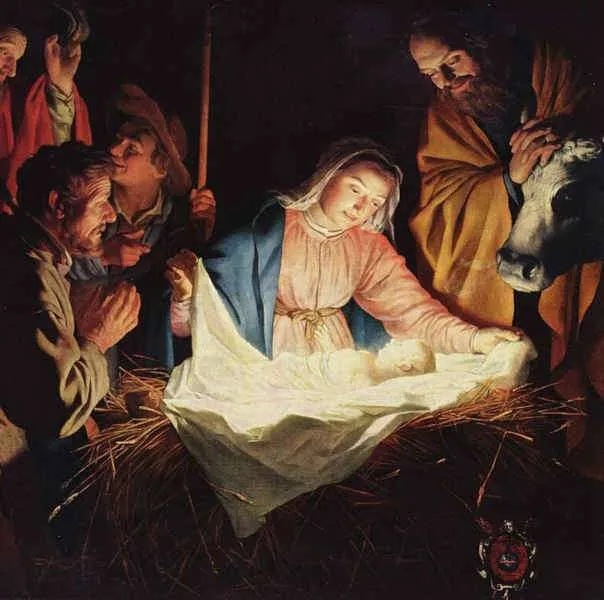
Christmas Day is among the most celebrated feasts in the world. Everything else in life stops while the Christian world, in particular, celebrates the birth of the Savior of the World that took place over 2,000 years ago in the small town of Bethlehem. The first Christmas was celebrated by Mary and Joseph, but a multitude of angels saw to it that poor shepherds from the nearby fields joined the celebration as representatives of the entire Christian world to come. Though the Incarnation took place nine months prior when the Archangel Gabriel announced to the Blessed Virgin Mary that she would conceive a Child, that Child exited her sacred womb and breathed His first breath of air on that holy night.

It is amazing that God chose such a humble birth. He came into the world while His parents were about seventy miles away from their home and family in Nazareth after journeying to Bethlehem, the City of David, so they could fulfill the requirements of the census promulgated by the Roman emperor, Caesar Augustus. The census required all who lived within the Roman Empire to enroll in their hometown, in large part for taxation reasons. Joseph was from the house and lineage of King David, so he was required to go to David’s ancestral home, Bethlehem, to register with Mary, his betrothed wife. The fact that the Savior of the World permitted Himself to become subject to the rulers of the pagan Roman Empire reveals His profound humility. The Son of God’s perfection of humility is also revealed by the immediate circumstances of His birth. It took place not in a royal palace, not even in a nice home, but in a cave where animals dwelt.

The presence of the poor shepherds extends the Son of God’s humility even further and also reveals the intrinsic dignity of every person. In God’s eyes, every person is equal in dignity, and His life was for all people. From God’s perspective, poor shepherds offered Him just as much praise and honor as if the Roman emperor himself came to adore Him after His birth. The same remains true today. Every person is capable of offering honor and glory to God that do not depend upon social rank, wealth, or natural gifts. They depend upon that love and adoration that were found in the shepherds.

Jesus’ birth in Bethlehem was also a fulfillment of the Old Testament prophecy found in Micah 5:1(2): “But you, Bethlehem-Ephrathah least among the clans of Judah, from you shall come forth for me one who is to be ruler in Israel; Whose origin is from of old, from ancient times.” In God’s perfect foreknowledge and providence, He revealed the location of the birth of the Ruler of Israel through Micah, several centuries before.

The reason we celebrate the Solemnity of Christmas on December 25 is uncertain, but it might have been chosen in relation to the Solemnity of the Annunciation. One tradition states that the dating of the Annunciation on March 25 was chosen because early Christians believed Jesus died on that date. Some believe that Jewish thought at that time suggested that the greatest prophets died on the same day of the year they were created. Some have further suggested that March 25 was the date of the creation of Adam, the fall of Adam, the fall of the angels, the sacrifice of Isaac by Abraham, and the passing of the Israelites through the Red Sea. Whether this was the belief in the early Church and is the reason for choosing March 25 for the Annunciation (and Incarnation), making Jesus’ birth nine months later on December 25, is unable to be verified historically, but it is an inspiring thought to ponder from a symbolic perspective.

Others have suggested that December 25 was chosen because it closely aligned with the winter solstice, the day of the year with the least amount of sunlight in the northern hemisphere. It was during that darkest time of the year that the New Light came into the world to permeate the darkness. This symbolic view draws creation itself into the praise and glory of God.

A final hypothesis regarding the date of Christmas comes from the fourth century. Some records indicate Pope Julius I declared December 25 to be the date in 350, once the Roman Empire was becoming more Christianized and pagan practices were dwindling. The pagan festival Saturnalia, which was a three-day celebration of the winter solstice, was celebrated each year with great solemnity, and the pagan festival of Sol Invictus has been celebrated on December 25 since 274. It’s possible that Pope Julius wanted to offer an alternative Christian feast to replace these popular pagan ones.

Regardless of the actual historical reason that December 25 was chosen, it is now cemented within our Christian tradition. It’s also important to remember that the Church celebrates the greatest Solemnities for eight straight days, an octave. Thus, Christmas Day is December 25 through January 1. Jesus’ birth being the first day of the year is symbolically significant. Our calendar system is based on the date of Christ’s birth: Anno Domini (A.D.), meaning, “in the year of our Lord.”

As we celebrate this annual Solemnity, the historical accuracy of the date must give way to the liturgical calendar. God, in His perfection of humility, molds His grace around the structures that His Church has been inspired to create. For that reason, we can be confident that the December 25 liturgical Solemnity is a day in which an abundance of grace is poured forth upon those who believe and honor His birth. Commit yourself, this year and every year, to a celebration of Christmas that goes beyond mere gifts, good food, and gatherings. Choose to celebrate Christmas Day for eight straight days. Don’t pack away the decorations and nativity scene. Keep pondering the Christmas story. Prayerfully give thanks to God for His Incarnation and Birth. Make this Christmas celebration one that is permeated with faith, so that the Light of the World can permeate the darkness of the world in which you live.

Source: https://mycatholic.life/saints/saints-of-the-liturgical-year/25-december-nativity-of-the-lord–solemnity/

Nativity of the Lord Read More »

Luke 2:6-7

The Poverty of Christmas

While they were there, the time came for her to have her child, and she gave birth to her firstborn son. She wrapped him in swaddling clothes and laid him in a manger, because there was no room for them in the inn.

Reflection:

A loving mother and father who experience the birth of their first child receive insight into the sacredness and beauty of this scene. Though great mystery surrounds Jesus’ conception within the womb of the Blessed Virgin Mary, she was truly His mother, and He was truly her Son. Saint Joseph, knowing he was not this Child’s biological father, made a profound act of faith by accepting that fatherly responsibility, as instructed in a dream by an angel of the Lord. Because of his faith and God-given mission, Joseph’s commitment to being the father of the Son of God was one that only a most loving and devoted father would make.

As we celebrate Christmas Day, we are reminded of the humility with which our Lord chose to enter the world. Jesus was born in a place where animals dwelt because Mary and Joseph were away from their home to register for the Roman census. At first glance, one might conclude that the physical environment, most likely a cave, was unfortunate. However, we can be certain that this humble and poor setting was part of God’s divine plan, adding to the glory of that night. Christ, in His humility, chose this setting to reveal to us the true greatness of love.

The poverty and humility of the cave and the manger—a feeding trough for animals—helped point to the sacredness of Jesus’ birth. No glamor, no fancy or comfortable setting, only love. Pure love. The love in the heart of the Blessed Virgin Mary, the devotion of Saint Joseph, and the Incarnate presence of the Son of God were everything needed to make that night glorious.

One lesson we can learn from the Nativity of the Lord is that the beauty, peacefulness, and contentment of our lives are not dependent upon how much money or how many material possessions we have, but rather on the purity of our love. The Holy Family’s hearts were perfectly fulfilled, not because of their surroundings, but because of their intimate union with God in the person of Jesus Christ.

The presence of the Son of God in that place of poverty sheds light on the true riches we crave. The true treasures we seek are found not in wealth, comfort, or possessions, but in the love and grace of God. The Holy Family’s witness reveals to us that when we place our hearts in God’s hands, we will be filled with all we need.

Reflect today on that most sacred, simple, and humble scene. As you do, try to imagine how humanly fulfilling that experience was for the Holy Family. Jesus was wrapped tightly in swaddling clothing, and He was adored with the greatest affection of His mother and foster father. Mary and Joseph’s hearts contained all that was necessary for profound gratitude and fulfillment. If you struggle with being fulfilled, learn a lesson from the Holy Family and seek to imitate Mary and Joseph so that your love for our Incarnate Lord fills you with all you need.

Source: https://catholic-daily-reflections.com/2025/12/24/the-poverty-of-christmas/

Luke 2:6-7 Read More »

Saint Paola Elisabetta Cerioli

Profile

Paola was born to Italian nobility, the youngest of 16 children of Francesco Cerioli and Francesca Corniani; she was born with a heart condition and slight spinal deformity that gave her a lifetime of frail health. She was educated in Bergamo, Italy. On 30 April 1835, at age 19, she entered into an arranged marriage with 59 year old Gaetano Busecchi; he was a difficult man with poor health, and their 19-year marriage was a bit of a trial. She was a mother of three–one died in infancy, one at age one, and her son Carlo died in 1854 at age 16; her husband died a few months later. A wealthy widow alone, Paola began sharing her wealth with poor and caring for orphans and neglected children, sometimes taking them into her own home. Feeling a call to religious life, she took a vow of chastity on 25 December 1856, vows of poverty and obedience on 8 February 1857. She founded the Institute of the Sisters of the Holy Family in Comonte di Seriate, Bergamo, Italy in December 1867, taking taking the name Paola Elisabetta; it’s mission is to help abandoned children and work with new parents. She founded a corresponding men’s Congregation of the Holy Family on 4 November 1863.

Born

  • 28 January 1816 in Soncino, Cremona, Italy as Constanse Honorata Cerioli

Died

  • 24 December 1865 in Comonte di Seriate, Bergamo, Italy of natural causes

Venerated

  • 2 July 1939 by Pope Pius XII (decree of heroic virtues)

Beatified

  • 19 March 1950 by Pope Pius XII

Canonized

  • 16 May 2004 by Pope John Paul II

Source: https://catholicsaints.info/saint-paola-elisabetta-cerioli/

Saint Paola Elisabetta Cerioli Read More »

Luke 1:68-69

We Need a Savior

“Blessed be the Lord, the God of Israel; for he has come to his people and set them free. He has raised up for us a mighty Savior, born of the house of his servant David…”

Reflection:

These words are the beginning of Zechariah’s song of praise, traditionally called the Benedictus, which he prayed as soon as his mouth was opened at the circumcision of his newborn son, John the Baptist. Priests and religious pray this beautiful song in the Liturgy of the Hours every morning. It recounts the whole plan of salvation that God began with Abraham, outlines the role of the prophets, and points to Zechariah’s son, John, as the “prophet of the Most High” who will “go before the Lord to prepare his way, to give his people knowledge of salvation by the forgiveness of their sins” (Luke 1:76–77).

As we prepare for the great Solemnity of Christmas Day, Zechariah’s song gives us much to ponder. He begins by blessing God Who “has come to his people and set them free.” Christmas is not only about the Most High God Who took on the form of an infant long ago. It’s also an ongoing coming to us by grace and the Sacraments. That same Most High God continuously descends into our souls as He is made visible to us in the Sacraments, especially the Eucharist. Therefore, each of us must sing Zechariah’s song with the same vigor and conviction every time we attend Mass or encounter God’s presence in our lives.

Why did God come to us? He came to set us free. Christmas must be a time when we acknowledge the ways that our sin oppresses us. We need a Savior. We need freedom. We need forgiveness. The only way to be receptive to our Savior is to humbly acknowledge how much we need Him.

We see this in Zechariah’s song when he speaks of the role his son John would play in the whole plan of salvation. John was to give God’s people “knowledge of salvation by the forgiveness of their sins.” Seeing our sins is essential. Our culture tempts us to downplay sin, to see it as normal or even acceptable. Some hold up their sin with great pride. We must avoid being influenced by this tendency and recognize our sin with clarity and honesty.

Understanding the kind of God we have greatly helps us to see our sin and our need for a Savior. Zechariah goes on to say, “In the tender compassion of our God the dawn from on high shall break upon us, to shine on those who dwell in darkness and the shadow of death, and to guide our feet into the way of peace.” Our God is not only compassionate, He offers us a “tender compassion.” He did not come to condemn, but to free us from “darkness and the shadow of death” so that we could be led into the “way of peace.” Deep down, we all want this. The only way to receive it is by listening to John the Baptist’s preaching that we must acknowledge our sins and repent.

Reflect today on the true meaning of Christmas. God became Man to save us from darkness, sin, and death. He came to set us free from all that binds us, oppresses us, and misguides us. He came to free us from the evil one’s lies and the many ways that those lies have permeated our lives and culture. Join with Zechariah today in his song of praise for the gift of salvation, and strive to pray his prayer with the same faith he had.

Source: https://catholic-daily-reflections.com/2025/12/23/we-need-a-savior/

Luke 1:68-69 Read More »

Saint John of Kanty (Cantius), Priest

c. 1390–1473; Patron Saint of teachers, students, priests, pilgrims, Lithuania, and Poland; Canonized by Pope Clement XIII on July 16, 1767

Jan Kanty (John Cantius in English) was born in 1390 in the small town of Kęty, in the Kingdom of Poland. Kęty is about ten miles south of Oświęcim, which the Nazis renamed Auschwitz, the location of the largest and most horrific concentration camp in World War II. Kęty is also thirteen miles west of Wadowice, where Pope Saint John Paul II was born 530 years later.

As a youth, John proved to be both intelligent and devout, receiving his early education in his hometown. Around the age of twenty-three, he enrolled in the Kraków Academy where he studied philosophy. Kraków Academy was the only university in the Kingdom of Poland at that time, being founded in 1364 by King Casimir III the Great. In 1817 it was renamed the Jagiellonian University and is where Pope John Paul II studied. During John Cantius’ studies, he was introduced to the spiritual movement called Devotio Moderna (Modern Devotion), which emphasized personal devotion, humility, and interior conversion, especially through the meditation upon Sacred Scripture and personal prayer.

Around the year 1418, John earned his doctorate in philosophy, taught philosophy classes at the Kraków Academy, and studied theology for three years. Upon completing his theological studies, John was ordained a priest and became the rector at the school of the Canons Regular of the Most Holy Sepulcher in Miechow, about twenty-five miles north of Kraków, where he served for about eight years. The Canons Regular of the Most Holy Sepulcher followed the Rule of Saint Augustine. One of Father John’s duties was to work as a copyist of Scripture and books, since the printing press had not yet been invented. As a copyist, Father John grew in an intimate knowledge of Sacred Scripture. He also copied the works of Saint Augustine, inspiring within him a deep love of Augustinian philosophy and theology. Throughout his life, Father John copied more that 18,000 pages of text that still exist, and most likely many more that do not. 

In 1429, Father John happily accepted a position at Kraków Academy. He became a beloved professor of Sacred Scripture, philosophy, and theology. His disposition was always humble, cheerful, serious, and godly. Most notably, Father John had a reputation for making complex philosophical and theological concepts accessible to his students, combining depth with clarity and practical application. He also continued his theological studies at the Kraków Academy, earning a doctorate in theology, and later fulfilled additional administrative responsibilities as the head of the Philosophy Department, and eventually as head of the Theology Department.

In addition to being an excellent professor, Father John took care of the spiritual needs of his students with compassion and concern. In the pulpit, Father John was known as a powerful preacher and a defender of orthodoxy. At that time, one of the raging debates within the Church was conciliarism, an assertion that the pope should submit to the authority of Church councils. Father John became a staunch defender of the papacy, which had a profound effect upon his colleagues and students.

Father John also became well known and well loved within the city of Kraków for his exceptional generosity and love of the poor. Whatever he had was theirs, minus the meager amount he needed to provide for his own needs. His clothing, money, and food were not off limits. One story relates that one time he even gave away his shoes to a poor person. When asked why he was going barefoot, he replied that a poor person needed his shoes more than he did.

Father John’s prayer life was greatly enhanced by his penitential life. He slept on the floor and ate very little. He made an 1,800-mile pilgrimage on foot to the Holy Land, carrying with him his one sack of belongings. He made four such pilgrimages to Rome, a mere 900-mile walk each way. 

As with many saints, miracles are also attributed to him. One legend relates that he came upon a poor young lady who was a servant to a strict and severe woman. While on an errand to fetch some milk, she accidentally dropped her jar, breaking it and spilling the milk. Father John had compassion for her, prayed over the jar, and miraculously fixed it. Even the milk was returned. Other stories relate miraculous healings of the sick and the recovery of stolen money. Many more miracles were attributed to his intercession by those who visited his tomb after his death. These later miracles drew pilgrims from across Europe to the university’s Collegiate Church of Saint Anne, where he was buried.

As we honor Saint John Cantius, ponder the fact that his attributes that made him so beloved were his humility, generosity, simplicity, concern for others, and diligence in his daily duty. These are qualities that we can all imitate in our own lives and are qualities that can produce saints. Consider any ways that you struggle with these qualities, and seek to imitate this humble servant of God.

Source: https://mycatholic.life/saints/saints-of-the-liturgical-year/23-december-saint-john-of-kanty-priest–optional-memorial/

Saint John of Kanty (Cantius), Priest Read More »

Luke 1:59-63

Our Identity in Christ

When they came on the eighth day to circumcise the child, they were going to call him Zechariah after his father, but his mother said in reply, “No. He will be called John.” But they answered her, “There is no one among your relatives who has this name.” So they made signs, asking his father what he wished him to be called. He asked for a tablet and wrote, “John is his name,” and all were amazed.

Reflection:

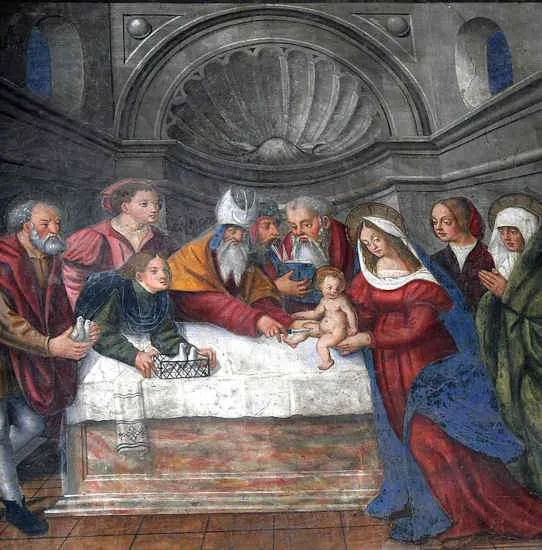
At the time of John the Baptist’s birth, it was customary for family, neighbors, and others within the community to gather for a child’s circumcision on the eighth day. According to Genesis 17:1–14, when God appeared to Abraham and established a covenant with him and his descendants, circumcision was instituted as the external sign of this covenant for every male child on the eighth day. Over time, it also became customary to name the child as part of the ceremony.

The naming of a child in Jewish tradition was significant. A child’s name connected him to his family and continued the family lineage. It was a way of honoring the family member whose name the child was given. Customarily, the firstborn male was named after his father or another significant relative. That’s why the family and friends who gathered for John’s naming and circumcision were surprised when he was not named Zechariah after his father and even more surprised when he was given the name John, a name that no other relative had.

The inclusion of this story in the Gospel narrative indicates that John’s name and its departure from Jewish custom hold special significance. Giving him a name that no other family member had was God’s way of indicating that John’s family, identity, and mission extended beyond his blood relatives. The name John means “God is gracious” or “God has been gracious.” Hence, John’s name points beyond his life to God, the Source of grace. His mission was universal, preparing the way of the Lord for all people. Through John, the gateway of God’s grace and mercy is proclaimed, and Jesus, the source of grace and salvation, enters. 

As we reflect on John the Baptist and his unique identity, we should also ponder our own identity in Christ. While family is the first and most important community where we come to know God and learn to love, God also calls us to an identity that transcends our biological family. We receive our most important identity through baptism. Just as circumcision was the sign of the Old Covenant, baptism is the sacrament that initiates us into the New Covenant in Christ.

Through baptism, we take on a new identity and become members of the one, eternal family of God. All who are in a state of grace are brothers and sisters in Christ, with God as our Father and the Blessed Virgin Mary as our spiritual mother.

Reflect today on your identity in Christ. In many cultures, it is customary to receive a new name at baptism, symbolizing this new identity. Ponder the identity given to you through baptism, the identity that defines who you truly are. Embrace this identity with all your heart.

Source: https://catholic-daily-reflections.com/2025/12/22/our-identity-in-christ/

Luke 1:59-63 Read More »