2024

John 16:21

The "Labor Pains" of God's WIll

“When a woman is in labor, she is in anguish because her hour has arrived; but when she has given birth to a child, she no longer remembers the pain because of her joy that a child has been born into the world.”

Reflection:

This truth can certainly be extended to any form of anguish we experience for a good reason. Note that the pain experienced in childbirth is pain for a good and holy reason. Therefore, the pain is forgotten, in a sense, when the mother sees and holds her newborn child. That suffering is forgotten in the sense that it is transformed into joy by the birth of a child.

There is much in life that can cause anguish. In today’s Gospel, Jesus goes on to say to His disciples: “So you also are now in anguish.” He says this because He had just finished speaking to them about His coming departure to the Father and about the suffering that they would all experience in the form of persecution. But then He says to them that after He departs and they no longer see Him, they will then see Him again and will rejoice. And He says, “On that day you will not question me about anything.” This is an important line to understand.

Anguish, or any form of suffering, can tempt us to question our lives and even to question God. It is clear that after Jesus was killed, the disciples questioned everything. They were confused and frightened. All appeared to be lost. Then, to a lesser degree, after Jesus ascended into Heaven and prior to Him sending the Holy Spirit, the disciples would have also experienced confusion. Why did Jesus leave them? Why didn’t He stay longer? Who was going to lead them now? These and many other similar questions would have arisen in their minds.

So also with us, when things do not go as planned, or when things take a painful turn in our lives, we can immediately question and even doubt the perfect plan of God. If things fall apart because of our sin, then repentance is the remedy. But if things fall apart, in the sense that life becomes difficult, then we should especially listen to the words of Jesus today.

When anguish in life happens because we are fulfilling God’s will, we must see that anguish as a means to a much greater good. Just as the pains of childbirth lead to the gift of a child, so the pains of bringing forth God’s will in our lives will lead to the presence of God Himself. Patient endurance is a virtue that is especially important in this case. For example, the anguish of overcoming an addiction, or of praying when we don’t feel like praying, or of forgiving someone who hurt us are all examples of anguish turning into blessings. Very often, combatting our own selfish will is difficult. But the fruit of engaging in such a battle within us is joy. There is joy found in victory over sin. Joy is found in persevering in prayer. Joy is found in every difficulty we endure for the Kingdom of God. But the joy is not always our first experience. It is only experienced when we patiently endure the situation.

Reflect, today, upon any form of anguish you are currently enduring for the glory of God, or anything you are currently avoiding because it seems difficult to do. Do not shy away from these difficulties. See them as a means to a glorious end. Endure the “labor pains” of the purification and mission God is calling you to by looking beyond the difficulties you initially experience so that you will see the end result that awaits you.

Source: https://catholic-daily-reflections.com/2024/05/09/the-labor-pains-of-gods-will-2/
John 16:21 Read More »

Saint Gregory of Ostia

Profile

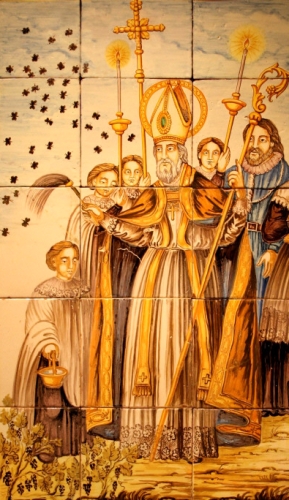
Gregory was a Benedictine monk, priest, and an abbot of the monastery of Saints Cosma e Damiano ad Micam auream, Rome, Italy. He was chosen as Cardinal–Bishop of Ostia, Italy and Vatican librarian c.1034 by Pope Benedict IX. He was a Papal legate to the kingdoms of Spanish Navarre and Old Castile. He was reported a miracle worker, especially concerned with saving crops from pests. He is venerated throughout Navarre and Rioja.

Died

  • 9 May 1048 at Logroño, Spain of natural causes

Patronage

  • protection of crops

Source: https://catholicsaints.info/saint-gregory-of-ostia/

Saint Gregory of Ostia Read More »

The Ascension of the Lord

The Solemnity of the Ascension of the Lord commemorates the fortieth day after the Resurrection when Jesus ascended body and soul into Heaven and took His seat at the right hand of His Father. Traditionally, the location of the Ascension is believed to be less than a mile east of the Old City of Jerusalem, and that spot is marked by the Chapel of the Ascension, which is said to contain a miraculous imprint of the footprints of Christ before He ascended. The event of the Ascension is found in the Gospels and Acts (Mark 16:19–20Luke 24:50–53Acts 1:6–12). It is also alluded to in various other passages (John 6:62Ephesians 4:7–101 Timothy 3:161 Peter 3:21–22).

Only Jesus and His Blessed Mother have entered into the glories of Heaven, body and soul. Jesus’ Ascension implies that He did so by His own authority and power. The Blessed Virgin Mary’s Assumption implies that she entered Heaven, body and soul, by God’s power, and not her own.

The Ascension marks the completion of Jesus’ earthly mission. He first united His divine nature with human nature through the Incarnation at the moment of the Annunciation. Saint Thomas Aquinas teaches that from that moment on, Jesus, the Son of God, experienced three types of knowledge. First, being God, He had beatific knowledge, that is, a direct knowledge of His essence, the Father’s essence, and the Holy Spirit’s essence. Second, He had the perfection of infused knowledge, that is, a bestowal of all truths given to the angels in Heaven, especially those truths necessary for the completion of His divine mission. Third, He began to acquire learned knowledge, or experiential knowledge. This was the form of knowledge attained through His human nature from the senses and His human reason.

As Jesus fulfilled His mission through life, His learned knowledge continued to grow until it was perfected in human form. It was never imperfect in the sense of sin, but only in the sense of growth through human experience and human love. He experienced all things, allowed the perfection of His beatific and infused knowledge to guide His human experiences and brought those human experiences and knowledge to perfection. His free embrace of the Cross manifested the perfection of divine love in human form, and His Resurrection brought that perfect unity of human and divine love to a new and transformed resurrected state of human existence. But that was not all. Today we commemorate the fact that Jesus took His perfected human nature into the Beatific Vision, enabling humanity itself to follow. The Blessed Virgin Mary was the first to do so given her sinless state.

The final stage of the salvation of humanity will take place when Jesus returns to judge the living and the dead. At that time, every human body will rise, will endure the final purification and transformation, and will share in the new and resurrected state in which the faithful will be able to stand, body and soul, before the Most Holy Trinity and experience the fullness of the Beatific Vision forever. What Jesus has already accomplished in His human form is what we look forward to in hope at the end of time.

The Feast of the Ascension was celebrated annually from as early as apostolic times. Saint John Chrysostom, Saint Gregory of Nyssa, and Saint Augustine all attest to this fact. When the Council of Nicaea set the date for the celebration of the Resurrection in 325, it chose to keep Easter on the first Sunday after the first full moon occurring on or after the vernal equinox in spring. This decision also set the day for the Ascension being forty days after Easter, on a Thursday. Today, many ecclesiastical provinces transfer the Thursday celebration to the following Sunday to provide for a wider celebration.

Though every aspect of Christ’s life is shrouded in mysteries which will only be fully understood by the faithful when they stand before Him and behold the Beatific Vision, today we especially ponder this beautiful and profound mystery of our faith. As we celebrate the Ascension, try to prayerfully meditate upon the perfect unity of Jesus’ human and divine natures. Ponder further the truth that because the Son of God is both God and man, and He beholds His Father and the Holy Spirit as both God and man, He invites each of us to begin to share in that glorious vision. Only after we fully die in and with Him and rise to new life in and with Him will we be able to know Him clearly and share in His glorious resurrected and ascended life. Until that moment comes, it’s important to ponder that which is incomprehensible. We must know that we do not know, believe what is beyond belief, hope in that which is more than we can understand. God is a mystery; the Ascension is a mystery—but they are mysteries that must be penetrated by prayer. Do so today as we commemorate this holy culmination of the earthly life and mission of Christ.

Source: https://mycatholic.life/saints/saints-of-the-liturgical-year/the-ascension-of-the-lord/

The Ascension of the Lord Read More »

Mark 16:15-16

The End is the Beginning

Jesus said to his disciples: “Go into the whole world and proclaim the gospel to every creature. Whoever believes and is baptized will be saved; whoever does not believe will be condemned.”

Reflection:

We celebrate today one more step in the completion of the mission of the Son of God. Humanity had sinned at the beginning of time and fallen from Original Innocence. God immediately began to prepare the world for the gift of eternal redemption by establishing a covenant with Noah, Abraham and Moses. He raised up various prophets and kings to further prepare His people for what was to come. And then, when the time was right, God entered our world through the Blessed Virgin Mary. Jesus, the Son of God, eventually entered into His public ministry, teaching, performing miracles, gathering the faithful to Himself, dying, rising and then appearing to His disciples in preparation for the Ascension. The Ascension completes the mission of the Son of God. Today we honor that definitive moment when God the Son, in His transformed and resurrected Human nature, ascends by His own power to the Father, bringing with Himself our humanity so that all humanity may ascend with Him.

As we celebrate the Ascension of Jesus, we must first see all that led up to that moment and seek to unite ourselves with all of those preceding events. We must listen to the words of the patriarchs and prophets of the Old Testament. We must especially listen to the teachings of Jesus in the New Testament and embrace His words without hesitation. And we must unite ourselves with His own death, dying to sin, so that we may also share in His Resurrection. Today, we must further see the invitation we are all given to ascend with Jesus to the Father. We must understand that where Jesus has gone, we are invited to follow if we only believe, embrace and live all that took place leading up to this glorious moment.

The Ascension was the end of Jesus’ life on Earth but also the beginning of our sharing in the life of Heaven. As Jesus ascended, He commissioned His disciples to go forth and “preach the gospel to every creature.” They were to preach to all about the saving plan of God that began at the time of Adam and Eve and was completed with the Ascension.

Reflect, today, upon your calling to not only share in this glorious moment of Jesus’ Ascension but also your calling to go forth and to do all you can to draw others into this new life. Reflect upon Jesus, Who also speaks to you today to invite you to bring others to that mountain. By teaching friends, family and all with whom God has entrusted to you to share the Gospel, you fulfill Christ’s mission to “go into the whole world” to gather the scattered people into the one fold of Christ so as to ascend with Him one day into eternity.

Source: https://catholic-daily-reflections.com/2024/05/08/deepening-your-understanding-2/

Mark 16:15-16 Read More »

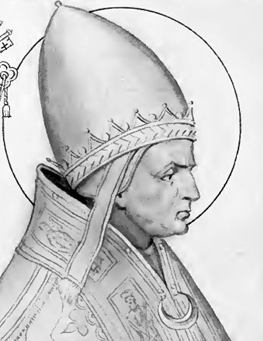
Pope Saint Boniface IV

Profile

Boniface was the son of a physician named John. He was a student under Saint Gregory the Great. He was a Benedictine monk at the Saint Sebastian Abbey in Rome, Italy. He served as deacon under Saint Gregory the Great; He was a dispenser of alms and patrimonies. He was chosen as the 67th Pope in 608.

Boniface converted the Roman temple of the old gods, the Pantheon, to a Christian church dedicated to Our Lady and all the Martyrs in 609, the first such conversion of a temple from pagan to Christian use in Rome. He supported the expansion of the faith into England, and met with the first bishop of London. He encouraged reforms among the clergy, and balanced it with improvements in their living and working conditions. He corresponded with Saint Columba. He worked to alleviate the sufferings in Rome due to famine and the disease that follows it. Late in life, he converted his own house into a monastery and lived there, dividing his time between his papal work and life as a prayerful monk.

Born

  • c.550 at Valeria, Abruzzi, Italy

Papal Ascension

  • 25 August 608

Died

  • 615 at Rome, Italy of natural causes
  • relics moved c.1100
  • relics moved in the late 13th century by order of Pope Boniface VIII
  • relics re-interred in Saint Peter’s Basilica, Rome, Italy on 21 October 1603

Canonized

  • Pre-Congregation

Source: https://catholicsaints.info/pope-saint-boniface-iv/

Pope Saint Boniface IV Read More »

John 16:12-13

The Best is Yet to Come

Jesus said to his disciples: “I have much more to tell you, but you cannot bear it now. But when he comes, the Spirit of truth, he will guide you to all truth.”

Reflection:

This passage still rings true for all of us today. God wants to reveal to us, within the depths of our consciences, the deepest, most profound and transforming truths that flow from the mind of the Father in Heaven. But we cannot bear it all now. Not fully. And eternity will be spent continually deepening our understanding of all that God reveals. And the process of this ongoing and deepening discovery will fill us with an ongoing and deepening joy. This will be our Heaven, but it must begin now.

First of all, it’s important to understand that God does “have much more to tell you.” Interestingly, coming to know how much you do not already know is itself a form of knowledge. Knowing that there is so much more, that God’s wisdom is infinitely beyond you, that the mind of God compared to yours is incomparable is itself a beautiful truth that must be understood. This truth should both humble you and also fill you with a holy awe of God and the infinite depth of wisdom, truth, beauty and glory contained within Him. This is an essential first step.

Furthermore, by saying that “you cannot bear it now” does not mean that you should not try to bear more and more of the truth that God wants to reveal. In fact, it’s a form of invitation, in that it indicates that there will come a time when you will be able to comprehend more. This should once again foster a hope and anticipation for all that remains hidden to be revealed. Humility in the face of the infinite God is necessary for growth in wisdom and knowledge of God.

How does this growth in wisdom and the knowledge of God happen? It happens by the power and working of the Holy Spirit. It is the “Spirit of truth” who will “guide you to all truth.” But even this statement, once again, implies that this is a process. It is the Spirit Who will “guide” you. And this guidance will continue throughout this life and on into eternity.

This teaching of our Lord begs the question: Have you begun the process? Have you begun to allow the Holy Spirit to guide you into the truth? Have there been concrete moments in your life when you came to know God in a new and profound way that could only have been possible by the power and working of God Himself?

Reflect, today, upon these essential questions. If you have had God the Holy Spirit speak clearly to You, then humble yourself before that truth. Pray for more wisdom and more knowledge of all that you do not know. And if you cannot relate to the idea of there being so much more that is beyond you, then humbly turn to our Lord and beg Him to begin to open your mind to all that He wants to say to you. The infinite mind of our God awaits you to be discovered and embraced. Begin the process today and let Him guide you into all truth.

Source: https://catholic-daily-reflections.com/2024/05/07/the-best-is-yet-to-come-3/

John 16:12-13 Read More »

Saint Rose Venerini

Profile

Rose was the daughter of Godfrey Venerini, physician in Viterbo, Italy. Following the death of her fiance, she entered a convent; following the death of her father, she returned home to care for her mother.

Rose invited neighbourhood women to pray the rosary in her home, and formed a sort of sodality. As these friends had little religious education, she began to teach them. Jesuit Father Ignatius Martinelli, her spiritual director, convinced her that she was called to be a teacher instead of a contemplative nun.

With two friends, Rose opened a free pre-school for girls in 1685, which was well received. In 1692, Cardinal Barbarigo asked her to oversee training of teachers and the administration of schools in his diocese of Montefiascone, Italy. She organized schools in many parts of Italy, including Rome, and by the time of her death there were 40 schools under her direction. She was a friend and co-worker of Saint Lucia Filippini.

Rose often met opposition, some fierce, and some actually violent – her teachers were shot at with bows, and their houses burned. She was never deterred, teaching, and finding people who were willing to face the danger in order to do good. The sodality, or group of women she had invited to prayer, were ultimately given the rank of a religious congregation. Today, the so-called Venerini Sisters work with Italian immigrants in the United States and elsewhere.

Born

  • 9 February 1656 at Viterbo, Italy

Died

  • 7 May 1728 at Rome, Italy of natural causes

Canonized

  • 15 October 2006 by Pope Benedict XVI

Source: http://catholicsaints.mobi/calendar/7-may.htm

Saint Rose Venerini Read More »

John 16:5-7

Grieved at Changes in Life

Jesus said to his disciples: “Now I am going to the one who sent me, and not one of you asks me, ‘Where are you going?’ But because I told you this, grief has filled your hearts. But I tell you the truth, it is better for you that I go. For if I do not go, the Advocate will not come to you. But if I go, I will send him to you.”

Reflection:

Jesus continues to speak prophetically to His disciples about the necessity for Him to go to the Father so that He can send the Holy Spirit. What’s interesting in this passage is that Jesus points out to His disciples that “grief” has filled their hearts because of what He has said to them. Clearly, this grief in their hearts is because they do not understand what they will soon experience and do not want their relationship with Jesus to change.

Throughout our lives, our Lord will call us to change. At times, He calls us away from that with which we are familiar and comfortable, and He calls us to something new. This can be frightening and can become the cause of “grief” for us also. To help, let’s consider this passage above in detail.

Recall that there were many times, prior to Jesus’ death, that Jesus slowly started to reveal to His disciples, especially to the Twelve, that He would be going to the Father and that He would no longer be with them in the way He had been. Jesus wanted the Twelve to begin to understand that their relationship with Him, with the Father and with the Holy Spirit would soon take on new meaning in their lives. But the fact that this was something new, a change to what they had grown accustomed, meant that they were more focused upon the grief that accompanies loss than they were focused upon the joy that awaited.

This same experience can often be found in all of our lives. Though dramatic change is not necessarily a regular occurrence throughout life, most everyone will experience change at various moments in life. And when that change occurs in accord with the will of God, it must be embraced with hope and great expectation.

For example, vocational changes, such as getting married, having children, or entering a religious vocation, always bring with it much change—but a change that God can use for much good. Also, the death of a loved one, a move to a new community, a new job or school, the establishment of new relationships and the like can be difficult but also fruitful. Since the Gospel passage above specifically refers to the change that comes from the outpouring of the Holy Spirit, it might be helpful to consider the fact that whenever some new change takes place in our lives, the Holy Spirit is there, waiting to enter into the new situation in ways we could have never imagined. So if you find yourself at times experiencing the grief of some loss, or difficulty with some new endeavor in life, know that the disciples experienced something similar. But in the end, Jesus’ words came true—“it is better for you that I go.” Though they did not want to see Jesus die and then ascend to Heaven out of their sight, this was part of the plan of God for their lives. So also when the changes we encounter in life are part of God’s divine plan, we can be certain that good things await.

Reflect, today, upon anything that our Lord may be asking of you in regard to a change in your life. Are you open, ready and willing to do whatever He asks? Or are you fearful or grieved by the thought of some change. Be open to anything our Lord asks of you and know that the full embrace of His holy will is the only path to true happiness in life.

Source: https://catholic-daily-reflections.com/2024/05/06/grieved-at-changes-in-life-3/ 

John 16:5-7 Read More »

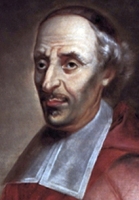
Saint Francis de Montmorency Laval

Profile

Francis was the third son of Hughes de Laval, an aristocrat soldier, and Michelle de Péricard. His was an old, distinguished and religious family, and Francis early felt a call to the priesthood. He was educated by Jesuits at La Fleche from ages eight to fourteen. His father died when he was thirteen, and as clerical positions were often as much politics as religion, Francis was made a parish canon so that his salary could help support the family.

Francis studied for the priesthood at the Jesuit Clermont College in Paris, France at age nineteen, but withdrew for a while in 1645 when his two older brothers died and he was forced to manage the family estates. He was ordained on 1 May 1647. He became the archdeacon of Evreux and a member of the Paris Foreign Mission Society at age thirty. He was a Vicar apostolic of Tongkin, Indochina (modern Vietnam) in 1653, but family obligations and the turmoil of the region prevented him moving there. He resigned his position in 1654 to spend four years in a hermitage in Caen. He was also a titular bishop of Petraea.

Francis was appointed vicar apostolic of New France (modern Canada) by Pope Alexander VII in 1658. He was consecrated as bishop on 8 December 1658. He arrived in Quebec City, population 500, to take up his new duties on 16 June 1659. His territory covered all of Canada and the central section of what would become the United States. It was an enormous frontier diocese in need of administration, stability, and evangelization, and Francis approached it as spiritual work. He promoted missionary work, and supported missionaries from the Jesuits and Recollect Franciscans.

Francis restored the shrine of Saint Anne de Beaupré, and built the cathedral of the Immaculate Conception. He founded the seminary of Quebec in 1663, and started the Catholic school system throughout Canada. Quebec was established as a diocese in 1674, and Laval consecrated its first bishop. He fought the alcohol trade to the Indian tribes, had it outlawed within his territory, and excommunicated those who dealt in it. His work slowed the trade and improved the lives of the natives, but made him many enemies within the liquor trade.

In 1684, Francis went into retirement, becoming a hermit at the seminary in Quebec, hoping to live out his life in prayer. However, disastrous fires in November 1701 and October 1705 brought him out of retirement to oversee needed re-construction, he was ever involved in charitable work for the poor, and available to consult with his successor. Laval University in Quebec is named for him.

Born

  • 30 April 1623 in Montigny-sur-Avre, Normandy, France

Died

  • 6 May 1708 in Quebec, Canada of natural causes

Canonized

  • 3 April 2014 by Pope Francis (equipollent canonization)

Patronage

  • patrons of the bishops of Canada

Source: http://catholicsaints.mobi/calendar/6-may.htm

Saint Francis de Montmorency Laval Read More »

John 15:26-27

Giving Testimony

“Jesus said to his disciples: ‘When the Advocate comes whom I will send you from the Father, the Spirit of truth who proceeds from the Father, he will testify to me. And you also testify, because you have been with me from the beginning.’”

Reflection:

Jesus informs His disciples that “the Spirit of truth” will come and that the Spirit, as well as the disciples, will “testify” to Him. When Jesus first spoke these words to His disciples, they would not have comprehended what He meant. Since these words are prophetic in nature, they are words spoken that were to come to fulfillment and, then, once fulfilled, the words would be understood. So what does Jesus mean?

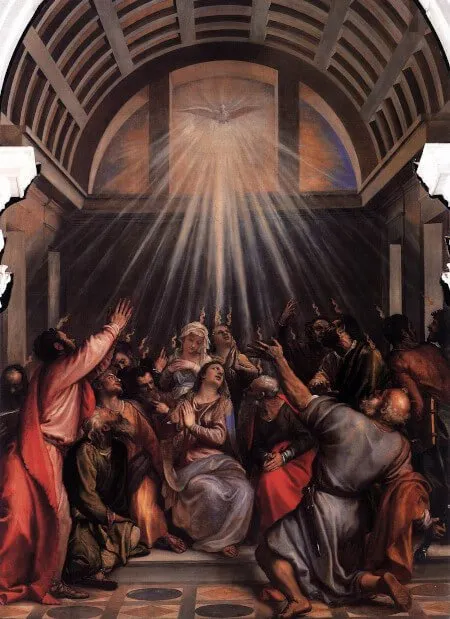
When we look at the Acts of the Apostles and read about the early Church, it is clear that something incredibly transforming took place after Jesus ascended into Heaven. Up until that time, the disciples and other followers of Jesus had faith, but they were also fearful. They communicated with those others who believed, but did so in secret and with fear. But as soon as Pentecost came and the Holy Spirit, the Advocate, the Spirit of Truth, descended upon them, the Apostles began to be used by God to powerfully proclaim the Gospel without fear and with great effect upon many. It was this experience of the disciples of our Lord, being filled with the Holy Spirit, to which Jesus was referring.

After Jesus died, and perhaps even more so after Jesus ascended into Heaven, it is likely that some of His disciples immediately concluded that the new movement Jesus started was now over. They could have never conceived of the idea that what Jesus started was only beginning. They could have never conceived of the fact that soon they would share in the beginning of the Church, proclaim the Gospel with courage and power, see the conversion of countless lives, witness the ongoing forgiveness of sins, and ultimately give their lives in imitation of our Lord. These disciples had no idea just what awaited them with the coming of the Advocate, the Spirit of Truth. What was awaiting them was their sharing in the ability to “testify” to Jesus by the power of the Holy Spirit. They soon realized that Jesus was actually more alive than ever and that He was now going forth to convert souls by the power of the Holy Spirit and through the instrumentality of all of His new disciples.

The same is true in our lives today. It is far too common for Christians to simply believe in Jesus personally, but then fail to wholeheartedly give testimony to Him by the transforming power of the Holy Spirit. It is far too common for followers of Christ to act more like the disciples prior to the coming of the Holy Spirit. Too often, Christians keep the Gospel to themselves, fearful of giving testimony by the power of the Holy Spirit.

Reflect, today, upon these prophetic words of Jesus. Though these words were initially spoken to the Twelve, Jesus also speaks these words to you today. He wants you, too, to be a witness to Him, giving testimony to others so that they will come to believe. Reflect upon how well you fulfill this prophetic calling. Where you are lacking, pray for the outpouring of the Holy Spirit in your life so that God can reach many hearts through you.

Source: https://catholic-daily-reflections.com/2024/05/05/giving-testimony-3/

John 15:26-27 Read More »