2024

Matthew 1:18-19

A Mysterious Pregnancy and Apparent Scandal

This is how the birth of Jesus Christ came about. When his mother Mary was betrothed to Joseph, but before they lived together, she was found with child through the Holy Spirit. Joseph her husband, since he was a righteous man, yet unwilling to expose her to shame, decided to divorce her quietly.

Reflection:

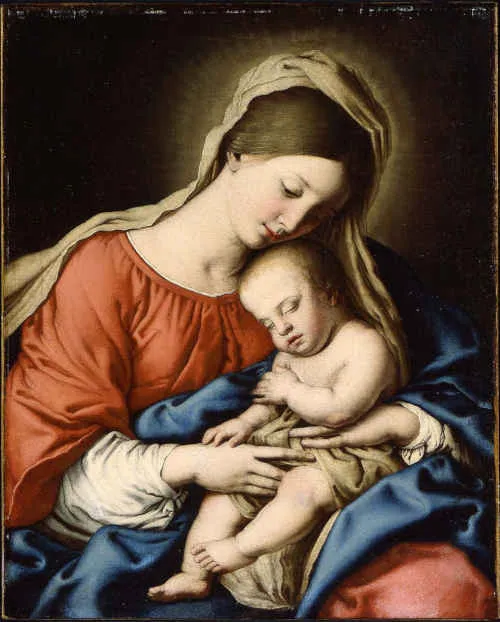
Mary’s pregnancy was truly mysterious. In fact, it was so mysterious that even Saint Joseph initially couldn’t accept it. But, to Joseph’s defense, who could accept such a thing? He was faced with what was a most confusing situation. The woman to whom he was engaged was suddenly with child, and Joseph knew he was not the father. But he also knew that Mary was a holy and pure woman. So, naturally speaking, it makes sense that this situation simply did not make immediate sense. But that’s the key. “Naturally speaking” this did not make immediate sense. The only way to understand the situation of Mary’s sudden pregnancy was through supernatural means. Thus, an angel of the Lord appeared to Joseph in a dream, and that dream was all he needed to accept this mysterious pregnancy in faith.

It’s amazing to consider the fact that the greatest event to ever take place in human history happened under a cloud of apparent scandal and confusion. The angel revealed the deep spiritual truth to Joseph secretly, in a dream. And though Joseph may have shared his dream with others, it’s most likely the case that many people still assumed the worst. Most would have presumed that Mary was pregnant either by Joseph or by someone else. The idea that this conception was the working of the Holy Spirit would have been a truth beyond what their friends and relatives could ever comprehend.

But this presents us with a great lesson about judgment and the action of God. There are countless examples in life when God and His perfect will lead to judgment, apparent scandal and confusion. Take, for example, any martyr of old. We now look at the many acts of martyrdom in a heroic way. But when the martyrdom actually happened, many would have been deeply saddened, angered, scandalized and confused. Many, at the time of a loved one being martyred for the faith, would be tempted to question why God permitted this.

The holy act of forgiving another could also lead some to a form of “scandal” in life. Take, for example, the crucifixion of Jesus. From the Cross, He cried out, “Father, forgive them…” Were not many of His followers confused and scandalized? Why didn’t Jesus defend Himself? How could the promised Messiah have been found guilty by the authorities and killed? Why did God allow this? 

Reflect, today, upon the mystery of God’s actions in life. Are there things in your own life that are hard to accept, to embrace, or to understand? Know that you are not alone in this. Even Saint Joseph experienced this. Prayerfully commit yourself to a deeper faith in God’s wisdom in the face of any mystery with which you struggle. And know that this faith will help you to live more fully in accord with the glorious wisdom of God.

Source: https://catholic-daily-reflections.com/2024/12/17/a-mysterious-pregnancy-and-apparent-scandal-3/

Matthew 1:18-19 Read More »

Saint Lazarus of Bethany

Profile

Lazarus was the brother of Saint Martha and Saint Mary of Bethany. He was the man whom Jesus raised from the dead after having been dead and in his tomb for four days. The Bible does not trace his history after the miracle, but tradition says he became a missionary to Gaul, the first bishop of Marseilles, France, and a martyr in the persecutions of Domitian.

Died

  • beheaded in the 1st century in a cave near Marseilles, France
  • some relics remain in Marseilles
  • some relics later enshrined in the Cathedral of Saint Lazare, Autun, France

Canonized

  • Pre-Congregation

Patronage

  • gravediggers
  • homemakers
  • Cyprus
  • in France
    – Aix-en-Provence
    – Autun, city of
    – Autun – Châlon-sur-Saône – Mâcon – Cluny, diocese of
    – Marseille, archdiocese of
    – Marseille, city of
  • San Lazzaro di Sarzana, Italy

Source: https://catholicsaints.info/saint-lazarus-of-bethany/

Saint Lazarus of Bethany Read More »

Matthew 1:15-16

An Amazing Reality

Eleazar became the father of Matthan, Matthan the father of Jacob, Jacob the father of Joseph, the husband of Mary. Of her was born Jesus who is called the Christ. 

Reflection:

The last line of the Gospel passage above offers much for us to meditate upon this day and throughout the week ahead. “Of her was born Jesus who is called the Christ.” What an amazing reality we celebrate! God Himself took on our human life, experienced conception, birth, infancy, childhood, etc. As a human, He also experienced hatred, abuse, persecution, and murder. Again, what an amazing reality we celebrate!

For the next eight days, the readings for Mass will focus more directly upon this amazing reality. We ponder today the lineage of Christ Jesus and see that He comes from the line of Abraham and David and that His ancestors were the great Judges, Kings and Levitical Priests. In the coming days of preparation for Christmas, we will ponder the role of Saint Joseph, the response of our Blessed Mother to the angel, the Visitation, Zechariah’s lack of faith and our Blessed Mother’s perfect faith.

As we enter into this octave of immediate preparation for the celebration of the birth of Christ, do use it as a time of true spiritual preparation. Though all of Advent is a season of preparation, these final days should especially focus upon the great mysteries surrounding the Incarnation and birth of the Christ Child. We must ponder the people Whom God chose to be intimately involved, and we should reflect upon the smallest of details regarding how this miracle of miracles took place.

Reflect, today, upon the true reason for Advent and Christmas. This final week leading up to Christmas can oftentimes become filled with busyness and other forms of preparation, such as shopping, cooking, traveling, decorating, etc. Though all of these other preparations have a place, don’t neglect the most important preparation—the spiritual preparation of your soul. Spend time with the Scriptures this week. Savor the story. Think about the amazing reality that we are about to celebrate.

Source: https://catholic-daily-reflections.com/2024/12/16/an-amazing-reality-3/

Matthew 1:15-16 Read More »

Saint Adelaide of Burgundy

Profile

Adelaide was born a princess, the daughter of King Rudolf II (Rupert II) of Upper Burgundy. She was promised at age two in an arranged marriage as part of a treaty between Rudolf and Hugh of Provence. She was married at age 16 to Lothair of Italy, who eventually became king of Italy. She was widowed in 950 while still a teenager; Lothair was probably poisoned by his successor to the throne, Berengarius. As part of his attempt to solidify his grip on power, Berengarius ordered Adelaide to marry his son; she refused, and was imprisoned. She was freed soon after when the German king, Otto the Great, defeated Berengarius.

Adelaide married Otto in Pavia, Italy in 951. He was crowned Emperor in Rome, Italy in 952, and Adelaide reigned with him for 20 years. Widowed in 973, she was ill-treated by her step-son, Emperor Otto II and his wife Theophano, but eventually reconciled with her royal in-laws.

When Otto II died in 983, he was succeeded by his infant son, Otto III. Theophano acted as regent, and since she still did not like Adelaide, used her power to exile her from the royal court. Theophano died in 991, and Adelaide returned once again to the court to act as regent for the child emperor. She used her position and power to help the poor, to evangelize, especially among the Slavs, and to build and restore monasteries and churches. When Otto III was old enough, Adelaide retired to the convent of Selta near Cologne, a house she had built. Though she never became a nun, she spent the rest of her days there in prayer.

Born

  • c.931 in the kingdom of Burgundy, Holy Roman Empire (modern Burgundy, France)

Died

  • 16 December 999 at the monastery of Selta (Seltz), Alsace of natural causes

Canonized

  • 1097 by Pope Urban II

Patronage

  • abuse victims
  • against in-law problems
  • brides
  • empresses
  • exiles
  • parenthood
  • parents of large families
  • people in exile
  • princesses
  • prisoners
  • second marriages
  • step-parents
  • victims of abuse
  • widows
  • Cluny, France

Representation

  • empress dispensing alms and food to the poor, often beside a ship
  • escaping from prison in a boat
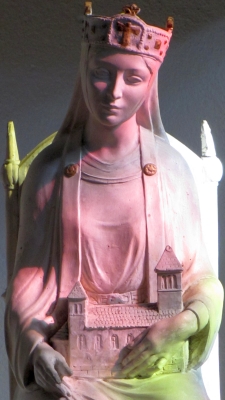
  • holding a church
  • veil

Source: https://catholicsaints.info/saint-adelaide-of-burgundy/

Saint Adelaide of Burgundy Read More »

Matthew 21:25-27

Religious Politicians

“Where was John’s baptism from? Was it of heavenly or of human origin?” They discussed this among themselves and said, “If we say ‘Of heavenly origin,’ he will say to us, ‘Then why did you not believe him?’ But if we say, ‘Of human origin,’ we fear the crowd, for they all regard John as a prophet.” So they said to Jesus in reply, “We do not know.”

Reflection:

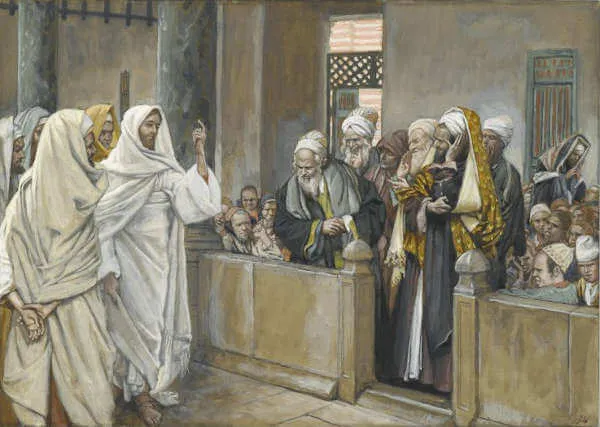
This is a perfect example of how not to live your life. But, sadly, this is too often an illustration of the way many in authority do live their lives. In this Gospel passage, we see the Pharisees acting as what we may term “religious politicians.” A religious politician is one whose religious convictions are decided in a backwards sort of way. Ideally, we will turn our eyes to Christ and all that He has revealed to us. This will produce the glorious gift of authentic faith, and from that rock foundation of faith, we act. But the Pharisees allowed their “convictions” to be based on what they perceived would produce the best outcome at the moment. They chose to say “We do not know” where John’s baptism was from because they thought it was the answer that most safeguarded them from any criticism.

As followers of Christ, we need to be ready and willing to suffer any and all ridicule that comes from living our convictions of faith in an open way. Faith will lead to charity, and charity will always be grounded in the truths of faith. But when we live and proclaim the truth, we will be criticized by some and will suffer as a result.

This Gospel offers us all an invitation to reflect upon the difficult truths of our day and age and to decide whether or not we are willing to publicly profess the truth. Think, especially, about the many moral truths of our faith that seem to be continually under attack. Are you willing to speak your faith clearly, with charity and with conviction, even if it means criticism from the world?

Reflect, today, upon the backwards approach taken by the Pharisees when they were confronted with a difficult question. Make the choice not to follow their example, choosing instead the unwavering convictions that you are called to embrace by your faith. What questions are being asked of you today? In which ways are you being tested by others? What is your approach to those tests? Do you speak more like a “religious politician?” Or do you speak with a clarity flowing from the rock foundation of your faith?

Source: https://catholic-daily-reflections.com/2024/12/15/religious-politicians-2/

Matthew 21:25-27 Read More »

Third Sunday of Advent

First Reading Zephaniah 3:14-18a

 Shout for joy, O daughter Zion!
        Sing joyfully, O Israel!
    Be glad and exult with all your heart,
        O daughter Jerusalem!
    The LORD has removed the judgment against you
        he has turned away your enemies;
    the King of Israel, the LORD, is in your midst,
        you have no further misfortune to fear.
    On that day, it shall be said to Jerusalem:
        Fear not, O Zion, be not discouraged!
    The LORD, your God, is in your midst,
        a mighty savior;
    he will rejoice over you with gladness,
        and renew you in his love,
    he will sing joyfully because of you,
        as one sings at festivals.

Responsorial Psalm Isaiah 12:2-3, 4, 5-6

R. (6)  Cry out with joy and gladness: for among you is the great and Holy One of Israel.
God indeed is my savior;
    I am confident and unafraid.
My strength and my courage is the LORD,
    and he has been my savior.
With joy you will draw water
    at the fountain of salvation.
R. Cry out with joy and gladness: for among you is the great and Holy One of Israel.
Give thanks to the LORD, acclaim his name;
    among the nations make known his deeds,
proclaim how exalted is his name.
R. Cry out with joy and gladness: for among you is the great and Holy One of Israel.
Sing praise to the LORD for his glorious achievement;
    let this be known throughout all the earth.
Shout with exultation, O city of Zion,
    for great in your midst
    is the Holy One of Israel!
R. Cry out with joy and gladness: for among you is the great and Holy One of Israel.

Second Reading Philippians 4:4-7

Brothers and sisters:
Rejoice in the Lord always.
I shall say it again:  rejoice!
Your kindness should be known to all.
The Lord is near.
Have no anxiety at all, but in everything, 
by prayer and petition, with thanksgiving, 
make your requests known to God.
Then the peace of God that surpasses all understanding 
will guard your hearts and minds in Christ Jesus.

Alleluia Isaiah 61:1

R. Alleluia, alleluia.
The Spirit of the Lord is upon me,
because he has anointed me
to bring glad tidings to the poor.
R. Alleluia, alleluia.

Gospel Luke 3:10-18

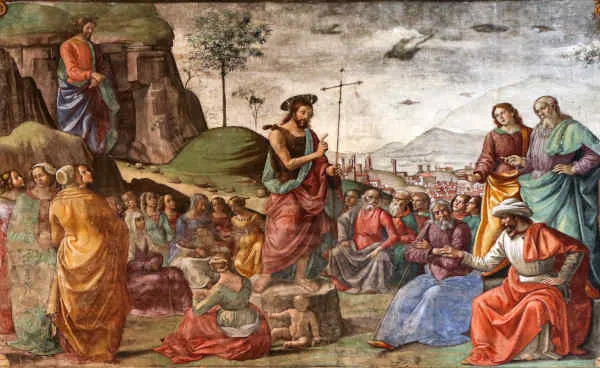
The crowds asked John the Baptist,
“What should we do?”
He said to them in reply,
“Whoever has two cloaks
should share with the person who has none. 
And whoever has food should do likewise.”
Even tax collectors came to be baptized and they said to him,
“Teacher, what should we do?”
He answered them, 
“Stop collecting more than what is prescribed.”
Soldiers also asked him,
“And what is it that we should do?”
He told them,
“Do not practice extortion, 
do not falsely accuse anyone, 
and be satisfied with your wages.”

Now the people were filled with expectation, 
and all were asking in their hearts 
whether John might be the Christ.
John answered them all, saying, 
“I am baptizing you with water,
but one mightier than I is coming.
I am not worthy to loosen the thongs of his sandals.
He will baptize you with the Holy Spirit and fire.
His winnowing fan is in his hand to clear his threshing floor
and to gather the wheat into his barn, 
but the chaff he will burn with unquenchable fire.”
Exhorting them in many other ways, 
he preached good news to the people.

Source: https://bible.usccb.org/bible/readings/121524.cfm

Third Sunday of Advent Read More »

Saint Virginia Centurione Bracelli

Profile

Virginia was the daughter of Giorgio Centurione, and imposing and controlling individual who became the Doge of Genoa, and Lelia Spinola. She was raised in a pious family and felt drawn to religious life as a child. However, due to family position, she agreed to an arranged marriage to Gasparo Grimaldi Bracelli on 10 December 1602. He was a drinker, a gambler, and though the couple had two daughters, Lelia and Isabella, he was little of a father or husband. Virginia was widowed on 13 June 1607 after five years of marriage, aged 20, and with two small children.

Virginia moved in with her in-laws, cared for her children, and dedicated her free time to prayer and charity. When her daughters were grown and married, Virginia devoted herself entirely to caring for the sick, aged, and abandoned children. In late 1624 and early 1625, war in the region led to many orphans, some whom Virginia took in and cared for. She worked with refugees in the town as well. When her mother-in-law died in August 1625, Virginia poured herself into the work, turning her house into a refuge and found the Cento Signore della Misericordia Protettrici dei Poveri di Gesù Cristo.

Her house was overrun with the needy during a plague and famine in 1629 – 1630. To house them all, Virginia rented the vacant convent of Monte Calvario and moved her charges there in 1631. Due to crowding, extra housing was built in 1634, Virginia was soon caring for 300 patients, and in 1635 she received official government recognition for her hospital. Virginia worked closely with the young women in her houses, teaching them religion and ways to earn a living.

The expenses of Monte Calvario were excessive, so Virginia bought two villas and started construction of a church dedicated to Our Lady of Refuge. It became the mother church of the Institution, whose Rule was written between 1644 and 1650 and which was divided into two congregations: Suore di Nostra Signora del Rifugio di Monte Calvario (Sisters of Our Lady of Refuge in Mount Calvary) and Figlie di Nostra Signora al Monte Calvario (Daughters of Our Lady on Mount Calvary). When the group of Protectors, the superiors and governors of the Institute was selected in 1641, Virginia retired from administration, working as the humblest sister, doing chores on the grounds and begging for alms for the Institute.

Sadly, though the Institute was a success, healing the sick, educating children, training adults, and helping the dissolute return to productive lives, personal and financial assistance began to decline. Without the chance to work with Virginia, many of the middle and upper class did not participate, fearing the poor and rough residents. Though her health was failing, Virginia returned to active administrative duties. She worked for general spiritual development throughout the region, working for the choice of the Blessed Virgin Mary as patron of the republic of Genoa in 1637, for the institution of the Forty Hours’ Devotion in 1642, and the revival of home missions in 1643. She acted as peacemaker between noble houses, and aided in the reconciliation of Church and Republic authorities in 1647, ending a dispute caused by the government abandoning support of the Institute. Virginia continued working up to the end of her days, and in later years received the gifts of visions and interior locutions.

Born

  • 2 April 1587 in Genoa, Italy

Died

  • 15 December 1651 in Genoa, Italy of natural causes

Beatified

  • 22 September 1985 by Pope John Paul II

Canonized

  • 18 May 2003 by Pope John Paul II at Vatican Basilica

Patronage

  • Sisters of Our Lady of Refuge in Mount Calvary

Source: https://catholicsaints.info/saint-virginia-centurione-bracelli/

Saint Virginia Centurione Bracelli Read More »

Luke 3:10

Turn From Sin

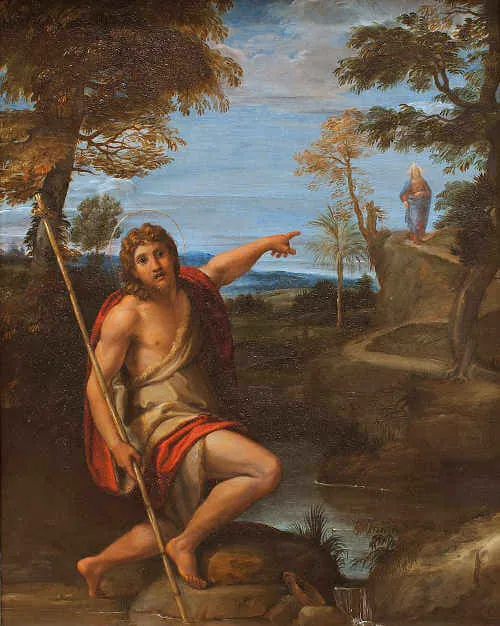
The crowds asked John the Baptist, “What should we do?”

Reflection:

Among those within the crowds who were asking Saint John the Baptist this question were tax collectors, soldiers and ordinary people. John gave an answer to them all, first telling them to turn away from the sins that they struggled with the most. Sin takes on many forms and often is closely associated with our daily duties in life. Some sins are sins of commission, meaning sins we commit by an intentional act. Some sins are those of omission, meaning a lack of certain virtues or a failure to do what we ought to do.

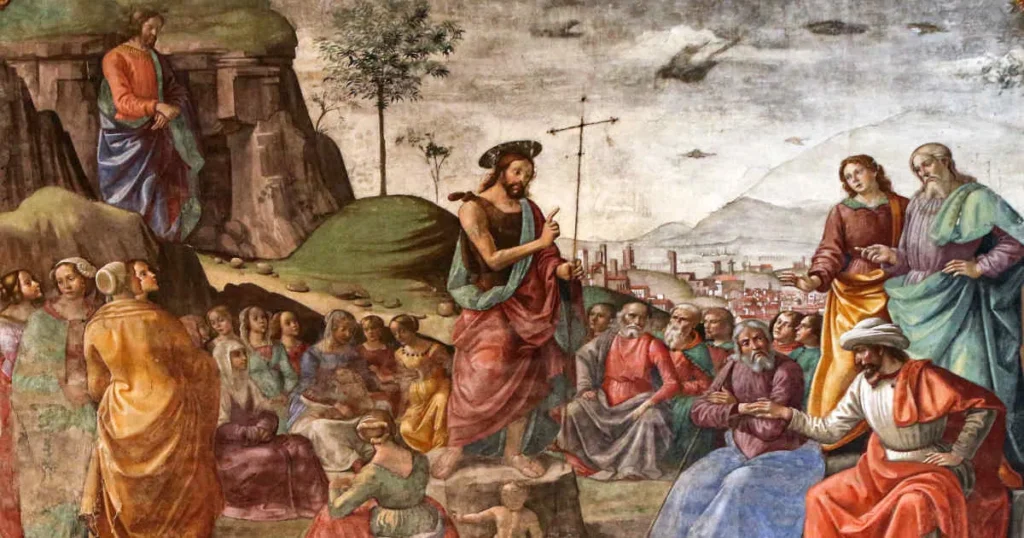
After addressing the particular sins that those in the crowds were struggling with, John then turns their attention to Christ. He states to them that “​​one mightier than I is coming” and that “He will baptize you with the Holy Spirit and fire.” In other words, John was giving the people a twofold command. First, work to overcome sin. And second, turn your eyes to Him Who is coming to you. Repenting from sin is not enough. Once we repent, we must then fill the void within our souls with the presence of Christ.

Advent, just like Lent, is an important time within our liturgical year to heed these messages. Though it’s true that we must work to overcome sin and turn to Christ every day of the year, God knows we need a special time each year when we give concerted effort to these spiritual endeavors. So before Advent passes you by, heed the words of the Baptist and take some time to examine your conscience thoroughly. Perhaps use a detailed list of the Ten Commandments or the Seven Capital Sins. Once you do that, seek out an opportunity to celebrate the Sacrament of Reconciliation. Doing so is essential to a fruitful Advent season.

Once you thoroughly repent of the sins you struggle with the most right now, turn to the Savior of the World with special attentiveness to the miracle of the Incarnation this Advent. Spend time adoring the God Who came to us in the form of a little child. Meditate on this Gift. Gaze at a nativity scene prayerfully. Read the Scripture passages about the birth of Christ. Close your eyes and imagine yourself there at His birth.

Reflect, today, upon this twofold exhortation from John and apply it to your Advent preparations. Cleanse your soul in a special way from all sin this Advent. Then prayerfully ponder and meditate upon the reality we are preparing to celebrate. As John says, allow the Christ Child to truly “baptize you with the Holy Spirit and fire” through your deepening devotion and prayer this Advent.

Source: https://catholic-daily-reflections.com/2024/12/14/turn-from-sin/

Luke 3:10 Read More »

Saint John of the Cross, Priest and Doctor

c. 1542–1591; Patron Saint of contemplatives, mystical theology, and Spanish poets; Canonized by Pope Benedict XIII on December 27, 1726; Declared a Doctor of the Church by Pope Pius XI in 1926; Commonly referred to as the “Mystical Doctor”

Juan de Yepes y Álvarez was born in Fontiveros, Ávila, Spain. His family descended from Jewish converts who settled in Fontiveros. His father, Gonzalo, was an accountant who worked for relatives who were involved in the silk trade. In 1529, Gonzalo married Catalina who was poor and an orphan. Gonzalo’s wealthy family did not receive the news well. As a result, he was shunned by his relatives and no longer able to work as their accountant. Therefore, Gonzalo joined his new bride in her trade of weaving to support his own family. Gonzalo and Catalina had three boys: Francisco, Luis, and Juan.

In 1545, when Juan was only three years old, his father died, leaving Catalina to raise and provide for their boys, a difficult responsibility for a widow at that time. She sought assistance from Gonzalo’s family but was rejected. Therefore, she and her boys lived in destitution. Two years after Gonzalo’s death, Luis died of malnutrition. Eventually, Catalina took Francisco and Juan and moved to Medina del Campo, a larger city, and resumed her work as a weaver.

In Medina, Juan was able to attend a boarding school for poor children. He received a basic education, housing, and food. Juan proved to be an excellent student and, in 1559, was invited to study at the nearby newly founded Jesuit school at the age of seventeen. With the Jesuits, Juan studied the humanities, grammar, rhetoric, Latin, and Greek. Four years later, in 1563, he entered the Carmelite Order, taking the name John of Saint Matthias.

John made his profession as a Carmelite in 1564 and subsequently received special permission from his superiors to follow the ancient Carmelite rule to the letter, rather than embrace the various changes to the rule that occurred over the years. After his professions, he was sent to study theology and philosophy at the prestigious university in Salamanca. There he excelled in his studies and was known for his intelligence and insights. At the end of his studies, John had second thoughts about his vocation as a Carmelite, preferring instead to live a more contemplative life. As a result, he decided that he would enter the Carthusians once he was ordained. John was ordained a priest in 1567.

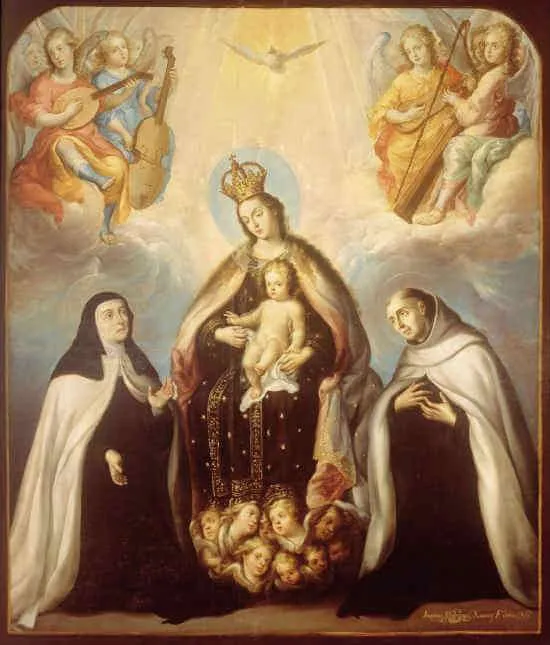
Father John returned to Medina to offer his first Mass. However, his intention to join the Carthusians all changed after meeting the Carmelite nun Teresa of Ávila. Mother Teresa was a reformer of the Carmelite Order and was in Medina to found a new convent. While there, she heard of the newly ordained priest, Father John, and attended his first Mass. Later, she spoke to him about her ideas on reforming the Carmelites in hopes that he would become her first friar in the reform. Father John was intrigued and accepted her invitation to remain a Carmelite and assist her with the new reforms, reviving the ancient rule.

After returning with Mother Teresa to Valladolid, he participated in a period of formation under her guidance and founded the first house for friars, along with two other Carmelite brothers. This first house began formally on November 28, 1568. Father John gave up his old name and took on the new name of Father John of the Cross. As more friars joined them, Father John, now the subprior and novice master, moved to a larger house in nearby Alcalá where he also became the rector of the university.

In May of 1572, Mother Teresa asked him to move to Ávila to become the spiritual director for the sisters at the Monastery of the Incarnation. He remained there for five years, working closely with the sisters and growing deep in his own spiritual life. He was especially blessed to act as spiritual director to Mother Teresa who, in many ways, acted as a spiritual guide to him. Shortly after his arrival in 1572, Mother Teresa entered into the spiritual transformation of the Divine Union while Father John acted as her spiritual director. At times, their conversations led both of them into ecstasy as the Holy Spirit worked powerfully in their lives and through their spiritual friendship.

Sadly, politics had its place in the Church at that time, and there were some who did not like the idea of reforming the Carmelite order. In January of 1576, Father John was arrested for the first time by the more contemporary and well-established Carmelites of the Observance. They wanted to end the reforms of Father John and Mother Teresa and their Discalced Carmelites (meaning those who wore sandals rather than shoes). His arrest was quickly ended by the intervention of the papal nuncio, Nicolás Ormaneto, who was favorable toward the reforms of the Discalced Carmelites. However, the following year, in June of 1577, the nuncio died. A new nuncio was appointed who was not in favor of the reforms. In December of that year, Father John was once again arrested by the Carmelites of the Observance and put in prison in their monastery in Toledo, where he remained for nine months.

After Father John’s arrest, the Provincial ordered him to “repent” of his reforms and to return to the monastery in Medina. Father John refused to do so, arguing that he was not bound by the Provincial’s demands, since he had received permission for his work on the reform from the nuncio Ormaneto while he was alive. As a result, Father John was judged as being rebellious and willfully disobedient to their authority and was imprisoned in a six-by-ten-foot dungeon cell.

During the nine months of his imprisonment, Father John was regularly abused by the friars in attempts to get him to “repent.” He was given no change of clothing, very little food, endured a severe case of lice, and had only his breviary to read. He endured the severe cold of the winter and the heat of the summer in the small dark cell that had only one small window high up on the wall. However, it was during this time of abuse that some of the greatest spiritual treasures to fill our Church were born. Father John, in the darkness of this prison, composed numerous poems, including Dark Night of the Soul and portions of the Spiritual Canticle. God did not allow this abuse to go fruitless. Father John grew deep in the spiritual life and entered into interior freedom through his prayer and surrender to God.

In August of 1578, it is said that God miraculously enabled Father John to escape at night “in the darkness,” as his poem relates, and find refuge with Mother Teresa’s sisters in Toledo. Eventually, he escaped to Santa Cruz, where he was cared for secretly and nursed back to full health. Over the coming years, his prison experience, the poems he composed, and his life of deep prayer and study prepared him to write four of the greatest works on mystical theology the Church has ever known: Ascent to Mount Carmel, Dark Night of the Soul, Living Flame of Love, and Spiritual Canticles. Each book was a commentary on the mystical poems he had composed. The poems themselves are considered to be among the most beautiful poems written in the Spanish language.

During the year after Father John escaped imprisonment, the Discalced Carmelites did all they could to regularize their situation within the larger Carmelite order and within the Church. Though the new nuncio tried to stop them, the king intervened. In April of 1579, a new provincial was appointed to oversee the Discalced Carmelites and to assist them with their reforms. In 1580, the Holy See allowed the Discalced Carmelites to enjoy independence from the Carmelites of the Observance, and Father John was appointed as prior of one of the new monasteries. Mother Teresa died in 1582. In 1585, the Discalced Carmelites were given even greater independence from the Carmelites of the Observance when they were established as an independent province. Father John was elected Vicar Provincial.

The charisms of this reform in which Father John and Mother Teresa were so instrumental included the following: 1) a strong Marian devotion, 2) a daily plan carefully set forth to maintain a life of continual prayer, and 3) a strict rule of enclosure focused on the asceticism of solitude, manual labor, perpetual abstinence, fasting, and fraternal charity. Many were attracted to this new strict Carmelite life. Therefore, monasteries of both nuns and friars continued to be founded.

Father John continued to found monasteries and oversee the reform until September of 1591, when he developed gangrene on his leg. He went to a monastery in Ubeda to receive care for his illness. Instead, the superior treated him coldly, arguing that Father John was a burden to the monastery. On December 13, just hours before his death, Father John called the prior to his cell and humbly begged his forgiveness for being a burden. This act of humility completely transformed the prior who was overwhelmed by Father John’s sanctity. At midnight, the saintly friar went home to Heaven to his Beloved to sing Matins with the angels, thus completing his mystical journey to divine union.

Saint John of the Cross endured many trials throughout his life, but God used those trials as a foundation for the spiritual formation he would provide to the Church through his masterful mystical theology. It could be argued that no one has captured the depths of the spiritual life, leading us to Divine Union and Mystical Marriage, better than Saint John of the Cross. He did not shy away from describing, in great detail, the interior purifications a soul must endure on that journey to complete freedom.

As we honor that great saint and mystical doctor of the Church, ponder the profound spiritual truth—that complete union with God is an ongoing process that requires total surrender, interior purgations of the senses and spirit, mortification, and mystical annihilation. Though these concepts are deep and utterly otherworldly, they are beautiful truths that the Church continues to uphold. Allow Saint John to inspire you to go deeper in your faith journey so that your divine union will evolve and blossom into the glorious life God desires for you.

Source: https://mycatholic.life/saints/saints-of-the-liturgical-year/14-december-saint-john-of-the-cross-priest-and-doctor–memorial/
Saint John of the Cross, Priest and Doctor Read More »

Matthew 17:12-13

Approaching the Word of God

“I tell you that Elijah has already come, and they did not recognize him but did to him whatever they pleased.  So also will the Son of Man suffer at their hands.”  Then the disciples understood that he was speaking to them of John the Baptist.

Reflection:

The last of the Old Testament Prophets was Malachi. He concluded his ministry about 400 years prior to the coming of Christ. Malachi prophesied that a “messenger” would come before the Messiah so as to prepare the way before Him. Malachi goes on further to say that “Elijah the Prophet” will come before the day of the Lord (See Malachi 3:1–24).

Many of the people at the time of Jesus did not understand this prophecy and were not even aware of it. Therefore, the scribes used this prophecy to confuse many of the people by claiming that since “Elijah” had not come, then clearly Jesus was not the promised Messiah.

Jesus clarified to the disciples that the “messenger,” who was to be the new Elijah, had already come in the person of John the Baptist. Thus, in clarifying this, Jesus also clarified that the scribes were not accurate in their attempt to interpret the Scriptures and were actively misleading the people on account of their errors.

One thing this tells us is that we must approach the word of God with humility. The pride of the scribes led them to believe that they had some sort of extraordinary wisdom that they did not. Thus, they acted as poor spiritual teachers of the people of God.

Humility before the Word of God is essential if we are to properly understand not only the Old Testament prophecies but also the very words of Jesus Himself. Without humility before the Word of God, we can all easily misinterpret the beautiful and holy words spoken by our Lord.

Everything in the Scriptures is profound, deep and true. And by this holy Word of God we come to meet God Himself. But if we allow pride to seep in, we may find ourselves imitating the scribes and misunderstanding God’s Word. The result will be a skewed image of God which will become an impediment to our personal encounter with our loving Lord. But if we can always remain humble before all that God has revealed to us, then we will more easily be open to those deepest and most beautiful truths God wants to speak to our hearts.

Reflect, today, upon any way that you have found yourself confused by the Word of God. Try to humbly open your heart more fully to that which our Lord wants to speak to you. Listen with an open mind and heart and allow the pure gift of faith to become your guide so that you will be led to those deepest truths of our faith.

Source: https://catholic-daily-reflections.com/2024/12/13/approaching-the-word-of-god-3/

Matthew 17:12-13 Read More »