2024

Fourteenth Sunday in Ordinary Time

First Reading Ezekiel 2:2-5

As the LORD spoke to me, the spirit entered into me
and set me on my feet,
and I heard the one who was speaking say to me:
Son of man, I am sending you to the Israelites,
rebels who have rebelled against me;
they and their ancestors have revolted against me to this very day.
Hard of face and obstinate of heart
are they to whom I am sending you.
But you shall say to them: Thus says the LORD GOD!
And whether they heed or resist—for they are a rebellious house—
they shall know that a prophet has been among them.

Responsorial Psalm Psalms 123:1-2, 2, 3-4

R. (2cd) Our eyes are fixed on the Lord, pleading for his mercy.

To you I lift up my eyes
who are enthroned in heaven —
As the eyes of servants
are on the hands of their masters.

R. Our eyes are fixed on the Lord, pleading for his mercy.

As the eyes of a maid
are on the hands of her mistress,
So are our eyes on the LORD, our God,
till he have pity on us.

R. Our eyes are fixed on the Lord, pleading for his mercy.

Have pity on us, O LORD, have pity on us,
for we are more than sated with contempt;
our souls are more than sated
with the mockery of the arrogant,
with the contempt of the proud.

R. Our eyes are fixed on the Lord, pleading for his mercy.

Second Reading 2 Corinthians 12:7-10

Brothers and sisters:
That I, Paul, might not become too elated,
because of the abundance of the revelations,
a thorn in the flesh was given to me, an angel of Satan,
to beat me, to keep me from being too elated.
Three times I begged the Lord about this, that it might leave me,
but he said to me, “My grace is sufficient for you,
for power is made perfect in weakness.”
I will rather boast most gladly of my weaknesses,
in order that the power of Christ may dwell with me.
Therefore, I am content with weaknesses, insults,
hardships, persecutions, and constraints,
for the sake of Christ;
for when I am weak, then I am strong.

Alleluia Cf. Luke 4:18

R. Alleluia, alleluia.

The Spirit of the Lord is upon me,
for he sent me to bring glad tidings to the poor.

R. Alleluia, alleluia.

Gospel Mark 6:1-6

Jesus departed from there and came to his native place, accompanied by his disciples.
When the sabbath came he began to teach in the synagogue,
and many who heard him were astonished.
They said, “Where did this man get all this?
What kind of wisdom has been given him?
What mighty deeds are wrought by his hands!
Is he not the carpenter, the son of Mary,
and the brother of James and Joses and Judas and Simon?
And are not his sisters here with us?”
And they took offense at him.
Jesus said to them,
“A prophet is not without honor except in his native place
and among his own kin and in his own house.”
So he was not able to perform any mighty deed there,
apart from curing a few sick people by laying his hands on them.
He was amazed at their lack of faith.

Source: https://bible.usccb.org/bible/readings/070724.cfm

Fourteenth Sunday in Ordinary Time Read More »

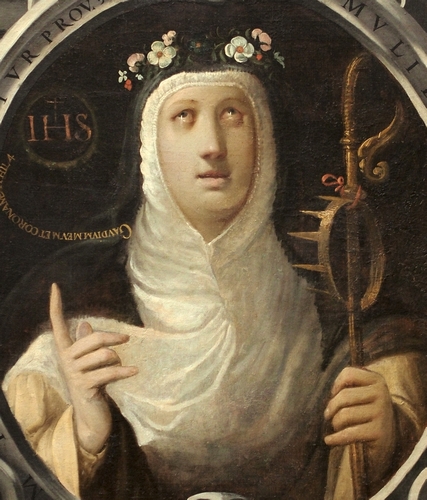
Saint Ethelburga of Faremoutiers

Profile

Ethelburga was the daughter of the king of East Angles. During her childhood, Ethelburga lived in a Gallic convent under the direction of Saint Burgundofara, a home she would have for the rest of her life. She was known throughout the community for her adherence to the Rule of the Order. In the mid-seventh century, Ethelburga was chosen abbess. She ruled with wisdom and justice until her death. Saint Tortgith of Barking was one of her nuns.

Died

  • 664 at Faremoutier, France of natural causes
  • when her body was exhumed seven years after her death, it was found incorrupt

Canonized

  • Pre-Congregation

Patronage

  • Faremoutiers, France

Source: https://catholicsaints.info/saint-ethelburga-of-faremoutier/

Saint Ethelburga of Faremoutiers Read More »

Mark 6:4-6

Faith and Miracles

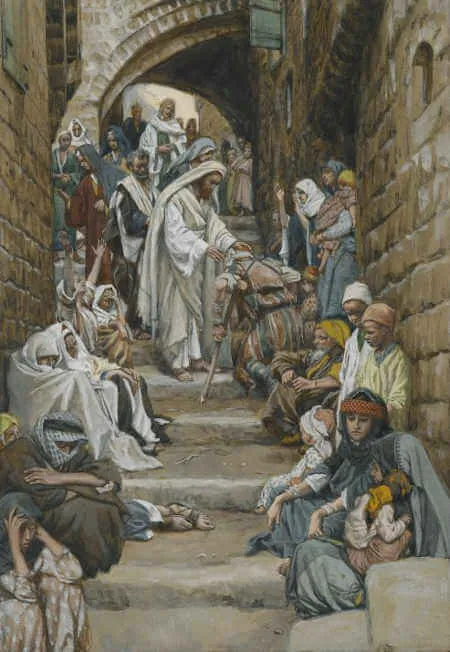
Jesus said to them, “A prophet is not without honor except in his native place and among his own kin and in his own house.” So he was not able to perform any mighty deed there, apart from curing a few sick people by laying his hands on them. He was amazed at their lack of faith.

Reflection:

Why was Jesus “not able to perform any mighty deed” in His hometown of Nazareth? Because the people who had known Him since He was a youth lacked faith in Him. But why wouldn’t Jesus simply perform awe-inspiring miracles with the hope of winning them over? Why not try to convince them by raising someone from the dead or by revealing His transfigured glory to His kinfolk, as He did on the Mount of Transfiguration to three of His disciples? The answer goes to the heart of the workings of faith in each soul.

Jesus’ goal in His hometown was not to convince the people that He was the Son of God, the Messiah. He could have easily convinced them of this by the most incredible of miracles and proved Who He was. But doing so would have undermined the reason He came. He came to ignite authentic faith in people’s hearts, not to convince them through clever reasoning or by the proof of miracles. Miracles were offered to those who already had faith, so as to increase their faith and to show them mercy. But when one lacked faith, a miracle could not increase that which was absent. It might have convinced them on a rational level, or at least impressed them greatly, but that is not true faith.

By analogy, say your spouse said to you, “I love you,” and your response was “Prove it.” How would they do so? What could they do to prove that they truly love you? Perhaps they could show charity, kindness, compassion and the like. These qualities certainly are manifestations of authentic love. But deep down, no one can prove they love another. Instead, love must be offered and received in a spiritual way. When that happens, each person somehow simply knows they love and are loved. This is the mystery of spiritual and authentic love.

The same is true with faith. Faith can’t be proved. It can’t be analyzed rationally. It must be embraced and lived. If the people in Jesus’ hometown were to have faith in Him, this gift of faith would start within their own souls. They would look at Him and listen to Him. By their openness and a special personal revelation from God, they would come to know and to believe Who He was. Faith comes first from within, when God communicates to the heart.

Reflect, today, upon your own level of faith in Jesus. When you look into your own soul, what do you see? Do you see a heart that knows Christ Jesus as its Lord? Have you discovered the presence of God within you, speaking to you, revealing Himself to you? Or do you primarily look for external signs and proofs of God’s presence and love? Look into your soul today and ponder the depth of faith that you discover there. When you discover this gift, gaze at it with love, for you are seeing God’s revelation of Himself to you.

Source: https://catholic-daily-reflections.com/2024/07/06/faith-and-miracles/

Mark 6:4-6 Read More »

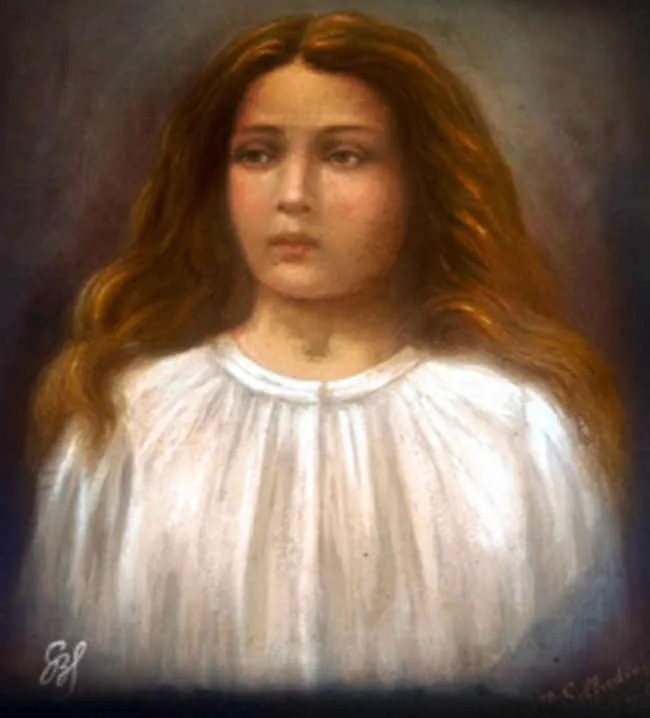
Saint Maria Goretti, Virgin and Martyr

1890–1902; Patron Saint of young people (especially girls), rape victims, and the poor; Invoked for the grace of mercy and forgiveness; Canonized by Pope Pius XII on June 24, 1950

Maria Goretti was born into poverty in Corinaldo, Italy. She was the third of seven children and was affectionately called Marietta by family and friends. Due to her family’s poverty, Maria was unable to attend school. She spent most of her time in the family home, performing chores and caring for her younger siblings. Her father owned a farm but lost it when Maria was only five years old. Hiring himself out as a farmhand, Maria’s father provided enough for his family to eat, but when Maria was nine, he died of malaria. To provide for her seven children, Maria’s mother began to work in the fields, with Maria taking on increased responsibility at home. Despite her lack of formal education and inability to read, Maria had deep faith. The family’s suffering from poverty and loss of their father did not diminish her faith; it strengthened it. When her mother began to lose hope during their difficulties, Maria habitually said, “Mother, be brave, God will help us.” Maria’s hope that her father would be freed from Purgatory led her to constant prayer, particularly the rosary.

When Mr. Goretti lost his farm, the Gorettis moved into a home shared with the Serenellis, Mr. Serenelli and his son Allessandro. Alessandro’s mother had suffered from a mental disorder and died when he was young. Alessandro’s brother suffered from a similar disorder, and their father was an alcoholic. As a result, Alessandro was a young man prone to anger who engaged in immoral behavior.

During the three years Maria and her family lived with the Serenellis, Alessandro made at least three sexual advances toward her. Each time she refused him. Outraged, he threatened to kill her if she told anyone, so she remained silent. When Maria was only eleven and Alessandro was twenty, he found Maria alone in their shared home, caring for her youngest sister and mending a shirt while her mother and older siblings were in the field working. Once again, Alessandro made a sexual advance toward her and she refused him. With an awl in his hand, Alessandro threatened to kill Maria if she refused him. “No! It is a sin! God does not want it!” she cried. She ran for the door, but Alessandro caught her and stabbed her fourteen times in the neck before running out of the house. As Maria lay bleeding on the floor, her little sister began to cry, catching the attention of her mother who came to investigate. After finding Maria stabbed and bleeding, she brought her to the local hospital where Maria survived for only a day.

At the hospital, the surgeon was surprised that Maria had survived that long. He immediately performed surgery without anesthetic. During the surgery, Maria woke up, and another doctor said to her, “Maria, think of me in Paradise.” Maria replied, “Well, who knows which of us is going to be there first?” The doctor said to her, “You, Maria.” To which Maria responded, “Then I will gladly think of you.” Before her death, Maria was able to express her forgiveness of Alessandro, further expressing her hope that she would see him in Heaven. She also received the last sacraments. On her deathbed, she told the Chief of Police that it was Alessandro who attacked her and added, “I forgive him, and I want him with me in heaven!” She died the following day.

In many ways, Maria’s brutal death marked the beginning of her new life. Her family was devastated, but they were also inspired by her faith, mercy, and act of forgiveness. At her funeral, many said of her, “A saint has died!” Devotion to her immediately began to spread and continues to spread today.

Since Alessandro was young, he was sentenced to thirty years in prison rather than life. During his first several years in prison, Alessandro remained defiant, refusing to repent. Although he knew that Maria had forgiven him, he could not accept forgiveness, nor admit his sin. However, when the local bishop, Giovanni Blandini, felt inspired to visit him in prison, things began to change. Around that time, Alessandro had a dream in which he saw Maria coming to him and handing him lilies, a symbol of purity. When he took the lilies, they burnt his hands and turned to dust. He wrote to the bishop thanking him for his visit, revealing the dream, and asking for prayers. In the years to follow, Alessandro underwent a profound conversion. After serving twenty-seven years of his thirty-year sentence, he was released.

Upon his release, Alessandro went to Maria’s mother, Assunta, and begged for her forgiveness, which she bestowed. “Who am I to withhold what my daughter so readily gave?” she responded. The next day, Alessandro and Assunta attended Mass together, receiving Holy Communion as if they were mother and son.

On June 24, 1950, Pope Pius XII canonized Maria and referred to her as the “Saint Agnes of the Twentieth Century.” Most remarkably, Maria’s mother and four of her siblings were present at the canonization. This was the first time a mother attended her child’s canonization. Even more remarkably, Alessandro was also present. Saint Maria’s prayers had truly worked a miracle of mercy, forgiveness, and reconciliation. Alessandro became a lay Franciscan brother, working as a gardener until his death at the age of eighty-seven.

Saint Maria Goretti’s short life and tragic death present us with so much more than a tragedy. They present us with hope—hope that even the most hardened sinner can repent and be saved. So often our world reacts with outrage toward sin, rather than mercy. Mercy is the defining virtue in the heart of Saint Maria, and this eleven-year-old girl should inspire us to work to overcome all anger, bitterness, and resentment toward the sinner. Ponder your own depth of mercy, or lack thereof, and allow this young child to inspire you to follow her example.

Source: https://mycatholic.life/saints/saints-of-the-liturgical-year/july-6—saint-maria-goretti-virgin-and-martyr/

Saint Maria Goretti, Virgin and Martyr Read More »

Matthew 9:16-17

The Newness of Grace

“No one patches an old cloak with a piece of unshrunken cloth, for its fullness pulls away from the cloak and the tear gets worse. People do not put new wine into old wineskins. Otherwise the skins burst, the wine spills out, and the skins are ruined. Rather, they pour new wine into fresh wineskins, and both are preserved.”

Reflection:

The parable above teaches us that even if someone were to faithfully understand and live the authentic Law that was given through Moses and the prophets, Jesus’ new teaching of grace, the New Law, was so different that it was not simply an improvement of the old, it completely replaced it. Furthermore, many of the customs taught by the Pharisees were unfaithful representations of the Law of Moses. They had deviated from the Law’s meaning and replaced it with their own scrupulous and erroneous multiplication of external practices. Thus, Jesus’ New Law needed to break away from these deviations completely.

To use a modern example, if you were to have an old phone that had become obsolete or stopped working, you wouldn’t buy a new phone so as to remove various parts from it to try to add those parts to the old phone to fix it. Instead, you use the new phone as a complete replacement for the old one.

A central quality of the New Law of grace is that it is entirely new and transforming. Therefore, by embracing this New Law, we become entirely new creations in Christ. Grace doesn’t simply patch that which is weak and sinful in us. It transforms us, elevating our human nature to an entirely new existence. This teaching is not only directed at the misguided teachings that the Pharisees had developed over the years, it was directed at human life itself. Not only were the Jewish customs to go through a transformation, humanity itself was to go through a transformation. Everything is made new in Christ.

This teaching applies just as much to us today as it did to the Jewish people of old. Today, we not only receive the new life of grace in Baptism, but we also receive it anew and share in this ongoing transforming renewal every time we allow grace to touch us more deeply and transform us more fully into the people God wants us to be. The “new patch” and the “new wine” are always transforming, and we must look forward to this newness throughout our lives.

Reflect, today, upon the joyful discovery that awaits you every day. Discovering the New Law of grace, accepting it into your life, and allowing it to transform you will set you on a path of discovery that will never get old. It is an ongoing discovery that is far greater than anything this world has to offer. Nothing can ever compare to the gift of God alive in our lives. It will never get old. It will always be transforming. And it will always be new. Ponder this gift God offers you today and say “Yes” to it with all your heart.

Source: https://catholic-daily-reflections.com/2024/07/05/the-newness-of-grace-2/

Matthew 9:16-17 Read More »

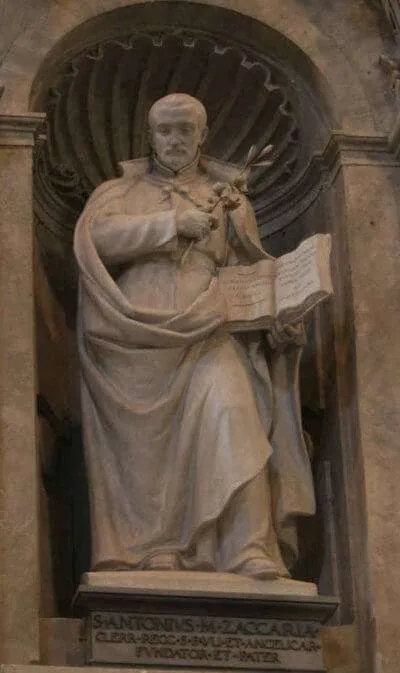
Saint Anthony Zaccaria, Priest

1502–1539; Patron Saint of physicians; Canonized by Pope Leo XIII on May 27, 1897

In 1502, Anthony Mary Zaccaria was born into a noble family in Cremona, a town in northern Italy. His father died when Anthony was two, leaving his eighteen-year-old mother to raise her only child. She ensured he received a good education and instilled in him a deep faith. His mother taught him to pray, leading him to spend long periods praying before a special altar dedicated to the Blessed Virgin Mary in their home, attending Mass, and preaching to his friends. Anthony was also deeply influenced by his mother’s care for the poor. Once, while returning from church, he encountered a poor, half-naked beggar who asked for alms. Having nothing on him, Anthony gave the beggar his silk cloak. His mother’s praise for this act of charity further motivated Anthony’s dedication to caring for the poor and sick.

After Anthony completed his elementary studies in Cremona, his mother sent him to Pavia to study philosophy and then to Padua to study medicine. At the age of twenty-two, he earned his doctorate in medicine and returned to Cremona, where he began his work as a physician, devoting much of his time to the care of the poor. As a physician, Doctor Anthony discovered that he could minister to both the physical and spiritual needs of the sick, especially those who were on their deathbeds. When called to the bedside of the sick, he encouraged them to turn to God in prayer, to receive the Sacraments, and to turn away from sin. He also gathered poor children together and taught them catechism. As his influence grew, members of the noble class also sought him out as a teacher for their children. Eventually, Doctor Anthony began preaching in the local church as a layman, drawing a diverse crowd of rich and poor, young and old.

Not long after starting his medical practice, Doctor Anthony realized that the salvation of souls was of far greater importance than the healing of the body. As a result, he abandoned his medical practice and devoted himself more fully to prayer so that he could discern God’s will. At the urging of his spiritual director, Anthony pursued theological studies and ordination to the priesthood, and in 1528, at the age of twenty-six, he was ordained a priest. During his first Mass, a miracle took place. At the moment of consecration, Father Anthony was enwrapped in light that remained until the Blessed Sacrament was consumed. News of this miracle spread quickly, and many wondered what would become of this new saintly priest.

As a priest, Father Anthony continued to minister to the spiritual needs of the people of Cremona. At that time, morals were in steep decline, poverty was on the rise, constant wars had taken a toll, and church attendance had greatly diminished. North of Italy, the Protestant Reformation was in full swing and confusion was prevalent. In this context, Father Anthony continued to catechize the young and old, rich and poor. Many were attracted to him due to his eloquence and manifest holiness. Indifferentism had become the “religion” of the day, but in Father Anthony, many people found an answer to their spiritual emptiness. They listened to his sermons and teaching, confessed their sins, attended his Masses, and sought out his counsel.

After laboring in Cremona for two years, divine providence led Father Anthony to Milan. Milan was a flourishing city at that time, but it was also a city without morals. Then under Spanish rule, Milan suffered from the turmoil caused by the Protestant Reformation. In Milan, Father Anthony attempted to do what he had done in Cremona, catechizing, preaching, calling people to repentance, visiting the sick and imprisoned, and caring for the poor. The moral decay in that town, however, was so great that Father Anthony knew he needed to do more. After much prayer and meditation upon the Cross, he was inspired to form a new community of religious individuals who would work for the salvation of souls. He met two kindred spirits, Bartholomew Ferrari and Anthony Morigia, who listened to his ideas and enthusiastically joined him. Together, they formed the Clerics Regular of St. Paul, a new religious order dedicated to simple and prayerful living and preaching that sought to imitate the great evangelist Saint Paul. This order later came to be known as the Barnabites, taking the name of one of Saint Paul’s faithful companions, Barnabas.

The Barnabites lived the radical Gospel message of Christ crucified, as preached by Saint Paul, by embracing radical poverty, mortification, charitable works, and the proclamation of the Gospel. Little by little, they aroused the interest of the people of Milan and hearts began to convert. The devil, furious at their victories for Christ, lashed out in numerous ways, first by disturbing them in their dwellings with noises and vile manifestations, and then by stirring up some townspeople against them. Father Anthony and his companions, however, were victorious, and the devil’s attacks were thwarted as the people turned to adoration of Christ crucified.

In addition to a new religious order for men, Father Anthony gathered some holy women together under Countess Ludovica Torelli, Countess of Guastalla, for whom Father Anthony was spiritual director. At Father Anthony’s request, the countess petitioned the pope for permission to found a new order. Once granted, Father Anthony, the countess, and other women founded the Angelic Sisters of St. Paul. They not only lived a life of prayer, penance, and poverty, but they also engaged in public works of charity, working to reform religious life as a whole by their good example. The order flourished and made a great impact in Milan and other cities.

For the next few years, Father Anthony and his followers worked to expand their ministry by offering conferences for the clergy, establishing an organization for married persons, and offering missions of evangelization. He fostered devotion to the Blessed Sacrament by instituting the practice of forty-hours devotion before the exposed Eucharist, encouraged frequent Communion, and prompted churches to ring their bells at three o’clock on Fridays to invite people to a moment of prayerful recollection on the Passion of Christ.

After years of severe penance and tireless service in his apostolate, Father Anthony died on the eve of the Solemnity of Saints Peter and Paul at the age of thirty-seven. Twenty-seven years after his death, his body was found to be incorrupt.

As we honor this fervent founder, preacher, lover of the Cross, and servant of charity, ponder Saint Anthony’s discovery that the salvation of souls is the greatest mission one can have in life. In the end, what will matter is how well we fulfilled the will of God. First and foremost, the will of God invites us all to have zeal for the proclamation of the saving message of Christ crucified in our words and deeds. Seek to imitate this servant of Saint Paul by freely embracing Saint Paul’s words, “But may I never boast except in the cross of our Lord Jesus Christ, through which the world has been crucified to me, and I to the world” (Galatians 6:14).

Source: https://mycatholic.life/saints/saints-of-the-liturgical-year/july-5—saint-anthony-zaccaria-priest/
Saint Anthony Zaccaria, Priest Read More »

Matthew 9:12-13

Dining with Sinners

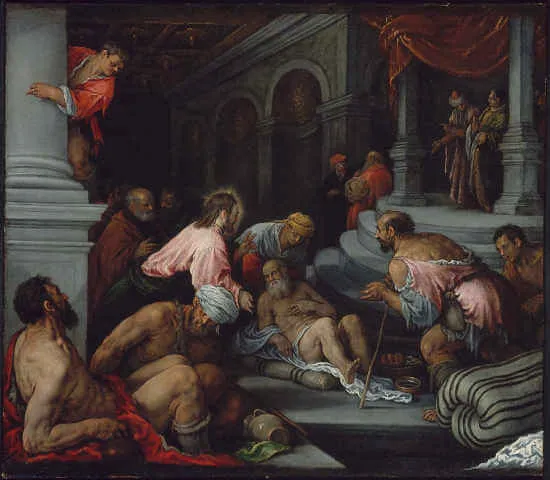
“Those who are well do not need a physician, but the sick do.  Go and learn the meaning of the words, I desire mercy, not sacrifice.  I did not come to call the righteous but sinners.” 

Reflection:

Would you describe yourself as one who is “well” or one who is “sick?” Are you among the “righteous” or the “sinners?” Be careful how you answer this question. Of course, the pride that comes with our fallen human nature often tempts us to claim that we are “well” and “righteous.” But humility will reveal the truth that we are among the “sick” and “sinners.”

This statement of Jesus is a response to the Pharisees who noticed that Jesus was dining at the house of Matthew, the tax collector, whom He had just called to follow Him. Matthew did indeed leave everything behind and followed Jesus, and then he hosted dinner for Jesus at his house. At that dinner, there were “many tax collectors and sinners” who came and sat with Jesus and His disciples, which led the Pharisees to ridicule them all.

Jesus’ response is very important for us to hear. By stating that He came not for those who were well and righteous but for those who were sick and sinners, it tells us two important things. First, it tells us that we are all spiritually sick and sinful. Second, it tells us that if we cannot humbly admit to that, and in our pride claim that we are well and are righteous, then we essentially reject Jesus, the Divine Physician, from our lives. We essentially say, “Lord, I do not need You.”

It’s also helpful to notice that Jesus was not embarrassed to be seen with sinners. He did not hesitate at all and, in fact, clearly stated that they were those whom He came for. For that reason, we should not be afraid or embarrassed to admit we are sinners who are spiritually ill and in need of our Lord. To deny that fact is to deny reality and to deny the very source of the ongoing healing we most certainly need in life. It’s a denial of our need for Christ Jesus Himself.

Do you need our Lord? Do you need interior cleansing, healing, and forgiveness every day? If it’s difficult for you to wholeheartedly say “Yes” to that question, then perhaps you struggle with the pride of the Pharisees more than you know. No matter how holy you become, no matter how deeply you pray and no matter how charitable you are, you will always need the healing and forgiveness of the Divine Physician each and every day. 

Reflect, today, upon the need you have in your life today for forgiveness. What sin do you struggle with the most? Interestingly, the holier one becomes, the more clearly they see their daily sins and their need for forgiveness and healing. If you struggle with this at all, spend time examining your conscience. Look for ways to do it more thoroughly and honestly. If you do, you can be certain that our Lord, the Divine Physician, will deeply desire to dine with you today and always.

Source: https://catholic-daily-reflections.com/2024/07/04/dining-with-sinners-3/

Matthew 9:12-13 Read More »

Saint Elizabeth of Portugal

1271–1336; Patron Saint of widows, brides, charity workers, those falsely accused, victims of adultery, and the Canary Islands, Spain; Invoked against jealousy, war, and difficult marriages; Canonized by Pope Urban VIII on June 24, 1625

Rainha Santa Isabel, or Saint Elizabeth, was born into the royal family of Aragon, Spain. She was one of three daughters of King Peter III of Aragon and Queen Constance of Sicily. Elizabeth’s older brothers would become successive kings of Aragon, Alfonso III and James II. Her namesake was her great-aunt, Saint Elizabeth of Hungary.

As a young princess, Elizabeth enjoyed all the privileges of a royal upbringing, yet her stature did not distract her from her faith. She was deeply devout from a young age, spending hours in the castle chapel engaged in prayer. By age eight, she regularly fasted, attended Mass, and prayed the entire Divine Office daily. Unlike other girls her age, she sought virtue and glory for God rather than indulging in frivolous activities. Her humility extended to her royal status, which she saw as a platform for service rather than privilege. She consistently demonstrated a loving concern for the poor, sick, and suffering.

In 1279, Elizabeth’s father arranged her marriage to the seventeen-year-old King Denis of Portugal, who was a notable poet. This strategic union was designed to strengthen the political alliance between Spain and Portugal. In 1282, twelve-year-old Elizabeth wedded King Denis, becoming Queen Elizabeth of Portugal. Despite her husband’s infidelity and immoral lifestyle, Elizabeth showed remarkable grace, treating her husband with love and fulfilling her duties as queen with humility. They had two children: their daughter, Constance, in 1290, and a year later, their son, Afonso, who would succeed his father as King of Portugal.

Queen Elizabeth stood out in the royal court, which was marred by the king’s immoral lifestyle. Her virtuous living served as a rebuke to others. She offered the resulting ridicule she suffered to God with humility and love. As queen, she sustained her prayerful life, attending daily Mass, engaging in penance, and continuing to pray the entire Divine Office. Her deep love for the poor and sick remained steadfast, and she sought daily opportunities to aid them. Elizabeth would personally distribute food and money to those in need at the palace door, and despite the king’s anger at her generosity, she found ways to continue her charitable work secretly. Using her royal position, she also improved others’ lives by constructing monasteries, churches, and hospitals.

The royal family also included the king’s other children, born to women other than the queen. Despite their complicated family dynamic, Elizabeth treated her stepchildren with love. Her son Afonso, however, was not as accepting. He was particularly resentful of the attention his father paid to the children born out of wedlock. Tensions escalated to the point of war, but before a battle could occur, Queen Elizabeth intervened. She rode out to the scene of the battle herself, kneeling between her husband and son, begging for peace. She successfully reconciled the two, earning the title of “Angel of Peace.”

In 1325, upon King Denis’s death, Queen Elizabeth, then fifty-four, retired to a house next to a Poor Clare monastery. She joined the Third Order Franciscans, a lay order begun by Saint Francis. For the next eleven years, she lived in simplicity and poverty, continuing her charitable work and welcoming all who sought her counsel. She once again played the role of peacemaker when her son, now King Afonso, initiated a war against his own son-in-law. Elizabeth fell ill and died on July 4, 1336, after returning from this intervention. She was not buried next to her husband but in a convent she founded in Coimbra, the Convent of Santa Clara. Years later, her body was found to be incorrupt, and as recently as 1912, medical examiners and Church officials declared that her body remained free of decay, looking as if she were only sleeping.

Though Saint Elizabeth of Portugal was born into royalty, she encountered many challenges. Her arranged marriage, her husband’s infidelity, family division, and an immoral royal court were burdens she bore with dignity, peace, and strength. Her faith and virtues, fueled by deep prayer and charitable acts, guided her through these difficulties.

In honoring this Queen of Portugal, consider the passing nature of earthly honors. Queens come and go, but saints live on forever. Saint Elizabeth willingly traded her earthly crown for a higher one in Heaven, where her saintly dignity eternally glorifies God. Follow in her humble footsteps, preferring sanctity over worldly honors and ambitions. Strive for the eternal over the temporal, and you too will give eternal glory to God and dwell in His royal court forever.

Source: https://mycatholic.life/saints/saints-of-the-liturgical-year/july-4—saint-elizabeth-of-portugal/

Saint Elizabeth of Portugal Read More »

Matthew 9:1-2

Priorities in Prayer

After entering a boat, Jesus made the crossing, and came into his own town. And there people brought to him a paralytic lying on a stretcher. When Jesus saw their faith, he said to the paralytic, “Courage, child, your sins are forgiven.

Reflection:

Just prior to this passage, Jesus cast out demons from two men from the town of the Gadarenes. Afterwards, the townspeople told Him to leave their town, so Jesus departed by boat and arrived in Capernaum, which was where He had been living after leaving Nazareth. This encounter with a paralytic on a stretcher is what awaited Him when He disembarked from the boat.

Recall that when Jesus had returned to Nazareth, where He grew up, He was not able to perform any miracles there because of their lack of faith. Their familiarity with Him tempted them to disbelieve that He was someone special. But now, in His new town where He had recently moved to, Jesus was able to perform mighty miracles because the people had manifest faith. 

In the passage above, try to enter the scene. Jesus was just rejected by the Gadarenes, He came by boat to Capernaum, He disembarked and was immediately met with a group of people who had clearly been waiting for Him. Try to imagine their conversations while Jesus was away at the other side of the lake. They knew He would return to His new home, they prepared a stretcher for the paralytic, and then they waited, hoped and prayed that Jesus would come and heal the man. It is also clear that Jesus could immediately sense their faith and was deeply touched by it. One of the most important parts of this passage is that Jesus did not simply say “Yes” to the physical healing and leave it at that. Instead, His response to the paralytic was to first forgive his sins. There is an important lesson for us to learn from this which will help us know how best to pray.

Oftentimes when we pray, we pray for this or that favor from our Lord. We pray for what we want Jesus to grant us. But this story shows us that what Jesus wants for us is different. First, He wants to grant us forgiveness for our sins. This is His priority, and it should also be ours. Once the forgiveness of sins takes place with this paralytic, Jesus also heals, as proof of His power to forgive sins. This story should help us to order our priorities in prayer according to Jesus’ priorities. If we make sorrow for sin our first priority, we can be certain that Jesus will answer us. From there, Jesus knows all of our needs. We can present them to Him but only when we are reconciled within our own heart with Him.

Reflect, today, upon the way you pray each day. Try to understand the importance of making a daily examination of your sins. This must become the first and most important part of your daily prayer. Though many people do not like to look at sin, it is much easier to do when the focus is not so much the sin as it is a focus upon the mercy of forgiveness and spiritual healing you need. The more aware you become of your daily sin, the more mercy you will receive. And the more mercy for the forgiveness of your sins you receive, the more our Lord will be able to bless you abundantly in other ways. Always start with the mercy of our Lord and your own need for that mercy every day, and all else will be taken care of by our Lord.

Source: https://catholic-daily-reflections.com/2024/07/03/priorities-in-prayer-3/

Matthew 9:1-2 Read More »

Saint Thomas the Apostle

Died c. 72; Patron Saint of doubters, architects, blind people, builders, geometricians, masons, surveyors, and theologians; Pre-Congregation canonization

Saint Thomas the Apostle is best known for doubting the Resurrection of Jesus, when he said, “Unless I see the mark of the nails in his hands, and put my finger into the nailmarks and put my hand into his side, I will not believe” (John 20:25). Prior to this, the Gospels refer to Thomas several times. The Gospels of Matthew, Mark, and Luke list him among the Apostles but do not provide details about his call. One of the few personal details given about Thomas is found in John’s Gospel, which refers to him as “Didymus,” meaning, “Twin.” It is reasonable, then, to presume that he had a twin.

The first detailed mention of Saint Thomas comes just prior to the seventh and final “sign” performed by Jesus in John’s Gospel. Jesus’ signs were his miracles, performed so that people “may come to believe that Jesus is the Messiah, the Son of God, and that through this belief, you may have life in his name” (John 20:31). The seventh sign was the raising of Lazarus from the dead. Prior to this miracle, the Sanhedrin was growing increasingly agitated and hostile toward Jesus. The disciples knew this, understanding that if Jesus performed more miracles, the Sanhedrin would react. When Jesus learned that his friend Lazarus had died, he told his disciples that he was going to raise Lazarus back to life. The disciples challenged Jesus out of fear of persecution, saying, “Rabbi, the Jews were just trying to stone you, and you want to go back there?” (John 11:8). Thomas then courageously said to the other disciples, “Let us also go to die with him” (John 11:16).

The second time Saint Thomas appears in John’s Gospel is at the beginning of Jesus’ Last Supper discourse. Jesus informed the Apostles that he would return to the Father and prepare a place for them, after which he would return to take them with him. Thomas objects, saying, “Master, we do not know where you are going; how can we know the way?” Jesus responds with his often-quoted statement, “I am the way and the truth and the life. No one comes to the Father except through me” (John 14:5–6).

The final, and most well-known, time Thomas is included in John’s Gospel is when he is absent from the other Apostles after Jesus’ Resurrection, and Jesus appears to the ten. When Thomas hears about this later, he strongly voices his doubts. However, a week later, Thomas’ doubt is transformed into belief when he cries out, “My Lord and my God!” Traditionally, the faithful repeat Thomas’ statement during Mass after the words of consecration as a way of expressing faith in Jesus’ True Presence. It was Thomas who provided us with these words of faith.

The Acts of the Apostles mentions Thomas in the list of Apostles who gathered in the upper room after Jesus’ ascension into Heaven. Otherwise, Thomas is not mentioned again by name but is referred to generally with the other Apostles, such as at Pentecost. However, various ancient traditions widely believe that Thomas took Jesus’ final words seriously when Jesus said to the disciples, “…you will be my witnesses in Jerusalem, throughout Judea and Samaria, and to the ends of the earth” (Acts 1:8).

Regarding Thomas’ journey “to the ends of the earth,” Pope Benedict XVI stated in a general audience, “Lastly, let us remember that an ancient tradition claims that Thomas first evangelized Syria and Persia (mentioned by Origen, according to Eusebius of Caesarea, Ecclesiastical History 3, 1) then went on to Western India (cf. Acts of Thomas 1–2 and 17ff.), from where he also finally reached Southern India” (September 27, 2006). The certainty of this cannot be definitively confirmed, but there is substantial evidence to support it. In addition to Origen and Eusebius, other early Church Fathers spoke of his missions to India. In the fourth century, Saint Ephrem the Syrian composed a hymn in which he spoke of Thomas ministering in India, and Saint Gregory of Nazianzus mentioned the same. Later in the fourth century, Saint Ambrose of Milan spoke of Thomas’ missionary work in India, and in the late sixth century, Gregory, the bishop of Tours, records that the Apostle was martyred in India and his remains were brought back to Edessa, Syria, modern-day Turkey, a place that tradition says Thomas visited and preached in on his way to India.

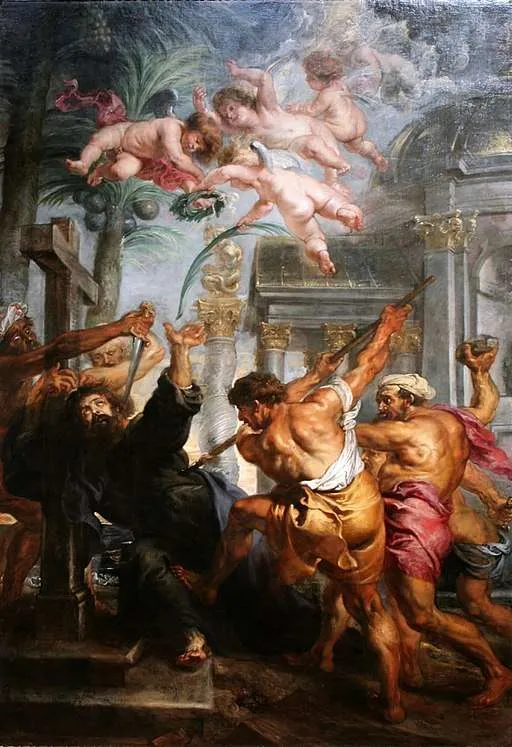
According to the most reliable traditions, Thomas arrived in India around the year 52. He preached along the Malabar Coast of southwestern India, as well as farther north in the Deccan Plateau. One ancient text called “The Acts of Thomas” speaks of many conversions and miracles that Thomas performed. Around the year 68, it is believed that Thomas and his companions traveled to eastern India, in modern-day Chennai, where he preached the Gospel, cared for the poor and sick, and erected churches. Tradition further states that Thomas worked to convert kings and their families as a way of gaining their support to convert the people. In Chennai, there is a hill called “Saint Thomas Hill,” believed to be the location of his martyrdom. Around the year 72, legend has it that while praying on that hill, Thomas was pierced in the back with a spear by order of the king for converting his wife and other family members to Christianity.

As we honor this great Apostle of the Lord, ponder the zeal he must have had to leave his home, family, and community, and travel to the far regions of India where he spent the rest of his life sharing the Gospel, baptizing, and establishing the Church. He died a martyr, which is fitting for such a courageous man. Though he struggled with doubts at first, his doubts were transformed by Christ.  Filled with the Holy Spirit at Pentecost, Thomas never looked back. As you ponder his life, reflect on any ways you can learn from him and imitate him. If you struggle with doubts, know that the Holy Spirit can transform those doubts and fill you with the same depth of zeal and commitment as Saint Thomas.

Source: https://mycatholic.life/saints/saints-of-the-liturgical-year/july-3—saint-thomas-the-apostle/

Saint Thomas the Apostle Read More »