2024

Luke 14:25-26

Loving through "Holy Hate"

Great crowds were traveling with Jesus, and he turned and addressed them, “If anyone comes to me without hating his father and mother, wife and children, brothers and sisters, and even his own life, he cannot be my disciple.”

Reflection:

After this startling opening line from our Lord, Jesus concludes today’s Gospel by saying, “In the same way, everyone of you who does not renounce all his possessions cannot be my disciple.” Thus, at first read it appears that we are called to not only renounce all we possess but also to hate those within our own family. But is this truly what our Lord means? Let’s begin with the idea of “hating” those within our family and even our own life.

Obviously the word “hate” in this Gospel passage is not the same as the sin of hate and anger. In commenting on this passage, one Church Father explains that there are some cases when the best way to love another is through a form of hate. That is, if another were to act as an obstacle to God, working to deter us from the will of our Lord, then our “hatred” for the actions they do must be firmly expressed. But this is love. A refusal to turn from God, by rejecting another’s disordered actions, is a way of sharing the Gospel with them. Let’s take an extreme example.

Imagine that you lived at a time and circumstance where being a Christian was a crime. You were arrested and commanded to publicly renounce your faith. Instead, you renounced that command with every strength of your soul. In this case, you exercise a form of holy “hate” for the persecution the person is imposing upon you. But that is also an act of love toward them as you fully reject their action by renouncing their command.

Or consider also how you hate even your “own life.” Let’s say that you fall into serious sin, over and over. The appropriate response is not only to repent but also to have a form of holy hatred for the habit into which you have fallen. This is a true hatred for yourself in the sense that it is a hatred for that which you have become by your sin. But this holy hatred has the ultimate goal of passionately overcoming your sin and is therefore a true act of love for yourself.

The concluding line of today’s Gospel mentioned above calls us to renounce all of our possessions. In other words, we must renounce anything that we are attached to in a way that is contrary to the will of God. Of course, in God’s providence most people (except those who take a vow of poverty) are invited by God to have various possessions so as to meet the material needs of life. But even in this case, we must “renounce” all that we possess, meaning, we must not allow ourselves to become attached to anything other than God. But this is freedom in the truest sense. Even if you have many things, it must be understood that those things do not make you happy. Only God and His will can fulfill you. Nothing else. Thus, we must learn to live as if God and God alone suffices. And if it is God’s will that you obtain a house, car, computer, television and other modern conveniences, then so be it. But true “renunciation” of all of these possessions simply means that if at any time you were to lose them, then this would be fine. Therein is perfect detachment. The loss of something material would not deter you in any way from loving and serving God and His holy will.

Reflect, today, upon these radical words of Jesus. Try to hear them in the way our Lord meant them. Work to be detached from everything that is contrary to the will of God and everything that becomes an obstacle to God in your life. In the end, possessing God alone is more than you could ever hope for. And only if you fully possess our merciful God will you be able to love yourself and others with the pure heart and love of Jesus our Lord.

Source: https://catholic-daily-reflections.com/2024/11/05/loving-through-holy-hate-3/

Luke 14:25-26 Read More »

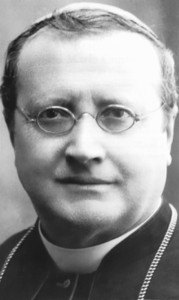
Saint Guido Maria Conforti

Profile

As a child, Guido used to have conversations in his parish church with Christ crucified. He entered the seminary in Parma, Italy at age 17, and was ordained on 22 September 1888. He was a professor at the seminary. He became the Vice-rector of the seminary and the Vicar of Clergy in the diocese of Parma. He also founded the Missionari Saveriani (Xaverian Missionaries) on 3 December 1895; they were assigned by Rome to evangelize China. He became the Archbishop of Ravenna, Italy on 9 June 1902. He resigned as archbishop due to poor health in October 1904. He became coadjutor bishop of Parma, Italy and titular archbishop of Stauropolis on 14 November 1904, and the Archbishop of Parma, Italy on 12 December 1907. He visited his parishes regularly, worked for religious formation, supported religious education for the laity and lay involvement with youth. In 1928, he travelled to China to visit the Xaverians working there.

Born

  • 30 March 1865 at Ravadese, Parma, Italy

Died

  • 5 November 1931 in Parma, Italy of natural causes
  • buried in the center of the apse of the church of the motherhouse of the Xaverian Missionaries in Parma

Venerated

  • 11 February 1982 by Pope John Paul II (decree of heroic virtues)

Beatified

  • 17 March 1996 by Pope John Paul II in Rome, Italy
  • the beatification miracle involved the cure of 12 year old Sabina Kamariza’s pancreatic cancer in Burundi, Africa in 1965

Canonized

  • 23 October 2011 by Pope Benedict XVI

Patronage

  • Xaverian Missionaries

Source: https://catholicsaints.info/saint-guido-maria-conforti/

Saint Guido Maria Conforti Read More »

Luke 14:16-18

You are Invited

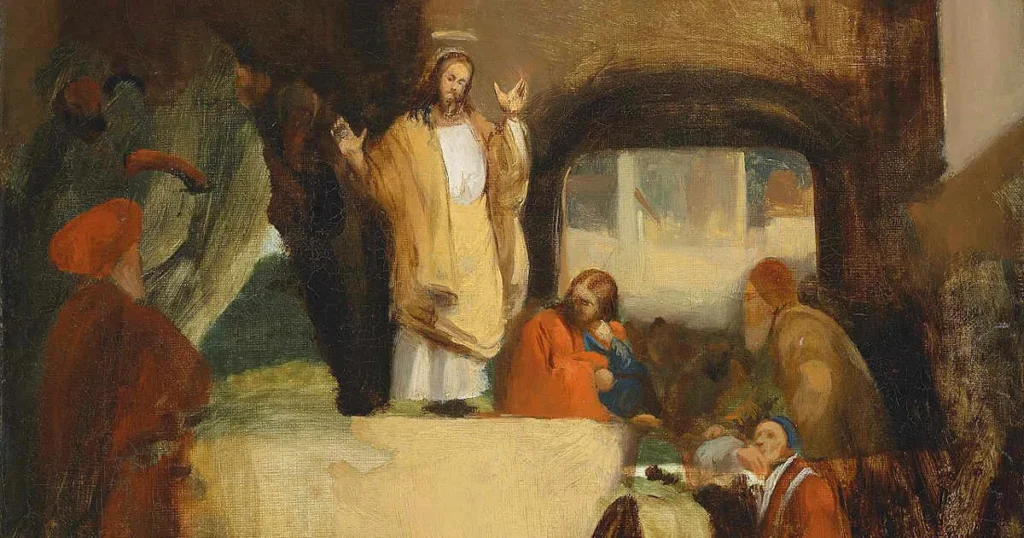
“A man gave a great dinner to which he invited many. When the time for the dinner came, he dispatched his servant to say to those invited, ‘Come, everything is now ready.’ But one by one, they all began to excuse themselves.”

Reflection:

Do you ever excuse yourself from the will of God? Do you pass up His invitation to feast at the table of His great dinner? More than anything else, the invitation God has given us to this “great dinner” is the invitation to participate in the Holy Mass and to pray. The fact that some would regularly excuse themselves from such an invitation shows that they do not understand that to which they have been invited. Others attend physically, but interiorly they are far from the feast that they attend.

In this parable, one after another of the invited guests did not come. So the man throwing the dinner sent out an invitation to “the poor and the crippled, the blind and the lame.” This is a reference to those Jews of Jesus’ time who recognized their need for the gift of salvation. They are those who were aware of their weaknesses and sins and knew that Jesus was the answer.

After the poor, crippled, blind and lame came to the feast, there was still more room. So the man sent his servants to invite those from “the highways and hedgerows” which is a reference to the Gospel being preached to the Gentiles who were not of Jewish origin.

Today, this feast continues to be offered. There are many lax Catholics, however, who refuse to come. There are those who find that life is too busy for them to make time for prayer and for Mass. They are those who are so caught up in worldly pursuits that they see little personal benefit in devoting themselves to the celebration of the Holy Eucharist.

If you wish to be among those who attend the feast of our Lord, you must work to identify yourself with the poor, crippled, blind and lame. You must recognize your brokenness, weaknesses and sins. You must not shy away from seeing yourself this way because it is to those that Jesus sends a desperate invitation. His desperation is an all-consuming desire for us to share in His love. He wants to love and heal those in need. We are those who are in need.

When we come to our Lord’s Feast through prayer, fidelity to His Word, and by our participation in the Sacraments, we will notice that He wants others to join us for His feast. Therefore, we must also see ourselves as those servants who are sent forth to the highways and hedgerows where we will find those who do not follow God’s will. They must be invited. Though they might not feel as though they belong, God wants them at His feast. We must do the inviting.

Reflect, today, upon two things. First, reflect upon any excuse you regularly use when God invites you to pray, to deepen your faith, and to participate in the Eucharist. Do you respond immediately and with eagerness? Or do you excuse yourself more often than you want to admit? Reflect, also, upon the duty given to you by God to go forth to the most lost souls so as to invite them to God’s feast. Our Lord wants everyone to know they are invited. Let Him use you to send forth His invitation.

Source: https://catholic-daily-reflections.com/2024/11/04/you-are-invited-2/

Luke 14:16-18 Read More »

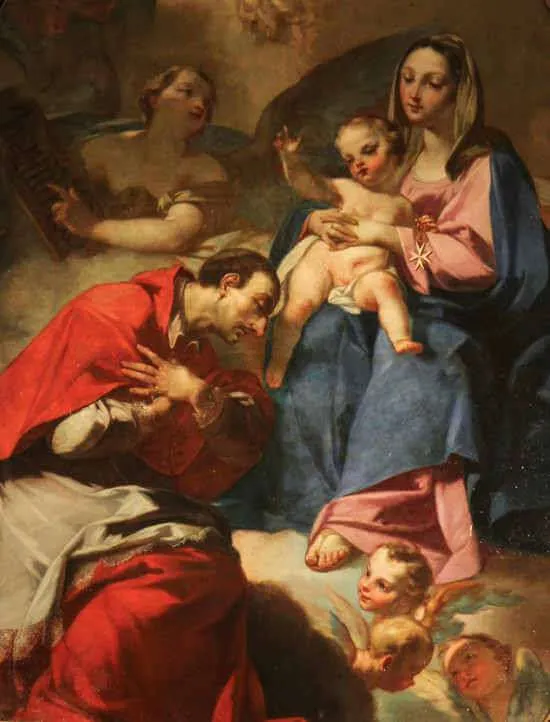
Saint Charles Borromeo, Bishop

1538–1584; Patron Saint of apple orchards, bishops, catechism writers, catechists, catechumens, seminarians, starchmakers, and spiritual directors; Invoked against abdominal pain, colic, stomach diseases, and ulcers; Canonized by Pope Paul V on November 1, 1610

Charles Borromeo was born in the Castle of Arona in the Duchy of Milan, into a well-established and influential noble family from northern Italy. Charles’ father was the Count of Arona, and his mother was from the prominent and powerful Medici family. Charles was the second son among six children. Typically, the first son inherited most of the family wealth and titles. It was common for the other sons of noble families to pursue careers within the Church, often becoming bishops or abbots of renowned monasteries. 

When Charles was seven, the first session of the Council of Trent began in response to the Protestant Reformation and to address various Church abuses. This pivotal council would intermittently hold twenty-five sessions over the next nineteen years. When Charles was eight years old, his maternal uncle, John Angelo Medici, was ordained a bishop and made a cardinal three years later. When Charles was nine years old, his mother passed away, prompting his father to remarry. His father married again a few years later after his second wife died. At twelve, Charles received the tonsure, propelling him toward an ecclesiastical vocation. Simultaneously, another uncle gave him the title of titular Abbot of Sts. Gratinian and Felinus at Arona, an honorary title that also endowed him with a steady income. With these funds, he was sent to Milan to begin his humanities studies. At sixteen, he furthered his education at the University of Pavia, located about twenty miles south of Milan, where he studied Church and civil law.

In August of 1558, when Charles was nineteen, his father died, and Charles was tasked with the responsibility of organizing his father’s estate so that his older brother could take over as count after his father. This was a difficult task since his father was not that organized. Once completed, Charles’ brother became Count Frederick Borromeo. The following year, Charles returned to his studies, earning his doctorate in civil and canon law on December 6, 1559.

Fresh out of school, Charles’ life was about to change. The previous August, Pope Paul IV had died and the cardinals had gathered to elect his successor. Cardinal John Angelo Medici, Charles’ uncle, was among the electors and was unanimously elected as supreme pontiff on Christmas Day, 1559, taking the name Pope Pius IV. The Borromeo and Medici families were elated. What happened next was one of the clearest examples of nepotism ever seen within the Church. Within a month, Pope Pius called his twenty-one-year-old nephew, Charles, to Rome and made him a cardinal, even though he wasn’t even a priest yet. Though most often cardinals are chosen from among the bishops, the pope can make anyone a cardinal. The designation ‘cardinal’ is an important honorary title that brings with it certain rights and responsibilities, such as electing the next pope, assisting with the governance of the Church, and advising the pope on important matters. Soon after, the pope appointed Cardinal Borromeo to be the equivalent of the Secretary of State, the administrator of the Archdiocese of Milan, the administrator of the Papal States, a Papal Protector and Legate, and various other duties.

Over the next four years, Cardinal Borromeo worked hard exercising his new responsibilities and enjoyed a good income. One thing he took great interest in was the completion of the Council of Trent, which had been going on since he was seven. He encouraged his pope uncle to conclude the Council by calling the final sessions. In early 1562, the eighteenth session of the Council of Trent was held, and seven more would be held over the following two years, concluding with the promulgation of the decrees on January 26, 1564. Because Cardinal Borromeo was a cardinal but not an ordained bishop, he was not able to participate in the council as other bishops did, but he was very involved in the formulation of the decrees behind the scenes, given his important positions at the Vatican and his training in canon law. 

On November 19, 1562, during the final period of the Council of Trent, tragedy struck the Borromeo family. Count Frederick, Cardinal Borromeo’s brother, suddenly died childless. He and Charles were the only living brothers bearing the Borromeo name. Without an heir, the family name would end, and the titles and inheritance would go to other noble families. For that reason, many within the family encouraged Cardinal Borromeo to abandon his Church career, return to the lay state, become the Count of Arona, inherit the family estate, marry, and have an heir. Even his uncle, Pope Pius IV supported that idea.

Up until that point, the young Cardinal Borromeo was living a prayerful and morally upright life but was also enjoying his power and wealth. This was a turning point for him. He decided to pursue his vocation, so he secretly arranged to be ordained a priest. Not even his uncle, the pope, knew. Once Charles was ordained, the pope was disappointed but understood and supported him. After his priestly ordination, Charles celebrated his first Mass on the Solemnity of the Assumption of the Mother of God at the tomb of Saints Peter and Paul. Three months later, he was ordained a bishop in the Sistine Chapel, and five months after that, was appointed as Archbishop of Milan at the age of twenty-five.

After his appointment as archbishop, Charles continued his services in Rome for the next year and a half. Following the Council of Trent’s conclusion, he dedicated himself to enforcing its decisions. He played a significant role in the development and release of the Roman Catechism, as well as various liturgical documents and hymns. Moreover, he actively executed the Council’s decrees and reforms within Rome. During this time, many challenges plagued the Church: indulgences and church positions were often sold, monasteries strayed from their spiritual focus, clergy training was insufficient, clerical celibacy was frequently ignored, liturgical ceremonies lacked reverence, and the general faith and morals of the people were weak. In collaboration with devout Romans, such as Saint Philip Neri, Cardinal Borromeo spearheaded transformative reforms in Rome.

Upon reaching Milan, Cardinal Borromeo devoted nineteen years to enforcing the decrees of the Council of Trent, igniting a Catholic reawakening within his vast archdiocese that resonated throughout the Church. While he had once basked in his noble heritage and wealth as a young man, a transformation began after he was ordained a priest. He adopted a simpler lifestyle, engaged in fasting and prayer, donated the majority of his wealth to the needy, and immersed himself deeply in pastoral responsibilities. From the moment of his first Mass, his fervor grew steadily, eventually setting his ministry aflame. He made pastoral journeys across his archdiocese several times, making a significant impact, especially since Milan hadn’t had a residing archbishop for eight decades. Prior to Trent, it was common for archbishops of prominent dioceses to reside in Rome, living the “good life,” while others cared for their dioceses. Under his guidance, seminaries were established for improved priestly training, liturgical practices were standardized and enhanced, religious orders were redirected toward their original rules of life, the Confraternity of Christian Doctrine was instituted to educate both young and old, care was extended to the poor and sick, and a resurgence in devotions, personal piety, acts of penance, and reverence for the Sacraments emerged.

In many ways, Saint Charles Borromeo began his life as one of the problems with the Church. Ecclesiastical positions were often seen more as an honor for the nobility than as a humble service of Christ. Though he could have lived as a prince within the Church, he responded to God’s grace and abided by the reforms of the Council of Trent that he helped to implement, becoming an outstanding example of what a bishop should be. The people of Milan, who had largely abandoned the practice of the faith, responded to his fatherly presence and a renewal began in haste.

As we honor this saintly reforming bishop, ponder the need you have in your own life and family for reform. When we become steeped in our old ways and bad habits, it can be hard to change. Follow the example of Saint Charles and seek to reform the church of your own soul and the domestic church of your family, using God’s divine decrees as your guide and His grace as your means.

Source: https://mycatholic.life/saints/saints-of-the-liturgical-year/-st-charles-borromeo/
Saint Charles Borromeo, Bishop Read More »

Luke 14:12-14

The Reward of Eternal Glory

“When you hold a lunch or a dinner, do not invite your friends or your brothers or sisters or your relatives or your wealthy neighbors, in case they may invite you back and you have repayment. Rather, when you hold a banquet, invite the poor, the crippled, the lame, the blind; blessed indeed will you be because of their inability to repay you.”

Reflection:

Is Jesus telling us that it is sinful to invite friends and family to a dinner party? Certainly not. He is teaching us about something much deeper. Throwing a dinner party for others is good when our motive is love. But if the goal of the dinner, or any other act of charity, is vainglory, then the vanity we achieve from such an act is the payment we will receive. Sadly, the “payment” of vainglory is sought and obtained by many in various ways. Jesus’ lesson teaches us that our only motive for the good we do should be the humble and hidden motive of loving service.

As a result of the temptation to pride, we can easily find ourselves being inordinately concerned about what others think about us. Holding a lunch or dinner for friends, family, and your wealthy neighbors is simply an illustration of the sin of pride at work. Within this context, Jesus is speaking about a person who performs some act for the sole purpose of building up their self-image and obtaining praise and flattery from others. This form of “glory” is truly vain in that it is not only worthless to the good of the soul, it is also damaging.

Why do you do what you do? Are your good actions done so that others will see and praise them? Do you go out of your way to show people how good you are? Are you overly concerned about the opinions of others? If the answer to any of these questions is “yes,” then you might be struggling with pride more than you realize.

On the contrary, are you content with doing some good deed that is hidden from the eyes of others? Can you take delight solely in helping others, even if no one knows about it? Are you motivated to serve and give of yourself for the exclusive reason that you want to make a difference in the lives of others? This is what Jesus means when He says you should hold a banquet for the poor, crippled, lame, blind, and everyone who is unable to repay you. In other words, when you are not able to receive the “reward” of vainglory, that is good. That must be your goal.

Reflect, today, upon how strong your desire is for notoriety. Consider some scenario where you worked hard day and night for some time to do some good work. Imagine that the good work accomplished great benefits for others. Then imagine that no one knew you were behind that good work and, therefore, you received no gratitude or acknowledgment. How would you feel? Ideally, you would rejoice for two reasons. First, you would rejoice that you were able to serve and make a difference. Second, you would rejoice that God and God alone was aware of your act of charity. When God sees our goodness and selfless service, He puts Himself in debt to us in a certain sense. The “debt” that God takes on is His gratitude and love which are expressed to us through eternal rewards of His making. Seek to obtain these eternal rewards by striving to serve in the most hidden and humble ways possible. Those rewards infinitely surpass the fleeting rewards of vainglory.

Source: https://catholic-daily-reflections.com/2024/11/03/the-reward-of-eternal-glory-2/

Luke 14:12-14 Read More »

Thirty-first Sunday in Ordinary Time

First Reading Deuteronomy 6:2-6

Moses spoke to the people, saying:
“Fear the LORD, your God,
and keep, throughout the days of your lives,
all his statutes and commandments which I enjoin on you,
and thus have long life.
Hear then, Israel, and be careful to observe them,
that you may grow and prosper the more,
in keeping with the promise of the LORD, the God of your fathers,
to give you a land flowing with milk and honey.

“Hear, O Israel! The LORD is our God, the LORD alone! 
Therefore, you shall love the LORD, your God,
with all your heart,
and with all your soul,
and with all your strength. 
Take to heart these words which I enjoin on you today.”

Responsorial Psalm Psalms 18:2-3, 3-4, 47, 51

R. (2)    I love you, Lord, my strength.
I love you, O LORD, my strength,
    O LORD, my rock, my fortress, my deliverer.
R. I love you, Lord, my strength.
My God, my rock of refuge,
    my shield, the horn of my salvation, my stronghold!
Praised be the LORD, I exclaim,
    and I am safe from my enemies.
R. I love you, Lord, my strength.
The LORD lives!  And blessed be my rock!
    Extolled be God my savior.
You who gave great victories to your king
    and showed kindness to your anointed.
R. I love you, Lord, my strength.

Second Reading Hebrews 7:23-28

Brothers and sisters:
The levitical priests were many
because they were prevented by death from remaining in office,
but Jesus, because he remains forever,
has a priesthood that does not pass away.
Therefore, he is always able to save those who approach God through him, 
since he lives forever to make intercession for them.

It was fitting that we should have such a high priest:
holy, innocent, undefiled, separated from sinners,
higher than the heavens.
He has no need, as did the high priests,
to offer sacrifice day after day,
first for his own sins and then for those of the people;
he did that once for all when he offered himself. 
For the law appoints men subject to weakness to be high priests,
but the word of the oath, which was taken after the law,
appoints a son,
who has been made perfect forever.

Alleluia John 14:23

R. Alleluia, alleluia.
Whoever loves me will keep my word, says the Lord;
and my father will love him and we will come to him.
R. Alleluia, alleluia.

Gospel Mark 12:28b-34

One of the scribes came to Jesus and asked him,
“Which is the first of all the commandments?” 
Jesus replied, “The first is this:
Hear, O Israel!
The Lord our God is Lord alone!
You shall love the Lord your God with all your heart,
with all your soul, 
with all your mind,
and with all your strength.

The second is this:
You shall love your neighbor as yourself.
There is no other commandment greater than these.” 
The scribe said to him, “Well said, teacher.
You are right in saying,
‘He is One and there is no other than he.’
And ‘to love him with all your heart,
with all your understanding,
with all your strength,
and to love your neighbor as yourself’
is worth more than all burnt offerings and sacrifices.”
And when Jesus saw that he answered with understanding,
he said to him,
“You are not far from the kingdom of God.” 
And no one dared to ask him any more questions.

Source: https://bible.usccb.org/bible/readings/110324.cfm

Thirty-first Sunday in Ordinary Time Read More »

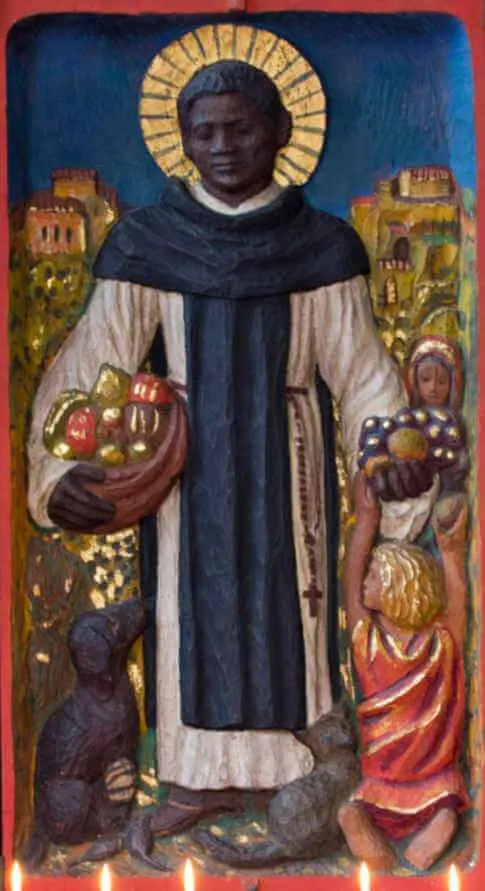
Saint Martin de Porres

1579–1639; Patron Saint of African-Americans, biracial people, barbers, innkeepers, the poor, Peru, public health workers, public schools, television, and interracial and social justice; Canonized by Pope John XXIII on May 6, 1962

In 1532, Spanish explorers arrived in modern-day Peru and captured the Incan Emperor, Atahualpa, marking the beginning of Spanish control in the region. Just five years later, Pope Paul III issued a papal bull lamenting the reports that many Spanish generals were acting as tyrants and plunderers, cruelly oppressing the indigenous peoples. They were stealing their silver and gold, taking their lands, forcing them into slave labor, and treating them as subhuman. In 1542, Spain established the Viceroyalty of Peru, formalizing political control over the region. Though some arriving missionaries defended the rights of the natives, much of the cruelty continued. King Philip II of Spain was also aware of the chaos and tried to intervene but had little success. In 1581, King Philip decided to send his best bishop to Peru. He chose the future Saint Turibius of Mogrovejo, who would help transform the new nation over the next twenty-five years. Saint Turibius was one of five saints who emerged from Peru in the late sixteenth to early seventeenth centuries. The others were Saints Rose of Lima, Juan Macías, Francis Solano, and the saint we honor today, Martin de Porres.

Martín de Porres y Velázquez was born in Lima, Viceroyalty of Peru, just two years before Saint Turibius of Mogrovejo arrived as the new archbishop and thirty-seven years after the Spanish-controlled Viceroyalty of Peru was established. Martin’s father was a Spaniard, and his mother was a freed slave of either African or native descent. According to the custom of the time, this made Martin an illegitimate child of mixed race, earning him the demeaning label of “mulatto.” He had one sister two years younger.

After Martin’s sister was born, their father, ashamed of his dark-skinned children, abandoned the family, leaving their mother, Ana, to raise the children on her own. Ana earned a meager living washing clothes, so the family was quite poor. Because the Spanish settlers brought with them missionaries, there had been a concerted effort over the previous decades to catechize and baptize both the natives and the African slaves. Though there is little documentation about Martin and his sister’s early faith formation, it is clear that Martin developed a profound love of God from an early age and a love for the poor and suffering. One story relates that when Ana sent Martin to the market to purchase food for the family, he often gave the food away to the poor on the way home. By the time Martin was twelve years old, his mother could no longer afford to feed him, so she sent him to a school where he was able to live and study for a couple of years. Afterwards, a barber-surgeon took him in and taught him his trade. Though “barbers” and “surgeons” might not seem to be of the same trade, these were among the most common medical practitioners at the time. Because barbers became skilled with blades for haircutting, they were also called upon for surgeries and learned other basic medical techniques. Martin soon fell in love with this trade, because it gave him an opportunity to not only support himself but also to be of service to others.

During his internship as a barber-surgeon, Martin’s prayer life deepened. He often spent hours every night in prayer, entering deeper and deeper into divine union. He always had an admiration for the Dominican friars in Lima, but it was against Spanish law for those of mixed race to become a professed religious. Since he had a deep desire to share in the Dominican life, he went to the Holy Rosary friary in Lima and petitioned the superior to admit him as a non-professed lay brother. Permission was granted.

For the next eight years, Martin lived and dressed as a Dominican but worked as a servant of the community. He cut the friars’ hair, cooked, cleaned, did laundry, and used his medical knowledge to care for the sick. Eventually, he did his duties so well that he was put in charge of the alms that the community distributed to the poor. Those eight years were a time of profound humility. Martin never complained but eagerly served the friars and local community in the most menial ways, with the most tender compassion and concern. Though some still looked down on him as “mixed-breed” and as an “illegitimate child,” those with a Christian soul couldn’t help but notice the extraordinary virtue Martin manifested. As a result, after eight years of humble service, the superior of the community of 300 friars decided to ignore the Spanish law and asked Martin to take formal vows as a Dominican at the age of twenty-four, which he did out of obedience. Over the next ten years, Brother Martin continued his humble service and grew deeper in prayer every year, spending countless hours before the Blessed Sacrament and developing a deep devotion to our Blessed Mother. He also submitted himself to severe penances, and his humility exponentially increased. One day, when the friary was struggling with finances and the superior was looking for things he could sell to raise money, Brother Martin exclaimed with sincerity, “I am only a poor mulatto, sell me!”

At the age of thirty-four, Brother Martin was placed in charge of the infirmary, a duty he would fulfill for the next twenty-five years until his death. As the infirmarian, Brother Martin used the skills he had learned as a barber-surgeon to help heal many people. People started to notice, however, that his medical remedies appeared to be backed by supernatural power. Miracles began to be reported. Though this was impressive to many, Brother Martin’s profound humility, compassion, and spiritual wisdom made an even greater impact. He cared not only for the Dominicans, but regularly sought out the poor and sick within the community, sometimes bringing the most diseased and emaciated into the friary and even providing his own bed. Though some brothers complained, Brother Martin’s depth of love was so convincing that the complaints quickly vanished.

Little by little, Brother Martin began to have a profound effect upon not only the friars but on all of Lima. His miracles increased. Sometimes he miraculously appeared in the room of a sick friar to care for him without even opening the door. Bi-locations were reported, and those arriving from Europe and Africa even claimed that he had appeared to them there, before they arrived in Peru. He founded a home for orphans. He continuously begged for alms throughout the city, distributing all he received to the other friars and the poor of the city. While in prayer, some saw him enveloped in light or levitating. He could read souls and was given miraculous wisdom and knowledge that led the most learned of men to seek his counsel. Miraculous cures were abundant, and his charity never ceased. He was even loving to stray animals, treating them with dignity as God’s creatures, some claiming he was even able to miraculously communicate with them. After his death, the miracles increased as people sought his intercession. Twenty-five years after his death, Martin’s body was exhumed and found to be incorrupt.

Saint Martin de Porres began his life in poverty and rejection. These sufferings, however, did not negatively affect his soul but only led to the increase of his virtue. His soul was so deeply united to God that God worked miracles through him. As we honor this saintly humble Dominican brother, ponder anything in your life that leaves you angry and discouraged. Saint Martin had many such temptations, but he turned them all into opportunities of grace. Allow Saint Martin to inspire you to do the same, so that God can use every cross in your life to bring forth an abundance of His love.

Source: https://mycatholic.life/saints/saints-of-the-liturgical-year/november-3—st-martin-de-porres-religious/

Saint Martin de Porres Read More »

Mark 12:32-33

Seekers of Truth

The scribe said to him, “Well said, teacher. You are right in saying, ‘He is One and there is no other than he.’ And ‘to love him with all your heart, with all your understanding, with all your strength, and to love your neighbor as yourself’ is worth more than all burnt offerings and sacrifices.”

Reflection:

This scribe got it. He posed a question to Jesus after Jesus was challenged by some of the Sadducees who did not accept Jesus’ teachings about the resurrection of the dead. The Sadducees were trying to trip Jesus up, and this scribe listened carefully to Jesus’ answer and found it to be well said. Therefore, this scribe asks Jesus his own question. He doesn’t ask this question in an attempt to trap Jesus, but because he appeared to sincerely want to hear Jesus’ answer. So he asked Jesus, “Which is the first of all the commandments?” To that question, Jesus gives a summary of the whole law of God saying that we must first love God with our whole heart, mind, soul and strength and then love our neighbor as ourselves.

We must all try to imitate this scribe. It was risky for him to show support of Jesus. Many of the other scribes were quite hostile toward Jesus. Therefore, by openly expressing His agreement with what Jesus taught, he was putting himself at risk of being criticized. But it appears he was not concerned about that. He was a seeker of truth, and Jesus ended up paying him a huge compliment by saying, “You are not far from the kingdom of God.”

In our growingly secular world, there are many truths of God that are being openly questioned and challenged. Agreement on what are the moral truths is becoming more of the exception than the norm. As a result, we will all find ourselves experiencing hostility from the world simply by being seekers of the truth. Many people even find that a mere refusal to openly support objective immorality will make them a target of the secular world.

Are you a seeker of truth? Do you recognize the holy truths of God when you hear them? If so, do you have the courage you need to pursue those truths and articulate them in accord with the mind of God in the presence of others? Evangelization is different from proselytism. Proselytism is a hostile and forceful preaching of the truths of God. It is argumentative and lacks basic respect for the freedom and dignity of others. Evangelization, on the other hand, is an essential practice that every follower of Christ must engage in. At the heart of evangelization is an honest and humble seeking of the truth in every situation. One who evangelizes does not attack another. They do not criticize and condemn. Instead, they seek to understand the full truth themselves and then openly share that truth with those who are open to it.

In many ways, this scribe did just that. He listened, understood, inquired, and then freely shared his faith in what Jesus said. Those who listened to him, especially other scribes, might not have agreed with his conclusions. They might have even criticized him among themselves. But the witness of this scribe might have opened the minds and hearts of others who were listening. Some would have sensed his openness, his understanding, and his joyful response and allowed his conversation with Jesus to affect them for the good. Thus, by openly seeking the truth, this scribe also evangelized others and Jesus praised Him for his good work.

Reflect, today, upon the way that you share your faith with others. Are you one who tends to be argumentative and condemning? Or do you allow the joy of your own discovery of the truths of God do the evangelizing? Be a seeker of Truth. Do so openly and with joy. If you do, others will discover in you the truths of God that they need and will be invited to imitate your truth-seeking in their own lives.

Source: https://catholic-daily-reflections.com/2024/11/02/seekers-of-truth/

Mark 12:32-33 Read More »

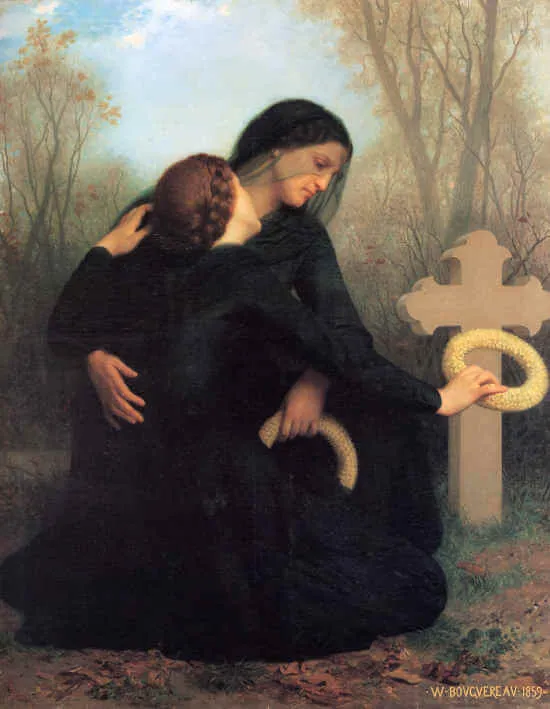
All Souls’ Day

Yesterday, the Church celebrated those men and women who have gone before us who now see God face to face in the Beatific Vision. Whether they are officially canonized or not, everyone in Heaven is a saint and will remain so for eternity, living lives of perfect communion with God and with everyone else in Heaven. There will be perfect order, knowledge, joy, love, and happiness forever. Too often in this life we lose focus on eternity. We easily become overly concerned about the here and now and fail to turn our eyes to Heaven, seeking to prepare ourselves fully for the day we die and come before God for our particular judgment.

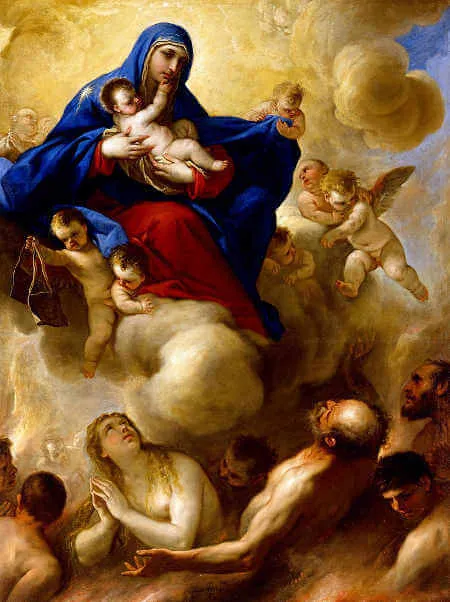
Today, as we commemorate All Souls, we turn our eyes to those men and women who have gone before us in death but died before being fully purified of every venial sin and all of sin’s effects. The Catechism of the Catholic Church explains it this way: “All who die in God’s grace and friendship, but still imperfectly purified, are indeed assured of their eternal salvation; but after death they undergo purification, so as to achieve the holiness necessary to enter the joy of heaven. The Church gives the name Purgatory to this final purification of the elect, which is entirely different from the punishment of the damned.” (#1030–31).

All Souls’ Day should have a twofold focus for each of us. First and foremost, today’s commemoration is a call to prayer for those who have died and are being purified in final preparation for their entrance into the Beatific Vision. Though God has no need of our prayers, it is His divine will that we participate in the distribution of His grace. For that reason, He chooses to solicit our prayers and then answer them, making us active instruments of His purifying grace so needed by those in this world and in Purgatory. By praying for those in Purgatory, especially today, we are assured that God lavishes upon them all that they need for the complete purification of their souls. The Mass, and our participation in the Mass, is particularly powerful and is the ideal way to open the floodgates of mercy for our loved ones who have died and remain unperfected. Take this duty to pray for these “poor souls” seriously. A common secular heresy that permeates Western culture says that a good person goes to Heaven immediately after death or becomes an angel. This well-intentioned, but erroneous, belief leaves many souls unprayed for. Know that those souls are depending on your prayers, because God wants you to pray for them and lovingly share in their purification. Offer prayers fervently for those souls.

A second focus to have on All Souls’ Day is upon your own soul. Today’s commemoration reminds us of the importance of our ongoing deepening conversion. We are all called to be saints. Ideally, our central focus in life is to become a living saint and not wait to be fully purified in Purgatory. Becoming a saint today requires not only a lot from us, it requires everything. Absolutely everything! Becoming a saint here and now means that we diligently seek out every sinful attachment within our souls and annihilate them. It means we continuously seek God’s mercy, confess our sins, receive forgiveness, and then change our lives completely. This is no small task!

One of the best ways to understand Purgatory is by studying the teachings of the greatest masters of the spiritual life, especially Saint John of the Cross and Saint Teresa of Ávila. These two Doctors of the Church wrote extensively about the process a soul goes through on its way to divine union, also called mystical marriage. Saint Teresa does this by describing a series of seven interior dwelling places through which a person must travel, each one requiring a deeper level of purification, culminating with the soul entering the innermost dwelling place, the presence chamber, where divine union takes place and the soul is fully purified of everything that is not God. Only souls who have entered this innermost dwelling place in this life, and die while in that state of divine union, will avoid the purification of Purgatory.

Saint John of the Cross wrote extensively of the same process of purification, using different terminology. He described two main purifications a soul goes through on the journey toward perfection. The first is the dark night of the senses, by which every bodily sense and appetite is purified. The second is the dark night of the spirit, by which the intellect, memory, and will are fully purified by the perfection of infused faith, hope, and charity. Prior to the first purification, the soul is in the purgative way. While in between the two purifications, the soul is in the illuminative way. After completing the second purification, the soul enters the unitive way, or mystical marriage, which is the same as Saint Teresa’s seventh dwelling place.

The reason for painting this very broad overview of their detailed writings on the journey of a soul toward perfection is to emphasize the fact that perfection is, indeed, a long and difficult process, but a necessary one that must take place either in this life or in the next. Every person must come to the realization that personal sanctity must become not only each one’s first mission in life but the exclusive mission. When personal sanctity is a person’s exclusive mission, every other part of that person’s life falls into place. Virtues grow, love for family and friends increases, duties are perfectly fulfilled, and God is fully glorified.

As we participate today in this Commemoration of All Souls, commit yourself first to praying for those who have died and are in need of final purification. Purgatory is God’s act of final mercy for those whom He loves with a burning and purifying love. Your prayers open the floodgates of God’s love on those who need it the most. As you pray for those who have died, pray also for your own soul and ponder how fervently you seek to become transformed into a living saint. Though the journey to divine union is not a quick and easy one, it is a journey well worth it. Make it your exclusive mission in life, and know that if you do, you will never regret it.

Source: https://mycatholic.life/saints/saints-of-the-liturgical-year/november-2–all-souls/

All Souls’ Day Read More »

John 6:40

Commemorating All Souls

“For this is the will of my Father, that everyone who sees the Son and believes in him may have eternal life, and I shall raise him on the last day.”

Reflection:

Yesterday’s Solemnity of All Saints gave us an opportunity to celebrate and rejoice in the fact that there are countless people who have gone before us who are now enjoying the glories of Heaven. These faithful souls lived lives that were grounded in God’s grace and have been fully purified of all sin. They now gaze at our good God face-to-face.

Today, we commemorate the fact that many who die in a state of grace are not immediately ready to stand before the glorious throne of God and see Him face-to-face. The only way this is possible is if every sin and every attachment to sin is purged from our souls. We must have nothing but pure charity alive within us if we are to enter the eternal glories of Heaven. But how many people die in such a state?

The Church, in her wisdom and holiness, has taught clearly through the centuries that when a person passes from this world to the next while still attached to less serious sin, they need to be fully purified in order to enter Heaven. This is Purgatory. The Catechism of the Catholic Church states: “All who die in God’s grace and friendship, but still imperfectly purified, are indeed assured of their eternal salvation; but after death they undergo purification, so as to achieve the holiness necessary to enter the joy of heaven. The Church gives the name Purgatory to this final purification of the elect, which is entirely different from the punishment of the damned” (#1030–31a).

For some, Purgatory can be a frightening and even confusing thought. Why doesn’t God, in His infinite mercy, simply take all our loved ones who followed Him straight to Heaven? The answer is simple. He does! And the path for them to Heaven is this incredible mercy of their final purification.

Purification of all attachment to sin within our soul is a mercy beyond what we can imagine. Through this final purification, God prepares the holy souls who have died for an eternity of joy. But this purification is necessary because God, in His love, does not want any soul to live eternally with even a minor attachment to sin. God wants us all free. The truth is that every sin on our soul, even the smallest one, is reason enough for us to be excluded from Heaven. So Purgatory must be seen as a final mercy from God by which He lifts every last burden that keeps us from perfect love, so that our eternity will be one of utmost freedom and ecstasy. God wants us to be filled only with the purity of love forever. Thus, upon our death, we are graced to enter into a final and intense purification of every minor sin, so that when we see God in all His glory, we will see Him with the perfection to which we are called. Purgatory is a gift, a grace, a mercy. It will be painful to go through in the same way that overcoming any sin is painful. But the good fruit of freedom from sin makes every final purification we must endure worth it a hundredfold and more.

Reflect, today, upon the spiritual truth that God wants you to be a saint. If you are among those few who die in a state in which you are purified from every sin, then be assured that you have already completed your purgatory on earth. But if you or your loved ones are among the many who still hold some minor attachment to sin at the time of death, then rejoice that God is not done with you yet. Anticipate with much gratitude the final purification that awaits and look forward to the freedom that ultimately comes from that purification.

Source: https://catholic-daily-reflections.com/2024/11/01/commemorating-all-souls-3/

John 6:40 Read More »