June 2024

Matthew 5:17-18

The New Law of Grace

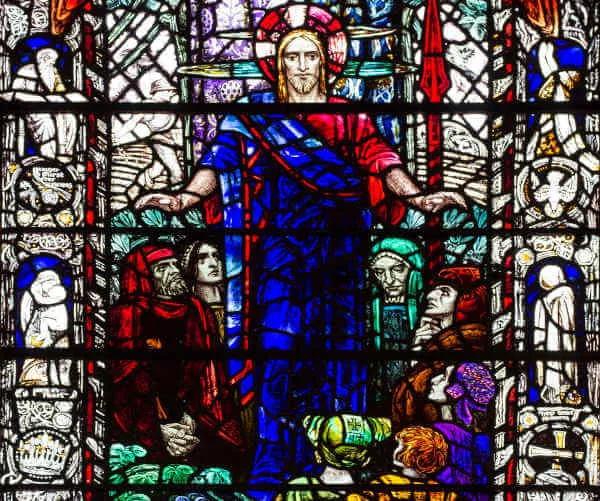
Jesus said to his disciples: “Do not think that I have come to abolish the law or the prophets. I have come not to abolish but to fulfill. Amen, I say to you, until heaven and earth pass away, not the smallest letter or the smallest part of a letter will pass from the law, until all things have taken place.”

Reflection:

The law and the prophets, as found in the Old Testament, consists of three types. First, there are the moral laws, such as the Ten Commandments, that are primarily based on the natural law of God. By “natural law,” we mean that our human reason can understand their truthfulness, such as with “Thou shall not kill, steal, etc.” Second, there were many liturgical precepts that were laid down and practiced as a preparation for and prefiguration of their ultimate liturgical fulfillment. The fulfillment is now found in the sacramental life of the Church. Third, there were various legal precepts that gave specific directions on daily living. These laws include instructions on food, relations with others, how to treat foreigners, cleansings, purifications of utensils, tithing, and much more.

In our Gospel today, Jesus essentially says two things. First, regarding the legal and liturgical precepts, He says that He came to “fulfill” them. Thus, Christians are no longer bound by these Old Testament legal and liturgical laws, in that we are now called to a much higher fulfillment of them all. But as for the moral laws, especially those found in the Ten Commandments, not a single precept taught is abolished. Instead, these Commandments are deepened, and the call to moral perfection is now much clearer. It is for this reason that Jesus goes on to say, “Therefore, whoever breaks one of the least of these commandments and teaches others to do so will be called least in the Kingdom of heaven. But whoever obeys and teaches these commandments will be called greatest in the Kingdom of heaven.”

It’s important to understand that those who lived before the time of Christ were not held to the same standard as we are today. That’s because they did not enjoy the gift of grace that was won by the Cross and is bestowed by the Holy Spirit. Today, we have so much more and, for that reason, are called to a much greater life of holiness. For example, we no longer celebrate the Passover as a mere remembrance of what God did by setting the Israelites free from slavery to the Egyptians. Today, we celebrate the New Passover through our participation in the Holy Eucharist, and our “remembrance” goes beyond the simple recalling of a memory of old. Our remembrance is one that enables us to actually participate in the saving sacrifice of Christ. We share in the actual event and are partakers of the grace won on the Cross each time we celebrate the Holy Mass. And as for the moral laws of the Old Testament, they become the bottom line of morality. The upper limit is now much higher. We are to love our enemies and pray for those who persecute us. We are to lay down our lives for others and take up our crosses daily to follow Jesus. We are called to the perfection of sacrificial love, and that is only possible by our sharing in the very life, death and resurrection of Christ our Lord.

Reflect, today, upon the very high calling you have been given by our Lord. It’s not enough to simply do the bare minimum in our worship and moral life. Doing so may permit you to be “least in the Kingdom of heaven,” but God wants you to share in His greatness. He calls you to be among the “greatest in the Kingdom of heaven.” Do you understand your high calling? Do you have the perfection of holiness as your goal? Commit yourself to the full participation in the New Law of Christ and you will be eternally grateful that you did.

Source: https://catholic-daily-reflections.com/2024/06/11/the-new-law-of-grace-3/
Matthew 5:17-18 Read More »

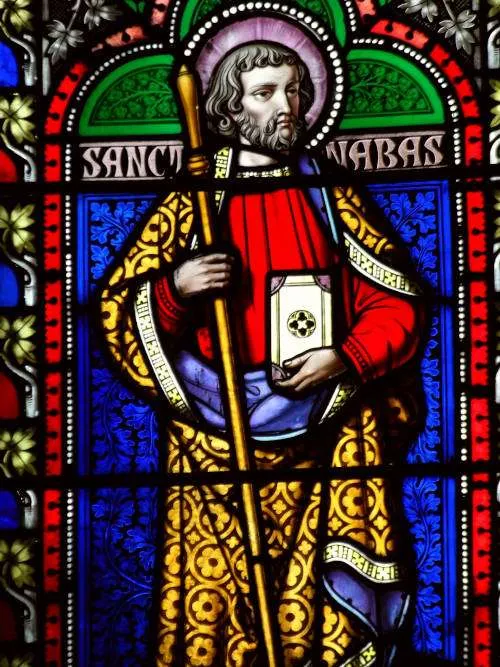
Saint Barnabas the Apostle

Early First Century–c. 61; Patron Saint of Cyprus, Antioch, and peacekeeping missions; Invoked against hailstorms; Pre-Congregation canonization

Saint Barnabas, originally named Joseph, was born on the isle of Cyprus and was a Jew of the tribe of Levi (see Acts 4:36). Nothing else is known about his early life. During Jesus’ public ministry, Joseph became His fervent follower and might have been one of the seventy-two disciples whom Jesus sent out on a mission (see Luke 10:1–24). After Pentecost, as the Church in Jerusalem began to grow, the Apostles changed Joseph’s name to Barnabas, which means “son of encouragement.” His name change might have occurred because Barnabas supported the Church when he “sold a piece of property that he owned, then brought the money and put it at the feet of the apostles” (Acts 4:37). This is the first mention of Barnabas in the New Testament.

Three years later, after Saint Paul had undergone his conversion to the Christian faith and spent three years fasting and praying in Arabia, he traveled to Jerusalem to consult with the Apostles. The Apostles and the Christian community were at first hesitant to receive him, for they were aware of the persecutions he had issued against the Church. Barnabas, however, “brought him to the apostles, and he reported to them how on the way he had seen the Lord and that he had spoken to him, and how in Damascus he had spoken out boldly in the name of Jesus” (Acts 9:27). After spending a short period of time in Jerusalem, Saint Paul returned to his hometown of Tarsus to avoid persecution. He remained in Tarsus for the next several years.

During that time, some of the Christians who left Jerusalem after the martyrdom of Saint Stephen traveled north to Antioch in Syria, where many Greek Gentiles lived. In Antioch, the Greek-speaking Christians began to preach the Word of God to the Gentiles. As a result, many of the Gentiles converted and accepted the faith. When the Apostles in Jerusalem heard about this, they sent Barnabas to minister to these new converts. Barnabas was so impressed that he went to find Saint Paul in Tarsus and brought him back to Antioch to help share the Good News. It was there, in Antioch, that the word “Christian” was first used, perhaps because the new converts were Gentiles who converted not to the Jewish faith, but directly to Christ.

After a year in Antioch, Paul and Barnabas returned to Jerusalem on a relief mission to assist those suffering from a famine. They brought with them money that was raised among the Christians in Antioch. After returning to Antioch, the Holy Spirit revealed to the Christian community that Paul and Barnabas were to be “set apart” for a special mission. The two were then ordained as bishops and sent forth on a mission, bringing with them Barnabas’ relative, John Mark, the Gospel writer. Over the next year, they traveled to Seleucia, Cyprus, Salamis, Paphos, Perga of Pamphylia, Antioch of Pisidia, Lystra, Derbe, Iconium, and back to Antioch, Syria. During this journey, they won many converts; some Greeks even tried to worship the two as gods. They also encountered opposition, including an unsuccessful attempt to kill Paul by stoning. The two later returned to Jerusalem to help settle disputes about Gentile converts before being sent off on another mission. Before the second journey, Barnabas and Paul disagreed about John Mark’s involvement in the mission, since John Mark had previously abandoned them for an unknown reason while in Pamphylia. The disagreement was so severe that Paul and Barnabas parted ways. Barnabas took John Mark with him to Cyprus, and Paul took Silas with him to Syria and Cilicia.

Nothing else is known for certain about Barnabas’ missionary activity with John Mark in Cyprus. Based on Paul’s first letter to the Corinthians and his letter to the Colossians, the disagreement the two had over John Mark did not have any lasting effect on their friendship. Even John Mark is later affectionately mentioned by Paul.

The only source we have that details Barnabas’ martyrdom comes from the fifth century, which makes its historicity uncertain. According to that tradition, Barnabas was preaching the Gospel around the year 61 and was arrested, dragged out of the city, and either burned to death or stoned. One tradition states that John Mark found his remains and buried them.

Another legend holds that in the year 478, Saint Barnabas appeared to the Archbishop of Cyprus and revealed the location of his burial to him. Archbishop Anthemios then found Saint Barnabas’ body incorrupt, holding the Gospel of Matthew. The Roman emperor then erected a church at the site and buried Saint Barnabas there. Though the church was later lost to history, excavations of the site have found a tomb believed to be that of Saint Barnabas. Saint Barnabas is the patron saint of Cyprus because he was the first missionary bishop on that island.

As we honor this great apostolic bishop, ponder the impact his ministry has had over time. Although the number of converts during his lifetime might have only been in the hundreds or thousands, the effect those converts had on subsequent generations multiplied over and over again. Saint Barnabas traveled, preached, baptized, celebrated the sacraments, and founded many Christian communities. He endured rejection, hardship, violence, and martyrdom, but he pressed on. His fervor stemmed from knowing his Lord, not only through his firsthand witness of Jesus’ ministry but also through his life of prayer and his reception of the Holy Spirit. Try to see his mission as one similar to yours. You, too, are called to zealously preach the Gospel to others. Do not hesitate to do so, no matter the cost. Pray that God uses you as He wills, and offer yourself to His service in imitation of this holy Apostle.

Source: https://mycatholic.life/saints/saints-of-the-liturgical-year/june-11—saint-barnabas-the-apostle/

Saint Barnabas the Apostle Read More »

Matthew 5:13-14

Salt and Light for the World

Jesus said to his disciples: “You are the salt of the earth. But if salt loses its taste, with what can it be seasoned? It is no longer good for anything but to be thrown out and trampled underfoot. You are the light of the world…”

Reflection:

Every Christian has two primary duties in life. First, we must strive for personal holiness. And second, we must work to help others achieve this same degree of holiness. This is what it means to be the “salt of the earth” and the “light of the world.”

Consider salt. Salt is a preservative, and it also adds flavor to food. It does so by entering the food and, in a sense, disappearing. So it must be with us. First, our Lord must enter our lives and preserve us from the corruption of sin. But as He does so, He will also bring out our goodness in a way that the “flavor” of holiness is evident to others. In this way, we will be used as salt for others. This is especially done by our works of charity.

Saint Thérèse of Lisieux said in her autobiography, “I see now that true charity consists in bearing with the faults of those about us, never being surprised at their weaknesses, but edified at the least sign of their virtue.” She believed that this was especially the way we act as salt and light to others. We help to preserve others from sin by being merciful to them when they are weak. We enrich their lives by seeing their goodness and rejoicing in it. And we do so in a hidden way. By our gentleness and compassion, our kindness and mercy, we preserve others and help them to grow in God’s abundant grace. And we do so, many times, without them even realizing how God used us.

Consider, also, light. The world in which we live is oftentimes quite dark and despairing. There is corruption all around us and temptations abound. Thus, the light of Christ must be made manifest far and wide. Those all around us need to see clearly the path to holiness and happiness. Again, this is possible if we first work to become light itself. Christ, the true Light of the World, must so permeate our lives that we find it almost automatic to shine brightly in a fallen world. When Christ is alive in us, we will radiate joy and peace, calm and conviction, moral goodness and determination. And when we live this way, we will not have to “impose” the Gospel on others; rather, God’s light will simply shine and be a beacon of hope to those who come into our presence.

Reflect, today, upon these two missions in life. First, ponder your call to holiness. How does God want to bring light into your own life, preserve you from all sin and add spiritual flavor for holy living? Second, who does God want you to love with His love? Who needs hope and joy, mercy and kindness, words of wisdom and encouragement? Be holy and then allow that holiness to shine forth to others and you will indeed be the salt of the earth and the light of the world.

Source: https://catholic-daily-reflections.com/2024/06/10/salt-and-light-for-the-world-3/

Matthew 5:13-14 Read More »

Martyrs of the Hulks of Rochefort

Profile

In 1790 the French Revolutionary authorities passed a law requiring priests to swear allegience to the civil constitution, which would effectively remove them from the authority of, and allegience to, Rome. Many refused, and in 1791 the government began deporting them to French Guyana. 827 priests and religious were imprisoned on hulks (old ships no longer sea-worthy and used for storage, jails, hospitals, etc.) at Rochefort, France to await exile, most on the Deux-Associés and the Washington which had previously been used to house slaves or prisoners. There they were basically ignored to death as there was little provision for food and water, less for sanitation, and none at all for medical help. 542 of the prisoners died there.

The survivors were freed on 12 February 1795 and allowed to return to their homes. Many of them wrote about their time on the hulks, and many of them wrote about the faith and ministry of those who had died. 64 of them have been positively identified and confirmed to have died as martyrs, dying for their faith –

  • Blessed Antoine Auriel
  • Blessed Antoine Bannassat
  • Blessed Augustin-Joseph Desgardin
  • Blessed Barthélemy Jarrige de La Morelie de Biars
  • Blessed Charles-Antoine-Nicolas Ancel
  • Blessed Charles-Arnould Hanus
  • Blessed Charles-René Collas du Bignon
  • Blessed Claude Beguignot
  • Blessed Claude Dumonet
  • Blessed Claude Laplace
  • Blessed Claude Richard
  • Blessed Claude-Barnabé Laurent de Mascloux
  • Blessed Claude-Joseph Jouffret de Bonnefont
  • Blessed Élie Leymarie de Laroche
  • Blessed Florent Dumontet de Cardaillac
  • Blessed François d’Oudinot de la Boissière
  • Blessed François François
  • Blessed François Hunot
  • Blessed François Mayaudon
  • Blessed Gabriel Pergaud
  • Blessed Georges-Edme René
  • Blessed Gervais-Protais Brunel
  • Blessed Jacques Gagnot
  • Blessed Jacques Lombardie
  • Blessed Jacques Retouret
  • Blessed Jacques-Morelle Dupas
  • Blessed Jean Baptiste Guillaume
  • Blessed Jean Bourdon
  • Blessed Jean Hunot
  • Blessed Jean Mopinot
  • Blessed Jean-Baptiste de Bruxelles
  • Blessed Jean-Baptiste Duverneuil
  • Blessed Jean-Baptiste Laborie du Vivier
  • Blessed Jean-Baptiste Menestrel
  • Blessed Jean-Baptiste Souzy
  • Blessed Jean-Baptiste-Ignace-Pierre Vernoy de Montjournal
  • Blessed Jean-Baptiste-Xavier Loir
  • Blessed Jean-François Jarrige de la Morelie de Breuil
  • Blessed Jean-Georges Rehm
  • Blessed Jean-Nicolas Cordier
  • Blessed Joseph Imbert
  • Blessed Joseph Juge de Saint-Martin
  • Blessed Joseph Marchandon
  • Blessed Lazare Tiersot
  • Blessed Louis-Armand-Joseph Adam
  • Blessed Louis-François Lebrun
  • Blessed Louis-Wulphy Huppy
  • Blessed Marcel-Gaucher Labiche de Reignefort
  • Blessed Michel-Bernard Marchand
  • Blessed Michel-Louis Brulard
  • Blessed Nicolas Savouret
  • Blessed Nicolas Tabouillot
  • Blessed Noël-Hilaire Le Conte
  • Blessed Paul-Jean Charles
  • Blessed Philippe Papon
  • Blessed Pierre Gabilhaud
  • Blessed Pierre Jarrige de la Morelie de Puyredon
  • Blessed Pierre-Joseph le Groing de la Romagère
  • Blessed Pierre-Michel Noël
  • Blessed Pierre-Sulpice-Christophe Faverge
  • Blessed Pierre-Yrieix Labrouhe de Laborderie
  • Blessed Raymond Petiniaud de Jourgnac
  • Blessed Scipion-Jérôme Brigeat Lambert
  • Blessed Sébastien-Loup Hunot

Died

  • between 19 May 1794 and 23 February 1795 aboard prison ships docked at Rochefort, Charente-Maritime, France

Venerated

  • 2 July 1994 by Pope John Paul II (decree of martyrdom)

Beatified

  • 1 October 1995 by Pope John Paul II

Source: https://catholicsaints.info/martyrs-of-the-hulks-of-rochefort/?lcp_page0=2#lcp_instance_0

Martyrs of the Hulks of Rochefort Read More »

Matthew 5:1-3

The Heights of Holiness

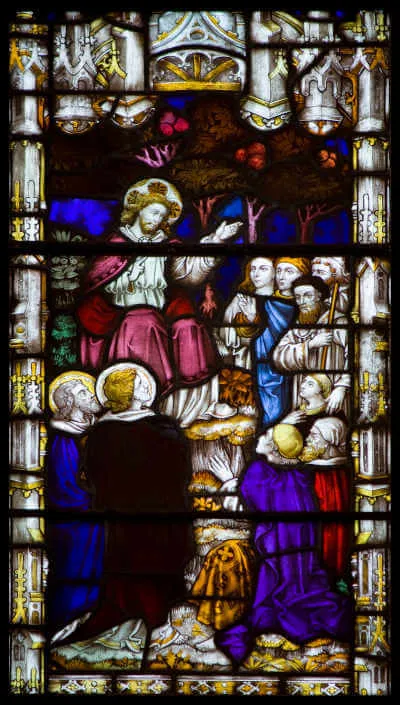
When Jesus saw the crowds, he went up the mountain, and after he had sat down, his disciples came to him. He began to teach them, saying: “Blessed are the poor in spirit, for theirs is the Kingdom of heaven.”

Reflection:

Today we are given the incredibly high calling of the Beatitudes to ponder. These lessons were taught by Jesus on a hill just north of the Sea of Galilee. Many were coming to Jesus to listen to Him preach and to witness His many miracles. They flocked to Him in this remote location, and Jesus had them recline as He preached what is now referred to as “The Sermon on the Mount.” This sermon is found in Chapter 5 through 7 of Matthew’s Gospel, and it takes place shortly after Jesus began His public ministry.

What a way to begin His public ministry! This teaching of Jesus was brand new and must have left many people mesmerized. Jesus no longer taught only the precepts of the Old Testament, such as the Ten Commandments; He now elevated the moral law to a level never conceived of before.

As the people listened to this new teacher speak with new authority and wisdom, they may have been excited and confused at the same time. To hunger and thirst for righteousness, to be merciful and clean of heart, and to be a peacemaker could have been accepted. But why was it that being poor, mournful, and meek were considered blessings? And even more challenging, why was it good to be persecuted for the sake of righteousness or insulted and falsely accused because of Jesus?

When Jesus’ new and radical teaching is clearly understood, it is not only His first disciples who may have been confused and excited at the same time. You, too, if you truly listen to His teachings and understand what He means, will find that you may be challenged to the core of your being. Jesus’ teaching must be embraced, fully, and without hesitation.

The Beatitudes are our call to perfection. They lay out for us the path by which we travel to the heights of holiness and obtain the glory of Heaven. They are our fine-tuned and detailed road map to the fullness of happiness and joy. But they also call us to a radical transformation of our minds and in our actions. They are not “easily” embraced, in the sense that they require that we turn from every selfish tendency we have and choose to live free of every earthly temptation, attachment and sin. Perfection awaits those who listen to, understand, and embrace the Beatitudes.

Reflect, today, upon the beginning of this challenging Sermon on the Mount. Try to find time to take each Beatitude to prayer. It is only through prayer and meditation that the full meaning of each of these invitations to holiness will be understood. Start with the call to interior poverty of spirit. This Beatitude calls us to complete detachment from all that is not part of God’s will. From there, consider the importance of mourning over your sin, of seeking purity of heart and humility in all things. Ponder each Beatitude and spend time with the one most challenging to you. Our Lord has much to say to you through this sermon. Don’t hesitate to allow Him to lead you to the heights of holiness through it.

Source: https://catholic-daily-reflections.com/2024/06/09/the-heights-of-holiness-3/

Matthew 5:1-3 Read More »

Tenth Sunday in Ordinary Time

First Reading Genesis 3:9-15

After the man, Adam, had eaten of the tree,
the LORD God called to the man and asked him, “Where are you?”
He answered, “I heard you in the garden;
but I was afraid, because I was naked,
so I hid myself.”
Then he asked, “Who told you that you were naked?
You have eaten, then,
from the tree of which I had forbidden you to eat!”
The man replied, “The woman whom you put here with me—
she gave me fruit from the tree, and so I ate it.”
The LORD God then asked the woman,
“Why did you do such a thing?”
The woman answered, “The serpent tricked me into it, so I ate it.”

Then the LORD God said to the serpent:
“Because you have done this, you shall be banned
from all the animals
and from all the wild creatures;
on your belly shall you crawl,
and dirt shall you eat
all the days of your life.
I will put enmity between you and the woman,
and between your offspring and hers;
he will strike at your head,
while you strike at his heel.”

Responsorial Psalm Psalms 130:1-2, 3-4, 5-6, 7-8

R. (7bc) With the Lord there is mercy, and fullness of redemption.

Out of the depths I cry to you, O LORD;
LORD, hear my voice!
Let your ears be attentive
to my voice in supplication.

R. With the Lord there is mercy, and fullness of redemption.

If you, O LORD, mark iniquities,
LORD, who can stand?
But with you is forgiveness,
that you may be revered.

R. With the Lord there is mercy, and fullness of redemption.

I trust in the LORD;
my soul trusts in his word.
More than sentinels wait for the dawn,
let Israel wait for the LORD.

R. With the Lord there is mercy, and fullness of redemption.

For with the LORD is kindness
and with him is plenteous redemption
and he will redeem Israel
from all their iniquities.

R. With the Lord there is mercy, and fullness of redemption.

Second Reading 2 Corinthians 4:13—5:1

Brothers and sisters:
Since we have the same spirit of faith,
according to what is written, I believed, therefore I spoke,
we too believe and therefore we speak,
knowing that the one who raised the Lord Jesus
will raise us also with Jesus
and place us with you in his presence.
Everything indeed is for you,
so that the grace bestowed in abundance on more and more people
may cause the thanksgiving to overflow for the glory of God.
Therefore, we are not discouraged;
rather, although our outer self is wasting away,
our inner self is being renewed day by day.
For this momentary light affliction
is producing for us an eternal weight of glory
beyond all comparison,
as we look not to what is seen but to what is unseen;
for what is seen is transitory, but what is unseen is eternal.
For we know that if our earthly dwelling, a tent,
should be destroyed,
we have a building from God,
a dwelling not made with hands, eternal in heaven.

Alleluia John 12:31b-32

R. Alleluia, alleluia.

Now the ruler of the world will be driven out, says the Lord;
and when I am lifted up from the earth, I will draw everyone to myself.

R. Alleluia, alleluia.

Gospel Mark 3:20-35

Jesus came home with his disciples.
Again the crowd gathered,
making it impossible for them even to eat.
When his relatives heard of this they set out to seize him,
for they said, “He is out of his mind.”
The scribes who had come from Jerusalem said,
“He is possessed by Beelzebul,”
and “By the prince of demons he drives out demons.”

Summoning them, he began to speak to them in parables,
“How can Satan drive out Satan?
If a kingdom is divided against itself,
that kingdom cannot stand.
And if a house is divided against itself,
that house will not be able to stand.
And if Satan has risen up against himself
and is divided, he cannot stand;
that is the end of him.
But no one can enter a strong man’s house to plunder his property
unless he first ties up the strong man.
Then he can plunder the house.
Amen, I say to you,
all sins and all blasphemies that people utter will be
forgiven them.
But whoever blasphemes against the Holy Spirit
will never have forgiveness,
but is guilty of an everlasting sin.”
For they had said, “He has an unclean spirit.”

His mother and his brothers arrived.
Standing outside they sent word to him and called him.
A crowd seated around him told him,
“Your mother and your brothers and your sisters
are outside asking for you.”
But he said to them in reply,
“Who are my mother and my brothers?”
And looking around at those seated in the circle he said,
“Here are my mother and my brothers.
For whoever does the will of God
is my brother and sister and mother.”

Source: https://bible.usccb.org/bible/readings/060924.cfm

Tenth Sunday in Ordinary Time Read More »

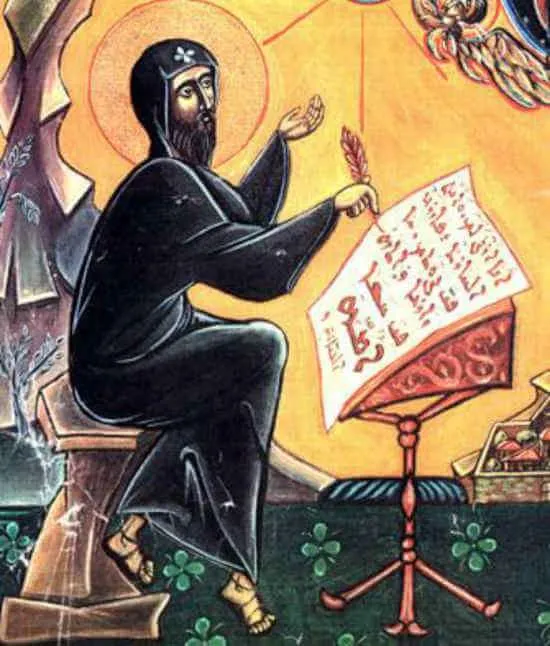
Saint Ephrem, Deacon and Doctor

c. 306–373; Patron Saint of spiritual directors and spiritual leaders; Pre-Congregation canonization; Declared a Doctor of the Church by Pope Benedict XV in 1920

Ephrem was born in the town of Nisibis, near Syria’s border with present-day Turkey. At the time of Ephrem’s birth, Nisibis was part of the Roman Empire. Nisibis was a diverse city of Syrians, Arameans, Arabs, Greeks, Jews, Parthians, Romans, and Iranians. Among the religious beliefs were Judaism, Christianity, and polytheism. Aramaic was commonly spoken, and to a lesser extent, Greek and Latin.

When Ephrem was just a boy, Emperor Constantine the Great issued the Edict of Milan, legalizing Christianity throughout the empire. Ephrem likely learned the faith from his mother at an early age. Stories from his youth, however, suggest that even though he was raised in the Christian faith, he failed to practice it. One story relates that one day when Ephrem was walking through a field and saw a cow, he decided to have fun by throwing rocks at it, forcing the beast to run. Ephrem pursued the cow, pelting it all the more until the poor animal died. When Ephrem later encountered the cow’s owner, he denied ever seeing the animal. He would come to regret his double sin.

Some months later, Ephrem was spending time with a friend who was a shepherd. After the shepherd had too much to drink, he lost the sheep to thieves or wolves. As a result, the shepherd and Ephrem were arrested and imprisoned on the charge that they stole the sheep. Within that prison, something life-changing took place. An angel was sent to chastise Ephrem, explaining that even though he was innocent of the crime against the sheep, he was not innocent of other crimes, such as the death of the cow. The angel’s holy rebukes did wonders in Ephrem’s soul, and he was filled with remorse and repentance as he came face-to-face with Divine Justice. By God’s grace, when the sorrowful Ephrem was released from prison after two months, he vowed to turn his life around.

Some time after his release, Ephrem consulted with the local bishop-monk, Saint James of Nisibis, seeking spiritual direction. Bishop James took Ephrem under his wing and began to teach him in his school, mentoring him in the ways of monastic life. At that time, Syrian monasticism was different from the monastic life that was developing in Egypt. In Egypt, monks would escape into the wilderness, seeking silence and solitude from the Roman Empire and society, so that they could focus exclusively on God. Saint Anthony of the Desert is among the most renowned of these desert fathers. In northern Syria, where Ephrem lived, those who sought out the monastic life did so within the community of believers. They lived as ascetics, doing penance and praying devoutly, but they also remained servants of the local church, serving the community and addressing their needs. This is the life that Ephrem undertook after vowing to live in poverty and celibacy.  As a hermit, he spent time in the solitude of caves and in the wilderness. Within the community, he performed good works.

Over the next forty to fifty years, Ephrem studied under Bishop James and lived an ascetic life of prayer, penance, and service. He used his many gifts for the glory of God. Ephrem’s enduring legacy is his writings. He was a prolific writer of hymns, poems, biblical commentaries, and homilies. It is believed that during his lifetime, he composed as many as 400 hymns and 3,000 poems that were tools for catechetics and worship. They were rich in imagery, theologically precise, insightful, melodic, and covered important topics such as the Incarnation, the Blessed Virgin Mary, the sacraments, and the purpose of the Christian life. His hymns and poems were also apologetical, meaning, a defense of the faith. At that time, numerous heresies abounded, and some heretics sought to push their beliefs on others by composing hymns, since a hymn was easily remembered. Ephrem took the same approach, only with orthodox poems and hymns that sought to dispel the heresies’ errors. Ephrem’s gifts of artistically presenting the deep truths of the faith led many over the centuries to refer to him as the “Harp of the Holy Spirit.” 

Around the year 350, Ephrem’s mentor, Bishop James, formally opened the School of Nisibis, which became an important center for education within the Syriac church. Ephrem assisted the bishop, becoming a respected and influential teacher.

In 363, Roman Emperor Jovian lost a battle to the Persians and had to surrender the Roman town of Nisibis. All Christians were expelled from Nisibis. Ephrem settled in the town of Edessa, about 125 miles to the west, a flourishing Christian city. In Edessa, Ephrem continued to teach, write, and serve the community in any way he could. He founded a school there, which became another important Christian center for learning. In Edessa, Ephrem became known as the saint of daily living because he often came out of his solitude to teach people how to live the faith in a practical way. At some point, he was ordained a deacon, and as a deacon, he became a true servant of others. When famine hit Edessa, he helped distribute food to the poor. When a plague struck, he cared for the sick. During a plague in 373, Ephrem contracted the disease and became a martyr of charity.

Though Saint Ephrem died in the fourth century, he was declared a Doctor of the Church in 1920 by Pope Benedict XV. Saint Ephrem is the only Syrian Doctor of the Church and is not only highly revered in the Eastern Catholic Church but in the Orthodox Church as well. It might be that the 1920 declaration was done in part as a way of further bridging the gap between the Catholic Church and the Orthodox Church.

As we honor this great saint, ponder especially the powerful effect that music has upon the human person. What types of songs do you listen to? Consider following the example of Saint Ephrem by filling your mind with hymns that give praise and glory to God and do so in a clear and theologically rich way. Such a habit will certainly help you grow in holiness.

Source: https://mycatholic.life/saints/saints-of-the-liturgical-year/june-9—saint-ephrem-deacon-and-doctor/

Saint Ephrem, Deacon and Doctor Read More »

Mark 3:28-30

Sincere Repentance

“Amen, I say to you, all sins and all blasphemies that people utter will be forgiven them. But whoever blasphemes against the Holy Spirit will never have forgiveness, but is guilty of an everlasting sin.” For they had said, “He has an unclean spirit.”

Reflection:

Jesus spoke these words to the crowds who had gathered around His home in Capernaum because two groups of people had just spoken very critically of Him in a public way. First, some of His extended family arrived and said to everyone, “He is out of his mind.” And then some of the scribes from Jerusalem said, “He is possessed by Beelzebul.” Thus, Jesus states clearly that their blasphemy is a sin against the Holy Spirit and will have everlasting consequences.

Why is it that certain sins will never be forgiven? What exactly is a sin against the Holy Spirit? Traditionally, our Church has identified this sin in a couple of ways. First, it is a sin of final impenitence, that is, the sin of obstinately persisting in grave sin. Obstinacy, or the refusal to repent, is a sin that cannot be forgiven, simply because the person committing it never seeks forgiveness. They become so entrenched in their sin that they refuse to change. Thus, the mercy of God is incapable of entering into them. Second, it has also been identified as presumption, meaning a person sins while expecting God to forgive. Presumption is more subtle; however, it also has the effect of keeping a person from the sincere repentance that is needed for forgiveness. The presumptuous person never fully repents and amends their life as long as they remain in their sin.

Of all the many sins you struggle with or might struggle with in the future, pay special attention to the sins against the Holy Spirit. Though we should never think we have a right to God’s forgiveness, we must always believe that God’s mercy is so great that the moment we humbly acknowledge our sin and sincerely repent of it, God will forgive. But the key is “sincerity.” In order to be forgiven, the repentance within us must be sincere, authentic, real and complete. We cannot fool God. We can certainly fool ourselves, but not God.

One of the best ways to regularly be certain that you are not guilty of any sin against the Holy Spirit is by going to the Sacrament of Confession and confessing your sins with openness, thoroughness and humility. Own your sin. Acknowledge it. Experience sorrow for it. Resolve to change. Then confess it and trust in God’s mercy.

Reflect, today, upon any way that you lack sincerity and thoroughness in your repentance from sin. Are you honest with yourself about the sins you have committed? Have you taken ownership of those sins? If so, have you also confessed them to God and firmly resolved never to commit them again? Take repentance seriously so that you never even begin to fall down the slippery slope that leads to any sin against the Holy Spirit.

Source: https://catholic-daily-reflections.com/2024/06/08/sincere-repentance/

Mark 3:28-30 Read More »

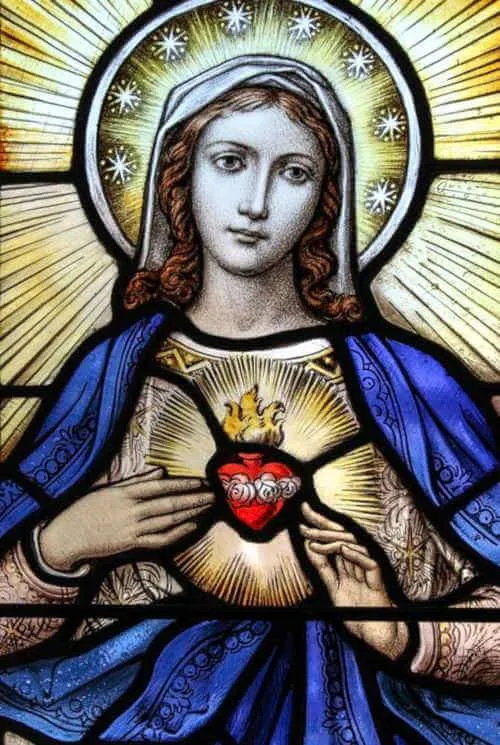
Immaculate Heart of Mary

The Immaculate Heart of Mary was created around 15 BC as a result of the Immaculate Conception, which is a dogma of our faith. As The Immaculate Conception, the Blessed Virgin Mary was preserved from all sin from the first moment of her conception by a singularly unique grace, preemptively bestowed upon her by the merits of her Son’s life, death, and resurrection. From the moment of her Immaculate Conception, Mary remained free from all sin as a result of her own free choice to cooperate with grace. As a result, she was conceived as a suitable instrument for the Incarnation of God, and she remained a suitable instrument throughout her life.

After Jesus’ birth, the Mother of God continued to perfectly cooperate with grace, accompany her Son, stand at the foot of His Cross, jointly offer Him to the Father, experience His Resurrection and His Ascension into Heaven, participate in the full outpouring of the Holy Spirit at Pentecost, and help give birth to the nascent Church through her motherly care. At the completion of her life, she was taken body and soul into Heaven to be with her Son and to be crowned as the Queen of Heaven and Earth, from which she mediates the love and mercy of God, and will do so for all eternity. The immaculate nature and this full view of our Blessed Mother’s life is the “big picture.” Today, we celebrate one specific aspect of that big picture—her Immaculate Heart.

Honoring the Immaculate Heart of Mary leads us to ponder that which she pondered—her own heart filled with perfect love. We first receive a glimpse of her heart in the Gospel of Luke. After the angels appeared to the shepherds in Bethlehem and announced the birth of Christ, they went in haste to where Jesus was born and found Mary, Joseph, and the Child lying in a manger. They told Mary and Joseph about their experience of the angel, “And Mary kept all these things, reflecting on them in her heart” (Luke 2:19). Twelve years later, Mary and Joseph traveled to Jerusalem from Nazareth for the annual feast of Passover. After completing the customary prayers and sacrifice, they began their journey home, thinking Jesus was in the caravan with relatives. When they discovered He was not, they returned to Jerusalem to find twelve-year-old Jesus talking with the teachers in the temple and asking them questions, and “all who heard him were astounded at his understanding and his answers” (Luke 2:47). After inquiring of Jesus why He remained, He told them He had to be in His Father’s house. Though Mary and Joseph did not fully understand the mystery they were witnessing, “his mother kept all these things in her heart” (Luke 2:51).

Every other encounter between Jesus and His mother in Scripture also reveals a sense of mystery and awe that evoked love and pondering. Most notably, as Jesus hung on the Cross, His mother stood before Him, gazing with love. From the Cross, Jesus entrusted Mary to John, and through John, to the whole Church.

Because the Mother of God was and is the Immaculate Conception, free from all sin throughout her life, then every part of who she was and is remained immaculate, including her heart. Mary’s heart, as with every human heart, is a symbol of every relational virtue that enables one to love. The Mother of God’s human love for her Son was perfect. And that is something worth pondering! Prior to the Mother of God and her Son, the perfection of human love did not exist. From the time of Adam and Eve, human love was mixed with selfishness and sin. From the moment of the Incarnation, the perfect exchange of human love was established between the Mother of God and her divine Son. Today we celebrate that perfect love and are invited to ponder it and share in it.

As a result of Jesus entrusting His mother to John and the whole people of God and her subsequent Assumption into Heaven and coronation as Queen, we also ponder the perfection of human love for us, her children, that flows from Heaven. By God’s will, that perfection of love is bestowed upon the Church and all Her members through the Immaculate Heart of Mary. We must not only ponder this glorious reality, we must also do all we can to be receptive sons and daughters of the love of our heavenly mother who loves us with a perfect love and bestows upon us the pure and perfect love of her Son’s divine grace that was instilled in her Immaculate Heart.

Devotion to the Blessed Virgin Mary began in apostolic times and continued through great saints, such as Ephrem the Syrian, Cyril of Alexandria, John Damascene, Gregory of Nazianzus, Ambrose of Milan, Augustine of Hippo, and Jerome. Though they did not make specific reference to the Immaculate Heart, they spoke of the Blessed Mother’s many virtues. These saints especially helped to lay the foundation for proclaiming Mary as the Mother of God (Theotokos) at the Council of Ephesus in 431.

From the twelfth to the fifteenth centuries, a number of saints contributed to the deeping of our understanding of the Blessed Virgin Mary. Among them are Saints Anselm of Canterbury, Bernard of Clairvaux, Mechtilde, Gertrude the Great, Bridget of Sweden, and Bernardino of Siena.

From the sixteenth century to the twentieth centuries, many other saints continued to develop our understanding of the Blessed Virgin Mary. In 1648, Saint John Eudes, a French priest and founder of the Congregation of Jesus and Mary, instituted a local feast in honor of the Holy Heart of Mary, fostering a realization of the love that the Blessed Mother had for her Son and for all people. This was the first liturgical feast approved by a local ordinary specifically honoring the “Holy Heart of Mary.” After him, Saints Louis de Montfort and Alphonsus Liguori wrote extensively on the Blessed Virgin Mary.

In 1854, Pope Pius IX proclaimed the Dogma of the Immaculate Conception, which paved the way for the specific title of the Immaculate Heart, and in the early twentieth century, Saint Maximilian Kolbe wrote extensively on the Immaculata.

In 1916, an angel appeared to three children in Fátima, Portugal, speaking of the “infinite merits of the Most Sacred Heart of Jesus and of the Immaculate Heart of Mary.” The following year, the  Blessed Virgin Mary, under the title of “Our Lady of the Rosary,” appeared six times to the children. During the second apparition, Our Lady said that Jesus “wishes to establish in the world devotion to my Immaculate Heart.” In 1925 and 1929, Our Lady appeared again to Lúcia to ask that her Immaculate Heart be honored on the first Saturday of each month.

In 1944, Pope Pius XII instituted the universal feast of the Immaculate Heart of Mary to be celebrated annually on August 22, and in 1969, Pope Paul VI moved the celebration to the Saturday after the Solemnity of the Sacred Heart.

As we honor the holy, most pure, and Immaculate Heart of Mary, try to ponder that which the Blessed Virgin Mary pondered during her life. Ponder the love she had for her Son. Ponder the mysteries contained within her heart. As you do, especially ponder the love that her heart has for you. Only in Heaven will we fully understand the holiness of Our Lady’s Immaculate Heart. For now, we must foster devotion to all that is contained within it and seek to open ourselves to the ongoing outpouring of God’s grace that dwells in an immaculate way in that holy sanctuary of love.

Source: https://mycatholic.life/saints/saints-of-the-liturgical-year/immaculate-heart-of-mary–memorial/

Immaculate Heart of Mary Read More »

Luke 2:51

The Heart of Perfect Love

He went down with them and came to Nazareth, and was obedient to them; and his mother kept all these things in her heart.

Reflection:

Over and over, the Scriptures reveal to us that the Blessed Virgin Mary “kept all these things in her heart.” What things? She continually pondered the great mystery of the life of her Son as His sacred life unfolded before her eyes.

A mother’s love is strong. Many times, a mother is more aware of the details of her child’s life than even the child itself. She is attentive, consoling, present, tender and loving. This was who Mary was to her divine Son, Jesus.

Mother Mary did not have full knowledge of every divine reality. She did not gaze upon the Most Holy Trinity with her eyes as she walked the earth. She did not have the full knowledge of the plan of the Father. But she did walk through life with the perfection of faith. She also knew the many truths of Heaven and earth through her Immaculate Heart. Her heart was a heart filled with every virtue. She loved with a love that was indescribable. And what she especially pondered in her Immaculate Heart, over and over throughout life, was the pure and perfect love she had for her Son. To her, this love left her in amazement. She was continually in a state of holy awe as she interacted with her Son, gazed upon His sacred life, and watched Him advance in “wisdom and age and favor before God and man” (John 2:52). The love in her heart was a lesson to herself. She continually deepened her knowledge of God through the pondering of the perfect love placed in her heart by her God. And this God, her Savior, was her Son.

We celebrate today the Memorial of the Immaculate Heart of Mary. Though there are many feasts throughout the year in which we honor this holy daughter of God, this celebration is an opportunity for us all to ponder her pondering heart.

A human heart is not just physical, it is also spiritual. It is the spiritual source of our love of God and others. From our heart flows either virtue or vice, love or hate, generosity or selfishness. As we honor the Immaculate Heart today, we are called to look at the ideal of what should live within our own hearts and what should flow forth from them. The perfection of all virtue is what must ideally flow from every human heart throughout time. And it is the heart of our Blessed Mother that will teach us how to internalize those virtues so as to become an instrument of the love of God to others.

Reflect, today, upon the spiritual perfection of the Immaculate Heart of Mary. Perfection is difficult to comprehend in our fallen state. But the more we look to the ideal, the more we will desire that ideal. And the more we desire that ideal, the more we will obtain it. Allow yourself today to ponder the ideal heart as it resided in the Mother of God and ask for her to intercede for you so that you will more fully imitate her.

Source: https://catholic-daily-reflections.com/2024/06/07/the-heart-of-perfect-love-3/

Luke 2:51 Read More »