January 2024

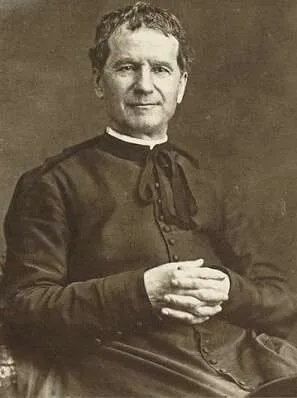
Saint John Bosco, Priest

Patron Saint of apprentices, boys, editors, laborers, magicians, students; Canonized by Pope Pius XI on April 1, 1934

The youngest of three sons, John Bosco was born into a poor family in northwest Italy in the rural hamlet of Becchi. His father, a farmhand for a neighboring family, died when John was only two. His mother continued to raise her sons with much love and affection.

Until the age of twelve, John spent most of his time trying to support the family by working as a shepherd and farmhand like his father. His family’s poverty made it difficult for him to obtain a good education. His learning came from his lived experience, homelife, and the sermons at church that he listened to attentively.

At the age of nine, John had the first of many dreams that would greatly influence him. In his dream, he came across a group of rough boys who were talking and cursing. John became angry with them and raised his fists to threaten them for their cursing. Suddenly, a man appeared in his dream who was radiant like the sun.

The man said to John, “Conquer the hearts of these, your friends, not with violence but with charity. Begin at once. Teach them the evil of vice and the excellence of virtue.” When John asked the man who he was, the man replied, “​​I am the Son of the lady I will send to be your teacher.” With that, the Blessed Mother appeared in the dream and began to teach John about his future mission of caring for boys with kindness.

John began his “ministry” when he was only ten. He would attend the shows of entertainers who performed juggling, magic tricks, and acrobatics. John studied their shows and then attempted to imitate them for other boys, always including prayers within the show and lessons he learned from Sunday sermons.

As was typical with many boys, John and his brother were always fighting with each other. This was one of the reasons that John decided to leave home at age twelve to look for work. A few years later, John caught the attention of a newly ordained priest and future saint, Father Joseph Cafasso, who saw his intellectual gifts and assisted him with his education. By the time John was twenty, Father Cafasso, with the help of some money from John’s mother, helped him enroll in the seminary. After six years of study, at the age of twenty-six, John was ordained a priest.

After ordination, Father John joined his mentor, Father Cafasso, in Turin to continue his studies at the Institute of Saint Francis where Father Cafasso was in charge. The two also engaged in ministry to the poor and imprisoned, cared for girls at a boarding school, and assisted in country parishes. It was in the prisons that Father John became aware of the number of boys who needed help.

Of this experience, he later wrote in his Memoirs, “I saw large numbers of young lads aged from 12 to 18, fine healthy youngsters, alert of mind, but seeing them idle there, infested with lice, lacking food for body and soul, horrified me. Public disgrace, family dishonor, and personal shame were personified in those unfortunates.” He thought to himself, “Who knows?…if these youngsters had a friend outside who would take care of them, help them, teach them religion…they could be steered away from ruin…”

Many of them were repeat offenders, and Father John’s heart was drawn to help them. His dream from when he was nine years old began to come to fruition as he sought to teach them, encourage them, listen to them, and befriend them as a mentor and spiritual father.

Father John’s plan was to found an oratory to provide structure and purpose for these boys. He helped them get jobs by teaching trades. At the same time, he provided them with food and shelter, taught them catechism, and gave them moral guidance and hope. Within ten years, Father John was assisting as many as 800 boys in need.

Less than a decade later, in 1861, some of the boys Father John mentored wanted to follow in his footsteps and assist other boys. Therefore, Father John founded the Society of St. Francis de Sales with a priest, seminarians, and a high school boy.

The Salesian Order was formally approved by the Vatican in 1869. In 1871 Father John expanded his mission by founding a Salesian religious order of women called the Daughters of Mary Help of Christians to care for girls. Finally, in 1874 he founded the Salesian Cooperators, a lay organization that worked with the male and female Salesian Orders.

Saint John Bosco saw a need as he encountered troubled, imprisoned, poor, orphaned, but good-hearted young boys. He followed his inspiration not to be harsh with them, but to offer them loving discipline, friendship, education, skills to support themselves, and a family within his oratory. This loving concern for these young boys overflowed into the hearts of many others, and God used this saintly man to save the souls of many by raising up an army of workers to care for them.

Ponder those in your life who are troubled, abandoned, disgraced, or struggling in other ways. Strive to imitate Saint John Bosco by seeing the good in them and helping to draw that goodness out so that they will find hope in the midst of their struggles with despair.

Source: https://mycatholic.life/saints/saints-of-the-liturgical-year/january-31-saint-john-bosco-priest/

Saint John Bosco, Priest Read More »
Mark 6:3

Christ All Around Us

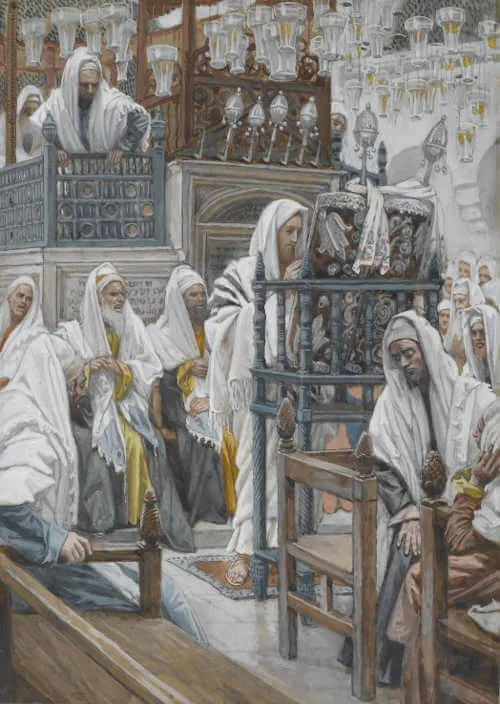
“’Is he not the carpenter, the son of Mary, and the brother of James and Joseph and Judas and Simon? And are not his sisters here with us?’ And they took offense at him.”

Reflection:

After traveling throughout the countryside performing miracles, teaching the crowds and gaining many followers, Jesus returned to Nazareth where He grew up. Perhaps His disciples were excited to return with Jesus to His native place, thinking that His own townspeople would be overjoyed to see Jesus again because of the many stories of His miracles and authoritative teaching. But the disciples were soon to have quite a surprise.

After arriving in Nazareth, Jesus entered the Synagogue to teach, and He taught with an authority and wisdom that confounded the locals. They said among themselves, “Where did this man get all this? What kind of wisdom has been given him?” They were confused because they knew Jesus. He was the local carpenter who worked for years with His father who was a carpenter. He was Mary’s son, and they knew His other relatives by name.

The primary difficulty Jesus’ townspeople had was their familiarity with Jesus. They knew Him. They knew where He lived. They knew Him as He grew up. They knew His family. They knew all about Him. Therefore, they wondered how Jesus could be anything special. How could He now teach with authority? How could He now do miracles? Thus, the townspeople were astonished, and they allowed that astonishment to turn into doubt, judgment and criticism.

The same temptation is something we all deal with more than we may realize. It is often easier to admire a stranger from afar than one whom we know well. When we hear of someone for the first time who is doing something admirable, it’s easy to join in that admiration. But when we hear good news about someone we know well, we can easily be tempted to jealousy or envy and to be skeptical and even critical.

But the truth is that every saint has a family. And every family potentially has brothers and sisters, cousins and other relatives through whom God will do great things. This should not surprise us—it should inspire us! And we should rejoice when those close to us and with whom we are familiar are used powerfully by our good God.

Reflect, today, upon those whom you are familiar with in life, especially your own family. Examine whether or not you struggle with an ability to see beyond the surface and accept that God dwells within everyone. We must constantly seek to discover the presence of God all around us, especially in the lives of those whom we know very well.

Source: https://catholic-daily-reflections.com/2024/01/30/christ-all-around-us-3/ 

Mark 6:3 Read More »

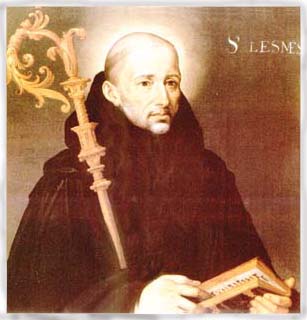
Saint Adelelmus

Profile

Adelelmus was a manservant, a soldier for France, with a promising career. While on pilgrimage to Rome, Italy, he met Saint Robert at the Chaise-Dieu monastery in Issoire (in modern France). Soon after, Adelelmus retired from military life to become a Benedictine monk at Issoire under the spiritual direction of Saint Robert. He was known as a miracle worker as well.

Adelelmus’s reputation for holiness spread. Constance of Burgundy, Queen of Castile, Spain was so impressed by him that in 1079, she and King Alphonsus VI of Castile built a monastery in Burgos, Spain on condition that he serve as its first abbot. Soon after, he added a church and hospital to the house. Adelelmus joined in the war to drive away the Moors from Spain.

One night, while out on some holy business, abbot Adelelmus and his aide were caught in a storm. Adelelmus ordered his assistant to light a candle so they could see to finish their journey. Not only was he able to light the exposed candle in the rain, but it stayed lit throughout their whole wet, windy, stormy trip.

Born

  • 11th century at Laudun, Poitou, France

Died

  • c.1100 at Burgos, Castilla la Vieja, Spain of natural causes

Patronage

  • butlers
  • domestic servants
  • housemaids
  • maids
  • manservants
  • servants
  • Burgos, Spain
  • La Chaise-Dieu, France

Source: https://catholicsaints.info/saint-adelelmus/

Saint Adelelmus Read More »

Mark 5:35-36

Fear Transformed by Faith

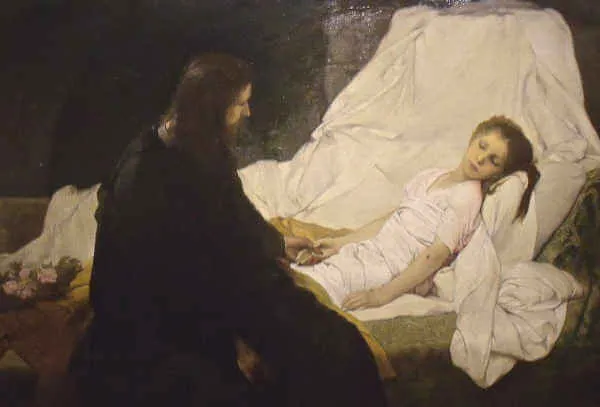
“While he was still speaking, people from the synagogue official’s house arrived and said, “Your daughter has died; why trouble the teacher any longer?” Disregarding the message that was reported, Jesus said to the synagogue official, “Do not be afraid; just have faith.”

Reflection:

This short line is one worth pondering every day. “Do not be afraid; just have faith.” This statement can apply to many situations we experience throughout our lives. It is a command of love from our Lord and is a command that we all need to hear, especially when hardships come our way.

First, it should be noted that this was a grave situation in which extreme emotion and temptations to fear would be understandable. The father in this story had a young daughter at the point of death, and he came to beg Jesus to heal her. Jesus agreed. But while they were on their way, Jesus and the father received the heartbreaking news that the daughter had just died.

As any parent would know, this news must have been incredibly difficult to hear. So begin by trying to understand the grief that this father was experiencing. Try to especially understand his grief at that moment as he heard this devastating news.

As you ponder his grief, try to also ponder the heart, thinking, emotions and words of Jesus. Jesus had no fear. He knew that this would end very well. But because He also had deep empathy and love for this grieving father, Jesus turned to him to give him hope. Hope in the midst of a very difficult and painful experience in life is hard to come by.

When faced with grief, it is very tempting to give in to despair. Despair is a complete loss of hope. Despair keeps us from God and strips us of faith. But despair is always avoidable if we follow Jesus’ command of love. “Do not be afraid; just have faith.”

What is it that tempts you to fear in life? What is it that tempts you to lose your hope? Perhaps you struggle with the death of a loved one, and you find it very difficult. Perhaps your grief comes from small sources and is only minor right now. The truth is that all of us will experience small temptations to lose hope every day. And most will also experience grave temptations at one time or another.

For these reasons, we must all constantly listen to Jesus’ words and work to dispel every fear in life as we invite God to bestow upon us the gift of hope that comes from unwavering faith in His plan for our lives.

Reflect, today, upon any struggles you have with despair, fear or anxiety in life. As you do, know that all things are possible when you turn to God with faith. Faith does not necessarily remove the hardships of life; it does something even better. It transforms hardships so that you can endure them with grace, joy and supernatural hope. When this happens, everything in life has the potential to be used by God for our good. All we need to do is continually reject fear and “just have faith.”

Source: https://catholic-daily-reflections.com/2024/01/29/fear-transformed-by-faith-2/

Mark 5:35-36 Read More »

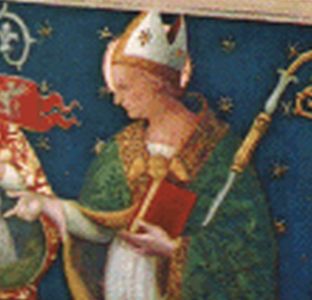
Saint Constantius of Perugia

Profile

Constantius was the first bishop of Perugia, Italy at age 30. He evangelized his people, cared for the poor, and lived a simple life that shamed the ruling classes.

Constantius was imprisoned, tortured, and martyred with many of his flock in the persecution of Marcus Aurelius.

Died

  • beheaded in 170
  • relics in an altar in the church of San Constanzo in 1205
  • relics re-enshrined in 1781
  • relics re-enshrined in 1825 at a new altar in the present church of San Constanzo

Canonized

  • Pre-Congregation

Patronage

  • Archdiocese of Perugia-Città della Pieve, Italy
  • City of Perugia, Italy

Source: https://catholicsaints.info/saint-constantius-of-perugia/

Saint Constantius of Perugia Read More »

Mark 5:7-9

Never Give Up on Another

“What have you to do with me, Jesus, Son of the Most High God? I adjure you by God, do not torment me!” (He had been saying to him, “Unclean spirit, come out of the man!”) He asked him, “What is your name?” He replied, “Legion is my name. There are many of us.”

Reflection: 

To most people, such an encounter would be terrifying. This man whose words are recorded above was possessed by a multitude of demons. He lived on the hillsides among various caves by the sea, and no one wanted to go near him. He was a violent man, crying out day and night, and all the townspeople were fearful of him. But when this man saw Jesus at a distance, something amazing happened.

Instead of Jesus being terrified of the man, the multitude of demons possessing the man became terrified of Jesus. Jesus then commanded the many demons to leave the man and enter a herd of about two thousand swine instead. The swine immediately ran down the hill into the sea and drowned. The possessed man returned to normal, becoming clothed and in his right mind. All who saw him were amazed.

Clearly, this brief summary of the story does not adequately explain the terror, trauma, confusion, suffering, etc., that this man endured during the years of his diabolical possession. And it does not adequately explain the grave suffering of this man’s family and friends, as well as the disorder caused to the local townspeople as a result of his possession.

Thus, to better understand this story, it is useful to contrast the before-and-after experience of all involved. It was very difficult for everyone to comprehend how this man could go from being possessed and out of his mind to calm and rational. For that reason, Jesus told the man to “Go home to your family and announce to them all that the Lord in his pity has done for you.” Imagine the mix of joy, confusion and disbelief that his family would have experienced. 

If Jesus could transform the life of this man who was completely possessed by a Legion of demons, then no one is ever without hope. Too often, especially within our families and among old friends, there are those whom we have written off as irredeemable. There are those who have gone so far astray that they seem hopeless. But one thing this story tells us is that hope is never lost for anyone—not even those completely possessed by a multitude of demons.

Reflect, today, upon anyone in your life whom you have written off. Perhaps they have hurt you over and over. Or perhaps they have chosen a life of grave sin. Look at that person in the light of this Gospel and know that there is always hope. Be open to God acting through you in a profound and powerful way so that even the most seemingly irredeemable person you know will be given hope through you.

Source: https://catholic-daily-reflections.com/2024/01/28/never-give-up-on-another-3/

Mark 5:7-9 Read More »

Fourth Sunday in Ordinary Time

First Reading Dt 18:15-20

Moses spoke to all the people, saying:
“A prophet like me will the LORD, your God, raise up for you
from among your own kin;
to him you shall listen.
This is exactly what you requested of the LORD, your God, at Horeb
on the day of the assembly, when you said,
‘Let us not again hear the voice of the LORD, our God,
nor see this great fire any more, lest we die.’
And the LORD said to me, ‘This was well said.
I will raise up for them a prophet like you from among their kin,
and will put my words into his mouth;
he shall tell them all that I command him.
Whoever will not listen to my words which he speaks in my name,
I myself will make him answer for it.
But if a prophet presumes to speak in my name
an oracle that I have not commanded him to speak,
or speaks in the name of other gods, he shall die.'”

Responsorial Psalm Ps 95:1-2, 6-7, 7-9

R. (8) If today you hear his voice, harden not your hearts.

Come, let us sing joyfully to the LORD;
let us acclaim the rock of our salvation.
Let us come into his presence with thanksgiving;
let us joyfully sing psalms to him.

R. If today you hear his voice, harden not your hearts.

Come, let us bow down in worship;
let us kneel before the LORD who made us.
For he is our God,
and we are the people he shepherds, the flock he guides.

R. If today you hear his voice, harden not your hearts.

Oh, that today you would hear his voice:
“Harden not your hearts as at Meribah,
as in the day of Massah in the desert,
Where your fathers tempted me;
they tested me though they had seen my works.”

R. If today you hear his voice, harden not your hearts.

Second Reading 1 Cor 7:32-35

Brothers and sisters:
I should like you to be free of anxieties.
An unmarried man is anxious about the things of the Lord,
how he may please the Lord.
But a married man is anxious about the things of the world,
how he may please his wife, and he is divided.
An unmarried woman or a virgin is anxious about the things of the Lord,
so that she may be holy in both body and spirit.
A married woman, on the other hand,
is anxious about the things of the world,
how she may please her husband.
I am telling you this for your own benefit,
not to impose a restraint upon you,
but for the sake of propriety
and adherence to the Lord without distraction.

Alleluia Mt 4:16

R. Alleluia, alleluia.

The people who sit in darkness have seen a great light;
on those dwelling in a land overshadowed by death,
light has arisen.

R. Alleluia, alleluia.

Gospel Mk 1:21-28

Then they came to Capernaum,
and on the sabbath Jesus entered the synagogue and taught.
The people were astonished at his teaching,
for he taught them as one having authority and not as the scribes.
In their synagogue was a man with an unclean spirit;
he cried out, “What have you to do with us, Jesus of Nazareth?
Have you come to destroy us?
I know who you are—the Holy One of God!”
Jesus rebuked him and said,
“Quiet! Come out of him!”
The unclean spirit convulsed him and with a loud cry came out of him.
All were amazed and asked one another,
“What is this?
A new teaching with authority.
He commands even the unclean spirits and they obey him.”
His fame spread everywhere throughout the whole region of Galilee.

Source: https://bible.usccb.org/bible/readings/012824.cfm

Fourth Sunday in Ordinary Time Read More »

Saint Thomas Aquinas, Priest and Doctor

Patron Saint of students, Catholic schools, apologists, booksellers, chastity, philosophers, publishers, scholars, theologians; Invoked against storms

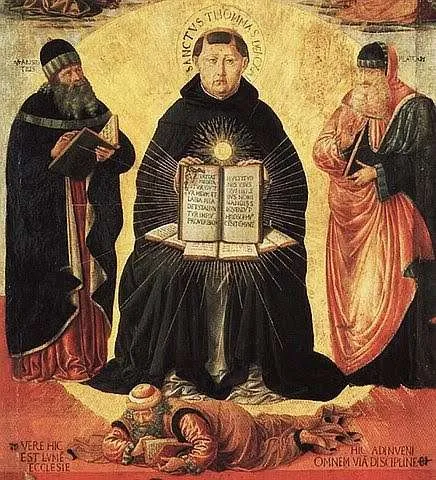
Among the greatest intellectuals in the history of the Church, Saint Thomas rises far above the rest. He is not only a Doctor of the Church but is given the titles Angelic Doctor, Common Doctor, and Universal Doctor. It is difficult to understate the impact that Saint Thomas has had on the Church’s doctrine and intellectual understanding of the faith.

Thomas was born in a grand castle in central Italy near the town of Aquino. His father was a nobleman, a knight in the army of the Emperor Frederick II. Thomas began his studies when he was only five at the famous Benedictine monastery, Monte Cassino, where his uncle was abbot. Thomas’s parents hoped he would one day become the abbot himself.

When Thomas was fourteen, because of military conflicts, Thomas moved from Monte Cassino to the newly founded University of Naples to continue his studies. It was there that he came in contact with the Dominicans who influenced him greatly and who made plans for Thomas to join their newly founded order. Thomas’ intellect shone forth at that time as he openly engaged in discussions, and his reputation for brilliance became widely known.

At the age of nineteen, the year after his father died, Thomas joined the Dominicans. This news angered his family who were steeped in the social system of feudalism at that time, which valued ownership of land and military service. The Benedictines were among the honored orders within the feudal system, not the Dominicans who were poor mendicant preachers. Thomas’ family wanted him to become the Abbot of Monte Cassino since it was more fitting for the nobility.

To remedy this, his mother had Thomas abducted and locked in a family castle where he remained imprisoned for about a year. During that time, his mother, siblings, and many others did all they could to try to convince Thomas to become a Benedictine, but Thomas refused. One day, his family even sent a prostitute to his cell to tempt him, but he chased her away with a burning log. Eventually, his mother permitted him to escape the castle at night as a way of saving the family from further disgrace.

Now twenty years old, Thomas rejoined the Dominicans and was sent to Paris where he became a student of the intellectual giant Brother Albert, who is now known as Saint Albert the Great. Brother Thomas especially became fond of Aristotle’s philosophy, which would become the foundation of much of his future writings, a first in the history of the Church. He continued to study under Brother Albert for several years.

Thomas also became much more reserved in class as he grew in the virtue of humility, rarely speaking up, debating, or revealing his keen intellect. His quiet nature led many of the students to conclude that he was unintelligent, and they gave him the nickname “Dumb Ox.”

One day, however, his teacher, Brother Albert, decided it was time for everyone to realize how brilliant Brother Thomas was, so he gave him a difficult question to answer and asked him to return the next day to present his answer to the class. After Thomas did so, his fellow students were in awe and Brother Albert said of him, “You call him the Dumb Ox, but in his teaching he will one day produce such a bellowing that it will be heard throughout the world.”

In 1252, at the age of twenty-six, Brother Thomas was given the title “Master in Theology” by the pope. For the next twenty-two years, Brother Thomas wrote numerous books, sermons, commentaries on Scripture, and even composed some of our Church’s most beautiful hymns, including Pange Lingua. He continued as a teacher, preacher, and papal theologian in Paris, Naples, Orvieto, and Rome.

Among his many works, Saint Thomas is best known for the Summa Theologica, or “Summary of Theology,” which he never completed. One tradition states that when he was celebrating Mass in 1273, he had a vision. He later told his scribe, Brother Reginald, that he could no longer write. When Brother Reginald asked him why, he responded, “Reginald, I cannot, because all that I have written seems like straw to me.” Brother Thomas died the next year after a series of illnesses.

Saint Thomas was not only brilliant, he was also a man of deep faith, who loved God, never stopped contemplating the truths of faith, and courageously introduced new methods by which God became better known and understood. His life of prayer produced a wellspring of supernatural truth that was then organized by his intellect and articulated in ways never seen before.

Thomas’ humility and sincerity come through in a story told by one early biographer who relates that as Brother Thomas was praying one morning before the crucifix, he anxiously implored the Lord as to whether or not his writings were correct. Jesus spoke to him saying, “You have written well of Me, Thomas, what shall be your reward?” Thomas replied, “Nothing but You, Lord.”

Though you might not be called to a life of intellectual brilliance, know that God wants to speak to your mind, reveal many hidden truths, and help you apply those truths to your daily life. Ponder any ways that you can more fully engage your mind with the truths of faith so that those truths will become the foundation of your mission in life.

Source: https://mycatholic.life/saints/saints-of-the-liturgical-year/january-28-saint-thomas-aquinas-priest-and-doctor/ 

Saint Thomas Aquinas, Priest and Doctor Read More »

Mark 1:23-26

The Subtleties of Grace

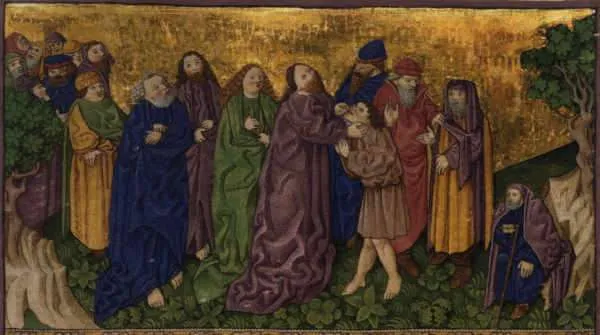
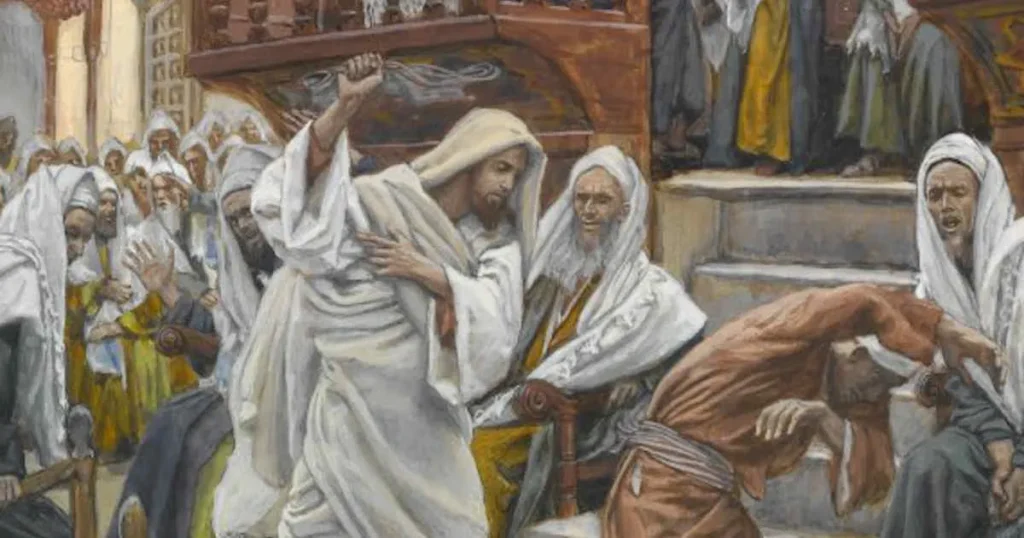
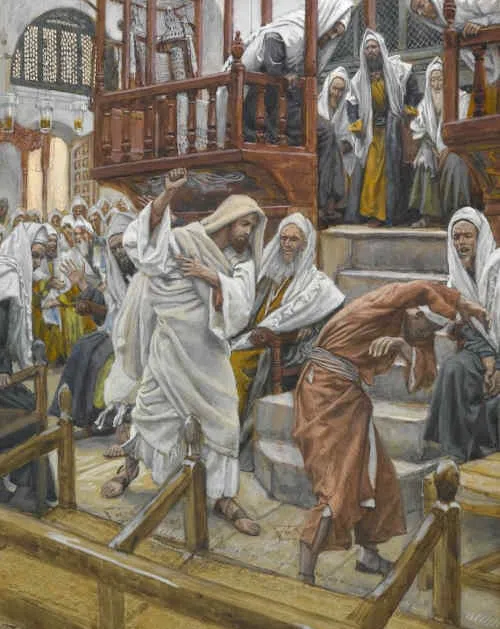
“In their synagogue was a man with an unclean spirit; he cried out, ‘What have you to do with us, Jesus of Nazareth? Have you come to destroy us? I know who you are—the Holy One of God!’ Jesus rebuked him and said, ‘Quiet!  Come out of him!’ The unclean spirit convulsed him and with a loud cry came out of him.”

Reflection: 

It’s interesting to note that this unclean spirit immediately knows Who Jesus is. This is because each of two opposites emphasizes the other very clearly. For example, the color black is most clearly seen when it is placed in front of something white. Or something hot is most noticeable after experiencing something very cold. And a loud noise is most jarring when someone is sitting in silence. And so it is with Jesus and evil. Jesus, the Holy One of God, is most clearly seen when He comes in contact with an unclean spirit.

This fact gives us some wonderful insights into our journey toward the heights of holiness. Oftentimes, when one experiences a profound and transforming conversion, it is because they were first living a life of sin. When one who is living in sin encounters the saving grace of God, it is quite noticeable. And that is good.

But there is also another spiritual insight we can take from this. To further the analogy, it is also true that when the color black is put next to something dark blue, or something hot is touched after holding something quite warm, there is less notice taken. So it is with the spiritual life.

When we are striving to obtain true holiness of life, and when we are already living the many virtues to which we are called, the next step closer to God might not be nearly as noticeable. Instead, growth in perfection for one who is already striving for perfection will be very subtle. And that is also good.

This is important to understand because sometimes, when a person has gone through a powerful conversion earlier in life, they want to return to the experience they had when they initially converted. But that should not be our goal. Instead, we should continually strive to experience these more subtle changes that take us from a life of holiness to one of even greater holiness.

In this case, if you do not sense a powerful contrast of spiritual experiences within you, that may be simply because there are no serious sins you are trying to overcome. Thus, the ideal for every Christian is to eventually experience less contrasting spiritual experiences and more that are gentle and subtle as our Lord continues to gently perfect you in many ways.

Reflect, today, upon your own spiritual journey toward holiness. If you do see serious sin in your life, know that God wants to profoundly free you and draw you through a major conversion. If you do not see serious sin in your life and if you already strive daily to become holy, then rejoice if your spiritual consolations and communications from God are much more subtle and, at times, undetectable. Keep working at perfection and rejoice that you are on the correct path.

Source: https://catholic-daily-reflections.com/2024/01/27/the-subtleties-of-grace/ 

Mark 1:23-26 Read More »

Saint Angela Merici, Virgin

Patron Saint of sickness, death of parents, disabled, handicapped, or physically challenged people; Canonized May 24, 1807 by Pope Pius VII

Angela was the youngest of five children born to her virtuous and faith-filled parents. She was born in the town of Desenzano in northern Italy. Shortly afterward, her family moved to a farm just outside of town where Angela was raised. Angela was well trained in the Catholic faith as a youth.

Each day, her father would read to the family about the lives of the saints from “The Golden Legend,” flooding little Angela’s mind and heart with a desire to imitate them. As a teenager, however, tragedy struck her family not once, not twice, but three times. Angela’s father, mother, and sister all died within a short period of time, leaving Angela and her three brothers orphaned.

After the deaths of her parents and sister, Angela and her youngest brother moved to the town of Salò, about fifteen miles north of Desenzano, to live with their uncle, her mother’s brother. Her uncle was also a virtuous man, and Angela continued to grow in her faith under his loving care.

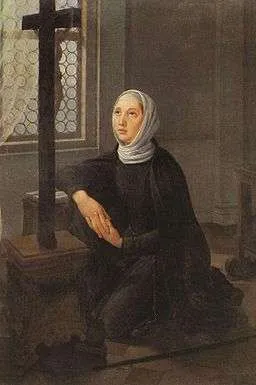
Around the age of twenty or twenty-two, Angela joined the Third Order Franciscans, the lay branch of the larger Franciscan Order. Third Order Franciscans did not take the same vows as consecrated men and women and lived out their vocations in the midst of the world.

As a Third Order Franciscan, Angela then began her lifelong custom of wearing the simple Franciscan Tertiary habit. She also informed her uncle that she wanted to dedicate her whole life to Christ, rather than get married. Soon after, her uncle died and Angela decided to move back to her family home in Desenzano to begin a new life as a lay Franciscan. She remained there for about the next twenty years.

At some point it is believed that Angela had one or more visions that increased her trust in God and deepened her commitment to her vocation. Angela was deeply concerned about whether her sister was in Heaven, and her heart longed for reassurance. Her answer came in the form of a vision she had of her sister joining in a Heavenly procession with angels and other young girls. This put Angela’s heart at rest. In that same vision or in a subsequent one, she saw a ladder leading to Heaven and several young virgins climbing that ladder.

This vision became the seed of her calling to teach young girls about God and to form them for holy living. Angela began to teach young girls who would gather in her home each day to help them become better Christians. Soon, other young single women began to imitate her, welcoming girls into their homes. These laywomen teachers formed a loose association among themselves, joining in a united mission and lay vocation. After twenty years in Desenzano, Angela was invited to start another house in the nearby city of Brescia.

In Brescia, Angela became well known and well loved by many, especially by young women in need. She counseled many, including former prostitutes, the upper class, the poor, and all who sought her guidance. In 1535, at the age of sixty-one, Angela finally fulfilled the final part of her mission when she gathered twenty-eight other virgins to form the lay organization of women known as the “Company of Saint Ursula.”

Saint Ursula was a fitting patron for them, since she was the patron saint of schoolgirls. The Company of Saint Ursula was the first secular institute for laity in the history of the Church. For women at that time, the only two options they traditionally had were either to enter marriage or to join a cloistered convent. This new lay association was the first to offer young women a third option. A couple of years later, Angela was elected the mother of this new company and remained so until her death in 1540.

At the time of her death, the Company had about 150 members. Four years after her death, in 1544, Pope Paul III issued a Papal Bull approving the Rule of the Company of Saint Ursula. Though the Company of Saint Ursula remains today, some of the Company’s first members formally branched off into a new religious order called the Ursulines under the leadership of Archbishop Saint Charles Borromeo of Milan in 1572. Both the “Ursulines” and the “Company of Saint Ursula,” which are distinct entities in the Church, point to Saint Angela as their founder.

God used Saint Angela for a unique mission. She fell in love with her God at an early age, dedicated herself solely to Him as her Spouse, and followed His will as it unfolded. At first, her mission was a personal mission of loving girls and guiding them to God in her home. Eventually, God expanded that mission and enfolded it into His Church. 

God does not call every person to start a new movement within the Church or to spark the beginnings of a religious order, but He does call us all to see the needs of those around us and work to meet those needs with love and devotion. Saint Angela saw the need to care for and teach young girls. Ponder the needs that are present around you and in imitation of Saint Angela, offer yourself to God so that you may help meet those needs in accord with God’s divine will.

Source: https://mycatholic.life/saints/saints-of-the-liturgical-year/january-27-saint-angela-merici-virgin/

Saint Angela Merici, Virgin Read More »