
May 2023

Psalm 51:1-2

Verse:

“Have mercy on me, O God, according to your unfailing love; according to your great compassion blot out my transgressions. Wash away all my iniquity and cleanse me from my sin.” - Psalm 51:1-2

Prayer For Redemption

Lord, I was told that Jesus did this for me and that all I have to do to receive Your forgiveness is to believe on the Lord Jesus Christ and I will be saved, eternally saved, and given a new life in Christ. Lord, a lot of this is hard for me to understand but I do believe that Jesus Christ died for my sins and that He rose again on the third day, has ascended into heaven and is sitting at the right hand of the Father, and that one day He will come back to take all who have trusted in Him into heaven to be with Him forever.

Amen.
Psalm 51:1-2 Read More »

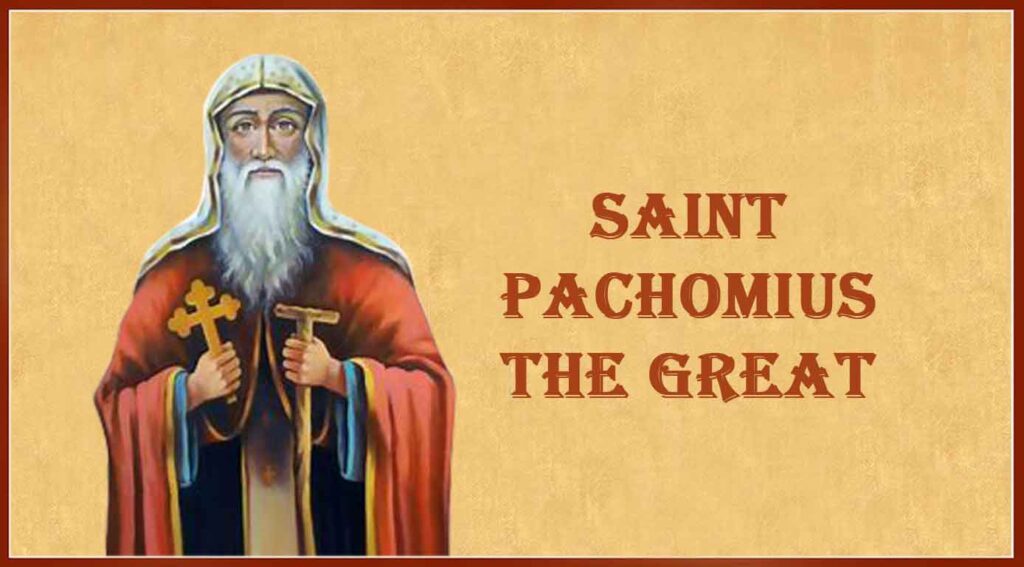
Saint Pachomius the Great

Saint Pachomius the Great is generally recognized as the founder of Christian cenobitic monasticism. At age 21, Pachomius was swept up against his will in a Roman army recruitment drive, a common occurrence during this period of turmoil and civil war. With several other youths, he was put onto a ship that floated down the Nile and arrived at Thebes in the evening.

After studying seven years with Palaemon, Pachomius set out to lead the life of a hermit near St. Anthony of Egypt, whose practices he imitated until Pachomius heard a voice in Tabennisi that told him to build a dwelling for the hermits to come to.

Pachomius established his first monastery between 318 and 323 at Tabennisi, Egypt. His elder brother John joined him, and soon more than 100 monks lived nearby. Pachomius set about organizing these cells into a formal organization.

Saint Pachomius continued as abbot to the cenobites for some forty years. During an epidemic (probably plague), Saint Pachomius called the monks and strengthened their faith. By the time Pachomius died, eight monasteries and several hundred monks followed his guidance. His reputation as a holy man has endured.

Saint Pachomius the Great Read More »

James 1:5

Verse:

“If any of you lacks wisdom, you should ask God, who gives generously to all without finding fault, and it will be given to you.” - James 1:5

Prayer For Wisdom

Heavenly Father, thank You for Your Word, which reminds us of the importance of asking You for godly wisdom when we feel that we are lacking in understanding or discernment, for You have promised to give generously to all who ask in faith.

James 1:5 Read More »

Saint Peter of Tarentaise

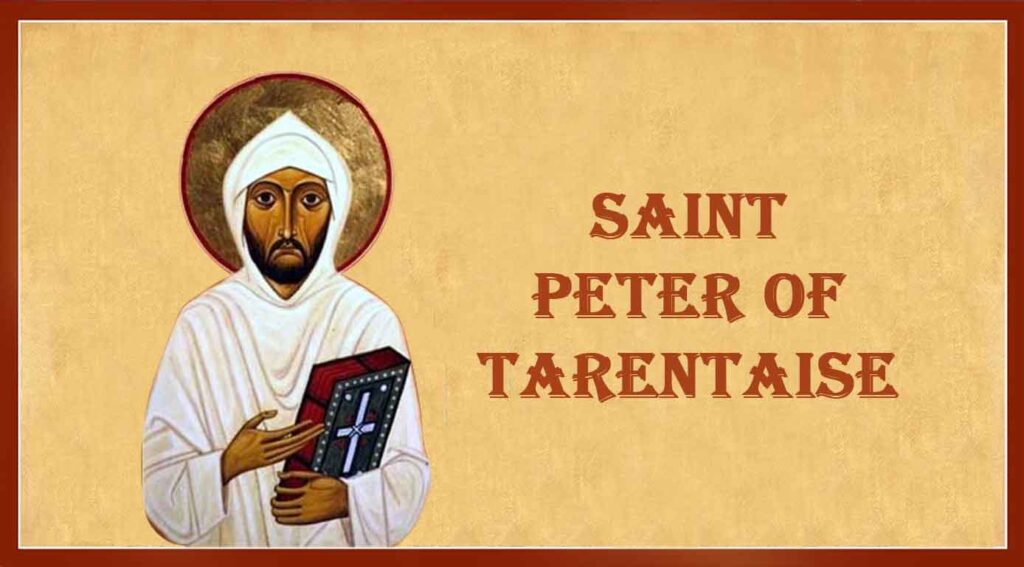
Saint Peter of Tarentaise was born in 1102 on a farm near Saint-Maurice-l’Exil, not far from the Cistercian Bonnevaux Abbey. He was a Cistercian monk who served as the archbishop of Tarentaise (as Peter II) from 1141 until his death.

In 1132, Saint Peter, his abbot, and twelve other monks founded Tamié Abbey in a defile of the Bauges mountains, as a daughter house of Bonnevaux. Once Abbot John was satisfied that the monks had adequate shelter, he returned to Bonnevaux, leaving Saint Peter as abbot of the new monastery. In 1142, at the insistence of his superiors including Bernard of Clairvaux, Peter reluctantly accepted the position as the Archbishop of Tarentaise.

In his episcopal role he applied the Cistercian principles he had learned as an abbot to restore the diocese and met with a good deal of success since the diocese’s management had declined and discipline lax. He removed corrupt priests (and elevated good priests to important pastoral positions) and promoted education for all the faithful

He rebuilt a hospice in poor repair at Little St. Bernard Pass. He also founded a charity which distributed food to farms in the surrounding hills. This would become known as pain de Mai and became a tradition continued in the region until the French Revolution.

He longed for the simple and pious life of a monk. In 1155 he disappeared and was later found as a lay brother in a remote convent in Switzerland. After about a year, when the monks discovered who he was, they alerted the archdiocese. Saint Peter was reluctant to emerge from his newfound solitude but was welcomed back into his archdiocese with much enthusiasm on the part of the people.

Saint Peter of Tarentaise died in 1174 as he attempted to mediate between feuding monarchs after a serious but brief illness. Miracles were reported at his tomb after his death and this led Pope Celestine III to canonize Peter as a saint in mid-1191.

Saint Peter of Tarentaise Read More »

1 Chronicles 16:11

Verse

“Look to the Lord and his strength; seek his face always.” - 1 Chronicles 16:11

Prayer For Strength In Loss

Lord, it was You that made us in Your image, with emotions and feelings, and I am hurting so much because of this loss. Lord, I feel utterly bewildered by all that has gone on and hardly know which way to turn. I just need Your strength to uphold me in this time of such enormous loss and such overwhelming grief.

1 Chronicles 16:11 Read More »

Saint Rose Venerini

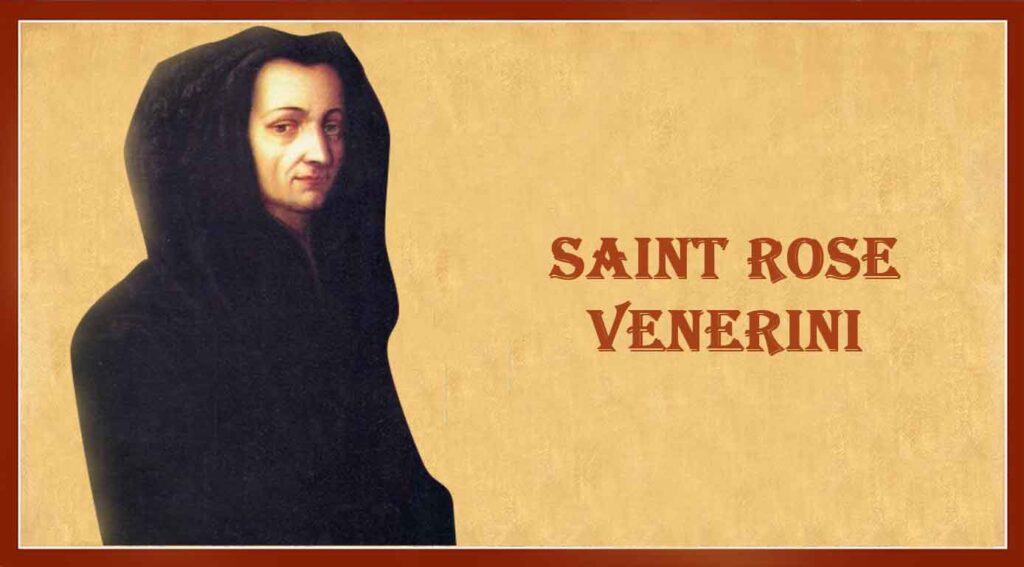
Saint Rose was born at Viterbo in Italy, the daughter of a doctor. Following the death of her fiancé she entered a convent, but soon returned home to care for her newly widowed mother. Meanwhile, Saint Rose invited the women of the neighborhood to recite the rosary in her home, forming a sort of sodality with them.

As she looked to her future under the spiritual guidance of a Jesuit priest, Saint Rose became convinced that she was called to become a teacher in the world rather than a contemplative nun in a convent. Clearly, she made the right choice: She was a born teacher, and the free school for girls she opened in 1685 was well received.

Soon the cardinal invited her to oversee the training of teachers and the administration of schools in his diocese of Montefiascone. As Saint Rose’s reputation grew, she was called upon to organize schools in many parts of Italy, including Rome. Her disposition was right for the task as well, for Rose often met considerable opposition but was never deterred.

She died in Rome in 1728, where a number of miracles were attributed to her. She was beatified in 1952 and canonized in 2006. The sodality, or group of women she had invited to prayer, was ultimately given the rank of a religious congregation. Today, the so-called Venerini Sisters can be found in the United States and elsewhere, working among Italian immigrants.

Sources:

https://www.franciscanmedia.org/saint-of-the-day/saint-rose-venerini/

Saint Rose Venerini Read More »

Proverbs 3:13

Verse

 “Blessed are those who find wisdom, those who gain understanding.” - Proverbs 3:13

Prayer For Spiritual Wisdom

Lord, give me a fresh understanding that the fear of the Lord is the beginning of wisdom and knowledge. Help me to know more of Jesus in whom are all the treasures of wisdom and knowledge. Grow my spiritual wisdom I pray O Lord. In Jesus' name,

Amen.

Proverbs 3:13 Read More »

Saint Dominic Savio

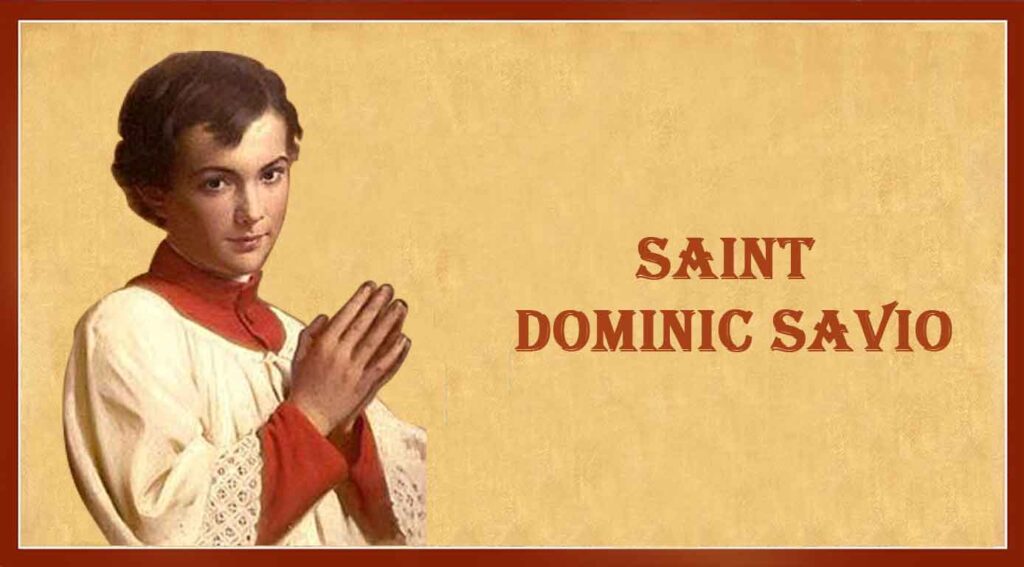
Saint Dominic Savio was an Italian student of John Bosco. His parents had ten children in all. His father was a blacksmith and his mother, a seamstress. They were poor, hardworking and pious.

His parents took great care to give him a Christian upbringing. By the age of four, Dominic was able to pray by himself and was occasionally found in solitude, praying. A chaplain at Murialdo when Dominic was five years old noted in a statement to John Bosco that he came to notice Dominic due to his regular church attendance with his mother.

At the age of five, he learned to serve Mass, and would try to participate at Mass every day as well as go regularly to Confession. Having been permitted to make his First Communion at an early age, he had much reverence for the Eucharist

When Saint Dominic’s health started to steadily deteriorate, he still spent most of his time with his friends, talking with them, and encouraging those who were experiencing troubles. He died at the age of 14, possibly from pleurisy.

He was noted for his piety and devotion to the Catholic faith, and was canonized a saint by Pope Pius XII in 1954.

Saint Dominic Savio Read More »

Saint Hilary of Arles

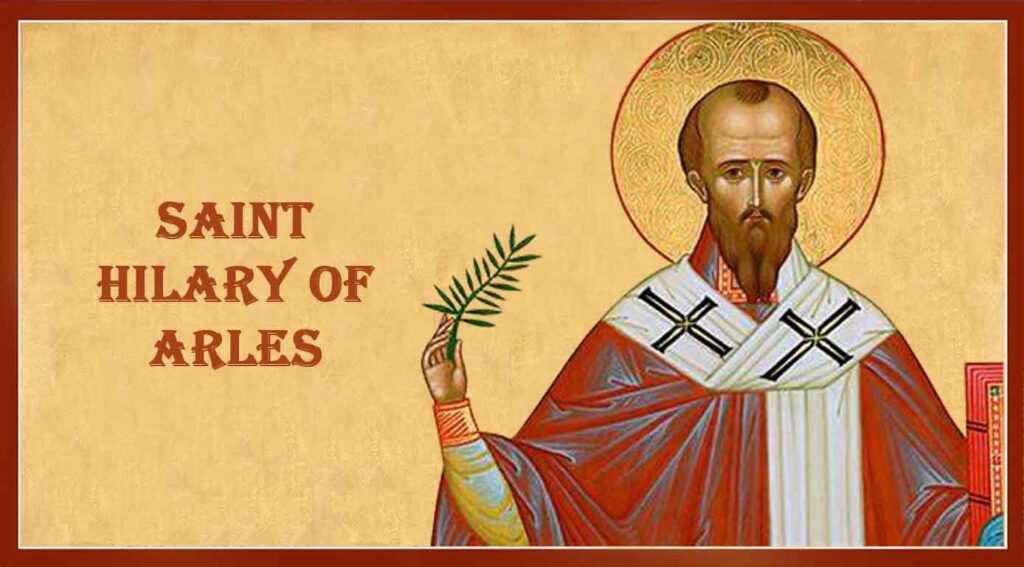
Born in France in the early fifth century, Saint Hilary came from an aristocratic family. In the course of his education he encountered his relative, Honoratus, who encouraged the young man to join him in the monastic life. Saint Hilary did so. He continued to follow in the footsteps of Honoratus as bishop. Saint Hilary was only 29 when he was chosen bishop of Arles.

The new, youthful bishop undertook the role with confidence. He did manual labor to earn money for the poor. He sold sacred vessels to ransom captives. He became a magnificent orator. He traveled everywhere on foot, always wearing simple clothing.

That was the bright side. Saint Hilary encountered difficulty in his relationships with other bishops over whom he had some jurisdiction. He unilaterally deposed one bishop. He selected another bishop to replace one who was very ill–but, to complicate matters, did not die! Pope Saint Leo the Great kept Saint Hilary a bishop but stripped him of some of his powers.

Saint Hilary died at 49. He was a man of talent and piety who in due time, had learned how to be a bishop.

Sources:

https://www.franciscanmedia.org/saint-of-the-day/saint-hilary-of-arles/

Saint Hilary of Arles Read More »